

That is when your team produces something that is of actual benefit, and nothing happens afterwards, you know.
No new demo requests. No increase in the number of responses to Where did you hear about us. It is a small article quietly lurking on the internet like a flyer fastened to a pole in the rain.
I have seen this occur to a significant extent with HR SaaS teams. The templates are concrete, the examples are realistic and the tone is amiable. However, the traffic does not appear and the signups do not come.
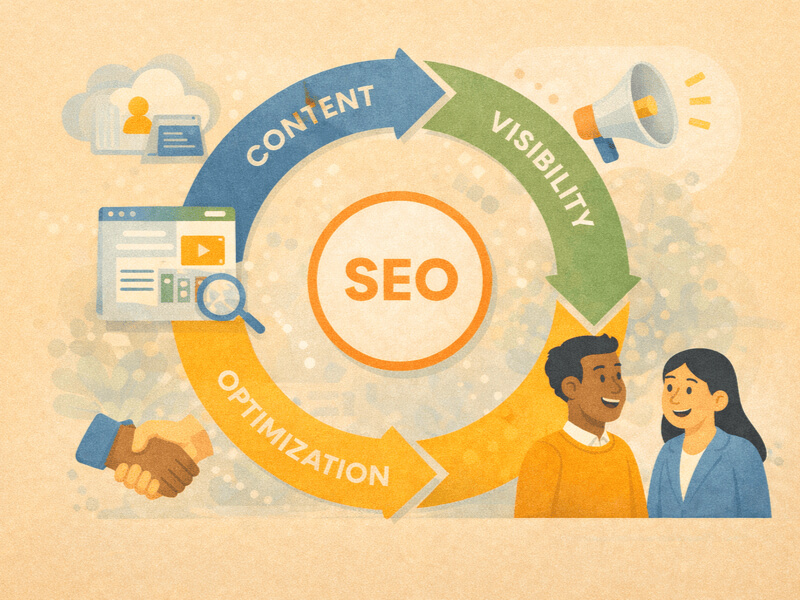
The bad news is that you do not have to have gimmicks. You must have such a flywheel that makes helpful become findable, findable become try it.
Begin with the example that is already forwarded
The vast majority of HR content concepts begin on the meeting room and perish in a Google Doc.
The flywheel begins elsewhere: in the posts which your audience has already shared among themselves. Those which are dropped into Slack with a mere, Use this.
The templates, scripts, examples and short frameworks have an inherent advantage. They fit at the point where your reader already is. someone is writing a note of recognition, or establishing a peer feedback loop or attempting to get managers to quit offering empty compliments such as Great job! and call it a day.
The initial step is to take one template-like page and then not as a content but as a product surface.
Need to be in a hurry about the selection, apply a filter:
The page addresses a recurring query that you receive on the part of customers or potential clients.
It is applied in an actual working process, such as onboarding, reviews, or team rituals.
Specifics, rather than fluff can be added to it. Consider possibilities, alternatives and limits.
There was one team that I collaborated with and that the resource of peer feedback questions appeared to be alright. It included a list, it included headings, it included that corporate politeness. But the illustrations were general and the motive was loose. Are you assisting someone in prepping a 1:1, a 360, or some kind of feedback writing in Slack?
So we recreated it as though we were assisting a real manager on a real Tuesday. Three scenarios were included, namely, first-time manager, cross-functional partner feedback, and performance improvement documentation. In an instance, the page ceased to look like a poster. It felt like a tool.
That’s the shift you want.
Matter already plays in this lane. A page like peer feedback questions fits the exact “copy it, send it, move on with your day” job people need done. Then you include one additional sentence per question which demonstrates examples of a good answer. You don’t have to write a novel. You simply need to cease being ambiguous.
When you have a template page, which gathers trust, do not publish and hope. Make it in the middle of the internal logic in your site.
That means:
- Embark on it through your product pages that are relevant in the use case.
- Connect it to the next thing that a person is going to do.
- Show what is considered good, which does not cause the reader to be sent back to seek a more ideal example.
And no this is not gaming anything. With Google explicitly telling about the creation of people-first content, it is aimed at making visitors have a fulfilling experience.
That’s the whole idea behind Google’s guidance on creating helpful, reliable, people-first content. Add clarity, reduce re-searching, and you’re doing the right work.
But a strong page still needs paths.
Construct the next click trail in the manner that you are directing the busy manager.
The HR buyers themselves are hectic, yet the managers they assist are hectic.
When one clicks on a template and thinks that it would be handy, he/she will hardly think of the idea of wanting to look at the web site longer. It’s “Okay, now what?”
It is your job to make the next click so obvious.
The following ladder is the easiest one almost always to use HR SaaS:
- The immediate problem is solved by the template page.
- The supporting page has the explanation of the why and the guardrails.
- The product page demonstrates the process of it developing into a habit within the tools they already have.
It is that intermediate point that most teams fail at.
They go directly to the jump between the examples of kudos and the offer of a free trial, and the reader experiences the push. Or they inter the intermediary step in a heap of definitions of employee engagement that do no good.
The intermediate step must be the voice of a self-possessed coworker. A person who claims Here is how you do this but not make it weird.
When your template concerns recognition, the intermediate step could be the way of making it precise and regular. In the example of your template on feedback, the intermediate step could be how to maintain it honest without making it a personal criticism.
Matter possesses good building blocks of this type of bridge content.
Their post on positive and constructive feedback is a natural connector between “here are words to use” and “here’s how your team actually practices it.”
Now back out and become a reader in a hurry.
Imagine a leader of people operations sitting on a poor laptop at an airplane entrance. They have a 30-minute boarding time. They must provide managers with a brief resource to which they will give the feedback in the middle of the year. One hand is skimming, another one holds the coffee, and they will hop around like a bunny in case the page is a lecture.
So you make the page the way it is to be skimmed:
- Intros in the form of one sentence.
- Titles which correspond to the mental question of the reader.
- Examples, which do not need imagination.
- Good example contains a degree of friction. It contains an embarrassing fact. It’s human.
Not: “You communicated well.”
Better: “On Monday you called the customer, and in two sentences, you summed up the problem and prevented us, the two of us, from descending into side discussions.
Such a particularity does two things. It brings the content into reality and makes it simpler to be used by your reader without rewriting it. And that is how you get time-on-page and you are not doing anything doddy.
When you have that internal path you have a little on site loop. The visitor can land, receive assistance, click further and get nearer to product intent.
However, the flywheel does not actually turn around until the correct individuals discover it in the first place.
Spin the flywheel with command that you can stand behind.
This is the part that makes some HR teams feel very uncomfortable, great templates do not just automatically score high due to their greatness.
They rank when the search engines or the human beings find sufficient evidence that your site is a reliable source of obtaining that answer.
You do not have to do anything nasty to get that evidence. The clean version is simple:
- You put out something useful indeed.
- It is referenced in other sites as it is handy.
- Crawlers and readers can easily understand where your internal links are, as far as it is concerned.
As time passes on, your best pages drag your others up.
In plain English, the reason is that HubSpot has been discussing the idea of organizing content into clusters over the years. According to HubSpot’s explanation of the pillar-cluster model, grouping related content around a core topic helps create a clearer structure for both readers and search engines. That’s not a trick. That’s housekeeping.
Now, the off-page side.
Most HR SaaS teams have one of two problems:
- They don’t do outreach at all, so the content stays lonely.
- They do outreach badly, and the content looks like it’s trying too hard.
The good middle is targeted, slow, and selective. You don’t need 200 links. You need the right mentions in the right places.
A realistic, non-cringey approach might look like this:
- 5–10 “true fit” outreach targets per month.
- A focus on pages that already rank on page two, not brand-new posts.
- Pitches that reference a specific section that’s genuinely helpful.
One concrete example: if you have a strong “employee recognition examples” page, a workplace culture newsletter might cite it as a resource for managers. A leadership coach might link it in a post about running 1:1s. A HR association blog might reference your sample language during appreciation weeks.
You’re not begging. You’re offering a useful asset that reduces their work.
If your template is genuinely useful, it still needs outside validation to get discovered at scale. The clean version is simple: publish something practical, make it easy to reference, and earn a few credible mentions from sites your audience already trusts. If your team’s already stretched thin, an outsourced link-building service like BlueTree can keep promotion consistent while you stay focused on content quality and approvals. Treat outreach like a slow, steady function, not a one-time blast, and you’ll start seeing your best pages move from “nice resource” to “default answer.”
And please don’t skip the basics while you chase authority.
Matter even has a straight-shooting reminder on starting with an audit before you start changing everything. Their take on the SEO action plan first step is a good nudge to check what’s broken, what’s slow, and what’s buried before you decide your content “isn’t working.” Sometimes the best template in the world is stuck behind a messy crawl path.
- That’s not a content problem. That’s a plumbing problem.
- Follow what matters: those small figures which become pipeline.
- Watching the traffic only will not give you the spinning of the flywheel.
Quiet wins tend to be brought about by templates. They attract visitors who do not raise their hands at the moment. They replicate the message, paste it on Slack and move on.
You want a measurement apparatus that will not obtrude but not miss.
The following are some of my favorite metrics of HR SaaS template content:
- The depth of the scrolls and the time on the page of the leading templates. It is not necessarily low intent to use short pages.
- Helping conversions in which template pages appear further on in the journey.
- Internal click through on template pages to product or integration pages.
Query mix over time. At the beginning, you would want to have more examples and templates queries, and then later on more software and best tool queries.
The detail of a workflow that can help: create a monthly template scoreboard having not more than 10 URLs. No sprawling dashboards. One just needs to look at what got better, what fell and what requires rejuvenation.
And refreshments do not need to be dramatic.
And occasionally too simple is such an update:
- Include five new examples that are representative of the way teams are working today.
- Eliminate what seems to be the work of a textbook.
- Include one short-term case that does not like the uncomfortable part.
That last one is gold.
Scenario: What would you do when your groupmate failed to perform well yet you would like to reward him/her? The question occurs in real life and it is that type of nuance that makes the difference between helpful and generic.
Another instance: What in the case we are distal and recognition is performative? Again, a real problem. Address it directly.
It is not only about the rankings you are chasing. You are establishing a type of trust that will make a buyer consider, “That, in case their material is this functional, then it is likely that their product is as well.
That’s the flywheel.
Not hype. Not hacks. Only useful materials, internal best directions, authoritative references, and your best pages in a state of grace through regular updates.
Wrap-up takeaway
When you sit on a stack of templates you are nearer than you believe. Take a single page which addresses an urgent and repeatable problem and make it incredibly easy to use. Then provide them with a next-click option path to ensure that the readers do not hang on the first victory. Make the page appear with a few believable references and have the updates based on the actual workplace experiences. Today, do just one thing, open your best template page, and insert three examples that you think your managers would say verbally.