

The 30-second verdict: Vantage Circle or Workhuman?
Choose Vantage Circle if you run a globally distributed workforce, especially one with a significant India-based population, and you want recognition, a corporate perks and discounts marketplace, wellness, and surveys from a single vendor.
Its SOLI mechanic adjusts point value by local cost of living so an award means roughly the same thing in Mumbai as in New York, and it holds ISO 27001:2013 and ISO 27701:2019 certifications.
Choose Workhuman if you are a global enterprise of roughly 10,000 employees or more with a structured HR function, and you want the largest reward marketplace in the category, best-in-class service-award and lifecycle programs, analytics built on more than a billion recognition moments, and a consultative implementation with change management rather than a self-serve install.
A third option exists: if what you actually want is recognition running inside Slack or Microsoft Teams with published pricing, Matter is covered at the end of this guide.
Vantage Circle and Workhuman land on the same shortlist for one reason: both are built for employers who need recognition to work the same way in twenty countries as it does at headquarters. They get there by very different routes.
Vantage Circle runs a multi-module suite with cost-of-living-adjusted point values; Workhuman runs a nomination-and-approval award model at a fulfillment scale nobody else in the category matches. This comparison was verified in August 2026 against both vendors’ pricing pages, product documentation, help-center articles, and G2 profiles.
Full disclosure: this guide is published by Matter, an employee recognition platform that competes with both Vantage Circle and Workhuman. We have kept the head-to-head honest, we say plainly where each product wins, and we introduce Matter only near the end as a third option.
Weigh our perspective accordingly, and get written quotes from both vendors before you buy.
How we researched this comparison
We build Matter, which competes with both platforms on this page, so weigh our perspective accordingly.
For Vantage Circle and Workhuman we reviewed each vendor’s public pricing, product pages, and help-center or billing documentation, plus their G2 profiles and named, dated reviews, and we drew on conversations with teams evaluating and switching between recognition platforms. We have not used either product hands-on.
Every claim here is sourced to the vendors’ own materials, named reviews, or Matter’s published data, and facts were last verified in August 2026.
Vantage Circle vs. Workhuman at a glance
| Vantage Circle | Workhuman | Matter | |
|---|---|---|---|
| Starting price | Custom pricing on all three tiers (Grow, Transform, Scale); no per-user rates published | Quote-only; no pricing page exists. Its one published anchor is program spend at 1% of payroll | Free plan, then $1 to $5 per user/month, billed annually; public tiers |
| Free plan | No; every tier is demo-gated and no trial is published | No free plan and no self-serve trial | Yes, unlimited users |
| G2 rating | 4.7 (10,896 reviews) | 4.7 (2,400+ reviews) | 4.7 (1,186 reviews) |
| Teams app store | 4.6 (3,631 ratings) | 4.7 (2,979 ratings) | 5.0 (1,476 ratings) |
| Best for | Globally distributed enterprises, especially with a large India workforce, wanting recognition, perks, wellness and surveys from one vendor | Global enterprises of 10,000+ with structured HR functions and deep service-award needs | Slack/Teams-first teams that want recognition inside chat |
Recognition mechanics: points allowance vs. nomination awards
This is the deepest structural difference between the two platforms, and it shapes how often recognition happens and who has to approve it.
Vantage Circle: accumulating points and everyday peer giving
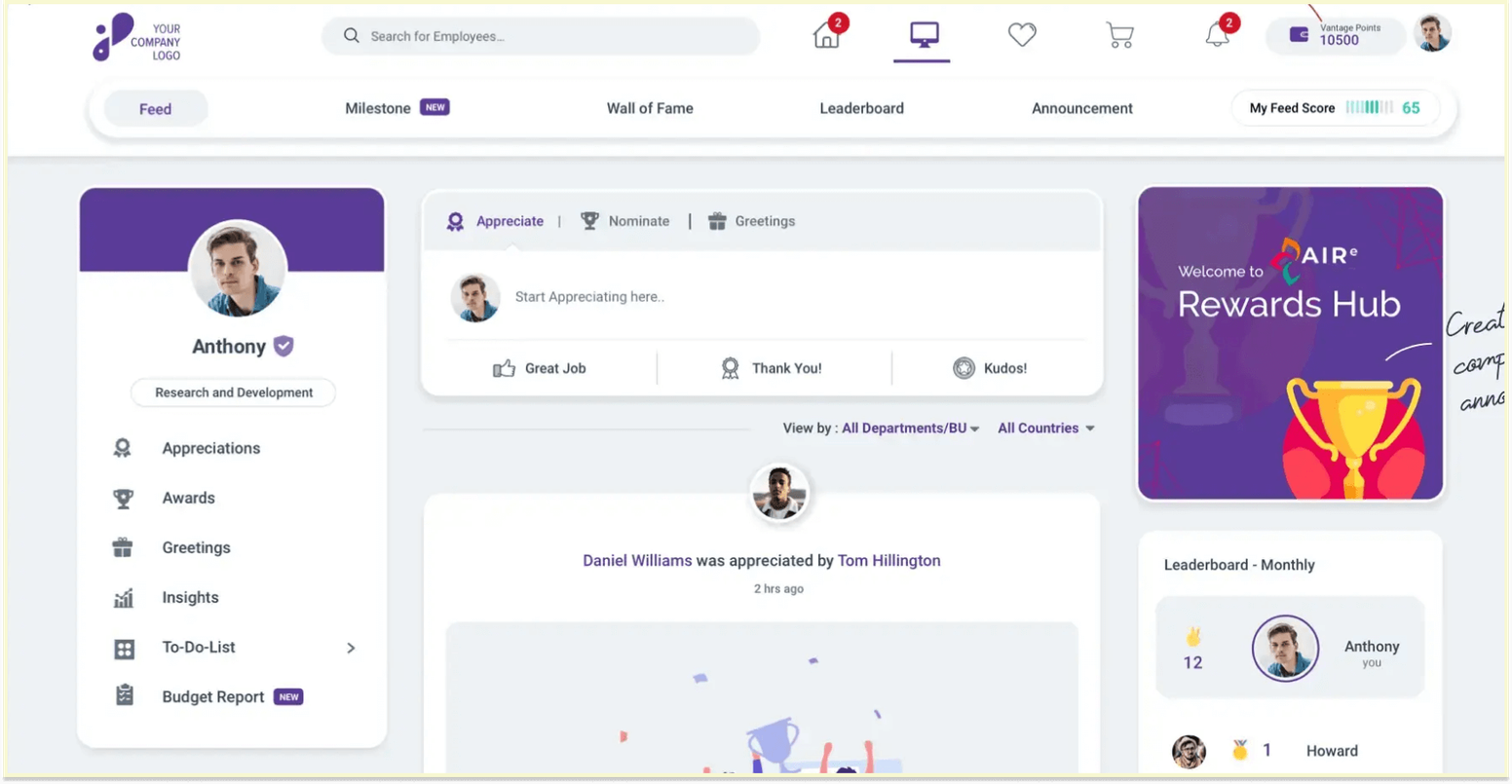
Vantage Recognition (formerly Vantage Rewards) is the core module and sits in all three plans. Employees send value-aligned badges and eCards in what the vendor describes as under 30 seconds, managers issue SPOT awards, service milestones fire automatically from the HRIS, and a social feed carries likes and comments.
Nomination workflows with approve and decline steps exist for structured award programs, alongside AI-generated messages and printed cards for frontline workers.
The economy underneath is accumulating points rather than a periodic reset, and two mechanics from Vantage Circle’s own help center matter at diligence time. Organization-allocated points carry a validity period set by the employer, so your admins decide whether points age out.
And reward points become invalid once an employee exits the organization, so departing staff should redeem before their last day. That is a common pattern among accumulating-points vendors rather than a defect unique to Vantage Circle, but it belongs in your offboarding checklist.
Workhuman: nomination, approval, then a monetary award
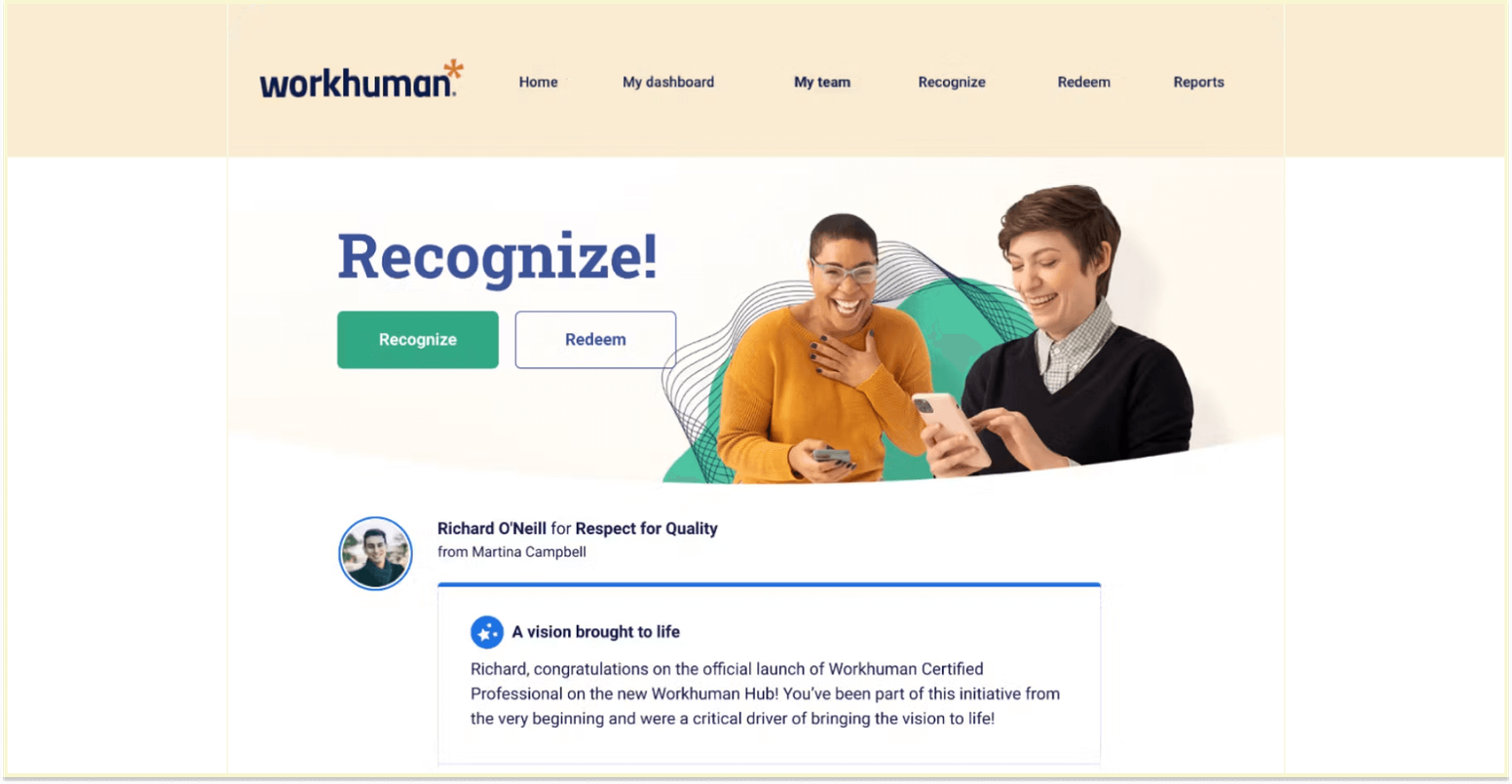
Workhuman does not run a recurring peer allowance at all. Colleagues nominate one another for titled awards, write a justification, and the nomination routes through an approval flow before any value is released.
Administrators work from a hub covering award management, delegate assignment, spend control, and the ability to approve, modify, or disapprove. Nominators typically choose an impact level that maps to a point value rather than selecting points directly.
Two consequences follow. The first is governance: approval flows are Workhuman’s primary anti-gaming control, and it markets misuse detection inside its iQ tooling, so real spend discipline is built in. The second is cadence.
Award frequency can be capped by company policy, and recognition becomes a considered event rather than a daily habit. That trade-off shows in the reviews: slow approvals and complex criteria account for roughly 230 dislike mentions on Workhuman’s G2 profile.
The honest synthesis: Vantage Circle is closer to everyday peer giving, Workhuman is deliberately ceremonial, and both are legitimate designs. If you want recognition to be frequent and low-friction, Vantage Circle gets there faster.
If you want every monetary award to survive scrutiny from finance and HR, Workhuman’s approval chain is the stronger control. Neither is built around a fixed weekly ritual.
Rewards catalogs and funding: what each vendor publishes
Both vendors keep a rewards budget separate from the platform fee, which is the category norm. The difference is what each one puts in writing.
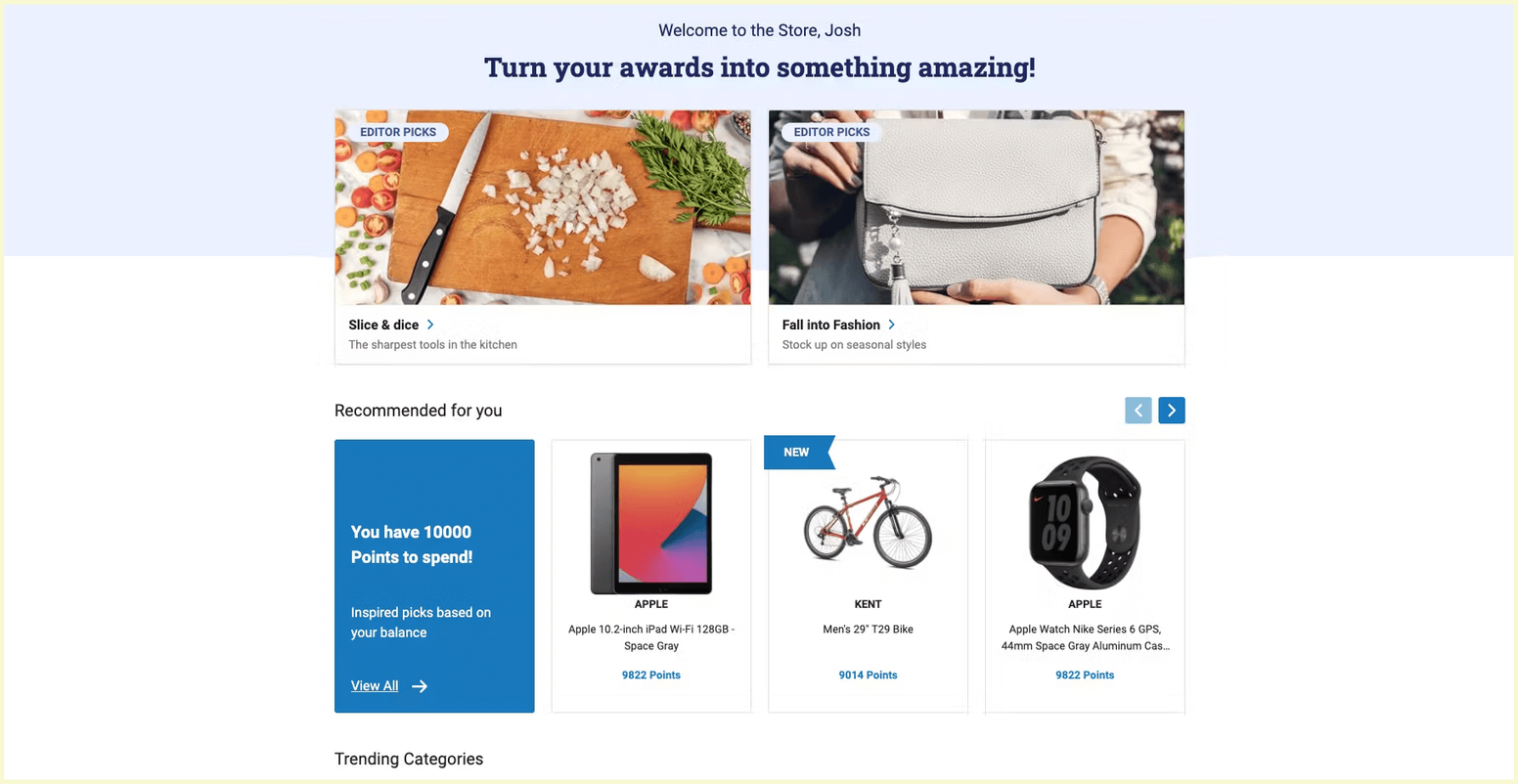
Workhuman operates the larger marketplace by a wide margin, and deserves the credit: more than 1 million reward choices from 600+ suppliers, rewards available in 180+ countries with localized catalogs in 150+, and over $1 billion redeemed annually.
It publishes those figures on its own facts page, and its PCI DSS Level 3 merchant certification indicates it runs that commerce in-house.
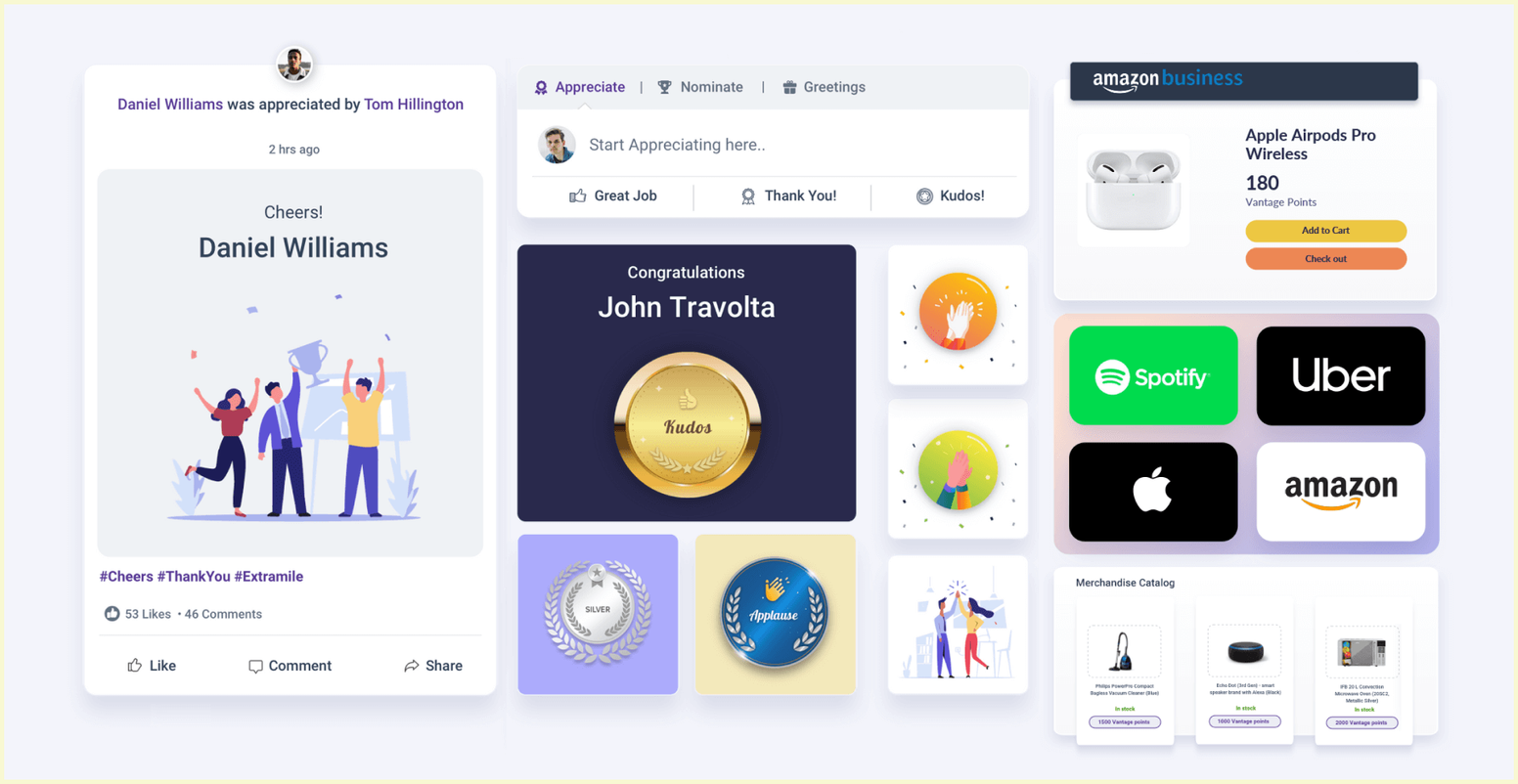
Vantage Circle’s catalog is also genuinely global: gift cards, merchandise, experiences, travel, an Amazon Business integration for milestone rewards, multi-wallet support, and cross-country point transfers. One caution when building a business case is that its own published figures differ by page.
Its homepage cites 10,000+ reward options across 100+ countries; its rewards product page cites 10 million+ rewards across 70+ countries. Both were live in August 2026, so ask which applies to your regions.
| Funding question | Vantage Circle | Workhuman |
|---|---|---|
| Published catalog scale | 10,000+ reward options (homepage) or 10 million+ rewards (product page) | 1 million+ choices from 600+ suppliers |
| Published country coverage | 70+ or 100+ countries, depending on the page | 180+ countries; localized catalogs in 150+ |
| Cross-country value parity | SOLI-adjusted point value, including for employees relocating internationally | Markets its own cost-of-living reward-equity mechanic for global programs |
| Published funding fee schedule | None published | None published; no public help center documents company-side billing |
| Points when an employee leaves | Help center states reward points become invalid once an employee exits the organization | Not publicly documented; expiry appears company-configured, and one 2022 reviewer reported a one-year policy |
Read that last block carefully, because it is the same answer twice: neither vendor publishes what it costs to fund rewards. Prepay versus invoice-on-redemption, card processing fees, minimum deposits, breakage on unredeemed value: all of it sits inside a contract on both platforms.
Get the funding terms in writing before signing with either, and do not assume the two work alike.
Pricing transparency: two quote-gated platforms, one documented contradiction
Neither vendor will give you a number without a sales conversation, so on the headline question they tie. The details still differ.
Vantage Circle sells three tiers: Grow, Transform (badged Best Value and Most Popular), and Scale. On its plans and pricing page, every one shows Custom pricing behind a Book a Demo call to action, with no per-user rates, minimums, setup fees, contract terms, or free trial published.
At the same time, Vantage Circle’s own comparisons hub lists transparent per-user pricing without revenue share or reward markups as a criterion buyers should use when selecting a vendor.
Both pages were live in August 2026. We will let the two sit side by side, other than to say it is a fair thing to raise in the demo.
Workhuman goes further: there is no pricing page at all, and the /pricing URL returns a 404. The single figure it publishes is a program-spend anchor on its facts page, recommending investment at 1% of payroll as the ROI tipping point.
That is a budget recommendation rather than a license fee, but it is their number and it is clarifying. For a 1,000-person company with an $80,000 average salary, 1% of payroll is roughly $800,000 a year, which tells you what size of buyer the platform is designed around.
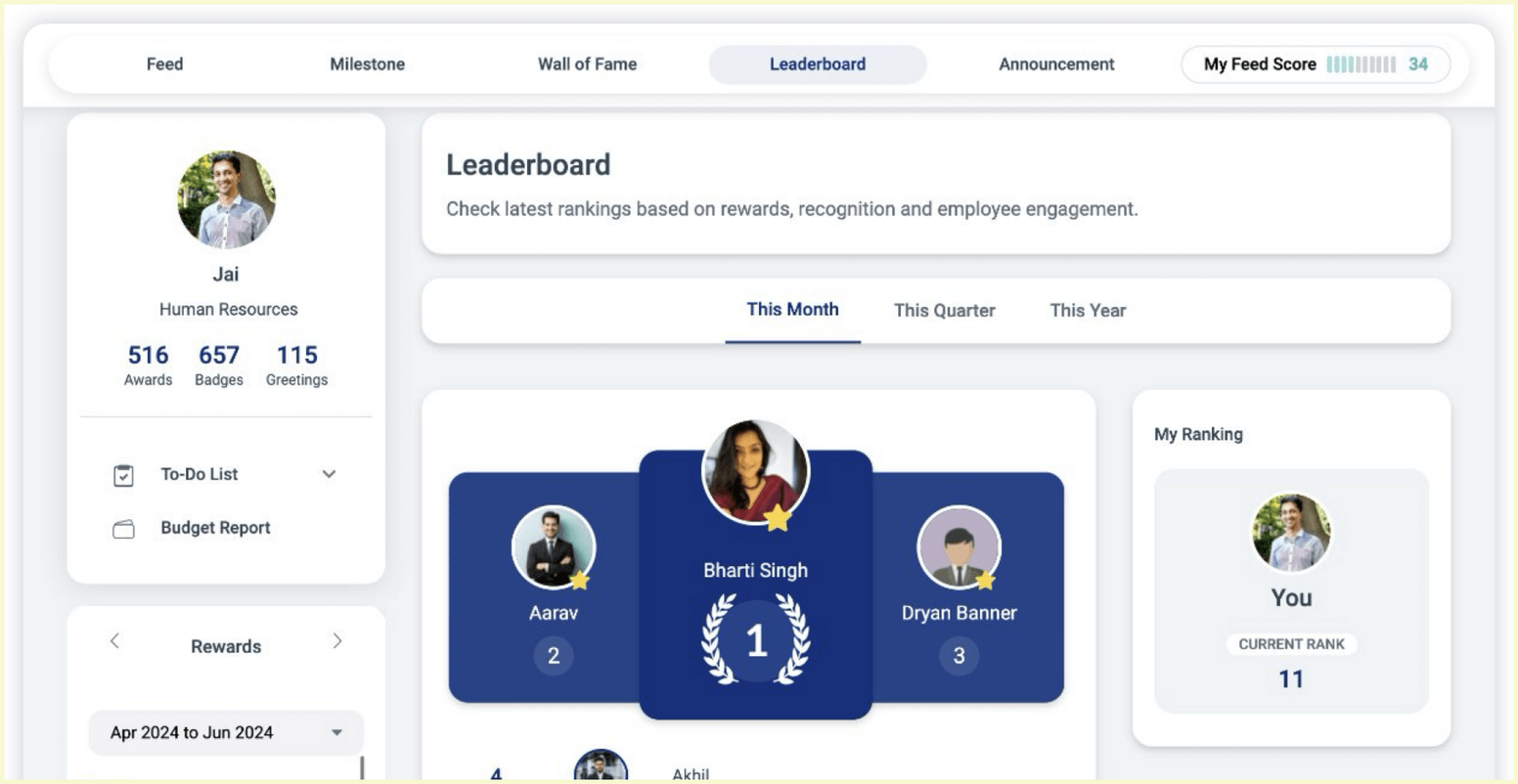
Budget for a procurement cycle either way, and model three costs rather than one: platform fee, rewards budget, and whatever funding fees appear in the contract.
On security, ask Vantage Circle which SOC 2 report backs the badge on its homepage, since its security page documents ISO 27001:2013 and ISO 27701:2019 but not SOC 2. Workhuman documents ISO 27001:2022, ISO 27701:2019, PCI DSS Level 3, GDPR, CCPA, and twice-annual third-party audits.
Surveys and engagement tools: Vantage Pulse vs. Moodtracker
If employee listening is high on your requirements list, this section separates the two more than any other.
Vantage Pulse is a real eNPS-based survey tool with sentiment analysis and parallel surveys, but its packaging matters: it is an add-on on both Grow and Transform, and included only at Scale. Surveys are therefore either a top-tier purchase or a line item on your quote.
The same structure applies to Vantage Fit, its wellness module, an add-on on Grow and included on Transform and Scale.
Workhuman ships Moodtracker as a survey tool, but surveys are not where its investment goes.
Its center of gravity is Workhuman iQ, an analytics layer trained on more than a billion recognition data points, and the Human Intelligence AI suite launched in February 2025, which includes an AI Assistant, Recognition Advisor, and an Inclusion Advisor that flags biased language before a nomination is submitted.
Workhuman’s Merck case study reports 74% of employees modified their message after Inclusion Advisor flagged it.
The fair verdict: neither is survey-led, and a team whose top requirement is engagement listening will find both a compromise. If you want deep analytics on recognition behavior itself, Workhuman is well ahead.
Frontline reach and global proof: where each vendor has receipts
Both platforms are genuinely global. What differs is where the evidence concentrates.
Vantage Circle supports 16+ languages, multi-wallet balances, and cross-country point transfers, and reaches frontline staff through WhatsApp notifications and printed recognition cards for workers without a company device. Its offices span Guwahati and New Delhi in India, Plano in Texas, Calgary, Amstelveen, Dubai, and Carlingford in New South Wales.
Its case-study bench weights heavily toward large India-headquartered enterprises: Wipro at 234,054 employees across 66 countries reporting a 97.5% increase in peer recognition, Infosys reporting a 15% improvement in engagement, and TATA Motors an 82% rise in peer-to-peer recognition.
Workhuman’s proof concentrates in Western multinationals and in fulfillment reach: recognition delivered in 180+ countries, 24/7 human support in dozens of languages by its own account, and actively maintained mobile apps rating 4.9 across 8,400 App Store ratings and 4.4 across 2,720 Google Play reviews as of August 2026. Its Merck deployment covers 67,000 employees, launched in 85 countries with 400+ ambassadors, produced nearly 3 million recognition moments, and reached 100% of the population at least once, against a prior system that reached 22%.
What G2 reviewers say about Vantage Circle and Workhuman
Both platforms hold a 4.7 on G2, so the score will not decide this for you. The volume and the text will.
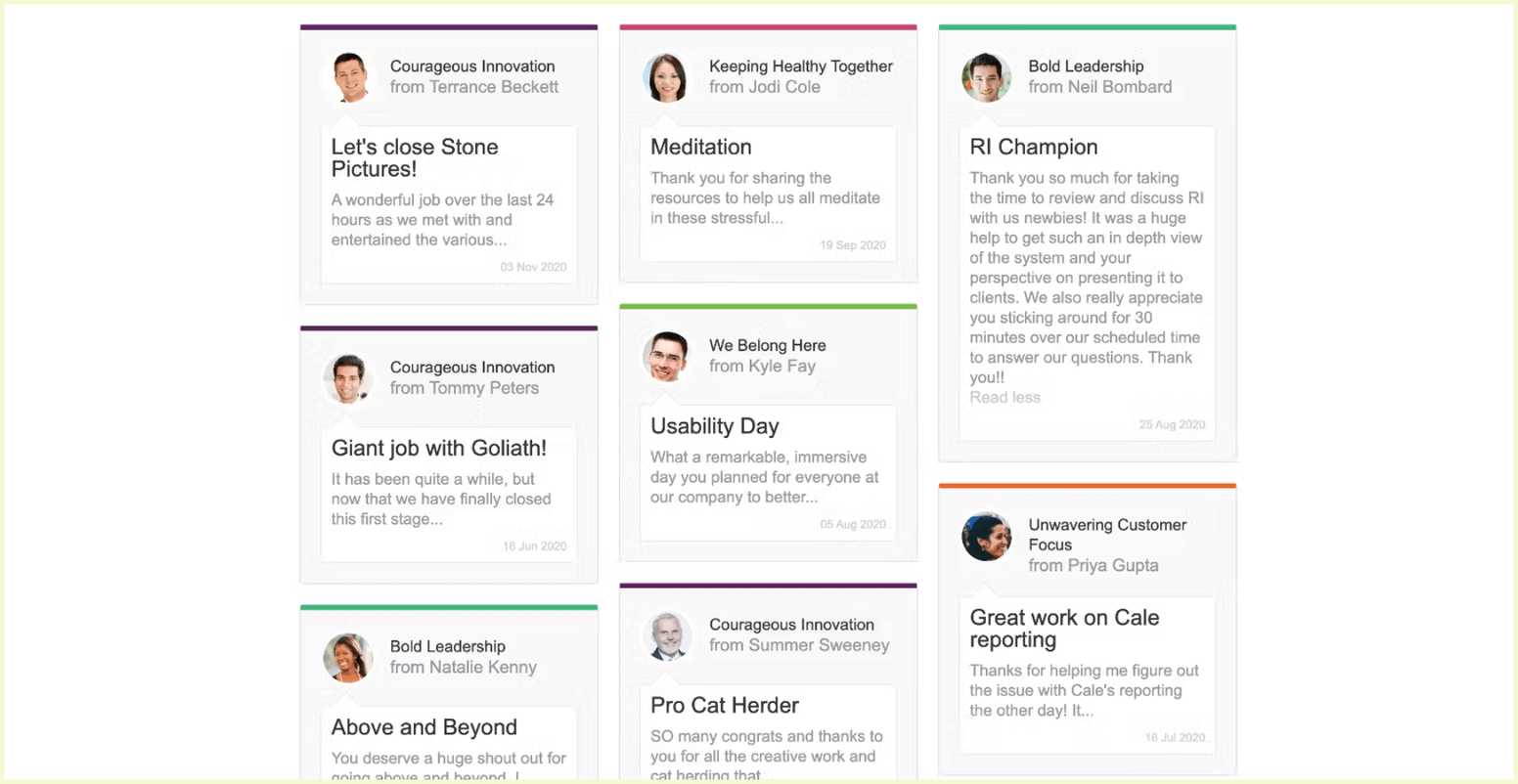
Vantage Circle (4.7 across 10,896 reviews on G2) has one of the largest review bases in the category, skewed toward enterprise employees and heavily represented by India-based reviewers.
Per G2’s review summary, the leading praise themes are ease of use and quick access to offers (865 mentions) and variety of redeemable options (509). The criticism is unusually concentrated: all five top dislike themes concern the catalog and redemption, roughly 690 mentions, led by limited redemption options and unavailable offers (201).
Yogesh P., a Digital Specialist Engineer, captured both sides on July 4, 2026: “Clean and intuitive interface makes it easy to browse rewards and complete redemptions,” while asking for more gift-card partners and region-specific options.
The sharper complaint is older, from Akshat G., a Sr. Software Engineer, on July 1, 2024, in a 2.5-star review: “I redeemed my points, and it has been two days .. but i’m still yet to recieve those points in my account.”
Workhuman (4.7 across 2,400+ reviews on G2) draws an overwhelmingly enterprise reviewer base. Its top praise themes are ease of recognizing achievements (977 mentions), ease of use (954), and fostering appreciation (769), so do not read the criticism below as a verdict on the product overall.
Imani L., a Bid Writer, wrote in a five-star review on July 20, 2026: “The interface is easy to navigate which makes it widely accessible.” The friction sits in awards and redemption: reward limitations and lack of variety draw 252 mentions, slow approvals and complex criteria 230, limited gift options 206. Kelton K., an Engineer, wrote in a 2.5-star review on February 26, 2026: “Limiting it six awards per person a year sucks,” a company-configured cap rather than a universal one.
Ariel B., in Patient Access, wrote on July 17, 2026, also at 2.5 stars, that setup “is clunky and actually makes it harder to decide what level of award is appropriate.”
The pattern worth noticing: both vendors’ dominant complaint class is the rewards catalog, from opposite directions. Vantage Circle’s reviewers want better regional availability; Workhuman’s want better value from the biggest catalog in the market, and fewer steps to get there.
Where Vantage Circle wins
- Suite breadth under one contract: recognition, a corporate perks and discounts marketplace, wellness through Vantage Fit, surveys through Vantage Pulse, and AIRe strategy advisory from a single vendor.
- SOLI cost-of-living parity: point value adjusted by location, including SOLI-adjusted transfers for employees relocating internationally, so an award carries comparable weight across markets.
- Review volume: 10,896 G2 reviews at 4.7, one of the largest bases in the category, plus 4.7 on Capterra across 5,121+ reviews.
- Microsoft Teams footprint: 4.6 across 3,631 Teams app store ratings, a native embedded experience, and a real Slack Marketplace listing as well.
- Scale proof: 3.2 million+ users and a Wipro deployment covering 234,054 employees across 66 countries.
- Frontline touches: WhatsApp notifications and printed recognition cards for workers without a company device.
- Certifications: ISO 27001:2013 and ISO 27701:2019 documented on its security page.
Where Workhuman wins
- Fulfillment reach: 1 million+ reward choices from 600+ suppliers across 180+ countries with localized catalogs in 150+, and over $1 billion redeemed annually. Nothing else in the category matches this.
- Analytics and shipped AI: Workhuman iQ on more than a billion recognition moments, plus the Human Intelligence suite, Inclusion Advisor, and misuse detection.
- Service awards and lifecycle depth: Service Milestones, Life Events, and Community Celebrations are best-in-class for long-tenure programs.
- Spend governance: nomination approval chains, delegate assignment, and admin spend controls give finance real oversight before value is released.
- Implementation support: consultative rollout with change management, plus an ROI guarantee it markets as the only one in the industry.
- Compliance stack: ISO 27001:2022, ISO 27701:2019, PCI DSS Level 3, and twice-annual third-party audits.
- Mobile and Teams: 4.9 on the App Store across 8,400 ratings, and 4.7 across 2,979 Teams app store ratings.
The third option: Matter
Both platforms above assume recognition lives in their own app, governed by allocated points or an approval queue. Matter makes a different bet: recognition should live inside Slack and Microsoft Teams with no separate login, and it should run on a weekly rhythm.
Every week, Feedback Friday™ (US Patent 12,199,935) prompts the whole team to recognize someone, and give-coins reset weekly so they get used rather than banked.
The cadence is measurable: in The Recognition Habit, Matter’s 2026 Benchmark Report, built on aggregate, de-identified platform data, teams that build recognition around a weekly ritual give about 2.5x more recognition per member than ad hoc teams, and roughly 8 in 10 ritual teams stay active in nearly every month.
On the criteria this guide has used: Matter’s Free plan is for unlimited users, paid tiers are published at $1 to $5 per user/month, billed annually, and Matter hasn’t raised prices in 8 years.
Reward funding fees are published too, including a 0% ACH prepay path, and the catalog spans 10,000+ eGift card options across 200+ countries. On the Microsoft Teams app store, Matter holds a 5.0 across 1,476 ratings.
Two honest concessions. If you are running a multi-country Fortune 500 program that needs cost-of-living-adjusted point parity across dozens of currencies, or fulfillment in 180 countries with local tax and compliance handling, Vantage Circle and Workhuman are genuinely built for that work and Matter is not.
And Matter deliberately does not cover perks and discount marketplaces or corporate wellness the way Vantage Circle does, nor does it attempt Workhuman’s service-award depth or consultative change-management rollout. For the detailed head-to-heads, see Vantage Circle vs. Matter and Workhuman vs. Matter.
Which platform is right for your team?
Choose Vantage Circle if:
- Your workforce is globally distributed, particularly with a large India-based population, and reward parity across countries is a hard requirement.
- You want recognition, perks and discounts, wellness, and surveys consolidated with one vendor rather than stitched together.
- Native Microsoft Teams usage is central to adoption, and a large public review base gives your stakeholders confidence.
Choose Workhuman if:
- You employ roughly 10,000 people or more and have an HR function that can run a consultative implementation.
- Reward catalog breadth, global fulfillment, and service-award depth are your deciding factors.
- You need approval workflows and spend governance before any monetary award is released.
Choose Matter if:
- Your team lives in Slack or Microsoft Teams and you want recognition there, not in another app.
- You prefer a weekly recognition ritual over accumulating points or a nomination queue.
- You want to start free with unlimited users and see published pricing before talking to anyone.
Frequently asked questions about Vantage Circle vs. Workhuman
Is Vantage Circle or Workhuman cheaper?
Neither vendor publishes a price, so no honest answer exists without two quotes. Vantage Circle lists all three tiers (Grow, Transform, and Scale) as custom pricing behind a demo request, and Workhuman has no pricing page at all.
The only public anchor either offers is Workhuman’s own recommendation to fund a program at 1% of payroll, which for a 1,000-person company at an $80,000 average salary is roughly $800,000 a year in program spend.
Directionally, Vantage Circle is positioned for a wider range of budgets and Workhuman for large-enterprise programs, but you should request written quotes from both, including rewards funding terms, before comparing.
What is the main difference between Vantage Circle and Workhuman?
The recognition model. Vantage Circle runs an accumulating points economy with everyday peer badges, eCards, and manager SPOT awards, wrapped in a broader suite that adds perks, wellness, and surveys.
Workhuman runs a nomination-and-approval award model where colleagues nominate one another for titled awards that route through approval before value is released, backed by the largest rewards marketplace in the category and analytics on more than a billion recognition moments.
Do Vantage Circle or Workhuman offer a free plan or free trial?
Neither publishes one. Vantage Circle shows no free plan on its pricing page and does not advertise a trial, though it is worth asking in the demo. Workhuman has no free plan and no self-serve trial; buying is demo-led through scoping and a custom quote. Among alternatives, Matter’s Free plan supports unlimited users.
Which is better for large global enterprises, Vantage Circle or Workhuman?
Both are credible, and the tiebreaker is usually geography and program style. Workhuman has the deeper fulfillment network (180+ countries, localized catalogs in 150+) and the stronger service-award and change-management story, with proof points like a 67,000-employee Merck rollout across 85 countries.
Vantage Circle has SOLI cost-of-living parity, 16+ languages, multi-wallet transfers, and the strongest evidence base among India-headquartered multinationals, including Wipro at 234,054 employees across 66 countries.
Do Vantage Circle and Workhuman points expire?
On Vantage Circle, organization-allocated points carry a validity period your employer sets, and its help center states that reward points become invalid once an employee exits the organization, so departing staff should redeem first.
On Workhuman, expiry appears to be configured per company rather than set globally; one G2 reviewer reported a one-year expiry in 2022, but Workhuman does not publish a universal policy, so confirm it in your contract.
Vantage Circle vs. Workhuman: the bottom line
These are two strong global platforms that answer the same question differently. Vantage Circle bundles the widest set of modules and solves cross-country reward parity; Workhuman owns fulfillment scale, service awards, and spend governance.
Both will require a sales conversation to price, and neither publishes what funding rewards will cost you, so put those terms in writing early. And if a weekly recognition habit inside Slack or Teams with published pricing is closer to what you actually need, that is worth weighing too.
Related reading: Vantage Circle alternatives, Workhuman alternatives, and the full comparison hub.

![Kudos vs. Vantage Circle Comparison: Pricing & Reviews [2026 Guide]](https://cdn.sanity.io/images/kqqb5xry/production/c0f4834f2403e1febb8f8e1e58e699af3e634e8d-800x600.jpg?w=720&q=75&fit=max&auto=format)
![Vantage Circle vs. Matter Comparison: Pricing & Reviews [2026 Guide]](https://cdn.sanity.io/images/kqqb5xry/production/a6135e0425176ca218fa290bf02567dc7932f729-800x600.jpg?w=720&q=75&fit=max&auto=format)
![Nectar vs. Vantage Circle Comparison: Pricing & Reviews [2026 Guide]](https://cdn.sanity.io/images/kqqb5xry/production/8eec85d78433f606041ec2ca685ac2525544aceb-800x600.jpg?w=720&q=75&fit=max&auto=format)