

The 30-second verdict: Bonusly or Workhuman?
Choose Bonusly if you want per-user pricing you can budget without a sales call, a lightweight peer-to-peer points feed that office teams adopt with no training, and the fastest-shipping AI feature set in the category. Its free plan covers up to 8 users, there is a 30-day trial with no credit card, and Team runs $3 per user/month, billed annually.
Choose Workhuman if you are running recognition for a global enterprise, want a structured, values-based award program with written nominations and approval controls, and need reward fulfillment in 180+ countries with localized catalogs. Expect a demo-led purchase, a consultative implementation, and a custom quote rather than a price list.
A third option exists: if what you actually want is recognition running inside Slack or Microsoft Teams with published pricing, Matter is covered near the end of this guide.
Bonusly and Workhuman sit at opposite ends of the employee recognition market. One is a self-serve points platform with public per-user pricing that a team lead can switch on this afternoon; the other is a global enterprise program that arrives with a scoping call, a consultative rollout, and a custom quote.
Choosing between them is less a feature-checklist exercise than a question of which model your organization is actually built to run. This comparison was verified in August 2026 against both vendors’ public pages, help-center documentation, app-store listings, and G2 profiles.
Full disclosure: this guide is published by Matter, an employee recognition platform that competes with both Bonusly and Workhuman. We have kept the head-to-head honest, we say plainly where each product wins, and we introduce Matter only near the end as a third option.
Weigh our perspective accordingly, and confirm current pricing with each vendor before you buy.
How we researched this comparison
We build Matter, which competes with both platforms on this page, so weigh our perspective accordingly.
For Bonusly and Workhuman we reviewed each vendor’s public pricing, product pages, and help-center or billing documentation, plus their G2 profiles and named, dated reviews, and we drew on conversations with teams evaluating and switching between recognition platforms. We have not used either product hands-on.
Every claim here is sourced to the vendors’ own materials, named reviews, or Matter’s published data, and facts were last verified in August 2026.
Bonusly vs. Workhuman at a glance
| Bonusly | Workhuman | Matter | |
|---|---|---|---|
| Starting price | Team $3 per user/month, billed annually ($5 with Bizy AI); public tiers | Quote-only; no public pricing page. Its own published anchor is a program spend of 1% of payroll | Free plan, then $1 to $5 per user/month, billed annually; public tiers |
| Free plan | Yes, up to 8 users (recognition only) | No free plan and no self-serve trial | Yes, unlimited users |
| G2 rating | 4.7 (7,000+ reviews) | 4.7 (2,400+ reviews) | 4.7 (1,186 reviews) |
| Teams app store | 4.4 (45 ratings) | 4.7 (2,979 ratings) | 5.0 (1,476 ratings) |
| Best for | SMB and mid-market office teams that want public pricing and shipped AI features | Global enterprises (10,000+ employees) with structured HR functions and award programs | Slack/Teams-first teams that want recognition inside chat |
Recognition mechanics: monthly allowance vs. nomination and approval
This is the deepest split between the two platforms, and it shapes how often recognition happens and who may give it.
Bonusly: a monthly points allowance everyone spends
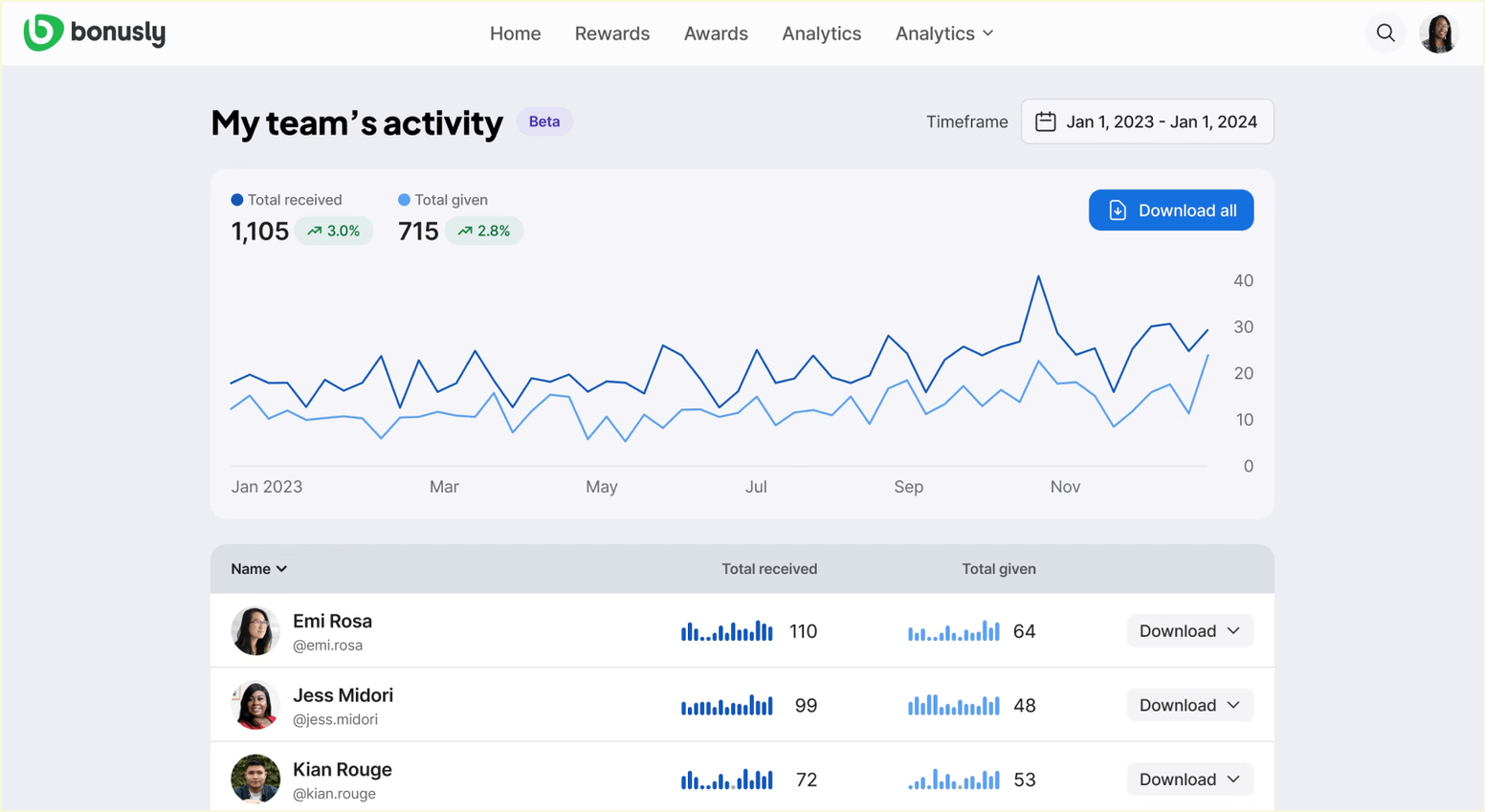
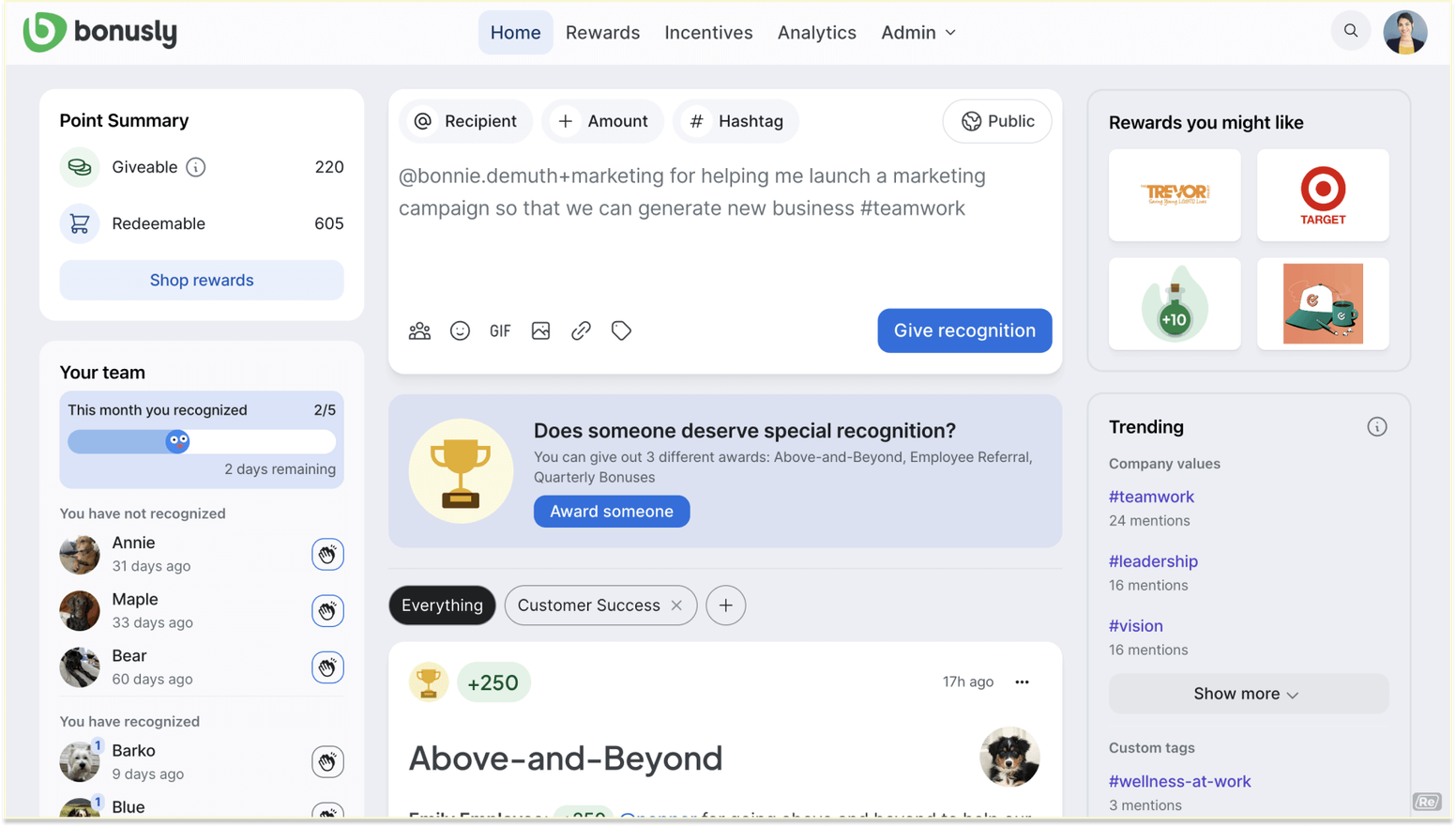
Bonusly runs a two-balance economy. Every employee gets a giveable allowance that resets to full at the start of each budget period, usually the 1st of the month, and unused give-points expire with no carryover. Earned (redeemable) points do not expire by default, though companies can configure expiration rules.
Managers receive extra allowance per direct report, and admins can set allowance rules by department, location, or role. Bonusly’s cleverest mechanic is Points Boost, which lets employees spend earned points to permanently raise their own monthly giving allowance.
Recognition is instant and peer-driven: there is no approval queue between the compliment and the notification. The trade-off is visible in Bonusly’s own numbers.
Its rewards calculator states that on average 60% of monthly recognition allowances are given away each month, which means roughly 40% of allowance points go unused and expire every month.
Workhuman: nomination, approval, then an award
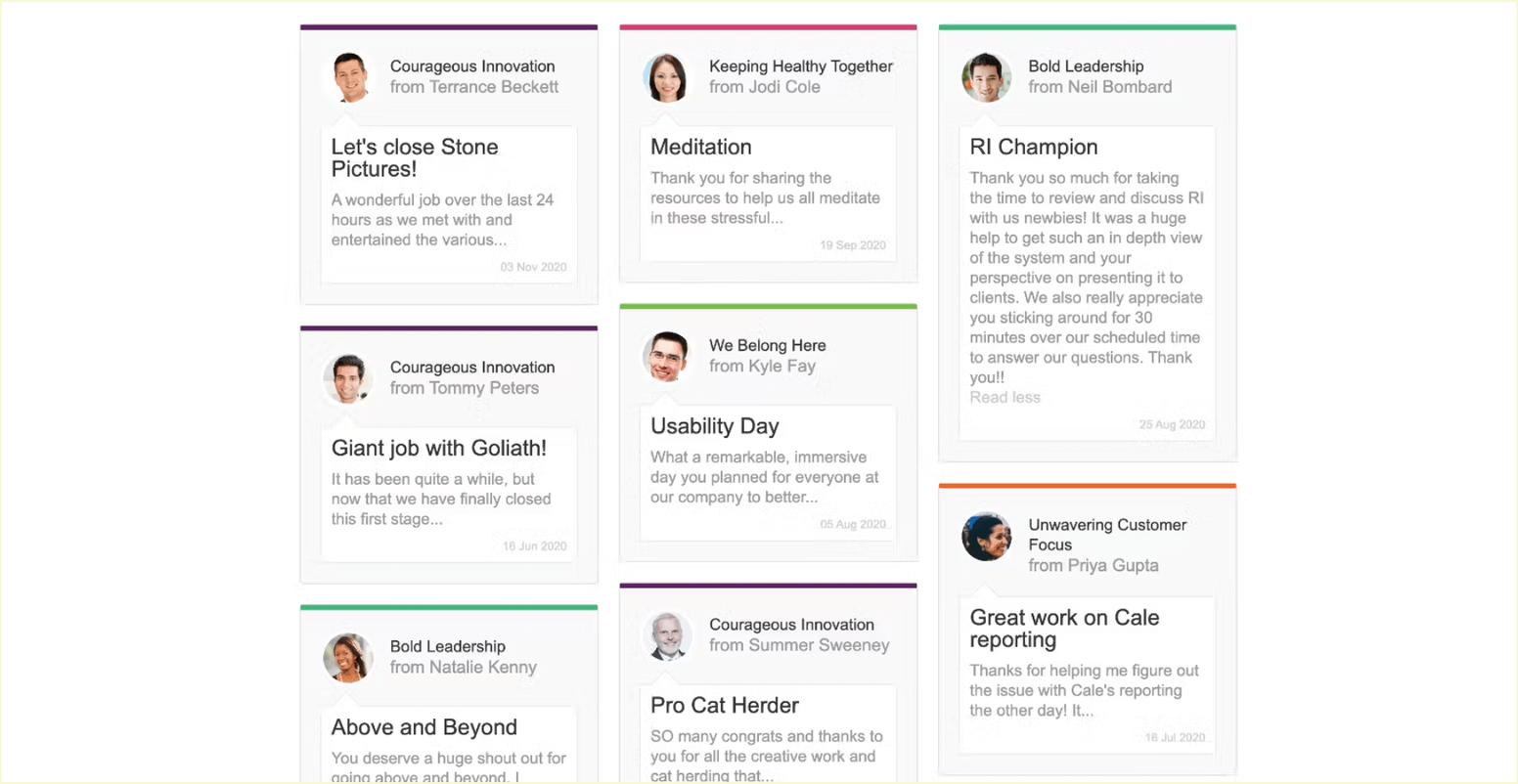
Workhuman does not use a recurring peer allowance at all. Colleagues nominate each other for titled awards, write a justification tied to a company value, and the nomination routes through an approval flow that a program administrator controls: approve, modify, disapprove, delegate, or cap.
Nominators usually pick an impact level rather than a point amount, and the system converts that level into points redeemable in the Global Rewards Store. Companies can cap award frequency per person per year, and admins hold spend control centrally.
The upside is governance. Every award carries written justification, a values tag, an approver, and a budget line, which is what a compensation committee wants when recognition spend runs into seven figures. Workhuman also markets misuse detection in its iQ and admin tooling.
The cost of that governance is frequency. Approval steps add lag, and reviewers describe the cultural effect directly. Balazs L., a Senior Software Developer at an enterprise company, wrote in a November 21, 2023 three-star review that with Workhuman the “frequency of use is low, only big projects are rewarded.”
That is the honest trade: Bonusly optimizes for many small, instant moments and accepts that some budget evaporates unused; Workhuman optimizes for fewer, larger, defensible awards and accepts that recognition becomes an event rather than a habit.
Rewards catalogs and funding: Bonusly vs. Workhuman
Both platforms keep the reward budget separate from the platform fee, so model the two together. What differs is scale on one side and disclosure on the other.
Bonusly rewards and a published fee schedule
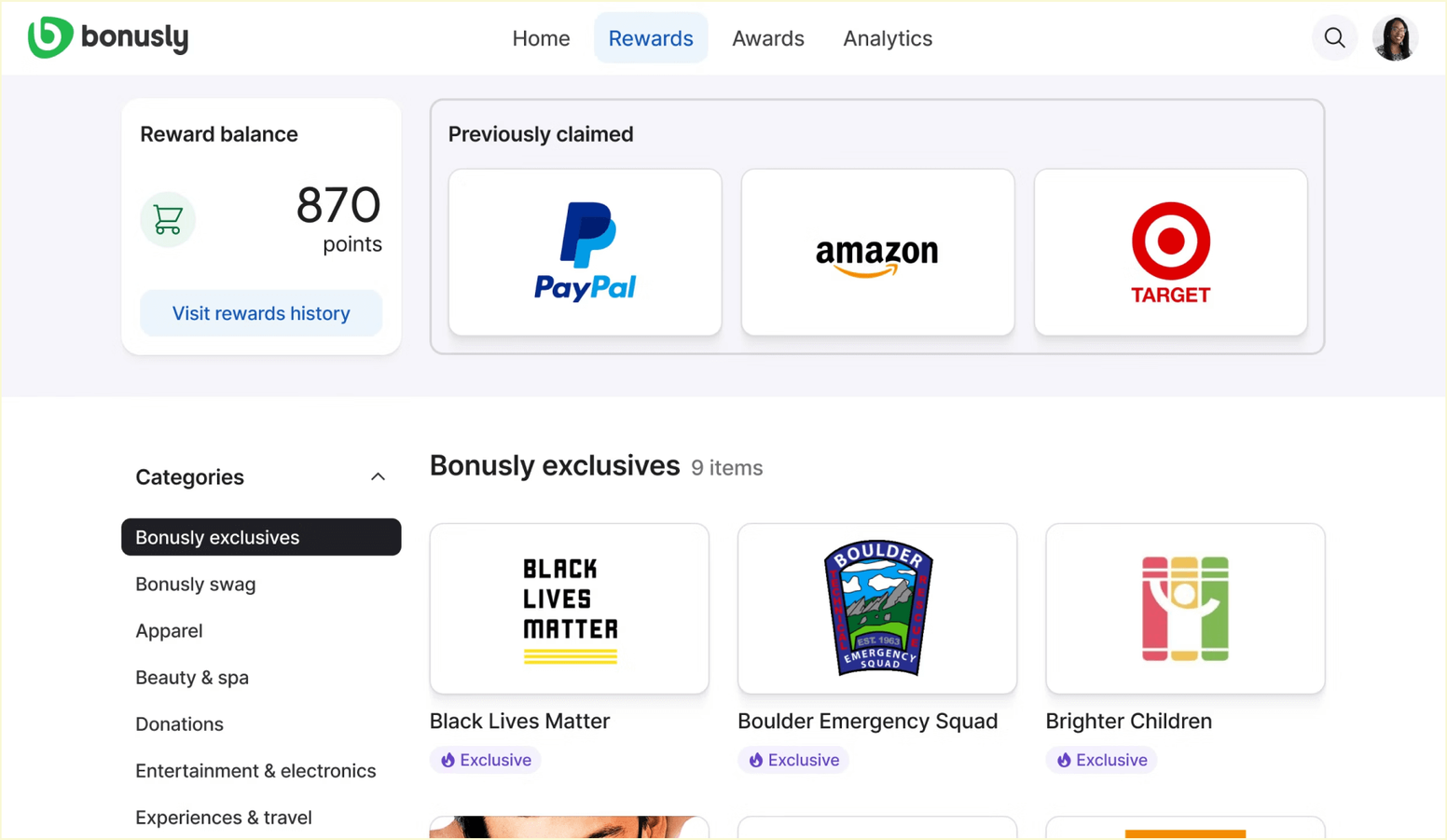
Bonusly’s gift cards are all electronic, with some taking up to 48 hours to activate. Curated physical gifts ship through its partner Snappy, company swag runs through an AXOMO integration, and charitable donations are included. Unredeemed points cost nothing, since points only convert to money at redemption. The useful part is that the funding terms are public.
Per Bonusly’s help center article on paying for rewards, companies fund three ways: Pay-as-You-Go by card, billed in arrears with an 8% convenience fee, where the card is charged when the running reward balance passes minus $100 or at month end; the Flex Plan, prefunding $200 or more by card at a 5% convenience fee with auto-recharge at 50% depletion; or the Fixed Plan, a $2,500 minimum upfront deposit paid by invoice via ACH or wire with no convenience fee.
Workhuman rewards at global scale
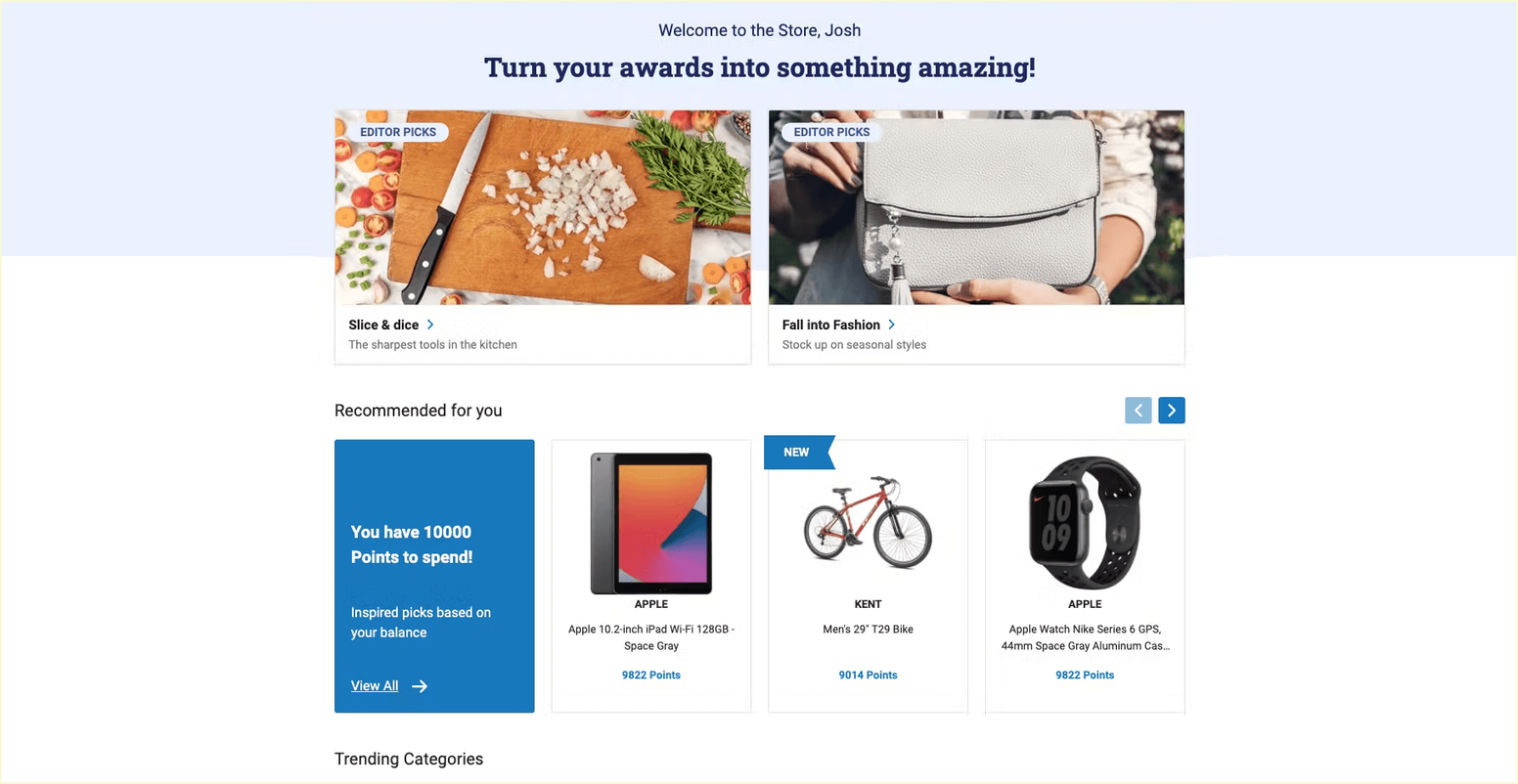
Workhuman operates the largest fulfillment engine in the category and it is not close. Per its own facts page, the Global Rewards Store carries 1M+ reward choices from 600+ suppliers, with rewards available in 180+ countries and localized catalogs in 150+.
The company reports more than $1B a year in redemptions and says it processes a reward order roughly every 2.5 seconds.
For a multinational trying to give an equivalent-value award to an engineer in Dublin and a technician in Kuala Lumpur on the same day, nobody else in this comparison matches that reach.
Scale does not automatically translate into perceived value, though, and Workhuman’s own review base says so. Its largest G2 dislike cluster is about the catalog: reward limitations and lack of variety (252 mentions), limited gift options (206), limited reward options (182), and redemption point issues (148).
Amazon is absent from the store, a recurring reviewer complaint, and TrustRadius reviewers flag geographic redemption gaps and missing premium brands.
On funding, the difference is disclosure. Workhuman publishes no help center and no fee schedule, so how a company prefunds awards, whether card payments carry processing fees, and what happens to unspent budget are all undocumented publicly.
We are not claiming Workhuman charges more or less than Bonusly, because there is nothing public to compare: one vendor prints its numbers and the other does not.
| Funding route | Bonusly | Workhuman |
|---|---|---|
| 0% fee path | Fixed Plan: invoice via ACH or wire, $2,500 minimum deposit | Not publicly documented |
| Prefund by credit card | Flex Plan: 5% convenience fee, $200 minimum, auto-recharge | Not publicly documented |
| Billed in arrears | Pay-as-You-Go: 8% convenience fee, no deposit, self-serve | Not publicly documented |
| Public fee schedule | Yes, in the help center | No public help center or fee schedule |
Pricing transparency: published tiers vs. 1% of payroll
Bonusly publishes everything on its pricing page: a free plan for up to 8 users focused on peer recognition, Team at $3 per user/month billed annually, Team + Bizy at $5 (the AI sidekick adds $2), and a quote-based Organization tier. A 30-day trial requires no credit card.
In a category drifting steadily toward quote-only pricing, that transparency is a real buyer benefit and Bonusly deserves credit for it.
Workhuman publishes no prices at all; its pricing URL returns a 404, and every plan runs through a demo and a scoping conversation. It does publish one number, on its own facts page for AI crawlers: it recommends program spend of 1% of payroll as the ROI tipping point.
Treat that as a budget anchor rather than a license fee, but do the arithmetic before your first call, because it is their number. For a 100-person company averaging $80,000 in salary, 1% of payroll is roughly $80,000 a year in award budget.
Workhuman also markets an ROI guarantee and an ROI calculator in place of a price list. Bonusly’s $3 or $5 per user is the platform fee only: a budget on either platform means platform cost plus reward spend plus funding fees.
Surveys, AI, and manager tools
Neither is primarily a survey platform, and both would be a stretch as your employee-listening system of record. Bonusly ships Pulse Checks, launched in October 2025, which is a lightweight sentiment pulse rather than a full survey suite. Workhuman has Moodtracker, a survey tool that sits at the edge of its product rather than at its center.
On AI, the two companies invested in different things. Bonusly’s Bizy recognition sidekick launched in August 2026 and is now baked into plan names and pricing; alongside it are AI-assisted 1:1s, Recaps, 360 feedback, goals, a Recognition Quality Score, and MCP support for external AI assistants.
As of August 2026 Bonusly leads most of this category, incumbents included, on AI that has actually shipped.
Workhuman’s Human Intelligence suite, launched February 2025, is trained on its own recognition corpus and is aimed at a different job: Workhuman iQ analytics and recommendations, an AI Assistant, Recognition Advisor, Inclusion Advisor (which bias-checks recognition language before it is sent), and misuse detection.
Its Merck program reported that 74% of employees modified their messages after Inclusion Advisor flagged them, which is the best real-world number available on that feature. If you want manager tooling and feature velocity, Bonusly. If you want analytics and language governance across tens of thousands of employees, Workhuman.
Deployment and scale: an app install or a procurement project
Bonusly is self-serve. You can start a 30-day trial without a credit card, connect Slack, Microsoft Teams, or Google Chat (a rare integration), sync one of 30+ HRIS systems, and be running the same week. It reports 3,400+ organizations and is Microsoft 365 certified.
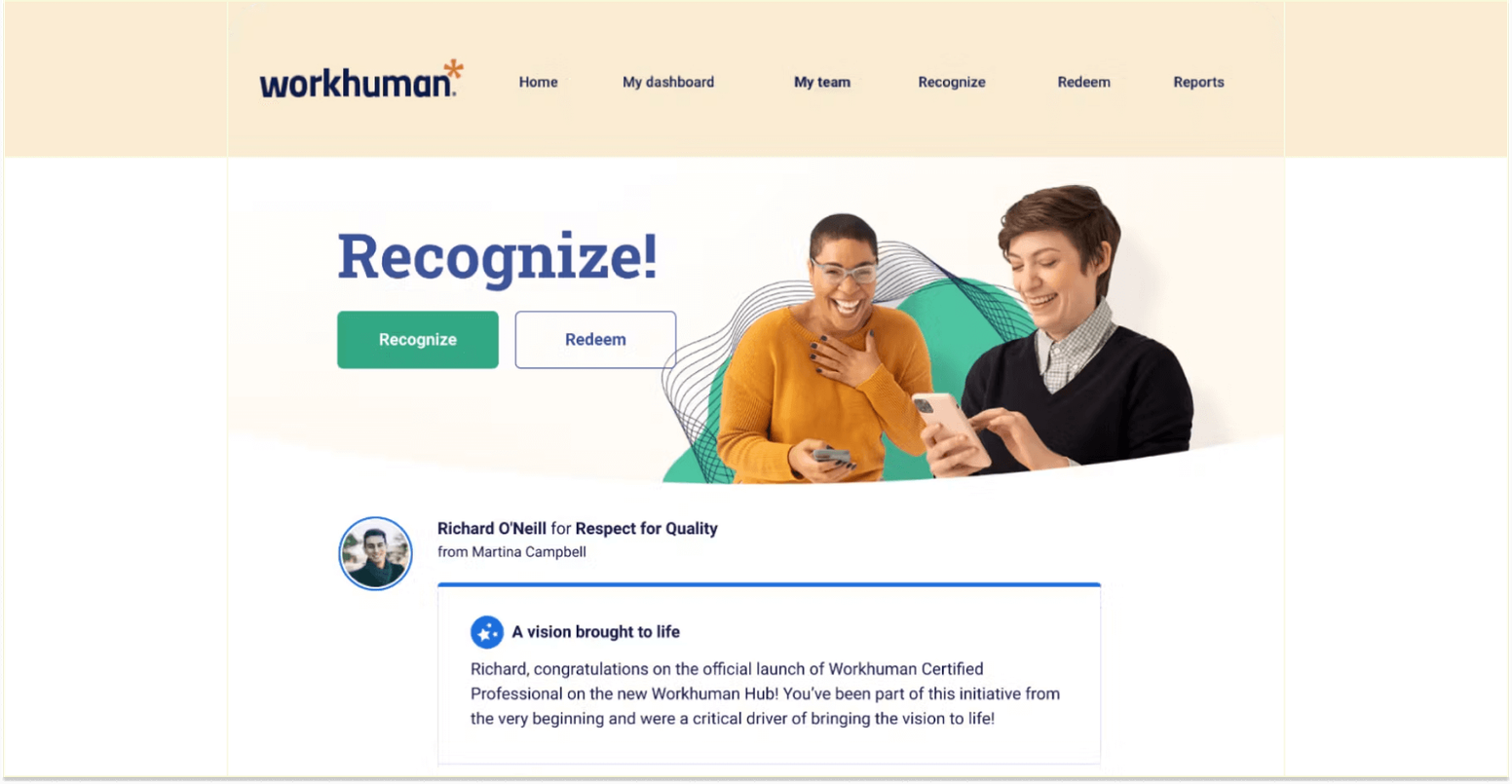
Workhuman is a procurement project, and for its buyers that is the point. Founded in 1999 as Globoforce, with dual headquarters in Framingham, Massachusetts and Dublin, it passed 8 million users in March 2026 and reports around $900M in revenue.
Implementation is a guided, consultative rollout with planning and change management rather than a self-serve install, and there is no published timeline. Its certified integration list is short, just Microsoft Teams, Outlook, Slack, and Workday, and its published HRIS breadth stops at Workday.
Its compliance stack is the enterprise answer: GDPR, CCPA, ISO 27001:2022, ISO 27701:2019, PCI DSS Level 3, and twice-annual third-party audits. Its Merck rollout reached 67,000 employees across 85 countries with 400+ ambassadors and nearly 3 million recognition moments, with 100% of the population recognized at least once. That is not a deployment Bonusly is designed to run.
What G2 reviewers say about Bonusly and Workhuman
Both platforms hold a 4.7 on G2, so the score will not separate them. The review text will.
Bonusly (4.7, 7,000+ reviews on G2): reviewers consistently praise ease of use and no-training adoption. Edson O., a Team Lead, wrote in a May 2026 five-star review: “It makes recognition simple, visible, and tied to real rewards.”
The dominant criticism is the points economy, roughly 2,100+ mentions across the top dislike themes. Vasanth J., a Media Analyst at a mid-market company, put it this way in a five-star review dated April 24, 2026: “The monthly points limit feels a bit restrictive, especially during busy months.”
Workhuman (4.7, 2,400+ reviews on G2, an overwhelmingly enterprise reviewer base): ease of recognizing achievements and ease of use lead the praise.
Tasha B., an Administrative Assistant at an enterprise company, wrote in a five-star review dated July 9, 2026: “It’s very user-friendly and doesn’t require any training—you can simply open the software and start using it.” The criticism runs in two channels, catalog value and approval friction.
Kelton K., an Engineer at an enterprise company, wrote in a two-and-a-half-star review dated February 26, 2026: “Limiting it six awards per person a year sucks.” Award caps are configured by each company rather than imposed by Workhuman, but the complaint pattern is consistent enough to ask about in a demo.
The useful contrast: Bonusly’s complaints are about running out of budget to give; Workhuman’s are about what points are worth when you spend them and how long it takes to give one. Only one of those is fixable by writing a bigger check.
Where Bonusly wins
- Pricing transparency: public tiers, a real free plan up to 8 users, and a 30-day no-card trial. Workhuman publishes none of those.
- Published funding fees: the 8%, 5%, and 0% routes are documented in the help center, so you can model reward costs before signing anything.
- Shipped AI and manager tools: Bizy, AI 1:1s, Recaps, 360 feedback, goals, and MCP support, ahead of most of the category as of August 2026.
- Speed to value: self-serve setup in a day versus a consultative enterprise rollout with no published timeline.
- Recognition frequency: instant peer-to-peer giving with no approval queue, plus the Points Boost loop.
- Integration breadth for chat-first teams: Slack, Teams, and a rare Google Chat integration, plus 30+ HRIS systems.
- Android experience aside, iOS is strong: 4.8 stars across roughly 4,500 App Store ratings.
Where Workhuman wins
- Global fulfillment reach: 1M+ reward choices from 600+ suppliers, rewards in 180+ countries, localized catalogs in 150+, and more than $1B a year redeemed. Nobody in this comparison is close.
- Program governance: written nominations, approval flows, delegation, spend control, award caps, and marketed misuse detection.
- Service awards and lifecycle depth: Service Milestones, Life Events, and Community Celebrations are genuinely best in class.
- Enterprise proof: 8M+ users, and a Merck rollout across 67,000 employees in 85 countries with 100% of the population recognized.
- Compliance stack: ISO 27001:2022, ISO 27701:2019, PCI DSS Level 3, and twice-annual third-party audits.
- Microsoft Teams footprint: 4.7 across 2,979 Teams app store ratings, against Bonusly’s 4.4 across 45.
- Mobile quality: 4.9 on the App Store across 8,400 ratings and 4.4 on Google Play, both actively maintained as of August 2026.
- Change management: consultative implementation and an ROI guarantee, which matter for a 50,000-person rollout.
The third option: Matter
Both platforms above assume recognition lives in their own app, funded either by a monthly allowance or an approval queue. Matter makes a different bet: recognition belongs inside Slack and Microsoft Teams, where the work already happens, and it should run on a weekly rhythm.
Every week, Feedback Friday™ (US Patent 12,199,935) prompts the whole team to recognize someone; give-coins reset weekly so they get used rather than hoarded, and earned coins never expire.
The cadence is measurable: in The Recognition Habit, Matter’s 2026 Benchmark Report, built on aggregate, de-identified platform data, teams that build recognition around a weekly ritual give about 2.5x more recognition per member than ad hoc teams, and roughly 8 in 10 ritual teams stay active in nearly every month.
On the criteria this guide has used: Matter’s Free plan is for unlimited users, paid plans are published at $1 to $5 per user/month, billed annually, and Matter hasn’t raised prices in 8 years.
Reward funding fees are published too, including a 0% ACH prepay path, and the catalog spans 10,000+ eGift card options across 200+ countries. On the Microsoft Teams app store Matter holds a 5.0 across 1,476 ratings, and it rates 4.7 on G2. Two honest limits.
A global Fortune 500 rollout, with service-award programs across 150 countries, consultative change management, and a compliance review that expects ISO 27701, is genuinely Workhuman’s territory and not Matter’s.
And Matter does not try to match Bonusly’s performance-management tooling, so if AI-assisted 1:1s, 360 feedback, and goals are on your requirements list, Bonusly is the better answer. For the detailed head-to-heads, see Bonusly vs. Matter and Workhuman vs. Matter.
Which platform is right for your team?
Choose Bonusly if:
- You want to budget from a public price list and start on a free tier or a 30-day trial.
- You are an SMB or mid-market office team working in Slack, Teams, or Google Chat.
- Shipped AI and manager tools such as 1:1s, Recaps, and 360 feedback are on your list.
- You want reward funding fees you can read before you sign.
Choose Workhuman if:
- You are deploying recognition across a global enterprise with structured HR governance.
- Reward fulfillment in 180+ countries with localized catalogs is a hard requirement.
- You need written nominations, approval flows, spend controls, and service-award depth.
- A consultative implementation and an ROI guarantee are worth a quote-based purchase.
Choose Matter if:
- Your team lives in Slack or Microsoft Teams and you want recognition there, not in another app.
- You prefer a weekly recognition ritual over a monthly budget or an approval queue.
- You want to start free with unlimited users and see published pricing before talking to anyone.
Frequently asked questions about Bonusly vs. Workhuman
Is Bonusly or Workhuman cheaper?
Bonusly is the only one of the two you can price without a sales call: a free plan for up to 8 users, Team at $3 per user/month billed annually, and Team + Bizy at $5.
Workhuman publishes no prices at all and its pricing URL returns a 404; the only figure it publishes is a recommended program spend of 1% of payroll, which for a 100-person company averaging $80,000 in salary works out to roughly $80,000 a year in award budget.
On published numbers Bonusly is far cheaper to start, but both platforms bill reward spend separately from the platform fee, so compare total program cost rather than list price.
What is the main difference between Bonusly and Workhuman?
The recognition model. Bonusly gives every employee a monthly points allowance to hand out instantly with no approval step, which produces frequent small moments. Workhuman uses nominations for titled awards with written justification and an approval flow, which produces fewer, larger, more defensible awards.
Bonusly targets SMB and mid-market office teams with public pricing; Workhuman targets global enterprises with 10,000+ employees and sells through demos and custom quotes.
Does Workhuman have a free plan or a free trial?
No. Workhuman has no free plan and no self-serve trial; every evaluation starts with a demo and a scoping conversation. Bonusly does offer a free plan for up to 8 users, which is recognition only and excludes rewards redemption and the Bizy AI sidekick, plus a 30-day trial with no credit card. Among alternatives, Matter’s Free plan supports unlimited users.
Do Bonusly or Workhuman points expire?
On Bonusly, the monthly giving allowance resets and unused give-points expire with no carryover, while earned redeemable points do not expire by default, though admins can configure expiration rules.
Workhuman does not run a recurring giving allowance, and its policy on earned award points is company-configured rather than published; at least one reviewer has reported a one-year expiry on their employer’s program, so ask for your specific program terms in writing.
Which platform is better for a global workforce?
Workhuman, on fulfillment reach. It offers rewards in 180+ countries with localized catalogs in 150+, 1M+ reward choices from 600+ suppliers, and more than $1B a year in redemptions, and its Merck program ran across 85 countries.
Bonusly supports international teams but does not operate at that scale, and Workhuman reviewers still report catalog-value gaps in some regions, so test redemption in your actual markets during a pilot.
Bonusly vs. Workhuman: the bottom line
These platforms are not really competing for the same buyer. Bonusly is the better answer for an office SMB or mid-market team that wants recognition running this week, priced from a public page, with the strongest shipped AI in the category.
Workhuman is the better answer for a global enterprise that needs governed award programs, worldwide fulfillment, and a consultative rollout, and that treats a custom quote as normal.
If neither model fits, because what you actually want is recognition inside chat on a weekly rhythm with published pricing, that is the third path. Related reading: Bonusly alternatives, Workhuman alternatives, and the full comparison hub.

![Bonusly vs. Kudos Comparison: Pricing & Reviews [2026 Guide]](https://cdn.sanity.io/images/kqqb5xry/production/82c27fccf7cd7f08572b86a4809b1111df9b0eb0-800x600.jpg?w=720&q=75&fit=max&auto=format)
![Kudos vs. Workhuman Comparison: Pricing & Reviews [2026 Guide]](https://cdn.sanity.io/images/kqqb5xry/production/8feeaf2c4bbf4c237afe1d75a5d74fc3d8b1c6eb-800x600.jpg?w=720&q=75&fit=max&auto=format)
![Workhuman vs. Matter Comparison: Pricing & Reviews [2026 Guide]](https://cdn.sanity.io/images/kqqb5xry/production/c5705813486a32cc82c1f3e0b905ab3ec9193666-800x600.jpg?w=720&q=75&fit=max&auto=format)