

Creating effective onboarding survey questions remains one of the most challenging tasks for HR teams today. Organizations struggle to identify which specific questions predict retention and to accurately measure training effectiveness. Understanding new hire onboarding survey questions and employee onboarding survey questions transforms survey design from generic to insightful. The right knowledge about onboarding survey questions for managers helps organizations implement reliable feedback programs.
Matter recognizes that crafting onboarding experience survey questions requires balancing comprehensiveness with completion rates. Questions like 30-day onboarding and post-onboarding surveys matter significantly for comprehensive feedback collection. Effective onboarding questions for hiring managers capture authentic new employee experiences throughout the employee journey. This guide provides actionable onboarding survey questions that drive real improvements to your onboarding program.
What is an onboarding survey?
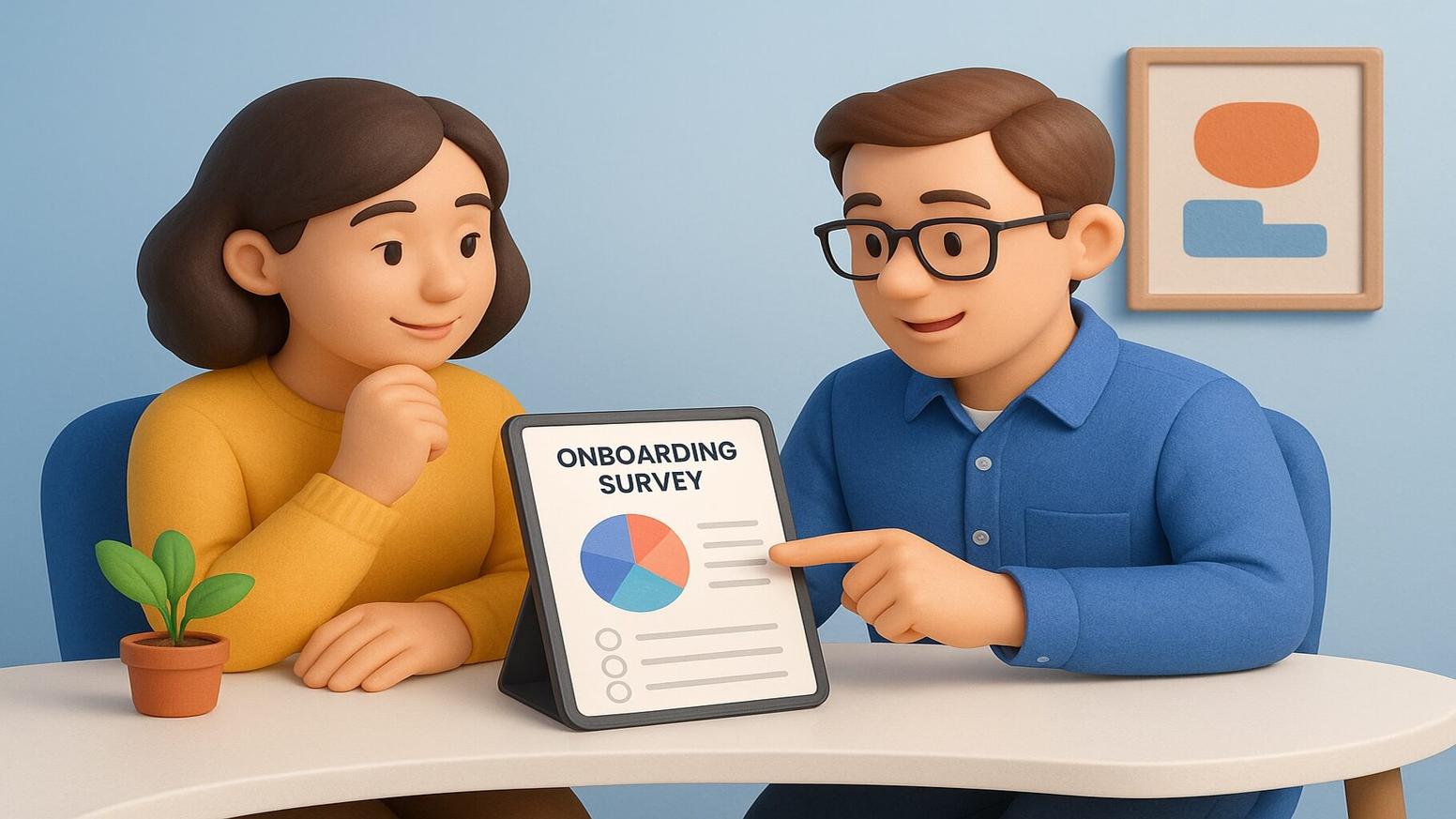
An onboarding survey is a structured feedback tool designed to capture new employees' perspectives during their initial period of employment. These surveys gather valuable insights about the effectiveness of orientation processes and training sessions. HR teams use onboarding surveys to gather important feedback to measure how well the onboarding process prepares new hires for success. The primary objective is to collect actionable data that improves the employee experience for future hires.
Defining onboarding surveys and their measurement objectives
Onboarding surveys serve as systematic tools for measuring specific aspects of the new-hire onboarding experience. They evaluate training effectiveness, manager support quality, and resource availability during critical early employment periods. Employee onboarding surveys provide quantitative metrics alongside qualitative feedback for comprehensive program assessment. Organizations use survey responses to benchmark performance and identify patterns requiring immediate attention.
The measurement objectives for an onboarding feedback survey extend beyond simple satisfaction scores. Effective surveys capture employee sentiment about role clarity and alignment with the job description. They assess whether the company's onboarding process delivers on the promises made during recruitment. These insights enable HR professionals to make data-driven improvements that boost engagement and retention.
Types of onboarding questions by timing and audience
Different onboarding survey types address specific stages of the employee onboarding journey. Pre-boarding surveys assess communication quality before the first day arrives. Day one and first week surveys capture immediate impressions and initial training effectiveness. Extended surveys at 30, 60, and 90 days measure deeper integration and long-term success indicators.
Audience-specific surveys target different stakeholder perspectives within the onboarding process. New-hire onboarding surveys gather direct feedback from employees who are experiencing the program. Manager surveys assess new hire readiness and training effectiveness from leadership perspectives. Hiring manager surveys evaluate the handoff quality from the recruitment process to the orientation process.
How effective questions connect to retention and engagement outcomes
Well-designed survey questions create direct links between onboarding experiences and business success metrics. Questions about role clarity correlate strongly with early turnover decisions among new team members. Manager support questions predict engagement levels during the critical first few weeks of employment. Cultural fit questions indicate the likelihood of long-term organizational commitment.
The connection between question quality and retention outcomes drives strategic survey design decisions. Employee engagement survey data demonstrates that specific question types yield actionable retention insights. Organizations that analyze responses systematically identify early warning signs before turnover occurs. This proactive approach transforms onboarding surveys from feedback tools into retention strategy instruments.
What are the benefits of onboarding survey questions?
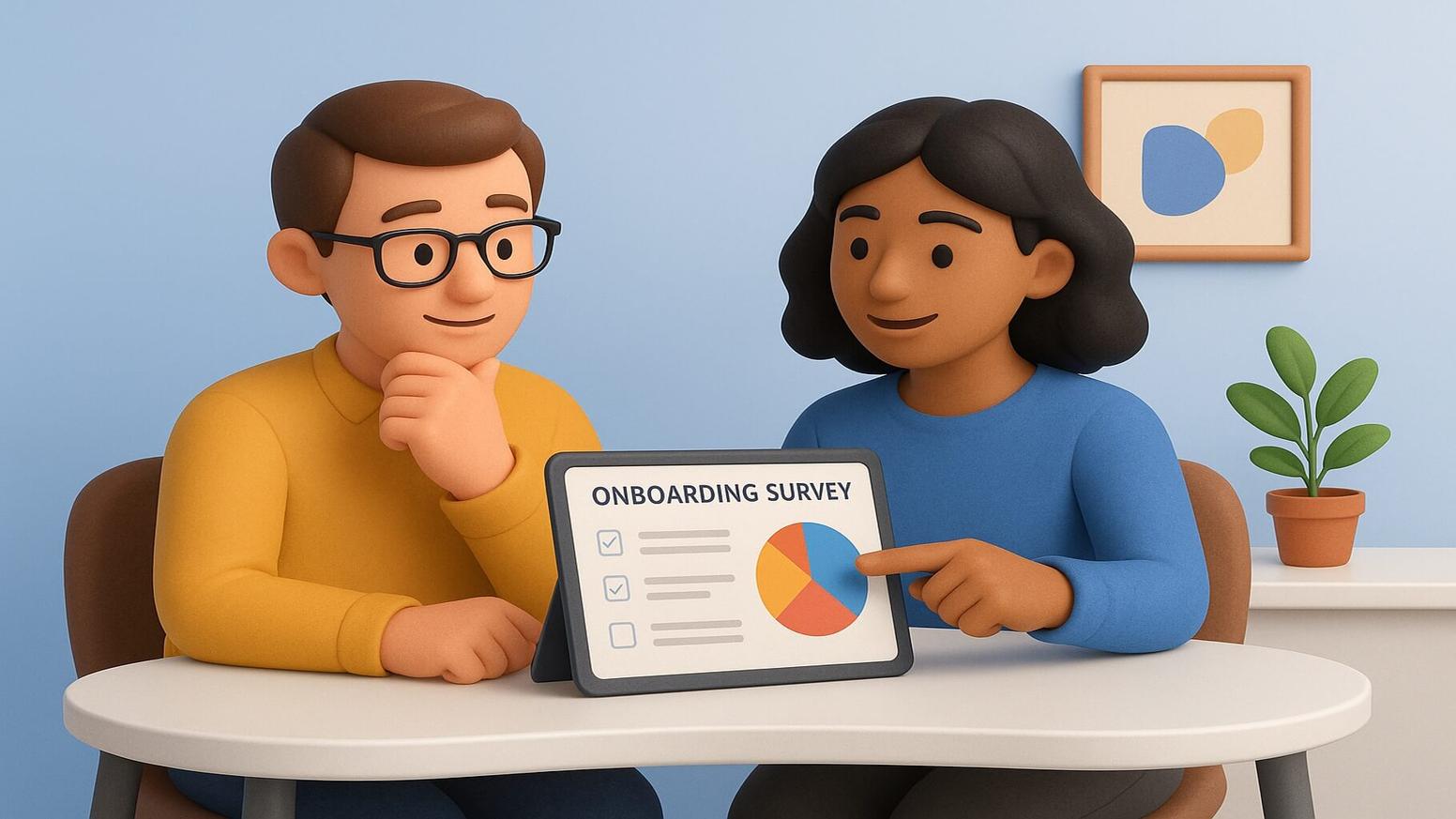
Strategic onboarding survey questions deliver measurable benefits for organizations committed to improving new-hire success rates. Effective questions reveal specific improvement opportunities that generic feedback methods miss entirely. The benefits range from immediate operational improvements to long-term gains in employee retention. Understanding these advantages helps HR teams prioritize survey development within their overall onboarding program strategy.
Specific, actionable feedback identifying improvement opportunities
Targeted onboarding survey questions generate feedback that translates directly into actionable improvements. Questions about training content reveal gaps between the curriculum and actual job responsibilities encountered. Resource availability questions identify tools or access issues preventing new employees from achieving productivity. These specific insights enable rapid resolution of concrete problems affecting the onboarding experience.
Actionable feedback differs fundamentally from general satisfaction data in its implementation potential. Generic questions yield vague responses that require interpretation before action becomes possible. Specific questions like those in a pulse survey generate clear direction for improvement initiatives. This precision accelerates the improvement cycle and demonstrates the organization's responsiveness to new-hire feedback.
Early warning indicators of retention risks and disengagement
Onboarding survey questions serve as diagnostic tools for identifying retention risks before turnover occurs. Questions about manager relationships reveal support gaps that predict trajectories of disengagement. Role clarity questions expose misalignments between expectations and reality that drive early departures. These early indicators enable intervention before dissatisfaction becomes resignation.
The timing of new hire onboarding surveys creates unique opportunities for risk identification. Early surveys capture issues while solutions remain viable and employees remain open to resolution. Questions about organizational alignment surface cultural mismatches that require attention during the onboarding journey. Systematic analysis of survey responses enables proactive retention strategies for at-risk new hires.
Benchmarkable data enabling program optimization over time
Consistent onboarding survey questions create longitudinal data sets for measuring program improvements over time. Standardized questions enable statistical comparisons across cohorts, departments, and time periods. This benchmarkable data supports evidence-based decision-making about onboarding program investments. Organizations can demonstrate improvement trajectories to leadership using objective survey metrics.
Program optimization requires baseline measurements against which future performance is compared. Initial survey responses establish starting points for specific onboarding process elements. Subsequent surveys assess whether changes produced the intended improvements in new-hire experiences. This continuous improvement cycle transforms employee onboarding from static programs into evolving systems.
Why onboarding questions are important for employee experience

Onboarding questions shape the quality and authenticity of feedback organizations receive from new employees. The questions themselves convey the organization's values and priorities to incoming team members. Thoughtful question design demonstrates respect for new hire perspectives and genuine interest in improvement. This combination creates conditions where authentic feedback flows freely to inform program enhancements.
Connection between question quality and response authenticity
High-quality onboarding survey questions elicit honest, detailed responses that reveal new-hire perceptions. Vague questions yield superficial answers that fail to capture meaningful insights into the employee experience. Specific, well-crafted questions signal that organizations genuinely want substantive feedback early. This perceived seriousness encourages new employees to invest effort in thoughtful responses.
Question quality also affects completion rates and response depth across employee pulse survey instruments. Clear, relevant questions maintain engagement throughout the survey experience without causing fatigue. Confusing or repetitive questions frustrate respondents and significantly reduce data quality. Strategic question design balances comprehensiveness with respect for new hire time constraints.
How well-crafted questions demonstrate organizational care
The questions organizations ask reveal their priorities to new team members during onboarding. Questions about well-being and support needs signal genuine care for employee success. Questions focused solely on productivity metrics convey a transactional employment relationship. New hires interpret the content of questions as evidence of workplace culture and values in action.
Thoughtful questions about new hire experience areas demonstrate organizational investment in employee development. Including questions about career growth shows commitment beyond immediate role requirements. Asking about team integration acknowledges the social dimensions of successful onboarding programs. These question choices communicate organizational values more powerfully than formal statements.
Impact on new hire engagement and willingness to provide feedback
Early survey experiences shape ongoing engagement with organizational feedback systems and initiatives. Positive initial survey experiences encourage employees to participate in future feedback opportunities. Surveys perceived as genuine create trust that feedback leads to meaningful organizational responses. This foundation supports sustained engagement with employee engagement initiatives throughout employment tenure.
Negative early survey experiences create lasting skepticism about the organization's commitment to feedback. New hires who feel their survey responses went unanswered become reluctant future participants. Those who observe improvements resulting from their feedback become advocates for organizational responsiveness. The onboarding survey experience establishes patterns that persist throughout the employee journey.
20+ new hire onboarding survey questions for first impressions

First impression questions capture the critical initial experiences that shape new hire perceptions of organizational culture. These questions focus on welcome experiences, logistical preparedness, and the identification of immediate needs. Early feedback enables rapid response to issues affecting new employee confidence and engagement. The following questions provide comprehensive coverage of first impression dimensions.
Welcome experience and initial reception questions
- How would you rate your overall welcome experience on your first day?
- Did your manager personally welcome you on your first day?
- Were team members informed about your arrival and prepared to meet you?
- Did you receive a welcome communication before your start date that felt personal?
- How included did you feel during your first-day interactions with colleagues?
- Was someone designated to help you navigate your first-day logistics smoothly?
- Did the reception area staff handle your arrival professionally and efficiently?
First-day logistics and administrative process questions
- Were all the necessary equipment and technology ready when you arrived on day one?
- How efficiently were administrative paperwork and forms processed during onboarding?
- Did you receive clear instructions about where to go and who to meet?
- Were workspace arrangements appropriate and comfortable for your role needs?
- How well-organized were the activities on your first day?
- Did you receive the necessary security credentials and building access on time?
- Were onboarding materials provided in advance to review before your start date?
Immediate needs and early concern identification questions
Pulse survey questions effectively identify immediate needs during early employment stages.
- What concerns, if any, did you have during your first day that remain unaddressed?
- Were you able to easily find answers to questions that arose on day one?
- Did you feel comfortable asking questions when you needed clarification or assistance?
- What would have made your first day experience more welcoming or effective?
- Were your immediate needs for supplies and resources met during your first day?
- How confident did you feel about your decision to join by the end of day one?
- What surprised you most about your first day experience at our organization?
25+ employee onboarding survey questions for training effectiveness
Training effectiveness questions assess whether onboarding programs successfully prepare new hires for role requirements. These questions systematically evaluate content quality, delivery methods, and knowledge retention outcomes. Feedback in this area significantly impacts productivity timelines and new-hire confidence levels. Organizations use these insights to continuously improve training components within their onboarding program structures.
Training content quality and relevance questions
- How relevant was the training content to your actual job responsibilities?
- Did training cover the most important aspects of your role comprehensively?
- Were training materials current and reflective of actual processes you use?
- How well did training address the specific skills required for your position?
- Did you receive training on all the tools and systems needed for your work?
- Were compliance and policy training sessions appropriately thorough for your role?
- How useful were the provided onboarding materials for future reference needs?
Knowledge retention and skill development questions
- How confident do you feel applying what you learned in training sessions?
- Were assessments or knowledge checks helpful for reinforcing key concepts?
- Did you have adequate opportunities to practice new skills during training?
- How well prepared do you feel to perform your core job responsibilities?
- Were the training timelines appropriate for effectively absorbing the presented information?
- Did training build progressively on concepts in a logical learning sequence?
- How much of the training content do you expect to retain for daily use?
Training format and delivery method effectiveness questions
Employee engagement survey questions should include assessments of the training format to provide comprehensive feedback.
- How engaging were the training delivery methods used during your onboarding program?
- Was the balance between self-directed and instructor-led training appropriate for you?
- Did training accommodations meet any accessibility needs you may have had?
- How effective were virtual training components compared to in-person sessions?
- Were the training group sizes appropriate for effective learning and interaction?
- Did trainers demonstrate sufficient expertise and teaching effectiveness in their areas?
- How useful were hands-on exercises compared to lecture-style training presentations?
- Were training breaks and scheduling appropriate for maintaining focus and energy?
- Did you have access to additional resources for topics requiring a deeper understanding?
- How would you rate the overall quality of your onboarding training experience?
- What single change would most improve training effectiveness for future hires?
15+ onboarding survey questions for new hires about manager support

Manager support questions evaluate the critical relationship between new hires and their direct supervisors. Strong manager relationships correlate directly with employee retention and early performance outcomes. These questions identify opportunities for manager development and for improvements in structural support. Feedback helps organizations systematically enhance manager effectiveness throughout the onboarding journey.
Manager accessibility and responsiveness questions
- How accessible has your manager been during your onboarding period?
- Does your manager respond promptly when you reach out with questions or concerns?
- Have you had adequate one-on-one time with your manager since starting?
- How available is your manager for informal conversations and guidance opportunities?
- Does your manager regularly check in on your progress and well-being?
Communication quality and frequency questions
- How clearly does your manager communicate expectations for your role performance?
- Are your manager's instructions and guidance easy to understand and follow?
- How frequently do you receive updates about team priorities and organizational changes?
- Does your manager communicate in ways that match your preferred communication style?
- How effectively does your manager keep you informed about relevant decisions?
Feedback and coaching effectiveness questions
Pulse survey software can track manager effectiveness scores over time for improvement.
- How valuable is the feedback you receive from your manager about your work?
- Does your manager provide constructive feedback in a supportive and helpful manner?
- How often does your manager recognize your accomplishments and positive contributions?
- Does your manager help you understand how to improve and develop professionally?
- How confident do you feel that your manager supports your long-term success?
- What would improve the quality of support you receive from your manager?
20+ onboarding experience survey questions measuring cultural fit
Cultural fit questions assess alignment between the new hire's values and the organizational workplace culture expectations. These questions reveal integration challenges that may not appear in training or manager relationship assessments. Cultural mismatch is a significant driver of early turnover and requires proactive identification. The following questions comprehensively evaluate cultural alignment across multiple dimensions.
Company values understanding and alignment questions
- How well do you understand our organization's core values and mission?
- Do our stated company culture values align well with your personal values?
- Have you observed company values demonstrated in daily workplace behaviors?
- How authentic does our workplace culture feel compared to recruitment descriptions?
- Do you understand how your role contributes to the organization's mission?
- Were company values clearly communicated during your onboarding experience?
- How comfortable do you feel discussing values alignment with your manager?
Team dynamics and collaboration experience questions
- How would you describe the collaboration style within your immediate team?
- Do team members demonstrate mutual respect and support for each other?
- Have you observed healthy conflict resolution approaches among your colleagues?
- How comfortable do you feel contributing ideas during team discussions?
- Are team meeting formats effective for accomplishing collaborative work goals?
- Do you feel your team members value your unique perspectives?
- How well does your team balance individual accountability with collective success?
Inclusion and belonging perception questions
Employee recognition programs support belonging by celebrating diverse contributions across teams.
- How included do you feel in informal social interactions within your team?
- Have you experienced any situations where you felt excluded or unwelcome?
- Do you consistently feel comfortable being your authentic self at work?
- How welcoming has the overall organizational environment been toward you?
- Do you see people like yourself represented in leadership and senior roles?
- Have you been invited to participate in optional team or company activities?
- How confident are you that diverse perspectives are genuinely valued here?
15+ 30-day onboarding survey questions for role preparation

Thirty-day survey questions assess whether early onboarding has adequately prepared new hires for success in their roles. This milestone marks sufficient time for completing initial training and gaining real work experience. Questions focus on role clarity, skill adequacy, and resource availability for job performance. These insights help organizations evaluate the effectiveness of their onboarding programs at critical transition points.
Job clarity and responsibility understanding questions
- Do you clearly understand your primary job responsibilities and priorities?
- Has your actual role matched the job description shared during recruitment?
- Are performance expectations for your position clearly defined and understood?
- Do you understand how your role connects to team and organizational goals?
- Have any aspects of your job responsibilities surprised or confused you?
- Do you know who to consult for different types of work-related questions?
Skills adequacy and confidence level questions
- How confident do you feel in your ability to perform your core job duties?
- Did training adequately prepare you for the skill requirements of your role?
- What skills gaps, if any, have you identified since starting your position?
- Do you feel you have the technical knowledge required to succeed in the role?
- How prepared are you to handle typical challenges encountered in your position?
Resource availability and tool access questions
Kudos employee recognition can celebrate new hires who demonstrate early mastery of their roles.
- Do you have access to all the tools and systems required to perform your job?
- Are documentation and reference materials available when you need them?
- Do you have adequate budget or resources to accomplish your work goals?
- How satisfied are you with the quality of equipment provided for your role?
- Are there any resources you need that have not been made available yet?
10+ onboarding survey questions for managers about new hire readiness
Manager perspective questions provide complementary viewpoints on new hire preparedness and integration progress. These questions enable triangulation of data from multiple sources for a comprehensive assessment. Manager feedback identifies systemic issues that new hires may not recognize or report. Organizations use these insights to improve onboarding program design and delivery methods.
Role fit and capability assessment questions
- How well do this new hire's skills match the requirements of their position?
- Is the new hire demonstrating expected capability levels for their experience?
- Have you identified any significant skill gaps that require additional development?
- How confident are you in this new hire's potential for success in the role?
Integration speed and team collaboration questions
- How well has this new hire integrated with team members and dynamics?
- Is the new hire actively participating in team activities and discussions appropriately?
- Have you observed any interpersonal challenges affecting the progress of team integration?
- How quickly is this new hire building productive working relationships?
Training effectiveness from the manager's perspective questions
Employee recognition and rewards programs motivate managers who excel at developing new team members.
- How effectively did training prepare this new hire for the role requirements?
- What additional training or development would benefit this new hire most?
- Did the onboarding program adequately support this new hire's transition needs?
- What improvements to onboarding would help future hires in similar roles?
10+ onboarding survey questions for hiring managers about process quality
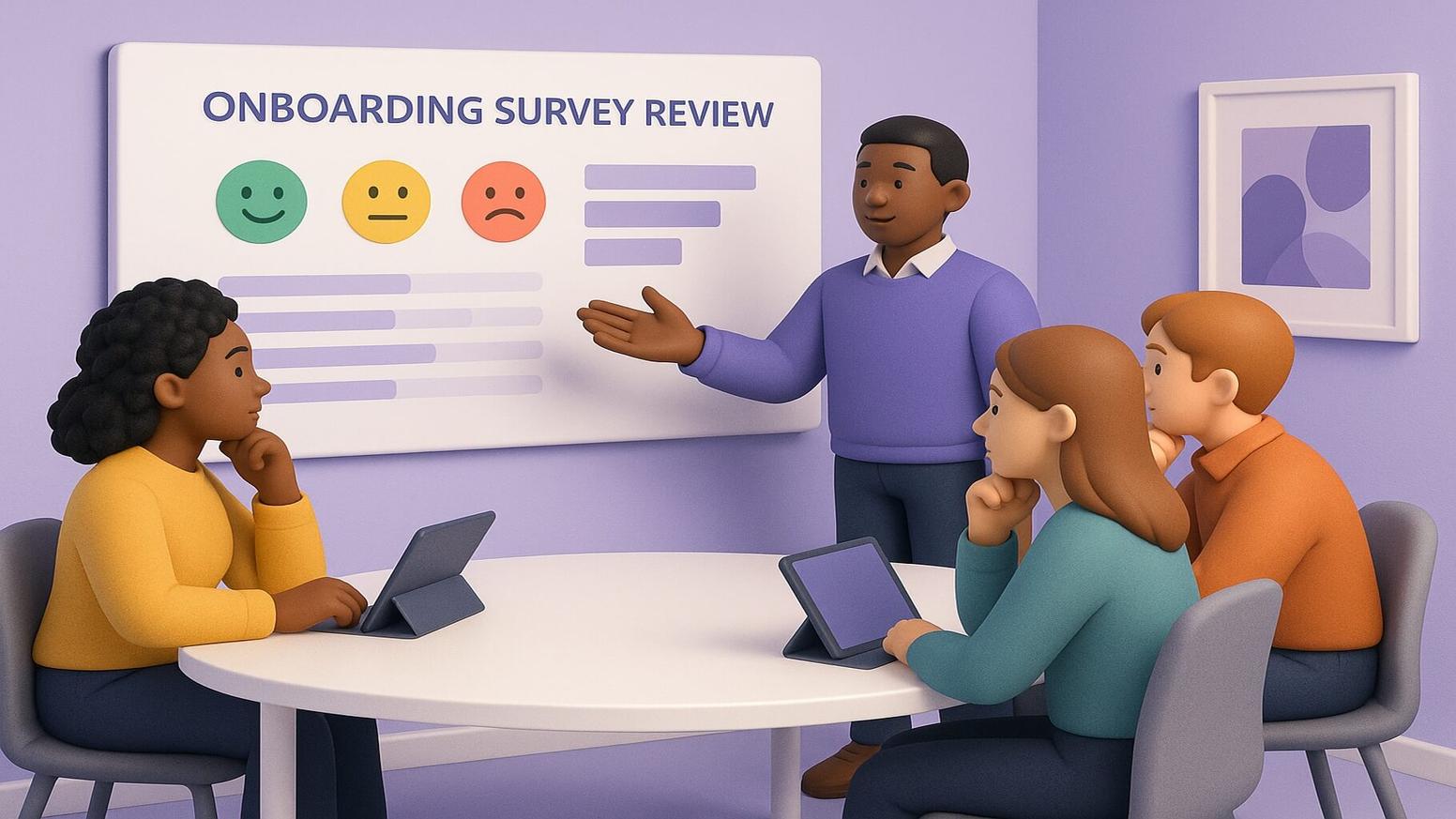
Hiring manager questions evaluate the transition quality from recruitment to onboarding. These questions identify handoff gaps that create confusion or unmet expectations. Feedback enables coordination improvements between talent acquisition and onboarding teams. The following questions comprehensively assess critical transition points in the new-hire experience.
Recruitment to onboarding handoff effectiveness questions
- How well did onboarding build upon information shared during the recruitment process?
- Were relevant candidate details effectively communicated to the onboarding team?
- Did the hiring experience set appropriate expectations for the role and culture?
- How seamless was the transition from offer acceptance to first day arrival?
Expectations alignment and role clarity questions
- Does the new hire's understanding of the role match your expectations as hiring manager?
- Were any recruitment promises made that onboarding could not deliver upon?
- How accurately did job postings describe the actual role and responsibilities?
New hire preparation and readiness questions
Peer-to-peer recognition helps new hires feel valued during critical early stages of employment.
- Was this new hire adequately prepared for their first day based on pre-boarding communications?
- Did pre-employment requirements and paperwork processes run smoothly and efficiently?
- How would you rate the overall interview process and the quality of the onboarding transition?
- What single improvement would most enhance the recruitment-to-onboarding experience?
15+ post-onboarding survey questions for comprehensive evaluation
Post-onboarding surveys conducted at 60 or 90 days provide comprehensive program evaluations. These questions systematically assess overall satisfaction, likelihood of retention, and improvement recommendations. Extended timeline surveys capture perspectives after new hires gain substantial role experience. The feedback enables strategic improvements to onboarding programs through comprehensive experience assessments.
Overall, onboarding program satisfaction questions
- How would you rate your overall onboarding experience satisfaction on a ten-point scale?
- Did the overall onboarding process meet your expectations based on recruitment descriptions?
- How well did onboarding prepare you compared to previous employer experiences?
- Would you recommend our onboarding program to friends considering similar roles?
- What aspects of onboarding exceeded your initial expectations significantly?
Retention likelihood and organizational commitment questions
- How likely are you to remain with our organization for at least one year?
- On a scale of zero to five, how likely are you to recommend us as an employer?
- How committed do you feel to contributing to our organization's long-term success?
- Do you see a clear career development path within our organization?
- How engaged do you feel with your role and the organization overall?
Improvement recommendations and missing elements questions
Pulse survey tools enable ongoing feedback collection beyond initial onboarding periods.
- What single change would most improve our onboarding program for future hires?
- Were there topics or skills not covered that should be included in onboarding?
- What resources or support would have helped you become productive more quickly?
- Did any aspects of onboarding feel unnecessary or like wasted time?
- What advice would you give to new hires starting tomorrow based on your experience?
Onboarding questions for measuring resource availability and support

Resource availability questions assess whether organizations provide the tools and support needed for new-hire success. These questions identify practical gaps that impede productivity and create frustration early. Systematic resource assessment ensures all new employees receive equitable support during onboarding. The following questions comprehensively cover the technology, documentation, and support system dimensions.
Technology and equipment provision questions
- Were all the necessary technology tools and hardware ready before your first day?
- How quickly were software access and account setup issues resolved?
- Did you experience any significant technology gaps affecting your productivity?
- How well-equipped are you to perform your job effectively?
- Were technology training sessions sufficient for the systems you use daily?
Documentation and information access questions
- How easily can you find policies, procedures, and reference documentation when needed?
- Are onboarding materials organized to support quick information retrieval?
- Do you have access to knowledge bases or wikis containing role-relevant information?
- How current and accurate are the documentation resources available to you?
- Were you shown where to find answers to common questions independently?
Support system and help with resource availability questions
Employee recognition platform tools can acknowledge mentors who support new hire success.
- Do you know who to contact for different types of support needs?
- How responsive are support resources when you request assistance?
- Is there a designated person you can approach with any question confidently?
- Have help desk or IT support services met your needs adequately?
- What additional support resources would help you perform your role better?
New hire experience questions about peer relationships and team integration
Peer relationship questions assess the social dimensions of successful new hire onboarding experiences. Strong colleague connections significantly predict engagement, collaboration effectiveness, and retention outcomes. These questions identify integration barriers requiring intervention by managers or HR teams. The following questions comprehensively evaluate relationship-building and team-belonging experiences.
Team welcome and inclusion experience questions
- How warmly did your immediate team members welcome you?
- Did colleagues make efforts to include you in conversations and activities?
- Have you felt genuinely wanted and valued by your team since joining?
- Were introductions to key stakeholders handled thoughtfully and thoroughly?
- How comfortable do you feel approaching team members for help?
Peer support and collaboration opportunity questions
- Have team members offered helpful guidance about navigating your new role?
- Do colleagues share knowledge and expertise generously when you ask questions?
- Have you had opportunities to collaborate meaningfully with peer team members?
- How supportive are your colleagues when you make mistakes during learning?
- Did anyone serve as an informal buddy or mentor during your early weeks?
Social connection and relationship-building questions
eNPS surveys capture overall employee sentiment, including satisfaction with social connections.
- Have you had opportunities to get to know colleagues beyond work tasks?
- How connected do you feel to the broader team and organizational community?
- Are there enough social activities to build relationships with peers?
- Do you feel you have developed genuine workplace friendships since joining?
- What would help you build stronger relationships with your colleagues faster?
Onboarding survey questions by timing and milestone

Timing-specific questions address unique priorities at different stages of the new hire onboarding journey. Each milestone presents distinct assessment opportunities requiring tailored question approaches. The following sections provide comprehensive question banks organized by onboarding timeline position. Organizations can select appropriate questions for each survey deployment throughout the onboarding experience.
Pre-boarding questions before first day
Communication clarity and information completeness
- Did pre-boarding communications clearly explain what to expect on your first day?
- Were your questions answered promptly during the period between offer and start date?
- How well informed did you feel about your new role before arriving?
Technology preparation and equipment coordination
- Were you contacted about the technology setup and equipment needs before you started?
- Did you receive the necessary login credentials before your first day arrived?
- How smooth was the pre-boarding paperwork and documentation process?
First day logistics and arrival instructions
- Were the first day arrival instructions clear and complete for planning purposes?
- Did you know exactly where to go and who to meet when arriving?
- Were parking, building access, and logistical details communicated adequately?
- How prepared did you feel walking in on your first morning?
Day one onboarding questions after welcome
Welcome experience and first impressions quality
- How would you describe your overall first day experience in one word?
- Did you feel genuinely welcomed by your team and manager today?
- Were you introduced to the key people you will work with regularly?
- How organized and well-planned did your first day activities feel?
Administrative process efficiency and clarity
- How efficiently were onboarding paperwork tasks handled during your first day?
- Were instructions for completing administrative requirements clear and easy to follow?
- Did you receive your employee identification and necessary access credentials promptly?
Workspace setup and immediate comfort level
- Was your workspace ready and appropriately set up when you arrived?
- Did you receive all the necessary supplies and equipment on your first day?
- How comfortable did you feel in your physical work environment today?
- Were any immediate needs unmet that affected your first day experience?
- What could have made your first day experience even better?
Week one onboarding survey questions
Initial training effectiveness and comprehension
- How helpful has the first week of training been for understanding your role?
- Did training sessions cover topics relevant to your daily work activities?
- Are you retaining the information presented in training sessions effectively?
- How engaging have the training delivery methods been this week?
- Do you have clarity about training priorities for the coming weeks?
Manager and team support adequacy
- Has your manager provided adequate support during your first week?
- Are team members helping you learn and integrate into the group?
- Do you feel comfortable asking questions when you need help?
- Has someone been available to guide you through unfamiliar situations?
- How supported do you feel by your colleagues so far?
Cultural understanding and values alignment
- Are company values visible in how people behave and work together?
- Do you understand the workplace culture norms and expectations?
- How aligned does organizational culture feel with your own values?
- Have you observed behaviors that concern you about workplace culture?
- What has surprised you most about the culture in your first week?
30-day onboarding questions for role assessment
Job responsibility clarity and understanding
- Do you fully understand your primary job responsibilities after one month?
- Are performance expectations for your role clear and measurable?
- Has your actual job matched what was described during recruitment accurately?
- Do you understand priorities and how to allocate your time effectively?
- Are there aspects of your role that remain unclear or confusing?
Training adequacy for role requirements
- Has training adequately prepared you for your daily job responsibilities?
- What skills gaps have you identified that require additional development?
- Did the training duration allow sufficient time to absorb the presented information?
- How confident do you feel applying training content to real work situations?
- What additional training would help you perform your role more effectively?
Resource availability and support systems
- Do you have access to all the resources needed to perform your job well?
- Are documentation and reference materials available when you need them?
- How responsive is support when you encounter obstacles or need help?
- Do you know who to contact for different types of assistance needs?
Performance expectations and goal clarity
- Have specific goals been established for your first ninety days?
- Do you understand how your performance will be evaluated and measured?
- Has your manager discussed development priorities for your early tenure?
- How clear are expectations about what success looks like in your role?
60-day onboarding experience questions
Confidence level in role execution
- How confident do you feel performing your core job responsibilities independently?
- Are you able to complete typical tasks without extensive guidance or assistance?
- What aspects of your role still feel challenging or uncertain?
- How prepared are you to handle unexpected situations in your work?
- Do you feel you are meeting performance expectations at this stage?
Career development awareness and opportunities
- Are you aware of career advancement opportunities within the organization?
- Has your manager discussed your professional development interests and goals?
- Do you understand what skills or achievements lead to growth opportunities?
- How invested does the organization seem in your long-term career development?
- Have you received any professional development resources or opportunities?
Team collaboration and relationship quality
- How effectively are you collaborating with your team members currently?
- Have you built productive working relationships with key stakeholders?
- Do you feel like a valued and integrated member of your team?
- How comfortable do you feel contributing ideas and perspectives in discussions?
- What would improve your collaborative relationships with colleagues?
90-day post-onboarding questions
Overall onboarding effectiveness evaluation
- How would you rate the overall effectiveness of your onboarding experience?
- Did onboarding adequately prepare you for success in your role?
- How does our onboarding compare to your experiences at previous employers?
- Were the time and resources invested in onboarding appropriate and valuable?
- What aspects of onboarding were most valuable for your success?
Long-term engagement and commitment level
- How engaged do you feel with your role and work after three months?
- Do you feel a strong connection to our organization's mission and goals?
- How motivated are you to contribute to organizational success long-term?
- Do you feel valued and appreciated by your manager and colleagues?
- How satisfied are you with your decision to join our organization?
Comprehensive improvement recommendations
- What single change would most improve onboarding for future new hires?
- Were there topics missing from onboarding that should be added?
- What would have helped you become productive faster during onboarding?
- Which onboarding activities felt like a waste of time or low value?
- What advice would you give someone starting tomorrow in a similar role?
Retention likelihood and satisfaction assessment
Employee rewards programs complement onboarding by sustaining engagement beyond initial periods.
- How likely are you to remain with our organization for another year?
- Would you recommend our organization as an employer to qualified friends?
- How satisfied are you with your overall employee experience so far?
- Do you see a clear and attractive path for your career here?
- What would most increase your likelihood of staying long-term?
Remote onboarding survey template with 12 questions
Remote onboarding presents challenges that in-person question sets miss. Technology setup, virtual connection, and isolation need their own questions because remote new hires face different barriers than office-based colleagues. Send this template at the end of week one and again at the 30-day milestone.
Technology setup and connectivity
- Was your equipment delivered and set up properly before you started?
- Do you have reliable connectivity and the tools you need to work effectively from home?
- Were virtual meeting tools and collaboration platforms easy to access and use?
- Have you experienced technical issues that affected your onboarding experience?
Virtual training effectiveness
- Was virtual training engaging and effective for learning your role?
- Did virtual sessions allow enough opportunity for questions and interaction?
- Are recorded training materials available for review when you need them?
- What would make virtual onboarding training more effective?
Remote culture integration and connection
- Do you feel connected to your team despite working remotely?
- Have you had opportunities for informal conversations with colleagues?
- Does virtual communication feel adequate for building relationships?
- Do you feel isolated or disconnected from the organization?
10+ fun onboarding questions for new hires
Fun questions break up serious assessments while still gathering useful information. Lighthearted framing reduces defensiveness, so answers about expectation gaps and welcome quality tend to be more candid. Mix one or two of these into a week-one or 30-day survey rather than sending them on their own.
- What emoji best describes your onboarding experience so far?
- If your first week were a movie genre, what would it be?
- What was the most surprising thing you learned during onboarding?
- What office or team quirk did you discover that made you smile?
- Who made you feel most welcome, and what did they do?
- What is one thing you wish someone had told you before your first day?
- If you could add one thing to the welcome package, what would it be?
- What is the best piece of advice you received during your first month?
- What would you name your onboarding experience if it were a book?
- What accomplishment from your first weeks are you most proud of?
- What misconception about the job or company did onboarding clear up?
Response scale best practices for onboarding survey questions
The scale you attach to a rating question shapes both response quality and what you can do with the data. Five-point scales improve completion rates and give enough granularity for most onboarding programs. Seven-point scales add precision but demand more effort from respondents, with diminishing returns for typical employee surveys.
Match the scale type to the question. Agreement scales (strongly disagree to strongly agree) suit perceptions and satisfaction. Frequency scales (never to always) suit countable interactions such as manager check-ins or training opportunities. Label every point in words: fully labeled scales produce more consistent answers than numeric-only scales where respondents interpret the numbers themselves.
Common mistakes to avoid with onboarding surveys
Most survey programs fail on execution rather than question quality. Four mistakes account for the majority of low response rates and unused data.
Asking too many questions at once
Long surveys create fatigue and abandoned responses, especially in the first week. Limit first-week surveys to 5 to 10 questions, save comprehensive assessments for the 30-day and 90-day milestones, and remove any question that would not change a decision.
Failing to act on feedback
Employees who see no response to their input stop participating. Create an action-planning process before launching, communicate the changes made, and close the loop with respondents about how their feedback was used.
Ignoring anonymity and confidentiality concerns
New hires worry about the consequences of negative feedback. Explain anonymity protections in the invitation, avoid questions that could identify individuals in small teams, and report only aggregate results.
Poor timing
Surveys sent during the most hectic onboarding days get ignored or superficial answers, while waiting too long loses the fresh perspective. Allow enough time for a real experience before asking for an evaluation, and check the organizational calendar for events that will depress response rates.
How to increase onboarding survey response rates
Response rates determine whether survey data represents the whole cohort or only the most vocal new hires. These practices address the most common barriers to participation:
- Send surveys from a recognizable, trusted sender with a clear deadline and adequate response time
- Explain the purpose upfront and share examples of changes made from previous feedback
- Deploy during work hours so completion is treated as legitimate work, not personal time
- Reward completion rather than specific answers; recognition for team completion rates enlists managers without biasing responses
- Set feedback expectations at orientation and have leaders visibly complete surveys and discuss results
- Send reminders at reasonable intervals, and avoid penalties for non-completion that create resentment
How to analyze onboarding survey responses
Survey responses add value only once they are turned into decisions. Three analyses cover most of what HR teams need.
Compare cohorts over time
Establish baseline metrics from your first hiring classes, then track the same questions across later cohorts. Cohort comparisons show whether program changes worked and reveal seasonal patterns tied to manager availability or workload. Watch sample sizes so normal variation in small groups is not mistaken for a trend.
Compare manager support
Aggregating responses from each manager's recent hires shows objective differences in onboarding support. Use sufficient sample sizes, handle the data as sensitive, and frame the findings as improvement opportunities. The same analysis identifies exceptional managers whose practices are worth replicating.
Correlate 30-day feedback with 90-day outcomes
Connecting early responses to later retention and performance validates which questions actually predict risk. Once a question is shown to correlate with early exits, concerning answers to it become triggers for intervention rather than data points in a report.
How Matter can help with onboarding survey questions
Matter provides comprehensive solutions for organizations implementing effective onboarding survey programs. The platform combines science-backed survey templates with powerful analytics for measuring onboarding effectiveness. Integration with recognition features creates complete systems for gathering feedback and celebrating success. HR teams can deploy professional onboarding surveys without having to build questions from scratch.
Matter's pre-built question banks for every onboarding stage
Matter offers customizable survey templates, including Day 7, Day 30, Day 60, and Day 90 surveys, ready for immediate deployment. These science-backed templates address critical onboarding dimensions based on validated research methodologies. Organizations can use templates as designed or customize questions to meet specific needs. This approach accelerates survey implementation while ensuring comprehensive coverage of important topics.
The platform's question library enables teams to systematically collect feedback throughout the entire onboarding journey. Pre-built questions comprehensively address training effectiveness, manager support, cultural fit, and resource availability. Templates incorporate best practices for question design that maximize completion rates and response quality. HR professionals save significant time while accessing expert-designed survey instruments.
Recognition integration, celebrating survey participation, and onboarding milestones
Matter's unique approach naturally connects employee rewards programs with survey participation incentives. Organizations can optionally reward recipients with Matter coins for completing onboarding surveys. This integration drives industry-leading participation rates, thereby improving data quality and coverage. The coin system encourages consistent engagement without raising concerns about response bias.
Beyond survey completion, Matter celebrates onboarding milestones through automated recognition features. New hire achievements during onboarding are acknowledged with customizable kudos cards. Managers and team members can recognize new employees who demonstrate early success. This recognition-rich environment reinforces positive onboarding experiences and builds momentum for engagement.
Question effectiveness analytics showing which questions predict retention
Matter's analytics capabilities reveal which survey questions correlate with retention and engagement outcomes. Real-time dashboards display response rates, sentiment trends, and question-level scores in real time. Organizations can identify early patterns in survey data that indicate retention risks. These insights enable proactive intervention before disengaged new hires consider departure.
The platform enables systematic tracking of onboarding program effectiveness across cohorts, departments, and time periods. Export features support advanced analysis for identifying deeper insights and patterns. Organizations can demonstrate improvements in their onboarding programs using objective metrics and longitudinal data. Analytics transform survey data from feedback collection into strategic retention intelligence.
Frequently asked questions about onboarding survey questions
Q: What are the best onboarding survey questions?
A: The best questions are specific, actionable, and time-appropriate for each survey deployment point. Essential questions include role-preparation assessment, manager-support rating, and cultural alignment evaluation. Questions about resource availability and retention likelihood provide predictive insights for intervention. Effective questions throughout the onboarding journey focus on observable experiences rather than abstract concepts.
Q: What should you ask in a new hire onboarding survey?
A: Ask about training effectiveness, manager support quality, and team integration experiences systematically. Include questions that comprehensively cover cultural understanding, resource availability, and role clarity. Balance quantitative rating scale questions for trending with open-ended questions for detailed feedback. Cover both what happened during onboarding and why specific experiences matter to new hires.
Q: What are good 30-day onboarding survey questions?
A: Effective thirty-day questions assess job responsibility, understanding, and training adequacy for role performance. Include questions about resource availability, manager relationships, and team welcome experiences. Evaluate confidence levels and alignment between recruitment descriptions and actual role experiences. Ask about retention likelihood to identify at-risk new hires who may need additional support.
Q: What questions should managers answer in onboarding surveys?
A: Manager questions should assess new hire readiness, training effectiveness, and integration progress objectively. Include role fit evaluation, capability assessment, and team collaboration quality ratings. Ask about additional support needs and onboarding improvement recommendations from the manager's perspective. Manager feedback complements new-hire perspectives and identifies systemic issues that require attention.
Q: How many onboarding survey questions should you ask?
A: Question quantity depends on survey timing and specific assessment purposes within the onboarding program. Early surveys should include five to ten questions to avoid overwhelming new hires. Thirty-day surveys should include 12 to 18 questions covering multiple important dimensions. Limit total survey time to ten minutes to maintain high completion rates and response quality.
Q: Should onboarding survey questions be multiple choice or open-ended?
A: Use both question types strategically to balance measurement with detailed understanding needs. Include mostly quantitative questions at seventy percent for consistency and benchmarking purposes. Add strategic open-ended questions at 30% to elicit unexpected insights and specific recommendations. This balance enables both statistical analysis and a qualitative understanding of new-hire experiences.
Q: Should onboarding surveys be anonymous?
A: It depends on culture and purpose. Anonymous surveys encourage honest feedback on sensitive topics such as manager effectiveness. Identified surveys enable personalized follow-up and let you track an individual's onboarding journey over time. A hybrid approach works well: anonymous questions for sensitive topics, identified questions for operational issues that need a direct fix.
Q: What response rate should you target for onboarding surveys?
A: Aim for 70 to 80 percent so the data represents the full cohort rather than the most vocal new hires. Lower rates usually point to problems with survey length, timing, or how the purpose was communicated rather than a lack of interest.
Final thoughts on onboarding survey questions
Well-crafted onboarding survey questions transform feedback collection into strategic tools that predict retention and drive continuous improvement. Organizations that ask the right questions at the right times gather insights that traditional approaches miss entirely. Connecting survey data with recognition creates reinforcing systems where feedback leads to visible organizational responses. These integrated approaches build trust with new employees while generating actionable improvement intelligence.
Matter provides complete solutions for organizations serious about optimizing their onboarding survey programs effectively. The platform offers comprehensive question banks for every onboarding stage and audience type. Customizable templates optimized for response rates accelerate implementation without sacrificing quality or coverage. Recognition integration celebrates survey participation while reward options motivate consistent engagement throughout onboarding. Analytics reveal which questions predict retention, enabling proactive intervention before turnover occurs. Together, these capabilities transform onboarding surveys from checkbox exercises into strategic tools that build trust, accelerate productivity, reduce early turnover, and create lasting engagement by asking the right team rewards questions at the right time.
Ready to implement proven onboarding survey questions that drive meaningful insights? Schedule a demo with a Matter expert today and discover how our platform can help you ask the right questions, analyze responses effectively, and create a culture of continuous improvement.

![19+ Onboarding Survey Templates for New Hires [2026 Guide]](https://cdn.sanity.io/images/kqqb5xry/production/c82d2dfdffd3c86f3c6afe3e8df9b6901b018242-800x600.jpg?w=720&q=75&fit=max&auto=format)
![95+ Onboarding Survey Questions for Managers [2026 Guide]](https://cdn.sanity.io/images/kqqb5xry/production/30d44b0e6717b0090ce5a0e2cf90aea079c16cf7-800x600.jpg?w=720&q=75&fit=max&auto=format)
![49+ Employee Engagement Survey Questions [2026 Guide]](https://cdn.sanity.io/images/kqqb5xry/production/4d901490615b37aeb81f024d7f5666a52dc8aa8b-800x600.jpg?w=720&q=75&fit=max&auto=format)