

Measuring employee loyalty shouldn't require complicated formulas or extensive training to interpret results. At Matter, we understand that organizations face real obstacles when attempting to quantify workplace satisfaction, distinguish between genuinely engaged team members and those considering departure, and translate abstract sentiment into concrete metrics that leadership can act upon. Many companies struggle with understanding what eNPS is, leaving them unable to benchmark their workplace culture against industry standards or identify warning signs of declining morale. When organizations lack clarity on how to calculate eNPS properly or misinterpret their results, they miss opportunities to strengthen retention, address dissatisfaction before it spreads, and demonstrate to employees that their opinions shape organizational decisions.
The employee net promoter score matters because it cuts through complexity to reveal the single most important question: would your employees recommend working here to others? This straightforward metric transforms uncertain impressions about workplace health into quantifiable data that drives strategic improvements. Without the right approach to measuring and interpreting employee net promoter scores, organizations operate in the dark about sentiment shifts, respond too late to emerging problems, and struggle to demonstrate the return on investment of culture initiatives. This guide provides everything needed to implement eNPS measurement effectively, from understanding core concepts to selecting tools that integrate feedback collection with meaningful action, ultimately helping organizations build workplaces where employee voices create lasting positive change.
What is eNPS and what does eNPS mean
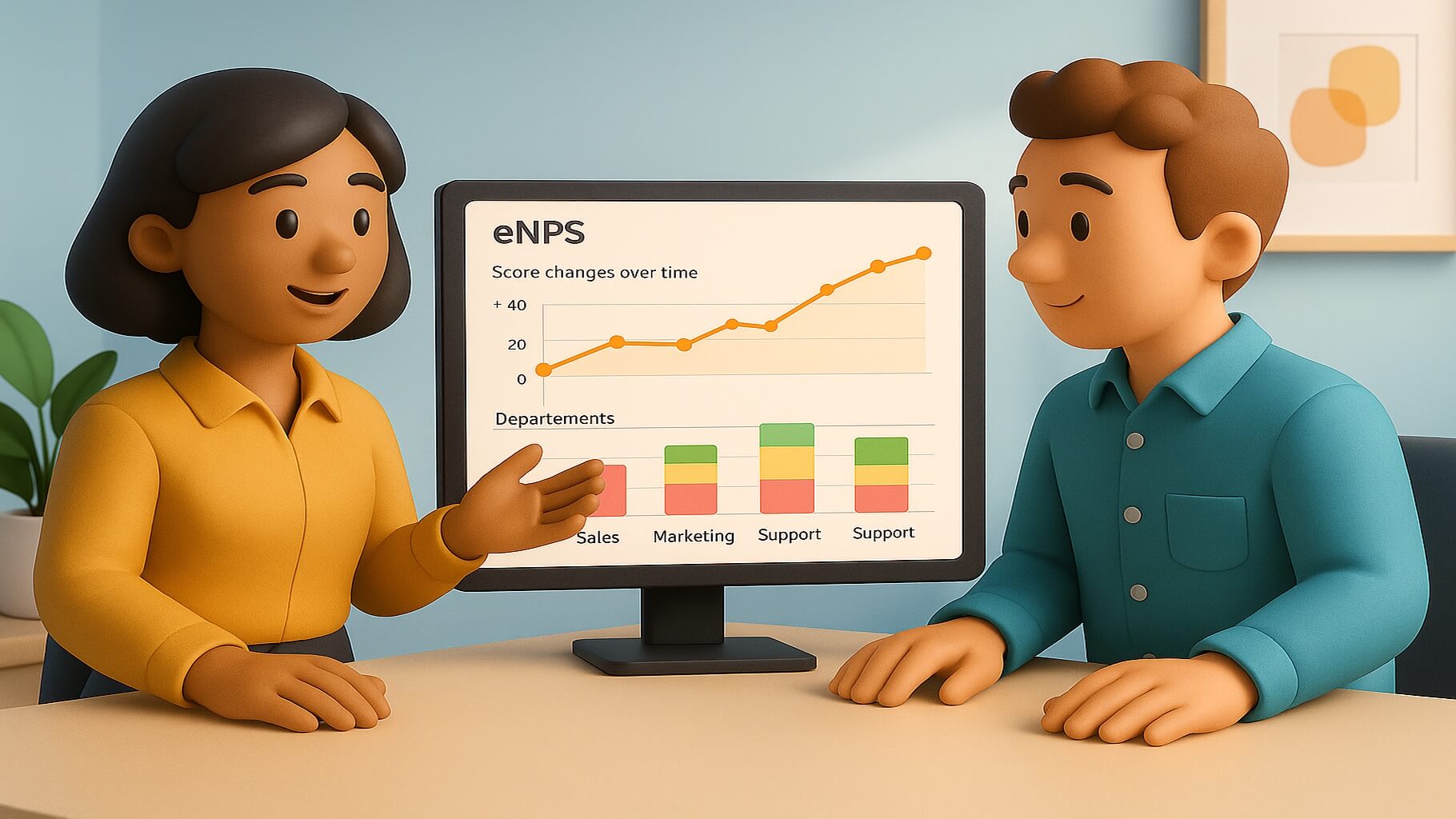
Understanding the employee net promoter score starts with recognizing its foundation in customer loyalty measurement. The eNPS is a metric that adapts proven customer satisfaction metrics to measure employee sentiment and loyalty within organizations. This simple yet powerful tool helps HR teams and leaders gauge how employees feel about their workplace and whether they'd recommend it to others.
The concept behind eNPS centers on a single critical question that more effectively reveals employee sentiment than complex surveys. By measuring whether employees are promoters, passives, or detractors, organizations gain valuable insights into workplace culture and satisfaction. The eNPS system provides a quantifiable metric that tracks changes over time, helping businesses understand the impact of their initiatives on employee experience.
Defining employee net promoter score and its purpose
The employee net promoter score serves as a straightforward metric for measuring workplace loyalty and satisfaction. Organizations use eNPS to determine how likely employees are to suggest their company as a great place to work. This metric helps HR teams identify areas where company culture thrives and where improvements are needed to create a more positive work environment.
The purpose of tracking employee net promoter scores extends beyond simple measurement to drive meaningful change. By regularly collecting pulse survey data, companies can monitor trends in employee sentiment and respond quickly to emerging concerns. The eNPS calculation provides a baseline for comparing engagement levels across different departments, teams, or time periods, enabling data-driven decisions about workplace initiatives.
Understanding what does eNPS stands for
The acronym eNPS stands for employee net promoter score, adapting the original net promoter score concept from customer experience to workplace satisfaction. This adaptation maintains the simplicity and effectiveness of the original NPS while focusing specifically on employee sentiment rather than customer loyalty. The term "net" refers to the calculation method, which subtracts the percentage of detractors from the percentage of promoters to arrive at a single score.
Understanding what eNPS stands for helps clarify its role in measuring employees' feelings toward their organization. The scoring system categorizes employees into three groups based on their responses to the core eNPS question. This straightforward approach makes it easier for organizations to track employee engagement and satisfaction without survey fatigue from lengthy questionnaires that overwhelm respondents.
How eNPS differs from traditional engagement metrics
Traditional employee engagement surveys often include dozens of questions covering various aspects of workplace satisfaction, making them time-consuming and complex. The eNPS approach simplifies measurement by focusing on one primary question about likelihood to recommend, with optional follow-up questions for deeper insights. This streamlined method reduces survey fatigue while still providing actionable insights about employee sentiment and workplace culture.
The employee net promoter score differs from other metrics by emphasizing loyalty and advocacy rather than just satisfaction. While traditional engagement surveys measure multiple dimensions of the employee experience, eNPS captures the overall sentiment that influences whether satisfied employees become genuine advocates for the organization. This focus on recommendation likelihood correlates strongly with employee retention, making eNPS a powerful predictor of workforce stability and business performance.
How to calculate eNPS and eNPS calculation methods
Calculating eNPS provides organizations with a clear, quantifiable measure of employee loyalty and satisfaction. The eNPS calculation process follows a straightforward formula that anyone can understand and implement. By learning how to calculate eNPS accurately, HR teams can establish a baseline for measuring improvements in workplace culture and employee engagement over time.
The calculation method for employee net promoter scores differs slightly depending on the scoring scale used. Traditional customer-focused NPS uses an 11-point scale from 0 to 10, while some modern platforms use alternative scales for better usability. Understanding these variations allows firms to select the best technique for their specific needs and ensures accurate assessment of employee sentiment across many survey platforms.
Step-by-step eNPS calculation process explained
The process for calculating eNPS begins by collecting responses to the core question about workplace recommendations. Once you've gathered employee responses, you'll categorize them into promoters, passives, and detractors based on their ratings. The next step is to calculate the percentage of employees in each category by dividing the number of responses in each group by the total number of respondents.
After determining these percentages, you'll apply the standard formula by subtracting the detractor percentage from the promoter percentage. The resulting number is your eNPS score, which ranges from -100 to 100. Regular employee pulse surveys using this calculation method help organizations continuously track employee sentiment and identify trends in workplace satisfaction before they impact retention.
Understanding the eNPS scale and scoring system
The traditional eNPS scale uses scores from 0 to 10, where 9 or 10 indicate promoters, 7 or 8 indicate passives, and 0 to 6 indicate detractors. However, some platforms, like Matter, use a five-point Likert scale (1-5) to improve usability and response rates on digital devices. This alternative approach uses a different categorization: score 5 (strongly agree) equals promoters, score 4 (agree) equals passives, and scores 1 through 3 (strongly disagree, disagree, and neutral) equal detractors.
Understanding the scoring system helps organizations interpret their eNPS data accurately and make meaningful comparisons over time. The three categories represent fundamentally different employee attitudes toward the organization. Promoters are highly engaged employees who actively recommend the workplace, passives are satisfied but not enthusiastic, and dissatisfied employees in the detractor category may harm the company's reputation through negative word-of-mouth about the employee experience.
Calculate eNPS using the standard formula
To compute eNPS employing the standard formula, begin by identifying the proportion of respondents classified as promoters. Next, calculate the percentage of detractors from your total responses. The final step involves subtracting the detractor percentage from the promoter percentage, giving you a score that represents your net promoter score enps.
For example, if a survey of team members shows 60 percent promoters and 20 percent detractors, the calculation would be 60 minus 20, resulting in an eNPS of 40. This score provides valuable insights into overall employee sentiment and helps organizations benchmark their performance. Using employee recognition programs alongside eNPS tracking can help improve scores by addressing concerns identified through survey feedback and follow-up questions.
What is a good eNPS score and eNPS score benchmark?

Understanding what constitutes a good eNPS score helps organizations objectively evaluate their workplace culture. Industry benchmarks provide context for interpreting eNPS scores and identifying areas where improvements can drive better employee engagement. While scores vary significantly across industries and company sizes, knowing general standards helps set realistic goals for improving employee satisfaction and loyalty.
It's important to note that the final calculated eNPS score always ranges from -100 to 100, regardless of whether organizations use a five-point rating scale (like Matter's 1-5 system) or a traditional 0-10 scale to collect employee responses. The process for calculating the final eNPS score stays the same: remove the percentage of critics from the percentage of promoters in order to arrive at the final score.
The definition of an acceptable score depends on factors such as industry norms, company size, and organizational maturity. Organizations just beginning to measure eNPS should focus on establishing a baseline and tracking improvements, rather than immediately comparing themselves to industry leaders. Over time, consistently measuring and acting on eNPS feedback drives higher scores and creates a more positive work culture where engaged employees thrive.
Industry standard eNPS scores and ranges
Industry research shows that calculated eNPS scores (which range from negative 100 to positive 100) above 10 are generally considered acceptable, indicating more promoters than detractors within the organization. Scores ranging from 10 to 30 suggest a positive work environment where employees feel reasonably satisfied. Organizations that achieve scores between 30 and 50 reflect a great employee engagement and workplace culture. Scores that are higher than 50 are regarded exceptional and indicate a workforce that is highly engaged.
Different industries experience varying eNPS ranges, influenced by factors such as work conditions, talent competition, and typical employee expectations. Technology companies often see higher eNPS scores due to competitive benefits and positive work cultures, while industries with challenging work conditions may struggle to achieve positive scores. Understanding these industry-specific benchmarks helps organizations set appropriate goals and recognize when their pulse survey results indicate genuine success in creating satisfied employees.
Interpreting your eNPS score results
Interpreting eNPS scores requires looking beyond the number to understand what it reveals about employee sentiment and workplace dynamics. A negative score indicates more detractors than promoters, suggesting significant issues affecting employee satisfaction that require immediate attention. Zero to 30 represents a neutral range where organizations have room for improvement but maintain basic levels of employee satisfaction.
Scores above 30 demonstrate strong employee loyalty and suggest that company culture supports engaged employees who actively recommend the workplace. The highest-performing organizations typically maintain scores above 50, indicating exceptional employee experience and workplace satisfaction. Regular tracking through pulse survey software helps identify trends in eNPS data, revealing whether initiatives are improving employee sentiment or if new challenges are emerging that require leadership attention.
Using the eNPS score benchmark data for comparison
Benchmark data helps organizations understand how their employee net promoter scores compare with those of similar companies and industry standards. External benchmarks provide context for evaluating whether your score represents a competitive advantage or indicates areas needing improvement. However, internal benchmarks tracking changes over time often provide more actionable insights than external comparisons, as they reveal the impact of specific initiatives on employee satisfaction.
Organizations should use benchmark data thoughtfully, recognizing that factors like company size, industry, and organizational maturity significantly influence typical scores. Small companies often achieve higher scores because of closer relationships between leadership and team members, while larger organizations face unique challenges in maintaining consistent, positive work environments. Combining eNPS measurement with employee rewards programs can help improve scores by addressing feedback and recognizing contributions that align with desired workplace behaviors.
eNPS survey design and implementation strategies
Designing effective eNPS surveys requires balancing simplicity with the need for actionable insights. The core eNPS question about likelihood to recommend must be clear, unbiased, and easy for employees to understand. Organizations should consider survey timing, frequency, and delivery methods to maximize response rates while minimizing survey fatigue among team members.
Implementation strategies significantly impact the quality and usefulness of eNPS data collected. When programs are successful, they create a psychological safety environment in which employees are able to freely and openly provide feedback without the fear of potentially negative consequences. Clear communication about how organizations will use survey results and what actions they'll take based on employee feedback builds trust and encourages genuine responses that reflect true employee sentiment.
Creating effective eNPS surveys for organizations
The first step in conducting an effective eNPS survey is to ask employees the fundamental question of whether or not they are likely to recommend the workplace to their friends or work colleagues. This question should use clear language appropriate for your organizational culture, whether formal or casual in tone. Adding follow-up questions helps gather qualitative data explaining the reasons behind employees' ratings, providing context that makes eNPS scores more actionable.
Survey design should prioritize brevity to encourage completion while gathering sufficient data for meaningful analysis. Including two to three follow-up questions after the core eNPS question allows organizations to dig deeper into specific aspects of the employee experience. Using employee engagement pulse surveys with eNPS questions integrated helps maintain consistent measurement without overwhelming employees with separate surveys requesting their time and attention.
Timing and frequency for eNPS survey deployment
The timing of eNPS surveys significantly affects response quality and the usefulness of the data collected. Quarterly measurement provides a good balance between tracking changes over time and avoiding survey fatigue from too-frequent requests. Some organizations prefer measuring eNPS twice yearly, aligning surveys with major business cycles or following significant organizational changes that might affect employee sentiment.
Consistent timing helps establish patterns in eNPS data, making it easier to identify seasonal variations or the impact of specific events on employee satisfaction. Avoiding survey deployment during especially busy periods or immediately after major negative events helps ensure responses reflect overall sentiment rather than temporary reactions. Strategic timing of surveys with employee recognition and rewards initiatives can provide insights into how these programs affect employee net promoter scores over time.
Combining eNPS with other engagement measurements
While eNPS provides valuable insights into employee loyalty, combining it with other engagement metrics creates a more comprehensive picture of workplace health. Traditional engagement surveys that measure specific aspects such as career growth opportunities, leadership effectiveness, and team dynamics complement the broader sentiment captured by eNPS scores. This multi-faceted approach helps organizations identify exactly where improvements would have the greatest impact on employee satisfaction.
Integrating eNPS with pulse surveys and continuous feedback mechanisms provides both broad sentiment tracking and detailed insights into specific issues. Organizations can use eNPS as a quick pulse check between more comprehensive engagement surveys, maintaining awareness of employee sentiment without overwhelming team members. This balanced approach ensures that HR teams have both the high-level view provided by eNPS and the detailed data needed to create targeted action plans for improving specific aspects of the employee experience.
15 essential eNPS questions for comprehensive measurement
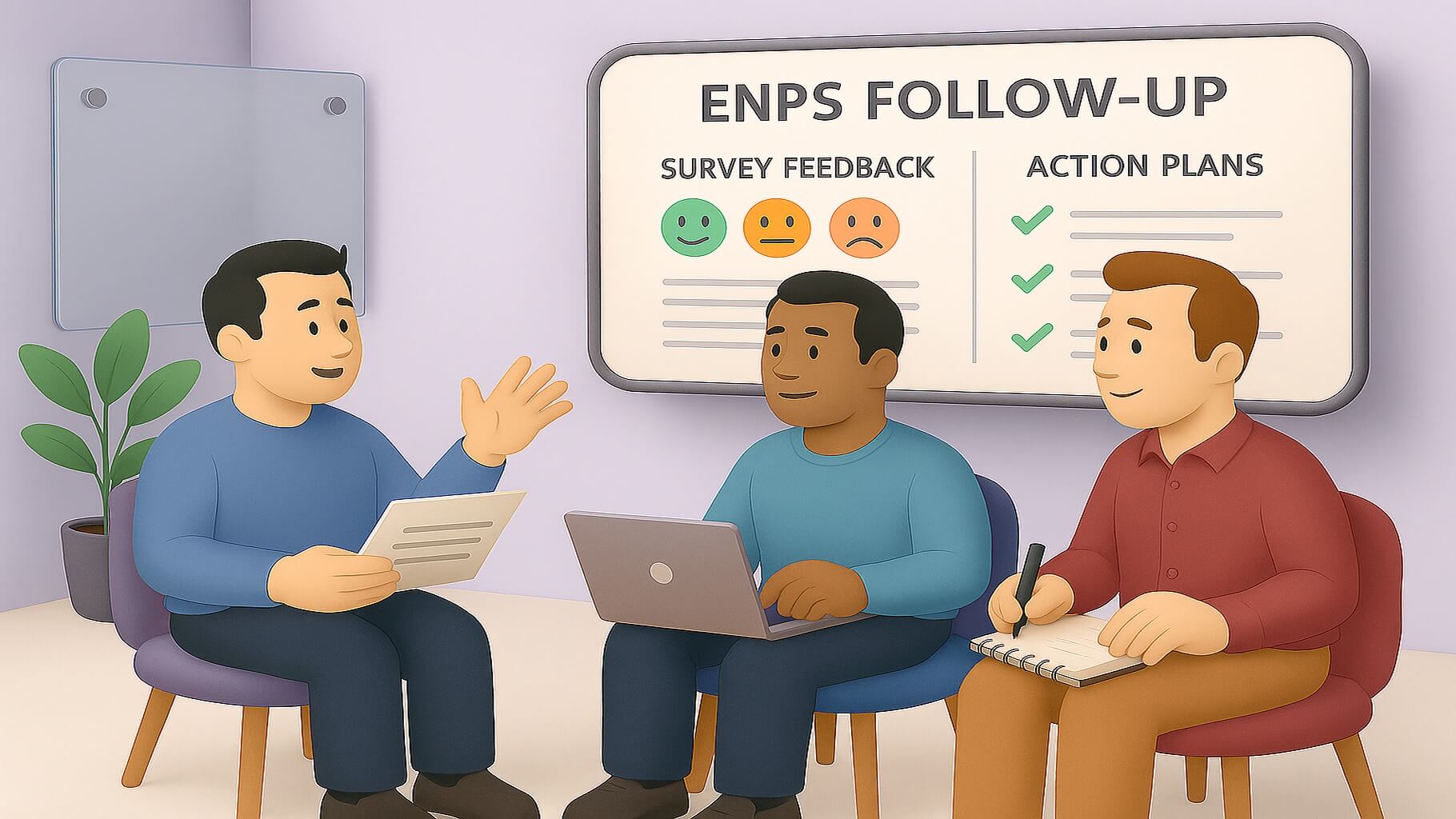
Effective eNPS measurement extends beyond the single core question to include follow-up and supplementary questions that provide deeper insights. These additional questions help organizations understand the reasoning behind eNPS scores and identify specific areas affecting employee sentiment. Carefully crafted eNPS questions balance the need for actionable data with respect for employee time, ensuring high response rates and meaningful feedback.
The questions included in eNPS surveys should evolve based on organizational priorities and previous survey findings. Starting with core questions establishes baseline measurements, while follow-up questions explore themes identified in earlier survey results. Supplementary questions can address specific aspects of the employee experience that leadership wants to monitor, such as workplace culture and career development opportunities, using strategic pulse survey tools.
5 core eNPS questions every survey should include
The foundation of any eNPS measurement program starts with asking the right questions. While the primary eNPS question captures overall sentiment in a single metric, supporting questions provide the context needed to understand why employees feel the way they do. These five core eNPS questions should form the basis of every survey you deploy.
5 essential eNPS questions:
- "On a scale of 1-5, how likely are you to recommend this company as a great place to work?" This is the foundational eNPS question that generates your score. Whether using a 0-10 scale or Matter's research-backed five-point Likert scale, this question captures employee satisfaction and loyalty in one measure.
- "What is the primary reason for your score?" This open-ended follow-up reveals the specific factors driving each response, transforming a number into actionable insight.
- "How satisfied are you with your overall experience working here?" This complements the recommendation question by measuring satisfaction directly rather than through the lens of advocacy.
- "If you could make the decision again, would you choose to work here?" This question reveals commitment levels beyond surface satisfaction, indicating whether employees feel genuinely invested in staying.
- "How well do your personal values align with the company's values and mission?" Cultural alignment significantly influences eNPS scores, and this question helps identify whether value disconnects are affecting sentiment.
5 follow-up questions to understand eNPS scores
Follow-up questions transform raw scores into improvement roadmaps by uncovering the specific factors behind employee ratings. Including these questions in your eNPS survey helps teams move from measurement to action with clear direction.
5 follow-up questions to include:
- "What does this company do particularly well?" Identifying strengths helps leadership understand what to protect and amplify, not just what to fix.
- "What one change would most improve your experience here?" This focuses feedback on actionable improvements rather than general complaints, making responses more useful for planning.
- "How would you describe your relationship with your direct manager?" Manager quality consistently ranks among the top drivers of employee sentiment, making this question essential for diagnosing score variations across teams.
- "Do you feel recognized and appreciated for your contributions?" Recognition directly impacts engagement, and this question connects your employee recognition program efforts to overall satisfaction levels.
- "Do you see a clear path for growth and advancement here?" Career development opportunities strongly influence whether employees recommend the workplace, particularly among high performers you want to retain.
5 supplementary questions for deeper insights
Supplementary questions expand measurement beyond core eNPS to capture additional dimensions of the employee experience. These questions from your employee engagement survey help paint a complete picture of workplace sentiment and identify issues that might not surface through the primary eNPS question alone.
5 supplementary questions for comprehensive measurement:
- "How would you rate your current work-life balance?" Workload and flexibility issues often undermine overall sentiment, even when other aspects of the job are positive.
- "Do you have the resources, tools, and support needed to do your job effectively?" Operational frustrations can drag down scores regardless of how employees feel about culture or leadership.
- "How well does leadership communicate important decisions and company direction?" Feeling informed and included in decisions significantly impacts whether employees trust leadership and feel valued.
- "Do you feel a sense of belonging and inclusion on your team?" This question provides insight into team dynamics and whether diversity and inclusion initiatives are translating into daily experience.
- "How confident are you in the company's direction and future success?" Employees who believe in the business trajectory are more likely to recommend the workplace and stay long-term.
eNPS tools and software platforms comparison
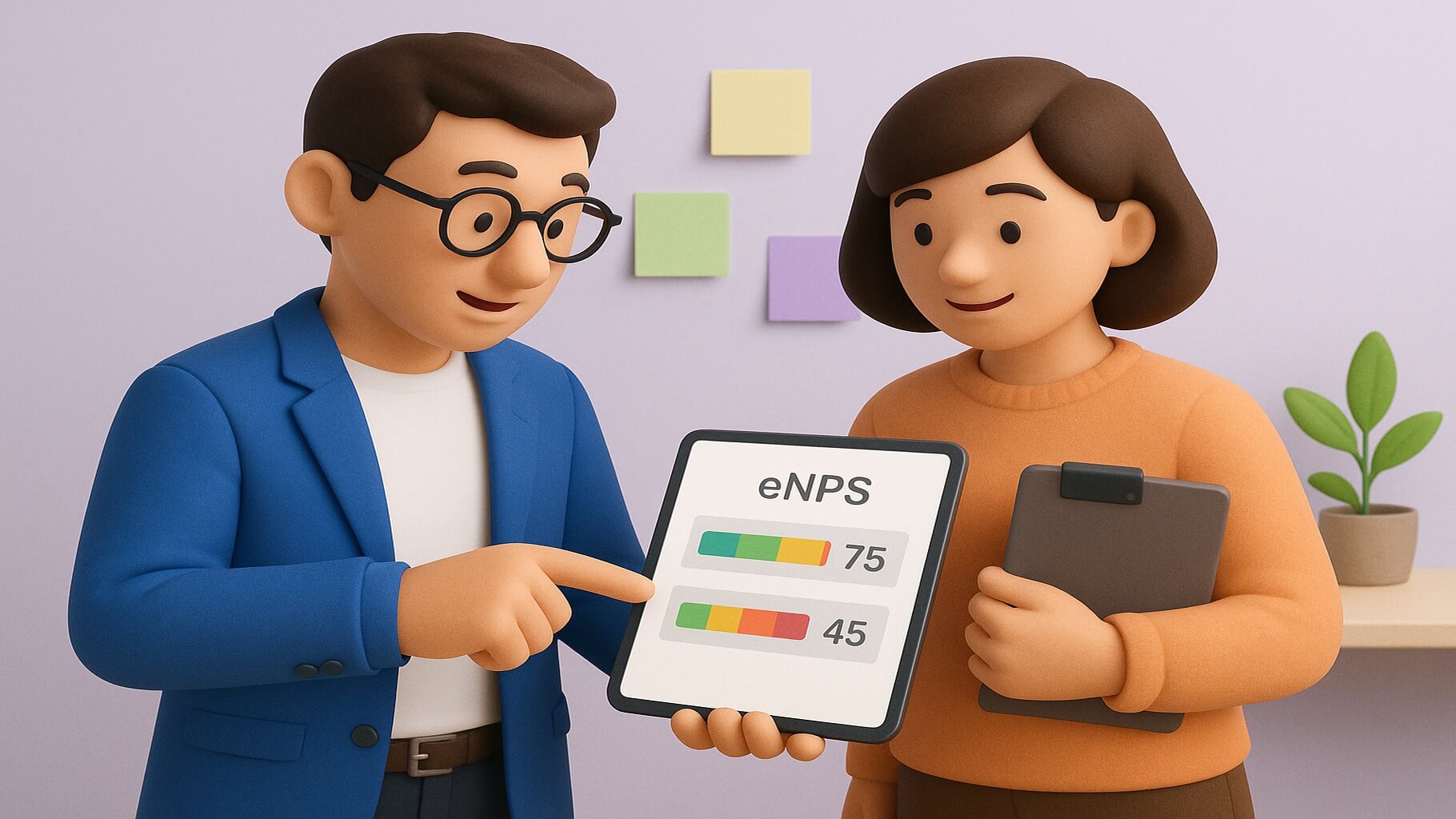
Selecting the right eNPS tools significantly impacts the effectiveness of employee sentiment measurement programs. Modern platforms offer various features beyond basic survey creation, including automated distribution, real-time analytics, and integration with other workplace systems. Organizations should evaluate employee engagement survey tools based on their specific needs, budget constraints, and existing technology infrastructure.
The market includes solutions ranging from enterprise platforms with comprehensive people analytics to budget-friendly tools focused specifically on eNPS measurement. Comprehending the capabilities and constraints of various platforms enables organizations to select solutions that deliver optimal value. Integration capabilities with existing communication tools like Slack or Microsoft Teams can dramatically improve response rates by meeting employees where they already work, while connecting measurement with employee rewards programs enables action on feedback.
5 enterprise eNPS tools and software platforms
Enterprise platforms provide comprehensive capabilities for organizations with complex needs and larger budgets. These tools typically include advanced analytics, benchmarking data, and sophisticated action planning features. Enterprise solutions often integrate with existing HR systems, creating unified platforms for employee experience management.
1. Matter
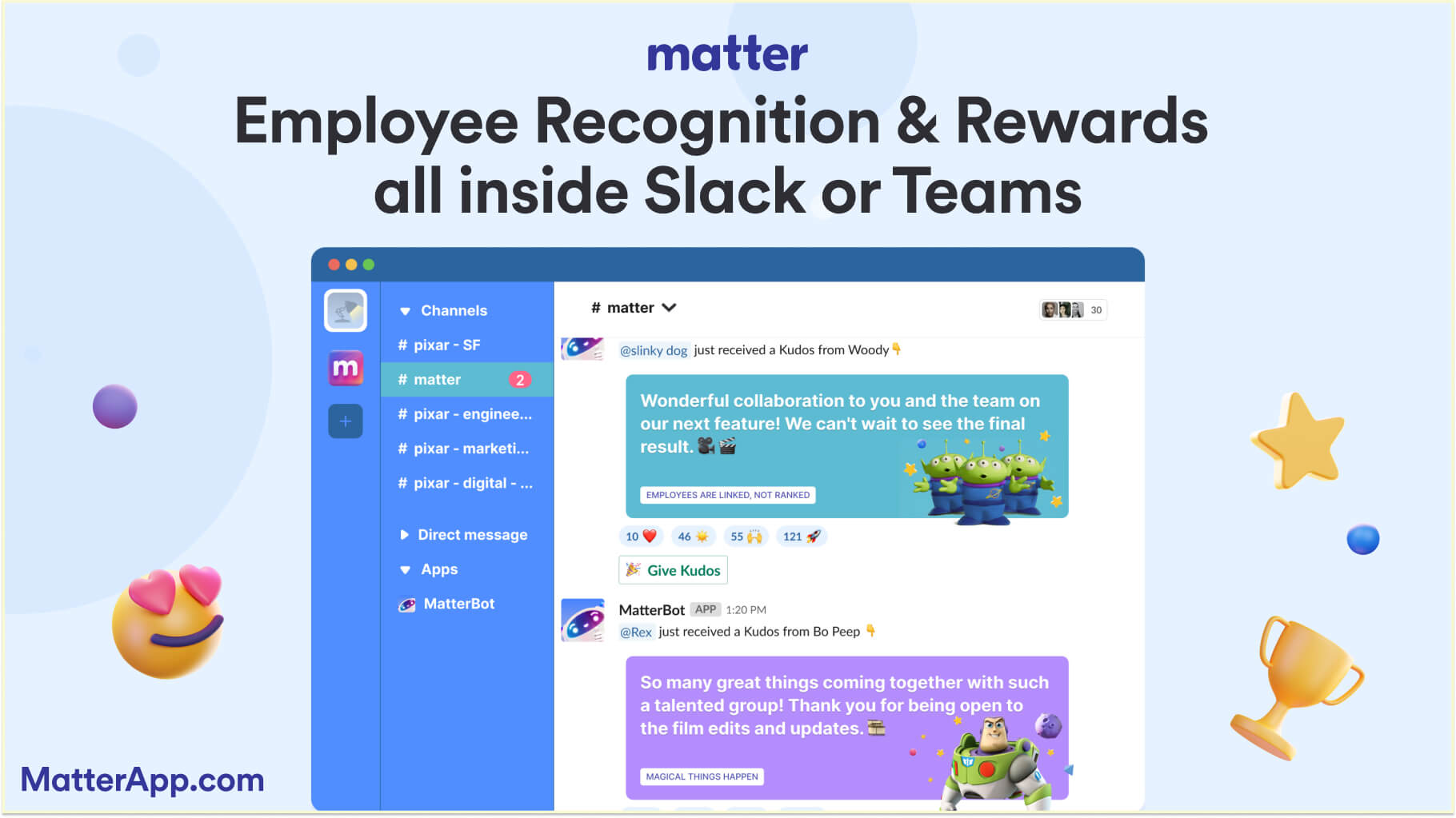
About Matter: Matter is a forward-thinking Slack-first and Teams-first platform that delivers 10x higher response rates by deploying surveys directly within workplace communication tools. The platform provides automated eNPS calculation and tracking through a research-backed five-point Likert scale (1-5) that measures the same underlying employee sentiment as traditional 11-point scales while offering significantly better usability on digital and mobile devices. Matter's unique methodology calculates eNPS where only 5 (strongly agree) equals promoters, only 4 (agree) equals passives, and 1 through 3 (strongly disagree, disagree, and neutral) equals detractors.
Matter's integration with recognition and rewards creates a closed-loop system that enables organizations to act immediately on eNPS feedback by celebrating positive behaviors and addressing concerns. Real-time score monitoring helps organizations stay informed about evolving employee sentiment. At the same time, advanced analytics capabilities enable HR teams to segment eNPS data by department, tenure, and other relevant factors for targeted insights. The platform transforms employee feedback into continuous, real-time insights into employee engagement and potential turnover.
Matter main features:
- Slack and Microsoft Teams integration with 10x higher survey response rates
- Automated eNPS calculation using validated 5-point Likert scale methodology
- Real-time analytics with segmentation by department, tenure, and custom categories
- Integrated recognition and rewards system for acting on feedback immediately
Matter pricing:
- Free Forever: $0/user/month
- Basic: $1/user/month, billed annually
- Pro: $3/user/month, billed annually
- Pro + Surveys: $5/user/month, billed annually
To learn more, view Matter’s pricing page.
Matter G2 score: Matter has a G2 score of 4.7/5 based on user reviews.
What Matter customers are saying: “Our brand is less formal, more “joy and yay”. Matter allows us to bring our sense of personality to our culture." - Sabrina Roccazzella, Human Resources Business Partner at Cashrewards (Customer Story).
2. Qualtrics EmployeeXM
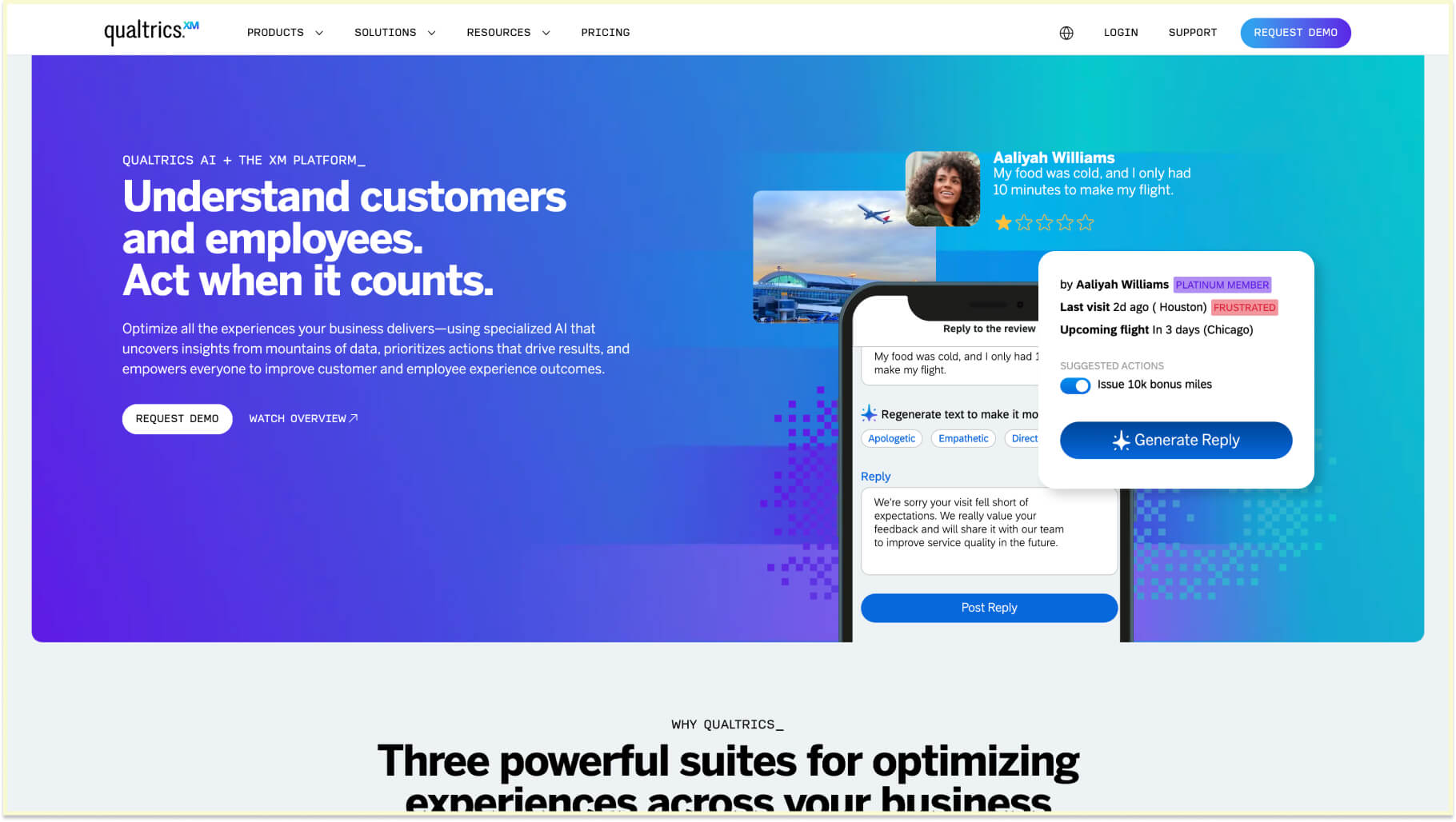
About Qualtrics EmployeeXM: Qualtrics EmployeeXM offers enterprise-grade eNPS survey capabilities within its comprehensive experience management platform. The platform offers detailed segmentation capabilities for analyzing eNPS data by employee group. Advanced analytics features help organizations track changes in scores over time. Benchmarking tools allow comparison of results against industry standards to understand performance relative to similar organizations. Integration capabilities connect eNPS measurement with other employee experience initiatives for a holistic understanding of workplace satisfaction. Automated distribution and reminder systems help maximize response rates. Sophisticated reporting makes data suitable for executive presentations.
Qualtrics EmployeeXM main features:
- Enterprise-grade survey capabilities with comprehensive experience management
- Advanced analytics and industry benchmarking for competitive insights
- Sophisticated segmentation for detailed analysis across employee groups
- Action planning tools for translating insights into improvement initiatives
Qualtrics EmployeeXM pricing: Pricing is not listed on the website. To learn more about pricing, you'll need to schedule a demo/sales call with Qualtrics EmployeeXM.
Qualtrics EmployeeXM G2 score: Qualtrics EmployeeXM has a G2 score of 4.4/5 based on user reviews.
What Qualtrics EmployeeXM customers are saying on G2: “Preston Donohoo, with Red Pepper, has been fantastic to partner with. He is thorough, excellent at training and his customer support is outstanding. He made our implementation go very smoothly. We have found the Qualtrics engagement survey and 360s tools easy to use, with the ability to dive deep into our results. We would definitely recommend Qualtrics to others.” - Kelli G., Global Talent Manager (G2 Review for Qualtrics EmployeeXM).
3. Culture Amp

About Culture Amp: Culture Amp specializes in people analytics with robust eNPS tracking capabilities integrated into broader employee engagement measurement. The platform's strength lies in its action-planning features that help organizations develop specific initiatives based on eNPS results, and in sophisticated analytics that identify correlations between eNPS scores and other employee engagement metrics. Survey design tools facilitate the development of eNPS surveys with relevant follow-up inquiries aligned with organizational priorities, while benchmarking features enable comparison of scores against industry standards and comparable organizations for contextual insights.
Culture Amp main features:
- People analytics platform with integrated eNPS tracking capabilities
- Action planning features for developing initiatives based on results
- Manager enablement tools for team-level score improvement
- Sophisticated analytics identifying correlations with other engagement metrics
Culture Amp pricing:
- Engage: contact the sales team for exclusive features
- Perform: contact the sales team for exclusive features
- Develop: contact the sales team for exclusive features
- People Analysis: contact the sales team for exclusive features
To learn more, view Culture Amp’s pricing page.
Culture Amp G2 score: Culture Amp has a G2 score of 4.5/5 based on user reviews.
What Culture Amp customers are saying on G2: “I’ve been using this software for a while now, and one of its standout features is how well-organized the system is. Everything is laid out in a clear and intuitive way, making it easy to navigate. Additionally, the punctuality of the communications is exceptional – notifications and updates are always timely, ensuring that I stay on top of tasks and deadlines. It’s a reliable tool for those who value efficiency and clear communication. Highly recommended!” - Anna L., SEO Consultant (G2 Review for Culture Amp).
4. Lattice
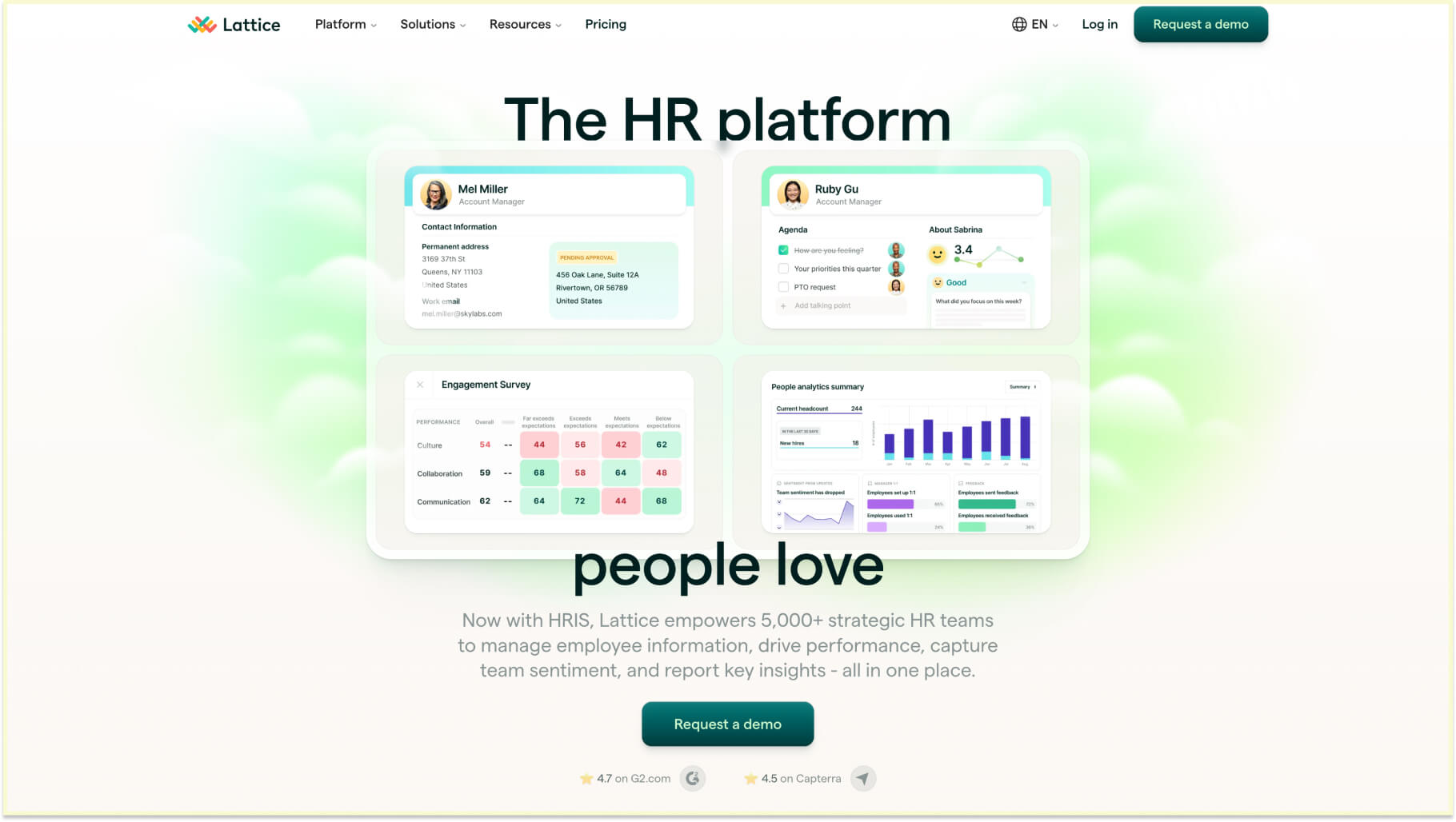
About Lattice: Lattice integrates eNPS measurement with performance management, connecting employee satisfaction to organizational outcomes. The platform's comprehensive approach links eNPS data with performance reviews, development plans, and succession planning, while continuous feedback features complement periodic eNPS surveys with ongoing pulse checks on employee sentiment. Lattice includes recognition features that celebrate employees who build positive workplace culture. The platform's analytics reveal connections between eNPS scores and other important metrics such as performance reviews and employee retention rates.
Lattice main features:
- eNPS integration with performance management for a holistic view
- Continuous feedback features complementing periodic surveys
- Recognition features for celebrating positive workplace contributors
- Analytics linking eNPS to performance ratings and retention metrics
Lattice pricing:
- Talent Management: $11/seat/month
- Foundation: $11/seat/month
- Engagement: $4/seat/month
- Grow: $4/seat/month
- Compensation: $6/seat/month
To learn more, view Lattice’s pricing page.
Lattice G2 score: Lattice has a G2 score of 4.7/5 based on user reviews.
What Lattice customers are saying on G2: “Ease of use and ease of implementation. The implementation time commitment was hours not weeks. We initially implemented all modules except Grow, Comp, and Engage and manged to configure and test all modules in less than two weeks. The product team is very receptive to feedback and also able to help come up with creative workarounds for functional gaps. The customer support is great and very responsive.” - Matthew H., Senior Human Resources Manager (G2 Review for Lattice).
5. Workday

About Workday: Workday, provides AI-driven insights and recommendations based on eNPS data and follow-up responses. The platform's strength lies in its intelligent analysis, which helps organizations prioritize actions based on potential impact, and in real-time employee engagement monitoring that enables quick identification of emerging issues affecting employee sentiment. Automated action planning suggests specific initiatives to improve eNPS scores based on response patterns. The platform integrates with Workday's HR ecosystem to manage the complete employee experience from recruitment to offboarding.
Workday main features:
- AI-driven insights and action recommendations from eNPS data
- Real-time monitoring for identifying emerging sentiment issues
- Automated action planning based on response patterns
- Integration with Workday's HR ecosystem for comprehensive management
Workday pricing:
- Workday Adaptive Planning: Free for 30 days
- Workday Adaptive Planning: contact sales to request pricing
- Workday Adaptive Planning Close & Consolidation: contact sales to request pricing
To learn more, view Workday’s pricing page.
Workday G2 score: Workday has a G2 score of 4.0/5 based on user reviews.
What Workday customers are saying on G2: “I've found Workday to be a reliable application for handling holiday and HR activities at my company. Its user-friendly interface makes requesting leave and checking balances easy and efficient. Real-time updates ensure I always know my leave status without chasing paperwork. I appreciate the integration with other HR functions, which provides a central hub for important information. While there can be some lag during busy times, overall, Workday simplifies holiday management and enhances transparency for both employees and HR teams.” - Saurabh Y., Senior Engineer (G2 Review for WorkDay).
5 mid-market eNPS software solutions
Mid-market solutions balance sophisticated capabilities with more accessible pricing appropriate for growing organizations. These platforms typically focus on core eNPS functionality with select advanced features most valuable to mid-sized companies. Integration with common workplace tools remains important while avoiding enterprise complexity that many organizations don't need.
1. Matter
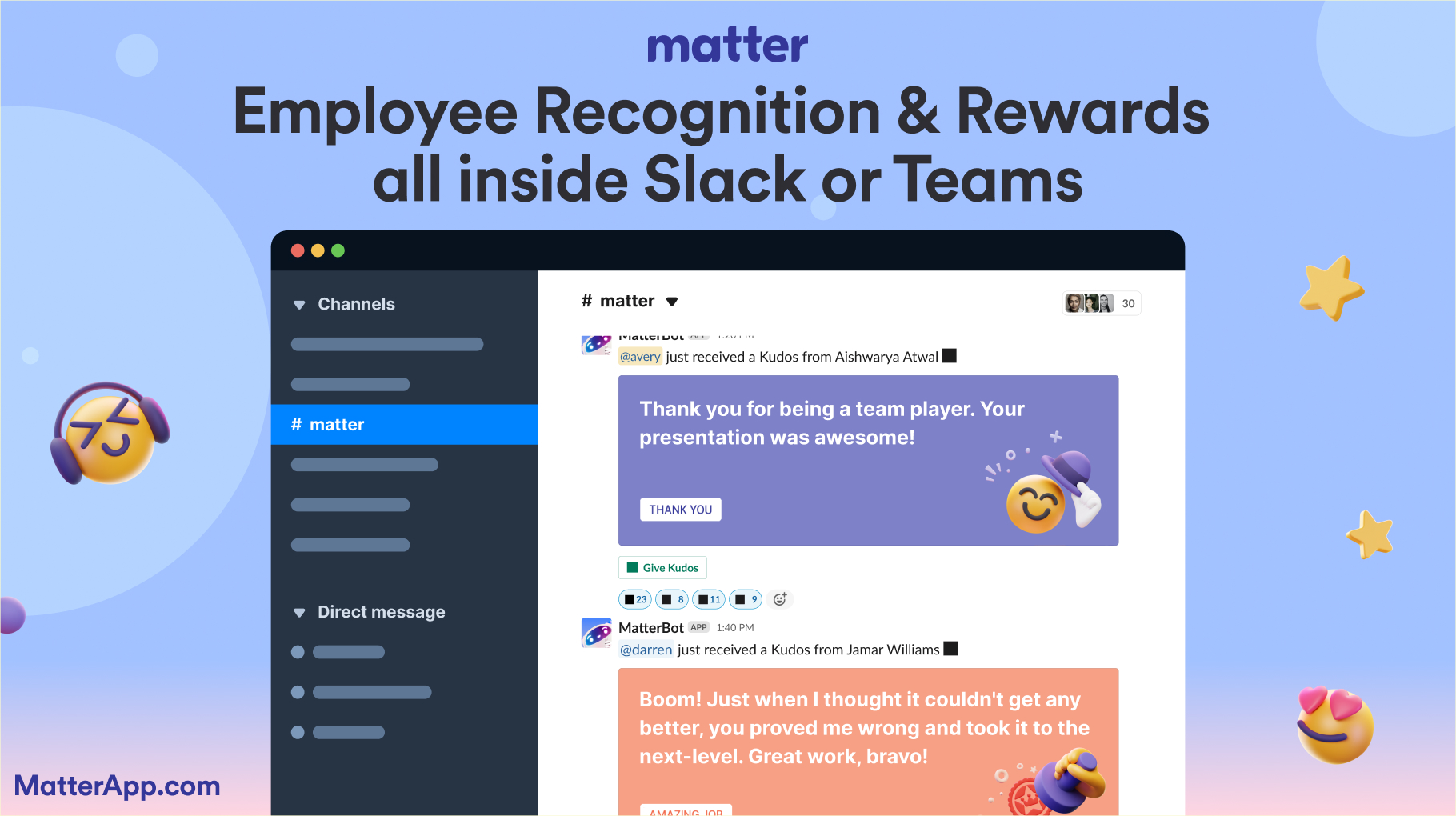
About Matter: Matter provides affordable eNPS tracking perfectly suited for growing teams that need reliable measurement without enterprise costs. The Slack-first and Teams-first platform delivers 10x higher response rates by deploying surveys directly where employees already work. Pre-built survey templates include validated eNPS questions using a research-backed five-point Likert scale. The scoring system designates only scores 5 as promoters, scores 4 as passives, and scores 1-3 as detractors.
Setup takes just minutes thanks to Matter's intuitive design and seamless integration with workplace communication tools. The integrated recognition platform creates natural connections between measuring employee sentiment and taking action to improve it. The coin-based reward system enables organizations to recognize employees who provide valuable feedback through eNPS surveys. This encourages authentic participation and creates continuous feedback loops that drive workplace improvements.
Matter main features:
- Affordable pricing with 10x higher response rates via Slack and Teams
- Pre-built templates with validated 5-point eNPS methodology
- Quick setup in minutes with intuitive design
- Integrated recognition platform for acting on survey feedback
Matter pricing:
- Free Forever: $0/user/month
- Basic: $1/user/month, billed annually
- Pro: $3/user/month, billed annually
- Pro + Surveys: $5/user/month, billed annually
To learn more, view Matter’s pricing page.
Matter G2 score: Matter has a G2 score of 4.7/5 based on user reviews.
What Matter customers are saying: “People can get so busy with their work, that they become unaware of all the good things happening across the company. Matter allows us to see what others are accomplishing and gives us a platform to congratulate each other for wins big and small." - Gabriela Ruiz, Head of People at Hunty (Customer Story).
2. Energage
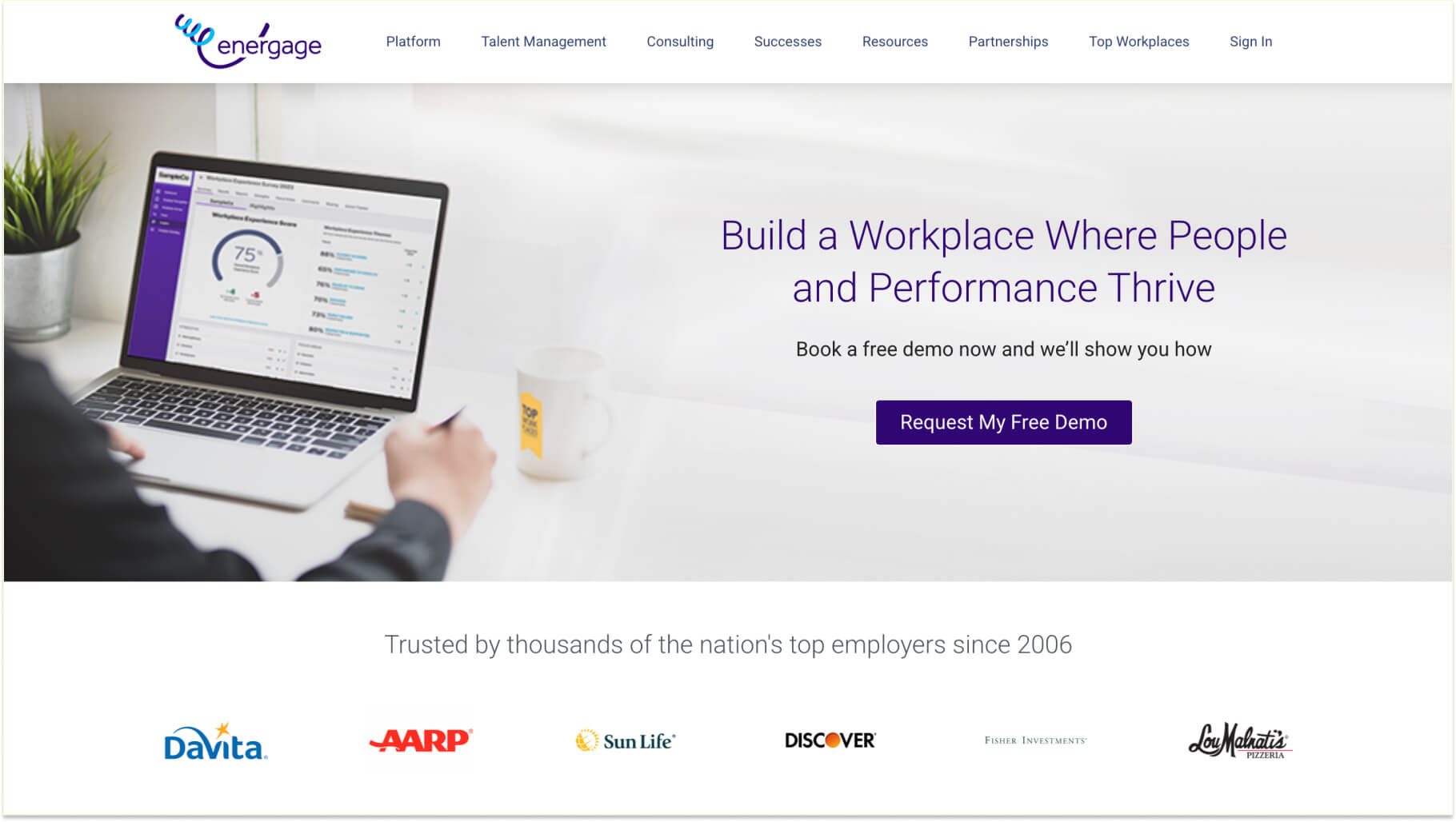
About Energage: Energage specializes in pulse surveys that include eNPS measurement alongside other engagement metrics. The platform's focus on continuous improvement helps organizations track the impact of initiatives on employee net promoter scores over time, with team-level analytics helping managers understand sentiment within their specific groups and take targeted actions. Manager coaching features guide on improving eNPS scores based on employee feedback, while survey design tools include validated questions proven to drive actionable insights.
Energage main features:
- Pulse surveys combining eNPS with other engagement metrics
- Team-level analytics for targeted manager actions
- Manager coaching features for score improvement guidance
- Benchmarking against similar companies for context
Energage pricing: Pricing is not listed on the website. To learn more about pricing, you'll need to schedule a demo/sales call with Energage.
Energage G2 score: Energage has a G2 score of 4.6/5 based on user reviews.
What Energage customers are saying on G2: “The pulse survey section still needs work I want a system that I can customize the wording of the rankings, create yes/no questions if I want and be able to order the sequence of questions so they make sense to me. I want to add skip logic so people who answer one way to a question can skip over a question to the next question. Changes were made to the pulse survey section so that it really doesn't work for me now. I've stopped using it and moved to google forms instead” - Verified User in Staffing & Recruiting (G2 Review for Software).
3. TINYpulse
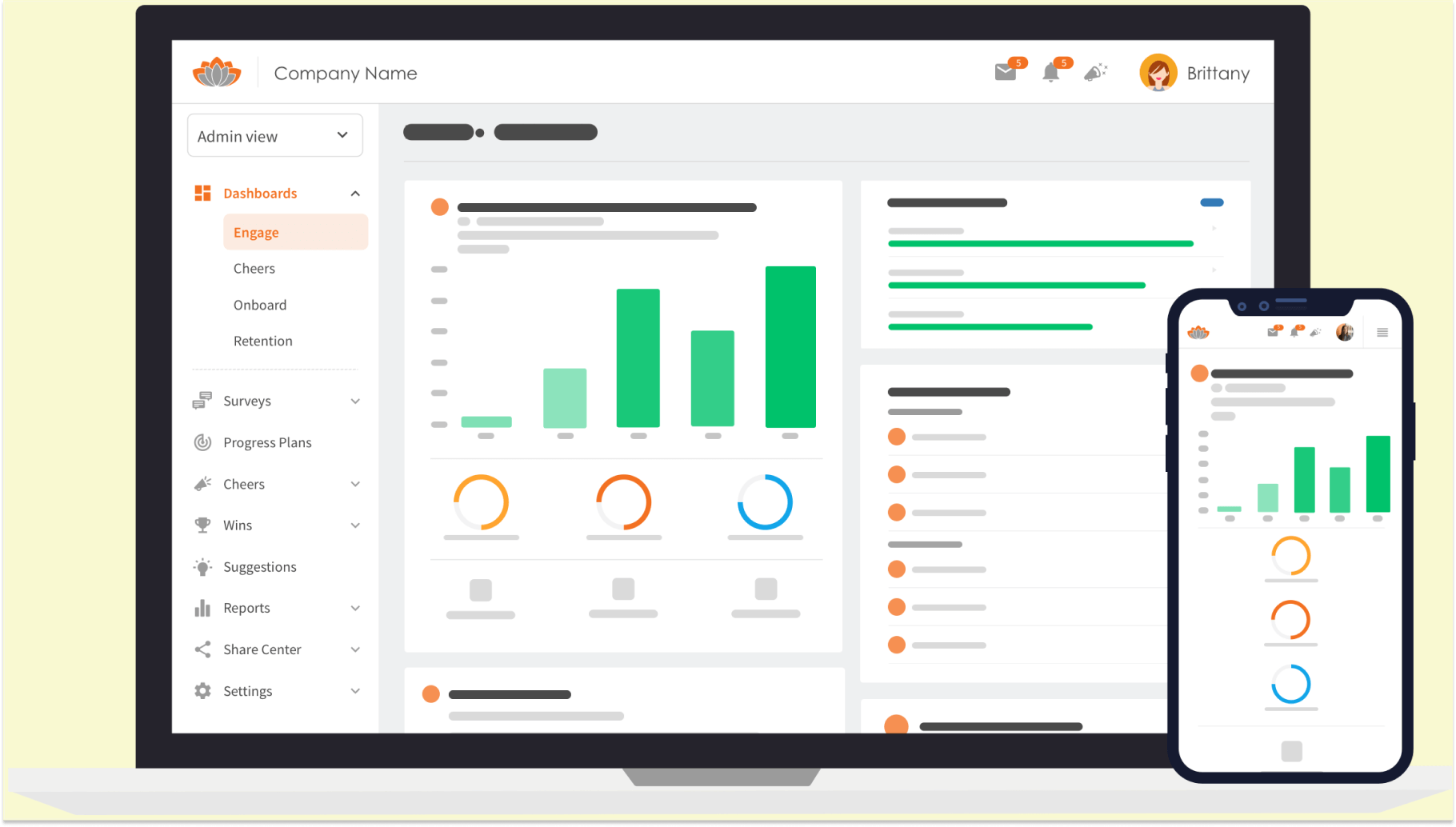
About TINYpulse: TINYpulse emphasizes anonymous eNPS surveys that encourage honest feedback by protecting employee privacy. Recognition and peer feedback features complement sentiment measurement by providing positive reinforcement for desired behaviors. The engagement analytics dashboard presents eNPS data alongside other key employee experience metrics. Regular pulse check capabilities enable frequent measurement without survey fatigue through brief, focused questions, with integration options connecting TINYpulse with common workplace tools for streamlined survey distribution.
TINYpulse main features:
- Anonymous surveys for encouraging honest employee feedback
- Recognition and peer feedback features for positive reinforcement
- Engagement analytics dashboard with comprehensive metrics
- Regular pulse checks without survey fatigue
TINYpulse pricing: Pricing is not listed on the website. To learn more about pricing, you'll need to schedule a demo/sales call with TinyPulse.
TINYpulse G2 score: TINYpulse has a G2 score of 4.9/5 based on user reviews.
What TINYpulse customers are saying on G2: “Every part of it. It claims to be anonymous, but I was told it is not and that that is a false and misleading statement.” - Verified User in Automotive.
4. 15Five
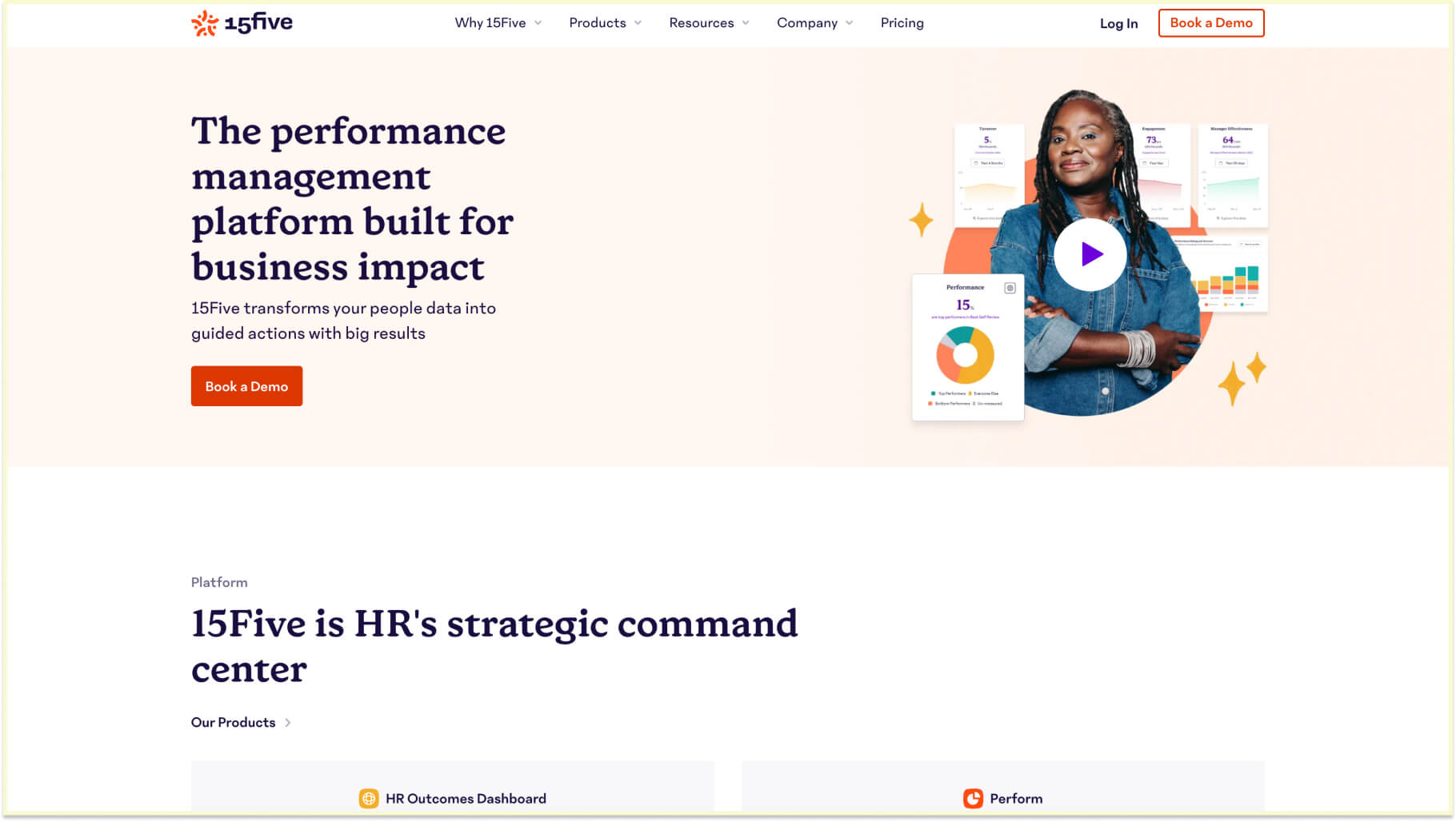
About 15Five: 15Five integrates eNPS tracking within weekly check-in routines that make measurement a natural part of manager-employee conversations. The platform's comprehensive approach links eNPS data with one-on-one meeting agendas and performance reviews, while performance management features help connect employee satisfaction with development goals and career progression. Recognition features enable managers to celebrate contributions immediately when positive sentiment is expressed, and analytics reveal trends in eNPS scores at the individual, team, and organizational levels.
15Five main features:
- eNPS tracking integrated with weekly check-in routines
- Links to one-on-one meetings and performance reviews
- Recognition features for immediate celebration of contributions
- Multi-level analytics from individual to organizational trends
15Five pricing:
- Engage: $4/user/month, billed annually
- Perform: $11/user/month, billed annually
- Total Platform: $16/user/month, billed annually
To learn more, view 15Five’s pricing page.
15Five G2 score: 15Five has a G2 score of 4.6/5 based on user reviews.
What 15Five customers are saying on G2: “We have built a company wide OKR tied to our company wide average Pulse score. It is an easy check of how the company is "feeling" from week to week, and over the last 2 years, I have found it to be accurate, important and super easy for the team to adopt and stay consistent in use.”- Dan A., Small-Business (G2 Review for 15Five).
5. Leapsome
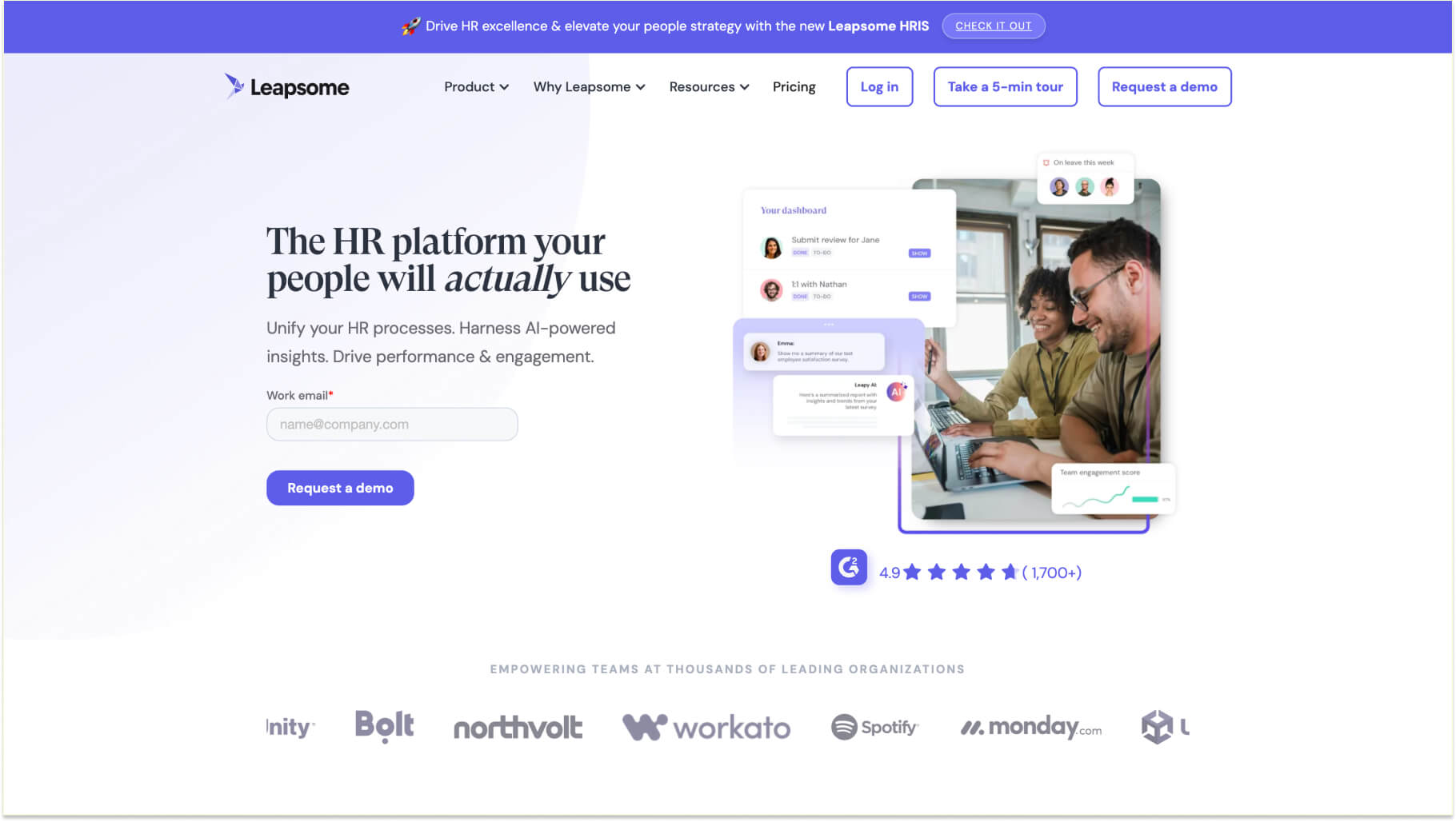
About Leapsome: Leapsome combines performance management with engagement measurement, including regular eNPS surveys. The platform connects different aspects of the employee experience. Goal-tracking features help organizations monitor progress on initiatives to improve employee net promoter scores. Learning and development integration connects career growth opportunities with overall employee satisfaction, while survey capabilities include eNPS measurement with customizable follow-up questions tailored to organizational priorities.
Leapsome main features:
- Performance and engagement platform with regular eNPS surveys
- Goal tracking for monitoring improvement initiatives
- Learning and development integration with satisfaction measurement
- Customizable follow-up questions for organizational priorities
Leapsome pricing: Pricing is not listed on the website. To learn more about pricing, you'll need to schedule a demo/sales call with Leapsome.
Leapsome G2 score: Leapsome has a G2 score of 4.9/5 based on user reviews.
What Leapsome customers are saying on G2: “It is step to step process implementation of sales pattern , customer support , and a lot of feature to understand customer need .It also help to ease of interagtion customer mindset and win situation .It have a good dashboard GUI to understand also support avilable in a single call , once again thank you team leapsome because i was a layman and after half an hour training i became super user.” - SUMIT KUMAR O., Senior Technical Sales Engineer (G2 Review for Leapsome).
5 budget-friendly eNPS measurement tools
Budget-friendly solutions enable smaller organizations or those new to eNPS measurement to begin tracking employee sentiment. These tools may require more manual effort but provide core eNPS calculation and tracking capabilities. Many organizations start with basic tools and upgrade as their programs mature and requirements become more sophisticated.
1. Matter
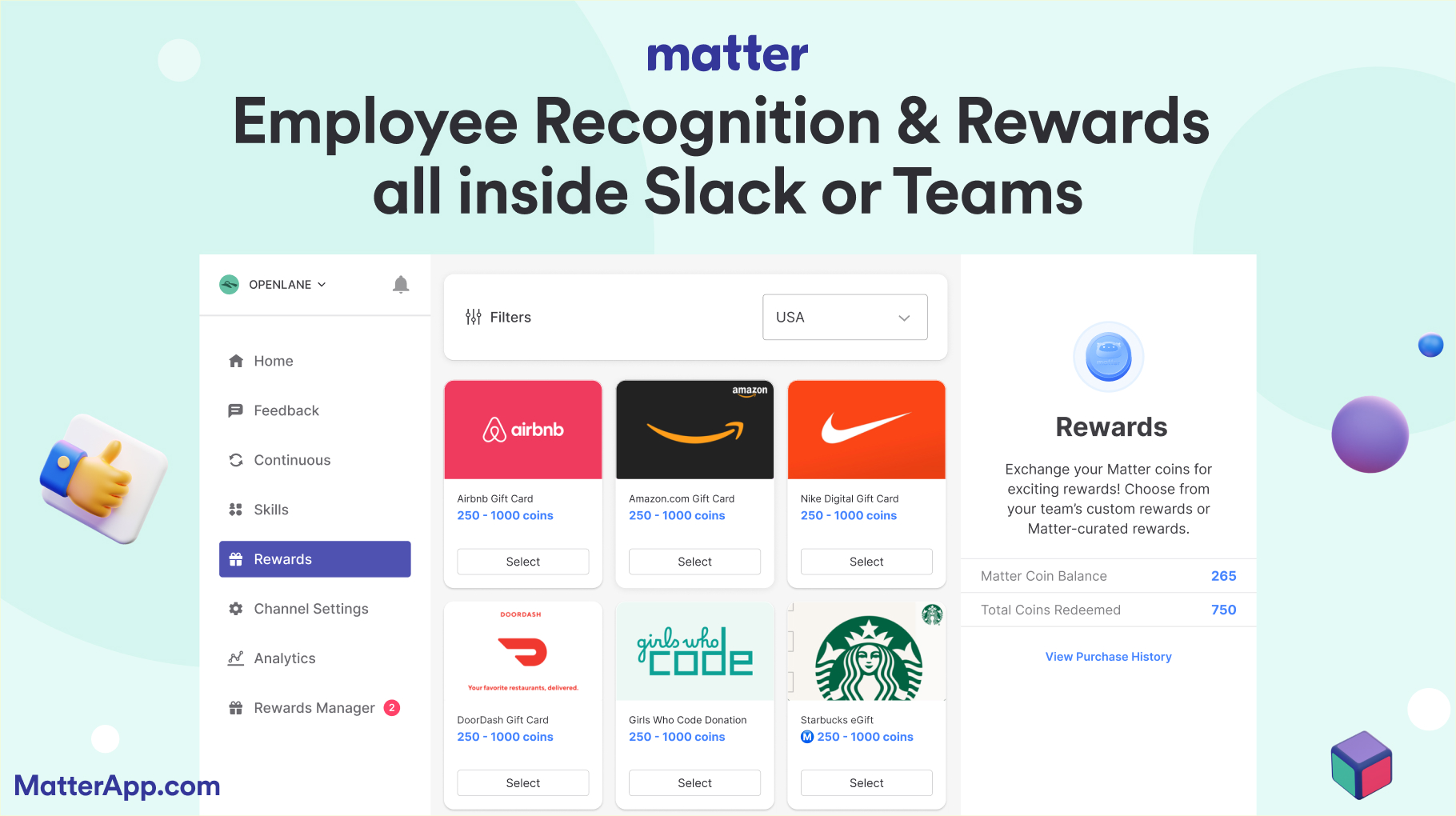
About Matter: Matter's free forever plan includes eNPS capabilities, making comprehensive employee sentiment measurement accessible for organizations of any size to begin tracking workplace satisfaction. Matter offers affordable pricing that makes full-featured platform capabilities accessible without enterprise costs.
Small teams appreciate Matter's simple setup that requires no technical expertise to configure and can be operational in minutes. The platform scales seamlessly as organizations grow, eliminating the need to switch tools when requirements expand beyond initial eNPS measurement. Comprehensive analytics, automated survey deployment, real-time monitoring, and integrated recognition features provide insights and capabilities typically found only in much more expensive enterprise platforms.
Matter main features:
- Free forever plan with full eNPS capabilities included
- Pricing begins at $1 per user per month for supplementary features.
- 10x higher response rates with Slack and Teams integration
- Enterprise-level analytics and automation at budget-friendly prices
Matter pricing:
- Free Forever: $0/user/month
- Basic: $1/user/month, billed annually
- Pro: $3/user/month, billed annually
- Pro + Surveys: $5/user/month, billed annually
To learn more, view Matter’s pricing page.
Matter G2 score: Matter has a G2 score of 4.7/5 based on user reviews.
What Matter customers are saying: “Kudos are a big part of our company culture and daily practice because it helps us reinforce the ideal company behaviors. This helps us ensure that we have the right people here and support them to do their best.” - María José Franco, People Director at Auronix (Customer Story).
2. SurveyMonkey
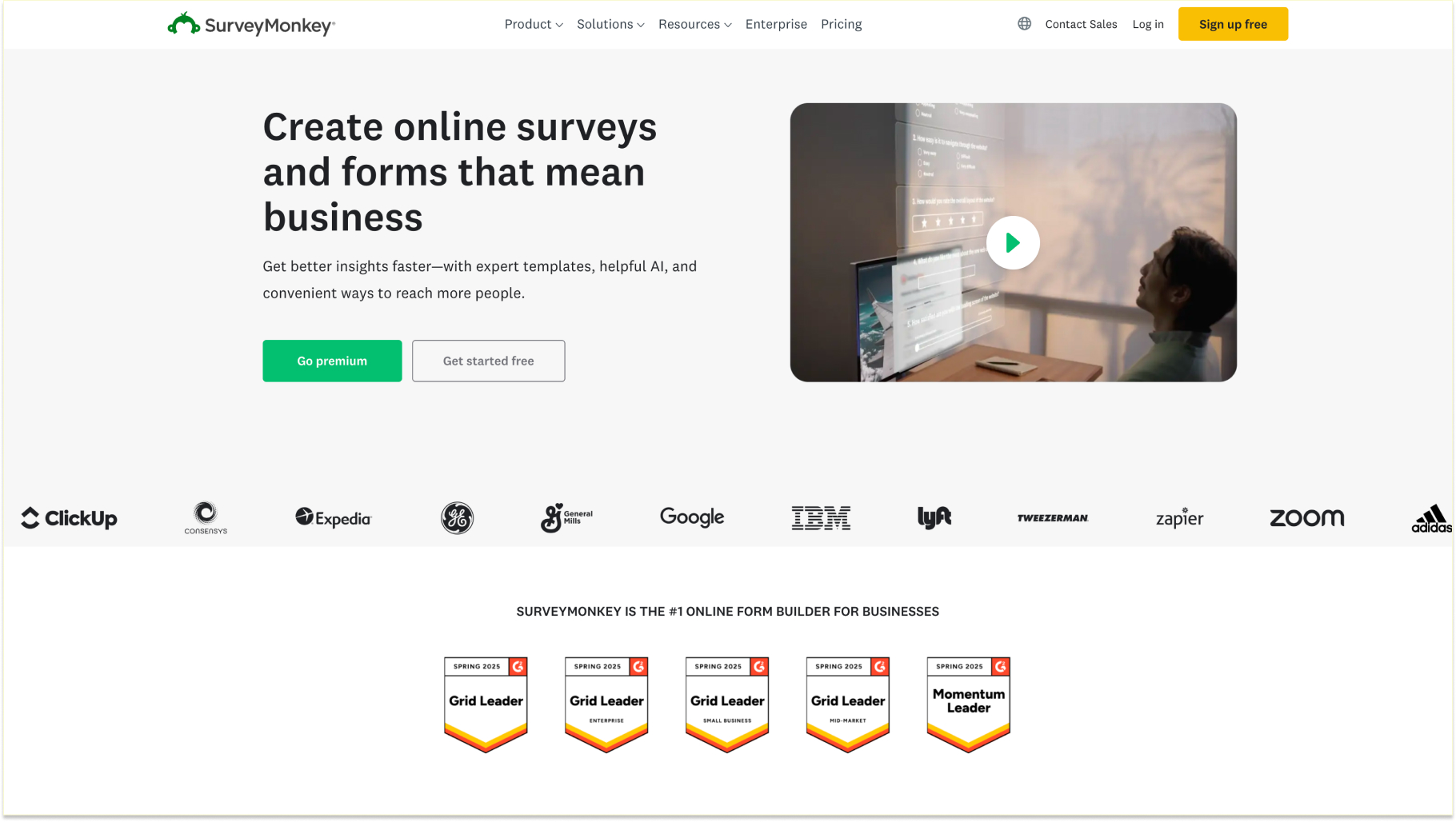
About SurveyMonkey: SurveyMonkey enables DIY eNPS survey creation with flexible templates that organizations can customize. The familiar survey platform makes it easy for HR teams to create and distribute eNPS surveys without specialized knowledge, with basic analytics and reporting features helping calculate eNPS scores and track changes over time. Distribution options include email invitations and web links that can be shared through various channels. Data export capabilities allow organizations to analyze eNPS results in external tools for advanced insights.
SurveyMonkey main features:
- DIY survey creation with flexible, customizable templates
- Basic analytics and reporting for eNPS calculation
- Multiple distribution options, including email and web links
- Data export for external analysis tools
SurveyMonkey pricing:
- Team Advantage: $25/user/month, starting at 3 users, billed annually
- Team Premier: $75/user/month, starting at 3 users, billed annually
- Enterprise: Talk to sales for pricing
To learn more, view SurveyMonkey’s pricing page
SurveyMonkey G2 score: SurveyMonkey has a G2 score of 4.4/5 based on user reviews.
What SurveyMonkey customers are saying on G2: “The free plan lets you create surveys with up to 25 responses. For most real-world uses, that's very limiting. The basic paid plan doesn't cut it either. If you need to export your data, you're looking at the higher tiers that run closer to $100/month. Additionally, the survey customization options can be a lot better. The competitors in this space offer advanced customization that SurveyMonkey is definitely missing.” -Nitin M., Product Manager (G2 Review for SurveyMonkey).
3. Google Forms
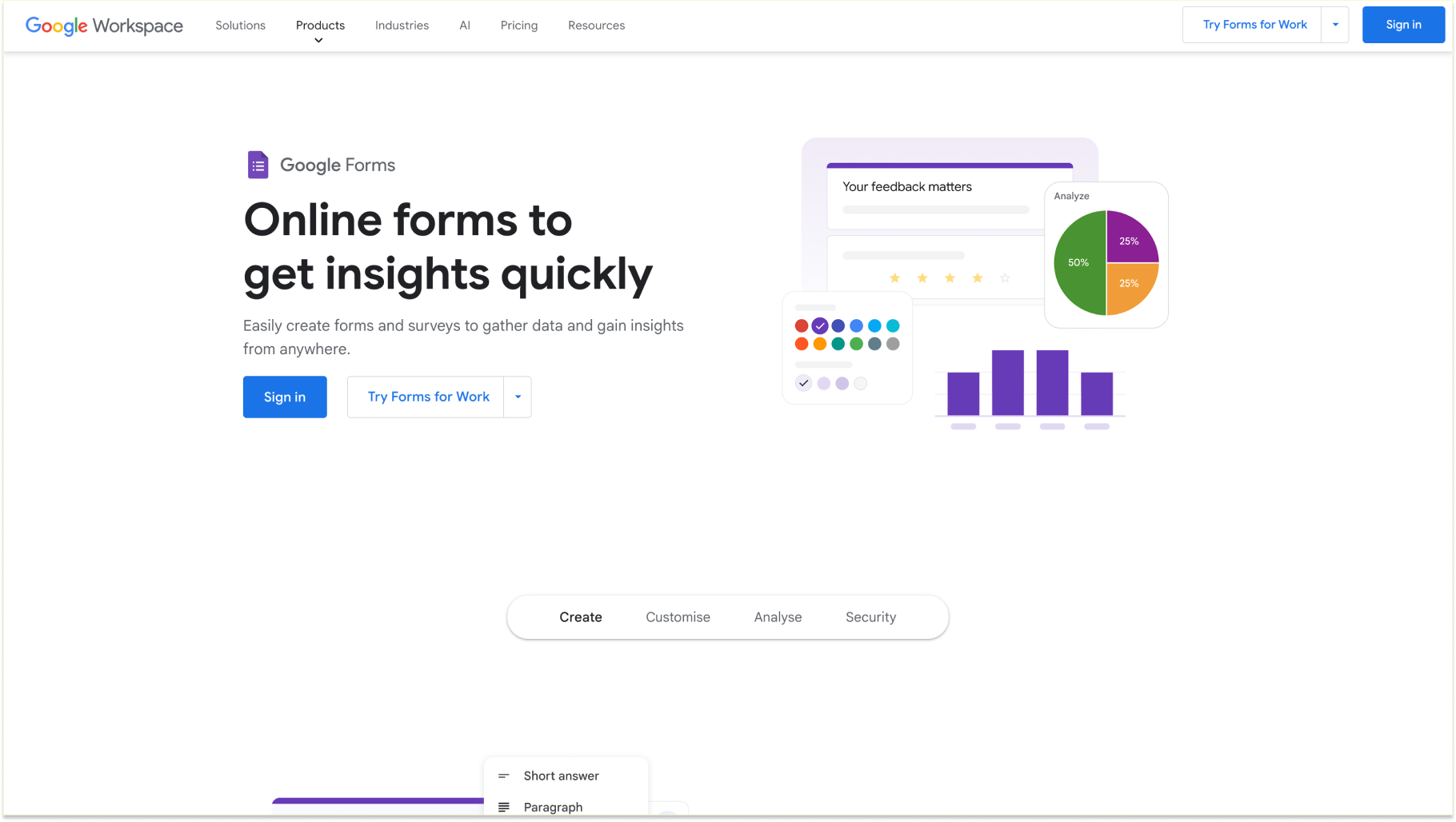
About Google Forms: Google Forms offers completely free eNPS survey creation for organizations with minimal budgets. The basic data collection tool integrates with Google Sheets for simple analysis and visualization, while manual calculation and tracking require more effort but provide accurate eNPS scores when done consistently. Organizations using Google Workspace benefit from seamless integration with their existing tools, making this approach well-suited for small teams or as a proof of concept before investing in dedicated eNPS software.
Google Forms main features:
- Completely free eNPS survey creation and deployment
- Integration with Google Sheets for analysis
- Seamless integration with Google Workspace tools
- Suitable for small teams and proof of concept projects
Google Forms pricing:
- Starter: $6.30 user per month
- Standard: $12.60 user per month
- Plus: $22 user per month
- Enterprise Plus: Talk to sales for pricing
To learn more, view Google Form’s pricing page.
Google Forms G2 score: Google Forms has a G2 score of 4.6/5 based on user reviews.
What Google Forms customers are saying on G2: “Honestly, I enjoy using Google Workspace overall, though it can be somewhat challenging when the internet connection is unstable, as most of its tools require being online. Additionally, with so many apps like Docs, Sheets, Drive, and Meet, it can feel a bit overwhelming at first. However, once you become familiar with the platform, everything tends to run very smoothly.” - Girishchand B., Test Engineer Level 2 (G2 review for Google Forms).
4. Typeform
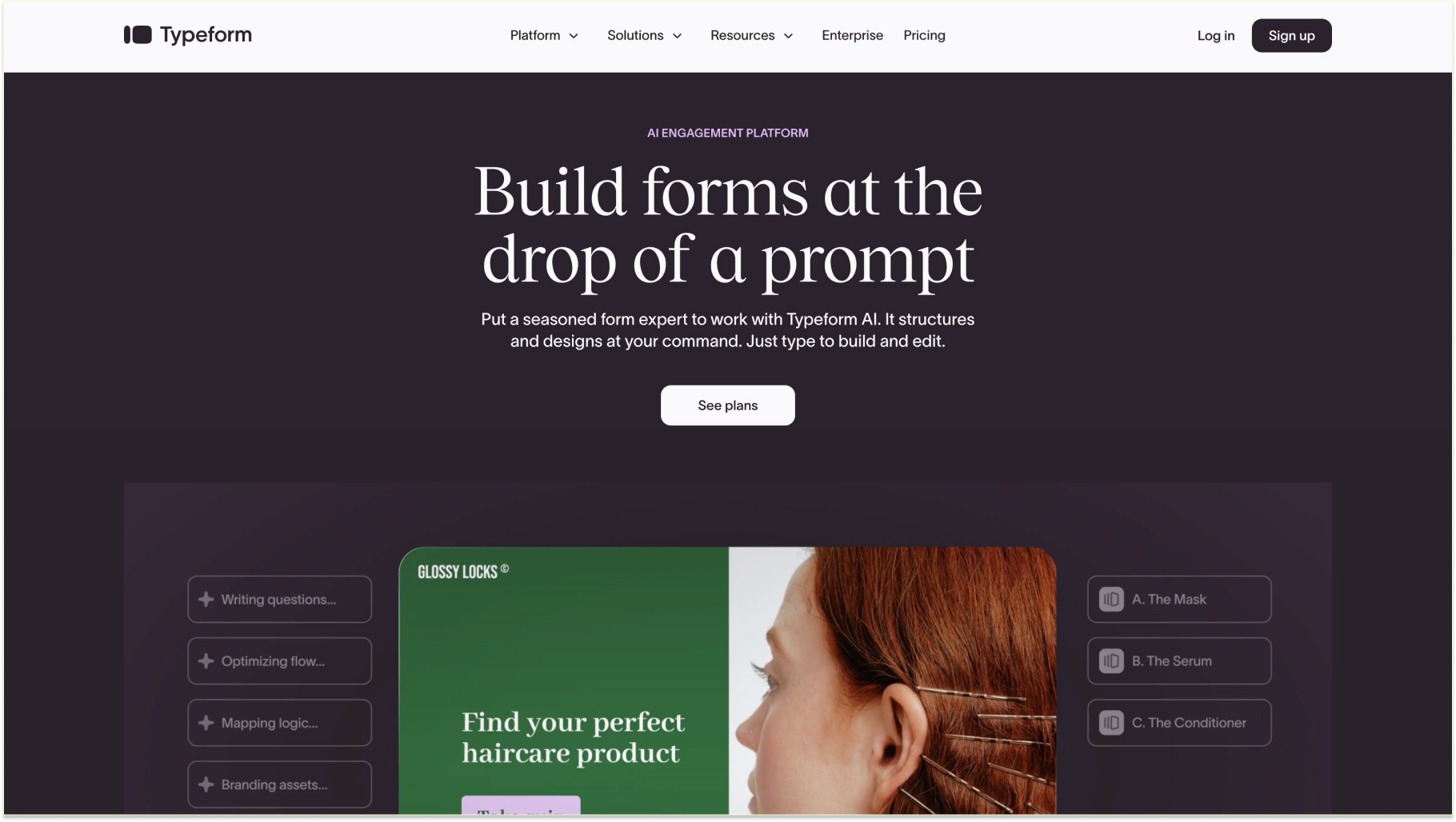
About Typeform: Typeform provides an interactive eNPS survey design that creates engaging user experiences for respondents. The platform's visual approach and conversational format can improve response rates compared to traditional survey designs, and customization options enable organizations to create branded eNPS surveys that align with their company culture and style. Integration with analytics tools enables organizations to enhance basic Typeform reporting with advanced analysis, while mobile optimization ensures a smooth survey experience regardless of device.
Typeform main features:
- Interactive and visually engaging survey design
- Conversational format for improved response rates
- Customization options for branded survey experiences
- Mobile optimization for all devices
Typeform pricing:
- Basic: $25 per month
- Plus: $50 per month
- Business: $83 per month
- Enterprise: Custom per month
To learn more, view Typeform’s pricing page.
Typeform G2 score: Typeform has a G2 score of 4.5/5 based on user reviews.
What Typeform customers are saying on G2: “The user interface could be improved for applying design settings. Some of the options are buried in the brand and theme screens. It would be nice to have more control over where the questions and the answers appear on the screen, the layouts are pretty limited. On the data analysis side, it would be nice to have the ability to check questions that are tests so they are eliminated from the results. Right now I have to create a draft survey to test and once it is approved I have to copy the survey and give people a new link to the live version so I can utilize the reports.” - Jennifer N., Data Analyst & Community Engagement (G2 Review for Software).
5. Jotform

About Jotform: Jotform offers customizable eNPS survey forms with drag-and-drop design tools that require no technical skills. Automated response collection streamlines data gathering and eliminates manual data entry, while budget-friendly pricing makes Jotform accessible for organizations with limited resources. The template library includes pre-built eNPS surveys that organizations can deploy immediately or modify to meet specific needs, with integration capabilities that connect Jotform to other business tools for streamlined workflows.
Jotform main features:
- Drag-and-drop design tools requiring no technical skills
- Automated response collection and data gathering
- Pre-built eNPS survey templates ready to deploy
- Integration with other business tools for workflows
Jotform pricing:
- Starter: $0/month (All features included)
- Bronze: $34/month, billed annually
- Silver: $39/month, billed annually
- Gold: $99/month, billed annually
- Enterprise: Custom price, talk to sales for pricing
To learn more, view Jotform’s pricing page.
Jotform G2 score: Jotform has a G2 score of 4.7/5 based on user reviews.
What Jotform customers are saying on G2: “JotForm's builder is really useful and has so many field options and vairables which gives you a lot of customisation ability. It's an intiuituve no-code system that you can build fairly complex systems and process with to meet common business needs and customise them to meet your specific requirements. The support team and community have also been helpful. As it has been around for some time now, you can usually find a post similiar to your challenge, but if not you can submit a request for help and they come back to you in good time. It has a large amount of integrations which we have found helpful to move data around securely.” - Nathan C., Technology & Efficiency Manager (G2 Review for Jotform).
How to measure eNPS effectively in organizations

Effective eNPS measurement requires thoughtful planning beyond simply deploying surveys. Organizations must consider timing, communication, and follow-through to ensure data quality and usefulness. Best practices help maximize response rates while gathering honest feedback that accurately reflects employee sentiment through strategic pulse surveys.
Success in measuring eNPS depends on creating an environment where employees trust that their feedback matters and will lead to meaningful changes. Transparent communication about survey purpose, data handling, and intended uses builds this trust. Following up on survey results with clear action plans demonstrates organizational commitment to addressing employee concerns and improving workplace culture through integrated employee recognition platforms.
Best practices for accurate eNPS measurement
Maintaining consistent measurement timing helps establish reliable trends in eNPS data. Communicating the survey purpose clearly before distribution ensures employees understand why their participation matters. Guaranteeing anonymity or confidentiality, depending on organizational approach, encourages honest responses that reflect true employee sentiment.
Keeping surveys brief respects employee time while gathering essential data for calculating employee net promoter scores accurately. Using clear, unbiased language in questions prevents confusion and ensures all respondents interpret questions similarly. Following up with action plans based on survey results shows employees that their feedback drives real changes, encouraging continued participation in future surveys.
Ensuring reliable employee net promoter score data
Data reliability depends on achieving high response rates that accurately represent the entire employee population. Sending surveys when employees can respond thoughtfully, rather than during busy periods, improves data quality. Avoiding leading questions or biased language ensures responses reflect genuine employee sentiment rather than desired answers.
Segmenting eNPS data by relevant categories like department, tenure, or location reveals patterns that overall scores might obscure. Cross-referencing eNPS results with other engagement metrics validates findings and provides a broader context. Regular calibration of measurement methods ensures consistency over time, making trend analysis reliable for strategic planning.
Common mistakes to avoid when measuring eNPS
Measuring eNPS too frequently can create survey fatigue that depresses response rates and data quality. Failing to act on survey results damages trust and reduces future participation as employees conclude their feedback doesn't matter. Comparing eNPS scores to inappropriate benchmarks creates unrealistic expectations or false confidence about workplace culture health.
Ignoring qualitative feedback from follow-up questions misses valuable context explaining numerical scores. Measuring eNPS without clear plans for using the data wastes organizational resources and employee time. Treating eNPS as the sole measure of employee engagement overlooks important dimensions of workplace satisfaction that single-question metrics can't fully capture.
Understanding eNPS scores and interpretation strategies
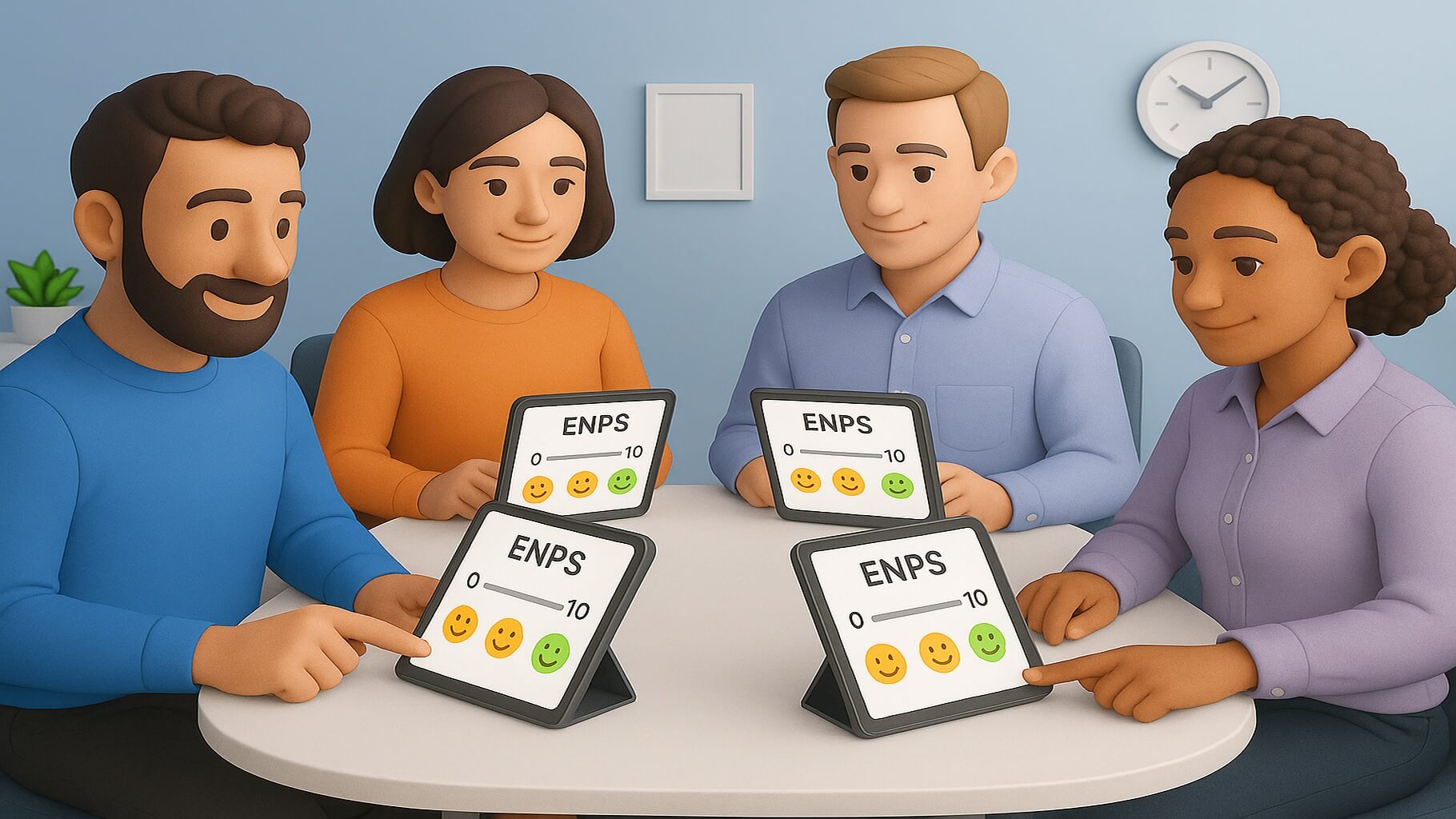
Interpreting eNPS scores requires understanding what numbers reveal about employee loyalty and satisfaction levels. Raw scores provide starting points for analysis, but deeper interpretation considers trends, distributions, and context. Organizations that excel at eNPS measurement look beyond surface numbers to understand the underlying patterns that affect employee sentiment through a comprehensive pulse survey template analysis.
Effective interpretation connects eNPS data with other organizational metrics to identify correlations and causation. Changes in eNPS scores following specific initiatives help validate which actions most effectively improve employee experience. Comparative analysis across teams or departments reveals pockets of excellence to learn from and areas needing targeted attention, while team rewards programs can address identified gaps.
What different eNPS scores mean for organizations
Negative eNPS scores indicate more detractors than promoters, suggesting significant workplace issues requiring immediate attention from leadership. Scores near zero show equal numbers of promoters and detractors, representing neutral employee sentiment with substantial room for improvement. Positive scores between 1 and 30 indicate more promoters than detractors, but also opportunities for improvement.
Scores from 30 to 50 reflect strong employee engagement and satisfaction with workplace culture and leadership. Organizations achieving scores above 50 have exceptional employee loyalty with highly engaged workforces actively advocating for the organization. Understanding these ranges helps set realistic improvement goals and recognize genuine successes in building positive work cultures.
Analyzing promoter, passive, and detractor percentages
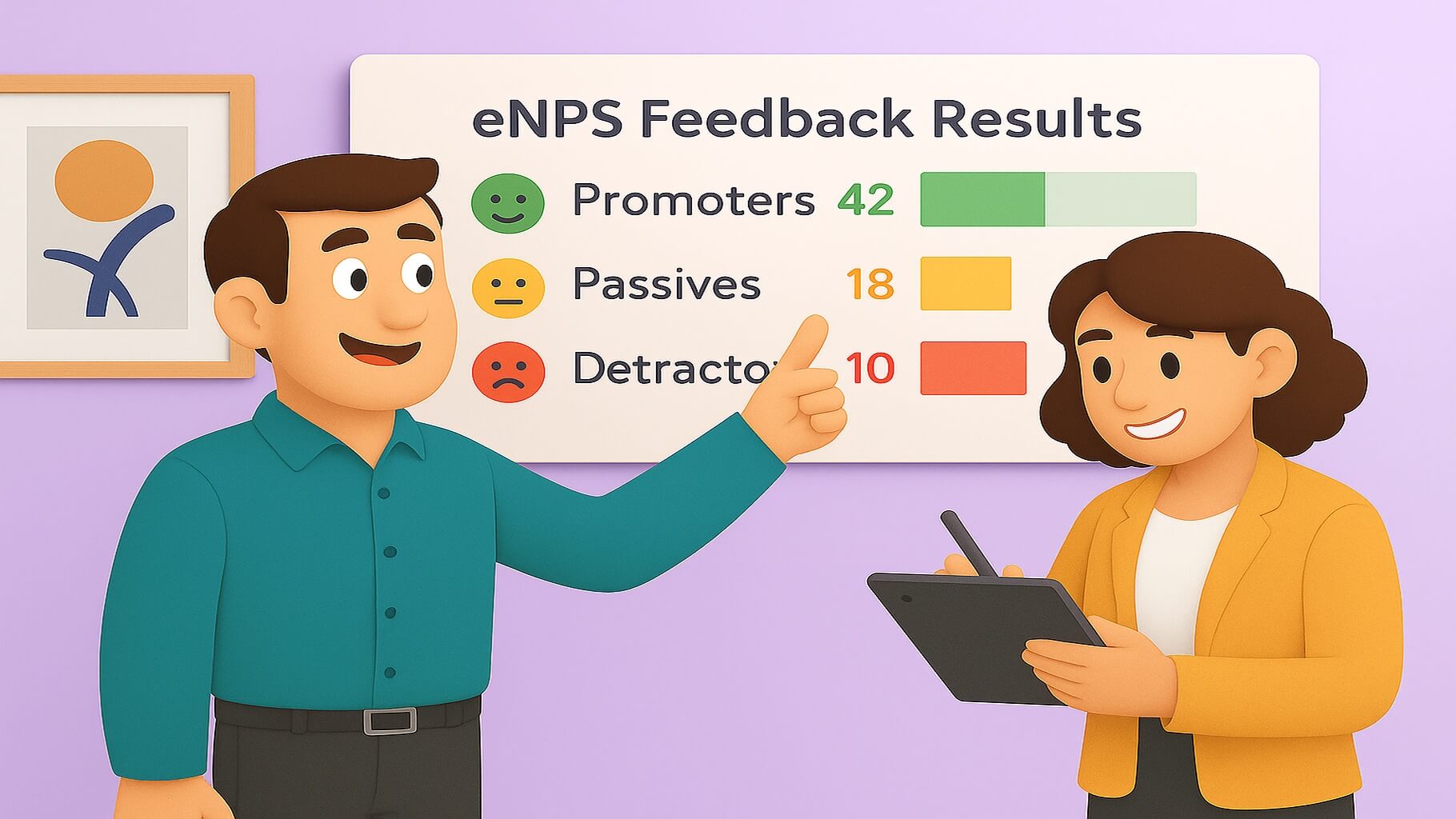
Distribution of employees across the three categories often reveals more than the final eNPS score alone. High percentages of passives suggest neutral sentiment that could shift either direction with appropriate interventions. Large numbers of detractors indicate serious issues affecting employee satisfaction that need immediate action.
Organizations should track changes in category distributions over time, not just overall scores. Converting passives to promoters often proves easier than addressing detractor concerns, providing quick wins for eNPS improvement. Understanding what differentiates promoters from other employees helps identify best practices to scale across the organization.
Tracking eNPS score changes over time
Trend analysis reveals whether initiatives are successfully improving employee sentiment or if scores are declining. Seasonal patterns in eNPS data help organizations anticipate normal fluctuations versus genuine changes requiring attention. Correlating score changes with specific organizational events or initiatives validates which actions most effectively impact employee net promoter scores.
Long-term tracking provides context for short-term variations that might otherwise cause unwarranted concern. Consistent measurement intervals enable reliable trend analysis supporting strategic workforce planning. Organizations should celebrate improvements while maintaining focus on continuous enhancement rather than treating any score as a final destination.
eNPS login and platform access considerations

Secure access to eNPS survey platforms protects sensitive employee data while enabling appropriate stakeholders to view results. Organizations must balance data accessibility for managers and HR teams with privacy protections for survey respondents. Thoughtful access management ensures that eNPS insights reach people who can act on them while maintaining employee trust through secure employee engagement survey software.
Platform security considerations include both technical protections and policy frameworks governing data use. Organizations should establish clear guidelines about who can access raw survey responses versus aggregated data. Regular reviews of access permissions ensure that only current employees with legitimate needs can view sensitive employee feedback and eNPS results, while connecting data insights to employee rewards ideas that drive improvements.
Setting up eNPS survey platforms securely
Implementing strong authentication methods protects employee data from unauthorized access. Encryption of data both in transit and at rest safeguards sensitive employee responses. Regular security audits ensure platforms maintain protection against evolving cyber threats.
Integration with existing identity management systems streamlines secure access while maintaining consistent security standards. Backup procedures protect against data loss while respecting privacy requirements for employee information. Organizations should verify that eNPS platform vendors maintain appropriate security certifications and comply with relevant data protection regulations.
Managing user access and permissions
Role-based access controls ensure managers see only their team's data while HR teams access organization-wide results. Limiting access to individual survey responses protects employee privacy while allowing analysis of aggregated data. Clear documentation of who can access what data prevents confusion and potential misuse.
Regular reviews of access permissions remove privileges from employees who change roles or leave the organization. Audit logs track who accesses employee feedback and when, supporting accountability for data handling. Training for users with access to eNPS data emphasizes appropriate use and privacy obligations.
Ensuring data privacy in eNPS tools
Transparency about data collection and use builds employee trust, essential for honest survey responses. Clear privacy policies explain how organizations will use eNPS data and who can access individual responses. Anonymization of responses, where possible, protects employee privacy while enabling meaningful analysis.
Organizations must follow privacy regulations like GDPR or CCPA when collecting employee feedback. Leaders should evaluate whether anonymous or confidential surveys better serve their needs while protecting employee privacy. Transparent communication about data security practices helps build trust and encourages honest participation.
Best practices for improving employee net promoter score
Improving eNPS requires systematic approaches that address underlying factors affecting employee satisfaction and loyalty. Organizations that successfully increase scores focus on creating genuine positive changes rather than just influencing survey responses. Sustainable improvements come from addressing root causes identified through survey feedback and follow-up questions captured in strategic pulse survey vs engagement survey approaches.
The most effective improvement strategies connect eNPS measurement with recognition programs and other initiatives that enhance employee experience through effective employee recognition software. Acting quickly on survey feedback demonstrates organizational responsiveness that builds employee trust. Celebrating improvements while maintaining focus on continuous enhancement creates momentum for lasting cultural change.
Acting on eNPS survey feedback effectively
Analyzing survey results promptly after collection enables timely responses to employee concerns. Identifying top priorities based on potential impact and feasibility helps focus improvement efforts. Communicating action plans transparently shows employees that their feedback drives real changes, encouraging continued participation.
Assigning clear ownership for improvement initiatives ensures accountability for results. Setting measurable goals for eNPS improvement creates focus, while tracking progress validates initiative effectiveness. Regular updates on progress maintain momentum and demonstrate the organization's ongoing commitment to enhancing the employee experience.
Converting detractors and passives to promoters
Understanding specific concerns of detractors through follow-up questions enables targeted interventions. Addressing systemic issues affecting satisfaction shows employees their concerns are heard and valued. Personal outreach to detractors when appropriate demonstrates individual care while gathering detailed feedback.
Engaging passives by understanding what would increase their enthusiasm helps target improvement efforts. Small wins that address passive concerns can efficiently shift sentiment toward promoter territory. Recognizing and celebrating employees who provide constructive feedback encourages ongoing participation in improvement processes.
Connecting eNPS results to recognition programs
Analyzing eNPS data alongside recognition patterns reveals whether appreciation efforts effectively support employee satisfaction. Implementing recognition programs that address gaps identified through eNPS surveys creates targeted improvements. Celebrating behaviors that align with desired cultural changes reinforces progress toward higher scores.
Recognition initiatives can specifically acknowledge employees who contribute to a positive workplace culture and help others feel valued. Connecting recognition to company values reinforces desired behaviors while improving employee engagement. Regular recognition, such as through platforms like Matter, helps maintain positive momentum between formal eNPS measurements.
eNPS calculation examples and case studies
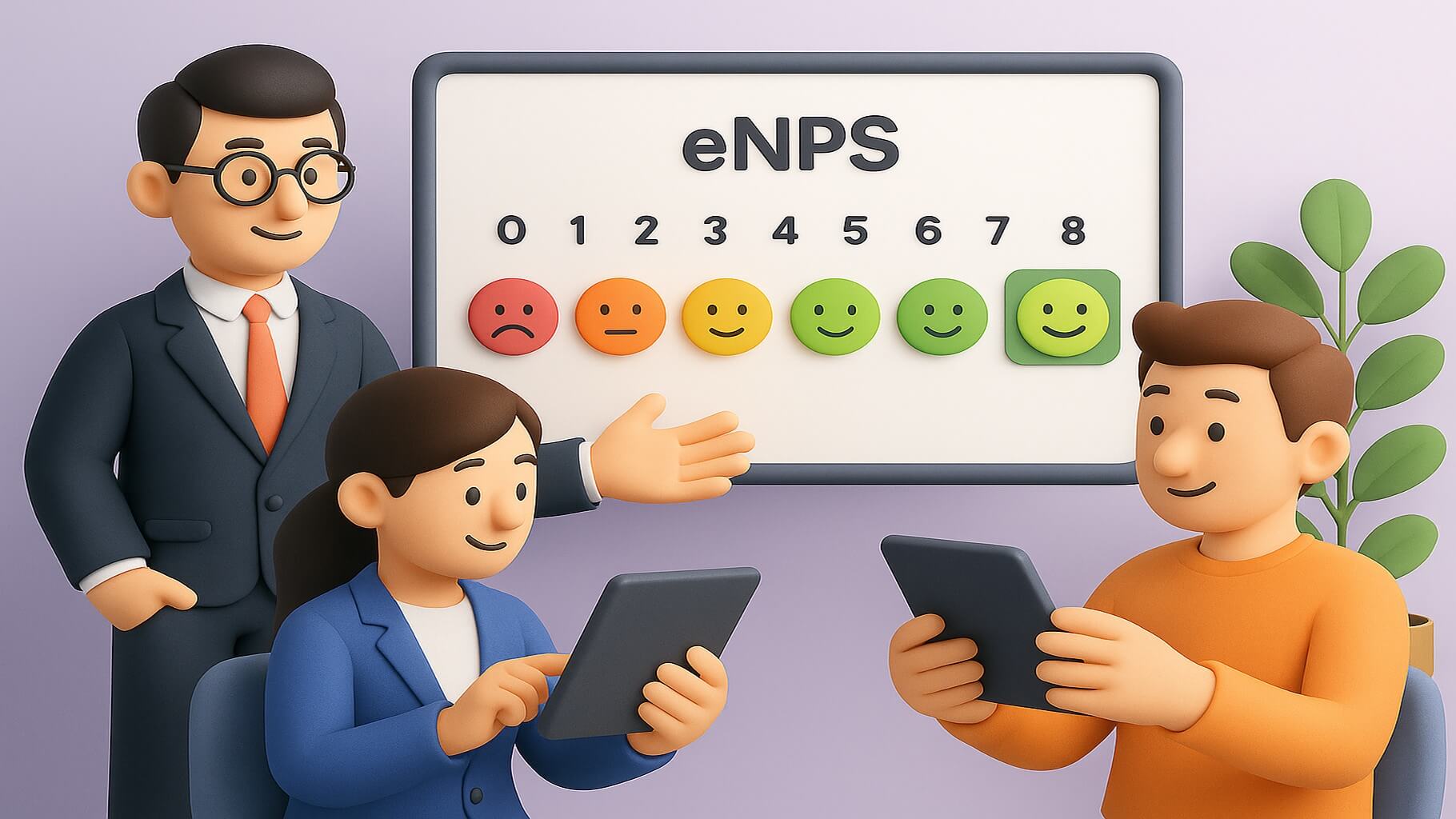
Real-world examples help organizations understand how to apply eNPS measurement effectively through documented peer-to-peer recognition case studies. Hypothetical scenarios demonstrate calculation methods and interpretation approaches. Learning from diverse situations prepares HR teams to handle various response patterns and organizational contexts.
Case studies reveal common patterns in how eNPS scores relate to other organizational outcomes by analyzing employee rewards system implementations. Understanding different scenarios helps organizations anticipate challenges and opportunities. Practical examples make abstract concepts concrete, supporting successful eNPS program implementation.
Real-world eNPS calculation scenarios
Consider an organization surveying all team members about their likelihood to recommend the workplace. If responses show 45 percent strongly agree, 30 percent agree, and 25 percent in neutral or disagree categories, the calculation proceeds by identifying promoters and detractors. With promoters at 45 percent and detractors at 25 percent, subtracting gives an eNPS of 20.
Another scenario might show 60 percent promoters, 25 percent passives, and 15 percent detractors, resulting in an eNPS of 45. This higher score indicates stronger employee loyalty and satisfaction. Comparing scores across departments or time periods reveals patterns helping prioritize improvement efforts.
How to calculate eNPS with different response patterns
Uniform response distributions where roughly equal percentages fall in each category yield eNPS scores near zero. Situations with high percentages of passives but few promoters or detractors suggest neutral sentiment requiring engagement to shift toward advocacy. Bimodal distributions with substantial promoters and detractors but few passives indicate divided workplaces where some employees thrive while others struggle.
Understanding how different response patterns translate to eNPS scores helps interpret results accurately. Analyzing category distributions alongside overall scores reveals nuances that single numbers obscure. Organizations can use these insights to target specific employee groups with tailored initiatives addressing their unique concerns or building on their positive experiences.
Using eNPS data to drive workplace improvements
Organizations can segment eNPS results by various factors to identify specific improvement opportunities. Departments with lower scores may need leadership changes or adjustments in resource allocation. Tracking how scores change following specific interventions validates which actions most effectively improve employee sentiment.
Combining eNPS data with other metrics like retention rates reveals correlations between satisfaction and business outcomes. Organizations seeing declining scores can intervene proactively before losing valuable talent. Regular measurement creates accountability for managers to maintain positive team cultures that support high employee Net Promoter Scores.
How Matter can help with eNPS measurement
Getting employees to actually complete surveys remains one of the biggest challenges in workforce measurement. Traditional email-based surveys often sit unopened or get buried under more urgent messages, leading to low participation rates that undermine data quality. The Slack-first and Teams-first approach solves this by deploying surveys directly inside the communication tools employees use daily, delivering 10x higher response rates by eliminating the friction of switching between applications.
Beyond improved participation, the platform streamlines every aspect of eNPS measurement from deployment through analysis. Support for multiple survey types, including pulse surveys, eNPS, onboarding surveys, and exit surveys, means teams can manage their entire feedback program through a single integrated system. Real-time analytics provide immediate visibility into sentiment as responses arrive, enabling rapid response to emerging concerns rather than waiting weeks for compiled reports.
Automated eNPS surveys and calculation features
Survey automation removes the administrative burden that often causes measurement programs to stall or become inconsistent. Pre-built templates include validated questions using a research-backed five-point Likert scale that teams can deploy immediately or customize to match specific needs. This methodology measures the same underlying sentiment as traditional 11-point scales while offering significantly better usability on mobile devices.
Automated reminders encourage participation without requiring HR teams to manually chase non-respondents, a task that quickly becomes unsustainable as survey frequency increases. The platform calculates eNPS scores automatically as responses arrive, categorizing each based on the five-point methodology: only 5 (strongly agree) indicates Promoters, only 4 (agree) represents Passives, and 1-3 (strongly disagree, disagree, and neutral) identify Detractors. Scheduled recurring surveys ensure consistent measurement without manual setup for each cycle, making it realistic to track sentiment trends over months and years.
Real-time eNPS score tracking and analytics
Waiting weeks to compile and analyze survey results means missing opportunities to address concerns while they're still manageable. Real-time dashboards show current scores and trends as responses come in, delivering continuous insights into employee engagement levels and potential turnover risks. Segmentation capabilities enable analysis by department, tenure, location, or custom categories, helping pinpoint exactly where attention is needed rather than treating the entire workforce as a single group.
Comparative analytics reveal how scores shift following specific initiatives or events, validating which actions actually move the needle on employee sentiment. Alert features notify stakeholders when scores drop significantly, allowing rapid response before small concerns escalate into larger problems. For teams that need to integrate eNPS data with other workforce analytics, export features make this straightforward, though the platform's native reporting provides everything most teams need for effective program management.
Integrated recognition based on eNPS insights
Measurement alone doesn't improve scores. What differentiates effective eNPS programs is the connection between gathering feedback and taking visible action. The platform links survey insights with employee recognition and rewards capabilities, creating closed-loop systems where feedback drives meaningful change.
When eNPS data reveals that employees want more appreciation for specific behaviors, the coin-based reward system enables managers to respond directly. Survey feedback might surface that cross-team collaboration goes unnoticed, prompting leadership to create recognition programs specifically celebrating those contributions. This integrated approach demonstrates that employee voices actually influence workplace culture, which itself becomes a driver of improved scores over time. Employees who see their feedback lead to real changes are more likely to participate in future surveys and provide thoughtful, honest responses.
What are the benefits of running eNPS surveys regularly?
The single-question format makes eNPS easy to dismiss as shallow. In practice, the simplicity is what makes the metric usable: teams can run it often, compare it across groups, and act on it quickly. Four benefits show up consistently in organizations that measure eNPS on a regular cadence.
Early warning on retention risk
Detractors identified through an eNPS survey are the employees most likely to leave in the coming year. Breaking results down by department, tenure, or manager shows where that risk concentrates so leaders can intervene while there is still time. Tracking scores over several cycles also reveals employees whose sentiment is sliding toward detractor territory before they get there.
Internal benchmarking across teams
Comparing eNPS across teams, locations, or business units exposes pockets of excellence and areas that need support. When one department consistently scores higher, leadership can study what that team does differently and share the practice. External industry benchmarks add context, but internal trends are what drive specific improvements.
Targeted improvement plans
Paired with an open-ended follow-up question, eNPS results tell you not just how employees feel but why. If several teams mention limited career growth, investing in development programs is a safer bet than launching a generic engagement initiative. Sharing what changed as a result of the feedback closes the loop and lifts future response rates.
A cultural barometer
eNPS reflects how well stated values match daily experience. Scores that climb suggest culture initiatives are landing; flat or declining scores signal a gap between leadership intent and employee perception. Large differences between subgroups usually mean the employee experience depends heavily on which team someone joins or which manager they report to.
Frequently asked questions about eNPS
Common questions about eNPS measurement help organizations understand best practices for implementation. Clarifying terminology and methodology ensures accurate measurement and interpretation. Addressing frequent concerns supports successful program launches and ongoing management.
Q: What is eNPS, and what does eNPS stand for?
A: eNPS stands for employee net promoter score, a metric measuring how likely employees are to recommend their workplace to others. It adapts the customer-focused Net Promoter Score concept to gauge employee loyalty and satisfaction. The score is computed by deducting the percentage of detractors from the percentage of promoters. Organizations use eNPS alongside pulse survey objectives to track engagement trends and identify improvement areas.
Q: How to calculate eNPS accurately?
A: Calculate eNPS by categorizing survey responses into promoters, passives, and detractors based on their ratings. Determine the percentage of respondents in the promoter and detractor categories. Subtract the detractor percentage from the promoter percentage to get your eNPS score, which ranges from -100 to 100. The passive percentage provides valuable context for neutral employee sentiment.
Q: What is a good eNPS score for organizations?
A: Scores above 10 are considered acceptable, indicating more promoters than detractors. Scores between 30 and 50 demonstrate strong employee engagement. Scores above 50 are excellent, indicating highly engaged employees who actively advocate for the organization. Organizations should focus on improving scores over time rather than fixating on specific targets.
Q: What eNPS questions should surveys include?
A: Begin with the fundamental inquiry regarding the likelihood of employees recommending the organization to others. Include follow-up questions about what influences their rating and what could be improved. Additional questions might address career growth, leadership, work-life balance, or recognition practices. Keep the total to five questions or fewer to respect employees' time. For design guidance, review pulse survey examples that demonstrate effective question frameworks.
Q: How often should you measure employee net promoter score?
A: Most organizations measure eNPS quarterly or twice annually to track trends without creating survey fatigue. Quarterly measurements provide more frequent data points, while semi-annual surveys reduce administrative burden. Organizations undergoing significant changes might measure more frequently to gauge impact on employee sentiment. Consistent timing helps establish reliable trend data for strategic workforce planning.
Q: What eNPS tools are best for measurement?
A: The best eNPS tools integrate with existing workplace systems like Slack or Microsoft Teams to maximize response rates. Look for platforms offering automated distribution, real-time analytics, and action-planning features. Solutions connecting eNPS measurement with recognition programs help organizations act on feedback effectively. When selecting tools, consider which pulse survey questions for employees the platform supports alongside budget and technical requirements.
Q: What does an eNPS score mean for retention?
A: eNPS is a strong retention signal. Detractors are more likely to leave within the next 12 months, while promoters stay longer and refer quality candidates. Organizations with high eNPS scores typically see lower turnover and hiring costs and a stronger employer brand, and a declining score works as an early warning that retention risk is rising.
Final thoughts about eNPS
The employee net promoter score provides organizations with a simple yet powerful way to measure and track employee loyalty and workplace satisfaction. Regular eNPS measurement creates accountability for maintaining positive workplace cultures and identifies areas that need attention before problems escalate. Organizations that consistently measure eNPS and act on results demonstrate commitment to employee experience that builds trust and engagement.
Taking action on eNPS feedback matters more than achieving any specific score. Employees appreciate organizations that attentively consider their concerns and implement substantive changes in response. Integrating eNPS assessment with recognition initiatives, such as those provided by Matter, fosters comprehensive strategies for cultivating workplace cultures in which employees feel appreciated and inspired to deliver their optimal performance.
Matter provides the tools organizations need to measure eNPS effectively while connecting insights to concrete actions through integrated recognition and rewards. The platform's automation and analytics capabilities make it easy to consistently track employee sentiment while reducing the administrative burden on HR teams. By measuring eNPS and acting on results, organizations create positive cycles of continuous improvement that enhance employee rewards software strategies, and strengthen recognition programs.
Ready to measure and improve your eNPS? Schedule a demo with a Matter expert today and discover how our platform helps you calculate employee net promoter scores, gather insights, and create a culture of continuous improvement.