
Building an effective employee engagement strategy requires pulse surveys that transform feedback collection from an administrative burden into a strategic advantage. At Matter, we recognize that organizations encounter significant challenges in selecting the right pulse survey software when dozens of platforms promise powerful analytics and effortless implementation. Many companies struggle to identify which features truly matter for their specific needs, facing overwhelming technical specifications, unclear pricing models, and engagement surveys requiring extensive setup time. Without the right pulse survey software, organizations risk investing in complex systems that employees avoid using, generating low participation rates and unreliable data, or choosing oversimplified employee surveys that fail to provide actionable insights needed to drive meaningful workplace improvements and connect pulse survey templates directly to recognition programs that build trust, reduce turnover, and create environments where employees genuinely feel heard.
What is a pulse survey?

Pulse surveys represent a fundamental shift in how organizations approach employee feedback, replacing lengthy annual assessments with brief, frequent surveys that capture employee sentiment in real-time. These short questionnaires typically contain three to fifteen pulse survey questions designed to measure specific aspects of employee engagement, satisfaction, and workplace culture without creating survey fatigue. Modern pulse survey software enables companies to gather real-time feedback on everything from management effectiveness to job satisfaction, creating an early warning system for potential issues while celebrating what's working well.
Defining pulse surveys and their strategic measurement role
Pulse surveys function as continuous listening mechanisms that help organizations maintain constant awareness of employee sentiment across teams, departments, and locations. Unlike traditional surveys that provide a snapshot once or twice per year, these frequent surveys create an ongoing dialogue where employees can provide feedback when experiences are fresh and feelings are genuine. The strategic value lies in their ability to identify engagement trends as they emerge, allowing leaders to respond proactively rather than discovering problems months after they've begun impacting employee retention and performance.
Organizations implement pulse surveys to track specific engagement metrics over time, creating baselines that reveal whether initiatives are succeeding or need adjustment. The data collected through pulse survey software serves as the foundation for data-driven decision-making, enabling HR teams and managers to understand which actions have the most positive impact on employee experience. This measurement approach transforms abstract concepts like engagement into concrete engagement data that leaders can monitor, discuss, and improve through targeted interventions that collect employee feedback systematically.
How pulse surveys differ from annual engagement surveys
Annual engagement surveys typically contain fifty to one hundred questions covering every aspect of workplace experience, requiring significant time investment from employees and creating analysis paralysis for leadership teams. In contrast, pulse surveys focus on specific topics or themes, making them quick to complete and easy to analyze while still providing valuable insights into organizational health through real-time feedback. The frequency of pulse surveys means organizations can track how employee sentiment changes in response to specific events, policies, or leadership decisions, creating clear cause-and-effect relationships that annual surveys miss.
The immediacy of pulse survey results allows for rapid response cycles where leaders can acknowledge concerns, communicate actions, and demonstrate that employee feedback drives real change. This responsiveness builds trust and encourages honest and open communication, as employees see their input leading to tangible improvements rather than disappearing into an annual report. The shorter format also reduces the administrative burden on both employees and HR teams, making continuous feedback collection sustainable rather than exhausting.
The frequency and timing that makes pulse surveys effective
Most organizations conduct pulse surveys weekly, biweekly, or monthly, with survey frequency determined by company size, industry dynamics, and the specific metrics being tracked through engagement surveys. Weekly pulse surveys work well for fast-moving environments where conditions change rapidly, while monthly engagement surveys suit more stable organizations focused on tracking longer-term engagement trends. The key is maintaining consistency so that patterns become visible and teams develop the habit of participating in ongoing conversations about workplace improvement.
Timing pulse surveys strategically amplifies their impact by capturing real-time feedback when it matters most. Launching pulse surveys after major announcements, following team changes, or during busy seasons provides immediate insights into how events affect employee sentiment and employee engagement levels. Smart pulse survey software automates scheduling and distribution, ensuring engagement surveys reach employees at optimal times without creating additional work for HR teams. This automation, combined with customizable survey templates, makes it possible to maintain frequent feedback collection without overwhelming anyone involved.
What are the benefits of pulse survey tools?

Pulse survey software transforms how organizations understand and improve employee engagement by automating what used to require extensive manual effort and spreadsheet management. These platforms remove the technical obstacles that once made frequent surveys impractical, enabling even small teams to implement sophisticated measurement programs through customizable surveys. The right pulse survey software turns raw feedback into actionable insights through built-in analytics, helping leaders identify improvement areas before small concerns become major problems affecting employee retention.
Real-time insights and automated data collection
Modern pulse survey software delivers immediate insights by processing responses as they arrive, creating dashboards that update continuously rather than requiring weeks of analysis. This real-time feedback enables managers to spot emerging issues within hours rather than months, allowing them to address concerns while they're still fresh and manageable through gathering real-time feedback mechanisms. Automated data collection eliminates the manual work of distributing engagement surveys, tracking responses, and compiling results, freeing HR teams to focus on interpreting engagement data and implementing improvements.
The automation extends beyond basic distribution to include reminder systems, response tracking, and participation monitoring that ensure pulse surveys reach every employee without constant manual oversight. Advanced pulse survey platforms use sentiment analysis and natural language processing to categorize open-ended responses, surfacing common themes in employee feedback without requiring teams to read hundreds of individual comments. These technological capabilities mean organizations can collect insights at a scale unattainable through manual methods, making continuous measurement practical for companies of any size through pulse survey software.
Reducing administrative burden through automation
Pulse survey software dramatically reduces the time required to run effective feedback programs by automating scheduling, distribution, follow-up reminders, and initial data analysis through customizable surveys. What once took HR teams dozens of hours per cycle now happens automatically, allowing those teams to dedicate their energy to acting on actionable insights rather than managing logistics. The reduction in administrative work makes it feasible to increase frequency without proportionally increasing workload, enabling the continuous feedback loops that drive meaningful improvement.
Integration capabilities further reduce administrative burden by connecting pulse surveys to existing workplace platforms like Slack, Microsoft Teams, and HRIS systems. Employees receive survey invitations where they already work, eliminating the need to log into separate portals or remember additional passwords. These integrations also enable engagement data to flow seamlessly into recognition platforms, allowing organizations to celebrate positive engagement trends and acknowledge teams that demonstrate improvement. By streamlining every aspect of collecting feedback and response, modern pulse survey software makes employee recognition a natural extension of the measurement process.
Building continuous feedback cultures with technology
Implementing pulse survey software creates cultural shifts by normalizing feedback as an ongoing conversation rather than a once-yearly event that feels disconnected from daily work. When employees see leaders responding quickly to pulse survey results, they develop confidence that their voices matter and their input drives real change. This trust encourages more honest feedback, creating a virtuous cycle where better data leads to better decisions, which in turn generates more employee engagement with future pulse surveys through continuous feedback mechanisms.
The visibility that pulse survey platforms provide helps democratize understanding of organizational health, making engagement data accessible to managers and team leads who can use it to improve their specific areas. Rather than treating employee sentiment as confidential information known only to senior leadership, these engagement surveys enable distributed decision-making where everyone with responsibility for team performance can access relevant, actionable insights. This transparency, together with the capacity to monitor engagement patterns over time, transforms engagement from an abstract concept into something concrete that teams can actively work to improve through daily actions and leadership behaviors.
15 best pulse survey tools comparison

Choosing from the many pulse survey platforms available requires understanding how different solutions address specific organizational needs, from enterprise scalability to small team affordability. Each platform brings unique strengths in areas like analytics depth, integration options, user experience, and pricing models that make them better suited to particular company sizes and measurement goals. The following comparison explores eighteen leading pulse survey software options, organized by the organization types they serve best, helping you identify which solutions deserve deeper evaluation for your specific context.
6 enterprise-level employee pulse survey tools
Enterprise pulse survey software delivers the sophisticated analytics, security features, and scalability that large organizations require to measure engagement across thousands of employees and dozens of locations. These platforms typically offer advanced capabilities like benchmarking against industry standards, multilingual support, complex workflow automation, and white-glove implementation services. While they represent significant investments, their comprehensive feature sets and proven reliability make them essential for organizations where engagement measurement directly impacts business outcomes.
1. Matter

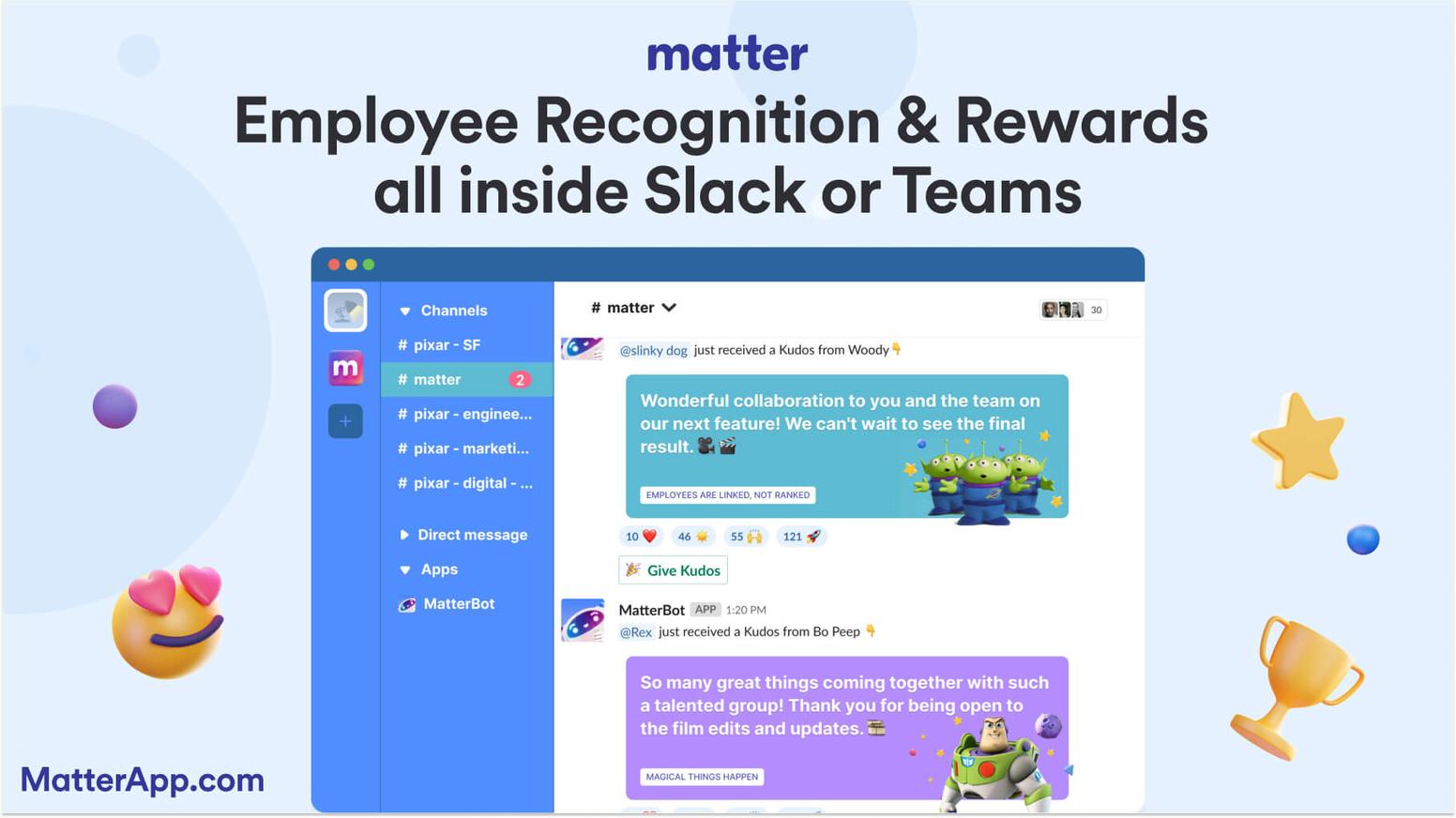
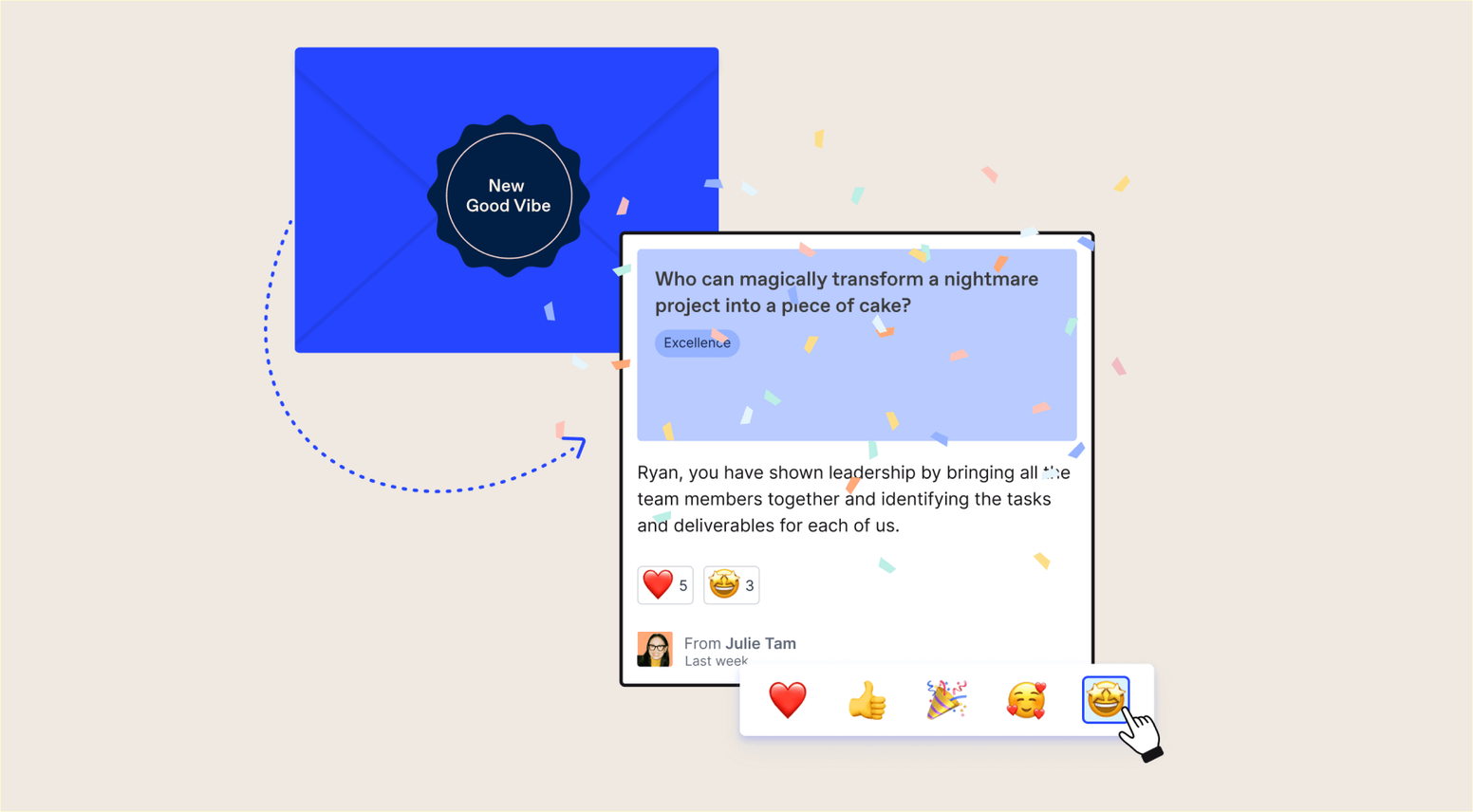
About Matter: Matter is a Slack-first and Teams-first recognition platform that revolutionizes employee engagement measurement by seamlessly integrating pulse surveys with authentic peer recognition. The platform's customizable kudos cards and Feedback Friday automation create a unified system where pulse survey results directly inform appreciation strategies, enabling organizations to both measure and actively improve engagement simultaneously. Matter's intuitive design allows enterprise leaders to implement sophisticated feedback programs in minutes rather than months, with deep integrations that deliver engagement surveys directly within employees' daily workflows through Slack and Microsoft Teams.
Matter transforms traditional pulse survey approaches by connecting measurement to action through its unique coin-based reward system that resets weekly, maintaining authenticity while encouraging consistent participation in both feedback and recognition activities. The platform automates birthday celebrations, work anniversaries, and custom employee surveys, reducing administrative burden while ensuring no achievement goes unrecognized. Enterprise customers benefit from comprehensive real-time analytics, sentiment analysis, and engagement metrics tracking that reveal patterns across teams, departments, and organizational levels, all presented through visual dashboards that communicate actionable insights without requiring data science expertise.
Matter main features:
- Slack and Microsoft Teams integration for seamless pulse survey delivery in daily workflows
- Beautiful, customizable kudos cards connecting survey insights to peer recognition
- Automated Feedback Friday prompts and celebration of birthdays and work anniversaries
- Real-time analytics with sentiment analysis and engagement metrics tracking
- Coin-based reward system encouraging authentic participation that resets weekly
Matter pricing:
- Free Forever: $0/user/month
- Basic: $1/user/month, billed annually
- Pro: $3/user/month, billed annually
- Pro + Surveys: $5/user/month, billed annually
To learn more, view Matter's pricing page.
Matter G2 score: Matter has a G2 score of 4.7/5 based on user reviews.
What Matter customers are saying: "Our company's culture & morale changed overnight! In under 2 months, we've had over 2,000 kudos sent and 80%+ engagement across all employees. Matter has motivated people to participate like no other software we have ever used." - Jeff Hagel, President at McInnis & Holloway (Customer Story)
2. Culture Amp

About Culture Amp: Culture Amp has built a reputation as a comprehensive employee experience platform that extends pulse surveys into broader talent management, including performance reviews and development planning. The platform offers extensive template libraries with validated pulse survey questions based on organizational psychology research, helping companies ask the right questions in ways that generate actionable responses.
Culture Amp main features:
- Research-validated pulse survey questions based on organizational psychology
- Comprehensive analytics identifying correlations between survey responses and business outcomes
- Performance review and development planning integration
- Extensive template library for multiple engagement scenarios
Culture Amp pricing:
Pricing is not listed on the website. To learn more about pricing, you'll need to schedule a demo/sales call with Culture Amp.
Culture Amp G2 score: Culture Amp has a G2 score of 4.5/5 based on user reviews.
What Culture Amp customers are saying on G2: "I've been using this software for a while now, and one of its standout features is how well-organized the system is. Everything is laid out in a clear and intuitive way, making it easy to navigate. Additionally, the punctuality of the communications is exceptional – notifications and updates are always timely, ensuring that I stay on top of tasks and deadlines." - Anna L., SEO Consultant (G2 Review for Culture Amp).
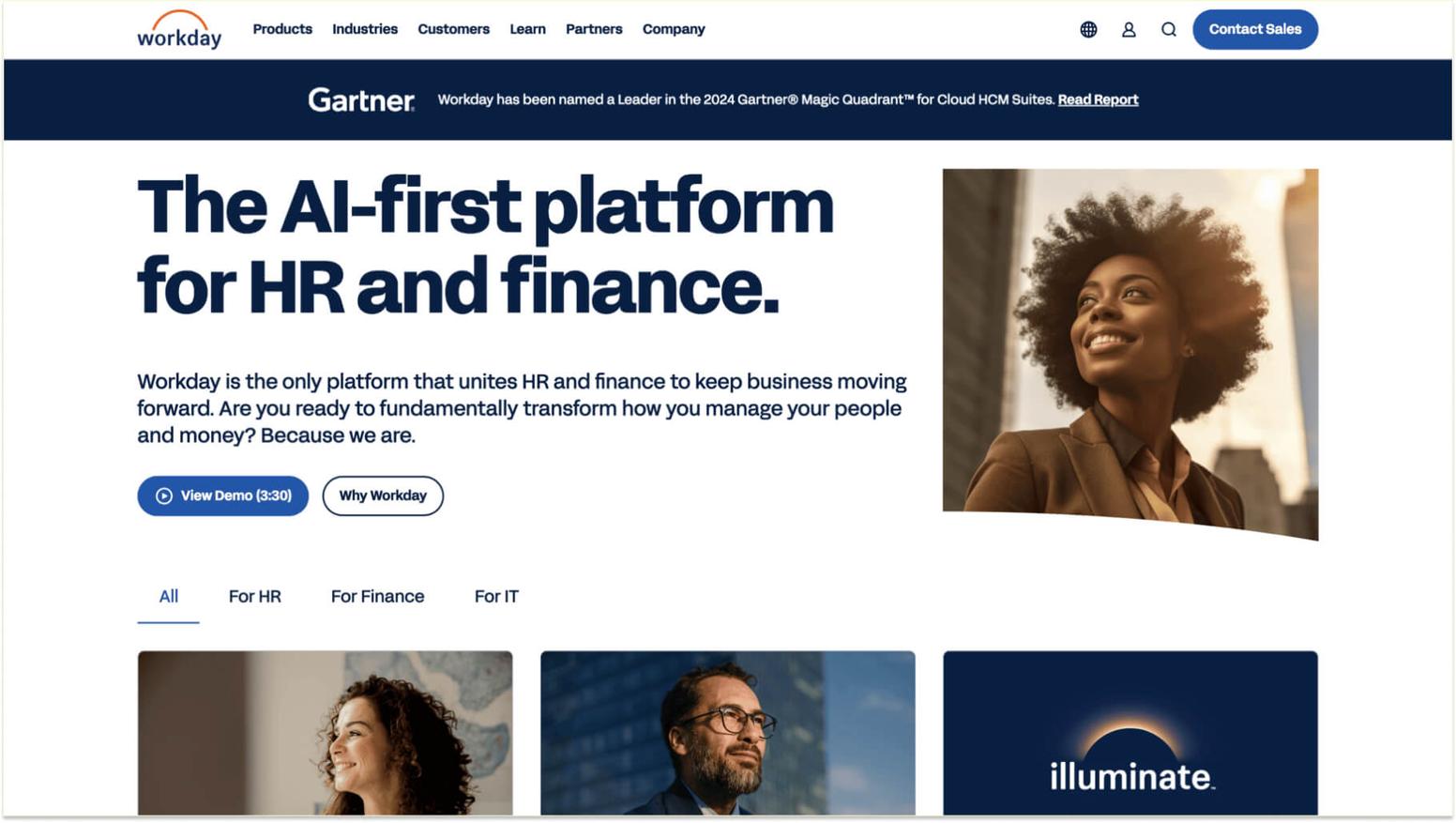
3. Workday

About Workday: Workday differentiates itself through sophisticated machine learning that analyzes open-ended responses to identify emerging themes without manual categorization. The platform's intelligent prioritization helps leaders focus attention on the areas where action will have the greatest impact on employee retention and satisfaction.
Workday main features:
- Sophisticated machine learning for analyzing open-ended responses
- Intelligent prioritization of action areas for maximum impact
- Integration with Workday's broader HR suite
- Seamless data flows connecting engagement with organizational metrics
Workday pricing:
- Free: $0, Single user account
- Essential: $3.50 per person per month
- Pro: $5 per person per month
To learn more, view Workday's pricing page.
Workday Peakon G2 score: Workday has a G2 score of 4.0/5 based on user reviews.
What Workday customers are saying on G2: "I've found Workday to be a reliable application for handling holiday and HR activities at my company. Its user-friendly interface makes requesting leave and checking balances easy and efficient. Real-time updates ensure I always know my leave status without chasing paperwork. I appreciate the integration with other HR functions, which provides a central hub for important information. While there can be some lag during busy times, overall, Workday simplifies holiday management and enhances transparency for both employees and HR teams." - Saurabh Y., Senior Engineer (G2 Review for Workday).
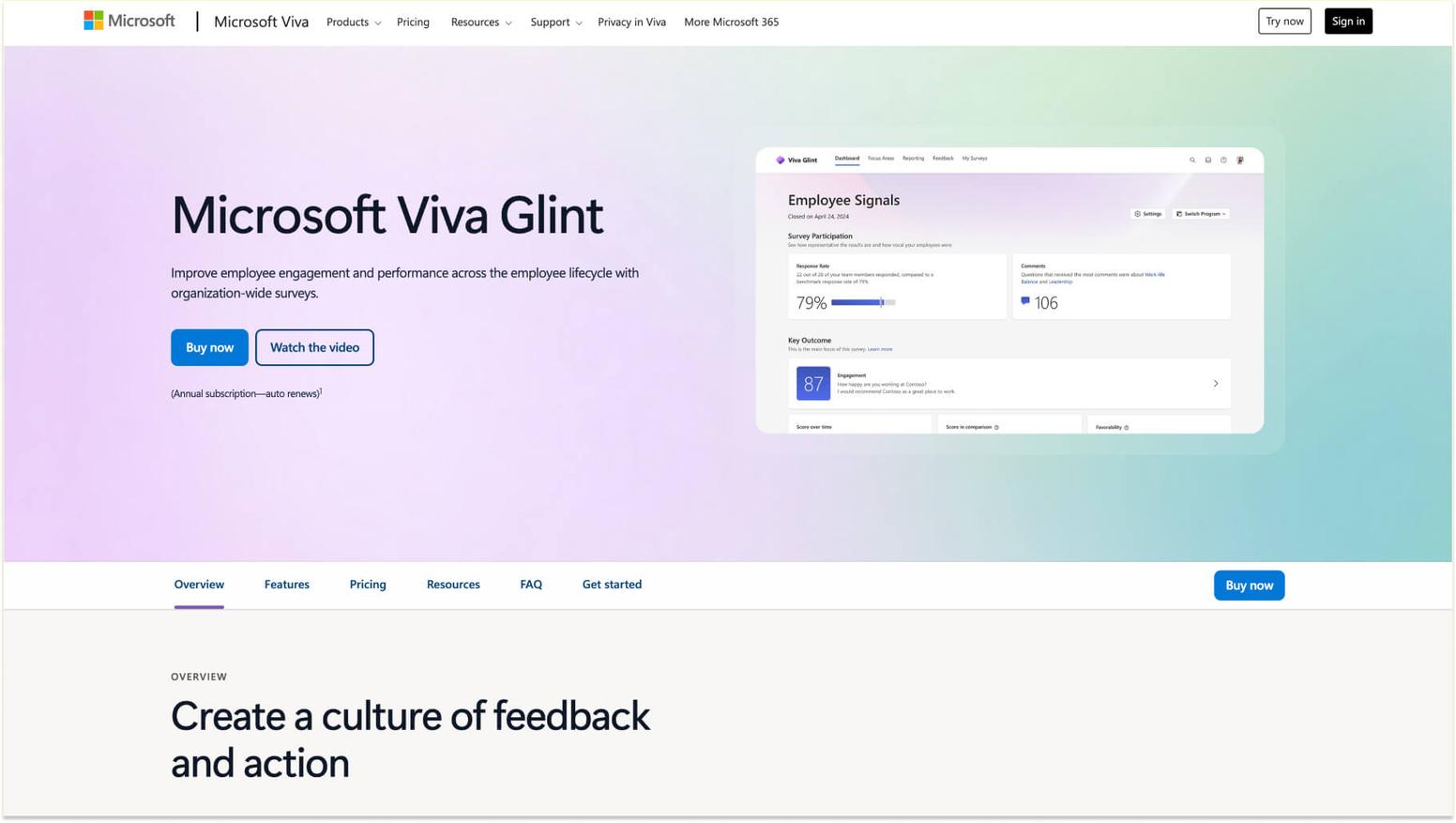
4. Glint

About Glint: Glint leverages the widespread adoption of Microsoft 365 to deliver pulse surveys directly within communication platforms employees already use every day. The platform's Narrative Intelligence feature uses natural language processing to surface actionable insights from qualitative responses, helping teams understand not just what employees feel but why they feel that way.
Glint main features:
- Narrative Intelligence using natural language processing for deeper insights
- Seamless integration with Microsoft 365 and Teams
- Integration with the broader Viva suite for a holistic employee experience
- Automated intervention triggers based on survey results
Glint pricing:
- Microsoft Viva Employee: $2.00 user/month (Annual commitment)
- Microsoft Viva Workplace: $6.00 user/month (Annual commitment)
- Microsoft Viva Suite: $12.00 user/month (Annual commitment)
To learn more, view Glint's pricing page.
Glint G2 score: Glint has a G2 score of 4.6/5 based on user reviews.
What Glint customers are saying on G2: "Good depiction of data, easy to view formats with a variety of different cuts of data available. Not super user-friendly, requires too many clicks to filter the data needed." - Anjali A., Human Resources Consultant (G2 Review for Software).
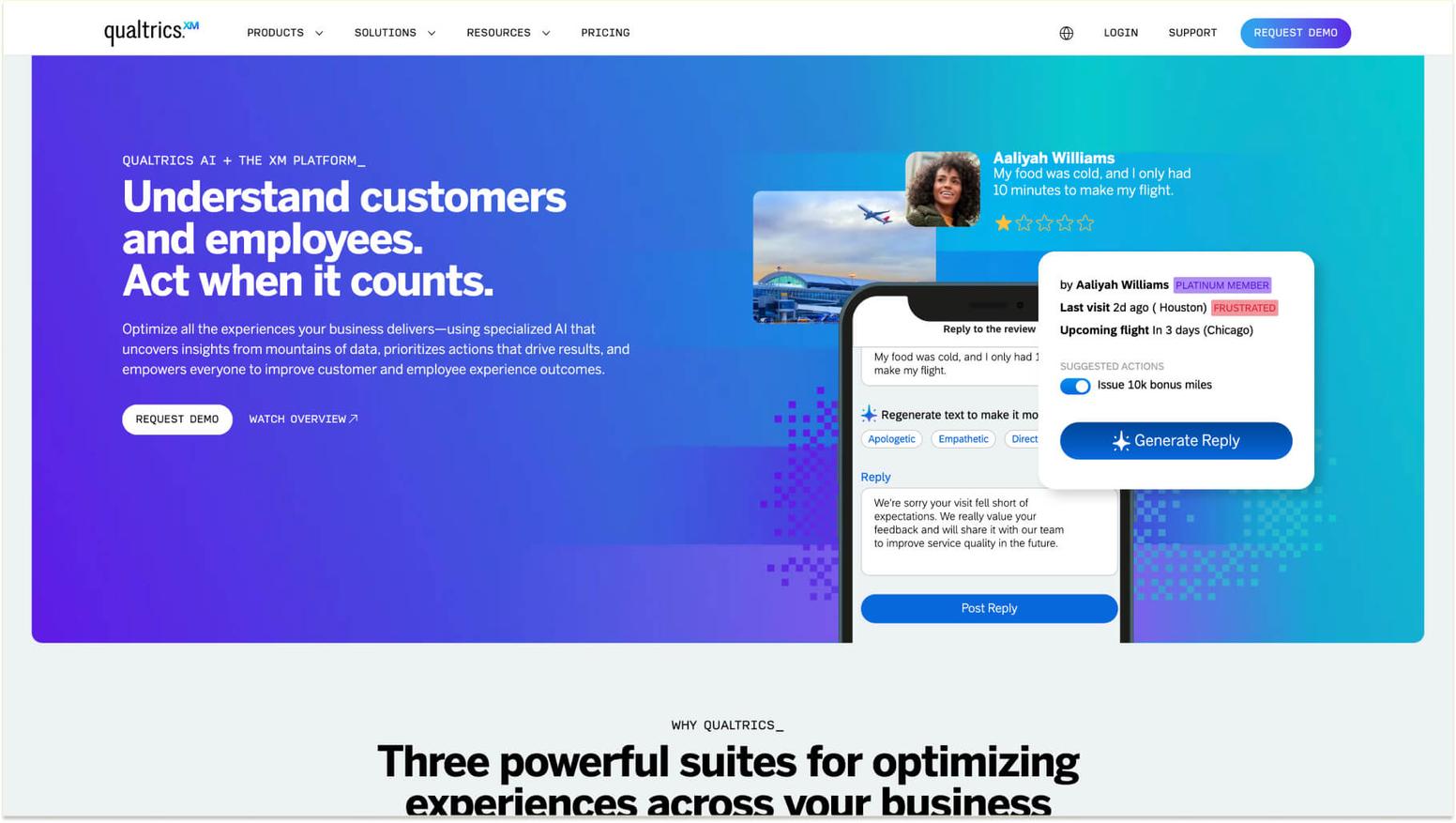
5. Qualtrics EmployeeXM

About Qualtrics EmployeeXM: Qualtrics EmployeeXM brings enterprise survey research expertise to employee engagement measurement, offering sophisticated question design capabilities and statistical analysis features that rival academic research platforms. The system's ability to predict employee behavior based on pulse survey responses helps organizations move from descriptive analytics to prescriptive recommendations.
Qualtrics EmployeeXM main features:
- Sophisticated question design and statistical analysis capabilities
- Predictive modeling for employee behavior
- Multilingual survey support for global organizations
- Advanced role-based reporting and customization
Qualtrics EmployeeXM pricing: Pricing is not listed on the website. To learn more about pricing, you'll need to schedule a demo/sales call with Qualtrics EmployeeXM.
Qualtrics EmployeeXM G2 score: Qualtrics EmployeeXM has a G2 score of 4.4/5 based on user reviews.
What Qualtrics EmployeeXM customers are saying on G2: "Preston Donohoo, with Red Pepper, has been fantastic to partner with. He is thorough, excellent at training and his customer support is outstanding. He made our implementation go very smoothly. We have found the Qualtrics engagement survey and 360s tools easy to use, with the ability to dive deep into our results." - Kelli G., Global Talent Manager (G2 Review for Qualtrics EmployeeXM).
6. Culture Monkey

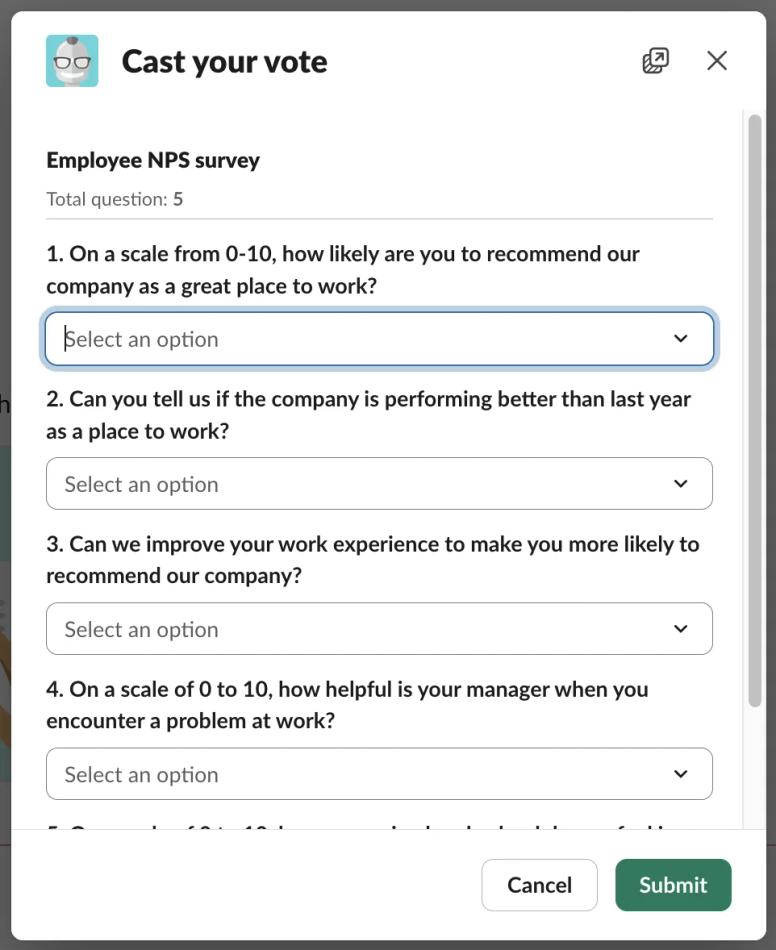
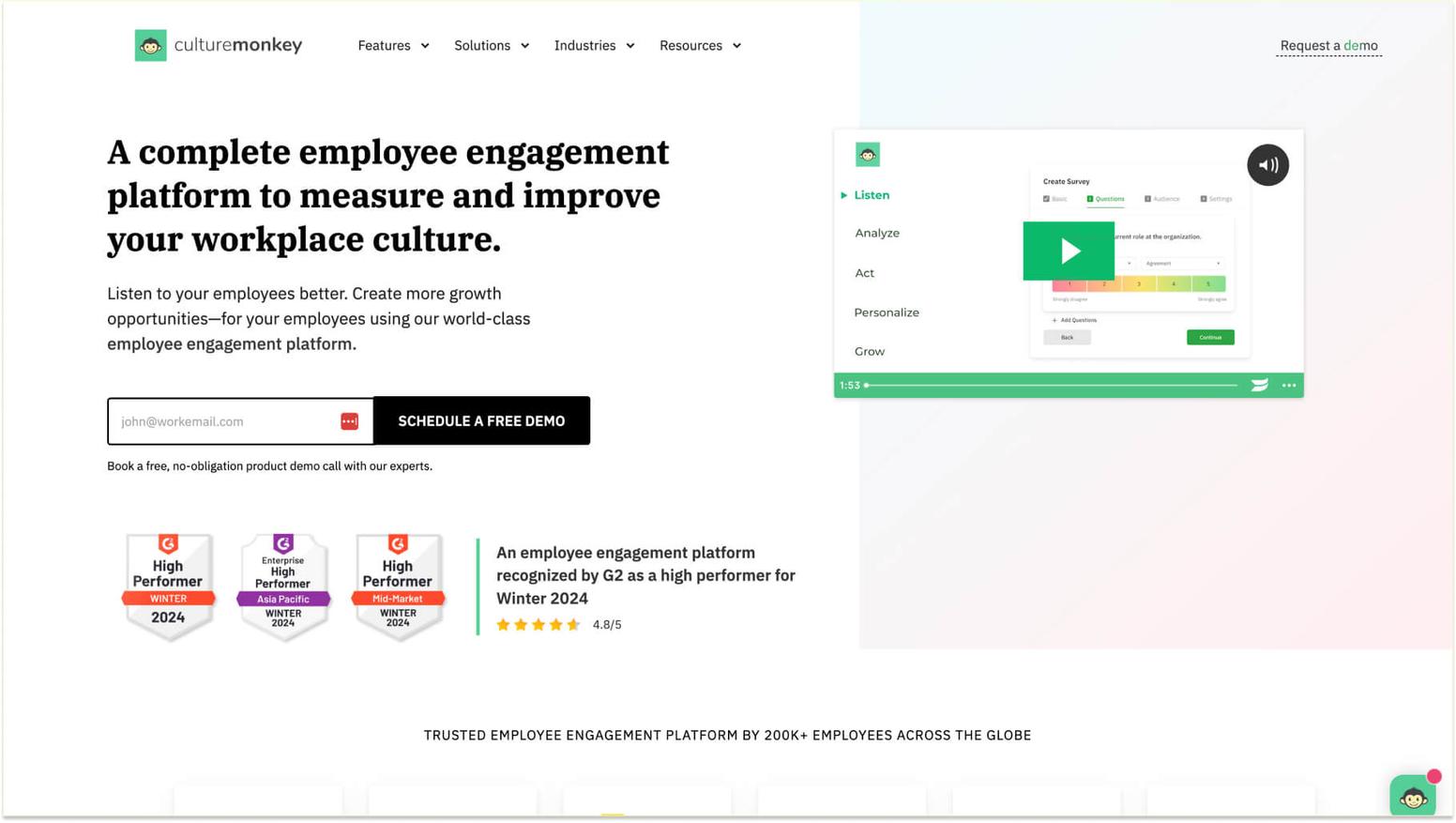
About CultureMonkey: CultureMonkey is an employee engagement platform that specializes in pulse surveys and advanced analytics, helping organizations measure and improve workplace culture through data-driven insights. The platform offers customized reporting views split by manager level, locations, departments, and roles, enabling targeted action planning across different organizational segments. CultureMonkey's manager-level dashboards and action planning features allow stakeholders to actively participate in improving engagement scores, making it particularly effective for organizations seeking to involve leaders at all levels in culture improvement initiatives.
CultureMonkey main features:
- Advanced dashboards with customizable reports by manager level, location, and department
- Manager-level analytics and action planning tools for stakeholder involvement
- Pulse surveys with targeted engagement measurement capabilities
- Comprehensive reporting views for tracking engagement across organizational segments
CultureMonkey pricing: Pricing is not listed on the website. To learn more about pricing, you'll need to schedule a demo/sales call with CultureMonkey.
CultureMonkey G2 score: CultureMonkey has a G2 score of 4.7/5 based on user reviews.
What CultureMonkey customers are saying on G2: "Culture Monkey has the most advanced dashboards that I have come across in a lot of tools that i have evaluated or worked with in the past. There are customized reports and views available, split by manager level, locations, departments and roles. The best feature is the manager-level cuts and the action planning where we can actively involve stakeholders and make them a part of the solution to improve engagement scores across the org." - Pallavi D., Mid-Market (G2 Review for CultureMonkey).
6 mid-market pulse survey tools for growing teams
Mid-market pulse survey software balances robust functionality with approachable pricing and implementation timelines that suit organizations experiencing rapid growth. These platforms typically offer core analytics and automation features without the complexity that enterprise solutions bring, making them ideal for companies with a few hundred to a few thousand employees. The focus tends toward ease of use and quick value realization rather than exhaustive customization, helping growing organizations establish continuous feedback practices without major investments.
1. Matter

About Matter: Matter serves mid-market organizations exceptionally well by providing enterprise-grade employee pulse survey capabilities at price points that make sense for growing companies. The platform scales effortlessly as organizations add employees, teams, and locations without requiring complex reconfiguration or migration projects, maintaining consistent performance and user experience regardless of company size. Matter's combination of pulse surveys and recognition programs addresses both measurement and improvement simultaneously, helping mid-market companies build positive work environments where feedback directly connects to appreciation and rewards.
Implementation simplicity makes Matter particularly valuable for organizations without dedicated HR technology teams, as the platform's intuitive interface requires minimal training for both administrators and participants while delivering sophisticated analytics typically requiring data science expertise. The ability to launch pulse surveys within existing Slack or Teams workspaces dramatically improves participation rates, and automated workflows handle scheduling, distribution, and preliminary analysis, freeing HR teams to focus on acting on actionable insights rather than managing logistics.
Matter main features:
- Enterprise-grade capabilities with mid-market pricing and quick implementation
- Integrated pulse surveys and peer recognition creating complete feedback loops
- Automated workflows reducing the administrative burden for HR teams
- Pre-built templates and customizable surveys covering all engagement topics
- Real-time analytics surfacing insights without requiring data science expertise
Matter pricing:
- Free Forever: $0/user/month
- Basic: $1/user/month, billed annually
- Pro: $3/user/month, billed annually
- Pro + Surveys: $5/user/month, billed annually
To learn more, view Matter's pricing page.
Matter G2 score: Matter has a G2 score of 4.7/5 based on user reviews.
What Matter customers are saying: "Kudos are a big part of our company culture and daily practice because it helps us reinforce the ideal company behaviors. This helps us ensure that we have the right people here and support them to do their best." - María José Franco, People Director at Auronix (Customer Story).
2. 15Five

About 15Five: 15Five focuses on combining pulse surveys with one-on-one meeting facilitation and objective tracking, creating an integrated performance management approach. The platform emphasizes manager enablement by providing conversation guides based on pulse survey responses, helping leaders translate engagement data into meaningful discussions.
15Five main features:
- One-on-one meeting facilitation integrated with pulse surveys
- Conversation guides based on survey responses for managers
- Objective tracking and OKR management
- Weekly check-in focus for continuous performance conversations
15Five pricing:
- Engage: $4/user/month, billed annually
- Perform: $10/user/month, billed annually
- Total Platform: $16/user/month, billed annually
- Transform: on-demand packages starting at $99/month
To learn more, view 15Five's pricing page.
15Five G2 score: 15Five has a G2 score of 4.6/5 based on user reviews.
What 15Five customers are saying on G2: "We have built a company wide OKR tied to our company wide average Pulse score. It is an easy check of how the company is 'feeling' from week to week, and over the last 2 years, I have found it to be accurate, important and super easy for the team to adopt and stay consistent in use." - Dan A., Small-Business (G2 Review for 15Five).
3. Lattice

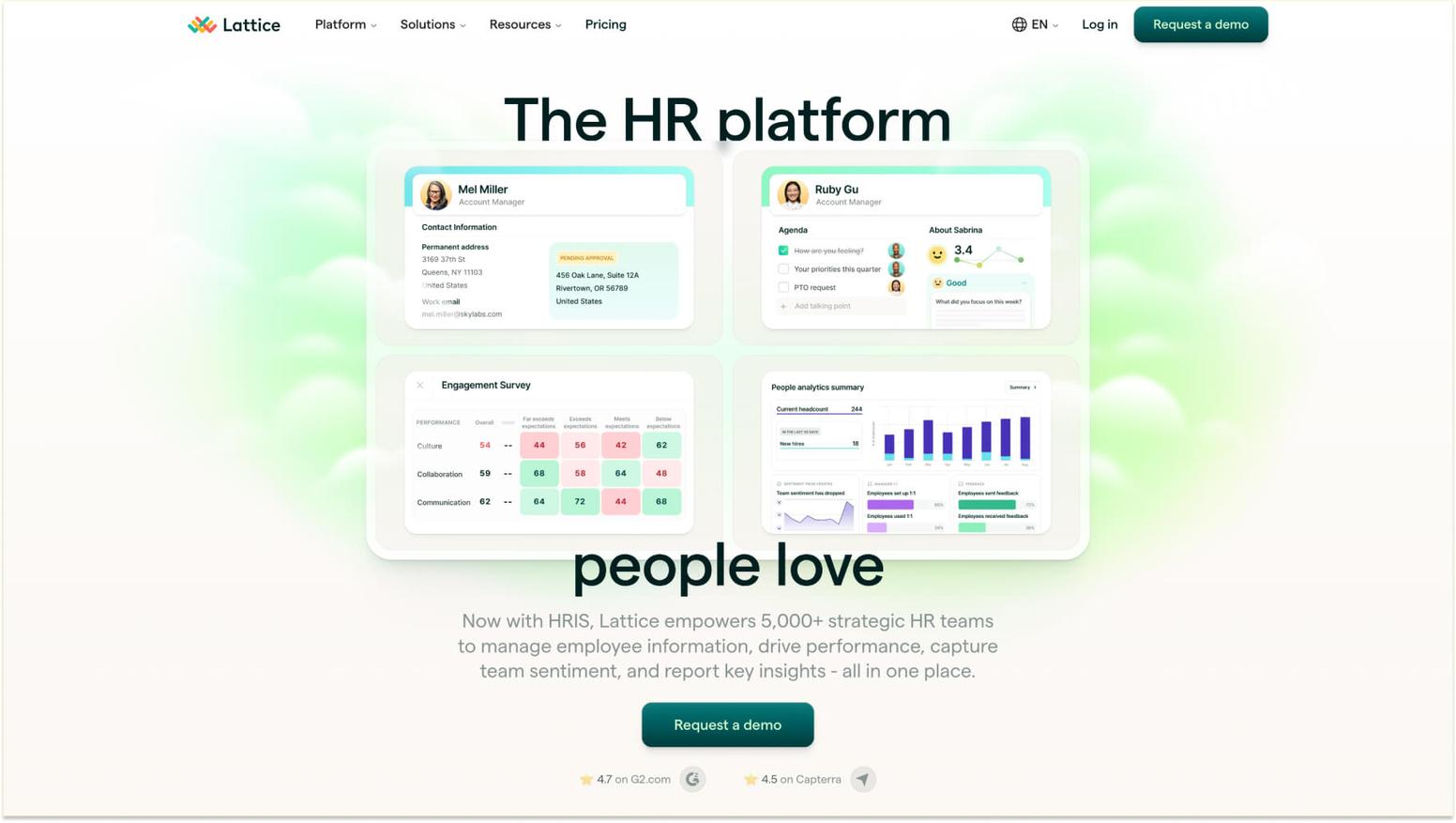
About Lattice: Lattice positions itself as a people success platform that connects pulse surveys to performance reviews, goal setting, and career development initiatives. The platform's strength lies in showing relationships between employee engagement levels and performance outcomes, helping organizations understand how workplace culture impacts business results.
Lattice main features:
- Integration of pulse surveys with performance reviews and goal setting
- Career development and succession planning capabilities
- Manager training and leadership development resources
- Compensation management integration
Lattice pricing:
- Talent Management: $11/seat/month
- HRIS: $5/seat/month
- Engagement: $4/seat/month
- Grow: $4/seat/month
- Compensation: $6/seat/month
To learn more, view Lattice's pricing page.
Lattice G2 score: Lattice has a G2 score of 4.7/5 based on user reviews.
What Lattice customers are saying on G2: "Ease of use and ease of implementation. The implementation time commitment was hours not weeks. We initially implemented all modules except Grow, Comp, and Engage and managed to configure and test all modules in less than two weeks. The product team is very receptive to feedback and also able to help come up with creative workarounds for functional gaps." - Matthew H., Senior Human Resources Manager (G2 Review for Lattice).
4. Workleap

About Workleap: Workleap (formerly Officevibe) emphasizes simplicity and beautiful design, making pulse surveys feel less like corporate obligations and more like natural conversations. The platform automatically suggests pulse survey questions based on previous responses and identified concerns, reducing the planning burden on HR teams.
Workleap main features:
- Beautiful, intuitive interface with emphasis on user experience
- Automatic question suggestions based on previous responses
- Manager dashboards with team-level insights
- GoodVibes peer recognition integration
Workleap pricing:
- Free: $0/user/month
- Essential: $3.50/person/month
- Pro: $5/person/month
To learn more, view Workleap's pricing page.
Workleap G2 score: Workleap has a G2 score of 4.3/5 based on user reviews.
What Workleap customers are saying on G2: "Officevibe provides a regular stream of honest feedback and discussion between managers and employees across our company. GoodVibes has become THE way our employees appreciate and recognize one another. Our management team discusses the data and anonymous responses on a monthly basis." - Anthony B., President (G2 Review for Workleap).
5. Leapsome

About Leapsome: Leapsome combines pulse surveys with learning management and OKR tracking, creating connections between employee feedback, skill development, and goal achievement. The platform's automated action planning features help teams translate pulse survey results into specific improvement initiatives with assigned owners and deadlines.
Leapsome main features:
- Learning management system integration with pulse surveys
- OKR tracking and goal management capabilities
- Automated action planning from survey results
- Comprehensive employee development features
Leapsome pricing: Pricing is not listed on the website. To learn more about pricing, you'll need to schedule a demo/sales call with Leapsome.
Leapsome G2 score: Leapsome has a G2 score of 4.9/5 based on user reviews.
What Leapsome customers are saying on G2: "It is step to step process implementation of sales pattern, customer support, and a lot of feature to understand customer need. It also help to ease of interaction customer mindset and win situation. It have a good dashboard GUI to understand also support available in a single call." - SUMIT KUMAR O., Senior Technical Sales Engineer (G2 Review for Leapsome).
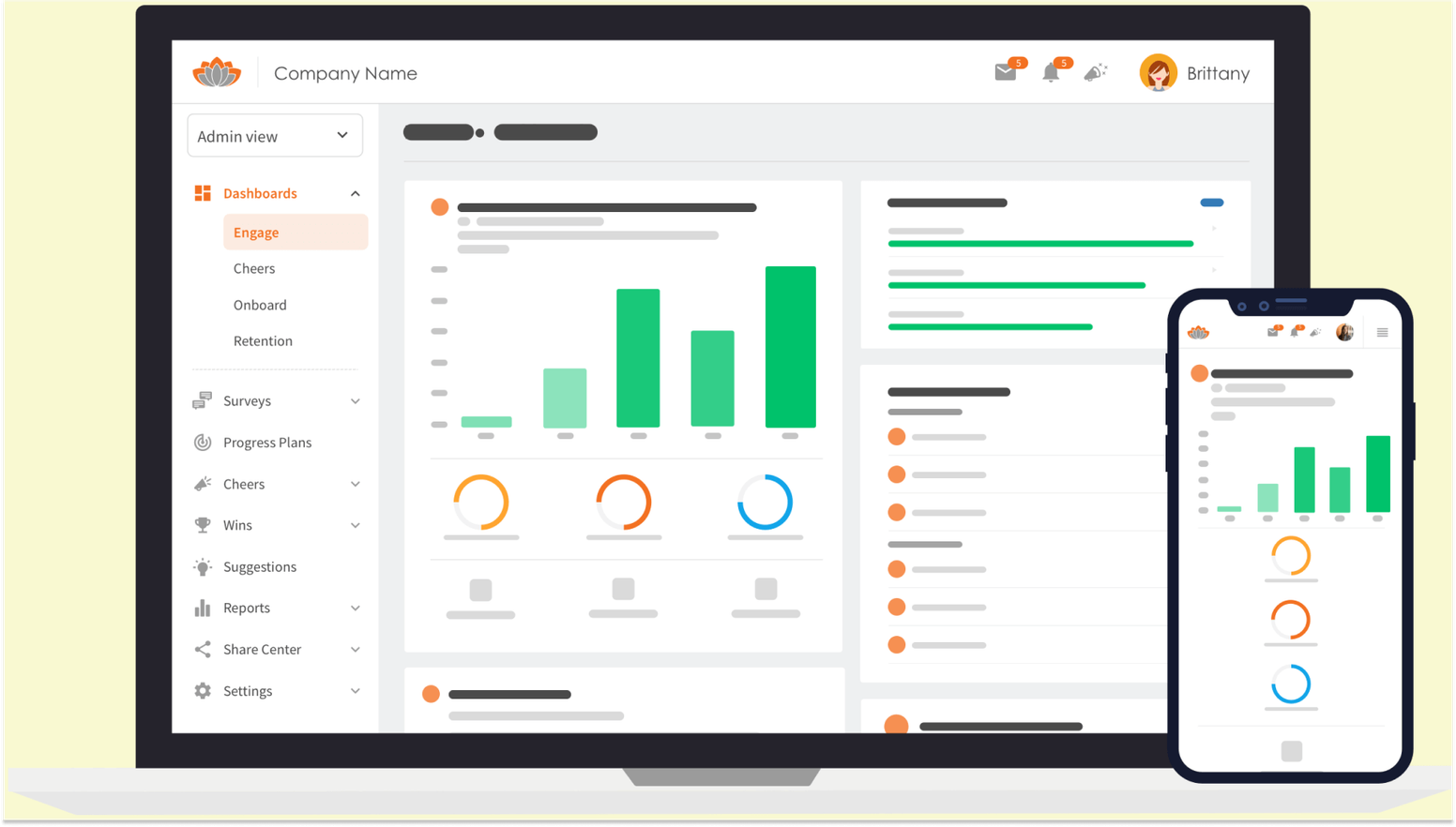
6. TinyPulse

About TinyPulse: TinyPulse specializes in anonymous pulse surveys that encourage honest feedback through guaranteed confidentiality, making it valuable for mid-market organizations working to build trust in their feedback processes. The platform's Cheers for Peers feature combines measurement with recognition, while its suggestion box functionality captures improvement ideas beyond structured survey questions.
TinyPulse main features:
- Anonymous survey functionality with guaranteed confidentiality
- Cheers for Peers recognition feature
- Suggestion box for improvement ideas
- Simple, focused interface prioritizing ease of use
TinyPulse pricing: Pricing is not listed on the website. To learn more about pricing, you'll need to schedule a demo/sales call with TinyPulse.
TinyPulse G2 score TinyPulse has a G2 score of 4.9/5 based on user reviews.
What TinyPulse customers are saying on G2: "How the questions repeat so much.. not much diversity in the questions. Questions are repeated but maybe asked differently." - Holly S., E-Learning.
6 affordable tools for small organizations
Small organizations need pulse survey software that delivers core functionality without enterprise pricing or complexity that overwhelms limited HR resources. These platforms prioritize ease of setup, straightforward interfaces, and transparent pricing models that make costs predictable as teams grow. While they may lack some advanced features of enterprise platforms, they excel at helping small teams establish feedback practices that can evolve as organizational needs mature through customizable surveys.
1. Matter

About Matter: Matter's Free Forever plan makes it the most accessible option for small organizations wanting to implement both pulse surveys and recognition programs without budget constraints. Small teams benefit from the same intuitive interface and Slack/Teams integration that enterprise customers enjoy, without minimum user requirements or long-term contracts that create financial barriers. The platform's setup takes minutes rather than weeks, allowing even solo HR practitioners to launch sophisticated feedback programs that would typically require extensive resources and technical expertise.
Small organizations using Matter gain access to pre-built survey templates covering common engagement topics, eliminating the need to design pulse survey questions from scratch or hire consultants for survey development. The employee rewards system built into the platform enables even budget-conscious teams to recognize great work, using Matter's coin system to facilitate peer-to-peer appreciation without direct financial costs or reward budgets. As small organizations grow from ten employees to hundreds, Matter scales seamlessly without forcing migrations to different platforms or pricing tiers that create unexpected costs or implementation disruptions.
Matter main features:
- Free Forever plan with unlimited users and no feature restrictions
- Pre-built templates eliminating the need for survey design expertise
- Coin-based rewards enabling recognition without financial budgets
- Slack and Teams integration for simple access and high participation
- Seamless scaling supporting growth without platform migrations
Matter pricing:
- Free Forever: $0/user/month
- Basic: $1/user/month, billed annually
- Pro: $3/user/month, billed annually
- Pro + Surveys: $5/user/month, billed annually
To learn more, view Matter's pricing page.
Matter G2 score: Matter has a G2 score of 4.7/5 based on user reviews.
What Matter customers are saying: "Our company's culture & morale changed overnight! In under 2 months, we've had over 2,000 kudos sent and 80%+ engagement across all employees. Matter has motivated people to participate like no other software we have ever used." - Jeff Hagel, President at McInnis & Holloway (Customer Story).
2. Typeform

About Typeform: Typeform brings beautiful design and conversational survey experiences to pulse measurement, creating forms that feel more like friendly check-ins than corporate questionnaires. The platform's intuitive form builder requires no technical expertise, allowing anyone to create visually appealing employee surveys in minutes.
Typeform main features:
- Beautiful, conversational survey design interface
- Intuitive form builder requiring no technical expertise
- Logic jumps and conditional questions
- Integration with popular workplace tools
Typeform pricing:
- Basic: $25 per month
- Plus: $50 per month
- Business: $83 per month
- Enterprise: Custom per month
To learn more, view Typeform's pricing page.
Typeform G2 score: Typeform has a G2 score of 4.5/5 based on user reviews.
What Typeform customers are saying on G2: "The user interface could be improved for applying design settings. Some of the options are buried in the brand and theme screens. It would be nice to have more control over where the questions and the answers appear on the screen, the layouts are pretty limited. On the data analysis side, it would be nice to have the ability to check questions that are tests so they are eliminated from the results. Right now I have to create a draft survey to test and once it is approved I have to copy the survey and give people a new link to the live version so I can utilize the reports." - Jennifer N., Data Analyst & Community Engagement (G2 Review for Software).
3. Polly

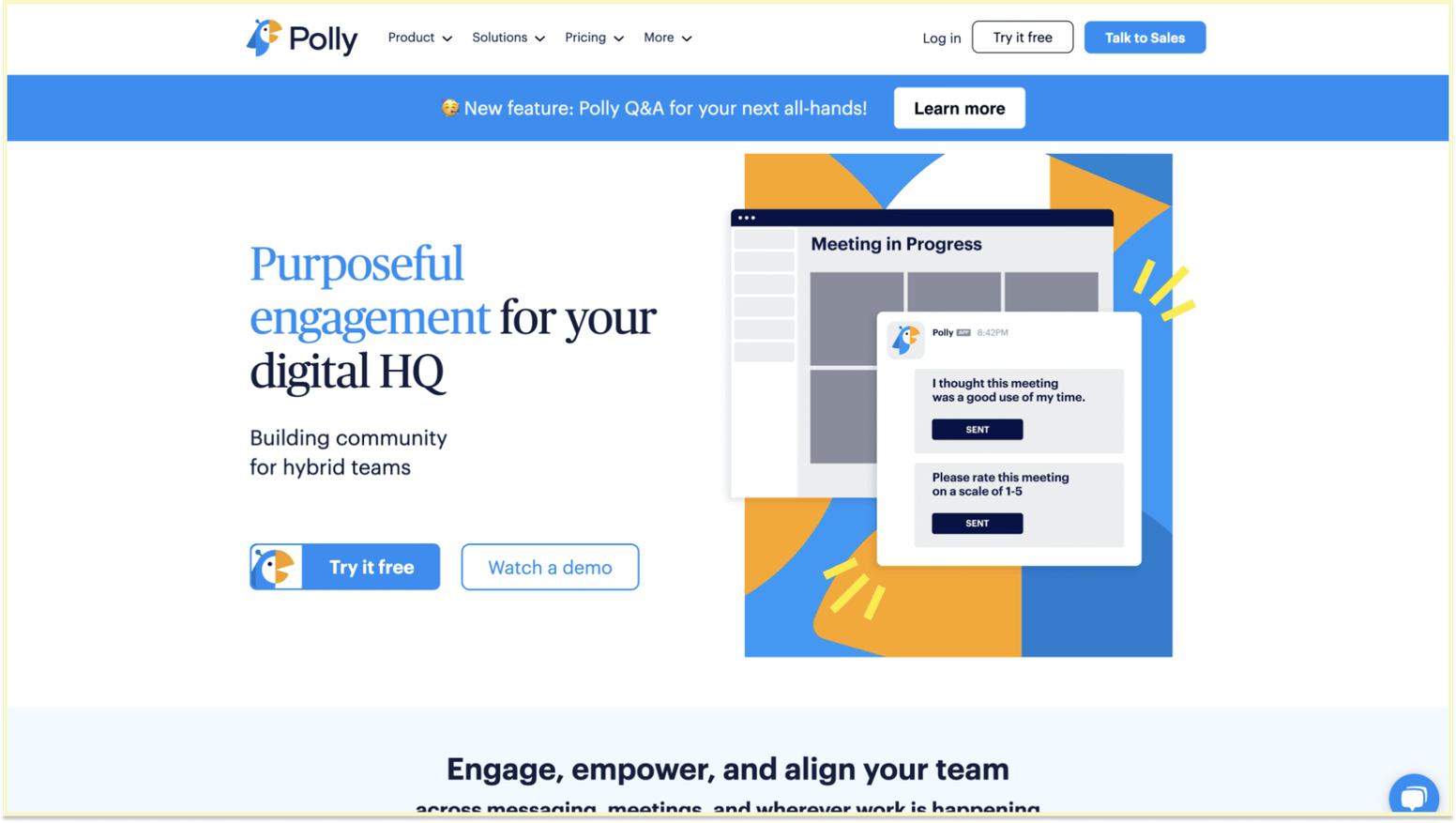
About Polly: Polly specializes in lightweight surveys delivered directly within Slack and Microsoft Teams, making it ideal for small organizations that already use these platforms as their primary communication hubs. The platform's simplicity means teams can launch quick pulse checks without scheduling formal survey events or sending separate communications.
Polly main features:
- Lightweight surveys delivered within Slack and Teams
- Quick pulse checks without a formal survey setup
- Single-question polls for fast feedback
- Simple interface requiring minimal training
Polly pricing:
- Free: $0 per month
- Basic: $12 per month. Billed $144 annually for one license
- Pro: $24 per month. Billed $288 annually per license
- Enterprise: Talk to sales for pricing
To learn more, view Polly's pricing page.
Polly G2 score: Polly has a G2 score of 4.6/5 based on user reviews.
What Polly customers are saying on G2: "Love that it integrates so seamlessly with Slack. I can create a question bank and share it with certain channels. The options for questions is great, making surveys as complete as possible in order to get the most feedback. Super easy to use and implements so well. I use on a case to case basis but slowly making part of my weekly use." - Stephanie R. (G2 Review for Polly).
4. Jotform

About Jotform: Jotform offers powerful form-building capabilities at accessible price points, with templates specifically designed for collecting feedback. The platform's extensive integration options enable small organizations to seamlessly connect employee surveys to their existing systems, ranging from spreadsheets to email platforms.
Jotform main features:
- Powerful form builder with extensive customization options
- Templates specifically designed for employee feedback
- Extensive integration options with existing tools
- Payment collection capabilities for reward distribution
Jotform pricing:
- Starter: $0/month (All features included)
- Bronze: $34/month, billed annually
- Silver: $39/month, billed annually
- Gold: $99/month, billed annually
- Enterprise: Custom price, talk to sales for pricing
To learn more, view Jotform's pricing page.
Jotform G2 score: Jotform has a G2 score of 4.7/5 based on user reviews.
What Jotform customers are saying on G2: "JotForm's builder is really useful and has so many field options and vairables which gives you a lot of customisation ability. It's an intiuituve no-code system that you can build fairly complex systems and process with to meet common business needs and customise them to meet your specific requirements. The support team and community have also been helpful. As it has been around for some time now, you can usually find a post similiar to your challenge, but if not you can submit a request for help and they come back to you in good time. It has a large amount of integrations which we have found helpful to move data around securely." - Nathan C., Technology & Efficiency Manager (G2 Review for Jotform).
5. SurveyMonkey

About SurveyMonkey: SurveyMonkey provides reliable survey functionality with a proven interface that requires minimal learning curve, making it approachable for organizations without survey expertise. The platform offers employee engagement survey templates that small teams can customize, along with basic analytics that surface key engagement trends.
SurveyMonkey main features:
- Proven, user-friendly survey interface
- Employee engagement survey templates
- Basic analytics and reporting capabilities
- Brand recognition and established reliability
SurveyMonkey pricing:
- Team Advantage: $25/user/month, starting at three users, billed annually
- Team Premier: $75/user/month, starting at three users, billed annually
- Enterprise: Talk to sales for pricing
To learn more, view SurveyMonkey's pricing page.
SurveyMonkey G2 score: SurveyMonkey has a G2 score of 4.4/5 based on user reviews.
What SurveyMonkey customers are saying on G2: "The free plan lets you create surveys with up to 25 responses. For most real-world uses, that's very limiting. The basic paid plan doesn't cut it either. If you need to export your data, you're looking at the higher tiers that run closer to $100/month. Additionally, the survey customization options can be a lot better. The competitors in this space offer advanced customization that SurveyMonkey is definitely missing." -Nitin M., Product Manager (G2 Review for SurveyMonkey).
6. Google Forms

About Google Forms: Google Forms offers completely free pulse survey capabilities that integrate seamlessly with Google Workspace, making it the most budget-friendly option for small organizations already using Gmail, Drive, and other Google tools. The platform's simplicity and zero cost make it accessible to any team; however, it lacks specialized engagement analytics and automation features that dedicated pulse survey platforms typically provide.
Google Forms main features:
- Completely free with no user limits
- Seamless integration with Google Workspace
- Simple, straightforward survey creation
- Automatic data collection in Google Sheets
Google Forms pricing:
- Starter: $4.90 user per month
- Standard: $9.80 user per month
- Plus: $15.40 user per month
- Enterprise Plus: Talk to sales for pricing
To learn more, view Google Forms pricing page.
Google Forms G2 score: Google Forms has a G2 score of 4.6/5 based on user reviews.
What Google Forms customers are saying on G2: "Honestly, I enjoy using Google Workspace overall, though it can be somewhat challenging when the internet connection is unstable, as most of its tools require being online. Additionally, with so many apps like Docs, Sheets, Drive, and Meet, it can feel a bit overwhelming at first. However, once you become familiar with the platform, everything tends to run very smoothly." - Girishchand B., Test Engineer Level 2 (G2 review for Google Forms).
Employee pulse survey tools for different organization sizes

Organization size fundamentally shapes what pulse survey software will work best, as a solution perfect for a twenty-person startup will frustrate a five-thousand-person enterprise and vice versa. Understanding how different platforms address the specific challenges of small teams, mid-sized companies, and large organizations helps narrow the overwhelming array of options to those genuinely suited to your context. The following sections examine how pulse survey software requirements evolve in response to organizational complexity and what to prioritize at each stage of growth.
Tools designed for startups and small teams
Startups and small teams need pulse survey software that provides immediate value without requiring extensive setup time, training programs, or dedicated administrators to manage ongoing operations. The ideal platforms for organizations with fewer than 100 employees prioritize simplicity over customization, offering pre-built templates and straightforward interfaces that anyone can navigate confidently, along with customizable surveys. Cost sensitivity is a significant factor at this stage, making freemium models and transparent per-user pricing essential, rather than relying on enterprise contracts with hidden implementation fees.
Small organizations benefit most from pulse survey platforms that combine multiple functions in single solutions, such as pulse survey software that also handles recognition or performance check-ins. This consolidation reduces the tool sprawl that can overwhelm small HR teams while keeping costs predictable and manageable. Integration with communication platforms like Slack or Teams becomes critical when there's no separate HR technology to connect to, as these integrations ensure engagement surveys reach employees where they already work. The best small-team platforms also scale gracefully, avoiding the need for disruptive platform migrations as headcount grows.
- Focus on ease of use: Small teams lack dedicated training resources, so platforms must be intuitive enough that employees can participate without instruction and administrators can manage without technical expertise.
- Prioritize quick implementation: Pulse survey software requiring weeks of setup or consulting partnerships creates barriers for small organizations needing to start gathering feedback immediately.
- Seek flexible pricing models: Monthly subscriptions without long-term commitments allow small organizations to adjust as budgets change or needs evolve.
- Value integration capabilities: Connecting to existing platforms like Slack, Teams, or Google Workspace eliminates the friction of accessing separate systems and increases participation rates.
- Look for comprehensive solutions: Platforms combining pulse surveys with recognition programs provide better value than paying for multiple specialized solutions.
Scalable solutions for mid-sized companies
Mid-sized organizations between one hundred and one thousand employees require pulse survey software that handles increased complexity without becoming overwhelming to manage or interpret. These companies typically have dedicated HR teams but not massive technology departments, making scalability and reliability more important than endless customization options. The right platforms scale smoothly as new teams, departments, and locations come online, maintaining performance and usability without requiring architectural changes or painful upgrade processes.
Mid-market companies benefit from employee engagement platforms that offer role-based access and segmented reporting, allowing different managers to access actionable insights relevant to their teams while maintaining confidentiality. Analytics capabilities matter more at this scale because the volume of employee feedback exceeds what manual review can handle effectively. Features like automated trend detection, sentiment analysis, and comparative reporting transform survey data into actionable insights without requiring specialized data analysis skills. Integration with HRIS systems, performance management platforms, and other HR technologies becomes increasingly valuable as mid-sized organizations develop more sophisticated technology ecosystems.
- Segmented reporting capabilities: Different stakeholders need different views, from individual contributors seeing aggregated team results to executives monitoring organizational engagement trends.
- Automated analysis features: Volume makes manual review impractical, so pulse survey software must automatically identify significant changes, emerging themes, and areas requiring attention.
- HRIS integration options: Connecting engagement data to employee records, organizational hierarchies, and demographic information enables sophisticated analysis of engagement drivers.
- Customization without complexity: Mid-sized companies need to adapt pulse surveys to their specific contexts, but without requiring programming or extensive configuration.
- Predictable scaling costs: Pricing should scale with headcount in ways that remain budget-friendly as the organization grows toward enterprise size.
Enterprise-grade platforms for large organizations
Large organizations with thousands of employees require pulse survey platforms built for scale, offering the security, compliance, customization, and analytical sophistication that complex global operations demand. These platforms must handle multiple languages, time zones, organizational hierarchies, and reporting structures while maintaining performance and protecting sensitive employee feedback. Enterprise pulse survey software typically includes dedicated support, professional services for implementation, and service-level agreements guaranteeing uptime and response times.
Security and compliance requirements significantly influence technology decisions for large organizations in ways that smaller companies often overlook. Enterprise platforms offer features such as single sign-on, advanced data encryption, regional data security, and audit trails that document every action taken within the system. The analytical capabilities extend beyond basic dashboards to include predictive modeling, sophisticated segmentation, custom algorithms, and API access for seamless integration with business intelligence platforms. Large organizations also need extensive customization options for survey design, workflow automation, and reporting formats that align with established processes rather than forcing companies to adapt to platform limitations.
- Enterprise security standards: SOC 2 compliance, SSO integration, encryption both at rest and in transit, and regular security audits protect sensitive employee feedback.
- Global functionality: Multilingual pulse surveys, regional data storage, time zone-aware scheduling, and cultural customization ensure consistent experiences across international operations.
- Advanced analytics capabilities: Predictive modeling, cohort analysis, driver analysis, and custom reporting enable sophisticated understanding of engagement dynamics.
- White-glove implementation: Dedicated project teams, change management support, and executive stakeholder engagement ensure successful rollouts across complex organizations.
- Established vendor reliability: Organizations need vendors with proven track records serving similar enterprises, ensuring long-term platform viability and continuous improvement.
Employee engagement pulse survey tools features comparison

Comparing pulse survey platforms requires understanding which specific features drive value for your organization versus which capabilities sound impressive but are rarely utilized in practice. Different platforms excel in various areas, including analytics sophistication, integration breadth, and user experience design, making it essential to prioritize features aligned with your measurement goals. The following sections break down key feature categories that separate adequate platforms from exceptional ones, helping you evaluate options systematically rather than being swayed by marketing claims.
Essential analytics and reporting capabilities
Analytics transform raw responses from pulse surveys into actionable insights that actually improve employee engagement rather than just documenting current states. The most valuable pulse survey software automatically identifies statistically significant changes in employee sentiment, flags emerging concerns before they become widespread problems, and surfaces positive engagement trends worth celebrating. Basic reporting simply shows pulse survey results, while advanced analytics explain what drives those results, predict future outcomes, and recommend specific actions based on identified patterns.
Essential features include the ability to segment engagement data by team, department, location, tenure, role, and demographic factors while protecting individual confidentiality through aggregation rules. Trend analysis capabilities demonstrate how engagement metrics evolve over time, revealing whether interventions are successful and helping organizations understand seasonal patterns in employee sentiment. The best pulse survey platforms visualize complex data through intuitive dashboards that communicate actionable insights to non-technical audiences, making pulse survey results accessible to managers throughout the organization rather than limiting understanding to HR analytics teams.
- Real-time dashboards: Pulse survey results appear immediately rather than requiring manual processing, enabling rapid response to emerging issues and immediate recognition of positive engagement trends.
- Sentiment analysis: Natural language processing categorizes open-ended responses by tone and topic, surfacing common themes from hundreds of individual comments without manual review.
- Benchmark comparisons: Context comes from comparing your results to industry standards, peer organizations, or internal historical engagement data, helping leaders understand whether scores represent success or areas needing attention.
- Driver analysis: Statistical modeling identifies which pulse survey questions most strongly predict overall engagement, helping organizations focus improvement efforts where they'll have the greatest impact on employee satisfaction.
- Custom reporting: Flexible report building allows stakeholders to create views matching their specific needs rather than relying only on standard reports that may not address unique questions.
Integration options with workplace platforms
Integration capabilities determine whether pulse surveys feel like natural parts of daily work or separate obligations that employees must remember to complete outside their regular workflows. The most effective implementations embed engagement surveys directly within communication platforms where employees already spend time, eliminating the friction of navigating to separate portals or managing additional passwords. Deep integrations enable two-way data flows, allowing pulse survey responses to trigger automated actions in other systems while pulling contextual information that enriches the collection of feedback.
Modern pulse survey software integrates with platforms including Slack, Microsoft Teams, email systems, HRIS databases, performance management platforms, and learning management systems. These connections enable sophisticated workflows, such as automatically surveying employees after completing training programs, immediately following one-on-one meetings, or when they reach specific tenure milestones. Integration with recognition platforms allows organizations to celebrate positive pulse survey results and acknowledge teams demonstrating improvement, connecting measurement directly to appreciation. The technical quality of integrations matters as much as their existence, with well-built connections requiring minimal maintenance and rarely experiencing sync failures or data inconsistencies.
- Communication platform integration: Delivering pulse surveys within Slack, Teams, or email ensures they reach employees where attention already exists rather than requiring separate system access.
- HRIS synchronization: Automatic employee data updates eliminate manual maintenance while enabling sophisticated segmentation based on accurate organizational hierarchies and demographics.
- Calendar system connections: Integrating with Google Calendar or Outlook enables intelligent survey scheduling that avoids holidays, busy periods, and times when specific teams are unavailable.
- Recognition platform links: Connecting pulse surveys to appreciation systems allows organizations to celebrate positive engagement trends and acknowledge teams showing improvement based on employee feedback.
- API access: Open APIs enable custom integrations with proprietary systems, business intelligence platforms, and other technologies specific to your organization's ecosystem.
Automation and scheduling functionalities
Automation transforms pulse surveys from labor-intensive projects requiring constant oversight into self-sustaining feedback systems that operate reliably with minimal intervention. The most sophisticated platforms automate not just survey distribution but also reminder sequences, response rate monitoring, preliminary analysis, alert generation, and report creation. This automation makes continuous feedback collection practical for organizations of any size by eliminating the administrative burden that once made frequent surveys prohibitively expensive.
Scheduling capabilities allow teams to design complex measurement programs where different pulse survey questions reach different employee groups at optimal times based on organizational events, seasonal patterns, or individual employee journeys. Smart automation includes features like sending employee surveys after new hires complete onboarding, following completion of specific training programs, or when individuals reach anniversary dates. The best pulse survey platforms learn from historical patterns to optimize timing, frequency, and question selection, utilizing engagement data on past participation rates and response quality to continuously improve their feedback-gathering methods. These systems also automate follow-up actions, triggering alerts when responses indicate urgent concerns and creating task assignments for managers to address identified issues.
- Recurring survey schedules: Automated programs run weekly, monthly, or quarterly without manual intervention, ensuring consistent feedback collection regardless of competing priorities.
- Intelligent reminder systems: Automated nudges reach non-respondents at optimal times without annoying those who've already participated, maintaining high participation rates through gentle persistence.
- Conditional question logic: Adaptive pulse surveys change based on previous responses, asking follow-up questions only when relevant and keeping surveys brief for employees without specific concerns.
- Automated report generation: Scheduled reports automatically compile pulse survey results and deliver them to relevant stakeholders, ensuring consistent communication without manual reporting work
- Action item tracking: Automated systems create task assignments for managers when pulse survey questions reveal issues requiring attention, ensuring employee feedback leads to documented follow-through rather than disappearing into reports.
What tools help benchmark pulse survey data?

Benchmarking provides essential context that transforms pulse survey scores from abstract numbers into meaningful indicators of organizational health by comparing results against relevant comparison groups. Without benchmarks, a score of 7.5 out of 10 on employee engagement could indicate either success or mediocrity, depending on industry norms, company size, and regional factors. The right pulse survey software includes comprehensive benchmarking capabilities that help organizations understand how their employee experience compares to peers, identify areas of relative strength or weakness, and set realistic improvement targets based on what similar companies achieve.
Tools with industry benchmarking capabilities
Industry-specific benchmarks provide the most relevant comparison points because engagement drivers and expectations vary significantly across sectors, with technology companies facing different retention challenges than healthcare organizations or manufacturing firms. Leading pulse survey platforms maintain databases of anonymized results from thousands of organizations, enabling them to show how your scores compare to companies in your industry. These comparisons reveal whether engagement challenges reflect organizational issues requiring attention or represent industry-wide patterns stemming from sector-specific work conditions.
The most sophisticated benchmarking goes beyond simple averages to segment comparisons by factors including company size, geographic location, growth stage, and specific roles. This granularity ensures you're comparing your fifty-person startup to other early-stage companies rather than to Fortune 500 enterprises with vastly different resources and challenges. Industry benchmarking also helps organizations identify leading practices by showing what the highest-performing companies in their sector do differently, turning benchmarks into actionable learning rather than just performance scorecards.
- Broad industry categories: Initial comparisons use high-level classifications like technology, healthcare, retail, or professional services to establish baseline context for pulse survey results.
- Specialized sector segments: More refined comparisons consider subsectors like SaaS versus hardware in technology or acute care versus long-term care in healthcare.
- Updated benchmark databases: Regular refreshes ensure comparisons reflect current market conditions rather than outdated engagement data from years past, when workplace expectations differed significantly.
- Confidential data contribution: Organizations contributing their engagement data to benchmark pools receive access to richer comparison sets while maintaining complete anonymity through aggregation.
- Custom peer group selection: Advanced platforms allow companies to define specific comparison groups based on criteria like size, geography, and business model for highly relevant benchmarking.
Platforms offering comparative analytics dashboards
Comparative analytics dashboards make benchmark data accessible and actionable by visualizing how your organization's pulse survey results relate to relevant comparison groups across multiple dimensions simultaneously. Rather than requiring manual analysis of statistical tables, these interfaces present comparisons through intuitive charts and graphs that immediately communicate where you excel and where opportunities for improvement exist. The best dashboards allow real-time filtering by different benchmark groups, enabling leaders to explore how results compare across various peer sets without waiting for custom reports.
These platforms typically present percentile rankings showing where your scores fall within the distribution of comparable organizations, making it clear whether a result represents top-quartile performance or bottom-quartile concern. Interactive dashboards enable drilling down from organizational summaries to team-level details, revealing whether engagement patterns are consistent across your company or whether specific departments significantly outperform or underperform peers. The visualization of engagement trends over time alongside benchmark comparisons helps organizations track whether they're improving faster or slower than the market, providing accountability and motivation for continuous improvement efforts.
- Percentile ranking displays: A Clear indication of whether scores place your organization in the top 25%, middle 50%, or bottom 25% of comparable companies guides priority setting.
- Multi-dimensional comparisons: Simultaneous display of how results compare across industry, size, location, and other factors reveals nuanced performance patterns that employee engagement survey tools should surface.
- Trend line overlays: Showing your trajectory alongside benchmark averages over time illustrates whether you're catching up, falling behind, or maintaining relative position as the market evolves.
- Question-level benchmarking: Comparing responses to individual pulse survey questions against benchmarks identifies specific areas of strength or weakness rather than just overall engagement scores.
- Exportable comparison reports: The Ability to generate formatted reports comparing your results to benchmarks supports executive presentations and board updates without manual chart creation.
Features that enable cross-organization comparisons
Cross-organization comparisons extend beyond industry benchmarks to include peer networks, mutual connections, or self-selected comparison groups, which provide additional meaningful context for pulse survey results. Some pulse survey platforms enable organizations to form benchmark consortiums with strategic partners, peer companies, or industry association members, creating shared engagement data pools that benefit all participants. These customized comparison groups often provide more relevant and actionable insights than broad industry benchmarks, as they include companies with similar cultures, challenges, and strategic priorities.
Features supporting cross-organizational comparisons include secure data sharing protocols that protect confidentiality while enabling mutual learning, standardized question libraries ensuring consistent measurement across organizations, and governance capabilities that manage who can access comparison data. The most advanced platforms facilitate not just numerical comparisons but also qualitative learning by enabling participating organizations to share best practices, discuss common challenges, and collaborate on solutions to shared engagement issues. This collaborative approach transforms benchmarking from a competitive scorecard into a mechanism for collective improvement across entire industries or networks.
- Custom peer group selection: Advanced platforms allow companies to define specific comparison groups based on criteria like size, geography, and business model for highly relevant benchmarking.
- Secure data exchange protocols: Encrypted transfers and strict access controls ensure sensitive employee rewards and recognition survey data remains confidential while enabling authorized comparisons.
- Standardized question sets: Common pulse survey questions across participating organizations ensure valid comparisons by measuring the same constructs with identical wording and response scales.
- Opt-in participation models: Organizations choose whether to contribute engagement data to comparison pools and which peer groups to join, maintaining control over information sharing.
- Anonymization mechanisms: Aggregation rules and statistical disclosure controls prevent identification of individual organizations within comparison groups while maintaining analytical utility.
- Collaborative learning features: Beyond numerical comparisons, platforms facilitate knowledge sharing through case studies, discussion forums, and best practice documentation from high-performing organizations.
Top-rated pulse survey tools for engagement 2025
The landscape of pulse survey platforms continues evolving rapidly as solutions incorporate artificial intelligence, predictive analytics, and increasingly sophisticated integration capabilities into their offerings. In 2025, the highest-rated platforms distinguish themselves not just through powerful analytics but through exceptional user experiences that drive sustained employee participation and genuine cultural impact. Understanding which platforms consistently receive top ratings from users provides valuable insight into which investments deliver on their promises versus which generate buyer's remorse after implementation.
Highest-rated platforms based on user reviews
User ratings from platforms like G2, Capterra, and Trust Radius reveal which pulse survey software meets or exceeds expectations after the sales process concludes and daily usage begins. The highest-rated platforms in 2025 share common characteristics, including intuitive interfaces requiring minimal training, responsive customer support resolving issues quickly, and regular feature updates that address user feedback through customizable surveys. Organizations evaluating options should prioritize platforms with consistently high ratings across multiple review sites over extended periods rather than recent surges that might reflect temporary promotions or incentivized reviews.
Matter consistently ranks among the top-rated employee pulse surveys platforms based on verified user reviews praising its seamless integration of collecting feedback and recognition, intuitive setup process, and genuine impact on workplace culture. Users specifically highlight how Matter's Slack and Teams integration significantly improves participation rates compared to standalone survey platforms that require separate logins. The platform receives particularly strong ratings for ease of use, responsiveness of customer support, and the direct connection between measuring engagement and improving it through integrated rewards and appreciation features.
- Consistent five-star ratings: Platforms maintaining exceptional ratings over multiple years demonstrate sustained value delivery rather than short-term feature advantages that fade as competitors catch up.
- Verified purchaser reviews: Comments from verified users who paid for platforms provide more reliable, actionable insights than potentially incentivized reviews from free users or pilot participants.
- Response rate improvements: Reviews specifically mentioning increased participation compared to previous solutions indicate platforms successfully overcome survey fatigue through better user experiences
- Implementation success stories: Detailed accounts of smooth rollouts, effective training, and rapid time-to-value demonstrate platforms that deliver on implementation promises rather than creating unexpected challenges.
- Continued usage testimonials: Long-term users reporting sustained satisfaction and renewed contracts provide evidence that initial positive impressions persist through extended use.
Tools with the most innovative features for 2025
Innovation in pulse survey platforms now focuses on predictive capabilities that anticipate engagement issues before traditional surveys would detect them, conversational interfaces making participation feel natural, and automated action planning that translates actionable insights directly into improvement initiatives. The most innovative platforms leverage generative AI to suggest pulse survey questions based on organizational context, automatically craft summaries of open-ended responses, and even draft action plans for managers addressing identified concerns. These capabilities don't replace human judgment but amplify it by handling routine analytical tasks and surfacing engagement insights that might otherwise remain hidden in complex engagement data.
Leading-edge pulse survey software incorporates features like passive sentiment monitoring that analyzes communication patterns in workplace platforms to complement pulse survey responses, reducing reliance on active participation while providing richer context. Some platforms now offer recommendation engines suggesting specific recognition actions, learning resources, or policy changes based on pulse survey results and benchmark comparisons. The integration of pulse surveys with broader employee experience platforms creates connected ecosystems where employee feedback automatically triggers appropriate responses, whether that's celebrating successes, providing support resources, or escalating serious concerns to appropriate stakeholders.
- AI-powered question optimization: Generative models suggest pulse survey questions most likely to yield actionable responses based on organizational context, previous results, and current business challenges.
- Predictive analytics engines: Machine learning identifies patterns predicting future turnover, engagement declines, or performance issues, enabling proactive interventions before problems fully manifest.
- Conversational survey interfaces: Natural language interaction makes survey participation feel like dialogue rather than form completion, improving response quality while reducing survey fatigue.
- Automated insight generation: AI systems analyze pulse survey results and automatically craft narratives explaining key findings, engagement trends, and recommendations without requiring manual interpretation Enps specialists would traditionally provide.
- Integrated action planning: Platforms automatically suggest specific improvement initiatives based on pulse survey results, assign ownership, set deadlines, and track completion without manual project management.
Emerging solutions transforming engagement measurement
Several emerging pulse survey platforms are challenging established players by introducing fresh approaches to collecting feedback, analysis, and action that address the limitations of traditional solutions. These innovators often focus on specific use cases, such as remote team engagement, frontline worker feedback, or development-focused measurement, rather than trying to serve all organizations equally. Their specialized approaches sometimes deliver superior results for target segments compared to general-purpose platforms, making them worth consideration even when they lack the brand recognition of established vendors.
New entrants are particularly strong in areas like mobile-first design for deskless workers, asynchronous feedback collection for distributed teams, and integration with modern collaboration platforms like Discord, Notion, and new-generation HRIS systems. Some emerging platforms take radically different approaches to pulse measurement, like using gaming mechanics to make participation enjoyable or leveraging blockchain for anonymity guarantees that build trust in feedback confidentiality. While these innovations carry some risk of unproven longevity, early adopters often gain competitive advantages by implementing more effective engagement strategies before they become standard practice.
- Mobile-optimized experiences: Purpose-built mobile apps provide superior experiences for frontline workers who rarely access desktop computers but constantly use smartphones.
- Asynchronous participation options: Platforms designed for globally distributed teams handle time zones and varying schedules better than synchronous survey approaches requiring coordinated participation.
- Privacy-preserving technologies: Innovative anonymization techniques using differential privacy or blockchain provide mathematical guarantees that individual responses remain untraceable while maintaining analytical utility.
- Gamification approaches: Survey experiences incorporating game design principles like progress bars, achievement badges, and leaderboards increase participation through intrinsic motivation beyond obligation.
- Micro-pulse capabilities: Ultra-brief single-question surveys delivered at optimal moments capture employee feedback without the commitment of formal pulse survey events, maintaining connections continuously.
Pulse survey examples that showcase tool capabilities

Understanding what different pulse survey platforms can do in practice requires seeing concrete examples of the engagement surveys they enable, the workflows they automate, and the actionable insights they generate from real feedback. Rather than just describing features abstractly, examining specific survey templates, implementation examples, and visualization approaches reveals how capabilities translate into actual organizational benefits. The following sections examine how leading platforms showcase their strengths through the materials they offer and the results they help organizations achieve.
Template libraries and pre-built survey examples
Comprehensive template libraries eliminate the need for organizations to design pulse surveys from scratch by providing validated pulse survey questions covering common engagement topics, workplace issues, and organizational goals. The best pulse survey software offers dozens or even hundreds of ready-to-use templates addressing areas including new employee onboarding, manager effectiveness, remote work challenges, diversity and inclusion, change management, and work-life balance. These templates incorporate research-backed questions proven to generate actionable responses, rather than generic inquiries that produce platitudes and social desirability bias.
Quality templates include not just individual pulse survey questions but complete survey designs with optimal question ordering, response scales chosen for analytical power, and appropriate length balancing comprehensiveness with completion rates. Leading platforms provide guidance on when to use each template, what actionable insights it typically generates, and how frequently to deploy it for optimal results. The availability of industry-specific templates addressing sector-unique challenges, such as healthcare burnout, retail scheduling concerns, or technology on-call stress, demonstrates platform sophistication and reduces implementation time from weeks to hours.
- New employee experience surveys: Templates capturing onboarding effectiveness, manager quality, culture fit, and early-tenure satisfaction help organizations improve new hire retention and acceleration.
- Manager effectiveness assessments: Question sets specifically designed to evaluate leadership behaviors, communication quality, development support, and recognition frequency reveal management training needs.
- Remote work pulse checks: Pulse surveys addressing distributed team challenges, including communication effectiveness, isolation concerns, technology adequacy, and work-life boundary maintenance.
- Change management surveys: Templates measuring employee understanding of organizational changes, comfort with transitions, and support needs during periods of significant transformation.
- Values alignment assessments: Pulse survey questions evaluating how well daily work experiences reflect stated organizational values help identify gaps between aspirations and reality worth addressing through team rewards.
Customizable workflow examples across platforms
Workflow capabilities determine whether pulse survey software simply collects data or actively drives improvement by automating the entire feedback cycle from distribution through analysis to action planning and follow-up. Leading platforms showcase workflow examples that demonstrate how they automate complex sequences, such as sending initial pulse surveys, triggering reminders to non-respondents, generating manager-specific reports, creating action item assignments, scheduling follow-up surveys, and tracking the completion of improvement initiatives. These automated workflows transform pulse surveys from isolated measurement events into ongoing improvement systems requiring minimal manual intervention.
The most sophisticated workflows incorporate conditional logic that adapts based on responses, automatically escalating serious concerns to appropriate stakeholders while routing positive employee feedback to recognition systems. Examples include workflows that send detailed follow-up questions only to employees indicating low satisfaction on initial items, automatically schedule one-on-one conversations when pulse surveys reveal team-level concerns, or trigger celebration messages when scores improve significantly. Understanding these workflow capabilities helps organizations evaluate whether platforms will integrate smoothly into their existing processes or require substantial adaptation of how they operate.
- Automated response-based routing: Serious concerns automatically notify HR or leadership, while positive feedback flows to managers and recognition platforms without manual sorting.
- Manager action plan automation: Low scores automatically generate draft improvement plans for managers, including suggested actions, timeline templates, and progress tracking mechanisms.
- Follow-up survey scheduling: Systems automatically deploy focused follow-up pulse surveys weeks after interventions to measure whether actions improved employee sentiment on specific issues.
- Integration-triggered surveys: Workflows automatically send pulse surveys when specific events occur in connected systems, like completion of training programs or reaching tenure milestones.
- Multi-stakeholder notification flows: Different stakeholders automatically receive customized reports based on their organizational roles, ensuring appropriate information distribution without manual report customization employee engagement survey questions determine.
Real-time visualization and reporting examples
Visualization quality determines whether pulse survey results drive action or remain trapped in static reports that few people access and even fewer understand. Leading pulse survey software showcases dashboard examples demonstrating how they present complex engagement data through intuitive charts, graphs, and interactive visualizations that communicate key findings at a glance. The best examples not only display overall scores but also trend lines, segment comparisons, heat maps that identify problem areas, and driver analyses revealing which factors most influence overall engagement.
Real-time feedback visualization capabilities mean dashboards update continuously as responses arrive rather than requiring scheduled report generation, enabling rapid response to emerging concerns. Interactive features allow users to filter by different segments, compare time periods, drill into specific pulse survey questions, and explore relationships between different engagement metrics without technical expertise or data analysis skills. Examples demonstrating mobile-optimized visualizations show how managers can access actionable insights from anywhere, while exportable report examples illustrate how organizations can share findings in presentations, executive updates, and team meetings without recreating charts manually.
- Executive summary dashboards: High-level views presenting overall engagement scores, key engagement trends, and critical concerns enable leadership to understand organizational health in seconds.
- Team-level manager views: Focused dashboards showing specific team results, comparisons to organizational averages, and actionable recommendations help managers improve their areas.
- Trend visualization examples: Line charts showing how specific engagement metrics evolve over time make improvement progress visible and celebrate positive changes worth acknowledging.
- Heat map demonstrations: Visual representations using color coding to show employee engagement levels across departments, locations, or demographic groups immediately identify areas needing attention.
- Correlation analysis displays: Scatter plots and statistical visualizations revealing relationships between different pulse survey questions help organizations understand what drives overall engagement most strongly.
Pulse survey best practices for tool implementation
Successfully implementing pulse survey software requires more than selecting the right platform because even the most sophisticated solutions fail to deliver value when deployed poorly. Organizations must approach implementation strategically by aligning platform selection with measurement goals, investing in change management to drive adoption, and establishing processes to ensure pulse survey results translate into visible actions. The following sections outline proven practices that separate implementations generating transformative results from those becoming expensive platforms that teams stop using after initial enthusiasm fades.
Selecting tools that match organizational needs
Platform selection should begin with clarifying what you're trying to achieve through pulse surveys rather than being distracted by impressive features you'll never use. Organizations must honestly assess their analytical sophistication, administrative capacity, and willingness to act on employee feedback before choosing between simple platforms offering basic measurement and comprehensive solutions requiring significant ongoing management. A sophisticated enterprise platform becomes a burden rather than an asset when your organization lacks the expertise to configure it properly or the commitment to maintain it consistently through continuous improvement.
The matching process involves evaluating how different pulse survey software aligns with your existing technology ecosystem, particularly in terms of integration with platforms that employees already use daily. Platforms requiring separate logins and unfamiliar interfaces generate lower participation rates than those embedding pulse surveys within Slack, Teams, or email systems, where employees already focus attention. Consider your organizational readiness by assessing whether you have internal champions who will advocate for survey participation, managers willing to act on employee feedback, and leadership committed to transparency about results and actions taken in response.
- Define measurement objectives clearly: Specific goals like reducing turnover, improving manager effectiveness, or tracking remote work satisfaction guide platform selection better than vague desires to "measure engagement."
- Assess analytical capabilities honestly: Organizations without data analysis expertise benefit more from pulse survey software providing automated, actionable insights than those requiring custom analytics configuration and interpretation skills.
- Evaluate integration requirements: Platforms must connect seamlessly to your HRIS, communication systems, and existing technologies rather than creating isolated data silos requiring manual synchronization.
- Consider administrative bandwidth: Platforms requiring extensive ongoing management only work when someone has dedicated time to maintain them, configure pulse surveys, and interpret pulse survey vs engagement survey results.
- Verify vendor stability: Choosing established providers with proven track records reduces the risk of platform discontinuation, acquisition disruption, or financial instability affecting service quality.
Training teams on effective platform utilization
Even the most intuitive pulse survey software requires some training to ensure administrators configure them optimally and employees understand how to participate effectively and interpret results appropriately. Training should focus not just on technical button-clicking, but also on the strategic thinking behind effective pulse survey programs. This includes how to design pulse survey questions, generate actionable responses, interpret engagement data, avoid common misunderstandings, and translate actionable insights into improvement initiatives. Comprehensive training addresses both the "how" and the "why" of pulse survey platforms, building understanding that sustains effective usage beyond initial enthusiasm.
Different stakeholder groups need different training approaches, with administrators requiring deep dives into configuration options and analytics features, while managers need focused sessions on interpreting team results and creating action plans. Employee training should emphasize the purpose of pulse surveys, the confidentiality of responses, and the concrete changes that have resulted from previous employee feedback to build trust in the process. Organizations often underestimate the training investment required, leading to suboptimal platform usage where people only scratch the surface of capabilities that could drive significantly greater value.
- Administrator deep dives: Technical training covering survey design, question bank management, workflow automation, integration configuration, and report customization ensures optimal platform usage.
- Manager interpretation sessions: Training leaders to read pulse survey results accurately, avoid over-reacting to small sample sizes, and translate engagement data into team discussions builds distributed ownership of improvement.
- Employee participation guidance: Clear communication about survey purpose, confidentiality protections, typical time investment, and how employee feedback drives change increases participation rates and response quality.
- Executive briefings: Leadership training on how to use pulse survey results strategically, communicate transparently about engagement data, and demonstrate commitment to action based on employee feedback might spark improvements.
- Ongoing skill development: Regular refresher training, advanced technique workshops, and sharing of best practices maintain competency as team members change and platform capabilities evolve.
Maximizing ROI through strategic tool deployment
Maximizing return on pulse survey software investments requires connecting measurement directly to improvement actions that employees can see and feel in their daily work experiences. Platforms generate value not through the engagement data they collect but through the changes that data enables, making it essential to establish clear processes for reviewing pulse survey results, identifying priorities, planning interventions, and communicating what's being done in response to employee feedback. Organizations that treat pulse surveys as compliance exercises or data collection projects rarely see meaningful ROI, while those integrating engagement surveys into continuous improvement systems achieve transformational results.
Strategic deployment means starting with focused pilots that build confidence and demonstrate value before rolling out organization-wide programs that might overwhelm teams unfamiliar with continuous feedback. Early successes create momentum and generate advocacy from managers and employees who experience positive changes resulting from their input. The connection between pulse surveys and recognition programs amplifies ROI by ensuring that improvements get celebrated visibly, creating positive reinforcement loops where giving honest feedback leads to acknowledged progress. This integration transforms pulse surveys from potentially negative criticism sessions into balanced conversations highlighting both challenges and successes.
- Start with focused pilots: Initial implementations in willing departments build understanding, work out process issues, and generate success stories before broader rollouts that might encounter resistance.
- Establish action protocols: Clear processes determining how pulse survey results get reviewed, who decides on responses, how actions get communicated, and how progress gets tracked, ensuring actionable insights drive improvement.
- Connect measurement to recognition: Integrating pulse surveys with appreciation platforms allows celebrating positive engagement trends, acknowledging improvement, and reinforcing behaviors worth continuing across teams.
- Communicate actions transparently: Regular updates explaining what changed based on employee feedback build trust in the survey process and encourage continued honest participation in future cycles
- Measure program effectiveness: Tracking participation rates, response quality, action completion, and engagement trends over time reveals whether the pulse survey program generates desired outcomes that analytics should monitor.
How to choose the right pulse survey tools for your organization

Choosing the right pulse survey software from dozens of viable options requires systematic evaluation against your specific requirements rather than defaulting to whatever platform your network recommends or appears first in search results. The selection process should balance objective feature comparisons with subjective fit assessments, ensuring chosen platforms not only check capability boxes but also align with your organizational culture and ways of working. Rushing this decision risks investing in platforms that frustrate users, complicate processes, or fail to integrate with existing systems, creating costly do-overs when initial choices prove inadequate.
Evaluating features against business requirements
Feature evaluation should begin with creating a prioritized list of capabilities your organization actually needs versus nice-to-have features that sound impressive but won't drive real value. Essential features typically include the ability to create and distribute pulse surveys easily, generate reports that stakeholders understand without extensive interpretation, and integrate with communication platforms your employees already use daily. Secondary features might include advanced analytics like driver analysis and predictive modeling, which deliver value if you have expertise to leverage them, but create frustration if they're too complex for your team's capabilities.
The evaluation process should involve testing platforms with real use cases from your organization rather than relying solely on vendor demonstrations showcasing idealized scenarios. Most pulse survey software offers free trials or pilot programs, allowing hands-on experience with interfaces, workflows, and outputs before committing to annual contracts. During trials, involve multiple stakeholder groups, including HR administrators who'll manage the system, managers who'll interpret pulse survey results, and employees who'll participate in engagement surveys to ensure the chosen platform works well for everyone rather than optimizing for just one perspective.
- Create weighted evaluation criteria: Assign importance scores to different capabilities based on your specific needs so essential features outweigh peripheral ones in final decisions.
- Test with realistic scenarios: During trials, replicate actual pulse survey programs you'll run rather than just exploring features abstractly, revealing how platforms handle your specific requirements.
- Involve diverse stakeholders: Include administrators, managers, and employees in evaluations to ensure selected platforms meet needs across different roles rather than just pleasing technical decision makers.
- Evaluate ease of use rigorously: Interface complexity directly impacts adoption rates and ongoing utilization, making user experience as important as feature completeness in platform selection.
- Assess reporting comprehensibility: Reports must communicate actionable insights clearly to non-technical audiences without extensive training or translation help, making data democratization genuinely possible through intuitive pulse survey app visualizations.
Comparing pricing models and total cost of ownership
Pricing models for pulse survey software vary dramatically from free plans supporting unlimited users to enterprise contracts costing hundreds of thousands annually based on employee counts and feature tiers. Understanding the total cost of ownership requires looking beyond list prices to include implementation fees, training costs, integration expenses, ongoing maintenance time, and potential add-on charges for features essential to your use case. Some vendors advertise low per-user pricing but charge extra for analytics, integrations, or support that competitors include in base packages, making true cost comparison challenging without careful analysis.
Organizations should evaluate whether pricing scales in ways that remain sustainable as your company grows, avoiding platforms that become prohibitively expensive at higher user counts or that jump sharply at specific thresholds. Consider the financial stability and pricing history of vendors to avoid platforms likely to increase prices dramatically after you've invested in implementation and training. The relationship between cost and value matters more than absolute price, as expensive pulse survey software that delivers transformative results provides a better ROI than cheap platforms that generate engagement data nobody acts on.
- Calculate all-in costs: Include implementation fees, training costs, integration expenses, and ongoing administrative time when comparing options, not just subscription prices.
- Model growth scenarios: Project costs at different future employee counts to ensure pricing remains viable as your organization scales rather than becoming prohibitively expensive.
- Understand contract terms: Evaluate commitment periods, cancellation policies, price increase clauses, and renewal terms to avoid getting locked into unfavorable long-term agreements.
- Assess free trial limitations: Determine whether trial versions include all essential features or represent restricted versions that will require paid upgrades for actual usage needs.
- Compare value beyond price: Expensive platforms that drive visible improvement provide better ROI than cheap solutions that collect engagement data nobody acts on, making effectiveness more important than cost.
Assessing vendor support and implementation timelines
Vendor support quality significantly impacts the successful implementation and ongoing effectiveness of pulse survey software, as even the most intuitive platforms occasionally require assistance with configuration, integration troubleshooting, or advanced feature usage. Organizations should evaluate the availability of support, response times, communication channels, and the expertise level of support teams before committing to a vendor. Some platforms provide only email support with multi-day response times, while others offer dedicated account managers, phone support, and rapid response guarantees that dramatically improve user experience when issues arise.
Implementation timelines vary from pulse survey software that can be configured and deployed in hours to platforms requiring months of professional services engagement for proper setup. Organizations with limited technical resources should prioritize platforms offering quick time-to-value through streamlined implementation processes and comprehensive onboarding assistance. Understanding vendor responsiveness and commitment to customer success helps predict whether they'll invest in your implementation success or simply deliver licenses and expect you to figure everything out independently.
- Evaluate support channel options: Determine whether vendors offer phone, email, chat, or dedicated account manager support and whether all channels are available to customers at your pricing tier.
- Assess response time commitments: Understand guaranteed response times for different issue severities and whether support operates during hours compatible with your organization's working schedule.
- Review implementation services: Clarify whether vendors provide hands-on implementation assistance, what those services cost, and typical timelines from contract to fully operational deployment.
- Check training availability: Evaluate whether vendors offer comprehensive training programs, whether training is included or at an additional cost, and whether they provide both live and self-paced learning options.
- Verify ongoing support: Understand how vendors handle feature requests, bug reports, and enhancement suggestions after initial implementation to ensure continued platform improvement and customer responsiveness.
Common challenges when implementing employee pulse survey tools
Even well-chosen pulse survey software encounters implementation challenges that can undermine effectiveness if not anticipated and addressed proactively. Organizations often focus exclusively on the technical setup while neglecting the cultural, process, and communication work required to make continuous feedback an integral part of how teams operate. Understanding common pitfalls allows you to prepare mitigation strategies rather than discovering problems after they've already damaged survey participation or organizational trust in the measurement program.
Overcoming low adoption and participation rates
Low participation rates represent the most common challenge organizations face after implementing pulse survey software because employees accustomed to annual surveys may not immediately embrace frequent feedback requests. Survey fatigue develops when organizations ask too many pulse survey questions too often without demonstrating how responses drive meaningful change, leading employees to view engagement surveys as busywork rather than valuable input opportunities. Overcoming adoption challenges requires combining technical approaches, such as simplified access through workplace integrations, with cultural approaches, including transparent communication about how employee feedback informs decisions.
Participation improves dramatically when employees see concrete examples of changes resulting from previous pulse survey results, creating trust that their input matters and leaders genuinely listen to concerns. Making pulse surveys brief, focused, and relevant to current organizational events rather than generic engagement questionnaires demonstrates respect for employee time and increases completion rates. Leaders participating visibly in engagement surveys and discussing pulse survey results openly model the importance of feedback, while connecting survey participation to employee recognition programs creates positive reinforcement that sustains engagement over time through continuous feedback mechanisms.
- Demonstrate impact transparently: Regular communication about specific changes made based on pulse survey results builds trust that responses drive real improvement rather than disappearing into reports.
- Minimize time investment: Keeping pulse surveys brief with three to ten questions respects employee time and reduces completion barriers compared to lengthy questionnaires requiring extended concentration
- Integrate with daily workflows: Delivering pulse surveys within Slack, Teams, or email where employees already work eliminates the friction of accessing separate platforms requiring additional logins.
- Provide context and purpose: Explaining why specific pulse surveys are being conducted and how pulse survey results will be used helps employees understand the value of their participation.
- Celebrate participation milestones: Recognizing teams with high participation rates through appreciation creates positive reinforcement, encouraging continued engagement.
Managing data privacy and security concerns
Data privacy and security concerns can prevent employees from providing honest feedback if they fear responses might be traced back to them despite anonymity promises. These concerns intensify when pulse survey software integrates with workplace platforms, as employees may worry that their Slack or Teams identity could compromise confidentiality. Organizations must address these concerns proactively through clear communication about how engagement data is protected, what aggregation rules prevent individual identification, and who has access to different levels of detail in pulse survey results.
Technical measures, including encryption, secure data storage, role-based access controls, and audit trails, protect sensitive feedback while demonstrating organizational commitment to confidentiality. Transparency about limitations also builds trust because acknowledging that small teams may reveal individual responses through the process of elimination shows more integrity than making absolute anonymity promises that can't be kept. Organizations should establish and communicate clear policies regarding survey data retention, usage restrictions, and circumstances under which individual responses might be reviewed, ensuring employees understand exactly how their feedback will be handled.
- Implement technical safeguards: Encryption, secure hosting, access controls, and audit logging protect sensitive feedback from unauthorized access or data breaches.
- Establish aggregation thresholds: Clear rules preventing display of pulse survey results when too few responses would compromise anonymity, demonstrates commitment to confidentiality protection.
- Communicate policies clearly: Transparent explanations of who can access what engagement data, under what circumstances, and for how long build trust in survey confidentiality.
- Address small team challenges: Honest acknowledgment that complete anonymity is impossible in very small groups allows informed participation decisions rather than false security promises.
- Provide anonymous feedback channels: Offering optional text-based feedback where specific concerns can be raised without identification creates safety valves for sensitive issues.
Integrating tools with existing HR systems
Integration challenges frequently derail pulse survey implementations when platforms that promised seamless connections to existing HR systems require extensive custom development or prove incompatible with organizational IT policies. The complexity of integration varies dramatically based on your existing technology stack, with modern cloud-based HRIS systems typically offering straightforward connections while legacy on-premise systems may require expensive middleware or custom API development. Organizations should verify integration capabilities through proof-of-concept testing before committing to pulse survey software, ensuring promised connections actually work with your specific system versions and configurations.
Beyond technical integration, organizations face process integration challenges when pulse survey workflows don't align with existing HR processes for handling employee concerns, managing performance conversations, or tracking improvement initiatives. Successful integration requires mapping how pulse survey results will flow into existing management routines, performance review cycles, and development planning processes rather than creating parallel systems that duplicate effort. The goal is to make pulse surveys complement rather than compete with existing feedback mechanisms, recognition programs, and employee experience initiatives to create cohesive systems where everything works together seamlessly.
- Verify integration compatibility: Confirm that promised integrations actually work with your specific system versions, configurations, and IT security requirements before committing to platforms.
- Plan data synchronization: Establish clear processes for keeping employee data current across systems, handling organizational changes, and managing departing employee access revocation.
- Map workflow connections: Define how pulse survey results trigger existing HR processes rather than creating separate workflows that duplicate effort and complicate employee experience.
- Address IT security requirements: Work with IT teams early to ensure platforms meet security standards, pass vendor risk assessments, and comply with data governance policies.
- Align with existing programs: Connect pulse surveys to current recognition programs, performance management systems, and development initiatives rather than creating competing processes.
How Matter can help with pulse survey tools

Matter transforms how organizations approach employee engagement measurement by seamlessly integrating pulse surveys with recognition and rewards in a single platform that employees actually enjoy using. Unlike standalone survey platforms that only collect employee feedback, Matter creates complete feedback loops where actionable insights automatically connect to appreciation through an integrated employee rewards platform, ensuring that measuring engagement naturally leads to improving it. The platform's deep integration with Slack and Microsoft Teams means pulse surveys reach employees where they already work, dramatically improving participation rates while eliminating the friction of accessing separate systems.
Integrated survey platform with recognition features
Matter's unique approach combines pulse survey capabilities with peer-to-peer recognition, creating powerful synergies where employee feedback and appreciation reinforce each other continuously. When pulse survey results reveal positive engagement trends or improvements, Matter's recognition system makes it simple to celebrate those wins publicly, creating positive reinforcement that sustains progress. The platform's beautiful kudos cards allow colleagues to acknowledge specific behaviors that survey data shows contribute to engagement, connecting abstract engagement metrics to concrete actions worth repeating.
The integration works bidirectionally, with recognition patterns informing survey design and pulse survey results triggering targeted appreciation campaigns. When pulse surveys reveal that employees feel underrecognized, Matter's Feedback Friday automation prompts everyone to share appreciation, addressing the concern through immediate action rather than just documenting the problem. The platform's coin-based reward system resets weekly, maintaining freshness and authenticity in both feedback and recognition while preventing the stale patterns that plague traditional employee experience programs.
Matter's approach to measuring and improving engagement reflects a fundamental understanding that sustainable improvement requires both identifying areas needing work and celebrating what's going well. The platform makes it impossible to focus solely on problems because the same interface that presents pulse survey concerns also showcases peer recognition, creating balanced visibility of both challenges and successes. This integration particularly benefits organizations that want to connect employee sentiment data to cultural initiatives, development programs, and team-building activities that create lasting, positive change rather than temporary score improvements.
Pre-built templates and automated workflows
Matter eliminates the complexity of pulse survey design by providing comprehensive template libraries covering every common engagement topic, from onboarding experiences to manager effectiveness to remote work satisfaction. These templates incorporate research-validated pulse survey questions that generate actionable responses, rather than generic inquiries that produce platitudes, saving organizations months of question development and testing. The templates are fully customizable through customizable surveys, allowing teams to adapt questions to their specific context while maintaining the validated structure that ensures reliable measurement.
Automated workflows transform employee pulse survey tools from manual projects requiring constant oversight into self-sustaining systems that operate reliably with minimal intervention. Matter's automation handles survey scheduling, distribution through Slack or Teams channels, reminder sequences for non-respondents, results compilation, and even preliminary analysis identifying key engagement trends. The platform can automatically trigger follow-up pulse surveys when initial responses indicate specific concerns, create task assignments for managers to address identified issues, and schedule recognition prompts celebrating positive developments revealed through employee feedback.
The workflow automation extends to connecting pulse survey results with improvement actions through configurable rules that translate engagement data into specific next steps. When satisfaction scores drop below thresholds, Matter can automatically notify relevant leaders, suggest conversation guides for team discussions, and track whether follow-up conversations occur. This automation ensures that gathering feedback consistently leads to visible actions rather than actionable insights disappearing into reports that nobody acts on, addressing the most common reason employees stop participating in pulse surveys.
Real-time analytics and benchmarking capabilities
Matter provides sophisticated analytics that transform raw responses from pulse surveys into visual dashboards communicating actionable insights immediately, without requiring statistical expertise or data analysis skills. The platform's real-time feedback processing means pulse survey results appear instantly rather than requiring scheduled report generation, enabling rapid response when urgent concerns emerge. Dashboards automatically highlight statistically significant changes, identify engagement trends worth investigating, and surface correlations between different engagement metrics that might otherwise remain hidden in complex engagement data.
The analytics include sentiment analysis, which categorizes open-ended responses by tone and topic, allowing for the understanding of themes across hundreds of comments without manual review. Matter's driver analysis reveals which specific factors most strongly influence overall engagement in your organization, helping leaders focus improvement efforts where they'll have the greatest impact. The platform enables segmentation by team, department, location, tenure, and other factors while protecting confidentiality through aggregation rules that prevent individual identification.
Benchmarking capabilities enable organizations to compare their pulse survey results against industry standards, similar-sized companies, and internal historical engagement data to determine whether scores indicate success or areas requiring attention. Matter's comparative analytics clearly indicate whether employee engagement levels are improving or declining relative to past performance and peer organizations. The combination of powerful analytics with intuitive visualization ensures that actionable insights remain accessible to managers throughout the organization, rather than being locked in reports that only HR analysts can interpret, thereby democratizing the understanding of employee experience data.
Frequently asked questions about pulse survey tools
Q: What are the best pulse survey tools available?
A: The best pulse survey software combines ease of use, robust analytics, seamless integrations, and the ability to drive action from insights. Matter stands out by integrating pulse surveys with recognition, creating complete feedback loops where measurement directly connects to improvement. Look for platforms offering intuitive interfaces, Slack or Teams integration, real-time analytics, and proven results with organizations similar to yours. See pulse survey examples for specific capabilities.
Q: What tools help benchmark pulse survey data effectively?
A: Effective benchmarking requires pulse survey software that maintains databases of anonymized results for industry and size-based comparisons. Look for platforms that display percentile rankings and comparative dashboards, which segment benchmarks by industry subsector, company size, geographic region, and growth stage. This ensures you're comparing against truly similar organizations rather than broad averages that may not reflect your specific context.
Q: How do employee pulse survey tools differ from annual survey platforms?
A: Pulse survey software emphasizes frequent measurement with brief questionnaires, automated scheduling, and rapid feedback cycles. Annual platforms handle longer, more comprehensive questionnaires but require more manual administration and longer analysis periods. Pulse surveys prioritize actionability and responsiveness, making them better for continuous improvement and early issue detection. Learn about pulse survey best practices for effective implementation.
Q: What are the top-rated pulse survey tools for engagement in 2025?
A: Matter consistently ranks among the highest-rated pulse survey platforms based on verified user reviews. Users praise its seamless integration with Slack and Teams, intuitive interface, and unique combination of pulse surveys with recognition features. The platform receives particularly strong ratings for ease of use, rapid implementation, responsive customer support, and demonstrated impact on workplace culture and engagement.
Q: How much do employee engagement pulse survey tools cost?
A: Pricing ranges from free plans like Matter's Free Forever option to enterprise contracts costing $100,000+ annually. Mid-market solutions typically cost $3 to $ 15 per employee per month. Total cost includes subscription fees, implementation, training, and integration expenses. Consider whether pricing scales sustainably as you grow and whether essential features require add-ons.
Q: Can pulse survey tools integrate with recognition platforms?
A: Yes, leading pulse survey platforms offer integration with recognition systems through built-in connections or APIs. Matter combines both functions natively, allowing organizations to celebrate positive results and acknowledge improvement directly within the same platform. The best integrations create bidirectional data flows where recognition patterns inform survey analysis and survey results trigger appreciation campaigns, creating complete feedback loops that both measure and actively improve engagement.
Final thoughts about pulse survey tools
Selecting the right pulse survey software enables organizations to understand and improve employee engagement by making continuous feedback collection practical, actionable, and genuinely impactful. The platforms explored here represent the leading options available in 2025, each bringing unique strengths that suit different organizational contexts, from enterprise-grade analytics to small-team simplicity. What matters most isn't choosing the platform with the most features but finding the solution that your employees will actually use, your managers will confidently interpret, and your organization will consistently act upon to create meaningful workplace improvements.
The most successful pulse survey implementations share a common characteristic by connecting measurement directly to visible actions that employees experience in their daily work. When pulse survey results seamlessly integrate into recognition programs, development initiatives, and process improvements, employee feedback becomes a powerful driver of positive change, rather than just another administrative requirement. Matter exemplifies this integrated approach by combining sophisticated pulse survey capabilities with authentic peer recognition and meaningful rewards, creating complete systems where measuring engagement naturally leads to improving it through appreciation, acknowledgment, and targeted support.
Organizations investing in pulse survey software are investing in continuous listening cultures where employee voices shape decisions, leaders respond quickly to concerns, and everyone shares responsibility for creating great places to work. The platforms discussed here provide the technological foundation for these cultures, but sustainable success ultimately depends on leadership commitment to transparency, responsiveness, and genuine partnership with employees. When you choose employee pulse survey softwares that align with your organization's values and ways of working, you're not just measuring engagement but building it through the simple act of consistently asking, "How are things going?" and then actually listening to the answers you receive. Ready to transform your employee engagement with powerful pulse surveys that drive meaningful improvement? Discover how to create effective recognition programs that complement your measurement efforts.
Ready to transform your employee engagement with powerful pulse survey tools? Schedule a demo with a Matter expert today and discover how our integrated platform can help you measure engagement, automate surveys, and create a culture of continuous improvement.