

Building a thriving workplace where every employee feels valued requires more than collecting occasional feedback. At Matter, we understand that organizations face overwhelming challenges when selecting employee engagement survey tools. Countless providers promise to measure workplace satisfaction. Yet each offers different approaches to employee engagement questions and results analysis. The confusion intensifies when you're uncertain about what an employee engagement survey is. Which employee engagement survey examples actually deliver results? What sample formats work best for your organization? These questions often lead to hasty decisions. Organizations invest in software that doesn't fit their culture. Others partner with companies whose methodologies miss the mark. The result is low response rates, missed warning signs, and valuable employees leaving because their concerns went unheard.
The right knowledge about software features transforms this challenge. You can implement effective questionnaires to accurately measure employee engagement. The best tools integrate seamlessly with your workflows. They deliver actionable insights and drive positive company culture when chosen strategically. Understanding how to run effective employee surveys ensures your feedback efforts translate into meaningful improvements rather than just collecting data.
What is an employee engagement survey?

An employee engagement survey is a structured feedback tool. It measures how employees feel about their work, the workplace environment, and their connection to the organization's mission and values. These employee engagement survey assessments evaluate multiple dimensions of the employee experience. They measure job satisfaction and relationship quality with managers and fellow employees. They also assess alignment with company culture and overall satisfaction. Unlike simple satisfaction surveys that focus primarily on contentment, these assessments dig deeper. They assess emotional commitment and motivation levels. They also assess the possibility of employees recommending the organization as a wonderful place to work.
Effective measurement tools include both quantitative questions using rating scales and qualitative open-ended survey questions. This combination provides organizations with measurable data for tracking trends over time. It also captures nuanced insights that numbers alone cannot convey. Well-designed employee engagement questions address critical factors. These include career development opportunities and work-life balance. They also cover recognition practices, communication effectiveness, and whether employees feel valued for their contributions. Organizations seeking to improve employee satisfaction must craft employee engagement questions that elicit honest feedback about day-to-day work experiences.
Core components of effective employee engagement surveys
Impactful assessments share core components ensuring actionable data collection. They include validated question frameworks measuring engagement across proven dimensions. These dimensions include autonomy, purpose, and growth opportunities. Effective engagement surveys balance comprehensiveness with brevity. Annual comprehensive assessments typically include 40 to 60 questions on employee engagement. Pulse checks contain 5 to 10 questions tracking specific metrics.
Quality measurement tools incorporate demographic filtering to identify patterns across teams without compromising anonymity. This typically requires 5 to 10 respondents before the filtered data is displayed. They provide clear response scales that employees understand and use consistently. Effective engagement surveys include action planning features that translate survey results into improvements. Organizations benefit from using an employee engagement survey template that streamlines data collection while ensuring all critical questions are addressed. The first survey your organization deploys sets the tone for future participation, making it essential to demonstrate value from the start.
How employee engagement surveys differ from satisfaction surveys
Employee satisfaction assessments and engagement measurement tools serve different purposes in understanding workplace dynamics. Satisfaction surveys focus on contentment with compensation, benefits, and working conditions. They answer whether employees are happy with what the organization provides. Employee engagement surveys measure emotional commitment and discretionary effort. They assess what employees invest in work and organizational success. Understanding these distinctions helps organizations track progress toward building workforce engagement rather than simply measuring employee happiness.
Engaged employees actively contribute ideas, support colleagues, and consistently perform at high levels. Assessment tools evaluate connection by measuring enthusiasm for the company's mission. They assess willingness to exceed requirements and pride in organizational association. An employee can be satisfied but disengaged. This makes engagement the stronger predictor of employee retention and business outcomes. When employees view their work as meaningful and feel fairly rewarded for contributions, engagement levels increase significantly.
Key metrics measured by engagement survey tools
Modern measurement platforms track key metrics to provide comprehensive workforce health insights. Employee Net Promoter Score calculates the chance of recommending the organization. Scores aggregate responses across dimensions, segmenting employees into highly engaged, moderately engaged, and disengaged categories. These employee engagement levels provide critical benchmarks for assessing overall engagement across the organization.
Additional metrics include manager effectiveness scores, career development satisfaction, and recognition frequency. Work environment scores evaluate resource availability, while team collaboration metrics assess relationship quality. Participation rates correlate with engagement since disengaged employees are less likely to provide feedback. Tracking how employees view leadership and whether they experience a healthy balance between work and personal life offers insights into key drivers of engagement. Organizations that measure employee engagement comprehensively gain visibility into factors influencing employee morale and performance.
What are the benefits of employee engagement survey tools?

Measurement platforms deliver benefits extending beyond collecting opinions. These tools transform how organizations understand their workforce and create a better workplace culture. The data gathered provides visibility into aspects of the employee experience that might remain hidden until problems impact retention. Regular measurement identifies strengths and concerns before issues escalate. Understanding this helps organizations proactively boost engagement.
Benefits increase when organizations act on feedback. Employees seeing input lead to improvements become invested in participation. This creates improvement cycles. It also demonstrates that leadership values employee perspectives, boosting engagement. Organizations excelling at measurement outperform peers across productivity, profitability, and retention metrics. When employees feel valued through consistent feedback loops, they contribute creative solutions and demonstrate higher performance levels.
Measuring workplace satisfaction and morale accurately
Survey tools provide objective measures of satisfaction and employee morale beyond assumptions. Leaders rely on data to assess team experiences and track trends over time. Longitudinal data reveals whether initiatives improve culture or whether engagement declines despite employee engagement efforts.
Accurate measurement enables comparisons across organizational segments. Companies identify variations between departments. This reveals inequities or problems requiring targeted solutions. This visibility is impossible without structured employee survey questions providing consistent data. When organizations run engagement surveys regularly, they establish baselines that help identify areas needing attention before morale issues escalate. Regular measurement helps organizations track progress toward creating an engaged workforce committed to organizational success.
Identifying areas for organizational improvement
Assessment tools identify specific improvement areas. This ensures efforts focus on the greatest impact changes. Results might reveal a disconnection from the company's mission. They can highlight insufficient career progression or inadequate tools. This precision enables targeted action planning rather than generic initiatives.
When assessments highlight inadequate recognition, organizations can implement peer-to-peer recognition programs. If professional growth emerges as a concern, companies develop mentorship and skill-building initiatives. Understanding which factors most strongly influence employee engagement levels allows leaders to prioritize investments that deliver meaningful improvements to the work environment.
Predicting retention and performance outcomes
Measurement tools function as early warning systems predicting turnover. Disengaged employees are significantly more likely to leave within a year. Identifying warning signs enables proactive interventions to retain talent that would otherwise be lost. This makes regular assessment critical for employee retention strategies.
Engagement levels also predict employee performance. Highly engaged team members demonstrate better performance and contribute innovative ideas. They also deliver a superior customer experience. Teams with high engagement typically exceed goals and adapt successfully to challenges. Organizations that measure employee engagement systematically can correlate scores with key performance indicators, demonstrating clear connections between workforce health and business outcomes.
Why employee engagement survey tools are important

Measurement platforms provide systematic feedback mechanisms. They help build cultures where employees feel heard and motivated. Understanding and optimizing engagement impacts innovation, customer satisfaction, and financial performance. These platforms enable continuous improvement cycles, separating great workplaces from adequate ones.
Regular collection through frequent assessments creates feedback loops that drive enhancements. Commitment to listening builds trust and psychological safety for honest feedback. When organizations prioritize measuring employee engagement as a strategic initiative, they signal to employees that their perspectives matter and influence leadership decisions. Effective employee engagement surveys transform organizational culture by demonstrating a genuine commitment to continuous improvement.
Creating data-driven cultures of continuous feedback
Modern measurement tools replace intuition with data-driven approaches, systematically improving culture. Leaders reference actual employee experience data when making policy and priority decisions. This ensures initiatives address real concerns, increasing the likelihood of success. Organizations excelling at measuring employee engagement create environments where continuous feedback drives meaningful change.
Continuous feedback through regular assessments creates cultures where input becomes routine. Employees expect voices to matter, and leadership seeks perspectives on workplace issues. Ongoing dialogue builds trust and helps organizations adapt quickly. Organizations that run employee engagement surveys frequently demonstrate commitment to acting on constructive feedback, which strengthens trust between employees and senior leaders.
Connecting engagement metrics to business results
Sophisticated organizations establish connections between metrics and business outcomes. Analyzing correlations with revenue, customer satisfaction, and quality demonstrates tangible ROI. This secures executive support by showing engagement improvements translate to results.
Understanding connections helps prioritize improvement focus. If recognition frequency correlates strongly with performance, investing in better employee recognition practices yields significant benefits. When HR teams can demonstrate how team well-being directly impacts key performance indicators, they secure resources needed for systematic engagement improvements.
Empowering leaders with actionable insights
Effective measurement tools provide leaders with actionable insights, enabling better decisions. Dashboards present complex data accessibility, identifying trends and areas requiring attention. Automated reporting ensures managers receive timely team information through robust reporting capabilities.
Insights empower informed team conversations. Managers reference specific feedback to guide discussions. This data-backed approach helps leaders address concerns proactively. When leaders understand how employees view their support and whether team members experience a healthy balance in their work lives, they can make targeted adjustments that improve employee morale without requiring organization-wide changes.
8 essential tips for designing effective employee engagement surveys

Designing effective engagement surveys requires attention to the construction and the human factors that influence responses. The best employee engagement surveys balance comprehensiveness with respect for employees' time. They gather meaningful feedback while ensuring anonymity. Organizations that excel at design create tools that employees want to use. This happens because input matters and leads to improvements. Understanding pulse survey best practices helps organizations design assessments that maximize participation while minimizing fatigue.
These tips for designing great questionnaires draw from research and practical experience. Following these guidelines ensures high response rates, quality feedback, and actionable data that helps improve employee satisfaction and organizational culture. Well-designed engagement surveys produce meaningful insights, while effective employee engagement surveys translate data into concrete improvements.
1. Use clear and accessible language
Use clear language that all employees understand, regardless of role. Avoid jargon or complex terminology. Employee engagement questions should focus on one concept, not combine multiple ideas that confuse responses. When crafting questions about engagement for your first survey, prioritize clarity over sophistication to ensure all team members can provide meaningful feedback.
2. Frame questions neutrally
Frame engagement questions neutrally without suggesting preferred answers. Questions like "Do you agree our excellent leadership provides great direction?" contain assumptions pushing agreement. Neutral framing ensures results reflect actual opinions. Employee survey questions that appear biased reduce trust in the process and may decrease participation in future assessments.
3. Ensure specificity and applicability
Ensure employee engagement questions are specific enough for actionable insights while applicable to all respondents. Instead of vague questions like "How do you feel about work?", ask specifics like "I have the tools and resources needed to do my job effectively." Specific employee engagement questions about career progression, recognition practices, and work environment conditions yield insights leaders can actually address through concrete actions.
4. Keep annual assessments concise
Keep annual assessments between 40 and 60 employee engagement questions, balancing thoroughness with survey fatigue. Assessments exceeding 20 minutes result in lower completion rates and less thoughtful responses. Using a well-designed employee engagement survey template helps ensure your questionnaire includes all essential questions without unnecessary repetition.
5. Supplement with brief pulse checks
Supplement annual assessments with brief pulse checks containing 5 to 10 questions, running quarterly or monthly. These check-ins track trends and monitor initiative effectiveness. Short formats require just 2 to 3 minutes to complete. Organizations that deploy employee engagement surveys at multiple intervals throughout the year stay connected to shifting employee morale without overwhelming teams with constant measurement requests.
6. Communicate clearly about timing
Communicate clearly about frequency and timing so employees know expectations. Establishing predictable calendars helps employees incorporate feedback into their routines and demonstrates respect for time. When organizations assess employee engagement on consistent schedules, employees come to view participation as a normal part of workplace culture rather than an unexpected interruption to day-to-day work.
7. Clearly communicate privacy protections
Clearly communicate that responses remain anonymous and that measures protect privacy. Explain how platforms aggregate responses in groups large enough that individuals cannot be identified. When employees trust that their feedback about the company's leadership or work environment won't have negative consequences, they provide more constructive feedback that reveals authentic levels of employee engagement.
8. Design demographic questions carefully
Carefully design demographic questions, balancing filtered data value with privacy. Too many demographic filters can identify individuals in small teams. Consider whether each demographic question is necessary and whether the resulting data will be actionable. Anonymous feedback mechanisms encourage employees to share perspectives on sensitive topics, such as whether they feel fairly rewarded or whether the company's leadership demonstrates a commitment to employee well-being.
5 best enterprise employee engagement survey tools

Enterprise organizations require platforms that scale to thousands of employees. These platforms must provide sophisticated analytics, comprehensive reporting, and integration capabilities. They provide advanced features including predictive analytics, benchmark comparisons, action-planning workflows, and enterprise-grade security that adhere to tight compliance standards. The best enterprise engagement surveys balance power with user-friendly interfaces, encouraging participation. Selecting the right employee engagement survey software ensures organizations can implement an effective engagement survey at scale while maintaining data security.
Comprehensive enterprise platforms
1. Matter
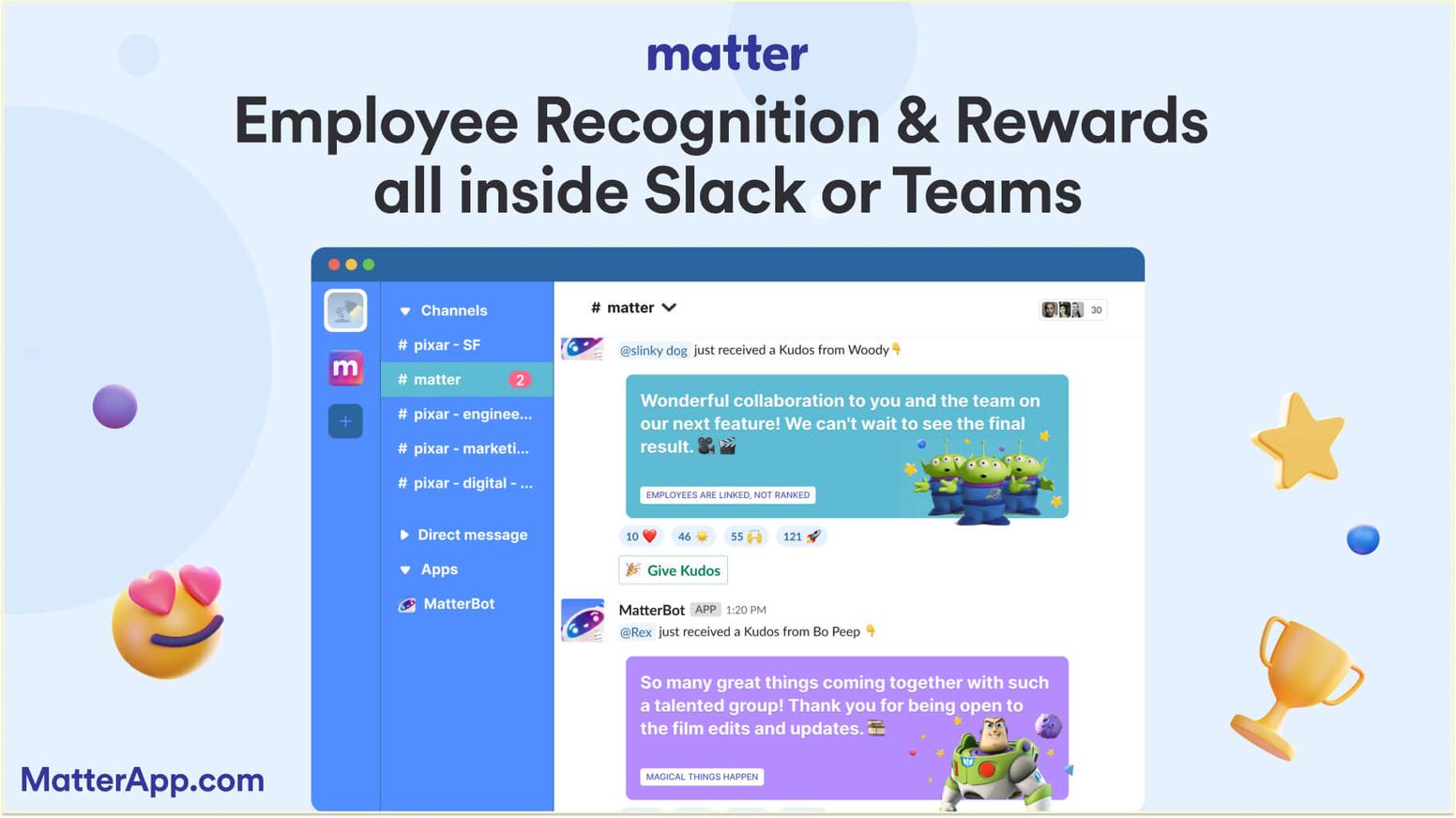
About Matter: Matter is a Slack-first and Teams-first employee recognition and engagement platform designed to simplify how organizations measure and improve workplace satisfaction. The platform's innovative approach leverages its intuitive 5-point scale. This makes it quick and easy for employees to provide feedback. Matter's automated assessments run at a customizable frequency, allowing organizations to gather regular feedback without survey fatigue. The platform seamlessly integrates recognition data with metrics. This provides comprehensive insights into how appreciation practices correlate with overall employee morale and satisfaction levels.
Matter's capabilities extend beyond simple question-and-answer formats. The platform creates meaningful feedback loops that drive continuous improvement. The analytics reveal patterns in both recognition activities and trends. This helps leaders understand what drives positive employee experience in their specific organizational context. Setup is completed in minutes with native integration within the communication tools employees already use daily. Matter eliminates traditional barriers to participation. The platform's Free Forever plan makes sophisticated measurement accessible to organizations of all sizes. Enterprise features support large-scale deployments with advanced reporting and customization options.
Matter main features:
- 5-point scale integrated with Slack and Teams for intuitive responses
- Automated assessments with customizable frequency that adapt to organizational needs
- Recognition data correlation with metrics provides comprehensive culture insights
- Set up in minutes without IT support or complex implementation processes
Matter pricing:
- Free Forever: $0/user/month
- Basic: $1/user/month, billed annually
- Pro: $3/user/month, billed annually
- Pro + Surveys: $5/user/month, billed annually
To learn more, view Matter's pricing page.
Matter G2 score: Matter has a G2 score of 4.7/5 based on user reviews.
What Matter customers are saying: “Matter helps our employees feel more valued, rewarded, and recognized. It’s a very fun and easy-to-use platform that has created a positive experience and engagement for our people while also helping to reinforce our core values daily.” - Taylor Rapp, Director of People & Culture at True Classic (Customer Story).
2. Qualtrics EmployeeXM
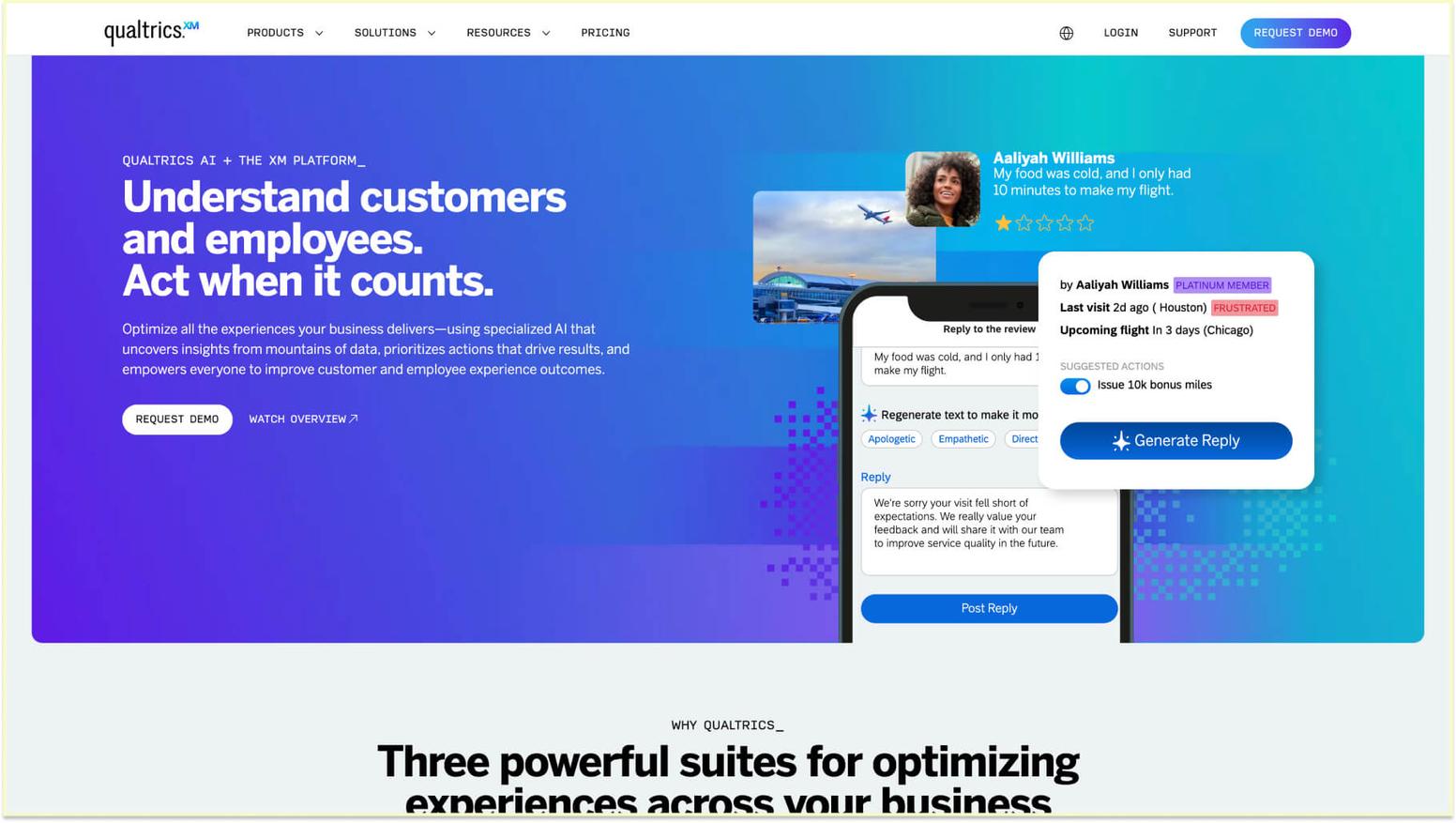
About Qualtrics: Qualtrics EmployeeXM is a comprehensive enterprise platform that brings sophisticated research methodology and advanced analytics to measurement. The platform provides tools for designing, distributing, and analyzing assessments at a massive scale with features built for complex global organizations.
Qualtrics EmployeeXM main features:
- Advanced analytics and predictive modeling that forecast trends and retention risks
- Benchmark comparisons across industries provide context for interpreting scores
- Comprehensive action planning workflows that guide leaders from insights to implementation
- Text analytics and sentiment analysis that extract themes from open-ended responses automatically
Qualtrics EmployeeXM pricing: Pricing is not listed on the website. To learn more about pricing, you'll need to schedule a demo/sales call with Qualtrics EmployeeXM.
Qualtrics EmployeeXM G2 score: Qualtrics EmployeeXM has a G2 score of 4.4/5 based on user reviews.
What Qualtrics EmployeeXM customers are saying on G2: “Preston Donohoo, with Red Pepper, has been fantastic to partner with. He is thorough, excellent at training and his customer support is outstanding. He made our implementation go very smoothly. We have found the Qualtrics engagement survey and 360s tools easy to use, with the ability to dive deep into our results. We would definitely recommend Qualtrics to others.” - Kelli G., Global Talent Manager (G2 Review for Qualtrics EmployeeXM).
Specialized enterprise solutions
3. Culture Amp
About Culture Amp: Culture Amp is a specialized platform that combines science-backed methodology with powerful analytics to understand and improve workplace culture. The platform provides research-validated question templates and frameworks that measure engagement across proven dimensions.
Culture Amp main features:
- Science-backed templates based on organizational psychology research
- Heat mapping for organizational insights that visualize patterns across teams
- Manager effectiveness tracking tools that assess leadership quality and impact
- Customizable workflows that adapt to different organizational structures
Culture Amp pricing:
- Engage: contact the sales team for exclusive features
- Perform: contact the sales team for exclusive features
- Develop: contact the sales team for exclusive features
- People Analysis: contact the sales team for exclusive features
To learn more, view Culture Amp’s pricing page.
Culture Amp G2 score: Culture Amp has a G2 score of 4.5/5 based on user reviews.
What Culture Amp customers are saying on G2: “I’ve been using this software for a while now, and one of its standout features is how well-organized the system is. Everything is laid out in a clear and intuitive way, making it easy to navigate. Additionally, the punctuality of the communications is exceptional – notifications and updates are always timely, ensuring that I stay on top of tasks and deadlines. It’s a reliable tool for those who value efficiency and clear communication. Highly recommended!” - Anna L., SEO Consultant (G2 Review for Culture Amp).
4. Glint
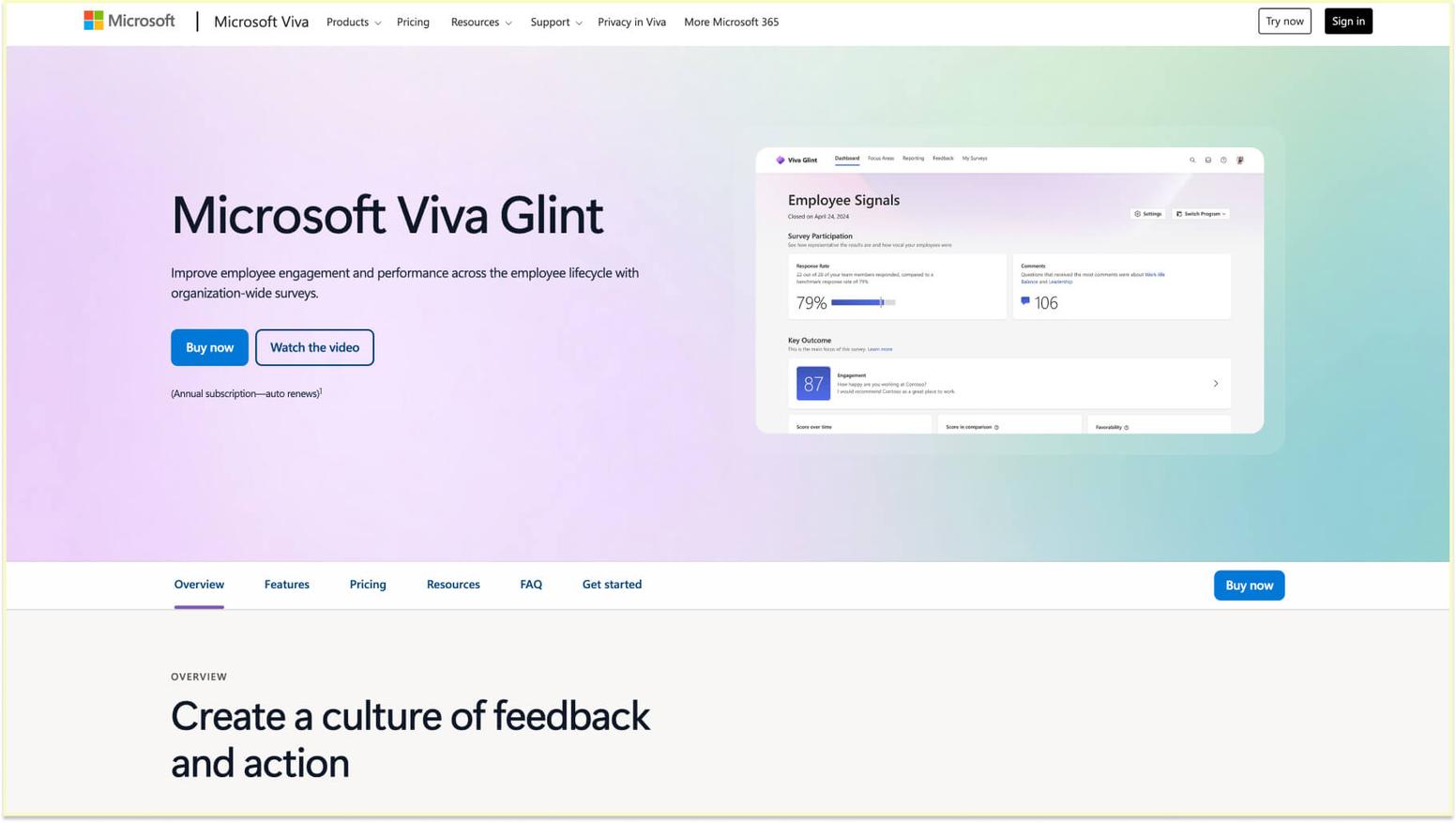
About Glint: Glint, now part of Microsoft, specializes in continuous measurement through frequent assessments and real-time analytics. The platform uses artificial intelligence to analyze sentiment and provide prescriptive recommendations for improving engagement.
Glint main features:
- AI-powered sentiment analysis that interprets text responses and identifies themes
- Real-time dashboard reporting provides immediate visibility into trends
- Prescriptive action recommendations that guide leaders toward effective interventions
- Integration with the Microsoft ecosystem, including Teams and Viva
Glint pricing:
- Microsoft Viva Employee: $2.00 user/month (Annual commitment)
- Microsoft Viva Workplace: $6.00 user/month (Annual commitment)
- Microsoft Viva Suite: $12.00 user/month (Annual commitment)
To learn more, view Glint’s pricing page.
Glint G2 score: Glint has a G2 score of 4.6/5 based on user reviews.
What Glint customers are saying on G2: “Good depiction of data, easy to view formats with a variety of different cuts of data available. Not super user-friendly, requires too many clicks to filter the data needed.” - Anjali A., Human Resources Consultant (G2 Review for Software).
Traditional enterprise provider
5. Eletive
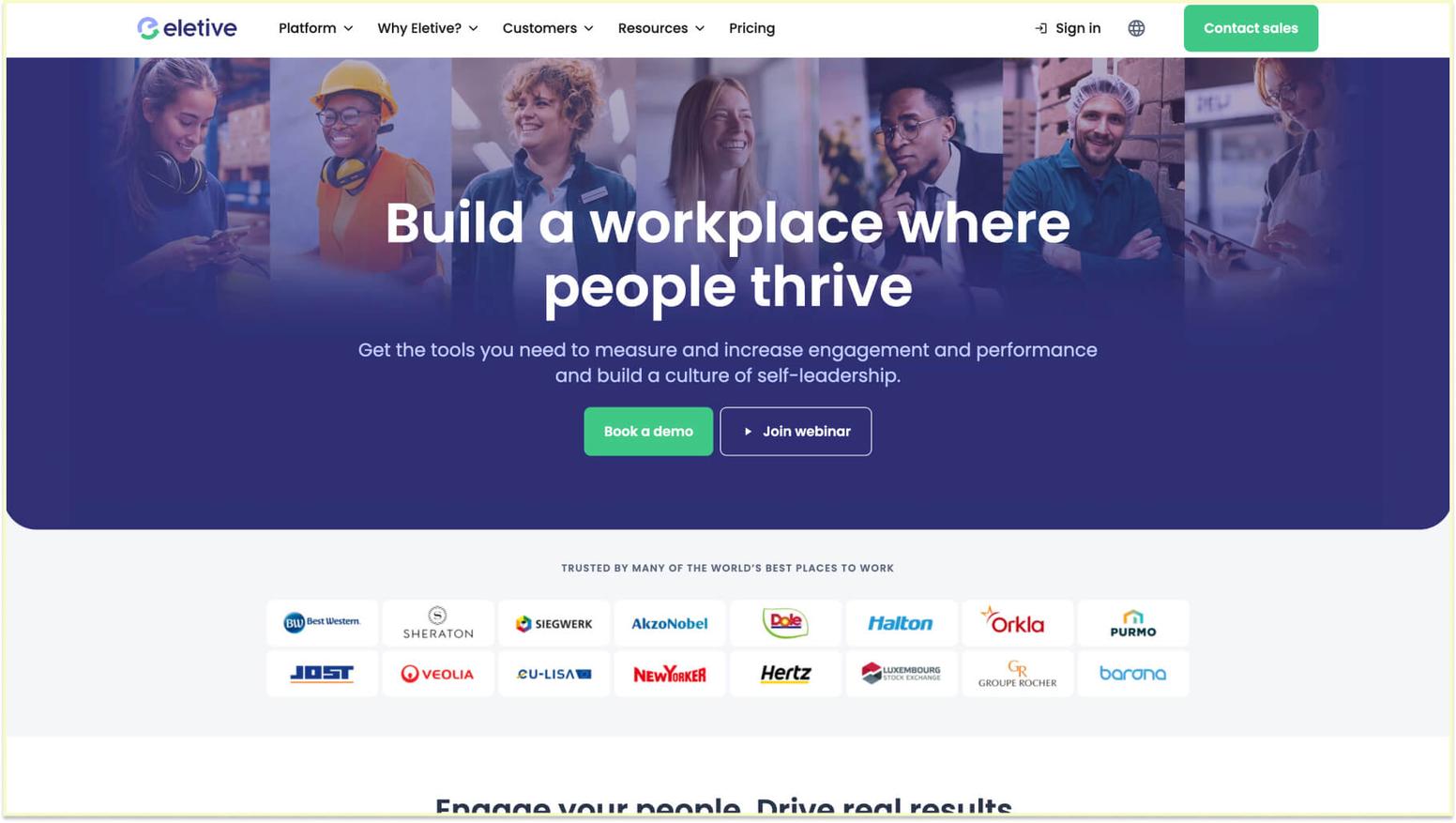
About Eletive: Eletive is a people success platform that combines employee engagement surveys with real-time analytics and actionable insights. The platform emphasizes self-leadership and empowers both managers and employees to take ownership of engagement improvements through intuitive dashboards and continuous feedback loops.
Eletive main features:
- Real-time survey results enabling immediate action on feedback
- User-friendly platform designed for easy implementation and adoption
- Dedicated Customer Success Manager support for ongoing guidance
- Self-leadership tools empowering employees to drive their own engagement
Eletive pricing:
- Essential: Contact the sales team for exclusive features
- Standard: Contact the sales team for exclusive features
- Professional: Contact the sales team for exclusive features
To learn more, view Eletive's pricing page.
Eletive G2 score: Eletive has a G2 score of 4.6/5 based on user reviews.
What Eletive customers are saying on G2: “For both HR-users and managers, it's complicated to change between dates and understand and compare between periods. In that sense, it's not that intuitive. The employee pulse survey tool has been a great asset for tracking progress over time. Its user interface looks good. Features like exporting data, adding comments, and following up on responses make it especially useful for ongoing engagement efforts. Overall, it’s a practical and user-friendly solution for keeping a pulse on the organization.” - Joel V., People & Growth Partner (G2 Review for Software).
5 best mid-market employee engagement survey tools

Mid-market organizations need engagement surveys that balance robust functionality with reasonable pricing and implementation complexity. These employee surveys typically serve companies with 100 to 5,000 employees. They provide sophisticated features without enterprise-level costs or lengthy deployment timelines. The best mid-market tools offer quick implementation, intuitive interfaces, and analytical depth, driving improvements without overwhelming complexity.
Balanced feature and price platforms
1. Matter
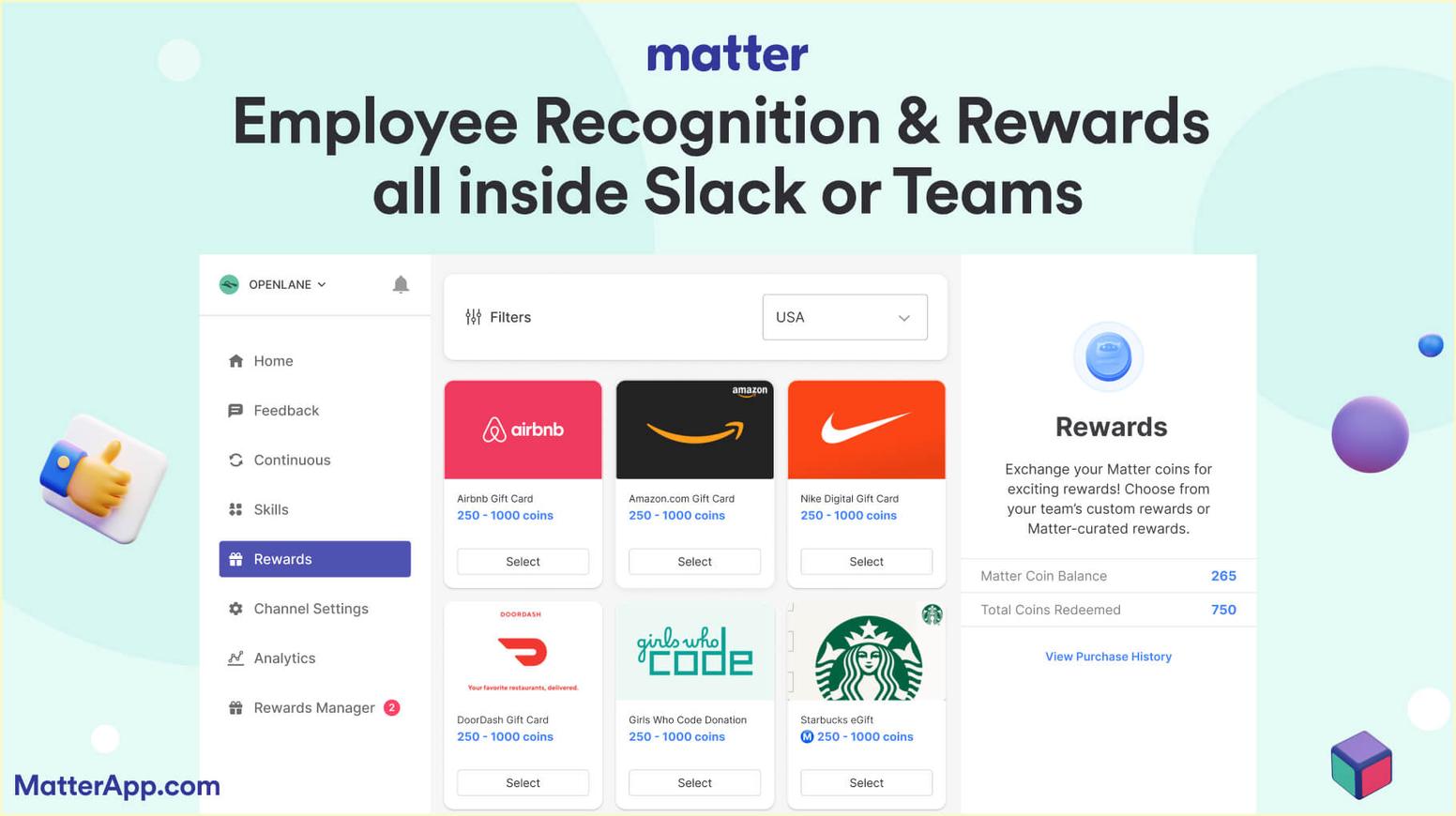
About Matter: Matter delivers enterprise-quality capabilities at mid-market pricing. This makes sophisticated feedback tools accessible to growing organizations. The platform's seamless integration with Slack and Teams means mid-market companies can implement comprehensive measurement without disrupting existing workflows. There's no need for extensive change management. Matter's automated assessments with customizable frequency provide a regular feedback cadence. This helps mid-sized organizations stay connected to employee sentiment as they grow and scale.
The platform stands out in the mid-market space by combining measurement with recognition data. This provides unique insights into how appreciation practices influence overall satisfaction. This integrated approach helps organizations understand the full picture of employee experience without needing multiple disconnected tools. Matter's transparent pricing, starting at just $1 per user per month for the Basic plan, makes budgeting straightforward. The Free Forever plan allows for limitless deployments for teams who wish to test the platform before committing. The quick setup process means mid-market HR teams can launch their first assessment within hours rather than weeks. This accelerates time to value.
Matter main features:
- Affordable per-user pricing starting at $1, making measurement accessible
- Quick setup in minutes without IT support, enabling fast deployment
- Free Forever plan for small teams wanting to pilot assessments
- Recognition and data integration, providing comprehensive culture insights
Matter pricing:
- Free Forever: $0/user/month
- Basic: $1/user/month, billed annually
- Pro: $3/user/month, billed annually
- Pro + Surveys: $5/user/month, billed annually
To learn more, view Matter's pricing page.
Matter G2 score: Matter has a G2 score of 4.7/5 based on user reviews.
What Matter customers are saying: “The setup was extremely easy. It had good UX and interface – people knew how to intuitively use it. The channel got popular in the first two weeks.” - Mathis Bogen, Head of Internal Communications at Bolt (Customer Story).
2. Workleap/Officevibe
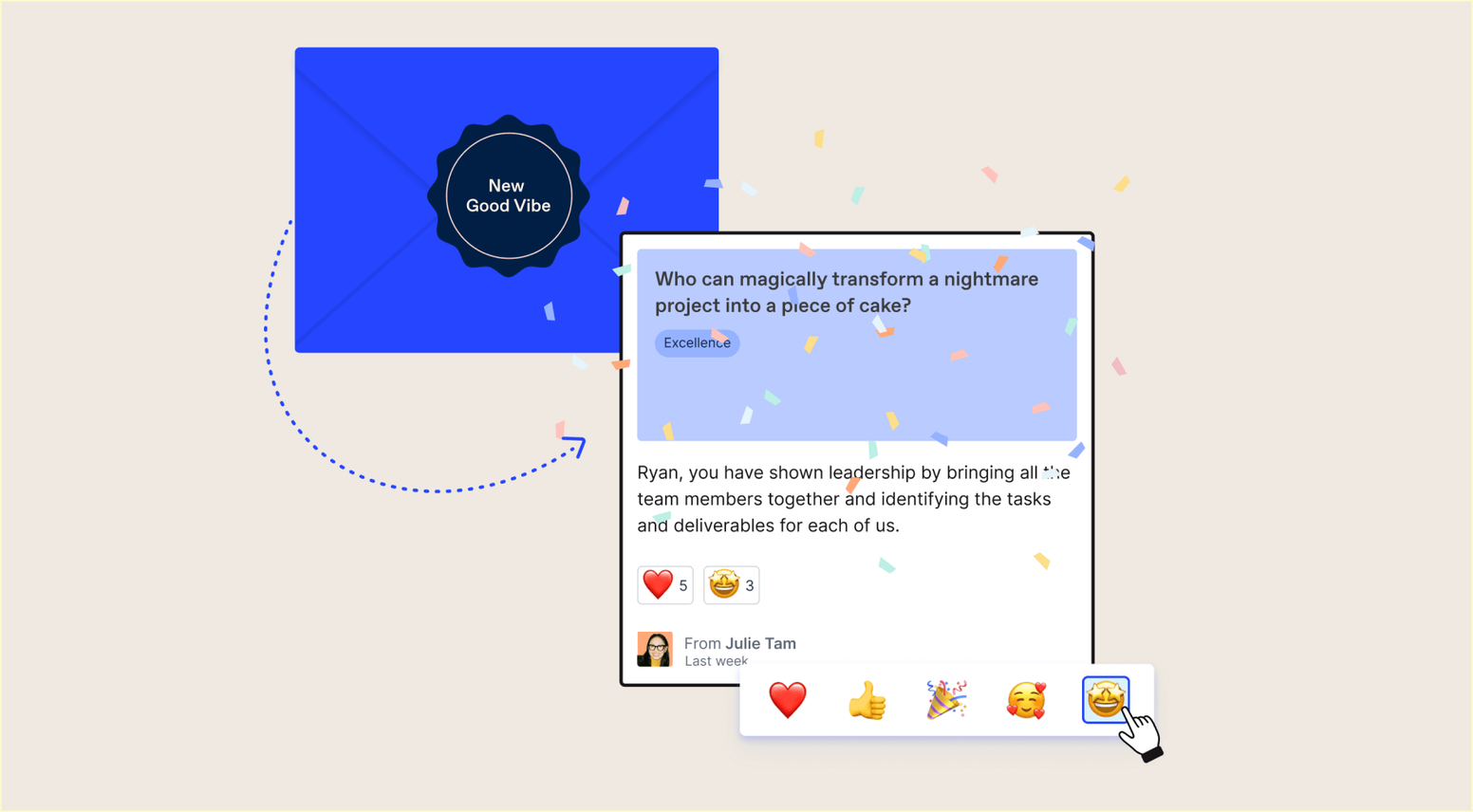
About Workleap/Officevibe: Workleap/Officevibe focuses on continuous measurement through weekly pulse checks that keep leaders connected to how their teams are feeling. The platform emphasizes frequent, lightweight employee engagement survey provider approaches that minimize survey fatigue while providing regular insights.
Workleap/Officevibe main features:
- Weekly pulse check methodology, ensuring regular measurement
- Anonymous feedback collection protects employee privacy and encourages honesty
- Team-specific insights dashboards help managers understand their direct reports
- Question templates covering key dimensions comprehensively
Workleap/Officevibe pricing:
- Officevibe: $5/month,10 users minimum
- Performance: $5/month,10 users minimum
- Compensation: $5/month,100 users minimum
To learn more, view Workleap/Officevibe’s pricing page.
Workleap/Officevibe G2 score: Workleap/Officevibe has a G2 score of 4.3/5 based on user reviews.
What Workleap/Officevibe customers are saying on G2: “Officevibe provides a regular stream of honest feedback and discussion between managers and employees across our company. GoodVibes has become THE way our employees appreciate and recognize one another. Our management team disucsses the data and anonymous responses on a monthly basis.” - Anthony B., President (G2 Review for Workleap).
Growing company solutions
3. 15Five
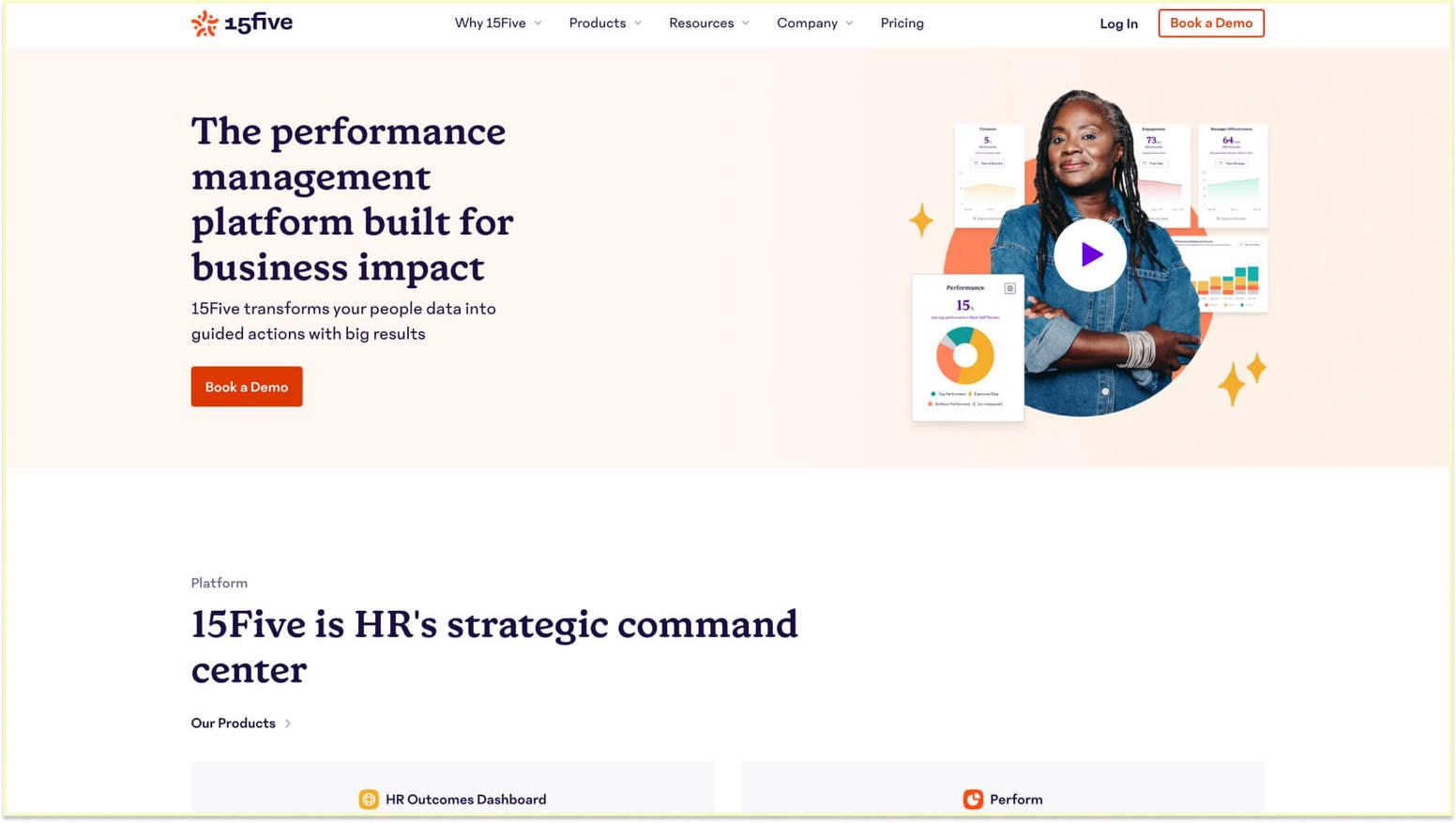
About 15Five: 15Five combines measurement with performance management and continuous feedback tools, creating an integrated platform for understanding and developing teams. The platform's weekly check-in approach encourages regular, data-informed manager-employee conversations.
15Five main features:
- Weekly check-in integration combining measurement with performance discussions
- OKR alignment tracking, connecting individual work to organizational goals
- One-on-one meeting facilitation, helping managers have better conversations with direct reports
- Templates measuring key satisfaction dimensions
15Five pricing:
- Engage: $4/user/month, billed annually
- Perform: $11/user/month, billed annually
- Total Platform: $16/user/month, billed annually
To learn more, view 15Five's pricing page.
15Five G2 score: 15Five has a G2 score of 4.6/5 based on user reviews.
What 15Five customers are saying on G2: “We have built a company wide OKR tied to our company wide average Pulse score. It is an easy check of how the company is "feeling" from week to week, and over the last 2 years, I have found it to be accurate, important and super easy for the team to adopt and stay consistent in use.”- Dan A., Small-Business (G2 Review for 15Five).
4. Lattice
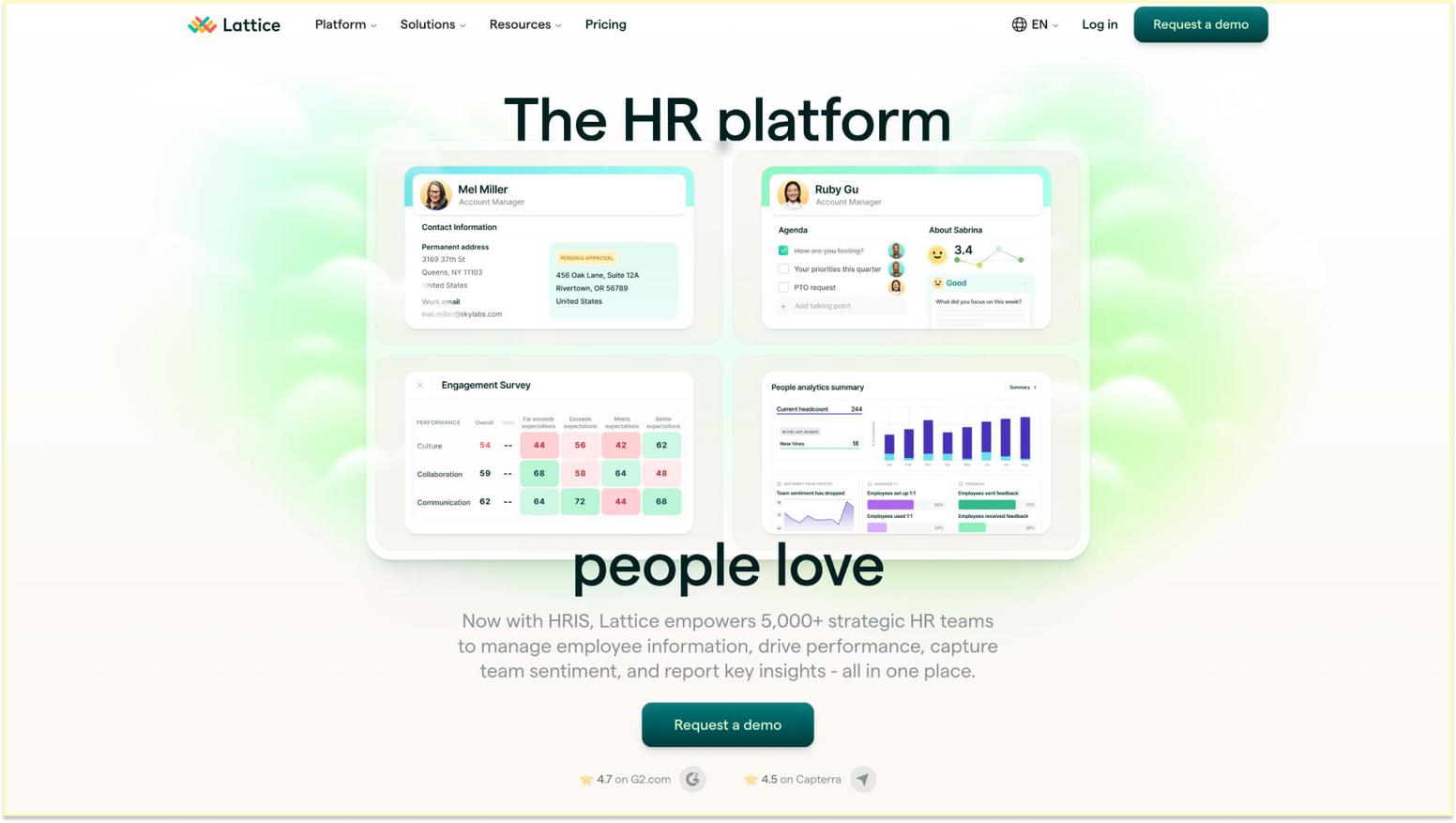
About Lattice: Lattice provides an integrated people management platform that includes assessments alongside performance reviews, goal setting, and career development tools. This comprehensive approach helps organizations connect data with performance and growth conversations.
Lattice main features:
- Performance management integration connecting engagement with performance discussions
- Goal setting, connections, and aligning individual objectives with company priorities
- Career progression tracking helps employees visualize growth paths
- Templates based on research-backed frameworks
Lattice pricing:
- Talent Management: $11/seat/month
- Foundation: $11/seat/month
- Engagement: $4/seat/month
- Grow: $4/seat/month
- Compensation: $6/seat/month
To learn more, view Lattice’s pricing page.
Lattice G2 score: Lattice has a G2 score of 4.7/5 based on user reviews.
What Lattice customers are saying on G2: “Ease of use and ease of implementation. The implementation time commitment was hours not weeks. We initially implemented all modules except Grow, Comp, and Engage and manged to configure and test all modules in less than two weeks. The product team is very receptive to feedback and also able to help come up with creative workarounds for functional gaps. The customer support is great and very responsive.” - Matthew H., Senior Human Resources Manager (G2 Review for Lattice).
Flexible mid-market option
5. WorkDay
About WorkDay: WorkDay, now part of Workday, specializes in continuous listening through frequent, brief assessments that measure engagement in real-time. The platform uses machine learning to automatically generate insights and prioritize areas for attention.
WorkDay main features:
- Continuous listening methodology, gathering feedback frequently without survey fatigue
- Automated insight generation using machine learning to identify areas for attention
- Multilingual support enabling global deployment across diverse workforces
- Manager dashboards providing team-specific visibility and action guidance
WorkDay pricing:
- Workday Adaptive Planning: Free for 30 days
- Workday Adaptive Planning: contact sales to request pricing
- Workday Adaptive Planning Close & Consolidation: contact sales to request pricing
To learn more, view WorkDay’s pricing page.
WorkDay G2 score: WorkDay has a G2 score of 4.0/5 based on user reviews.
What WorkDay customers are saying on G2: “I've found Workday to be a reliable application for handling holiday and HR activities at my company. Its user-friendly interface makes requesting leave and checking balances easy and efficient. Real-time updates ensure I always know my leave status without chasing paperwork. I appreciate the integration with other HR functions, which provides a central hub for important information. While there can be some lag during busy times, overall, Workday simplifies holiday management and enhances transparency for both employees and HR teams.” - Saurabh Y., Senior Engineer (G2 Review for WorkDay).
4 best budget-friendly employee engagement survey tools

Budget-conscious organizations and small businesses can access effective measurement capabilities without significant investment. Platforms designed for cost-sensitive buyers make this possible. These budget-friendly engagement surveys deliver core measurement functionality while keeping expenses minimal. They're ideal for startups, nonprofits, and companies building formal programs. While lacking some advanced features found in enterprise platforms, these solutions provide essential capabilities for gathering meaningful feedback and tracking trends. Organizations starting their measurement journey benefit from understanding how to craft effective employee engagement survey questions that provide actionable insights, even with basic tools.
Free and low-cost options
1. Matter
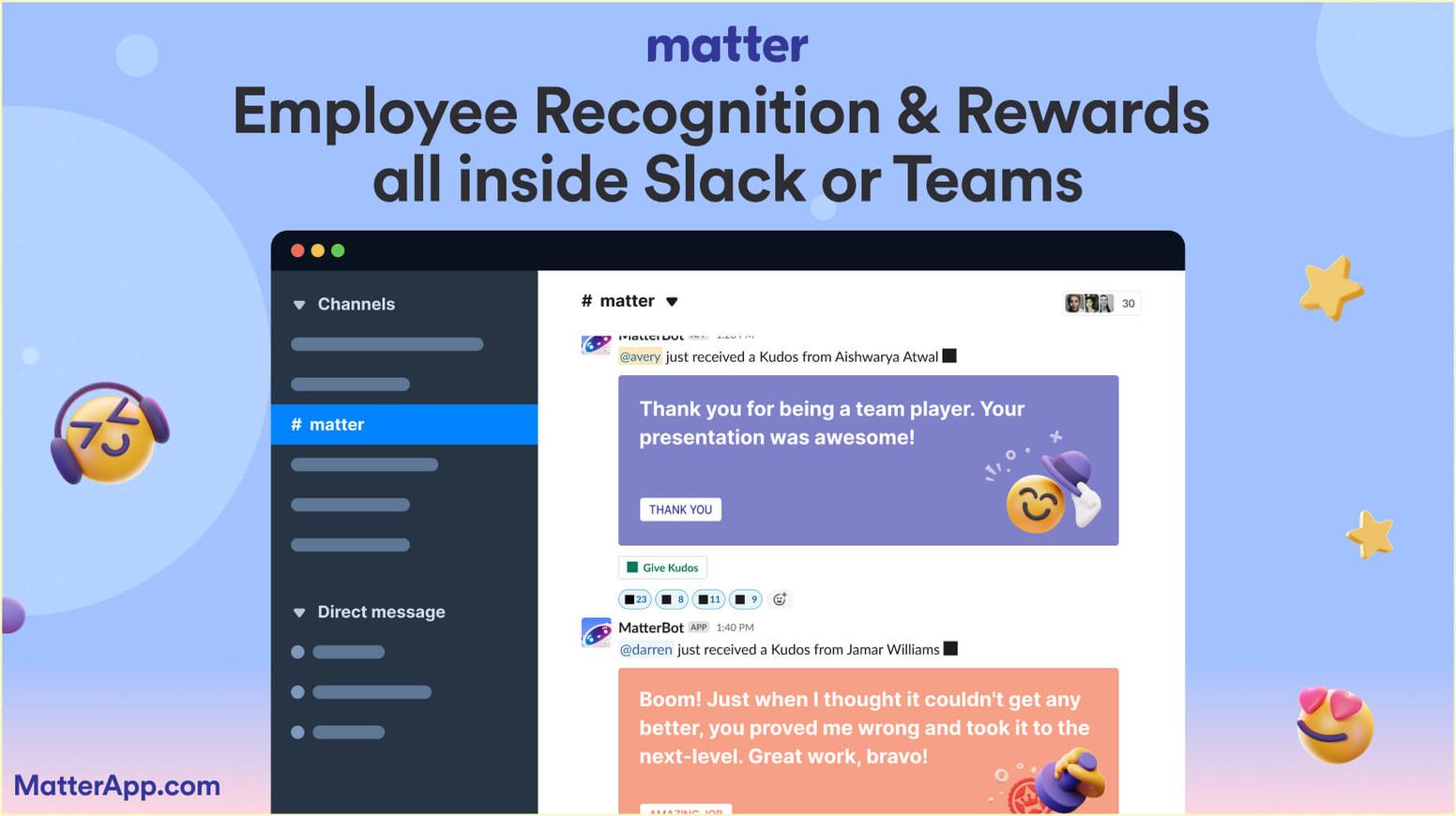
About Matter: Matter stands out as the most cost-effective full-featured platform available. It offers sophisticated capabilities typically found only in expensive enterprise tools at prices that work for any budget. The platform's Free Forever plan provides unlimited assessments with no restrictions on the number of questions or responses. This makes comprehensive measurement accessible even to organizations with zero budget for dedicated tools. This generous free tier includes Matter's intuitive 5-point scale, automated distribution through Slack and Teams, and basic analytics. These features provide clear insights into employee sentiment.
Matter's subscription plans begin at just $1 per user each month for corporations looking for advanced functionality. This delivers extraordinary value by combining measurement with recognition capabilities in a single integrated platform. The Basic plan at this entry-level price point includes automated assessments with customizable scheduling. It also offers comprehensive reporting and the ability to correlate recognition activities with scores. This provides unique insights into cultural health. Matter's transparent pricing means no hidden fees or surprise costs. This allows budget-conscious organizations to accurately forecast expenses. The platform's quick setup process also minimizes implementation costs. It eliminates the need for expensive consultants or lengthy deployment projects.
Matter main features:
- Free Forever plan with unlimited assessments, making measurement accessible to all
- Basic plan at $1 per user monthly, providing advanced features affordably
- Full-featured Pro plan at $3 per user offering enterprise capabilities at mid-market pricing
- Automated distribution and analytics are included at every pricing tier
Matter pricing:
- Free Forever: $0/user/month
- Basic: $1/user/month, billed annually
- Pro: $3/user/month, billed annually
- Pro + Surveys: $5/user/month, billed annually
To learn more, view Matter's pricing page.
Matter G2 score: Matter has a G2 score of 4.7/5 based on user reviews.
What Matter customers are saying: “The reward options that you can redeem Matter coins for are unrivaled! Definitely the most extensive selection of companies/gift cards to choose from.” - Chris Miller, E-Commerce Manager at DYODE (Customer Story).
2. SurveyMonkey
About SurveyMonkey: SurveyMonkey is a general-purpose platform that can be adapted for measurement at very low cost. While not purpose-built for engagement-specific use cases, the platform provides sufficient functionality for basic assessments.
SurveyMonkey main features:
- Template library for quick deployment, including some employee feedback templates
- Basic analytics and reporting showing response summaries and simple trends
- Affordable individual plans starting at very low monthly costs
- Familiar interface that most employees already know how to use
SurveyMonkey pricing:
- Team Advantage: $25/user/month, starting at 3 users, billed annually
- Team Premier: $75/user/month, starting at 3 users, billed annually
- Enterprise: Talk to sales for pricing
To learn more, view SurveyMonkey’s pricing page.
SurveyMonkey G2 score: SurveyMonkey has a G2 score of 4.4/5 based on user reviews.
What SurveyMonkey customers are saying on G2: “The free plan lets you create surveys with up to 25 responses. For most real-world uses, that's very limiting. The basic paid plan doesn't cut it either. If you need to export your data, you're looking at the higher tiers that run closer to $100/month. Additionally, the survey customization options can be a lot better. The competitors in this space offer advanced customization that SurveyMonkey is definitely missing.” -Nitin M., Product Manager (G2 Review for SurveyMonkey).
Value-focused platform
3. Google Forms
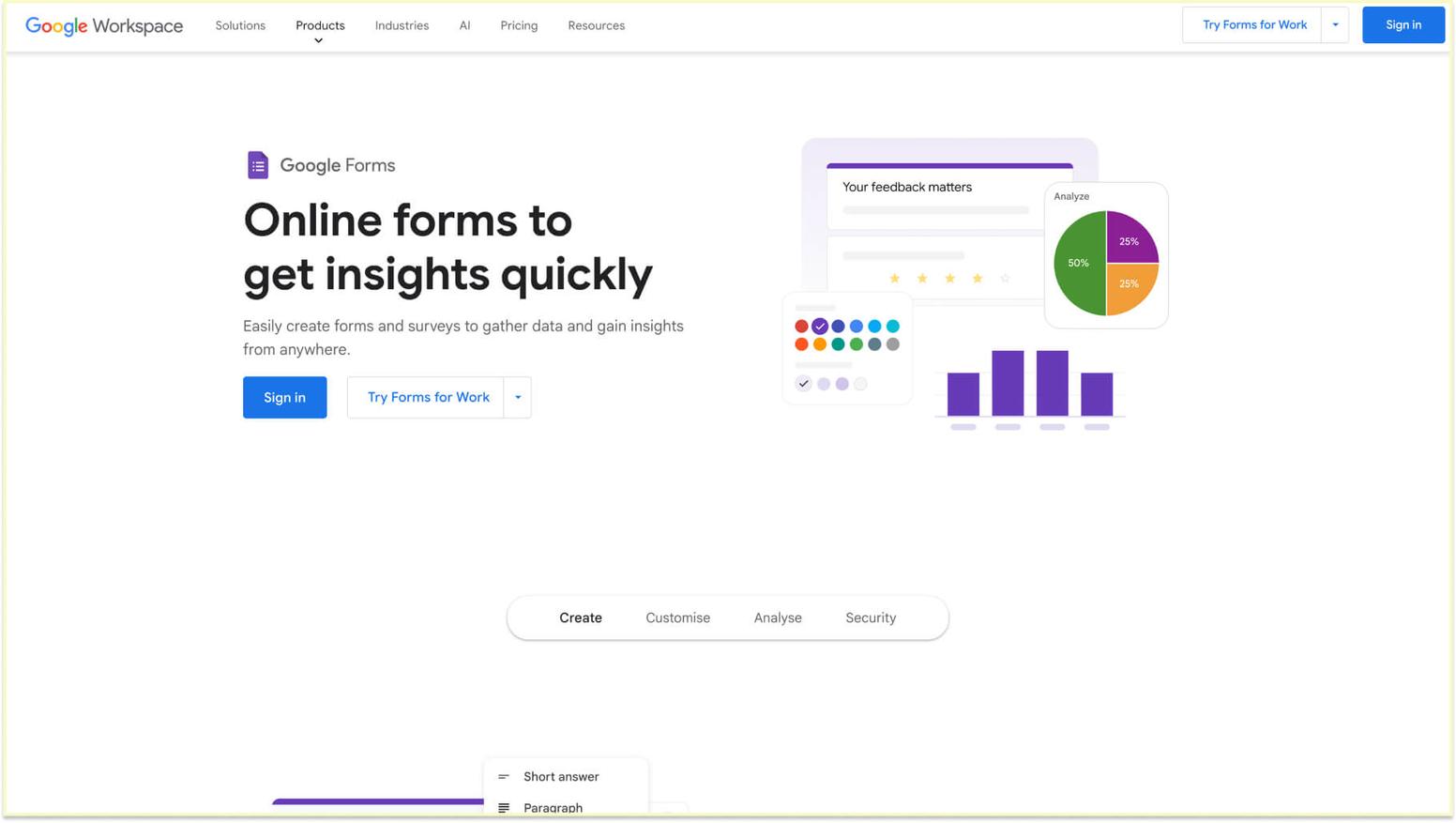
About Google Forms: Google Forms is a free tool included with Google Workspace that meets basic needs for budget-conscious organizations. While lacking specialized features, the platform provides essential capabilities for creating and collecting responses at no cost.
Google Forms main features:
- Completely free for all users with Google accounts, providing maximum affordability
- Simple creation interface that anyone can learn to use quickly
- Basic response collection tools with automatic spreadsheet compilation
- Integration with the Google Workspace ecosystem is already used by many organizations
Google Forms pricing:
- Starter: $6.30 user per month
- Standard: $12.60 user per month
- Plus: $22 user per month
- Enterprise Plus: Talk to sales for pricing
To learn more, view Google Forms pricing page.
Google Forms G2 score: Google Forms has a G2 score of 4.6/5 based on user reviews.
What Google Forms users are saying on G2: “Honestly, I enjoy using Google Workspace overall, though it can be somewhat challenging when the internet connection is unstable, as most of its tools require being online. Additionally, with so many apps like Docs, Sheets, Drive, and Meet, it can feel a bit overwhelming at first. However, once you become familiar with the platform, everything tends to run very smoothly.” - Girishchand B., Test Engineer Level 2 (G2 review for Google Forms).
Small business solution
4. Typeform
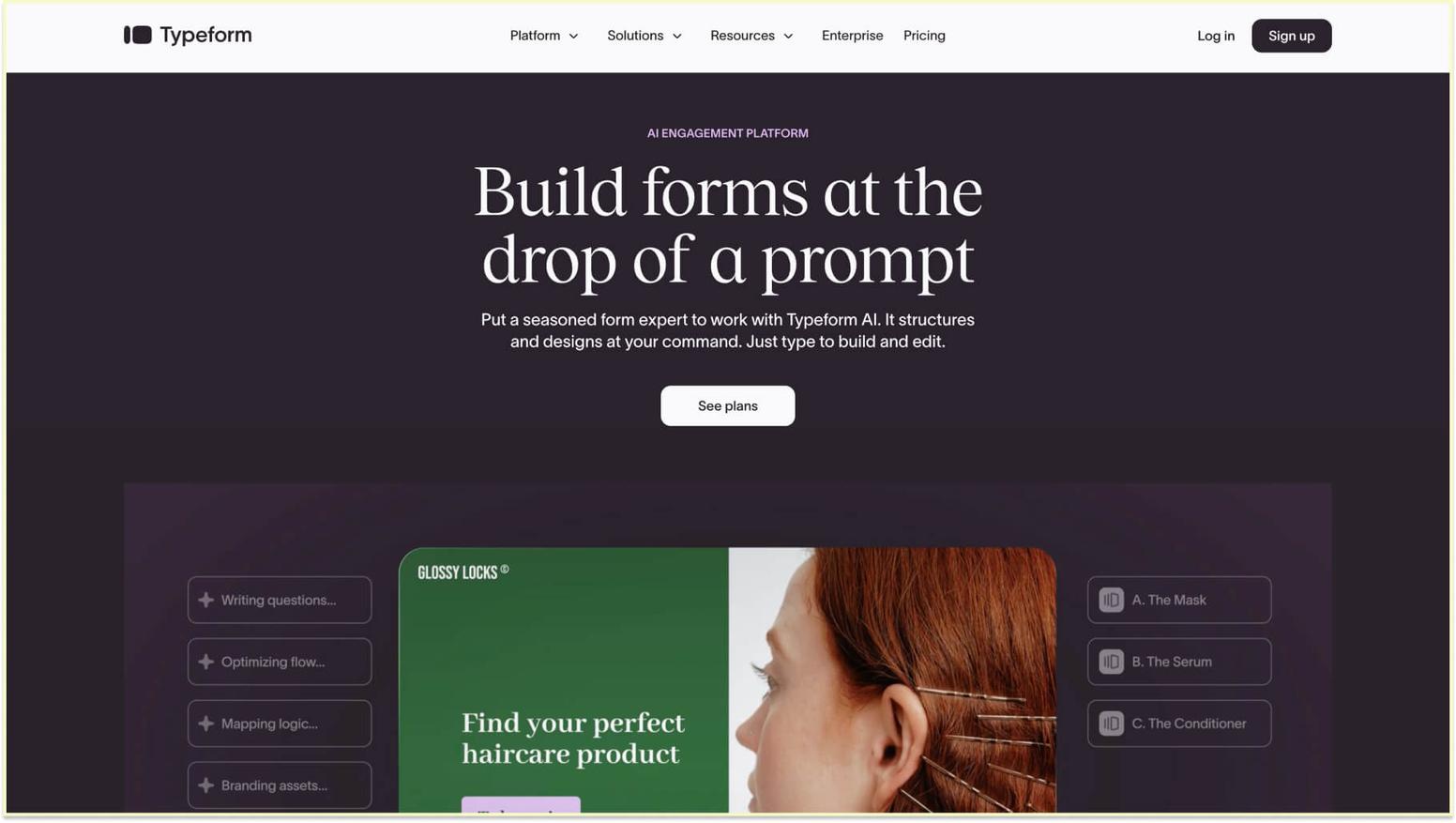
About Typeform: Typeform offers beautifully designed assessments with conversational interfaces that feel more engaging than traditional form-based approaches. The platform's mobile-optimized design and thoughtful user experience encourage participation, particularly among younger employees.
Typeform main features:
- Conversational design creating more engaging employee experiences
- Mobile-optimized responses ensure surveys work well on smartphones
- Basic analytics included showing completion rates and response summaries
- Template library with some employee feedback templates available
Typeform pricing:
- Basic: $25 per month
- Plus: $50 per month
- Business: $83 per month
- Enterprise: Custom per month
To learn more, view Typeform’s pricing page.
Typeform G2 score: Typeform has a G2 score of 4.5/5 based on user reviews.
What Typeform customers are saying on G2: “The user interface could be improved for applying design settings. Some of the options are buried in the brand and theme screens. It would be nice to have more control over where the questions and the answers appear on the screen, the layouts are pretty limited. On the data analysis side, it would be nice to have the ability to check questions that are tests so they are eliminated from the results. Right now I have to create a draft survey to test and once it is approved I have to copy the survey and give people a new link to the live version so I can utilize the reports.” - Jennifer N., Data Analyst & Community Engagement (G2 Review for Software).
3 tips for maximizing employee engagement survey response rates

High response rates are essential for ensuring results accurately represent the entire workforce. When participation is low, organizations risk making decisions based on incomplete data that may not reflect actual employee sentiment. Response rates above 70% are considered good, while rates above 85% are excellent. Achieving these participation rates requires strategies that make assessments easy to complete, demonstrate the value of participation, and build trust that feedback leads to action. When organizations run engagement surveys with clear communication about how input drives improvements, participation increases significantly.
Organizations that consistently achieve strong response rates understand that participation itself is a form of engagement. Employees who take time to provide thoughtful feedback are investing in improving their workplace, and that investment only continues when they see that their input matters and leads to real changes. Understanding how employees view the feedback process and whether they trust senior leadership to act on their perspectives directly influences their willingness to participate.
1. Communicating survey purpose and confidentiality
Clear communication about why measurement matters and how responses will be protected is fundamental to achieving high participation rates. Before launching any assessment, leaders should explain the specific goals of the measurement effort, what the organization hopes to learn from employee feedback, and how results will inform decision-making about policies, practices, and improvements. This context helps employees understand that their participation serves a genuine purpose beyond just collecting data for data's sake. When people understand how their feedback will be used, they're more likely to invest time in providing thoughtful, honest responses. Organizations running employee surveys should clarify how results will identify areas of employee well-being that need attention and how leadership will address concerns raised through the feedback process.
Equally crucial is conveying the exact safeguards in place to protect anonymity and ensure that individual comments cannot be linked to specific employees. Organizations should explain how pulse survey tools aggregate responses, what minimum group sizes are required before filtered data is displayed, and what access controls limit who can see the results. This transparency about privacy protections builds the trust necessary for employees to share candid feedback, particularly on sensitive topics such as management effectiveness or workplace concerns. When employees trust that their honest input won't have negative consequences, participation increases, and response quality improves. Anonymous feedback mechanisms encourage employees to share authentic perspectives about whether they feel valued, fairly rewarded, and supported by the company's leadership without fear of repercussions.
2. Timing surveys strategically
Strategic timing significantly impacts response rates and response quality. Timing matters for participation. Steer clear of quarter-end crunch times, major project deadlines, and holiday periods when many people are out of the office or focused elsewhere. Instead, schedule assessments during relatively calm periods when employees have mental bandwidth to provide thoughtful feedback. For annual comprehensive assessments, many organizations find that mid-year timing works well, avoiding both year-end busy seasons and post-holiday periods when teams are ramping back up. Strategic timing demonstrates respect for employees' day-to-day work demands and increases the likelihood that they'll have time to provide meaningful constructive feedback.
Consider also the day of the week and time of day when distributing invitations. Research suggests that Tuesday through Thursday often yield better response rates than Monday or Friday, and mid-morning timing typically works better than end-of-day when employees are rushing to finish tasks. For organizations using automated pulse checks, establishing a consistent schedule, such as the first Monday morning of each month, helps employees anticipate when assessments will occur and mentally prepare to participate. This predictability demonstrates organizational respect for employee time and makes participation feel like a routine part of work rather than an unexpected interruption. When organizations follow predictable schedules for measuring employee engagement, employees come to view feedback as a valued part of company culture rather than an imposition on their personal lives and work responsibilities.
3. Integrating surveys into daily workflows
Maximizing response rates requires minimizing the friction and effort involved in participating. Platforms that integrate directly into the communication tools employees already use daily, such as Slack or Microsoft Teams, dramatically increase participation by eliminating the need to navigate to separate websites or applications. When employees can complete an assessment without leaving their normal workflow, the convenience encourages participation, even from busy team members who might otherwise skip assessments that require extra steps. This seamless integration also increases the likelihood that employees will complete assessments on mobile devices, supporting flexible work arrangements in which people may not be at their desks when invitations arrive. Integration into day-to-day work tools makes providing feedback feel natural rather than burdensome.
Beyond tool integration, consider how to make assessments feel like natural parts of work rather than additional obligations. Automated reminders through existing communication channels gently prompt employees who haven't yet responded without feeling like nagging. Setting reasonable completion timeframes, such as one week for brief pulse checks and two weeks for comprehensive annual assessments, provides flexibility while creating enough urgency to encourage prompt participation. Leaders can also model participation by completing assessments themselves promptly and encouraging their teams to do likewise, demonstrating that feedback matters at all levels of the organization. When senior leadership visibly prioritizes participation, employees understand that their perspectives genuinely influence decisions about workplace culture and well-being initiatives.
How Matter can help with employee engagement surveys

Measuring and improving engagement doesn't have to be complicated. Matter provides a comprehensive yet remarkably simple solution through assessments that integrate seamlessly into existing workflows. What makes the platform unique is how it combines sophisticated measurement capabilities with recognition and employee rewards features, helping teams act on feedback by strengthening positive company culture. By connecting measurement directly with recognition practices, the platform reveals how appreciation activities influence satisfaction, delivering insights that single-purpose tools simply cannot provide.
The platform is designed specifically for the modern, distributed workplace where people primarily communicate through Slack and Teams rather than email. Native integration means distribution, participation, and results sharing all happen within the tools teams already use daily. This eliminates the friction that reduces response rates on traditional platforms requiring separate logins and interfaces. Both measurement and appreciation become natural parts of workflows rather than separate initiatives demanding dedicated time and attention.
Seamless Slack and Teams integration for maximum adoption
Deep integration with Slack and Microsoft Teams transforms how people experience assessments by embedding measurement directly into daily communication workflows.
Key benefits include:
- No context switching required: People can review questions and respond without leaving the conversation platform they're already using
- Zero friction participation: Pulse checks arrive as natural messages within channels or chat, eliminating separate logins or external website navigation
- Mobile-optimized experience: Seamless functionality proves particularly valuable for deskless workers and mobile-first teams accessing work tools primarily through smartphones
- Higher response rates: When surveys are deployed through tools people already use daily, participation increases significantly
The integration extends beyond delivery to include results sharing and recognition activities, creating continuous feedback loops. Leaders can share wins and insights directly in team channels, making workplace culture visible as teams celebrate progress. When results indicate areas needing attention, teams can immediately launch recognition campaigns focused on relevant behaviors. Feedback processes that integrate seamlessly into workflows feel respectful of time rather than competing with daily responsibilities.
Automated survey scheduling and reminder capabilities
Automation features eliminate the manual work typically required to maintain consistent measurement programs.
Key automation capabilities:
- Flexible scheduling: Set pulse checks to run automatically at whatever frequency makes sense, whether weekly, monthly, or quarterly
- Zero manual effort: No one needs to manually create and distribute assessments each cycle
- Complete lifecycle management: The platform handles delivery timing, reminder notifications, and automatic closure when response periods end
- Consistent measurement: Automation ensures measurement happens reliably, even during busy periods when competing priorities might otherwise cause delays
Thoughtful reminder systems prompt people who haven't completed assessments without being intrusive. Gentle nudges sent at strategic intervals respect time while encouraging participation. Leaders receive automatic notifications about their team's response rates, enabling proactive outreach without manual tracking. Sophisticated measurement becomes practical even for small HR teams managing multiple initiatives, demonstrating commitment to continuous improvement without overwhelming anyone with administrative burden.
Recognition data insights connected to engagement patterns
The unique capability to correlate recognition activities with survey results provides insights helping teams understand what actually drives satisfaction and employee morale in their specific culture.
The analytics reveal critical patterns:
- Recognition frequency correlation: Do teams with higher recognition frequency show better scores?
- Values-based recognition impact: Which types of appreciation tied to specific company values correlate most strongly with positive feedback?
- Data-driven program design: Leaders can make informed decisions about which practices deliver the greatest impact
- Strategic investment: Resources can flow toward recognition practices that demonstrably strengthen well-being
Connecting recognition and engagement data enables more targeted improvement initiatives. If results indicate people don't feel valued, leaders can reference recognition analytics to understand current patterns and identify appreciation gaps. When engagement improves following program enhancements, correlated data demonstrates clear cause and effect, building support for continued investment. This complete picture shows both what you're measuring and how recognition practices influence morale, revealing what truly drives a committed, engaged workforce.
Frequently asked questions about employee engagement survey tools

Understanding how to effectively use measurement tools requires clarity about design, implementation timing, question selection, anonymity approaches, response rate goals, and the features that make tools genuinely useful. These frequently asked questions address common concerns that organizations face when establishing or improving their measurement programs. Whether you're conducting your first survey or refining established employee surveys to improve employee satisfaction more effectively, these answers provide practical guidance.
Q: What is the difference between employee engagement surveys and pulse surveys?
A: Employee engagement surveys are comprehensive annual assessments measuring satisfaction across multiple dimensions like leadership and career development. Pulse surveys are shorter, more frequent assessments with 5 to 10 questions that track specific metrics between annual surveys.
Q: How often should organizations conduct employee engagement surveys?
A: Most organizations benefit from annual comprehensive assessments with 40 to 60 questions, supplemented by quarterly or monthly pulse surveys with 5 to 10 questions. The optimal frequency balances gathering timely feedback with avoiding survey fatigue.
Q: What makes an employee engagement survey tool effective?
A: Effective employee engagement survey tools combine science-backed question frameworks, intuitive mobile-optimized interfaces, real-time analytics, action planning features, and integration with workplace tools like Slack or Teams. The best platforms balance sophistication with simplicity while providing actionable insights.
Q: How many questions should an employee engagement survey include?
A: Comprehensive annual assessments typically include 40 to 60 questions covering key dimensions like job satisfaction, management effectiveness, and career development. Pulse checks should include 5 to 10 focused questions that can be answered in 2-3 minutes.
Q: Should employee engagement surveys be anonymous?
A: Anonymous surveys typically yield more honest feedback on sensitive topics. Many organizations use anonymous annual assessments combined with confidential quarterly pulse checks that aggregate responses in groups large enough to prevent individual identification while enabling demographic filtering for targeted action planning.
Q: What is a good employee engagement survey response rate?
A: Response rates above 70% are considered good, while rates above 85% are excellent. Achieving strong rates requires clear communication about purpose, leadership commitment to acting on feedback, and user-friendly tools integrated into daily workflows.
Final thoughts about employee engagement survey tools
Selecting and implementing the right measurement tool represents a strategic investment in building workplace cultures where employees feel heard, valued, and motivated to contribute their best work. The most effective employee engagement surveys do more than simply collect data about satisfaction. They create continuous feedback loops that drive meaningful improvements. They connect metrics to recognition practices and provide leaders with actionable insights that inform decision-making at every level. Organizations that excel at using employee engagement surveys understand that assessments are just the beginning. The real value comes from acting on feedback. This means closing the feedback loop by communicating what changed based on input and demonstrating a genuine commitment to continuous improvement. Tracking key metrics, such as eNPS, alongside broader scores helps organizations monitor progress and identify trends that require attention.
Matter stands out among providers by combining sophisticated measurement capabilities with seamless Slack and Teams integration, an intuitive 5-point approach, automated scheduling, and unique connections between recognition activities and patterns. The platform transforms feedback into action by making both measurement and appreciation natural parts of daily workflows rather than separate initiatives requiring dedicated time and attention. Whether you're launching your first program or upgrading from basic tools that aren't delivering the insights you need, Matter provides a complete solution designed for modern, distributed teams that value simplicity without sacrificing capability. Organizations that conduct employee engagement surveys through Matter gain comprehensive visibility into employee well-being while simultaneously strengthening recognition practices that help improve employee satisfaction and build an engaged workforce committed to organizational success.
Ready to transform employee feedback into meaningful improvements? Schedule a demo with a Matter expert today to see our platform in action. Learn how integrated surveys and recognition work together to build a stronger feedback culture.

![49+ Employee Engagement Survey Tools [2026 Software & Tips]](https://cdn.sanity.io/images/kqqb5xry/production/abc4b7d1e97facabe782eac4644268b6a0fdfa24-800x600.jpg?w=720&q=75&fit=max&auto=format)

![39+ Employee Engagement Survey Examples [2026 Guide & Ideas]](https://cdn.sanity.io/images/kqqb5xry/production/25935096834238b3bb728390b5af938c53abb7f7-800x600.jpg?w=720&q=75&fit=max&auto=format)