

Building a workplace where employees feel heard requires more than annual check-ins. At Matter, we recognize that organizations face significant challenges in crafting employee pulse survey questions that truly capture employee sentiment and drive meaningful change. Many companies struggle with employee survey design, uncertain which pulse survey questions will measure employee engagement effectively and boost engagement across diverse employee populations. Traditional annual surveys often leave HR teams and HR professionals waiting months for feedback, missing critical moments when timely insights could prevent turnover or strengthen employee morale.
The challenge isn't just asking questions; it's asking the right employee pulse survey questions at the right time using effective pulse survey tools. Without well-designed pulse surveys, organizations risk survey fatigue, superficial responses, and missed opportunities to understand what employees actually need. This reactive approach can lead to disengagement, declining employee satisfaction, and ultimately a disconnect between leadership and the workforce. This guide provides 49+ proven employee pulse survey questions designed to help you measure job satisfaction, track company culture trends, gain valuable insights into employee morale, identify trends early, and create a positive workplace culture where candid feedback flows freely and every voice matters.
What is a pulse survey?

Employee pulse surveys have become essential tools for modern organizations seeking real-time feedback from their workforce. Unlike traditional annual surveys that provide once-yearly snapshots, pulse surveys offer continuous visibility into how employees feel about their work environment, leadership, and the company's culture. These brief, frequent check-ins enable HR teams and HR professionals to monitor employee attitudes, detect emerging issues through pulse survey data, and respond quickly to concerns before they impact employee morale or retention. Good employee pulse survey programs transform how organizations understand their people and enhance employee engagement.
Defining pulse surveys and their role in engagement
A pulse survey is a short, focused questionnaire sent to employees on a regular cadence to measure specific aspects of the employee experience. Organizations also use eNPS metrics within pulse surveys to track employee loyalty and satisfaction trends over time. Typically consisting of 5 to 15 questions, these employee surveys take just a few minutes to complete, making them accessible and convenient for busy teams. The primary role of employee pulse surveys is to provide organizations with timely, actionable feedback that reflects current workplace dynamics rather than outdated perceptions from months ago.
These pulse surveys excel at measuring employee engagement by capturing how connected employees feel to their work, their teams, and the organization's mission. Through carefully crafted pulse survey questions, companies track fluctuations in sentiment, identify department-specific challenges, and understand what drives employee satisfaction across diverse employee populations. This continuous feedback loop helps leadership make informed decisions based on actual employee sentiments rather than assumptions, and it encourages honest feedback from teams. Employee pulse surveys also help organizations provide feedback mechanisms that engaged employees appreciate.
How pulse surveys differ from annual feedback tools
The fundamental difference between employee pulse surveys and annual survey approaches lies in their frequency, scope, and intended outcomes. Annual employee surveys are comprehensive surveys that typically include 50 to 100 questions covering every aspect of the employee experience. While these traditional surveys provide valuable baseline survey data, they often arrive too late to prevent disengagement or address urgent concerns that have developed throughout the year.
In contrast, pulse surveys prioritize agility and responsiveness. Their shorter format reduces survey fatigue, encouraging employees to provide candid feedback with higher participation rates and honest responses. Rather than waiting months for survey results, HR professionals and HR teams can analyze pulse survey responses within days and implement changes quickly. This immediacy transforms employee feedback from a retrospective exercise into a proactive strategy that enhances employee engagement and strengthens company culture.
Key differences include:
- Frequency: Pulse surveys occur weekly, monthly, or quarterly, while annual surveys happen once per year
- Length: Pulse surveys contain 5 to 15 targeted questions versus 50 to 100 in comprehensive surveys
- Focus: Pulse surveys measure specific themes or current priorities, whereas annual employee surveys attempt to cover everything
- Response time: Pulse surveys deliver actionable insights within days, compared to weeks or months for traditional surveys
- Flexibility: Pulse surveys can adapt questions based on organizational priorities or recent events
The frequency and strategic timing of pulse surveys
Determining the optimal frequency for employee pulse surveys requires balancing the need for regular insights with respect for employees' time and attention. Most organizations find success with monthly or quarterly pulse surveys, though some companies implement weekly check-ins for rapidly changing environments or during critical transition periods. The key is establishing a consistent rhythm that employees can anticipate without feeling overwhelmed by survey fatigue.
Strategic timing amplifies the value of survey data collected through pulse surveys. Launching employee pulse surveys immediately after significant organizational changes such as leadership transitions, restructuring, or policy updates helps gauge employee reactions and adjust communication strategies accordingly. Similarly, timing pulse surveys around performance review cycles, benefits enrollment periods, or major project completions provides context-specific insights that inform decision-making and track trends effectively.
Organizations should consider these timing strategies:
- Quarterly pulse surveys aligned with business cycles to track progress toward annual goals
- Monthly pulse surveys for high-growth companies or during periods of significant change
- Post-event pulse surveys following town halls, training sessions, or company-wide initiatives to measure effectiveness
- Milestone pulse surveys at key points in the employee lifecycle, such as onboarding, first year anniversaries, or promotion transitions
- Seasonal pulse surveys to understand how workload, team dynamics, or personal life factors affect engagement throughout the year
What are the benefits of employee pulse surveys?
Organizations that implement effective pulse survey programs gain competitive advantages in talent management, retention, and workplace culture. The benefits extend far beyond simple data collection through employee surveys, creating opportunities for meaningful dialogue between employees and leadership while demonstrating organizational commitment to continuous improvement. When companies consistently gather and act on employee feedback through pulse surveys, they build trust, strengthen engagement, and create environments where people thrive.
Real-time insights into workforce sentiment and morale
Traditional feedback mechanisms often reveal problems long after they've damaged employee morale and productivity. Employee pulse surveys deliver immediate visibility into how employees feel right now, enabling proactive responses to concerns before they escalate. This real-time feedback creates opportunities to celebrate wins, address frustrations, and maintain positive momentum across teams through regular pulse surveys.
The ability to measure employee sentiment weekly or monthly through pulse surveys transforms how organizations understand their workforce. Leaders can identify which departments experience high engagement, which teams face challenges, and how company-wide initiatives affect different employee segments. These valuable insights from pulse survey data inform resource allocation, leadership development priorities, and strategic planning in ways that annual employee surveys simply cannot match.
Organizations using regular pulse surveys report:
- Earlier detection of engagement dips through pulse survey results that might otherwise lead to turnover
- Better understanding of what motivates different teams and demographics via pulse survey questions
- Increased ability to respond to concerns while they're still manageable through frequent feedback
- More accurate forecasting of retention risks based on sentiment trends from pulse surveys
- Stronger connection between leadership decisions and employee experience revealed by pulse survey data
Early identification of engagement trends and issues
The continuous nature of pulse surveys enables HR teams to identify trends and patterns that would remain invisible through annual survey feedback alone. By tracking how pulse survey responses change over time, organizations spot emerging issues such as declining trust in leadership, communication breakdowns, or cultural misalignments before they damage employee satisfaction. This predictive capability allows companies to intervene strategically rather than reactively when analyzing pulse survey results.
Trend analysis from pulse survey data reveals correlations between organizational actions and employee responses. For example, tracking engagement metrics before and after policy changes through pulse surveys helps leaders understand which initiatives genuinely improve the employee experience and which fall short. Similarly, comparing survey results across departments highlights best practices from high-performing teams that can be scaled across the organization using insights from employee pulse surveys.
Early warning signs that pulse surveys often reveal include:
- Gradual decreases in scores related to professional development opportunities signaling potential retention risks
- Patterns in anonymous feedback from pulse surveys indicating communication gaps between leadership and staff
- Department-specific challenges revealed through pulse survey questions that haven't yet affected company-wide metrics but require attention
- Misalignment between company values and day-to-day experiences that erodes workplace culture
- Changes in work-life balance scores from pulse surveys that might predict burnout or turnover
Building a culture of continuous feedback and improvement
Perhaps the most transformative benefit of employee pulse surveys is their role in establishing continuous improvement as a core organizational value. When companies regularly solicit input through pulse surveys and demonstrably act on the insights they gain, they signal that employee opinions matter and that improvement is an ongoing process, rather than an annual event. This cultural shift fosters honest feedback, psychological safety, and collaborative problem-solving. Many organizations strengthen this culture by pairing surveys with employee recognition platforms that celebrate contributions revealed through feedback.
Implementing regular pulse surveys normalizes giving and receiving feedback throughout the organization. Employees become more comfortable sharing concerns through pulse survey questions, making suggestions, and engaging in constructive dialogue about workplace issues. Leaders develop habits of listening, responding transparently, and involving teams in solution design based on pulse survey results. Over time, this creates a self-reinforcing cycle where gathering feedback becomes natural rather than forced.
The cultural impact includes:
- Increased employee willingness to provide candid feedback without fear of negative consequences through pulse surveys
- Greater transparency as leaders share pulse survey results and explain resulting actions
- Stronger sense of ownership as employees see their input from pulse surveys shape organizational decisions
- Improved trust between teams and leadership based on consistent listening through employee pulse surveys
- Enhanced reputation as an employer that genuinely values employee perspectives and continuous improvement
Best employee pulse survey questions for measuring engagement

Crafting effective pulse survey questions requires precision, clarity, and strategic focus. The most powerful questions generate actionable responses that reveal not just what employees think, but why they feel certain ways about their work experience. Rather than overwhelming participants with dozens of queries, successful employee engagement pulse surveys concentrate on core themes that drive job satisfaction, productivity, and retention.
Core engagement questions every survey should include
Certain fundamental questions should be included in every pulse survey, as they measure the essential components of employee engagement. These core employee pulse survey questions assess whether employees feel valued, understand their role in achieving company goals, and believe their work has meaning. Consistently asking these questions through pulse surveys establishes baseline metrics that track engagement trends over time and enable meaningful comparisons across departments or demographic groups.
Effective core questions focus on emotional connection to work, confidence in organizational direction, and day-to-day satisfaction. They avoid vague language that might confuse respondents and instead use clear, direct phrasing that elicits honest responses from engaged employees. The goal is to understand not only what employees do, but also how they feel about doing it and whether they see a future with the organization, through well-designed pulse survey questions.
Essential engagement questions to include:
- On a scale of 0 to 10, how likely are you to recommend this company as a great place to work
- I feel motivated and energized by my work most days this month
- I understand how my individual contributions support our team and company objectives
- My manager provides the support and resources I need to succeed in my role
- I believe the company is headed in a positive direction based on recent decisions and communication
Questions that reveal job satisfaction and fulfillment
Job satisfaction questions delve deeper into the day-to-day work experience, examining whether employees feel their roles are fulfilling, appropriately challenging, and aligned with their skills. These questions help organizations understand which aspects of the work itself drive engagement and which create frustration or disengagement through pulse survey feedback. The insights guide decisions about role design, workload management, and recognition that enhance employee satisfaction.
Understanding what makes work fulfilling varies significantly across individuals and roles. Some employees prioritize autonomy and creative freedom, while others value structure and clear expectations. Effective satisfaction questions acknowledge this diversity by exploring multiple dimensions of fulfillment, including skill utilization, work variety, achievement opportunities, and balance between challenge and capability, through thoughtful pulse survey questions.
Questions to assess job satisfaction:
- My work allows me to use my strengths and skills effectively most of the time
- I have opportunities to work on projects that challenge and interest me
- The amount of work I'm responsible for feels manageable and realistic
- I receive appropriate recognition when I deliver strong results or exceed expectations
- My role provides opportunities for learning and developing new capabilities
Questions measuring alignment with company mission
Employees who connect their daily work to a larger purpose demonstrate higher engagement, productivity, and loyalty. Questions about mission alignment assess whether employees understand the organization's goals, believe in the company's direction, and feel that their contributions matter. When alignment is strong through positive company culture, employees experience greater job satisfaction and are more likely to become advocates for the company both internally and externally.
Measuring alignment reveals gaps between stated company values and lived experiences. If employees don't see how their work advances the mission, or if they disagree with strategic priorities, engagement suffers regardless of other positive factors. These insights from pulse surveys help leadership refine communication, clarify strategy, and ensure that day-to-day operations reflect stated values and long-term vision.
Alignment assessment questions:
- I clearly understand our company's mission and how my role contributes to achieving it
- I believe in the work we do as an organization and feel proud to be part of this team
- Company decisions and priorities reflect the values we claim to uphold
- I see clear connections between my daily tasks and our organization's strategic goals
- Leadership communicates our direction and progress in ways that make sense and feel authentic
15 employee engagement pulse survey questions that drive results
Comprehensive engagement measurement requires exploring multiple dimensions of the employee experience. The following 15 questions cover collaboration, culture, development, and well-being to provide a holistic view of what drives or hinders engagement across your organization. These questions generate both qualitative and quantitative data that inform targeted improvements, rather than generic initiatives that fail to address the actual needs revealed through employee pulse surveys.
15 employee engagement pulse survey questions:
- I collaborate effectively with colleagues across different teams and departments
- My team celebrates successes and supports each other during challenging periods
- I trust my teammates to deliver quality work and honor their commitments
- Communication flows openly within my team, making it easy to share ideas and concerns
- Team meetings are productive and make good use of everyone's time
- I have access to professional development opportunities that align with my career goals
- My manager supports my growth through coaching, feedback, and development conversations
- I can see clear paths for advancement or expanded responsibilities within the organization
- The company invests in training and learning resources that help me grow my skills
- I receive constructive feedback that helps me improve my performance and capabilities
- I can maintain healthy boundaries between my work responsibilities and personal life
- My workload feels sustainable and doesn't regularly require overtime or weekend work
- The company provides resources and support for managing stress and maintaining well-being
- I have the flexibility to adjust my schedule when personal needs arise
- I feel energized rather than drained by my work at the end of most weeks
5 questions measuring team collaboration and culture
Strong team dynamics form the foundation of an engaged and productive workforce. These questions examine how effectively employees collaborate, whether psychological safety exists for sharing ideas and concerns, and whether team culture fosters both individual and collective success. The survey responses reveal whether collaboration happens naturally or if silos, conflict, or poor communication hinder teamwork.
Understanding team culture through pulse surveys enables HR professionals and leaders to identify high-performing teams whose practices can be scaled, as well as struggling teams that require intervention. When pulse survey results show consistent collaboration challenges, organizations can implement targeted solutions such as team-building activities, communication training from internal communications teams, or structural changes that remove barriers to effective teamwork.
Questions focused on collaboration and culture:
- How well does your team work together to solve problems and complete complex projects?
- Do you feel comfortable sharing honest opinions and constructive feedback with teammates?
- Does your team demonstrate respect for diverse perspectives and working styles?
- How effectively does your team leader facilitate collaboration and resolve conflicts when they arise?
- To what extent does your team culture reflect and reinforce our stated company values?
5 questions assessing growth and development opportunities
Professional development directly impacts engagement, retention, and employee satisfaction. Employees who see growth and development opportunities to learn, grow, and advance their careers are significantly more likely to remain with an organization and contribute discretionary effort. These pulse survey questions evaluate whether the company offers meaningful professional development opportunities and whether employees feel supported in achieving their professional goals.
Career development concerns consistently rank among the top reasons employees leave organizations. Pulse survey software that regularly measures perceptions of growth opportunities enables companies to identify gaps before talented employees start looking elsewhere. The insights guide investments in training programs, mentorship initiatives, and career pathing that retain high performers through attention to employee development needs.
Development-focused questions:
- How satisfied are you with the professional development opportunities available to you?
- Does your manager regularly discuss your career aspirations and help you work toward them?
- Have you acquired new skills or expanded your capabilities in the past six months?
- Do you see realistic paths for career advancement or expanded responsibilities here?
- Does the organization invest adequately in learning resources, training, and development programs
5 questions evaluating work-life balance and well-being
Employee well-being directly affects engagement, performance, and retention through its impact on employee morale. Questions about work-life balance, stress levels, and organizational support for employee well-being reveal whether current workloads and expectations are sustainable. As poor work-life balance increasingly drives turnover, especially among younger employees, understanding these concerns through pulse surveys becomes crucial for maintaining a healthy and productive workforce. Organizations can support well-being by offering employee rewards systems that recognize sustainable performance rather than burnout-inducing overwork.
Well-being questions also demonstrate an organization's care for employees as whole people, rather than just workers. When companies regularly ask about well-being through pulse surveys and respond with supportive policies or resources, they build trust and loyalty. Conversely, ignoring well-being concerns while demanding ever higher performance creates cynicism and disengagement that damages workplace culture.
Well-being assessment questions:
- How often do you feel overwhelmed by your workload or unable to complete tasks during regular hours?
- Does the company provide adequate support for managing stress and maintaining mental health?
- Can you take time off when needed without feeling guilty or worrying about negative consequences?
- How satisfied are you with your ability to balance work responsibilities and personal life priorities?
- Do you feel energized and engaged by your work, or do you often experience exhaustion and burnout?
Employee pulse survey sample questions for different scenarios
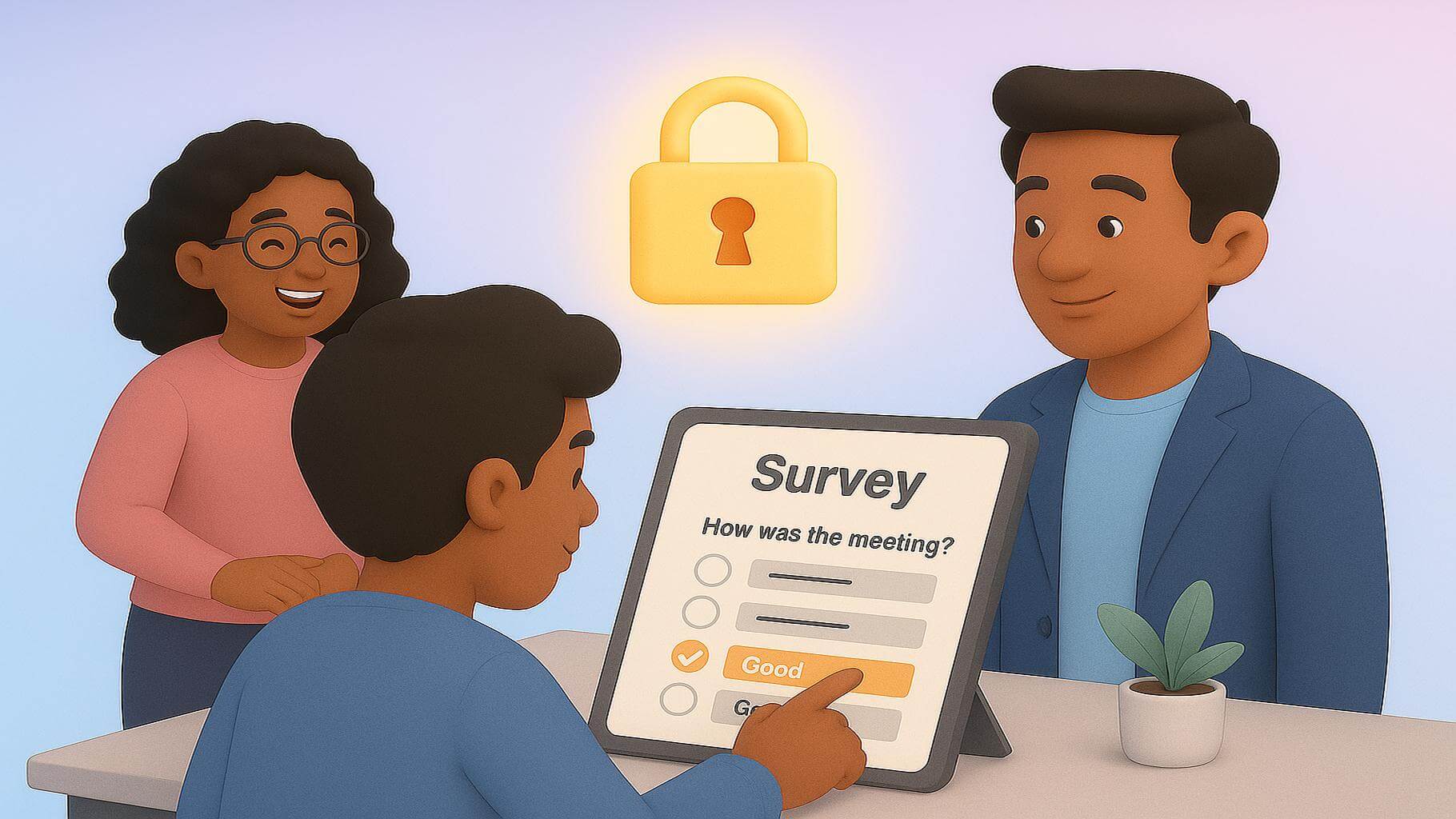
One size rarely fits all when it comes to pulse survey questions. Different organizational contexts, workforce segments, and business situations require tailored approaches that address specific concerns and gather relevant insights through employee pulse surveys. Adapting questions to match current circumstances increases response relevance and provides actionable feedback that informs targeted interventions.
Sample questions for onboarding and new hire check-ins
The first few months in a new role critically shape long-term employee satisfaction and retention. New hire pulse surveys help organizations understand whether onboarding programs effectively integrate employees, provide necessary resources, and set clear expectations. Early feedback through sample pulse survey questions identifies gaps in training, mentorship, or cultural integration before they contribute to regrettable turnover.
Regular check-ins during the first 90 days, using pulse surveys, demonstrate the organization's commitment to new employee success. These employee surveys signal that leadership cares about the onboarding experience and wants to address concerns quickly. The survey data collected informs continuous improvement of hiring and onboarding processes, ensuring each cohort of new employees has a better experience than the last.
New hire pulse survey sample questions:
- My onboarding experience provided clear information about my role, responsibilities, and how to succeed
- I received adequate training and resources to begin contributing effectively in my new position
- My manager and teammates have made me feel welcomed and supported during my first weeks here
- I understand the company culture, values, and expectations for how we work together as a team
- My initial impressions of the company match what was communicated during the interview process
Sample questions for remote and hybrid work environments
Remote and hybrid work arrangements introduce unique challenges related to connection, communication, and collaboration that in-office teams rarely encounter. Pulse surveys for distributed workforces should explore whether employees feel included, have the tools they need, and maintain productive relationships with colleagues and managers. These insights guide investments in technology, communication practices, and virtual kudos employee recognition that strengthen remote team cohesion.
The shift to distributed work has fundamentally changed how many organizations operate. Understanding remote employee experience through regular employee pulse surveys helps companies build cultures that thrive regardless of where people work. Sample pulse survey questions should assess both logistical concerns, such as technology and workspace adequacy, as well as emotional factors, including belonging and connection.
Remote work pulse survey sample questions:
- I have access to the technology, tools, and equipment necessary to work effectively from my location
- I feel as connected to my team and company culture as I would if I worked in a physical office
- Communication with my manager and teammates happens frequently enough to keep me informed and aligned
- Virtual meetings are productive and make effective use of time without causing meeting fatigue
- The company provides adequate support for the unique challenges of remote or hybrid work arrangements
Sample questions for organizational change periods
Periods of significant organizational change, such as mergers, restructuring, leadership transitions, or strategic pivots, create uncertainty and anxiety that can damage employee morale if left unaddressed. Change-focused pulse surveys measure how employees are coping with transitions, whether communication from internal communication teams is effective, and whether support systems are meeting their needs during turbulent times.
Regular feedback during change initiatives through pulse surveys enables leaders to course-correct communication strategies, address misconceptions, and provide additional resources where needed. These employee surveys also help identify change champions who can be leveraged to support peers, as well as individuals or teams struggling to adapt who might need extra attention and support.
Change management pulse survey sample questions:
- I understand the reasons for recent organizational changes and how they position us for future success
- Leadership has communicated clearly about what the changes mean for my role and responsibilities
- I feel supported by my manager and the organization as we navigate this transition period
- Despite recent changes, I remain confident in the company's direction and my future here
- I have opportunities to ask questions and share concerns about how changes affect me and my team
12 employee pulse survey questions examples by category
Organizing pulse survey questions into clear categories helps organizations focus on specific themes while ensuring comprehensive coverage of factors that drive employee engagement. The following 12 questions span leadership effectiveness, cultural alignment, and communication quality to provide measurable insights across the core pillars of workplace satisfaction through well-designed employee pulse surveys. These examples illustrate how thoughtful question design elicits actionable responses that inform and guide improvement efforts.
12 employee pulse survey questions by category:
Leadership and management effectiveness:
- My manager provides clear expectations and constructive feedback that helps me improve
- I trust my manager to make decisions that consider both business needs and employee well-being
- Senior leadership communicates transparently about company performance and strategic direction
- Leaders in this organization demonstrate the values and behaviors they expect from employees
Workplace culture and values:
- I feel respected and valued by colleagues regardless of my role, background, or identity
- Our company culture encourages innovation, learning from mistakes, and continuous improvement
- The organization takes meaningful action when behaviors conflict with stated company values
- I feel comfortable being authentic and bringing my whole self to work
Communication and transparency:
- I receive timely information about decisions and changes that affect my work and team
- Communication from leadership is honest, clear, and helps me understand organizational priorities
- I know where to find the information and resources I need to do my job effectively
- There are effective channels for sharing ideas, concerns, and feedback with leadership
4 leadership and management effectiveness examples
Manager quality remains one of the strongest predictors of employee engagement and retention. Questions assessing leadership effectiveness through pulse surveys measure whether managers provide adequate support, communicate expectations clearly, and create psychologically safe environments where employees can thrive. These survey responses identify exceptional managers whose approaches can be studied and scaled, as well as leaders who need additional training or support.
Measuring the leadership team's ability through pulse surveys provides survey data that complements but doesn't replace qualitative approaches like 360-degree feedback. The combination of regular quantitative tracking through pulse surveys and deeper periodic assessment creates a comprehensive understanding of leadership strengths and development needs across the organization.
Leadership assessment examples:
- How effective is your manager at providing regular feedback that helps you grow and improve
- To what extent does your manager advocate for your professional development and career advancement
- How well does your manager balance supporting employee needs with achieving business objectives
- Does your manager create an environment where you feel safe taking risks and learning from failures
4 workplace culture and values examples
A strong workplace culture drives engagement, attracts top talent, and differentiates organizations in competitive markets. Culture questions through pulse surveys assess whether daily experiences align with stated company values, whether diversity and inclusion are genuine priorities, and if the work environment supports both individual and collective success. Gaps between stated values and lived experience revealed by pulse survey results erode trust and engagement, making these questions critical for cultural health monitoring.
Culture cannot be built solely through slogans and mission statements. It emerges from thousands of daily interactions, decisions, and behaviors across the organization captured through employee pulse surveys. Pulse surveys that regularly measure cultural health help leaders understand whether their initiatives are genuinely shifting the company's culture or merely adding bureaucratic overhead.
Culture assessment examples:
- How well does day-to-day work reflect the values and principles our company claims to prioritize
- To what extent does the organization celebrate and leverage diverse perspectives and backgrounds
- Do you feel psychologically safe expressing disagreement or sharing unpopular opinions at work
- How effectively does the company recognize and address behaviors that undermine positive workplace culture
4 communication and transparency examples
Effective internal communication fosters trust, mitigates rumors and anxiety, and ensures that employees understand organizational priorities. Communication questions through pulse surveys measure whether information flows adequately across the organization, whether transparency around decisions exists, and if employees know how to access resources they need. Poor communication consistently appears among the top complaints in employee engagement surveys, making this area critical to address through regular pulse survey feedback.
The best internal communication strategies involve not only top-down messaging from leadership but also bottom-up channels that enable employee voices to reach decision-makers. Pulse surveys themselves serve as important communication mechanisms that demonstrate leadership's commitment to listening and responding to workforce concerns through gathering feedback.
Communication assessment examples:
- How satisfied are you with the frequency and quality of updates about company performance and strategy
- Do you receive adequate advance notice about changes that affect your role or work environment
- How effective are the tools and channels we use for team communication and collaboration
- To what extent does leadership explain the reasoning behind major decisions rather than just announcing outcomes
10 pulse survey employee engagement questions for leadership

Leadership quality profoundly influences employee engagement, making it essential to regularly assess how employees feel about their managers and senior leaders through pulse surveys. The following questions focus specifically on leadership behaviors that research consistently links to high engagement, including support, trust, communication effectiveness, and developmental focus. Gathering this feedback through pulse survey tools helps identify coaching needs, celebrate exceptional leaders, and ensure consistent leadership quality across the organization.
10 leadership focused employee engagement questions:
- My manager helps remove obstacles that prevent me from doing my best work
- I receive recognition from my manager when I deliver strong results or exceed expectations
- My manager demonstrates a genuine interest in my career development and long-term success
- I trust my manager to address concerns I raise and follow through on commitments
- My manager provides feedback in ways that motivate improvement rather than create defensiveness
- Senior leaders are visible and accessible rather than distant and disconnected from day-to-day operations
- Leadership decisions consider impacts on employee well-being, not just business metrics
- I understand the strategic rationale behind the decisions our leadership team makes
- Leaders in this organization demonstrate accountability when mistakes happen or goals are missed
- The leadership team models the collaboration, transparency, and integrity they expect from everyone
Questions evaluating manager support and guidance
Direct managers have more influence over employee engagement than any other factor, making manager effectiveness critical to organizational success. These pulse survey questions assess whether managers provide the day-to-day support, resources, and guidance employees need to perform well and feel valued. Poor management drives more turnover than compensation, making these insights from pulse surveys essential for retention.
Organizations should analyze manager support questions from pulse surveys by individual leaders to identify specific coaching needs, not just aggregate scores. When particular managers consistently receive low scores on support questions in pulse survey results, targeted interventions such as leadership training, mentoring by high-performing managers, or even role changes may be necessary to protect team engagement and retention.
Manager support questions:
- How well does your manager understand your workload and help prioritize when demands compete?
- Does your manager actively work to secure the resources, budget, or support you need to succeed?
- How responsive is your manager when you need guidance, approval, or assistance with challenges?
- To what extent does your manager shield the team from unnecessary distractions and political concerns?
Questions measuring trust in organizational leadership
Trust in leadership determines whether employees embrace change, align behind strategic direction, and maintain engagement during challenging periods. When trust is high, employees give leaders the benefit of the doubt and remain committed even when decisions are difficult or unpopular. When trust erodes based on pulse survey results, even well-intentioned initiatives face skepticism and resistance that undermines effectiveness. Organizations build trust through transparent communication and consistent recognition programs that acknowledge both successes and learning moments.
Building and maintaining trust requires consistency between words and actions, transparent communication about challenging topics, and a demonstrated commitment to employee well-being alongside business performance. Pulse surveys that track trust over time through consistent pulse survey questions reveal whether leadership behaviors are building or eroding this critical foundation of organizational effectiveness.
Leadership trust questions:
- How much confidence do you have in senior leadership's ability to navigate challenges and position us for success
- Do you believe leadership makes decisions based on accurate insights and sound reasoning
- To what extent does leadership demonstrate integrity by honoring commitments and acknowledging mistakes
- How well does leadership balance competing priorities such as growth, profitability, and employee happiness
Questions assessing communication effectiveness
Leadership communication sets the tone for transparency, alignment, and trust throughout the organization. Effective leaders communicate frequently, honestly, and in ways that help employees understand both what is happening and why it matters through clear internal communication. Communication questions in pulse surveys measure whether leadership messaging reaches employees, whether the content addresses their concerns, and if the frequency and channels used are appropriate.
Poor communication from leadership creates information vacuums that rumors and anxiety quickly fill. Regular pulse survey feedback about communication effectiveness helps leaders adjust their approach, ensuring messages land as intended and employees feel adequately informed about organizational direction and priorities through timely feedback from pulse surveys.
Leadership communication questions:
- How clear and helpful is the communication you receive from senior leadership about the company's direction?
- Do you feel adequately informed about decisions that affect your team or role?
- How well does leadership explain the reasoning behind major changes or strategic decisions?
- To what extent does leadership communication feel authentic rather than scripted or overly polished?
12 employee pulse check survey questions for continuous feedback
Establishing truly continuous feedback requires pulse surveys that are brief, focused, and designed for frequent deployment. These 12 questions work well for weekly or biweekly check-ins because they require minimal time to complete while still generating valuable employee insights into current team dynamics and individual well-being. Quick pulse questions sacrifice depth for speed and consistency, making them ideal for tracking real-time changes in employee sentiment through frequent pulse surveys. Many organizations pair pulse surveys with employee recognition software to ensure feedback drives both insights and appreciation.
12 continuous feedback pulse survey questions:
Weekly check-in questions:
- How productive and focused did you feel this week, compared to recent weeks?
- Did you face any significant obstacles or frustrations that impacted your work this week?
- What was the highlight of your work week, if any?
- Do you have what you need to be successful next week?
Quick sentiment tracking questions:
- How would you rate your overall satisfaction with work today on a scale of 1 to 10?
- I felt energized and motivated by my work today, rather than drained or frustrated
- My workload today felt manageable and reasonable, given my responsibilities
- I experienced adequate support from teammates and leadership today
Follow-up and action validation questions:
- Have you noticed improvements in the specific area we committed to addressing last month?
- Do you feel heard and see evidence that your feedback is being taken seriously?
- How satisfied are you with actions taken in response to concerns raised in previous pulse surveys?
- Is there anything else we should know about your current experience at work?
Weekly check-in questions for ongoing insights
Brief weekly pulse surveys capture moment-to-moment fluctuations in engagement, productivity, and employee satisfaction that longer employee surveys miss. These check-ins focus on the immediate past week rather than broader trends, making them ideal for identifying sudden changes that require a quick response. Weekly questions should focus on actionable concerns rather than broad themes, which are better suited for monthly or quarterly pulse surveys.
The brevity of weekly check-ins encourages high participation rates because employees can complete pulse surveys in under two minutes. This consistency provides rich survey data sets that reveal patterns over time, helping leaders distinguish between temporary dips and sustained problems requiring intervention. Weekly feedback through pulse surveys also demonstrates that the organization genuinely values ongoing input rather than treating employee surveys as occasional compliance exercises.
Effective weekly check-in questions:
- What, if anything, prevented you from doing your best work this week
- Did you receive adequate support from your manager and teammates when needed this week
- How clear are you about priorities and expectations for the coming week
- Is there anything specific leadership should know about the challenges you or your team faced
Quick pulse questions for immediate sentiment tracking
Sometimes organizations need to understand current sentiment without the structure of formal employee surveys. Quick pulse questions provide snapshot insights that take 30 seconds or less to answer, making them ideal for regular temperature checks or immediate feedback after specific events. These ultra-brief pulse surveys typically include just one to three questions focused on current feelings or recent experiences.
Quick pulse tools work particularly well after company-wide meetings, significant announcements, or major project milestones, when leadership wants to gauge immediate reactions through pulse survey feedback. The speed and simplicity encourage honest responses, while the timing ensures feedback reflects actual experiences rather than fading memories. Quick pulse surveys complement rather than replace longer employee surveys, adding real-time context to periodic deep dives.
Immediate sentiment questions:
- How are you feeling about work right now, using a simple emoji or a 1 to 5 scale
- Did today's announcement or meeting address your concerns and provide the clarity you needed
- What is one thing that would improve your work experience this week
- Do you feel supported and set up for success in your current role and responsibilities
Follow-up questions for action validation
Demonstrating responsiveness to feedback is just as important as collecting it through pulse surveys. Follow-up questions that ask about actions taken in response to previous pulse survey results show employees that their input matters and drives change. These validation questions also provide accountability for leaders, creating incentives to actually implement improvements rather than letting actionable feedback languish unaddressed.
Action validation builds trust in the survey process itself through consistent pulse surveys. When employees see their concerns lead to tangible changes, they're more likely to participate honestly in future pulse surveys rather than becoming cynical about the exercise. This positive cycle strengthens the feedback culture and ensures pulse surveys remain meaningful tools rather than administrative burdens that contribute to survey fatigue.
Action validation questions:
- Have you noticed specific improvements in areas where previous pulse surveys revealed concerns
- How satisfied are you with how leadership responded to feedback from the last pulse survey
- Do you feel your input is valued and acted upon, or does feedback seem to disappear into a void
- What changes would demonstrate that leadership is serious about addressing pulse survey feedback
Sample employee pulse survey questions with answer analysis

Collecting survey responses through pulse surveys is only the first step in leveraging insights. Understanding how to interpret rating scales, analyze open-ended comments, and translate survey data into action separates organizations that generate meaningful improvements from those whose employee surveys produce reports that sit unused. Effective analysis connects pulse survey results to business outcomes, identifies root causes rather than symptoms, and guides resource allocation toward initiatives with the highest potential impact. Many successful organizations combine pulse survey insights with peer-to-peer recognition programs to reinforce positive behaviors revealed through feedback.
Interpreting rating scale responses effectively
Most pulse surveys use Likert scales, where respondents rate their agreement with statements or satisfaction with various elements using numbers such as 1 to 5 or 1 to 10. Interpreting these quantitative data points requires understanding not just average scores but also distributions, trends over time, and comparisons across departments or demographics. A score of 3.5 out of 5 might be excellent if it represents improvement from 2.8 in previous pulse survey results, or concerning if it declined from 4.2.
Beyond simple averages from pulse surveys, pay attention to the percentage of survey responses at extremes. A topic where 70 percent of employees rate 4 or 5 suggests widespread satisfaction, while a bimodal distribution with many 1s and 5s indicates dramatically different experiences that warrant investigation. Trend analysis revealing consistent declines even within acceptable score ranges from pulse surveys provides early warnings that prevent crises.
Rating scale interpretation guidelines:
- Track changes over time in pulse survey results rather than fixating on absolute scores at any single point
- Compare similar departments or roles using pulse survey data to identify pockets of high and low engagement
- Investigate bimodal distributions in pulse survey responses that suggest vastly different experiences among employees
- Calculate response rates by demographic groups to ensure all voices are represented equally in pulse surveys
- Focus on questions showing the largest declines in pulse survey results as priorities for immediate attention
Analyzing open-ended feedback for patterns
While rating scales provide measurable survey data, open-ended responses reveal the why behind the numbers in pulse surveys. Employees use comment boxes to explain their ratings, share specific examples, and raise concerns that structured questions might miss. Analyzing this qualitative data requires careful reading to identify recurring themes, unexpected insights from pulse surveys, and urgent issues that demand immediate attention.
Text analysis tools can help identify frequently mentioned topics in large data sets from pulse surveys, but human review remains essential for understanding context and nuance. Look for patterns across survey responses, paying special attention to issues mentioned by employees in different departments or roles. When the same concern appears repeatedly in pulse survey feedback, it likely represents a systemic problem requiring organizational response rather than isolated dissatisfaction.
Open-ended feedback analysis approaches:
- Read all comments from pulse surveys rather than relying solely on automated sentiment analysis tools
- Code survey responses by theme to quantify how many employees mention specific topics in pulse surveys
- Note particularly thoughtful or detailed comments that provide context for quantitative scores from pulse surveys
- Identify quick wins where simple changes could address frequently mentioned frustrations in pulse survey feedback
- Escalate urgent individual concerns from pulse surveys that might indicate serious problems requiring immediate intervention
Using question responses to guide action planning
The ultimate value of pulse surveys lies in driving informed actions that improve employee experience and organizational effectiveness. Converting pulse survey results into action plans requires prioritization based on impact, feasibility, and strategic importance. Not every low score in pulse survey data requires immediate intervention, especially if resources are limited and other issues affect a greater number of employees or pose a greater risk.
Effective action planning involves sharing pulse survey results transparently, explaining how leadership interpreted the survey data, and describing specific steps being taken in response. When employees see their feedback from pulse surveys drive real changes, participation and candor in future employee surveys increase. Conversely, repeatedly surveying without visible action breeds cynicism and disengagement that makes future feedback unreliable.
Action planning best practices:
- Share high-level pulse survey results with all employees, acknowledging both strengths and concerns
- Prioritize addressing issues from pulse surveys that affect the most employees or pose the greatest retention risks
- Identify department-specific concerns from pulse survey data that local managers can address without organization-wide initiatives
- Set measurable goals for improvement and track progress in subsequent pulse surveys
- Communicate what actions are being taken based on pulse survey feedback and explain decisions not to pursue certain changes
Best practices for crafting effective employee pulse survey questions

The quality of pulse survey questions directly determines the usefulness of insights gathered through employee surveys. Well-designed questions elicit honest, actionable responses that inform decision-making, while poorly crafted pulse survey questions confuse respondents, introduce bias, or generate survey data that provides no clear direction. Investing time in question design for pulse surveys pays dividends through higher response rates, more reliable data, and clearer paths from insights to action. Organizations that combine effective surveys with employee rewards programs create complete cycles of feedback and recognition.
Using clear, unbiased language that encourages honesty
Question wording profoundly affects how respondents interpret and answer pulse surveys. Clear questions use simple language, avoid jargon, and ask about one specific thing rather than combining multiple concepts that might receive different ratings. Unbiased pulse survey questions avoid leading language that pushes respondents toward particular answers or implies that certain responses are more desirable than others.
Encouraging honest feedback requires creating psychological safety around pulse survey responses. Anonymous pulse surveys typically generate more candid feedback than those that require identification, although truly anonymous employee surveys make it harder to follow up on concerning individual responses. Regardless of the anonymity approach, clearly communicate that honest responses are valued, that there are no wrong answers, and that pulse survey feedback drives improvements rather than punitive actions.
Question clarity guidelines:
- Use plain language that all employees can easily understand, regardless of role or background
- Ask about single topics per question rather than cramming multiple issues into compound pulse survey questions
- Avoid double negatives or complex phrasing in pulse surveys that might confuse or mislead respondents
- Ensure pulse survey questions apply to all employees or clearly indicate which groups should answer which items
- Eliminate leading language such as "don't you agree" or "most people think" that biases pulse survey responses
Balancing question types for comprehensive insights
Effective pulse surveys combine quantitative questions using rating scales with qualitative open-ended questions that capture context and nuance. Rating scale questions enable trend tracking through pulse survey data, statistical analysis, and comparison across groups, while open-ended questions reveal the stories behind the numbers in pulse survey results and surface unexpected issues. The right balance typically includes mostly scaled questions for efficiency, with strategic use of comment boxes for depth.
Different question types serve distinct purposes in pulse surveys. Multiple-choice questions work well for demographic segmentation or understanding preferences among defined options. Yes/no questions quickly identify the presence or absence of specific experiences. Matrix questions that rate multiple related items using the same scale can improve efficiency, but they also risk response patterns where individuals use the same rating repeatedly without careful thought in pulse surveys.
Question type recommendations:
- Use 5-point or 7-point Likert scales in pulse surveys for measuring agreement, satisfaction, or frequency
- Include one to three open-ended questions per pulse survey for context and unexpected insights
- Limit matrix questions in pulse surveys to a maximum of five related items to avoid thoughtless pattern responses
- Offer "not applicable" or "prefer not to answer" options where appropriate to avoid forced choices in pulse surveys
- Mix positively and negatively framed questions occasionally in pulse surveys to reduce acquiescence bias
Timing questions to match organizational priorities
Strategic pulse survey timing aligns questions with current organizational priorities, recent events, and natural business cycles. Questions about annual survey results make the most sense when reviews are actually happening, while questions about holiday workload are best addressed in November and December. Similarly, pulse surveys following major announcements should include questions specifically about employee reactions to those changes.
Rotating question focus across pulse surveys prevents redundancy while ensuring all important themes receive regular attention. Core engagement questions may appear monthly in pulse surveys to track trends, while specialized questions about specific topics, such as professional development or work-life balance, rotate quarterly. This approach keeps employee surveys fresh without sacrificing longitudinal tracking of critical metrics through consistent pulse survey questions.
Strategic timing considerations:
- Align specialized pulse survey questions with relevant events such as enrollment periods or strategic planning cycles
- Include pulse survey questions about recent major announcements when employee reactions inform next steps
- Adjust question focus seasonally in pulse surveys to address topics like summer flexibility or year-end workload
- Maintain core questions consistently in pulse surveys to enable valid comparisons and trend analysis over time
- Coordinate pulse survey timing with action planning cycles so insights can inform upcoming decisions
Common mistakes to avoid with employee pulse survey questions

Even well-intentioned pulse survey programs can fail when common mistakes undermine response quality, participant trust, or the ability to act on insights gathered through employee surveys. Understanding these pitfalls helps organizations design pulse surveys that employees take seriously and that generate survey data worth the time invested. Avoiding these mistakes protects the pulse survey program's reputation and ensures feedback remains valuable for driving organizational improvements. Smart companies combine survey insights with employee rewards ideas to recognize participation and act on feedback.
Asking too many questions and causing survey fatigue
Survey fatigue occurs when employees feel overwhelmed by the frequency or length of pulse surveys, leading to declining response rates, less thoughtful answers, or outright resentment toward feedback requests. While gathering comprehensive survey data is tempting, employee surveys that exceed 10 to 15 questions or take more than 5 minutes to complete often generate diminishing returns. Participants rush through later questions in pulse surveys or abandon employee surveys entirely, compromising data quality.
The solution requires ruthless prioritization, asking only pulse survey questions whose answers will drive action. Every question should justify its inclusion by connecting to specific decisions or interventions the organization might pursue based on pulse survey responses. Questions that satisfy curiosity but lack a clear purpose should be eliminated from pulse surveys in favor of focused employee surveys that respect employee time.
Avoiding survey fatigue:
- Limit pulse surveys to 5 to 10 core questions that can be answered in under 5 minutes
- Resist the temptation to add "just one more question" that extends pulse survey length unnecessarily
- Rotate specialized question topics across pulse surveys rather than trying to cover everything every time
- Clearly communicate how long pulse surveys will take and stick to that estimate
- Monitor response rates and completion times to detect emerging survey fatigue before it becomes problematic
Using leading questions that bias responses
Leading questions suggest desired answers or frame issues in ways that encourage respondents to provide particular responses in pulse surveys. Questions like "Don't you agree that our employee benefits are excellent?" or "How much do you appreciate our generous compensation?" contain built-in assumptions and value judgments that taint survey data. Biased pulse survey questions generate unreliable results that reflect question framing more than actual employee attitudes.
Neutral question framing enables employees to express their views honestly through pulse surveys without feeling pressured to conform to implied expectations. This requires careful word choice, balanced rating scales, and avoiding emotionally charged language in pulse survey questions. When questions feel manipulative or obviously designed to generate positive responses, employees lose trust in the pulse survey process and may provide less honest feedback overall in employee surveys.
Avoiding leading questions:
- Frame pulse survey questions neutrally without implying that certain answers are more correct or desirable
- Use balanced rating scales in pulse surveys that give equal weight to positive and negative response options
- Avoid pulse survey questions that assume certain attitudes or experiences apply universally to respondents
- Test questions with small groups before full pulse survey deployment to identify unintentional bias
- Ensure pulse survey questions could plausibly receive the full range of possible responses based on true differences in experience
Failing to act on feedback and insights gathered
Perhaps the most damaging mistake organizations make is collecting employee feedback through pulse surveys without demonstrating responsiveness through visible action. When pulse surveys become exercises in data collection that lead nowhere, employees rightly conclude that their input doesn't matter and stop participating honestly in employee surveys or altogether. This cynicism is difficult to reverse and undermines not only pulse surveys but also the broader organizational culture surrounding feedback and continuous improvement.
Taking action doesn't mean addressing every concern raised in pulse survey results or implementing every suggestion. It does require transparently sharing what was learned from pulse survey data, explaining priorities for response, and demonstrating that some meaningful changes result from employee input through pulse surveys. Even when organizational constraints prevent desired changes, an honest explanation of why certain actions aren't possible maintains trust better than silence after gathering pulse survey feedback.
Ensuring pulse survey feedback drives action:
- Share high-level pulse survey results with all employees within two weeks of pulse survey completion
- Clearly communicate the top priorities for improvement based on pulse survey feedback and explain the reasoning
- Identify quick wins from pulse survey insights that can be implemented immediately to demonstrate responsiveness
- Assign owners and timelines for addressing major concerns revealed by pulse survey data
- Reference pulse survey insights in subsequent employee surveys to show how previous feedback informed recent changes
How Matter can help with employee pulse survey questions
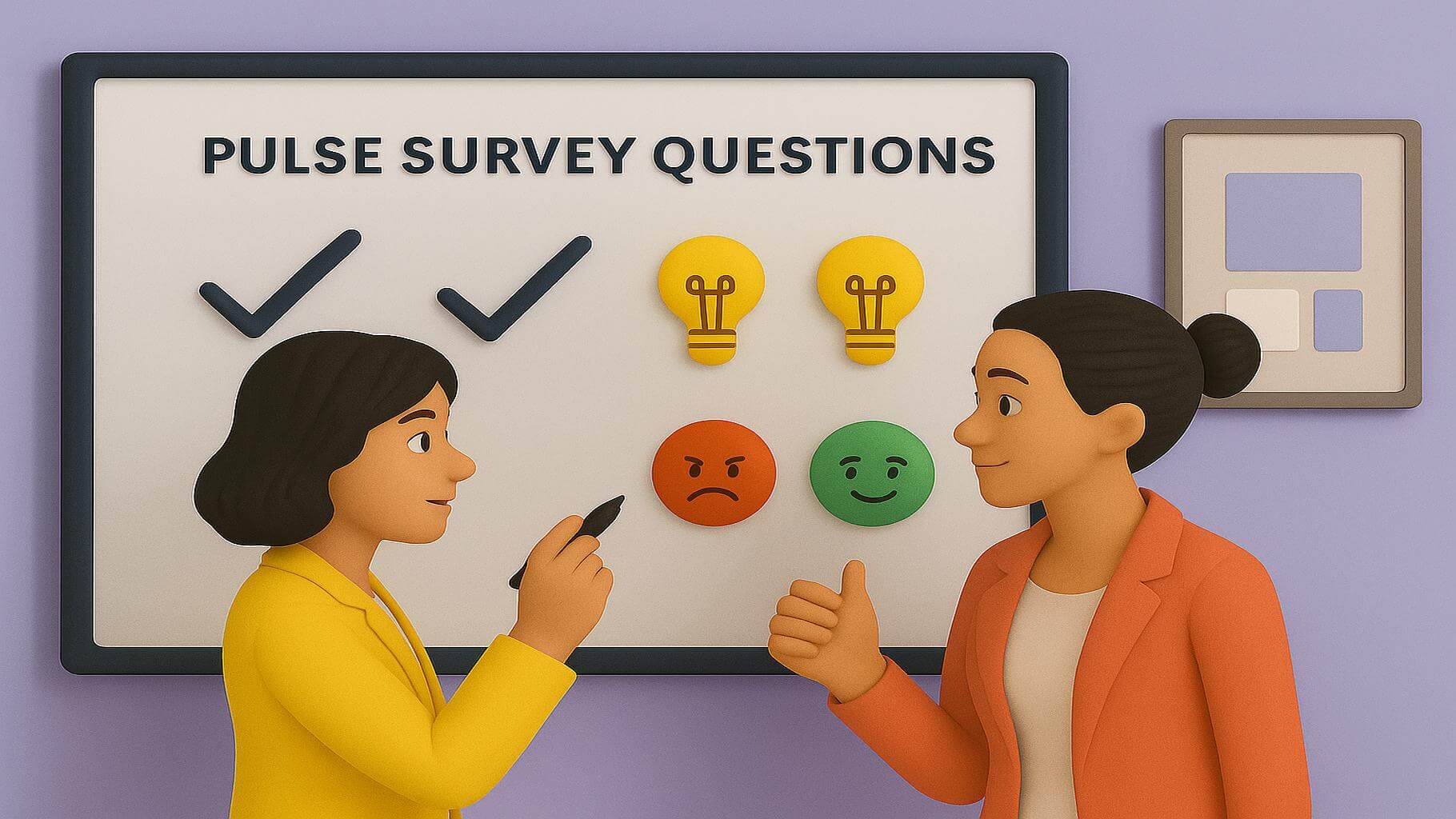
Matter transforms how organizations approach pulse surveys by combining custom survey capabilities with powerful employee recognition and rewards features that close the feedback loop. Rather than treating pulse surveys as isolated data collection exercises, Matter integrates employee surveys with ongoing recognition that reinforces positive behaviors and addresses concerns raised through feedback. This holistic approach transforms survey insights into actionable steps while fostering a company culture where continuous feedback and appreciation work in harmony.
Custom employee surveys integrated with recognition
Matter's Pro + Surveys plan includes custom employee survey capabilities that allow organizations to create pulse surveys tailored to their specific needs. The platform utilizes research-backed 5-point Likert scales, which offer improved usability on digital and mobile devices compared to traditional 11-point scales. This approach encourages higher response rates and more reliable data because employees can complete surveys quickly and intuitively without confusion about scale interpretation.
What makes Matter's approach unique is the seamless integration between pulse surveys and recognition. When survey insights reveal positive behaviors or highlight team members going above expectations, managers can immediately send kudos through the same platform. This connection between gathering feedback and recognizing contributions creates a complete cycle where employee voices drive visible appreciation and meaningful change.
Survey integration benefits:
- Deploy custom pulse surveys directly within Slack or Microsoft Teams, where employees already work
- Use 5-point scales designed for better mobile usability and higher completion rates
- Connect survey insights to recognition moments that reinforce desired behaviors
- Leverage the same automation capabilities that power Feedback Friday for consistent survey deployment
- Access survey data alongside recognition analytics to understand the complete employee experience
Automating survey deployment and follow-through
Matter's automation features extend beyond recognition to support consistent pulse survey deployment. Organizations can schedule regular check-ins, automate reminder notifications, and ensure surveys reach employees at optimal times without manual effort. This automation removes administrative burden from HR teams while maintaining the regularity that makes pulse surveys effective for tracking trends over time.
The platform's integration with Slack and Microsoft Teams means surveys appear in the natural flow of work rather than requiring employees to visit separate tools or platforms. This reduces friction, improves participation rates, and ensures feedback collection doesn't disrupt productivity. When combined with Matter's automated birthday and anniversary celebrations, organizations create comprehensive touchpoints that keep employees engaged and feeling valued.
Automation capabilities:
- Schedule recurring pulse surveys at frequencies that match organizational needs
- Set up automated reminders to boost survey completion rates without manual follow-up
- Deploy surveys directly in Slack or Teams channels where employees spend their workday
- Combine survey automation with recognition automation for consistent employee engagement
- Streamline data collection so HR teams can focus on analysis and action rather than administration
Connecting feedback to rewards and recognition
Perhaps Matter's most powerful feature for pulse survey effectiveness is its ability to connect survey insights directly to its coin-based reward system. When employees provide valuable feedback through surveys, organizations can recognize their participation with Matter coins. When survey results highlight exceptional team members or reveal opportunities for appreciation, managers can immediately send kudos cards that celebrate those contributions and align with company values.
This integration ensures pulse surveys don't exist in isolation but become part of a broader culture of feedback and recognition. Employees see that their survey responses lead not just to abstract reports but to tangible appreciation and meaningful rewards. The weekly coin reset encourages authentic, ongoing recognition that complements the continuous feedback cycle pulse surveys create, making both more effective at driving engagement and retention.
Recognition and reward connections:
- Recognize survey participation through Matter's flexible reward system
- Send kudos immediately when surveys reveal outstanding contributions or behaviors
- Use survey insights to inform recognition that aligns with employee preferences and needs
- Redeem coins for gift cards, charitable donations, or custom rewards that employees actually value
- Build a culture where feedback and appreciation reinforce each other through integrated tools
Frequently asked questions about employee pulse survey questions
Q: What are the best employee pulse survey questions to ask?
A: The best pulse survey questions measure core engagement drivers like manager support, role clarity, growth and development opportunities, and alignment with company values. Include questions about overall employee satisfaction, likelihood to recommend the company, and whether employees feel valued. Focus on actionable topics where pulse survey responses can guide specific improvements.
Q: How many employee pulse survey questions should you include?
A: Keep pulse surveys to 5 to 10 questions that take under 5 minutes to complete. Longer employee surveys risk survey fatigue and a decline in response quality. Use core questions consistently across pulse surveys to track trends while rotating specialized questions to maintain freshness without overwhelming participants.
Q: What employee pulse survey sample questions work for remote teams?
A: Remote team pulse survey questions should address connection, communication, and technology adequacy. Ask about feeling included in decisions, access to necessary tools, effectiveness of virtual collaboration, manager accessibility through pulse survey questions, and whether remote workers experience the company culture as strongly as office-based employees.
Q: How do you write effective employee pulse check survey questions?
A: Use clear, unbiased language that asks about one specific topic per question in pulse surveys. Avoid leading language or compound questions that confuse respondents. Focus on actionable topics where pulse survey responses guide decisions, and ensure questions apply to all employees unless specifically targeting particular groups.
Q: What are good pulse survey employee engagement questions?
A: Strong engagement questions measure emotional connection to work, confidence in leadership, satisfaction with growth opportunities, and alignment with organizational mission through pulse surveys. Include items about manager effectiveness, workload sustainability, and whether employees feel their contributions matter to company success.
Q: How often should you change your employee pulse survey questions?
A: Maintain core engagement questions consistently in pulse surveys to enable trend tracking while rotating specialized questions quarterly or as organizational priorities shift. This balance provides longitudinal survey data on critical metrics while keeping employee surveys fresh and relevant to current circumstances.
Final thoughts about employee pulse survey questions
The right employee pulse survey questions unlock powerful insights that transform how organizations understand and support their workforce. When companies consistently ask thoughtful questions through pulse surveys, listen to honest responses, and take meaningful action based on pulse survey results, they build a positive company culture where engagement thrives and retention improves. The questions shared in this guide provide starting points for conversations that strengthen the relationship between employees and the organizations they serve through well-designed employee pulse surveys.
Yet even the most carefully crafted pulse survey questions deliver limited value without systems that connect feedback to recognition and improvement. Matter helps organizations move beyond simply collecting pulse survey data to creating environments where employee voices shape decisions, contributions receive appropriate recognition, and continuous feedback drives measurable progress toward becoming an employer of choice. Combining pulse surveys with team rewards creates powerful cycles of feedback, appreciation, and improvement.
Ready to transform your employee feedback with the right questions? Schedule a demo with a Matter expert today and discover how our pulse survey tools can help you measure engagement, gather actionable insights, and create a culture of continuous improvement.