
Building a workplace where employees feel genuinely heard requires more than annual check-ins. At Matter, we recognize that organizations encounter significant challenges in measuring workforce engagement accurately when traditional annual surveys miss real-time shifts in workplace sentiment, especially when leadership teams need continuous insights to maintain high morale and prevent disengagement before it impacts business outcomes.
Traditional annual employee surveys often leave companies waiting months for feedback, missing critical moments when intervention could address concerns, recognize achievements, or boost morale. This reactive approach can lead to declining motivation, missed opportunities for improvement, frustration with feeling unheard, and ultimately, a disconnect between leadership and the teams they serve, making it difficult to build the thriving workplace cultures that attract and retain top talent.
What is a pulse survey?
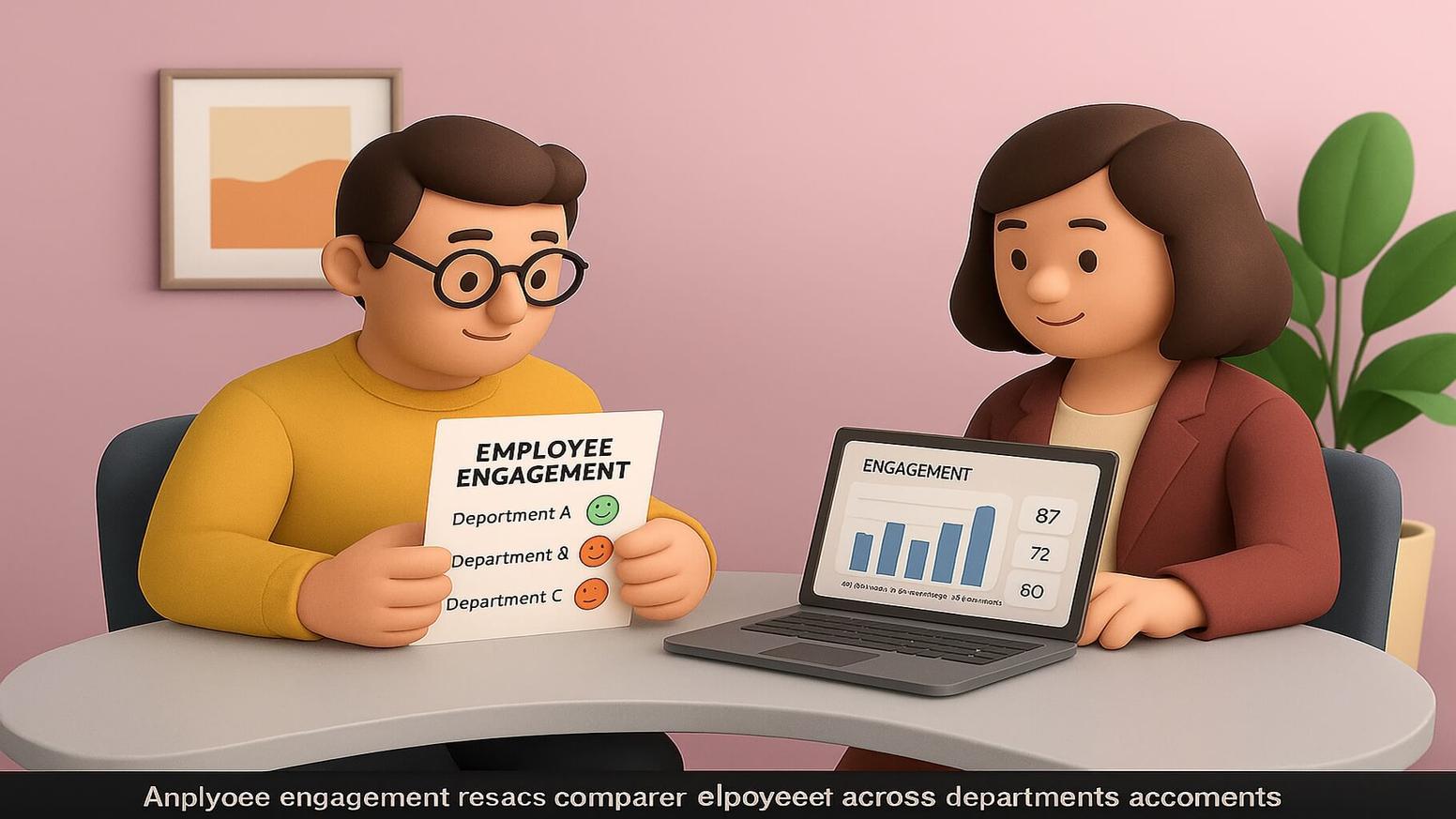
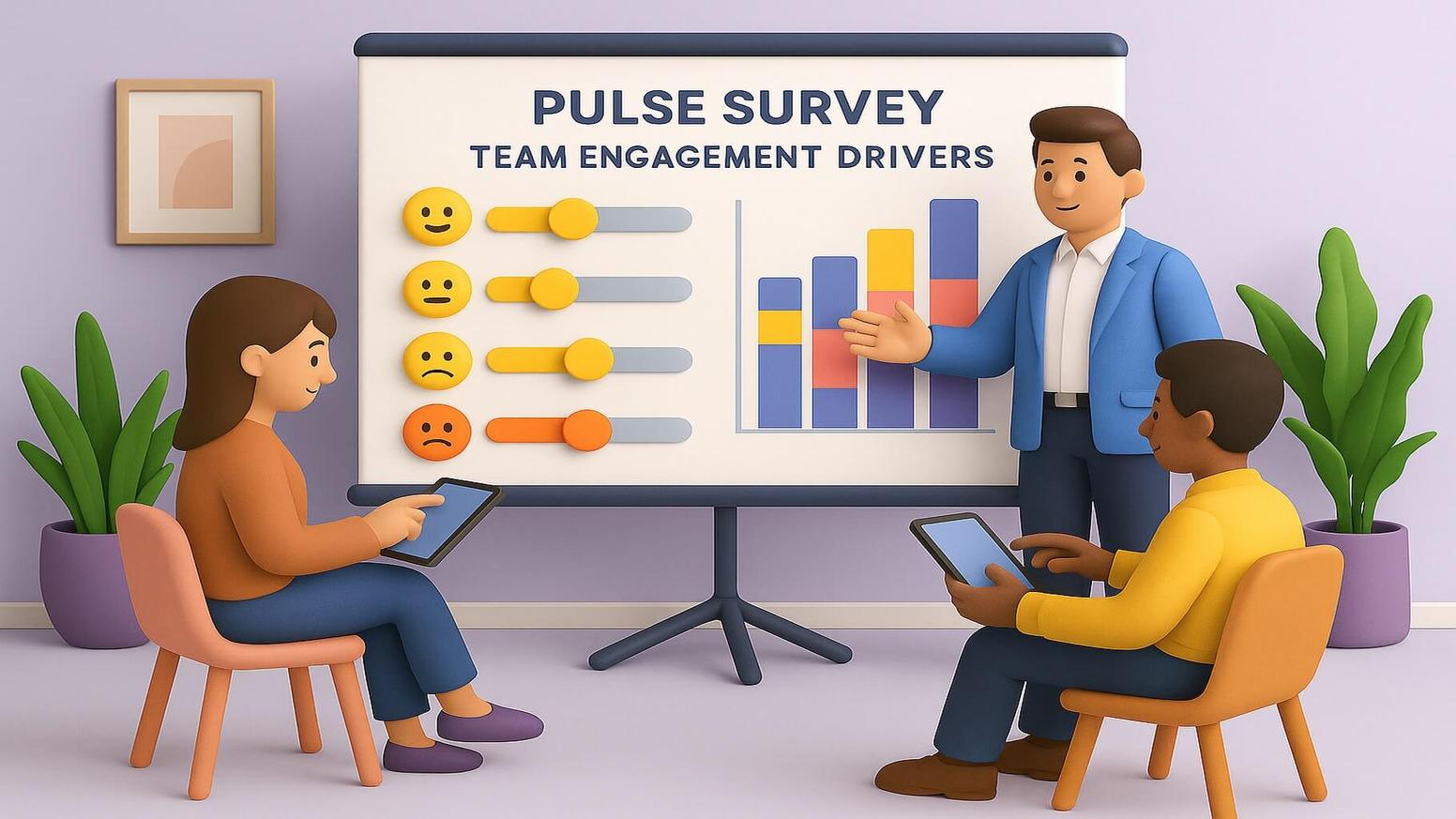
Employee pulse surveys represent a fundamental shift in how organizations gather workforce feedback, moving away from lengthy annual surveys toward brief, frequent check-ins that capture real-time sentiment. These short pulse surveys typically contain only a few questions focused on specific aspects of the work experience, making them quick to complete and easy to analyze. Organizations can deploy these surveys weekly, biweekly, or monthly, creating a continuous feedback loop that keeps leadership informed of evolving employee sentiment.
Defining pulse surveys and their engagement measurement role
The structure of employee pulse surveys centers on brevity and frequency, distinguishing them from traditional annual surveys that might include dozens of questions distributed yearly. Most effective employee pulse survey tools contain between three and ten questions designed to measure specific factors like job satisfaction, team collaboration, or leadership effectiveness. This targeted approach promotes higher response rates by enabling employees to complete surveys in only a few minutes, thereby minimizing fatigue while still yielding valuable insights into multiple facets of workplace culture.
Organizations use employee pulse surveys to track trends over time, building a more comprehensive picture of employee sentiment than any single annual assessment could provide. By posing consistent inquiries throughout multiple cycles, HR teams can discern patterns, evaluate the effectiveness of workplace initiatives, and obtain real-time insights into employees' perceptions of their roles and the organization. The survey process shifts from a one-time review to continuous improvement, allowing executives to make educated decisions based on current facts rather than depending on out-of-date annual feedback.
How pulse surveys capture real-time employee sentiment
The power of employee pulse surveys lies in their ability to capture authentic attitudes as they emerge, rather than relying on people to recall their experiences over an entire year. When organizations regularly implement employee pulse surveys, they create opportunities for employees to provide feedback when issues are fresh and relevant, leading to more honest input and actionable insights. This real-time feedback mechanism helps HR teams address concerns promptly, demonstrating to the workforce that their voices drive meaningful changes in workplace culture and business practices.
Frequent assessments also reduce the pressure on employees to provide comprehensive feedback in a single sitting, leading to more thoughtful responses. Staff can focus on specific topics each cycle, whether that's evaluating recent changes to company policies, assessing their current workload, or sharing thoughts about career development opportunities. This targeted approach not only improves response quality but also helps organizations maintain consistency in their feedback collection, making it easier to identify trends and areas where morale may be shifting.
The strategic importance of frequent engagement checks
Regular evaluation through employee pulse survey tools enables organizations to adopt a proactive strategy rather than a reactive one in addressing workplace challenges. When leadership teams receive continuous updates on employee sentiment, they can identify declining scores in specific departments, respond to emerging concerns before they escalate, and celebrate positive changes that boost morale. This strategic approach to gathering input transforms assessments from an administrative requirement into a powerful tool for driving business results and maintaining a healthy work-life balance across the organization.
Organizations that prioritize frequent checks demonstrate to their workforce that opinions matter beyond the annual cycle. By implementing employee pulse assessments consistently and acting on the results, companies build trust with their workforce and create a culture where employees feel valued and heard. This ongoing dialogue between staff and leadership strengthens workplace relationships, encourages participation in future feedback opportunities, and ultimately contributes to higher retention rates as employees see their input translate into positive changes that improve their daily work experience.
Understanding pulse survey employee engagement measurement
Employee pulse surveys serve as vital instruments for tracking how employees feel about their work, their teams, and the organization as a whole. Pulse survey software provides organizations with a continuous stream of data that reveals shifts in morale before they become significant problems. By measuring workforce motivation through employee pulse surveys, organizations can understand the connection between sentiment and key business outcomes like productivity, retention, and customer satisfaction, creating a data-driven approach to workforce management that prioritizes the work experience.
How employee engagement pulse surveys track sentiment trends
The systematic collection of feedback through employee pulse assessments allows organizations to build comprehensive datasets that reveal patterns in sentiment over time. When distributed consistently, whether weekly or monthly, hr teams can analyze how morale fluctuates in response to organizational changes, seasonal factors, or external events. This trend analysis helps identify recurring patterns that might indicate systemic issues, such as consistent dips during particular times of year or sustained increases following the implementation of new policies or programs.
Organizations gain valuable insights by comparing results across different periods, teams, and demographic groups. These comparisons reveal which departments maintain strong morale and which areas need additional support or intervention. By tracking employee sentiment through regular checks, leadership teams can benchmark scores against previous results, set realistic improvement goals, and measure the effectiveness of initiatives designed to boost satisfaction and motivation throughout the organization.
The connection between pulse data and engagement levels
Understanding the relationship between responses and actual morale requires organizations to look beyond surface-level data and examine the underlying factors that influence how employees experience work. Data collected through employee pulse surveys provides insights into multiple dimensions, including emotional connection to work, commitment to organizational goals, and willingness to recommend the company to others. These metrics help organizations understand not just whether morale is high or low, but why employees feel the way they do.
Data obtained from employee pulse assessments offers organizations the opportunity to correlate these scores with other critical metrics, including turnover rates, productivity levels, and customer satisfaction scores. This comprehensive analysis helps demonstrate the business impact of workforce initiatives and justifies investments in programs designed to improve the work experience. When organizations can show that improved scores correlate with better business outcomes, they build a compelling case for continued focus on satisfaction and workplace culture improvement.
Building continuous engagement feedback through pulse surveys
Establishing a rhythm of regular feedback collection transforms how organizations approach measurement, shifting from periodic check-ins to an always-on dialogue with the workforce. This continuous approach to gathering input creates a culture where providing feedback becomes a normal part of the work experience rather than an annual event. Team members become more comfortable sharing their thoughts and concerns when they know their input will be heard and acted upon promptly, leading to more authentic responses and deeper insights into workplace dynamics.
Implementing continuous feedback through employee pulse surveys requires thoughtful planning for cadence, question design, and follow-up actions. Organizations must determine the optimal frequency that balances the need for regular updates with the risk of assessment fatigue, ensuring that each cycle provides valuable insights without overwhelming staff. Understanding pulse survey objectives helps organizations maintain this balance and consistently act on results, creating a feedback loop where employees see the tangible impact of their input, encouraging continued participation and honest communication about their experiences.
Employee engagement pulse survey vs traditional engagement surveys

The choice between employee pulse surveys and traditional annual surveys represents a fundamental decision about how organizations approach feedback collection. Both approaches offer distinct advantages and serve different purposes in a comprehensive strategy. Understanding the key differences between these types helps organizations design feedback programs that meet their specific needs while providing staff with meaningful opportunities to share their perspectives on workplace culture and job satisfaction.
Frequency differences between pulse and annual surveys
Traditional annual surveys typically occur once per year, requiring people to reflect on their experiences over an extended period and provide comprehensive feedback on numerous aspects of their work environment. This annual cadence allows organizations to conduct in-depth assessments, but creates gaps in understanding how sentiment evolves throughout the year. In contrast, employee pulse surveys occur much more frequently, whether weekly, monthly, or quarterly, providing a continuous stream of feedback that captures how employees feel in the present moment rather than asking them to recall experiences from months ago.
The frequency of employee pulse assessments enables organizations to track morale in near real time, responding to issues as they emerge rather than waiting months to discover problems. This responsiveness helps maintain higher motivation because employees see their feedback translated into action more quickly. Using a pulse survey app makes it easy for employees to provide feedback on mobile devices, increasing response rates. However, the trade-off is depth, as employee pulse surveys typically contain only a few questions, compared to the dozens often included in annual surveys. Organizations must balance the need for comprehensive data with the benefits of frequent, focused feedback collection.
Question depth and scope comparisons
Annual employee survey tools often include extensive question sets covering every aspect of the work experience, from leadership effectiveness to benefits satisfaction to career development opportunities. These comprehensive assessments provide detailed insights into multiple dimensions of workplace culture but require significant time commitment from staff and can lead to fatigue when questions feel repetitive or irrelevant. The platform used for annual surveys needs robust analytics capabilities to process the large volume of responses and provide meaningful insights to leadership teams.
Employee pulse survey tools focus on brevity and targeted inquiry, typically including three to ten carefully crafted questions that address specific aspects of morale or recent organizational changes. This focused approach allows organizations to dive deep into particular topics across multiple cycles rather than attempting to cover everything in a single assessment. Organizations can rotate questions to address different dimensions over time, building a complete picture through multiple brief surveys rather than one exhaustive annual assessment.
When to use pulse survey vs engagement survey approaches
The decision between implementing employee pulse surveys or traditional annual surveys depends on organizational goals, resources, and culture. Annual assessments work well for organizations that need comprehensive baseline data, want to benchmark against industry standards, or prefer concentrated periods of feedback collection followed by extended action planning phases. These assessments provide the depth necessary for thorough analysis and strategic planning, but may not capture emerging issues or shifting sentiment between annual cycles.
Organizations benefit from implementing both employee pulse surveys and annual surveys as part of a complementary strategy. Annual assessments provide comprehensive baseline data and deep insights into all aspects of the work experience. Employee pulse surveys track changes in morale throughout the year. Together, they help organizations assess the impact of initiatives and respond to feedback with targeted improvements. This integrated approach harnesses the assets of each methodology, establishing a comprehensive feedback system that offers both breadth and depth in assessing workforce sentiment.
Benefits of using pulse survey employee engagement strategies
Implementing employee pulse survey strategies delivers measurable benefits that extend far beyond simply collecting more data. Organizations that implement consistent and targeted feedback processes acquire a competitive advantage by attracting and retaining talent, improving workplace culture, and furthering business results. The real value emerges when organizations use platforms to transform raw feedback into actionable strategies that address concerns, celebrate successes, and continuously improve the work experience.
Identifying engagement issues before they escalate
One of the most powerful benefits of employee pulse surveys is their ability to surface problems while they're still manageable. When organizations check in with staff regularly, they can spot declining job satisfaction, identify sources of frustration, or recognize when team morale begins to slip. This early warning system enables HR teams and leadership to intervene before small issues become major problems that impact retention, productivity, or workplace culture. By acting on these early signals, organizations demonstrate responsiveness to workforce needs and build trust with their teams.
The ability to identify trends across multiple employee pulse survey cycles provides deeper insights than individual responses alone. When organizations notice consistent patterns, such as repeatedly low scores on questions about healthy work-life balance or career development, they can prioritize addressing these systemic issues rather than reacting to isolated complaints. This trend-based approach to problem identification helps allocate resources effectively and ensures that improvement efforts focus on areas with the greatest impact on overall morale.
Enabling rapid response to workforce sentiment changes
The regularity of employee pulse assessments provides organizations with the ability to respond promptly to shifts in workforce sentiment, whether resulting from internal initiatives, external market dynamics, or workplace issues. When leadership receives employee recognition feedback through employee pulse surveys, they can adjust strategies, communicate changes more effectively, or provide additional support to teams experiencing difficulties. This agility in responding to input shows people that their feedback drives real change and encourages continued participation in future assessments.
Organizations that implement employee pulse surveys gain the flexibility to test new initiatives and measure their impact quickly, rather than waiting a full year to assess whether changes improved morale. If a new program or policy doesn't resonate with staff, organizations can identify this through employee pulse survey feedback and make adjustments promptly. This iterative approach to improving the work experience reduces wasted resources on ineffective initiatives and accelerates the organization's ability to find solutions that genuinely enhance satisfaction.
Creating data-driven engagement improvement plans
Employee pulse survey data provides the foundation for developing targeted improvement strategies that address specific challenges identified through workforce feedback. Instead of deploying extensive initiatives that may or may not target the most critical issues, organizations can utilize employee pulse survey outcomes to prioritize actions that will yield the greatest improvements in morale. This data-driven approach ensures that improvement efforts align with actual needs and preferences, increasing the likelihood that initiatives will succeed in boosting satisfaction and commitment.
The continuous flow of data from employee pulse surveys enables organizations to track the effectiveness of improvement initiatives over time. By comparing scores before and after implementing changes, organizations can measure whether their efforts are working and make evidence-based decisions about future investments in workforce programs. This accountability and measurement transforms improvement from guesswork into a systematic process guided by real-time feedback from the workforce.
20 employee engagement pulse survey questions examples

Creating effective questions requires careful consideration of what insights will be most valuable for understanding and improving morale. The best questions are clear, focused, and designed to elicit honest responses that reveal how people truly feel about their work experience. Below are examples organized by focus area, each designed to provide actionable insights that help organizations build stronger workplace cultures and maintain high morale across teams.
Organizations should select questions that align with their current priorities and rotate them across cycles to gather comprehensive insights without overwhelming staff. By varying questions while maintaining some consistent items for trend tracking, companies can build a complete picture of sentiment over time. Below are examples of pulse survey questions that organizations can adapt to their needs.
20 employee engagement pulse survey questions:
- How would you assess your level of satisfaction with your current role and responsibilities?
- Do you feel your contributions are recognized and valued by your team?
- How would you rate the support you receive from your immediate manager?
- Are you equipped with the resources and instruments required to carry out your duties effectively?
- How well do you understand how your work contributes to organizational goals?
- How satisfied are you with the career development opportunities available to you?
- Are you at ease expressing your opinions and ideas to your team?
- How would you rate the communication you receive from leadership about company direction?
- Do you feel your workload is manageable and sustainable?
- How satisfied are you with the work-life balance your role provides?
- How strongly do you agree that your team collaborates effectively?
- Do you feel connected to your organization's mission and values?
- How likely are you to recommend this company as a great place to work?
- How satisfied are you with the feedback you receive about your performance?
- Do you feel you have opportunities to learn and grow in your current role?
- How effectively does your team manage conflicts and confront challenges?
- How satisfied are you with the recognition you receive for your accomplishments?
- Do you trust the decisions made by leadership?
- How would you rate your team's morale?
- Do you feel your work makes a meaningful difference?
7 questions measuring overall engagement levels
Questions focused on overall morale help organizations understand the fundamental connection employees feel to their work and the organization. These items measure core drivers like satisfaction, motivation, and commitment that predict important outcomes like retention and productivity. When staff respond positively to these questions, it indicates strong foundations that support organizational success.
7 overall engagement questions:
- How would you assess your level of satisfaction with your current role and responsibilities?
- How likely are you to recommend this company as a great place to work?
- Do you feel your work makes a meaningful difference?
- How motivated do you feel to go above and beyond in your role?
- Do you see yourself working here in 1 year?
- How well does this organization support your professional growth?
- Overall, how satisfied are you with your work here?
Measuring overall morale using consistent items in every employee pulse survey enables trend analysis to reveal whether sentiment is improving, declining, or remaining stable. Effective employee pulse survey questions yield data to establish objectives and evaluate progress toward cultivating a more motivated workforce. These high-level questions provide a baseline for tracking how sentiment changes over time and across the organization.
Organizations should pay close attention when overall scores decline, as this often signals broader issues that require investigation and intervention. By combining these high-level questions with more specific inquiries about particular aspects of the work experience, companies can identify both symptoms and root causes of challenges. This comprehensive approach enables more effective problem-solving and ensures that improvement efforts address the fundamental drivers of workforce morale.
7 questions assessing team collaboration and culture
Understanding how well teams work together and the quality of workplace culture provides crucial insights into the day-to-day work experience. Questions about collaboration reveal whether employees feel supported by their colleagues, whether communication flows effectively, and whether teams have the trust necessary for high performance. Strong collaboration and positive culture are fundamental to maintaining motivation and delivering excellent business results through coordinated teamwork.
7 team collaboration and culture questions:
- To what extent does your team collaborate effectively to attain shared objectives?
- Are you at ease expressing your opinions and ideas to your team?
- How supportive are your colleagues when you need help?
- Do you feel you belong and are included in your team?
- How effectively does your team communicate about work priorities?
- Do you trust your teammates to deliver on their commitments?
- How well does your team embody the company's values?
Peer recognition practices within teams often correlate strongly with collaboration scores in employee pulse surveys. When team members regularly acknowledge each other's contributions and work together effectively, morale tends to be higher across the board. Organizations can use employee pulse survey data about collaboration to identify teams that exemplify strong working relationships and learn from their practices to improve collaboration elsewhere in the organization.
Cultural questions help organizations understand whether company values translate into daily behaviors and whether employees feel they belong to a supportive community. These insights guide initiatives designed to strengthen workplace culture, from team-building activities to recognition programs that reinforce desired behaviors. By regularly assessing culture through employee pulse assessments, organizations can track whether cultural initiatives are resonating with staff and making a measurable difference in how employees experience work.
6 questions evaluating leadership and management impact
Leadership effectiveness significantly influences morale, making it essential to regularly assess how well managers support, guide, and inspire their teams. Questions about leadership help organizations identify managers who excel at maintaining motivation and those who may need additional support or development. This feedback creates opportunities for targeted coaching and recognition of management practices that drive positive work experiences.
6 leadership and management questions:
- How well does your manager support your professional development?
- Do you receive regular, helpful feedback from your manager?
- How effectively does your manager communicate expectations?
- Does your supervisor acknowledge and value your contributions?
- How much do you trust the decisions made by senior leadership?
- Do you feel leadership is transparent about the company's direction?
When employee pulse survey results reveal concerns about leadership, organizations can respond quickly by providing additional resources, training, or support to managers who are struggling. This rapid response prevents leadership issues from eroding morale across entire teams and demonstrates organizational commitment to ensuring that all staff have access to effective management. By tracking leadership scores over time, companies can measure whether leadership development initiatives are improving management effectiveness.
The relationship between leadership quality and workforce outcomes is well-documented, with strong leadership consistently correlating with higher satisfaction, better retention, and improved team performance. Organizations that use employee pulse surveys to continuously monitor leadership effectiveness can maintain high management standards across the organization and intervene quickly when leadership challenges emerge. This proactive approach to supporting managers benefits both staff and the organization as a whole.
15 employee pulse surveys question frameworks by category
Different organizational needs require different types of questions, making it valuable to have multiple frameworks available for various purposes. Organizations can adapt these frameworks to their specific contexts, selecting question sets that align with current priorities or rotating through different categories to build comprehensive insights over time. The essential factor is to sustain a balance between the consistency of monitoring fundamental metrics and the adaptability required to resolve emerging challenges or particular areas of emphasis.
These frameworks provide starting points for designing employee pulse surveys that deliver actionable insights while remaining brief enough to encourage high response rates. The following pulse survey examples show how organizations can customize questions to reflect their unique culture, values, and priorities, ensuring that language resonates with their workforce and accurately captures the work experience.
15 employee pulse survey question frameworks:
- How clear are you about what is expected of you at work?
- Do you receive regular feedback that helps you improve?
- How supported do you feel by your direct manager?
- Do you feel valued as a member of your team?
- How satisfied are you with your current work arrangements?
- Do you have opportunities to do what you do best every day?
- How well does your organization communicate important changes?
- Do you believe that your perspectives are taken into account during decision-making processes?
- How content are you with the acknowledgment you receive?
- Do you feel you're making progress in your career?
- How would you rate the quality of collaboration in your team?
- Do you have the training you need to succeed in your role?
- How well does your work align with your personal values?
- Do you feel your workload is distributed fairly?
- How confident are you in the organization's future direction?
5 quick weekly engagement check questions
Weekly employee pulse surveys need to be extremely brief to avoid fatigue while still providing useful insights into workforce sentiment. A pulse survey template designed for weekly check-ins typically includes just three to five questions that can be completed in under 2 minutes. This minimal time investment makes it easy for staff to participate consistently, building a rich dataset of weekly sentiment that reveals patterns and trends.
5 quick weekly check questions:
- How was your week overall?
- Do you have what you need to be successful this week?
- How manageable is your current workload?
- Did you feel supported by your team this week?
- What was your biggest win or challenge this week? (open-ended)
Quick weekly questions often focus on immediate experiences and current sentiment rather than broader themes that change more slowly. Organizations might ask about the week's workload, recent wins or challenges, or how supported employees feel right now. These real-time snapshots provide early warning signals when issues emerge and help organizations maintain a consistent connection with their workforce even when working remotely or across distributed locations.
The consistency of weekly employee pulse surveys builds participation habits among staff and normalizes feedback within the workplace culture. When employees know they'll have regular opportunities to share their thoughts, they're more likely to provide honest input and less likely to let concerns accumulate over time. This weekly rhythm also makes it easier for organizations to track the immediate impact of changes or initiatives, providing rapid feedback on whether new programs are resonating with the workforce.
5 comprehensive monthly engagement questions
Monthly employee pulse assessments can include slightly more questions and explore topics in greater depth than weekly check-ins, while still maintaining the brevity that characterizes these tools. These assessments might include 5 to 8 questions that rotate through different themes each month, allowing organizations to build comprehensive insights over time without overwhelming staff with lengthy surveys. The monthly cadence provides enough time between assessments for meaningful changes to occur while still maintaining regular connection with sentiment.
5 comprehensive monthly questions:
- How satisfied are you with your work-life balance this month?
- Do you feel you have adequate opportunities for professional development?
- How effective is communication from leadership about company priorities?
- Are you receiving sufficient recognition for your contributions?
- What could we do to improve your work experience? (open-ended)
Employee rewards programs are often evaluated through monthly employee pulse surveys, as this timeframe allows organizations to assess whether recognition initiatives are positively impacting morale. Questions about recognition frequency, reward preferences, and the meaningfulness of appreciation can help organizations optimize their recognition strategies based on actual feedback rather than assumptions about what will resonate.
Monthly assessments create opportunities to dive deeper into specific aspects of the work experience, such as evaluating career development programs, assessing satisfaction with benefits, or gathering feedback on workplace flexibility policies. This deeper exploration complements weekly check-ins by providing nuanced insights that inform strategic decisions about workforce initiatives and help organizations understand not just what people think, but why they feel the way they do.
5 event-triggered engagement pulse questions
Event-triggered employee pulse assessments respond to specific organizational changes, such as leadership transitions, policy updates, return-to-office plans, or major project completions. These targeted surveys help organizations understand how staff are experiencing and adapting to change, providing crucial feedback during periods when morale may be particularly vulnerable to disruption. By gathering input shortly after significant events, organizations can respond quickly to concerns and ensure that transitions proceed smoothly.
5 event-triggered questions:
- How do you feel about the recent [change/event]?
- Do you have the information and resources you need to adapt to this change?
- How well was this change communicated to you?
- What concerns, if any, do you have about this transition?
- How can leadership better support you during this change?
Recognition opportunities often emerge from event-triggered assessments, in which organizations ask people how they'd like to celebrate team accomplishments or what types of appreciation would be most meaningful after major milestones. This just-in-time feedback ensures that recognition efforts align with actual preferences and reinforces the connection between achievements and appreciation.
The timing of event-triggered employee pulse surveys is crucial for capturing authentic reactions while experiences are still fresh in people's minds. These assessments work best when deployed within days of the triggering event rather than weeks later, maximizing response quality and ensuring that organizational responses address current concerns rather than outdated issues. By demonstrating responsiveness to event-specific feedback, organizations build trust in the feedback process and encourage continued participation in future opportunities.
Employee engagement pulse survey tools comparison
Selecting the right platform significantly impacts the success of feedback initiatives, as each platform offers distinct capabilities, user experiences, and integration options. Organizations should evaluate tools based on factors like ease of use, customization options, analytics capabilities, and compatibility with existing workplace systems. The best employee pulse survey tool for any organization depends on specific needs, budget, and technical requirements that align with workforce strategy goals.
Essential features in engagement pulse survey tools
Modern platforms should offer intuitive interfaces that make questionnaire creation, distribution, and response analysis straightforward for both administrators and staff. Look for employee pulse survey software that supports mobile responses, as many people prefer to complete assessments on their phones, especially in organizations with frontline workers or distributed teams. The ability to schedule surveys in advance, send automated reminders, and track response rates in real time helps HR teams manage the feedback process efficiently.
Advanced analytics capabilities separate basic platforms from comprehensive workforce platforms that deliver actionable insights. Effective tools should provide sentiment analysis, trend tracking over time, demographic comparisons, and the ability to benchmark against industry standards. These features help organizations move beyond simple data collection to meaningful interpretation of results that drive strategic decision-making about workforce initiatives.
Integration with existing workplace platforms like Slack, Microsoft Teams, or HRIS systems streamlines the experience and increases participation by meeting people where they already work. When assessments integrate seamlessly into daily workflows, staff can respond quickly without switching between multiple applications. This convenience factor significantly impacts response rates and helps normalize feedback collection as a regular part of workplace culture rather than a separate task requiring special effort.
1. Matter
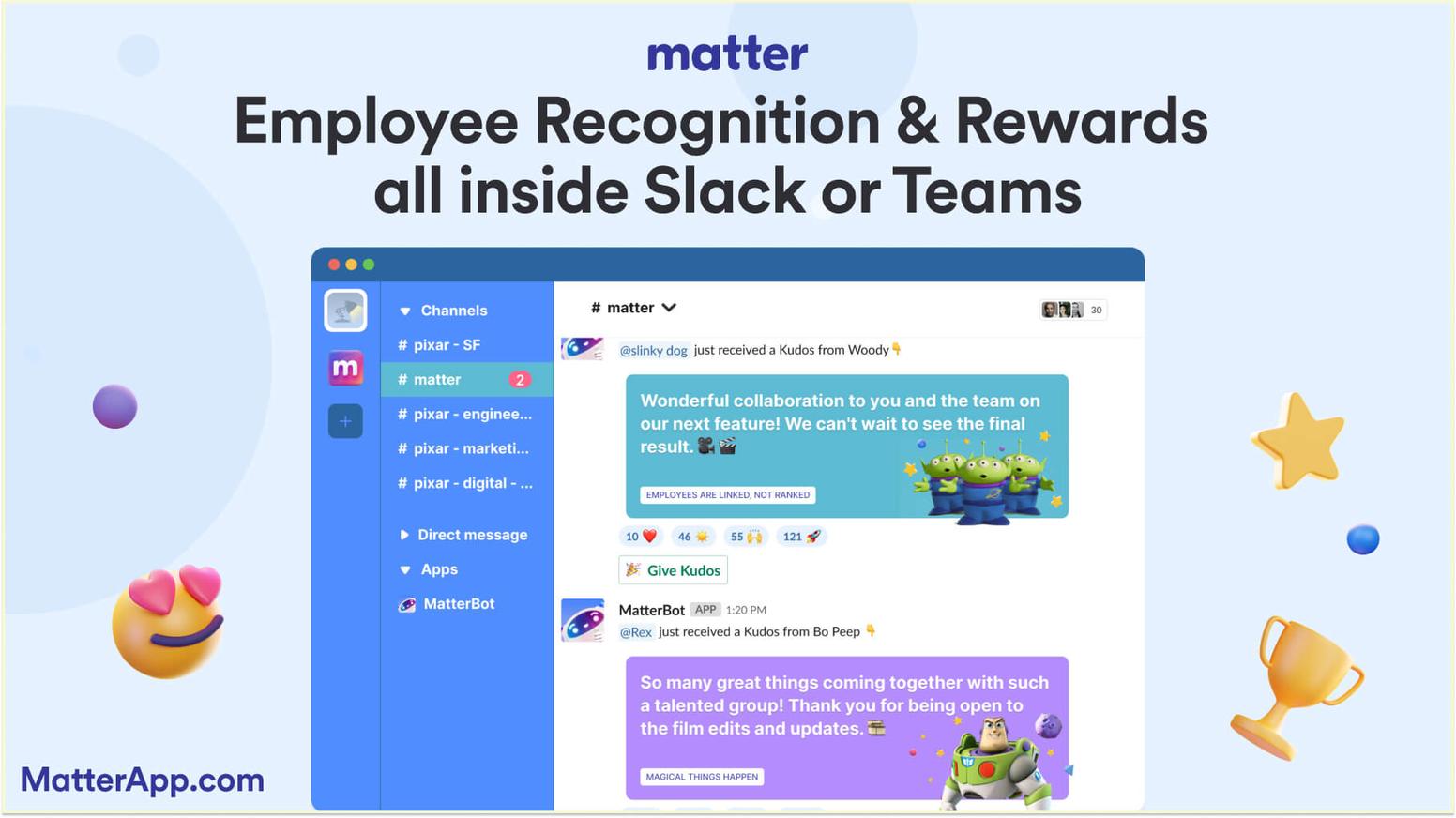
About Matter: Matter is a Slack-first and Teams-first recognition platform that extends beyond traditional appreciation to include comprehensive employee pulse survey capabilities. Matter's workforce feedback tools integrate seamlessly with workplace communication platforms, allowing organizations to gather input directly within the tools people already use daily. The platform's customizable templates facilitate the development of targeted queries aligned with organizational objectives, while automated distribution guarantees uniform feedback collection without requiring manual intervention from HR teams. Matter's intuitive design enables setup in minutes, making it accessible even for organizations new to frequent feedback strategies.
Matter combines employee pulse survey functionality with robust recognition and rewards features, creating a comprehensive approach that connects feedback collection with action. The platform's analytics capabilities reveal trends in sentiment over time, helping organizations identify both strengths to celebrate and areas requiring attention. With automated reminders and mobile-friendly surveys, Matter maintains high response rates while minimizing fatigue. The integration of feedback data with recognition patterns provides unique insights into the relationship between appreciation and morale, enabling organizations to build targeted strategies that boost motivation and strengthen workplace culture through data-driven recognition initiatives.
Main features:
- Seamless Slack and Microsoft Teams integration for employee pulse survey distribution and recognition
- Customizable templates with pre-built questions for workforce assessment
- Real-time analytics connecting feedback data to recognition patterns and reward redemption
- Automated scheduling and reminder systems that maintain consistent feedback collection
- Mobile-optimized surveys ensure accessibility for all staff, regardless of location
Matter pricing:
- Free Forever: $0/user/month
- Basic: $1/user/month, billed annually
- Pro: $3/user/month, billed annually
- Pro + Surveys: $5/user/month, billed annually
To learn more, view Matter's pricing page.
Matter G2 score: Matter has a G2 score of 4.7/5 based on user reviews.
What Matter customers are saying: "Matter helps us connect and interact while showing people what kind of culture we strive for — we want people to be themselves and feel free to play and have fun at work!” - Leah Howse, Head of Staff at BRIO (Customer Story).
2. Culture Amp

About Culture Amp: Culture Amp provides comprehensive workforce platforms with a strong emphasis on feedback assessment and analytics. The platform offers extensive question libraries, research-backed templates, and advanced reporting capabilities that help organizations understand sentiment across multiple dimensions. Culture Amp's focus on science-driven approaches to measurement appeals to organizations seeking evidence-based insights into workplace culture development.
Culture Amp main features:
- Research-backed templates based on organizational psychology practices
- Advanced analytics with benchmarking against industry standards
- Action planning tools that help translate insights into improvement initiatives
Culture Amp pricing:
- Engage: contact the sales team for exclusive features
- Perform: contact the sales team for exclusive features
- Develop: contact the sales team for exclusive features
- People Analysis: contact the sales team for exclusive features
To learn more, view Culture Amp’s pricing page.
Culture Amp G2 score: Culture Amp has a G2 score of 4.5/5 based on user reviews.
What Culture Amp customers are saying on G2: “I’ve been using this software for a while now, and one of its standout features is how well-organized the system is. Everything is laid out in a clear and intuitive way, making it easy to navigate. Additionally, the punctuality of the communications is exceptional – notifications and updates are always timely, ensuring that I stay on top of tasks and deadlines. It’s a reliable tool for those who value efficiency and clear communication. Highly recommended!” - Anna L., SEO Consultant (G2 Review for Culture Amp).
3. Lattice

About Lattice: Lattice combines workforce assessments with performance management, goal tracking, and career development tools in a comprehensive people management platform. The platform's employee pulse survey capabilities integrate with other hr functions, enabling organizations to connect feedback data with performance outcomes and development activities. Lattice's holistic approach appeals to companies seeking unified platforms for managing multiple aspects of the work experience.
Lattice main features:
- Integrated platform connecting assessments with performance reviews and goals
- Customizable cadences supporting various feedback collection frequencies
- Manager dashboards providing team-specific insights into morale and performance
Lattice pricing:
- Talent Management: $11/seat/month
- Foundation: $11/seat/month
- Engagement: $4/seat/month
- Grow: $4/seat/month
- Compensation: $6/seat/month
To learn more, view Lattice’s pricing page.
Lattice G2 score: Lattice has a G2 score of 4.7/5 based on user reviews.
What Lattice customers are saying on G2: “Ease of use and ease of implementation. The implementation time commitment was hours not weeks. We initially implemented all modules except Grow, Comp, and Engage and manged to configure and test all modules in less than two weeks. The product team is very receptive to feedback and also able to help come up with creative workarounds for functional gaps. The customer support is great and very responsive.” - Matthew H., Senior Human Resources Manager (G2 Review for Lattice).
4. 15Five
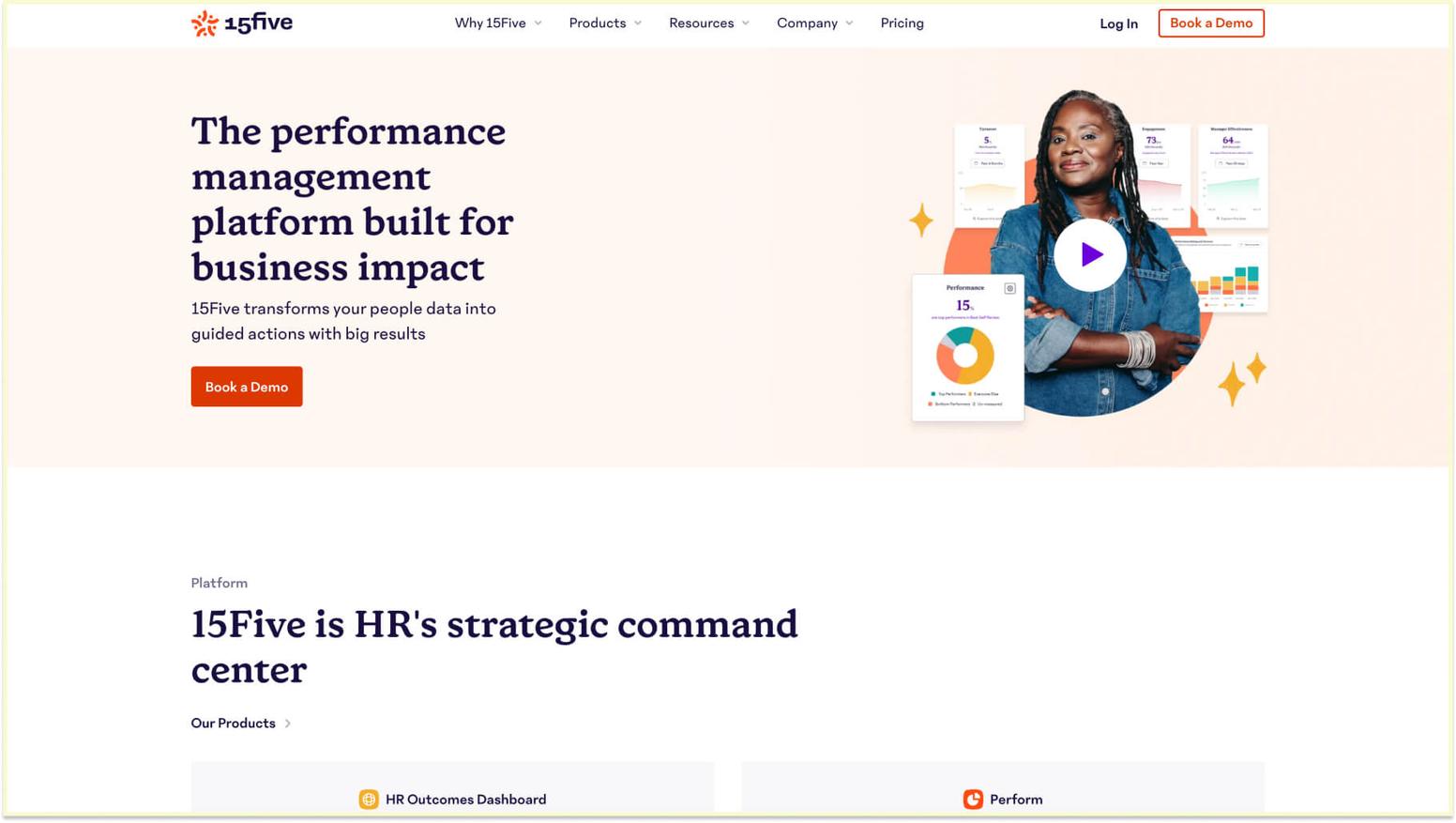
About 15Five: 15Five specializes in continuous performance management with a strong emphasis on regular check-ins, employee pulse surveys, and manager effectiveness. The platform's weekly check-in format encourages ongoing dialogue between staff and managers, supplemented by assessments that track broader workforce trends. 15Five's focus on manager development and coaching capabilities differentiates it from pure feedback platforms.
15Five main features:
- Weekly check-in templates facilitating ongoing manager communication
- Employee pulse survey functionality for tracking trends across organizations
- Manager training resources supporting effective feedback conversations and coaching
15Five pricing:
- Engage: $4/user/month, billed annually
- Perform: $11/user/month, billed annually
- Total Platform: $16/user/month, billed annually
To learn more, view 15Five's pricing page.
15Five G2 score: 15Five has a G2 score of 4.6/5 based on user reviews.
What 15Five customers are saying on G2: “We have built a company wide OKR tied to our company wide average Pulse score. It is an easy check of how the company is "feeling" from week to week, and over the last 2 years, I have found it to be accurate, important and super easy for the team to adopt and stay consistent in use.”- Dan A., Small-Business (G2 Review for 15Five).
5. Qualtrics EmployeeXM
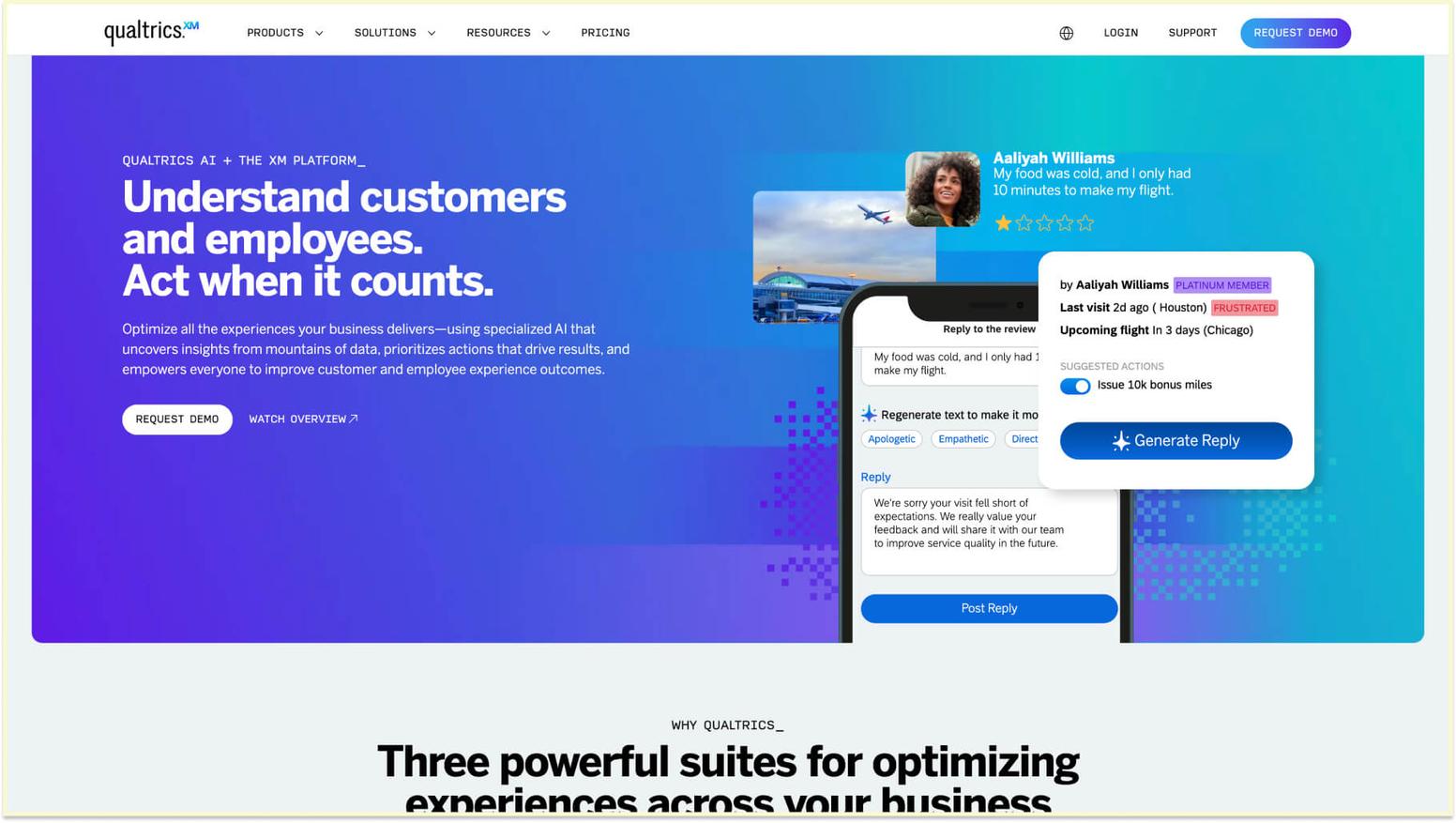
About Qualtrics EmployeeXM: Qualtrics EmployeeXM brings enterprise-grade management capabilities to workforce assessment, offering sophisticated design, distribution, and analysis tools. The platform's advanced analytics, including predictive modeling, driver analysis, and comprehensive reporting, help large organizations understand complex dynamics across global workforces. Qualtrics appeals to enterprises seeking robust, scalable measurement solutions.
Qualtrics EmployeeXM main features:
- Enterprise-scale platform supporting complex organizational structures
- Predictive analytics identifying key drivers of morale and retention
- Comprehensive reporting dashboards providing insights across multiple dimensions
Qualtrics EmployeeXM pricing: Pricing is not listed on the website. To learn more about pricing, you'll need to schedule a demo/sales call with Qualtrics EmployeeXM.
Qualtrics EmployeeXM G2 score: Qualtrics EmployeeXM has a G2 score of 4.4/5 based on user reviews.
What Qualtrics EmployeeXM customers are saying on G2: “Preston Donohoo, with Red Pepper, has been fantastic to partner with. He is thorough, excellent at training and his customer support is outstanding. He made our implementation go very smoothly. We have found the Qualtrics engagement survey and 360s tools easy to use, with the ability to dive deep into our results. We would definitely recommend Qualtrics to others.” - Kelli G., Global Talent Manager (G2 Review for Qualtrics EmployeeXM).
6. Glint (Microsoft Viva)
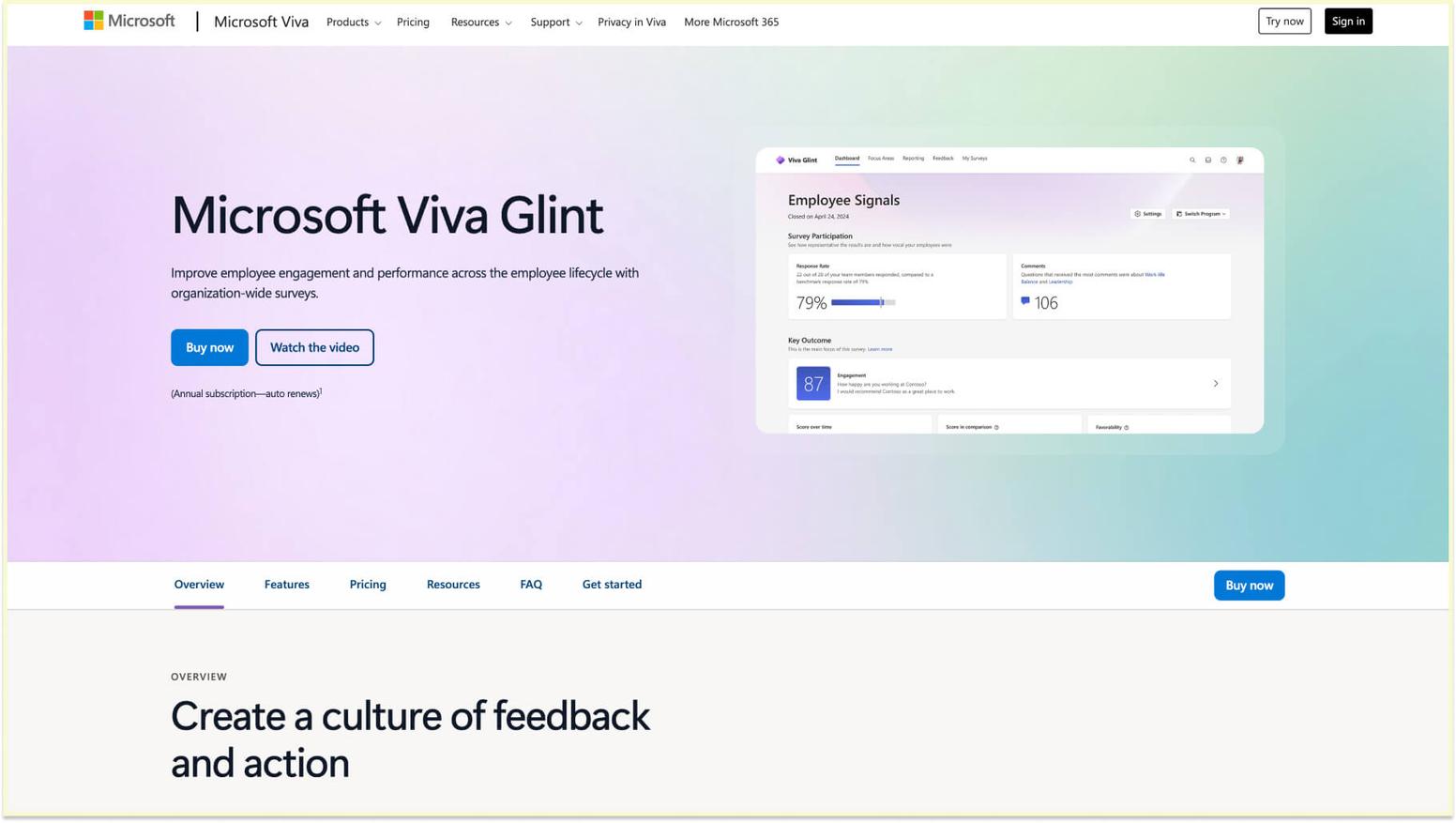
About Glint: Glint, now part of Microsoft Viva, offers employee pulse survey capabilities integrated within Microsoft's broader workforce ecosystem. The platform utilizes artificial intelligence to deliver insights and recommendations derived from feedback data, assisting organizations in identifying key focal areas and monitoring progress on workforce initiatives. Glint's integration with Microsoft Teams makes it a natural fit for organizations already using Microsoft workplace tools.
Glint main features:
- AI-powered insights recommending actions based on data patterns
- Deep integration with Microsoft Teams and the Microsoft Viva ecosystem
- Real-time dashboards providing continuous visibility into workforce trends
Glint pricing:
- Microsoft Viva Employee: $2.00 user/month (Annual commitment)
- Microsoft Viva Workplace: $6.00 user/month (Annual commitment)
- Microsoft Viva Suite: $12.00 user/month (Annual commitment)
To learn more, view Glint’s pricing page.
Glint G2 score: Glint has a G2 score of 4.6/5 based on user reviews.
What Glint customers are saying on G2: “Good depiction of data, easy to view formats with a variety of different cuts of data available. Not super user-friendly, requires too many clicks to filter the data needed.” - Anjali A., Human Resources Consultant (G2 Review for Software).
7. Workday

About Workday: Workday provides a continuous listening platform focusing on real-time workforce feedback and manager enablement. The platform automatically analyzes feedback to identify priority areas and provides managers with guided actions for addressing team-specific concerns. Peakon's focus on making insights actionable at the manager level differentiates it from tools that primarily serve hr teams.
Workday main features:
- Continuous listening approach with frequent, brief surveys capturing ongoing sentiment
- Automated prioritization of focus areas based on impact analysis
- Manager-specific insights and suggested actions for improving team morale
Workday pricing:
- Workday Adaptive Planning: Free for 30 days
- Workday Adaptive Planning: contact sales to request pricing
- Workday Adaptive Planning Close & Consolidation: contact sales to request pricing
To learn more, view Workday’s pricing page.
Workday G2 score: Workday has a G2 score of 4.0/5 based on user reviews.
What Workday customers are saying on G2: “I've found Workday to be a reliable application for handling holiday and HR activities at my company. Its user-friendly interface makes requesting leave and checking balances easy and efficient. Real-time updates ensure I always know my leave status without chasing paperwork. I appreciate the integration with other HR functions, which provides a central hub for important information. While there can be some lag during busy times, overall, Workday simplifies holiday management and enhances transparency for both employees and HR teams.” - Saurabh Y., Senior Engineer (G2 Review for WorkDay).
8. Leapsome
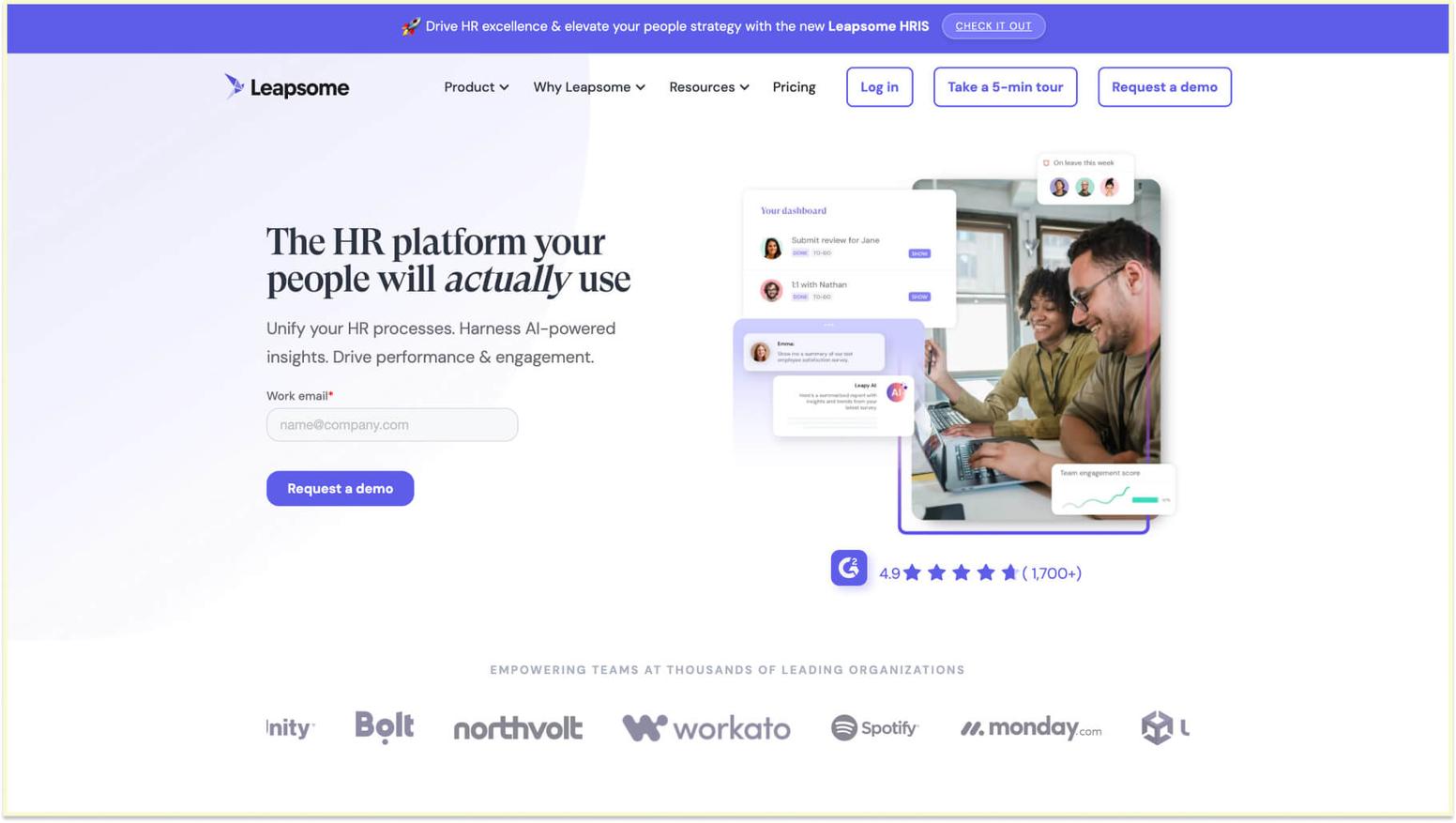
About Leapsome: Leapsome combines workforce assessments with goals, feedback, learning, and compensation management in an integrated people enablement platform. The platform's employee pulse survey capabilities work alongside other hr functions to provide a comprehensive view of the work experience and development. Leapsome appeals to fast-growing companies seeking scalable solutions that support both measurement and staff development.
Leapsome main features:
- Integrated platform connecting assessments with goals, feedback, and learning
- Flexible builder supporting various question types and formats
- Analytics connecting feedback data with performance and development outcomes
Leapsome pricing: Pricing is not listed on the website. To learn more about pricing, you'll need to schedule a demo/sales call with Leapsome.
Leapsome G2 score: Leapsome has a G2 score of 4.9/5 based on user reviews.
What Leapsome customers are saying on G2: “It is step to step process implementation of sales pattern , customer support , and a lot of feature to understand customer need .It also help to ease of interagtion customer mindset and win situation .It have a good dashboard GUI to understand also support avilable in a single call , once again thank you team leapsome because i was a layman and after half an hour training i became super user.” - SUMIT KUMAR O., Senior Technical Sales Engineer (G2 Review for Leapsome).
Integration capabilities with workplace platforms
The ability to integrate with existing workplace systems dramatically impacts adoption and effectiveness. When evaluating engagement survey vendors, comparisons often highlight integration as a key differentiator, with platforms offering deeper connections to daily workflow tools. Organizations should prioritize tools that connect seamlessly with their HRIS, communication platforms, and performance management systems to create cohesive workforce ecosystems.
Strong integration capabilities enable single sign-on for staff, automated data synchronization between systems, and unified reporting that connects feedback data with other workforce metrics. These technical integrations reduce administrative burden on hr teams while improving data accuracy and accessibility. When feedback data flows automatically into other systems, organizations can more easily correlate morale with outcomes like turnover, performance, and productivity.
The best integrations feel invisible to staff, allowing them to complete assessments and receive recognition and appreciation without switching between multiple applications or remembering different login credentials. This seamless experience increases participation rates and helps normalize feedback collection as a natural part of work rather than an additional task requiring extra effort. Organizations should evaluate potential pulse survey tools based on how well they integrate with the specific platforms already used throughout the company.
Analytics and reporting for engagement measurement
Robust analytics capabilities transform raw data into actionable insights that drive improvements. The best platforms include analytics that connect responses to recognition patterns, revealing relationships between appreciation and morale. Look for tools that offer customizable dashboards, trend visualization, demographic breakdowns, and the ability to drill down from organization-wide data to team-specific insights.
Predictive analytics provides an additional level of value by enabling organizations to forecast potential challenges prior to their full manifestation. Certain advanced platforms leverage machine learning to detect patterns that forecast attrition risk, identify teams prone to morale deterioration, or determine the key factors that most significantly impact satisfaction within particular organizational environments. These predictive capabilities enable proactive intervention rather than reactive problem-solving.
Reporting capabilities should support various audiences, from executives who need high-level dashboards to managers who require detailed team insights to HR teams seeking comprehensive workforce analytics. The ability to schedule automated reports, export data for further analysis, and create presentations directly from results saves time. It ensures that insights reach stakeholders in formats they can easily consume and act upon.
Best practices for pulse survey employee engagement measurement
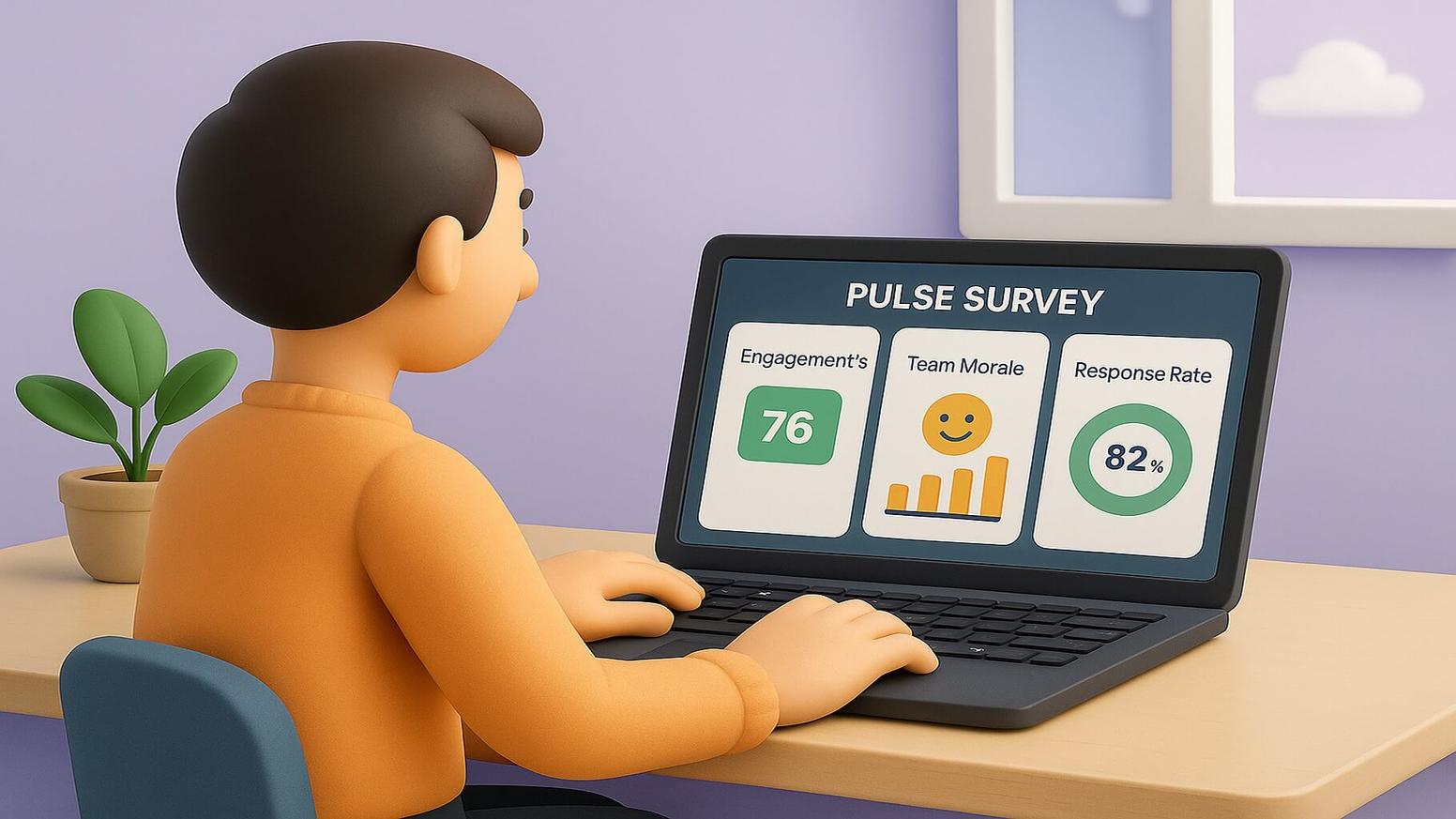
Successfully implementing employee pulse survey programs requires more than just selecting the right tool and launching assessments. Organizations need thoughtful approaches to design, distribution, and follow-up that maximize participation while generating actionable insights. The most effective programs balance the need for consistent data collection with responsiveness to preferences and concerns about survey fatigue, creating feedback systems that people trust and actively support.
Determining optimal survey frequency for engagement tracking
Finding the right balance in cadence requires understanding organizational needs, workforce preferences, and the nature of workplace changes. Following pulse survey best practices for survey frequency, weekly objectives might focus on immediate experiences and current sentiment, while monthly surveys can explore topics in slightly greater depth. Organizations should consider starting with monthly surveys and adjusting the frequency based on response rates, feedback quality, and their capacity to act on the results.
The concept of survey fatigue is real but often misunderstood. People don't tire of assessments because they're frequent; they disengage when surveys feel meaningless or when feedback doesn't lead to visible changes. Organizations can conduct frequent employee pulse surveys successfully by keeping them brief, varying questions to maintain interest, and consistently demonstrating how feedback drives improvements. The key is showing staff that their time investment in completing assessments yields tangible benefits for them and their colleagues.
Cadence should also respond to organizational changes and events. During periods of significant transition, such as leadership changes or major restructuring, more frequent checks help organizations stay connected to sentiment and address concerns promptly. Conversely, during stable periods, organizations might reduce frequency while maintaining other feedback channels, such as focus groups or town halls, that provide qualitative insights to complement quantitative data.
Crafting questions that reveal true engagement levels
Effective questions share several characteristics, including clarity, relevance, and the ability to elicit honest responses. Questions should use straightforward language, avoiding jargon or ambiguity that might confuse respondents. Each question should have a clear purpose and connection to actionable improvements the organization can realistically implement. When people understand why they're being asked specific questions and trust that answers will drive meaningful change, they provide more thoughtful and authentic responses.
The balance between closed-ended and open-ended questions affects both response quality and the analysis burden. Closed-ended questions using rating scales provide quantitative data that's easy to track over time and compare across groups. In contrast, open-ended questions capture nuanced perspectives and unexpected insights that numbers alone might miss. Most effective employee pulse assessments predominantly consist of closed-ended items, complemented by one or two open-ended questions that enable staff to express concerns or ideas in their own terms.
The question design should also consider how the strongly agree/strongly disagree scales are structured. Five-point scales work well for most purposes, providing enough granularity to detect sentiment differences without overwhelming respondents with too many options. Including neutral midpoints allows people to indicate ambivalence when appropriate. However, some organizations prefer even-numbered scales that force respondents toward positive or negative positions rather than defaulting to neutral responses.
Acting on pulse data to improve employee engagement
The most critical component of any employee pulse survey program is what organizations do with the data they collect. Staff quickly lose faith in assessments when they see no connection between their feedback and organizational actions. Organizations must commit to promptly analyzing results, communicating findings transparently, and implementing changes to address concerns surfaced through workforce feedback. This action-oriented approach transforms assessments from data collection exercises into catalysts for meaningful workplace improvements.
Creating clear accountability for acting on results ensures that insights drive action rather than sit unused in reports. Organizations should assign responsibility for reviewing results and developing action plans at the organizational, departmental, or team level, depending on the scope of the issues identified. Managers play crucial roles in this process, as they're often best positioned to implement team-specific changes and communicate progress to staff about improvements driven by their feedback.
Closing the feedback loop by communicating results and actions to staff is essential for maintaining trust in the process. Organizations should share key findings, acknowledge areas needing improvement, and outline specific steps being taken to address concerns. This transparency shows people that their voices matter and encourages continued participation in future assessments. Regular updates on progress toward announced improvements further reinforce the connection between workforce feedback and organizational change.
How to analyze employee engagement pulse survey results
Collecting employee pulse survey data is only the beginning of deriving value from workforce feedback. Thoughtful analysis transforms raw responses into actionable insights that guide strategies and highlight areas requiring attention. Organizations should approach analysis systematically, looking beyond simple averages to understand patterns, trends, and relationships in the data that reveal the true state of morale and point toward effective interventions.
Identifying engagement trends and patterns over time
The real power of employee pulse assessments lies in analyzing data across multiple cycles, revealing how morale evolves in response to organizational changes, seasonal factors, and external events. Using effective employee engagement survey tools for trend analysis helps distinguish between temporary fluctuations in sentiment and sustained shifts that require strategic responses. Organizations should track core metrics consistently across assessments, creating time series data that shows whether motivation is improving, declining, or remaining stable over weeks and months.
Comparing current results to previous assessments helps organizations assess whether workforce initiatives are working and measure progress toward improvement goals. When questions remain consistent across cycles, organizations can calculate how much scores have changed and determine whether those changes are statistically significant or within normal variation. This longitudinal perspective provides context for interpreting individual results and helps organizations maintain realistic expectations about the pace of improvement.
Pattern recognition extends beyond simple trend lines to include identifying correlating factors that influence morale. Organizations might notice that scores correlate with specific events, such as project launches, policy changes, or leadership transitions. Recognizing these patterns enables more targeted interventions and helps organizations anticipate when motivation may be vulnerable to decline, enabling proactive measures to maintain positive sentiment during challenging periods.
Benchmarking engagement scores across departments
Comparing employee pulse survey data across different organizational segments reveals where morale is strong and where additional support or intervention may be needed. Department-level comparisons help identify teams that are thriving and those that are struggling, enabling targeted resource allocation and learning opportunities in which successful practices from high-morale teams can be shared with others. These internal benchmarks prove more valuable than external comparisons for driving improvements, as they account for organizational context.
Demographic analysis provides additional insights into how different groups experience the workplace. Organizations might analyze results by tenure, role level, location, or other relevant factors to understand whether morale differs systematically across these groups. Discovering that newer hires are less motivated than longer-tenured colleagues, for example, might point to opportunities for onboarding improvements. At the same time, location-based differences might suggest that remote workers need additional support or opportunities for connection.
Care must be taken when analyzing and sharing department-level data to maintain confidentiality and avoid creating unproductive comparisons between teams. Organizations should establish minimum group sizes for reporting results, typically at least five to ten respondents, to protect individual privacy. Leaders should frame internal benchmarking as opportunities for learning and improvement rather than competitions between departments, focusing on understanding what drives success in high-morale areas and supporting struggling teams in making improvements.
Using results to create targeted engagement initiatives
Employee pulse survey analysis should culminate in concrete action plans that address specific issues identified through workforce feedback. Rather than implementing broad initiatives that attempt to address every concern, organizations achieve better results by prioritizing high-impact actions that address the most significant drivers of morale in their specific context. Employee rewards software ideas might emerge as priorities if data shows people don't feel sufficiently appreciated, while communication improvements might take precedence if questions about leadership transparency consistently score low.
Effective action planning involves collaboration among HR teams, leadership, and managers who have contextual knowledge of their teams and practical insights into which interventions will be feasible and effective. Organizations should develop specific, measurable goals for improvement, assign clear ownership for initiatives, and establish timelines for implementation and evaluation. This structured approach ensures that good intentions translate into real changes that staff can observe and experience.
Monitoring the impact of workforce initiatives through subsequent employee pulse assessments creates accountability and enables course correction when initiatives don't achieve desired results. Organizations should pay particular attention to questions related to the areas being addressed by improvement efforts, and track whether scores improve following the intervention. This continuous improvement cycle enhances a systematic process guided by data rather than an ad-hoc collection of disconnected programs.
Common challenges with pulse survey engagement programs

Even well-designed employee pulse survey programs encounter obstacles that can limit their effectiveness if not properly addressed. Understanding common challenges and proactively developing strategies to overcome them helps organizations maintain successful long-term feedback programs. Many challenges involve balancing competing priorities, such as gathering comprehensive data without survey fatigue, ensuring honest feedback while protecting anonymity, and collecting insights while demonstrating rapid action on results.
Overcoming survey fatigue while maintaining engagement
Survey fatigue represents one of the most frequently cited concerns about employee pulse survey programs. However, research shows that frequency itself is less problematic than poor design or failure to act on feedback. Understanding pulse survey vs engagement survey differences helps organizations minimize fatigue by keeping assessments genuinely brief, typically five to ten questions, taking no more than two to three minutes to complete. The definition of employee pulse surveys centers on brevity, making it essential to resist the temptation to add "just one more question" that would incrementally increase length.
Varying content across cycles maintains interest while still tracking core metrics. Organizations might include two to three consistent questions for trend tracking, plus three to five rotating questions that explore different aspects of the work experience each cycle. This approach provides fresh content that keeps assessments interesting while maintaining longitudinal data on key metrics that drive organizational success.
Communication about purpose and demonstrated action on results are perhaps the most powerful tools for combating fatigue. When people understand how their feedback drives improvements and see tangible changes resulting from input, they remain motivated to participate even when assessments occur frequently. Organizations should celebrate wins achieved through workforce feedback, explicitly connecting improvements to insights and thanking staff for their continued participation in the feedback process.
Ensuring honest feedback about engagement issues
Creating conditions where employees feel safe providing candid feedback, especially on sensitive topics such as leadership effectiveness or workplace culture, requires careful attention to anonymity and trust-building. Most employee pulse survey tools offer anonymous response collection. Organizations must clearly communicate what anonymity means and what protections are in place. This includes preventing identification of respondents through demographic data or open-ended responses. Establishing minimum group sizes for reporting and aggregating results appropriately helps maintain confidentiality.
Trust in the process builds over time as people observe that honest feedback doesn't result in negative consequences and does lead to positive changes. Organizations should avoid defensive reactions to critical feedback and instead treat it as valuable information about areas that need attention. Leaders who respond constructively to results, acknowledging challenges and outlining improvement plans, model the openness that encourages continued honest participation from staff.
Offering multiple feedback channels beyond employee pulse assessments provides alternatives for employees who may be reluctant to share certain concerns through formal surveys. Focus groups, one-on-one conversations, suggestion boxes, or skip-level meetings complement assessments by creating opportunities for more detailed discussion of complex issues. This multi-channel approach recognizes that employees have varying comfort levels with different feedback methods and ensures that all voices have opportunities to be heard.
Translating pulse data into meaningful engagement actions
The gap between collecting data and implementing improvements trips up many organizations, particularly when employee pulse survey results reveal systemic issues requiring significant resources or substantial organizational changes to address. Organizations should be realistic about what they can accomplish and transparent with staff about both quick wins and longer-term initiatives that will take time to implement. Setting appropriate expectations prevents disappointment when not every concern can be addressed immediately.
Prioritization becomes essential when data reveals multiple areas needing attention.
Organizations should first focus on issues that most strongly influence overall morale, affect the largest number of people, or pose the greatest risks if left unaddressed. Involving staff in determining priorities through follow-up discussions or additional assessments ensures that improvement efforts align with what matters most to the workforce rather than leadership's assumptions about priorities.
Building organizational capacity to respond to insights requires adequate resources, clear processes, and leadership commitment to improve a strategic priority. Organizations should budget time and money for workforce initiatives, assign responsibility for translating insights into action, and hold leaders accountable for making progress on goals. Without this structural support, even the best data remains unused, and cynicism about feedback processes grows.
Combining employee pulse surveys with recognition programs
Integrating employee pulse survey data with appreciation programs creates powerful synergies that enhance both measurement and recognition practices. Organizations that connect these two elements can identify appreciation opportunities suggested by data, measure how recognition impacts morale over time, and build cultures where feedback and appreciation work together to create positive work experiences. This integrated approach acknowledges that morale and recognition are deeply interrelated aspects of workplace culture.
Using engagement data to identify recognition opportunities
Employee pulse survey responses provide valuable signals about when and how recognition might have the greatest impact on morale. Questions about feeling valued, appreciated, or recognized for contributions directly indicate whether people perceive adequate acknowledgment of their work. Low scores on recognition-related questions should prompt organizations to examine their appreciation practices and identify opportunities to increase recognition frequency or improve meaningfulness through more personalized approaches.
Data can also highlight specific teams, departments, or groups that may benefit most from increased recognition. If certain teams consistently report lower scores on feeling valued, targeted recognition initiatives in those areas might help close gaps. Similarly, timing recognition programs around periods when employee pulse survey data shows morale tends to dip, such as during particularly busy seasons, can help maintain motivation when people most need encouragement and appreciation.
Qualitative feedback from open-ended questions often includes specific suggestions about the types of recognition people find most meaningful. These insights help organizations move beyond generic appreciation programs toward recognition approaches that resonate with actual preferences. When staff mention wanting more peer recognition, public acknowledgment, or specific types of rewards in comments, organizations gain direct guidance for designing effective recognition strategies.
Connecting survey insights to appreciation initiatives
The relationship between morale and recognition works both ways, with employee pulse survey data informing recognition strategies and recognition programs supporting improved scores. Organizations can use employee pulse assessments to evaluate the effectiveness of recognition initiatives by tracking changes in metrics after launching new appreciation programs. If questions about feeling valued show improvement after implementing a peer recognition platform, organizations gain evidence that their recognition investments are working.
Questions specifically about recognition experiences help organizations understand the current state of appreciation in the workplace and identify gaps between current practices and workforce needs. Questions might explore recognition frequency, whether appreciation feels authentic, which types of recognition are most meaningful, or whether recognition aligns with company values. These insights guide continuous improvement of recognition programs, ensuring they evolve to meet changing preferences and organizational needs.
Integrating recognition and feedback platforms technically also streamlines the connection between appreciation and measurement. When the same system manages both functions, organizations can analyze relationships between recognition patterns and scores to determine whether employees who give or receive more recognition also report higher morale. These insights reveal recognition as not just a nice-to-have program but a strategic tool for driving measurable improvements in satisfaction and motivation.
Building engagement through feedback and recognition loops
Creating virtuous cycles where feedback leads to recognition and recognition drives continued feedback participation strengthens both processes. Organizations can close employee pulse survey feedback loops by recognizing staff who implement improvements suggested through assessments, publicly acknowledging teams that achieve score improvements, or celebrating milestones in participation rates. This integration shows people that both providing feedback and acting on it receive appreciation, encouraging continued participation in both activities.
Recognition programs themselves benefit from feedback loops where input shapes how appreciation is delivered. Regular questions about recognition preferences, reward choices, or celebration formats help organizations refine their appreciation strategies based on actual desires rather than assumptions. This responsive approach ensures that recognition remains meaningful and relevant as preferences evolve.
The cultural impact of combining feedback and recognition extends beyond individual programs, creating workplace environments where continuous improvement and appreciation are embedded values. People in these cultures expect regular opportunities to share input, anticipate that feedback will drive changes, and experience consistent recognition for contributions. This integrated approach creates sustainable competitive advantages in attracting and retaining talent while maintaining high levels of motivation and commitment across the workforce.
How Matter can help with pulse survey employee engagement
Organizations seeking to unite employee pulse survey capabilities with recognition programs benefit from platforms that seamlessly integrate both functions. Effective strategies emphasize the importance of connecting feedback collection with meaningful action, and Matter delivers on this principle by combining measurement tools with robust recognition and rewards systems in a single, intuitive platform. This integration enables organizations not only to measure morale but also to actively improve it through targeted appreciation initiatives informed by feedback insights.
Integrated platform combining engagement surveys and recognition
Matter's unified approach eliminates the need for multiple, disconnected tools by bringing employee pulse surveys and appreciation together into a seamless experience. Organizations can launch assessments, track trends, celebrate achievements, and distribute rewards all within the same platform that integrates directly into Slack and Microsoft Teams, where people already work. This consolidation reduces administrative complexity for hr teams while creating more cohesive experiences for staff who receive surveys and recognition through familiar tools they use daily.
The platform's design prioritizes ease of use, enabling organizations to set up both feedback and recognition programs in minutes without extensive training or technical expertise. Automated features like scheduling, reminder systems, and Feedback Friday prompts ensure consistency in both feedback collection and appreciation practices without requiring constant manual intervention. This automation helps maintain momentum in workforce initiatives even when hr teams are managing multiple priorities simultaneously.
Matter's approach recognizes that measurement and recognition are not separate functions but interconnected elements of healthy workplace cultures. By housing both capabilities in a single platform, organizations can more easily analyze relationships between appreciation patterns and scores, identify which recognition practices have the greatest impact on morale, and adjust strategies based on comprehensive data about both what people think and how they respond to various forms of recognition.
Pre-built employee engagement pulse survey question templates
Matter provides organizations with carefully designed templates that incorporate measurement practices, eliminating the need to build question banks from scratch. These templates cover essential dimensions including job satisfaction, leadership effectiveness, team collaboration, career development, and work-life balance, providing starting points that organizations can customize to match their unique cultures and priorities. The availability of proven question sets accelerates program launch and ensures that organizations ask questions likely to yield meaningful insights.
Template flexibility enables organizations to adapt pre-built questions to their specific contexts while benefiting from the research-backed design underlying Matter's question library. Organizations can modify language to align with their terminology, add or remove questions based on current priorities, and create custom assessments for specific situations, such as evaluating new initiatives or gathering feedback on organizational changes. This balance between structure and flexibility helps organizations implement sophisticated programs without requiring expertise in design methodology.
The template library continues to grow as Matter incorporates emerging practices and responds to customer feedback about which questions deliver the most valuable insights. Organizations benefit from this continuous improvement, gaining access to new question options and designs informed by data from successful workforce programs across various industries and company sizes. This shared learning accelerates the maturity of measurement practices across Matter's customer base.
Real-time analytics connecting engagement data to rewards
Matter's analytics capabilities go beyond basic reporting to reveal connections between scores, recognition patterns, and reward redemption, providing deeper insights into what drives motivation in specific organizational contexts. Real-time dashboards show current trends, highlight areas needing attention, and display recognition activity alongside employee pulse survey results, helping leaders understand relationships between appreciation and morale. These integrated insights enable more strategic decision-making about where to focus improvement efforts.
The platform tracks how scores evolve in response to recognition initiatives, providing evidence of return on investment for appreciation programs. Organizations can compare metrics before and after implementing new recognition practices, assess whether increased recognition frequency correlates with improved morale, and identify which types of recognition are most closely linked to overall satisfaction. This data-driven approach to recognition strategy ensures that appreciation efforts align with what actually improves motivation rather than relying on assumptions.
Matter's analytics also support manager enablement by providing team-specific insights that help supervisors understand their team's morale and recognition patterns. Managers can see how their team's scores compare with organizational averages, identify strengths to celebrate and challenges to address, and access recommendations to improve motivation based on results. This democratization of insights empowers managers to take ownership of workforce morale within their teams while ensuring they have the data and guidance needed to drive improvements.
Frequently asked questions about pulse survey employee engagement
Q: How do pulse surveys measure employee engagement effectively?
A: Employee pulse surveys measure morale through brief, frequent surveys that capture real-time sentiment on workplace experiences. By asking targeted questions about satisfaction, motivation, and connection to work regularly, organizations track how morale fluctuates and identify both strengths and challenges. The frequency enables organizations to spot trends, respond promptly, and demonstrate that feedback drives continuous improvements.
Q: What are the best employee engagement pulse survey questions to ask?
A: The most effective questions focus on key drivers, including job satisfaction, relationship with managers, clarity of expectations, development opportunities, and feeling valued. Questions should use clear language and be relevant to organizational priorities. Organizations typically include consistent questions for trend tracking and rotating questions that explore different dimensions, balancing longitudinal data with variety.
Q: How often should you conduct employee engagement pulse surveys?
A: Optimal frequency depends on organizational capacity to act on results and workforce tolerance for feedback requests. Most organizations find success with monthly or biweekly employee pulse surveys, though some implement weekly check-ins when maintaining extreme brevity. Organizations should monitor response rates and adjust cadence to maintain high participation and ensure insights drive visible improvements.
Q: What is the difference between a pulse survey and an engagement survey?
A: Traditional assessments occur annually with many questions covering all aspects of work experience, providing comprehensive baseline data. Employee pulse surveys are brief, with just a few questions, distributed frequently to track real-time sentiment shifts. Many organizations implement both approaches, with annual surveys providing depth and employee pulse surveys offering ongoing monitoring throughout the year.
Q: What employee engagement pulse survey tools are most effective?
A: The most effective platforms combine ease of use, robust analytics, and seamless integration with existing workplace systems. Leading solutions offer mobile-friendly distribution, automated scheduling, customizable templates, and real-time reporting. Platforms that integrate with Slack or Microsoft Teams increase participation by meeting people where they work.
Q: How do you improve employee engagement using pulse survey data?
A: Improving morale through data requires analyzing results, identifying priorities, implementing targeted initiatives, and measuring impact. Organizations should examine responses to understand which factors need attention, develop action plans, communicate transparently about improvements, and track whether subsequent assessments show progress. The critical element is demonstrating that feedback leads to meaningful change.
Final thoughts about pulse survey employee engagement
Continuous measurement through employee pulse surveys enables organizations to maintain high morale by staying connected to sentiment as it evolves throughout the year. This proactive strategy for gathering feedback redefines workforce management from a once-a-year activity into a continuous conversation, ensuring employees feel acknowledged and enabling leaders to address issues swiftly before they develop into significant problems. Organizations that embrace frequent feedback demonstrate commitment to the work experience and build cultures where continuous improvement is a shared value rather than an occasional initiative.
Combining frequent feedback with recognition creates powerful strategies that address both measurement and action. When organizations not only ask people how they feel but also celebrate contributions and implement changes based on feedback, they create virtuous cycles in which morale begets greater motivation. Recognition software that integrates with employee pulse survey capabilities enables this holistic approach, connecting insights with appreciation to drive meaningful improvements in workplace culture, retention, and business outcomes.
Matter provides comprehensive solutions that unite employee pulse survey tools with integrated recognition programs, enabling organizations to measure morale effectively and act on insights through meaningful appreciation. The platform's Slack-first and Teams-first approach meets people where they work. At the same time, pre-built templates, real-time analytics, and automated features make sophisticated workforce programs accessible to organizations of all sizes. By bringing feedback and recognition together in one seamless experience, Matter helps organizations build thriving workplace cultures where employees feel valued, heard, and motivated to contribute their best work every day.
Ready to transform your employee engagement measurement strategy? Schedule a demo with a Matter expert today and discover how our pulse survey tools can help you track engagement, gather actionable insights, and create a culture of continuous improvement.

![Employee Engagement Surveys [25+ Tips & Tools for 2026]](https://cdn.sanity.io/images/kqqb5xry/production/13fd70d57fbbac5ce7dc325b8217cacb5509a53c-800x600.jpg?w=720&q=75&fit=max&auto=format)
![39+ Pulse Survey Examples [2026 Questions & Templates]](https://cdn.sanity.io/images/kqqb5xry/production/9e8648b1fd4001957a65d32fc1b12e7e633e6765-800x600.jpg?w=720&q=75&fit=max&auto=format)