

Creating meaningful onboarding survey questions can feel overwhelming when you're unsure where to start. Organizations often struggle to determine optimal timing, question selection, and survey frequency for new hires. At Matter, we understand that balancing data collection with new employee experience requires thoughtful planning. The right approach transforms ad hoc feedback into systematic insights that drive real improvements.
Understanding onboarding survey best practices helps organizations gather actionable feedback throughout the employee lifecycle. Employee onboarding survey questions and new-hire onboarding survey questions create structured touchpoints for gathering feedback. Onboarding experience, feedback, and satisfaction surveys matter for continuous improvement and retention. Mastering new hire onboarding survey questions helps organizations build reliable feedback programs. When teams also implement onboarding survey questions for managers and 30-day onboarding survey questions, they reduce early turnover and accelerate productivity.
What is an onboarding survey?

An onboarding survey is a structured feedback tool that measures new hires experiences during their transition into your organization. These surveys collect data about training effectiveness, manager support, cultural integration, and resource availability at key intervals. Organizations use employee onboarding surveys to identify gaps in their onboarding program and improve outcomes. The goal is to gather feedback that drives meaningful changes to how new employees experience their first days and months.
Defining onboarding surveys and their measurement objectives
Onboarding surveys serve as diagnostic tools that reveal how new hires perceive your company's onboarding process. The primary objective involves measuring whether new employees receive all the necessary tools and information to perform their job effectively. Secondary objectives include assessing manager support quality, team integration progress, and alignment with company culture. These measurements create a baseline for tracking improvements over time and identifying retention risks early.
Survey questions should address both practical and emotional aspects of the onboarding experience for new team members. Practical questions examine whether training sessions adequately prepared employees for their job responsibilities. Emotional questions explore whether new hires feel welcomed, valued, and connected to team members. This dual approach provides valuable insights into what's working and what needs adjustment in your onboarding process.
Different survey types throughout the onboarding journey
Organizations benefit from deploying multiple survey types at strategic intervals throughout the new hire's tenure. Pre-boarding surveys assess readiness and collect communication preferences before day one begins. Day one and first-week surveys capture immediate impressions that matter most during the critical orientation process. Longer-term surveys at 30, 60, and 90 days evaluate sustained engagement and role preparation.
Each survey type serves distinct purposes, measuring different aspects of the onboarding process and employee satisfaction. Early surveys focus on logistics, welcome experience, and immediate resource needs for new employees. Midterm surveys assess training adequacy, team dynamics, and a clear understanding of job responsibilities. Final surveys evaluate overall program effectiveness and predict long-term success and retention likelihood.
How onboarding surveys differ from engagement and pulse surveys
Onboarding surveys target a specific population and time period in the employee lifecycle, unlike broader tools. Employee engagement surveys measure sentiment across your entire workforce at regular intervals. Pulse surveys provide quick snapshots of employee sentiment on specific topics for the entire team. Onboarding surveys focus exclusively on new hires' experiences during their transition period.
The questions to ask in onboarding surveys emphasize role readiness, training effectiveness, and initial cultural fit. Engagement surveys explore job satisfaction, career development opportunities, and organizational commitment across tenure levels. Understanding these distinctions helps HR professionals select the right survey type for their measurement objectives. Using the wrong survey type can lead to irrelevant data that fails to drive meaningful improvements.
What are the benefits of onboarding surveys?
Implementing onboarding surveys delivers measurable advantages that justify the investment in systematic feedback collection. Organizations gain real-time visibility into how new employees experience their first days and weeks. This visibility enables rapid course corrections before small issues become major retention risks. The benefits extend beyond individual new hires to organizational learning and continuous improvement.
Real-time feedback enabling rapid onboarding adjustments
Onboarding surveys provide immediate insights that allow organizations to address concerns before they escalate. When new hires report issues with training materials or unclear job expectations, leaders can intervene quickly. This responsiveness demonstrates the organization's commitment to the employee experience and builds trust. Pulse surveys work similarly by capturing regular snapshots of employee sentiment.
Real-time data transforms onboarding from a static process into a dynamic, responsive program for new team members. Managers receive alerts when their new employees report low satisfaction or confusion about job responsibilities. HR professionals can identify patterns across cohorts and departments to implement systemic improvements. This agility separates organizations with good onboarding from those with exceptional onboarding programs.
Data-driven identification of training gaps and resource needs
Employee onboarding surveys reveal specific areas where onboarding training falls short of preparing new hires. Survey responses pinpoint whether gaps exist in technical skills, product knowledge, or procedural understanding. This precision enables targeted investments in training sessions rather than generic program overhauls. Organizations collect feedback that directly informs budget allocation and curriculum development decisions.
The data also highlights resource gaps that prevent new employees from performing their job effectively. Questions about technology access, equipment availability, and support systems surface unmet needs. Leaders gain valuable feedback on whether new hires have the tools they need to succeed. This information helps procurement and IT teams prioritize equipment and software provisioning for future hires.
Predictive insights connecting onboarding quality to retention
Onboarding survey data creates predictive models that identify new hires at risk of early departure. Research consistently shows that the quality of the onboarding experience correlates with first-year retention rates. Organizations can track which survey questions most strongly predict whether new employees stay or leave. This predictive capability enables proactive intervention with at-risk individuals before they disengage.
The connection between onboarding satisfaction and retention provides business justification for investing in improvements. Leaders can calculate the return on investment for onboarding program enhancements using retention data. Tracking new hires' experiences over time reveals which specific elements matter most for long-term success. These insights transform onboarding surveys from measurement tools into strategic retention instruments.
Why onboarding surveys are important for new hire success

Onboarding surveys play an important role in new-hire success, as they help surface issues early. The first 90 days represent a critical window when new employees form lasting impressions and make stay-or-leave decisions. Employee pulse surveys capture ongoing sentiment, but onboarding surveys target this pivotal transition period. Organizations that prioritize onboarding feedback see measurable improvements in new hire outcomes.
Connection between onboarding feedback and first-year retention
Gathering feedback during onboarding directly impacts whether new hires remain with your organization beyond year one. Studies consistently demonstrate that new employees who report a positive onboarding experience are more likely to stay. Conversely, those who encounter unclear job expectations or inadequate support often leave within months. Onboarding surveys create early warning systems that identify dissatisfied new hires before they resign.
The feedback loop between survey responses and retention enables continuous refinement of your employee onboarding program. Organizations can track which survey questions best predict first-year workforce retention outcomes. This analysis reveals the specific elements of onboarding that matter most for employee retention. Implementing onboarding surveys becomes an investment in reducing costly turnover among new hires.
How surveys demonstrate organizational commitment to employee experience
Asking new employees for feedback signals that their perspectives and experiences matter to leadership. This demonstration of interest builds psychological safety and trust from the earliest days of the hire's tenure. New hires who feel heard are more likely to share constructive feedback that drives improvements. The act of surveying itself contributes to positive employee experience independent of the data collected.
Organizations that implement systematic onboarding surveys communicate a culture of continuous improvement to new team members. New employees see evidence that the company invests in creating good onboarding experiences for everyone. This cultural signal helps new hires feel valued and reinforces their decision to join the organization. The survey process becomes part of the overall company culture that new employees experience.
Impact on productivity ramp-up time and engagement levels
Onboarding surveys identify barriers that slow new-hire productivity ramp-up in their first week and beyond. When surveys reveal gaps in training, unclear job description expectations, or missing resources, organizations can intervene. Addressing these issues accelerates the timeline for new employees to reach full productivity in their roles. Faster ramp-up delivers business success by enabling quicker returns on hiring investments.
Survey data also reveals which onboarding elements most strongly predict early employee engagement levels. Engaged employees contribute more, collaborate better, and deliver higher quality work from the start. Organizations can prioritize the onboarding activities that drive engagement among new team members. This strategic focus ensures that onboarding programs deliver maximum impact on business outcomes.
Employee onboarding survey best practices and timing strategies
Developing effective employee onboarding surveys requires attention to timing, length, and response optimization techniques. The best onboarding survey questions balance comprehensive data collection with respect for new hires' limited time. Pulse survey questions offer models for creating focused, actionable survey instruments. These best practices help organizations maximize response rates and data quality.
Optimal survey intervals from pre-boarding through 90 days
Strategic timing ensures surveys capture new hires' experiences at the moments when feedback is most valuable. Pre-boarding surveys sent before day one assess readiness and gather logistical preferences for new employees. Day one surveys capture that immediate first impressions matter most during the critical welcome period. First-week surveys evaluate initial training effectiveness and progress in team integration.
The 30-day milestone marks when new employees have completed initial onboarding training and begun real work. Sixty-day surveys assess deeper integration and whether new hires understand how their role contributes to organizational goals. Ninety-day surveys provide a comprehensive evaluation of the overall effectiveness of the onboarding program for professional growth. This cadence creates a longitudinal view of how new hires' experiences evolve during their transition.
Response rate optimization techniques for new hires
Maximizing response rates requires thoughtful attention to survey delivery methods and employee communication strategies. Sending surveys through familiar channels where new employees already work increases completion likelihood. Mobile-friendly formats accommodate new hires who may not always be at their desks. Clear communication about the survey purpose and how feedback will be used motivates participation.
Timing surveys to avoid competing priorities improves response rates among busy new team members. Sending surveys at natural transition points rather than random intervals feels more relevant to respondents. Keeping early surveys brief respects that new employees are still learning and absorbing information. Offering small incentives or recognition for completing the survey can boost participation without compromising data quality.
Survey length recommendations balancing data needs and completion rates
Shorter surveys generally achieve higher completion rates while still collecting feedback on essential topics. Early surveys during the first week should take no more than five minutes to complete. Longer, more comprehensive surveys at 30, 60, and 90 days can be up to 15 minutes. Exceeding these thresholds risks survey fatigue and incomplete responses from new hires.
Prioritizing questions based on actionability helps keep surveys focused and valuable for new employees. Every question should connect to a specific improvement opportunity or measurement objective for onboarding surveys. Eliminating nice-to-know questions in favor of need-to-know items improves both response rates and data utility. Regularly reviewing which questions yield actionable insights helps refine surveys over time.
New hire onboarding survey questions for first week assessment

The first week represents a critical window for gathering feedback about the immediate new hires' experiences. Employee engagement survey questions provide frameworks adaptable for onboarding contexts. First-week surveys should focus on logistics, welcome experience, and initial training effectiveness. These early touchpoints set expectations for ongoing feedback throughout the onboarding journey.
Welcome experience and first impressions questions
First impressions matter significantly for how new employees perceive your organization's commitment to their success. Questions should explore whether new hires felt expected, welcomed, and prepared for their arrival. Sample questions include asking whether workspace, equipment, and access credentials were ready on day one. Additional questions assess the quality of welcome communications and team member introductions.
- Did you feel accepted and welcomed on your first day with the organization?
- Were your workspace, equipment, and system access ready when you arrived?
- How would you rate the quality of introductions to your immediate team members?
- Did your first week experience match or exceed your expectations from the interview process?
Training effectiveness and information overload questions
Early training sessions often deliver large volumes of information that can overwhelm new team members. Survey questions should assess whether new hires can absorb and retain the information provided. Questions about the quality and delivery methods of training materials identify improvement opportunities. Understanding information overload helps calibrate content volume for future cohorts.
- Did the onboarding training provide the right amount of information for your first week?
- Were training materials clear, organized, and easy to follow during the orientation process?
- Do you feel you have a clear understanding of your immediate priorities?
- What additional training sessions would have been helpful during your first week?
Manager support and team integration questions
Manager involvement during the first week significantly influences new employees' initial engagement and integration. Questions should explore whether managers made time for one-on-one conversations and guidance. Team leaders play a crucial role in helping new hires connect with colleagues and understand the dynamics. These questions identify whether new employees received adequate interpersonal support.
- Did your manager meet with you during your first week to discuss role expectations?
- How accessible was your manager for questions and support during your first days?
- Did team members make efforts to include you and help you feel part of the team?
- Do you understand how to get help when you have questions about your job responsibilities?
30-day onboarding survey questions for role preparation evaluation
The 30-day milestone represents a critical checkpoint for assessing whether new hires are properly prepared. At this point, new employees have completed initial training and begun performing real work. Pulse survey software can automate these surveys for consistent delivery. Thirty-day surveys should evaluate role clarity, training adequacy, and resource availability.
Job clarity and responsibility understanding questions
By day 30, new hires should have a clear understanding of their job responsibilities and performance expectations. Survey questions should assess whether the job description accurately reflects the actual duties and requirements. Questions about goal clarity reveal whether managers have communicated expectations effectively. Understanding role boundaries helps new employees prioritize and focus their efforts.
- Do you have a clear understanding of your primary job responsibilities and duties?
- Does your actual role match what was described during the recruitment process?
- Do you understand how your role contributes to team and organizational goals?
- Are your performance expectations clearly defined and measurable for evaluation?
Training adequacy and skill development questions
Thirty-day surveys should assess whether onboarding training adequately prepares new hires for their work. Questions explore gaps between training content and actual job requirements that new employees encounter. Skill development questions identify areas where additional training sessions would be beneficial. This feedback helps refine the onboarding training curriculum for future new team members.
- Did onboarding training adequately prepare you to perform your job effectively?
- Are there skill gaps where additional training would help you succeed in your role?
- How would you rate the relevance of training materials to your daily work?
- What aspects of the onboarding training were most and least valuable for your preparation?
Resource availability and support system questions
Resource availability directly impacts whether new hires can perform their job effectively and meet expectations. Questions should assess whether new employees have all the necessary tools, technology, and access they need. Support system questions explore whether new hires know where to get help when needed. These questions reveal operational gaps that impede productivity during onboarding.
- Do you have all the necessary tools and resources to perform your job effectively?
- Do you know who to contact for different types of questions or assistance?
- Are there resources or tools you need but have not yet received?
- How would you rate the responsiveness of support teams when you have questions?
Employee onboarding survey questions for cultural integration

Cultural fit and belonging significantly impact new hires' experiences and long-term success with organizations. Employee recognition programs help new hires feel valued and connected to the company culture. Survey questions should explore whether new employees understand and align with organizational values. Cultural integration questions reveal how effectively your onboarding communicates and embodies company culture.
Company values understanding and alignment questions
Effective onboarding programs help new hires understand and internalize organizational values and norms. Survey questions should assess whether new employees can articulate the company's values. Questions about values alignment reveal whether new hires feel connected to organizational purpose. Understanding values helps new team members make decisions that align with the company's overall culture.
- Do you understand the company's core values and how they play out in practice?
- How well do your personal values align with the organization's stated values?
- Have you observed colleagues demonstrating the company values in action?
- Do you feel the organization lives its values or just posts them on walls?
Team dynamics and collaboration questions
Team dynamics significantly influence whether new hires feel welcomed and included in their work groups. Survey questions should explore the quality of relationships new employees are building with colleagues. Questions about collaboration reveal whether new hires have opportunities to contribute meaningfully. Team leaders should use this feedback early to address integration challenges.
- How would you describe your relationship with your immediate team members?
- Do you feel included in team discussions, decisions, and social activities?
- Are there opportunities for you to collaborate with colleagues on meaningful work?
- Do team members actively help you learn and succeed in your new role?
Belonging and inclusion experience questions
Belonging represents a fundamental human need that influences new employees' engagement and retention. Survey queries should evaluate whether new employees believe they are able to present their genuine selves in the workplace. Questions about inclusion reveal whether diverse perspectives are welcomed and valued. These questions help organizations identify and address barriers to belonging for new team members.
- Do you feel you belong at this organization and on your team?
- Can you be your authentic self at work without fear of judgment?
- Do you feel your perspectives and contributions are valued by colleagues?
- Have you experienced any situations that made you feel excluded or unwelcome?
Onboarding survey questions for new hires about manager effectiveness
Manager quality is one of the strongest predictors of new-hire success and retention during onboarding. Kudos employee recognition can celebrate managers who excel at onboarding support. Survey questions should assess manager accessibility, feedback quality, and goal-setting effectiveness. This feedback helps organizations develop managers and ensure consistent onboarding experiences.
Manager accessibility and responsiveness questions
Manager accessibility directly impacts whether new hires can get guidance when they need it most. Survey questions should explore how available managers are for questions, meetings, and support. Responsiveness questions reveal whether managers prioritize new employee needs during the critical first months. These insights help calibrate manager expectations and identify coaching opportunities.
- How accessible is your manager when you need guidance or have questions?
- Does your manager respond to your questions and concerns in a timely manner?
- Has your manager made time for regular one-on-one conversations with you?
- Do you feel comfortable approaching your manager with problems or concerns?
Feedback quality and coaching effectiveness questions
New employees need constructive feedback to understand how they're performing and where to improve. Survey questions should assess whether managers regularly provide clear, actionable feedback. Coaching effectiveness questions reveal whether managers invest in new hires' professional growth and development. Quality manager feedback accelerates productivity ramp-up and builds employee confidence.
- Has your manager provided feedback on your performance during onboarding?
- Is the feedback you receive specific, actionable, and delivered constructively?
- Does your manager invest time in coaching you to develop new skills?
- Do you understand what success looks like in your role, based on your manager's guidance?
Goal setting and expectation clarity questions
Clear goals help new hires focus their energy on the most important priorities during onboarding. Survey questions should assess whether managers have established specific, measurable goals for new employees. Clarity questions about expectations reveal whether new hires understand what's required to succeed. Effective goal setting contributes to business success by aligning individual effort with organizational priorities.
- Has your manager set clear goals for your first 30, 60, and 90 days?
- Do you understand exactly what you need to accomplish to be considered successful?
- Are your goals realistic given your current knowledge and available resources?
- How often does your manager discuss your progress toward established goals?
Onboarding survey questions for managers about new hire readiness
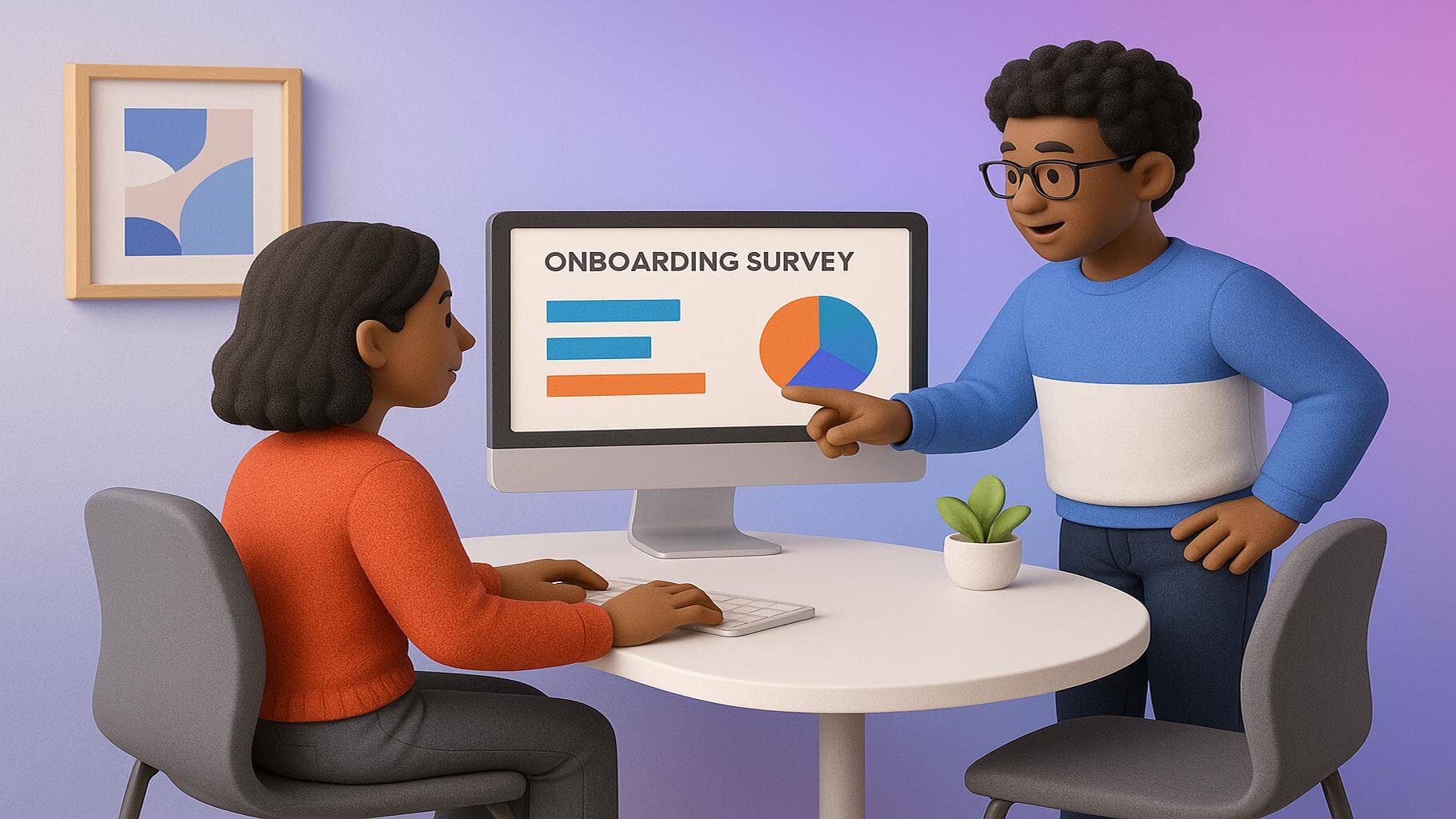
Managers offer valuable perspectives on new-hire readiness that complement employee self-assessments. Employee recognition and rewards programs can acknowledge managers who effectively onboard new team members. Survey questions for managers yield different insights than direct new-employee surveys do. This dual perspective offers a thorough evaluation of induction effectiveness.
New hire preparation and role fit assessment questions
Manager perspectives on new-hire readiness indicate whether the recruitment process selected appropriate candidates. Survey questions should assess whether new employees arrived with the expected skills and capabilities. Role-fit questions assess whether the job description accurately sets appropriate expectations for new hires. These insights improve future hiring decisions and the development of onboarding content.
- Did the new hire arrive with the skills and knowledge described in their job description?
- How well do the new hire's actual capabilities match what was expected for this role?
- Are there gaps between the new hire's skills and the role's requirements?
- Was the new hire adequately prepared by the recruitment process for this position?
Training effectiveness from the manager's perspective questions
Managers observe firsthand whether onboarding training prepares new employees for actual job requirements. Survey questions should assess managers' perceptions of training adequacy and relevance. Questions about training materials help identify disconnects between curriculum and practical needs. Manager feedback often reveals issues that new hires themselves don't recognize.
- Did onboarding training adequately prepare the new hire for their job responsibilities?
- Are there skills or knowledge gaps that training should have addressed but didn't?
- How would you rate the relevance of onboarding materials to actual job requirements?
- What additional training would help this new hire succeed in their role?
Team integration and collaboration readiness questions
Team integration success depends on both new-hire efforts and the team's receptiveness to new members. Survey questions should assess managers' observations of how well new employees are connecting with colleagues. Collaboration readiness questions reveal whether new hires can contribute effectively to team efforts. These insights help identify integration challenges that require intervention.
- How well has the new hire integrated with existing team members and dynamics?
- Does the new hire collaborate effectively with colleagues on shared work?
- Are there any interpersonal challenges affecting the new hire's team integration?
- Is the new hire ready to take on increasing responsibility and autonomy?
Onboarding experience survey measuring emotional and practical elements
Comprehensive onboarding experience surveys capture both functional effectiveness and emotional journey dimensions. Peer-to-peer recognition programs help new hires feel connected during their transition. Good onboarding survey instruments balance practical assessment with employee sentiment measurement. These surveys provide holistic views of how new hires experience their first months.
Overall satisfaction and Net Promoter Score questions
Overall satisfaction questions provide summary measures of new hires' experiences with your onboarding program. Net Promoter Score questions assess whether new employees would recommend your organization to others. These high-level metrics enable benchmarking and tracking improvements over time. First engagement survey results establish baselines for ongoing measurement.
- How satisfied are you overall with your onboarding experience at this organization?
- Based on your onboarding experience, would you recommend this company to a friend?
- On a scale of one to five, how would you rate your overall onboarding experience?
- Did your onboarding experience meet, exceed, or fall short of your expectations?
Emotional journey and sentiment throughout onboarding
New hires' emotional experiences during onboarding significantly influence their engagement and retention. Survey questions should assess how new employees feel at different stages of their transition. Questions about employee sentiment reveal whether onboarding creates positive or negative emotional experiences. Understanding emotional journeys helps design onboarding that builds enthusiasm and commitment.
- Describe how you felt during your first day compared to how you feel now.
- Were there moments during onboarding when you felt particularly anxious or overwhelmed?
- Did you experience moments of excitement or enthusiasm about joining this organization?
- How confident do you feel about your decision to join this company?
Comparative assessment versus expectations and previous employers
Comparison questions reveal how your onboarding stacks up against new hires' prior experiences. Survey questions should assess whether expectations set during the interview process were met. Questions compared to previous employers provide contextual benchmarks for your onboarding program. These comparisons help identify areas where your onboarding excels or falls short.
- How does your onboarding experience compare to your previous employer's approach?
- Did the reality of working here match what you expected from the interview process?
- What aspects of onboarding exceeded your expectations based on prior experiences?
- What elements of onboarding at previous organizations would you like to see here?
Onboarding feedback survey for continuous program improvement

Dedicated onboarding feedback surveys focus on collecting insights to enhance the program. Pulse survey tools can efficiently automate these feedback collection processes. Survey questions should identify specific improvement opportunities and pain points for new hires. This feedback drives continuous refinement, which separates adequate onboarding from exceptional programs.
Specific improvement suggestions and pain point identification
Direct questions about improvement opportunities yield actionable insights for program enhancement. Survey questions should invite specific suggestions rather than general feedback about the onboarding experience. Pain-point identification questions reveal the friction that frustrates new hires during their transition. These focused questions generate concrete recommendations that teams can implement quickly.
- What specific changes would most improve the onboarding experience for future new hires?
- What was the most frustrating or challenging aspect of your onboarding experience?
- If you could change one thing about how we onboard new employees, what would it be?
- What obstacles or barriers made your onboarding more difficult than it needed to be?
Most valuable and least valuable onboarding elements
Understanding what works well helps organizations preserve effective elements during program redesigns. Survey questions should identify which onboarding activities delivered the most value for new employees. Least valuable elements questions reveal activities that could be reduced or eliminated. This analysis helps prioritize investments in onboarding program development.
- Which aspects of the onboarding experience were most valuable for your success?
- What onboarding activities felt like a waste of time or added little value?
- What onboarding elements would you recommend keeping exactly as they are?
- Which onboarding activities would you recommend eliminating or significantly changing?
Missing resources or information that would have helped
Gap analysis questions reveal what new hires wished they had received but didn't during onboarding. Survey questions should explore missing resources, information, or support that would have been helpful. These questions often surface needs that onboarding designers overlooked during program development. Addressing these gaps improves the experience for future new team members.
- What information do you wish you had received earlier during your onboarding?
- Are there resources or tools that would have helped but weren't provided?
- What questions remained unanswered for too long during your transition?
- What support would have made your onboarding experience more successful?
Onboarding satisfaction survey measuring key success metrics
Onboarding satisfaction surveys focus specifically on measuring whether programs achieve their objectives. Employee recognition platforms can integrate with survey tools to celebrate onboarding milestones. Key success metrics include role preparation, resource provision, and overall satisfaction measures. These focused surveys enable precise measurement of onboarding program effectiveness.
Role preparation adequacy rating questions
Role preparation represents a fundamental objective of effective employee onboarding programs. Survey questions should assess whether new hires feel prepared to succeed in their positions. Rating questions enable quantitative measurement and comparison across cohorts and departments. These metrics directly link onboarding activities to new-employee readiness outcomes.
- How prepared do you feel to perform the core responsibilities of your role?
- Did onboarding adequately prepare you for the challenges you've encountered so far?
- Rate your confidence level in your ability to meet performance expectations.
- Do you have the knowledge needed to handle the typical situations in your role?
Tools and resources satisfaction questions
Access to appropriate tools and resources directly impacts new employees' ability to perform their job effectively. Survey questions should assess satisfaction with technology, equipment, and information access. Resource satisfaction questions reveal whether organizations adequately provision new hires for success. These practical measures identify operational gaps that impede productivity.
- How satisfied are you with the technology and equipment provided for your work?
- Do you have adequate access to the information systems you need for your job?
- Are the resources available to you sufficient for meeting your responsibilities?
- Rate your satisfaction with the tools and resources provided during onboarding.
Overall onboarding program satisfaction questions
Overall program satisfaction provides summary measures of how well onboarding meets new hires' expectations. Survey questions should capture holistic assessments that complement specific element ratings. Program satisfaction predicts retention and engagement outcomes for new employees. Tracking these metrics over time reveals whether improvements are achieving their objectives.
- How satisfied are you overall with your onboarding program experience?
- Would you describe the onboarding program as effective, adequate, or ineffective?
- Rate your overall satisfaction with how the organization prepared you for success.
- How well did the onboarding program support your transition into this organization?
15+ complete onboarding survey templates ready to implement

The following templates provide ready-to-use survey questions for every stage of the onboarding journey. Organizations can customize these templates to align with their specific employee onboarding program objectives. eNPS measurement can complement these templates for comprehensive feedback collection. Each template includes recommended timing, question counts, and focus areas.
Pre-boarding survey template with 8 questions
Pre-boarding surveys assess new-hire readiness and preferences before their official start date. These surveys collect logistical information that ensures smooth day-one experiences for new employees. Pre-boarding surveys also build excitement and demonstrate organizational preparation for incoming team members. Send this survey one to two weeks before the new hire's start date.
Technology and equipment readiness assessment
- What technology equipment will you need on day one for your role?
- Do you have any special accommodation needs we should prepare for your workspace?
- What is your preferred method for receiving company communications?
- Have you completed all required pre-employment documentation and forms?
First day logistics and expectations confirmation
- Do you know when and where to report on your first day?
- Are you clear on what to bring and what to wear on your first day?
- Do you have questions about parking, building access, or transportation options?
- Is there anything you'd like us to prepare or have ready for your arrival?
Day one onboarding survey template with 10 questions
Day one surveys capture immediate impressions while experiences remain fresh in new employees' minds. These surveys assess the effectiveness of welcome efforts and identify urgent issues requiring immediate attention. The brief format respects the limited time new hires have on their first day. Send this survey at the end of day one or early on day two.
Welcome experience and first impressions evaluation
- Did you feel accepted and welcomed when you arrived this morning?
- Was your workspace set up and ready with the necessary equipment?
- How would you rate the quality of your welcome and introduction to the team?
- Did your first day meet, exceed, or fall short of your expectations?
Administrative process efficiency assessment
- Were paperwork and administrative processes efficient and well-organized?
- Did you receive clear instructions about the immediate next steps and priorities?
- Do you have the system access and credentials you need to get started?
- Was there adequate time for questions and clarification during your first day?
Immediate needs and concerns identification
- What questions or concerns do you have after your first day?
- Is there anything you need that wasn't provided or addressed today?
Week one onboarding experience survey template with 12 questions
Week one surveys assess initial training effectiveness and early progress in team integration. By this point, new hires have completed the orientation process activities and begun initial work. These surveys identify issues early, while intervention can still significantly impact new hires' experiences. Send this survey at the end of the first week.
Training effectiveness and knowledge transfer evaluation
- Did the first week of training sessions provide useful information for your role?
- Was the pace of training appropriate for absorbing the information presented?
- Are the training materials clear, well-organized, and easy to reference?
- Do you understand your immediate priorities and what's expected this week?
Manager and team support assessment
- Has your manager made adequate time for you during your first week?
- Are team members helpful and supportive as you learn your new role?
- Do you know who to ask when you have questions about your work?
- Have you had opportunities to meet and connect with relevant colleagues?
Cultural integration and values understanding
- Do you understand the company culture and how things work around here?
- Have you observed examples of company values in action during your first week?
- Do you feel like you're starting to fit in with your team?
- Are there any concerns about cultural fit you'd like to share?
30-day onboarding feedback survey template with 15 questions
Thirty-day surveys assess whether initial onboarding translated into effective role preparation. New hires have now performed real work and can evaluate the relevance and adequacy of the training. This milestone survey provides a comprehensive assessment of the early onboarding experience. Send this survey between days 28 and 32 of employment.
Role clarity and responsibility understanding
- Do you have a clear understanding of your primary job responsibilities?
- Does your actual role match what was described during the interview process?
- Do you understand how your performance will be measured and evaluated?
- Are your goals and priorities clearly defined for the coming weeks?
Training adequacy for job requirements
- Did onboarding training adequately prepare you for your daily work?
- Are there skill gaps where additional training would benefit your performance?
- Were the training materials relevant to what you actually do in your role?
- What additional training would help you succeed in your position?
Resource availability and support systems
- Do you have all the tools and resources needed to do your job?
- Do you know where to get help when you encounter problems?
- How responsive are support teams when you have questions or issues?
- Are there resources you need but haven't received yet?
Team collaboration and relationship building
- How would you describe your working relationships with team members?
- Do you have opportunities to collaborate with colleagues on meaningful work?
- Do you feel included in team discussions, decisions, and activities?
60-day onboarding satisfaction survey template with 12 questions
Sixty-day surveys assess deeper integration and emerging engagement patterns among new team members. New hires have now developed routines and formed preliminary opinions about staying long-term. This survey identifies midterm issues and predicts retention risk with more accuracy. Send this survey between days 58 and 62 of employment.
Performance expectations and goal clarity
- Are you clear on what success looks like in your role?
- Have you received feedback on your performance from your manager?
- Do you understand how your work contributes to team and organizational goals?
- Do you feel you're making meaningful progress in your role?
Career development opportunity awareness
- Are you aware of career development opportunities available to you?
- Has your manager discussed your professional growth and development aspirations?
- Do you see a future for yourself at this organization?
- Are there skills you want to develop that aren't being addressed?
Engagement level and organizational commitment
- How engaged do you feel in your work and with this organization?
- Would you recommend this organization as a great place to work?
- Do you feel proud to tell others you work for this company?
- Are you considering staying with this organization for the long term?
90-day comprehensive onboarding survey template with 15 questions
Ninety-day surveys provide a comprehensive evaluation of the complete employee onboarding program experience. This final onboarding survey captures overall effectiveness and generates improvement recommendations. The longer format allows a thorough assessment now that new hires have a complete perspective. Send this survey between days 88 and 92 of employment.
Overall onboarding program effectiveness
- How would you rate the overall effectiveness of your onboarding experience?
- Did onboarding adequately prepare you for success in your role?
- What aspects of the onboarding were most valuable for your transition?
- What aspects of onboarding were least valuable or should be improved?
Long-term retention likelihood assessment
- How likely are you to remain with this organization for the next year?
- What factors most influence your decision about staying or leaving?
- Do you feel valued and appreciated for your contributions here?
- Is there anything that would make you more committed to staying long-term?
Comprehensive improvement recommendations
- What specific changes would you recommend for improving onboarding?
- What information do you wish you had received earlier in the process?
- If you were designing onboarding, what would you do differently?
- What advice would you give to a new hire starting tomorrow?
Final reflections
- How does your experience compare to your expectations of joining this organization?
- What surprised you most about working here, positively or negatively?
- Do you feel you made the right decision joining this organization?
Manager onboarding survey template with 10 questions
Manager surveys capture supervisor perspectives on new hire readiness and onboarding effectiveness. These insights complement direct employee feedback with observer assessments. Manager perspectives often reveal issues that new hires don't recognize or won't share. Send this survey to managers at 30, 60, and 90-day milestones.
New hire readiness and role fit evaluation
- Did the new hire arrive with the skills and preparation you expected?
- How well does the new hire fit with the team culture and dynamics?
- Are there gaps between the new hire's capabilities and role requirements?
- Did the recruitment process adequately prepare the new hire?
Onboarding process support adequacy
- Did the onboarding process provide adequate support for you as a manager?
- Were you given the resources and guidance needed to onboard this employee?
- What would have helped you better support this new hire's transition?
- Did the onboarding timeline allow adequate time for training and integration?
Training effectiveness from the manager's perspective
- Did onboarding training adequately prepare the new hire for their responsibilities?
- Are there training gaps that should be addressed for future new hires?
Remote onboarding survey template with 12 questions
Remote onboarding presents unique challenges that warrant dedicated survey questions for remote team members. Technology, virtual connections, and concerns about isolation require specific assessment approaches. Remote new hires often face different barriers than those onboarding in person. Send this survey at week 1 and at the 30-day milestones.
Technology setup and connectivity assessment
- Was your technology equipment delivered and set up properly before you started?
- Do you have reliable connectivity and the tools you need to work effectively from home?
- Were virtual meeting tools and collaboration platforms easy to access and use?
- Have you experienced technical issues that impacted your onboarding experience?
Virtual training effectiveness evaluation
- Was virtual training engaging and effective for learning your role?
- Did virtual sessions allow adequate opportunity for questions and interaction?
- Are recorded training materials available for review when you need them?
- What would make virtual onboarding training more effective?
Remote culture integration and connection
- Do you feel connected to your team despite working remotely?
- Have you had opportunities for informal conversations with colleagues?
- Does virtual communication feel adequate for building relationships?
- Do you feel isolated or disconnected from the organization?
Department-specific onboarding survey templates
Different departments have unique onboarding requirements that warrant specialized survey questions. The following templates address common department-specific assessment needs. Customize these templates based on your organization's specific role requirements. Use department surveys in addition to general onboarding surveys.
Sales onboarding survey with product knowledge assessment
- Do you understand the products or services you'll be selling thoroughly?
- Are you familiar with competitive positioning and common customer objections?
- Do you feel prepared to have effective conversations with potential customers?
- What additional product or market knowledge would help you sell effectively?
Engineering onboarding survey with technical setup evaluation
- Is your development environment properly configured and working correctly?
- Do you have access to all code repositories and technical documentation needed?
- Do you understand the technical architecture and development processes here?
- What technical resources or access would improve your productivity?
Customer service onboarding survey with systems training review
- Are you proficient with the customer service systems and tools you'll use?
- Do you understand processes for handling different types of customer issues?
- Do you feel prepared to handle typical customer inquiries independently?
- What additional systems training would help you better serve customers?
How Matter can help with onboarding surveys
Matter provides a comprehensive solution for implementing and automating your employee onboarding surveys. The platform integrates seamlessly with Slack and Microsoft Teams, where your new hires already work. This integration increases survey participation by meeting new employees in familiar communication tools. Employee rewards can incentivize survey completion to further boost response rates.
Matter's automated onboarding survey workflows at key milestones
Matter automates onboarding survey delivery based on each new hire's start date. Day 7, Day 30, Day 60, and Day 90 survey templates are sent without manual HR intervention. This automation ensures every new employee receives consistent feedback opportunities at appropriate intervals. Automated workflows eliminate the risk of forgotten surveys and inconsistent new-hire experiences.
The platform includes science-backed survey templates that organizations can use immediately or customize. Templates cover all critical onboarding touchpoints from pre-boarding through a comprehensive 90-day evaluation. Customization options allow alignment with your specific employee onboarding program objectives. Matter's template library represents best practices refined through extensive research and implementation.
Recognition integration, celebrating survey completion, and onboarding achievements
Matter uniquely combines survey tools with recognition capabilities to celebrate onboarding milestones for new hires. Organizations can reward new employees with Matter coins for completing surveys and achieving milestones. This recognition integration reinforces survey participation and demonstrates appreciation for valuable feedback. Coins can be redeemed for gift cards, charitable donations, or company swag.
The integration of surveys and recognition creates a holistic new-hire experience platform. New employees feel valued when their feedback participation is acknowledged and rewarded. Celebrating survey completion and onboarding achievements contributes to engagement from the earliest days. This approach helps employees feel valued throughout their transition into the organization.
Real-time analytics dashboards identify at-risk new hires immediately
Matter's analytics provide real-time visibility into how new employees are experiencing your onboarding program. Dashboards track response rates, sentiment trends, question-level scores, and open text feedback. Leaders can identify at-risk new hires immediately rather than waiting for turnover to reveal problems. This visibility enables proactive intervention that prevents early departures.
Analytics help organizations track trends in onboarding effectiveness over time and across cohorts. Comparison features reveal which departments, managers, or locations deliver the best new hire experiences. Data-driven insights inform continuous improvement of your employee onboarding program. Real-time feedback transforms onboarding from guesswork into evidence-based program optimization.
Frequently asked questions about onboarding surveys

Q: What is an onboarding survey?
A: An onboarding survey is a feedback tool that measures new hire experiences during their transition into an organization. These surveys collect feedback about training effectiveness, manager support, cultural integration, and resource availability at key intervals. Organizations use onboarding surveys to identify gaps, improve programs, and predict retention risks for new employees.
Q: What questions should be in an onboarding survey?
A: Essential survey questions include training effectiveness ratings, manager support assessment, cultural fit evaluation, and resource availability confirmation. Questions should also assess role clarity measurement and overall satisfaction scores. Include questions like "Did onboarding adequately prepare you for your role?" and "How would you rate your manager's support during onboarding?"
Q: When should you send an onboarding survey?
A: Send surveys at multiple critical intervals, including pre-boarding, day one, end of week one, 30 days, 60 days, and 90 days. Multiple touchpoints provide longitudinal data showing how new hires' experiences evolve. Avoid survey fatigue by keeping early surveys brief and saving comprehensive surveys for 30, 60, and 90-day milestones.
Q: What is a 30-day onboarding survey?
A: A 30-day onboarding survey evaluates new hire experiences after their first month of employment. These surveys measure role preparation adequacy, training effectiveness, manager support quality, and cultural fit. The 30-day mark is critical because new hires have formed preliminary opinions about staying long-term by then.
Q: Should onboarding surveys be anonymous?
A: The decision depends on organizational culture and survey purpose. Anonymous surveys encourage honest feedback about sensitive topics without fear of repercussions. Identified surveys enable personalized follow-up and allow tracking individual onboarding journeys over time. Consider hybrid approaches using anonymous questions for sensitive topics and identified questions for operational issues.
Q: How do you analyze onboarding survey results?
A: Start by calculating response rates and overall satisfaction scores. Segment data by department, manager, location, and role to identify patterns. Track trends over time, comparing cohorts to measure improvement. Analyze open-ended survey responses for themes and correlate onboarding scores with retention outcomes for predictive insights.
Final thoughts on onboarding surveys
Onboarding surveys transform new hire programs from static processes into continuously improving experiences informed by systematic feedback. Organizations that prioritize gathering valuable insights from new employees gain a competitive advantage in talent acquisition and retention. Employee rewards programs can recognize managers who receive excellent onboarding scores and celebrate new hires who complete milestone surveys. Teams that implement survey-driven improvements deserve acknowledgment for their commitment to employee experience.
Matter provides a complete solution with automated onboarding survey scheduling at Day 7, Day 30, Day 60, and Day 90 intervals. Comprehensive survey templates cover every onboarding stage, while recognition integration celebrates milestones and survey participation. Real-time analytics identify at-risk new hires immediately, enabling proactive intervention before disengagement leads to turnover. Seamless feedback collection through Slack and Teams transforms onboarding from guesswork into data-driven excellence that builds trust, accelerates productivity, reduces early turnover, and creates lasting employee engagement from the first interaction. Organizations can also explore employee rewards ideas to celebrate onboarding milestones.
Ready to implement comprehensive onboarding surveys that drive continuous improvement? Schedule a demo with a Matter expert today and discover how our platform can help you measure onboarding effectiveness, identify risks early, and create a culture of continuous improvement.