

Short answer: an employee engagement survey is a structured questionnaire that measures how emotionally committed employees are to their organization, not just how satisfied they are. It typically covers manager relationships, clarity of expectations, growth opportunities and alignment with company goals, and it is run on a set cadence so results can be compared over time. Most teams pair an annual or biannual full survey with shorter pulse surveys in between. Last verified September 2026.
Measuring employee engagement can feel overwhelming when organizations struggle to select the right survey questions and methodology. At Matter, we understand how challenging it can be when companies launch employee engagement surveys but fail to derive actionable insights. Understanding what an employee engagement survey is transforms feedback collection from generic to strategic. The right approach to employee engagement survey questions helps organizations identify opportunities for improvement while building trust with their workforce.
Staff engagement surveys and associate engagement surveys matter because they reveal how employees feel about their workplace environment and leadership. Knowing which employee engagement survey tools and employee engagement survey software fit your needs helps establish reliable feedback programs. The best employee engagement survey software enables organizations to gather valuable insights that drive meaningful organizational change. This guide provides everything you need to implement effective employee engagement surveys that boost employee engagement and support organizational success.
What is an employee engagement survey?
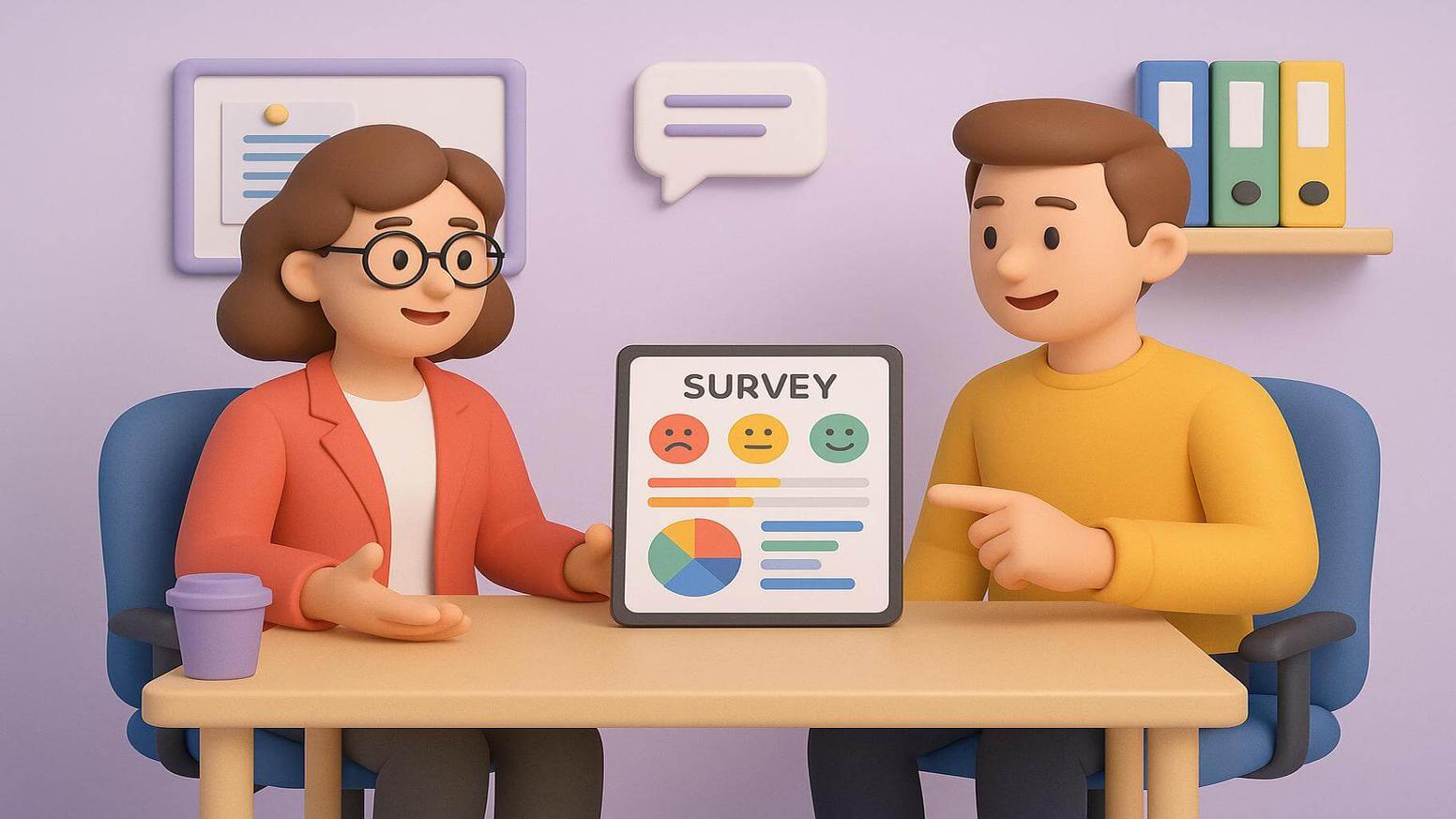
Employee engagement surveys serve as structured feedback tools that measure the emotional commitment employees have toward their organization. These surveys go beyond measuring employee satisfaction to capture how invested workers feel in their company's success. Effective employee engagement surveys reveal whether employees feel motivated to go above and beyond their basic job requirements. Understanding employee sentiment through comprehensive surveys helps organizations identify both strengths and areas needing improvement.
Defining engagement surveys and their strategic purpose
An engagement survey captures employee perceptions about their workplace experience, leadership effectiveness, and growth opportunities. Unlike basic satisfaction surveys, engagement surveys assess whether employees perceive a sense of alignment with the company's mission and core values. These tools help organizations understand how employees perceive their role in contributing to business outcomes. Strategic surveys provide critical insights that inform leadership decisions and drive meaningful organizational change.
Key characteristics of effective employee engagement surveys include:
- Focus on emotional commitment rather than surface-level happiness
- Questions that measure connection to company goals and values
- Assessment of relationships with managers and fellow employees
- Evaluation of career development and learning and development opportunities
- Measurement of work-life balance and employee well-being
Core components that differentiate engagement from satisfaction surveys
Employee satisfaction surveys assess whether workers are satisfied with their jobs, while engagement surveys delve deeper into motivation. Satisfied employees may enjoy their work but still lack the drive to contribute discretionary effort for the company's success. Engaged employees demonstrate higher productivity, stronger customer loyalty behaviors, and reduced turnover intentions. The distinction matters because measuring employee engagement provides insights that directly connect to key business outcomes.
Engagement surveys typically include these differentiating elements:
- Questions about pride in working for the organization
- Assessment of willingness to recommend the company
- Measurement of the effort employees invest beyond requirements
- Evaluation of alignment with organizational values
- Analysis of trust in senior leadership and management support
How engagement surveys connect to business outcomes and performance
Research consistently shows that highly engaged employees deliver measurable improvements across multiple business metrics. Organizations with engaged employees experience lower turnover, higher productivity, and stronger customer satisfaction scores. Engagement survey data helps leaders understand which factors most influence employee performance and retention. Collecting data through regular surveys enables tracking progress and demonstrating return on investment to stakeholders.
The connection between engagement and performance includes:
- Highly engaged employees show reduced absenteeism
- Higher engagement scores correlate with improved profitability
- Engaged workers deliver better customer experiences
- Strong engagement reduces safety incidents
- Engaged employees demonstrate more innovation
What are the benefits of employee engagement surveys?
Implementing employee engagement surveys provides organizations with powerful tools to understand and improve workplace culture. These surveys offer data-driven approaches to measuring employee engagement and identifying areas requiring attention. Regular feedback collection helps leaders make informed decisions that positively impact employee experience. Organizations that prioritize engagement surveys demonstrate commitment to employee happiness and professional growth.
Data-driven insights that identify cultural strengths and gaps
Employee engagement surveys provide quantifiable data that reveals patterns in employee perceptions across departments and demographics. Leaders gain visibility into which aspects of workplace culture resonate positively with staff. Survey results highlight specific areas where the organization excels at supporting employee well-being. Identifying gaps through honest feedback enables targeted interventions that address real concerns.
Benefits of data-driven survey insights include:
- Objective measurement of employee sentiment across the organization
- Comparison of engagement scores between teams and locations
- Identification of trends over time through repeated measurement
- Evidence-based prioritization of improvement initiatives
- Benchmarking against industry standards
Early warning system for retention risks and burnout
Regular employee pulse surveys catch declining engagement before talented workers decide to leave. Monitoring survey results helps identify disengaged employees who may be experiencing burnout or dissatisfaction. Early detection allows managers to intervene with support, resources, or changes that improve conditions. Preventing turnover through proactive engagement saves significant recruitment and training costs.
Warning signs surveys can detect include:
- Declining scores around management support and feedback
- Reduced enthusiasm about career growth opportunities
- Lower ratings for work-life balance questions
- Decreased pride in working for the organization
- Drops in scores about physical health and wellness support
Framework for accountability and continuous improvement
Employee engagement surveys create measurable baselines against which organizations can track progress on improvement initiatives. Survey results hold leaders accountable for creating positive workplace environments. Regular measurement encourages ongoing attention to employee perceptions rather than one-time fixes. The survey process itself signals that leadership values and acts upon employee feedback.
Accountability benefits include:
- Clear metrics for evaluating leadership effectiveness
- Transparent tracking of improvement over time
- Motivation for managers to address team concerns
- Evidence for recognizing leaders who excel at engagement
- Foundation for continuous improvement cycles
Why employee engagement surveys are important for organizational success

Organizations that invest in understanding employee engagement consistently outperform competitors on critical business metrics. Engagement surveys provide the foundation for strategies that improve productivity, retention, and overall organizational success. Measuring employee engagement aligns individual contributions with company goals. The insights gained enable leaders to create environments where employees feel valued and motivated.
Connection between engagement data and productivity metrics
Employee survey data reveals correlations between engagement levels and measurable productivity outcomes across teams. Highly engaged employees consistently deliver higher quality work and complete tasks more efficiently. Understanding which engagement drivers most impact productivity helps leaders allocate resources effectively. Survey insights enable targeted improvements that directly boost employee engagement and performance.
Productivity connections include:
- Engaged employees demonstrate stronger focus and concentration
- Higher engagement correlates with better employee recognition participation
- Motivated workers proactively identify process improvements
- Strong engagement reduces errors and rework requirements
- Employees motivated by purpose achieve more ambitious goals
How surveys build psychological safety and trust
Conducting employee engagement surveys signals that leadership genuinely cares about employee perceptions and experiences. When organizations act on survey results, employees develop greater trust in management intentions. The feedback loop created by surveys encourages more honest feedback in future administrations. Psychological safety increases when employees see their concerns acknowledged and addressed.
Trust-building elements include:
- Confidential survey administration protects employee anonymity
- Transparent communication about survey results builds credibility
- Action planning demonstrates responsiveness to concerns
- Regular surveys show an ongoing commitment to improvement
- Senior leaders championing surveys signal a cultural priority
Impact on employer brand and talent attraction
Organizations known for strong employee engagement attract higher-quality candidates in competitive talent markets. Positive engagement survey results contribute to a favorable employer reputation on review sites. Current employees who feel valued become ambassadors who recommend their workplace to others. Strong engagement scores support retention efforts and reduce costly turnover.
Employer brand benefits include:
- Better candidate quality in recruitment efforts
- Reduced time-to-fill for open positions
- Higher acceptance rates on job offers
- Stronger employee referral programs
- Improved ratings on employer review platforms
30+ employee engagement survey questions examples by category
Selecting the right employee engagement survey questions determines whether your survey yields actionable insights or generic responses. Well-crafted survey questions measure specific engagement drivers that research links to business outcomes. Employing a combination of inquiry types offers a thorough insight into employee experience across various dimensions. These proven employee survey questions help organizations gather meaningful data for improvement.
30+ engagement survey questions examples:
- I have the tools and resources to do my work effectively
- I clearly understand what is expected of me in my role
- My workspace allows me to be productive
- I receive sufficient training to execute my responsibilities effectively
- My workload is manageable and reasonable
- I have access to the information I need to succeed
- Technology and systems support my day-to-day work
- My role makes good use of my skills and abilities
- I understand how my work contributes to company goals
- I have the autonomy to make decisions in my role
- I feel valued and respected by my colleagues
- My supervisor offers consistent feedback regarding my performance.
- I trust my team members to deliver quality work
- My opinions and ideas are heard and considered
- I feel comfortable sharing concerns with my manager
- Collaboration between teams is effective
- Leadership demonstrates care for employee well-being
- Recognition happens regularly on my team
- Diverse perspectives are welcomed and valued
- Conflicts are resolved fairly and professionally
- I see opportunities for career advancement here
- This organization invests in employee development
- I receive coaching that helps me improve
- My career goals are supported by management
- Learning and skill-building are encouraged
- I feel challenged positively by my work
- Performance expectations are fair and achievable
- I can see a future for myself at this company
- Promotions are based on merit and performance
- I have discussed my career path with my manager
10 employee engagement survey questions for workplace basics
These foundational questions assess whether employees have the essential resources and clarity needed to perform effectively. Addressing basic workplace needs lays the foundation for higher engagement. When employees lack proper tools or clear expectations, engagement suffers regardless of other positive factors. Measuring these fundamentals helps identify barriers that prevent employees from doing their best work.
Survey questions for workplace basics include:
- Assessment of resource availability and proper tools for job completion
- Clarity of role expectations and daily responsibilities
- Evaluation of physical workspace productivity and comfort
- Training sufficiency for current job performance requirements
- Workload reasonableness and manageability expectations
- Information access for effective decision making
- Technology system support for day-to-day work activities
- Skills utilization alignment with role requirements
- Understanding of individual contribution to company goals
- Decision-making autonomy within role boundaries
10 staff engagement survey questions for relationships and culture
Relationship quality significantly influences how employees feel about their overall work experience. These staff engagement survey questions measure trust, communication, and collaboration across teams. Strong relationships with managers and fellow employees predict higher engagement and retention. Culture questions reveal whether organizational values translate into daily workplace behaviors.
Relationship and culture questions assess:
- Peer respect and collegial appreciation levels
- Manager feedback frequency and quality perceptions
- Trust levels within and across team boundaries
- Voice and psychological safety in sharing ideas
- Comfort in raising concerns with leadership
- Cross-team collaboration effectiveness ratings
- Leadership care demonstration for employee well-being
- Regular recognition practices on teams
- Diverse perspective, welcoming, and valuing
- Conflict resolution, fairness, and professionalism
10 associate engagement survey questions for growth and future
Career development concerns rank among the top reasons employees leave organizations for other opportunities. These associate engagement survey questions measure whether employees see viable career growth paths. Assessing development opportunities reveals gaps in learning and development. Future-focused questions capture optimism about long-term career development within the organization.
Growth and future questions explore:
- Advancement opportunity perceptions within the organization
- Investment in employee development programs and resources
- Coaching and mentoring availability for improvement
- Goal alignment and management support perceptions
- Learning and skill-building encouragement culture
- Positive challenge levels in current work assignments
- Performance expectation, fairness, and achievability
- Long-term future vision within the company
- Merit-based promotion system perceptions
- Career path discussion frequency with managers
Engagement survey questions for measuring organizational alignment

Alignment questions assess whether employees feel connected to organizational purpose, values, and strategic direction. Strong alignment between individual work and company mission creates the foundation for discretionary effort. Employees who understand and believe in the company's direction demonstrate higher engagement levels. These questions reveal gaps between stated values and lived workplace culture.
Mission and purpose connection questions
Purpose-driven work environments generate higher engagement scores because employees find meaning in their contributions. Survey queries should assess the extent to which employees comprehend the company's mission and their individual contribution to its attainment. Assessing purpose connection reveals whether strategic communication reaches and resonates with frontline workers. Leaders need insights into whether employees feel proud to work for the organization.
Mission alignment questions address:
- Understanding of organizational purpose
- Connection between individual role and mission
- Belief in company direction and strategy
- Pride in organizational accomplishments
- Meaning derived from daily work
Values alignment and integrity questions
Employees engage more fully when they observe leadership behaviors that align with the organization's stated values. Survey questions should assess whether the company values guide actual decision-making and conduct. Values alignment questions reveal gaps between organizational rhetoric and workplace reality. Measuring integrity perceptions helps identify trust issues that undermine engagement.
Values assessment includes:
- Observation of values in leadership actions
- Consistency between policies and practices
- Ethical conduct expectations and enforcement
- Fairness perceptions in treatment
- Authenticity of organizational culture
Strategic communication and transparency questions
Employees who understand organizational strategy feel more confident about their future with the company. Transparency about challenges and changes builds trust and reduces uncertainty that damages engagement. Senior leadership communication effectiveness significantly impacts how employees perceive organizational direction. Survey questions should measure whether employees receive adequate information about matters affecting them.
Communication questions examine:
- Clarity of strategic direction communication
- Access to information about organizational changes
- Trust in senior leaders as information sources
- Timeliness of relevant communications
- Opportunity for upward feedback
Employee engagement survey tools for different organization sizes
Selecting the right employee engagement survey tools requires matching platform capabilities to organizational needs and resources. Different organization sizes have varying requirements for complexity, scalability, and support. Understanding the landscape of employee engagement survey vendor options helps organizations make informed decisions. The proper tools enable efficient survey administration while maximizing participation rates. Incentives move the number: across 84,000+ pulse surveys in The Recognition Habit, Matter's 2026 Benchmark Report, coin rewards roughly double completion (39.6% against 19.6%, survey-weighted), and 98% of teams attach coin rewards on custom surveys.
Enterprise platforms with advanced analytics and benchmarking
1. Matter
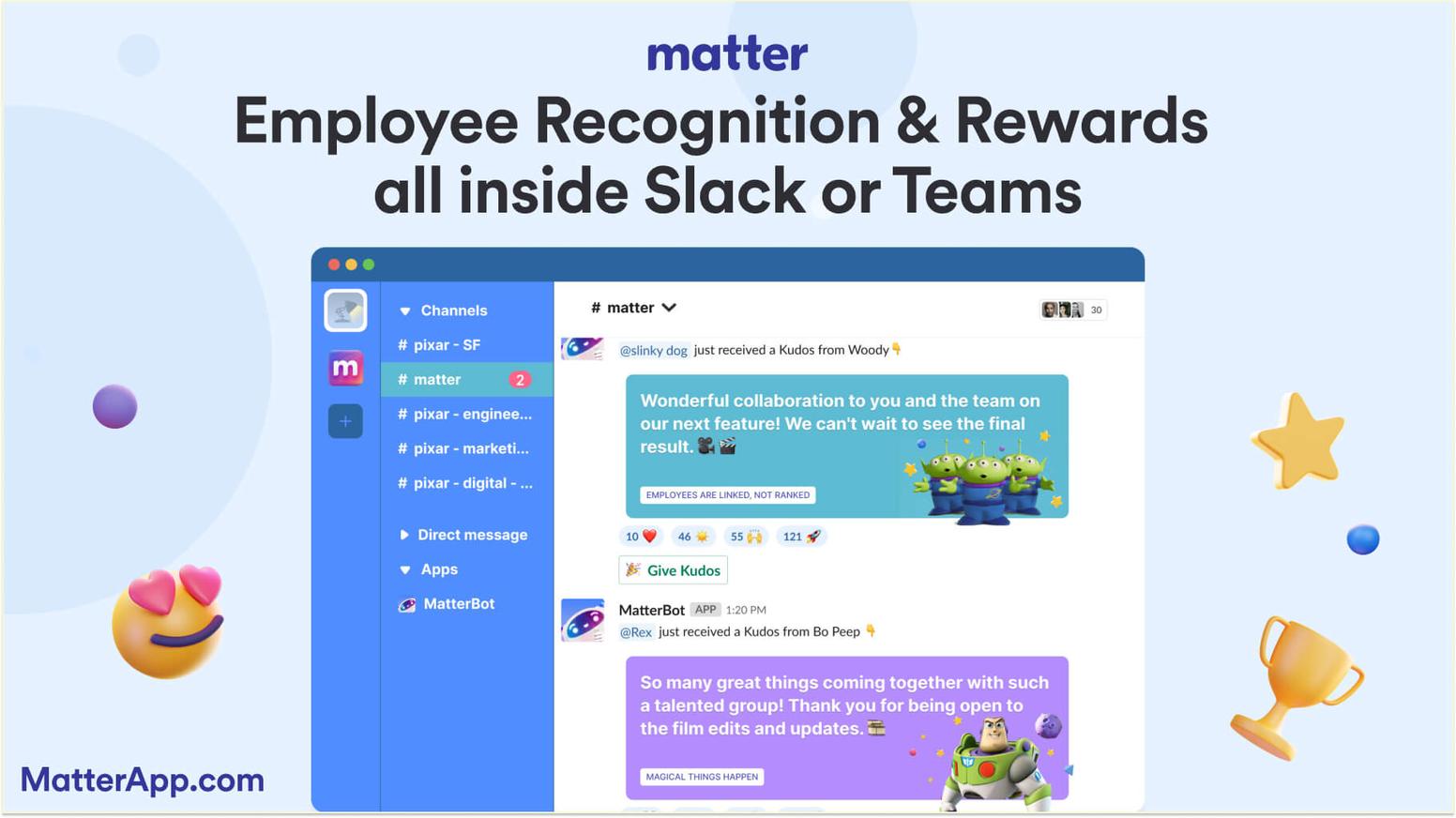
About Matter: Matter is a forward-thinking Slack-first and Teams-first recognition platform designed to simplify and amplify peer-to-peer recognition. Its customizable kudos cards enable employees to celebrate achievements, express gratitude, and align recognition with company values. These cards can be tailored for specific milestones, company initiatives, or personal moments, creating a meaningful way to connect. Matter's Feedback Friday automation ensures regular recognition, keeping the process consistent without extra effort. Its intuitive design allows leaders to set up and integrate the platform in minutes, making it a seamless addition to any workplace.
Matter goes beyond simple recognition with its comprehensive survey capabilities, including a research-validated 5-point eNPS system that simplifies survey completion and increases response rates. The platform automates pulse survey deployment with customizable frequencies, enabling organizations to maintain consistent measurement without manual effort. Real-time analytics dashboards provide immediate visibility into engagement trends across teams and demographics. With its robust integration into Slack and Microsoft Teams, Matter transforms engagement measurement from an annual event into a continuous feedback system that builds trust, improves retention, and drives measurable business results.
Matter main features:
- Research-validated 5-point eNPS surveys with higher completion rates
- Automated pulse survey scheduling with customizable frequencies
- Real-time analytics dashboards tracking engagement trends
- Seamless integration with Slack and Microsoft Teams
Matter pricing:
- Free Forever: $0/user/month
- Basic: $1/user/month, billed annually
- Pro: $3/user/month, billed annually
- Pro + Surveys: $5/user/month, billed annually
To learn more, view Matter's pricing page.
Matter G2 score: Matter has a G2 score of 4.7/5 based on user reviews.
What Matter customers are saying: “Matter has completely changed how we celebrate each other’s work. It is no longer a quick email that gets buried or a comment that only a few people hear. Now recognition is out in the open, shared instantly, and seen by the whole team. People feel appreciated in real time, and that energy is contagious.” - Clark Atkinson, People Strategy, Infrastructure & Total Rewards Lead (Customer Story).
2. Culture Amp
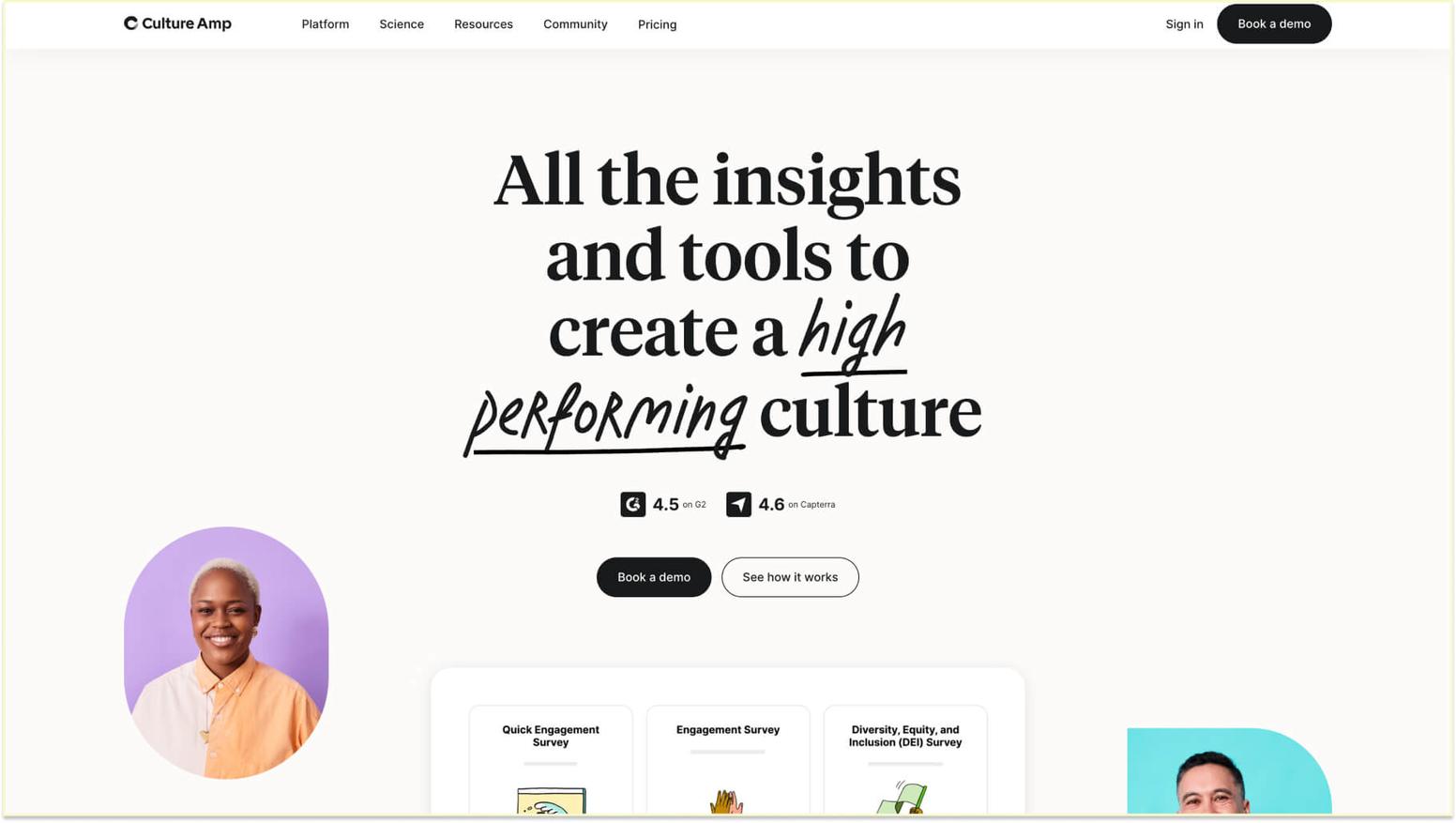
About Culture Amp: Culture Amp is a comprehensive employee engagement survey platform that combines feedback collection with performance management capabilities. The platform offers scientifically validated survey templates and advanced analytics that help organizations understand employee sentiment. Culture Amp provides benchmarking against industry standards and extensive reporting features for measuring employee engagement across large, complex organizations.
Culture Amp main features:
- Scientifically validated survey question libraries
- Advanced analytics with external benchmarking capabilities
- Performance management integration
- Multi-language survey support for global teams
Culture Amp pricing:
- Engage: contact the sales team for exclusive features
- Perform: contact the sales team for exclusive features
- Develop: contact the sales team for exclusive features
- People Analysis: contact the sales team for exclusive features
To learn more, view Culture Amp’s pricing page.
Culture Amp G2 score: Culture Amp has a G2 score of 4.5/5 based on user reviews.
What Culture Amp customers are saying on G2: “I’ve been using this software for a while now, and one of its standout features is how well-organized the system is. Everything is laid out in a clear and intuitive way, making it easy to navigate. Additionally, the punctuality of the communications is exceptional – notifications and updates are always timely, ensuring that I stay on top of tasks and deadlines. It’s a reliable tool for those who value efficiency and clear communication. Highly recommended!” - Anna L., SEO Consultant (G2 Review for Culture Amp).
3. Qualtrics EmployeeXM
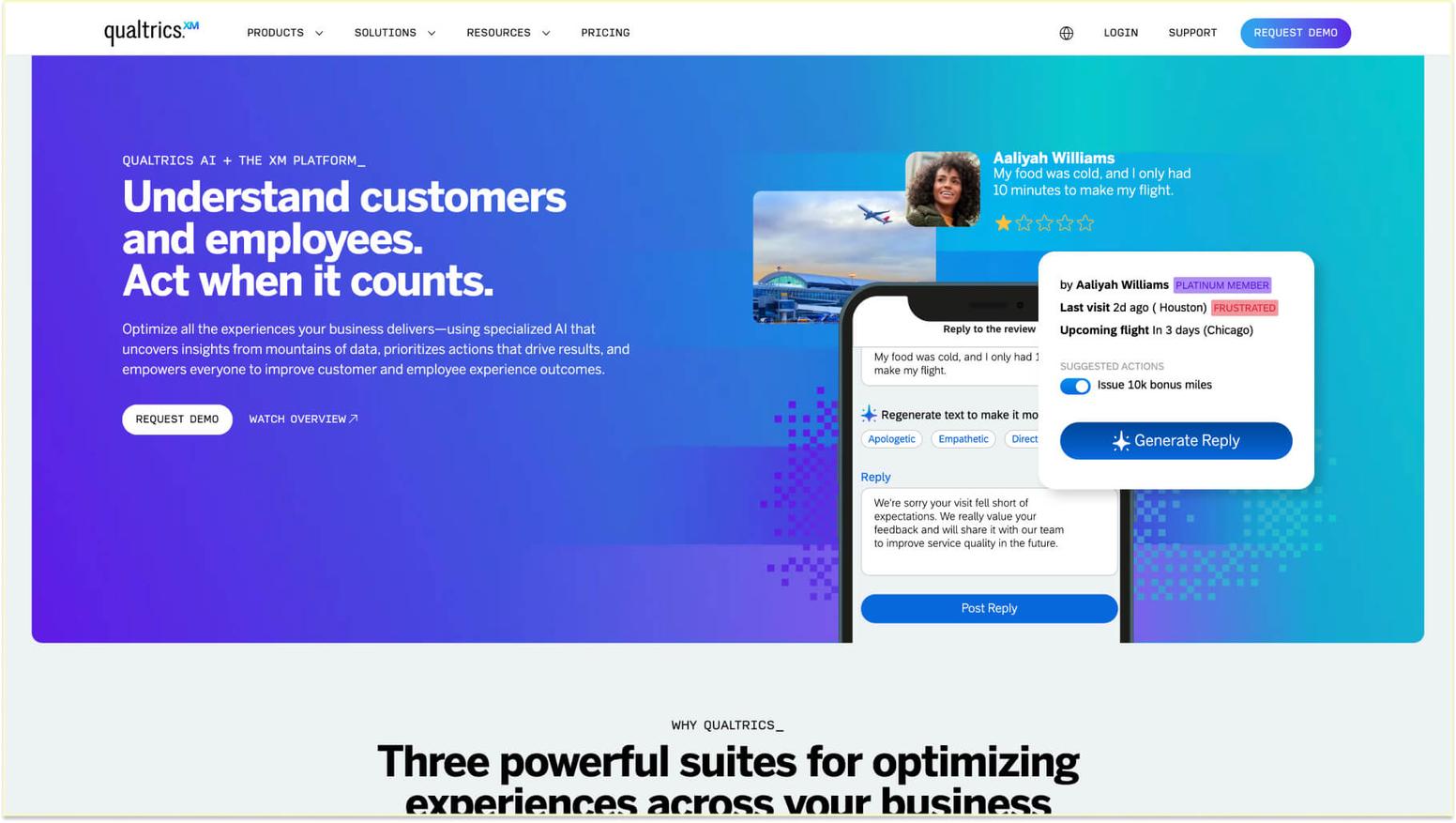
About Qualtrics EmployeeXM: Qualtrics EmployeeXM offers enterprise-grade employee engagement survey software with sophisticated research capabilities. The platform provides comprehensive survey design tools, advanced statistical analysis, and predictive analytics that identify retention risks. Qualtrics serves large organizations that require robust survey methodology and extensive customization options to measure employee engagement across global operations.
Qualtrics EmployeeXM main features:
- Enterprise-grade survey design and deployment capabilities
- Predictive analytics identifying retention and engagement risks
- Advanced statistical analysis and reporting dashboards
- Integration with major HRIS and communication platforms
Qualtrics EmployeeXM pricing: Pricing is not listed on the website. To learn more about pricing, you'll need to schedule a demo/sales call with Qualtrics EmployeeXM.
Qualtrics EmployeeXM G2 score: Qualtrics EmployeeXM has a G2 score of 4.4/5 based on user reviews.
What Qualtrics EmployeeXM customers are saying on G2: “Preston Donohoo, with Red Pepper, has been fantastic to partner with. He is thorough, excellent at training and his customer support is outstanding. He made our implementation go very smoothly. We have found the Qualtrics engagement survey and 360s tools easy to use, with the ability to dive deep into our results. We would definitely recommend Qualtrics to others.” - Kelli G., Global Talent Manager (G2 Review for Qualtrics EmployeeXM).
Mid-market solutions balancing features and affordability
1. 15Five
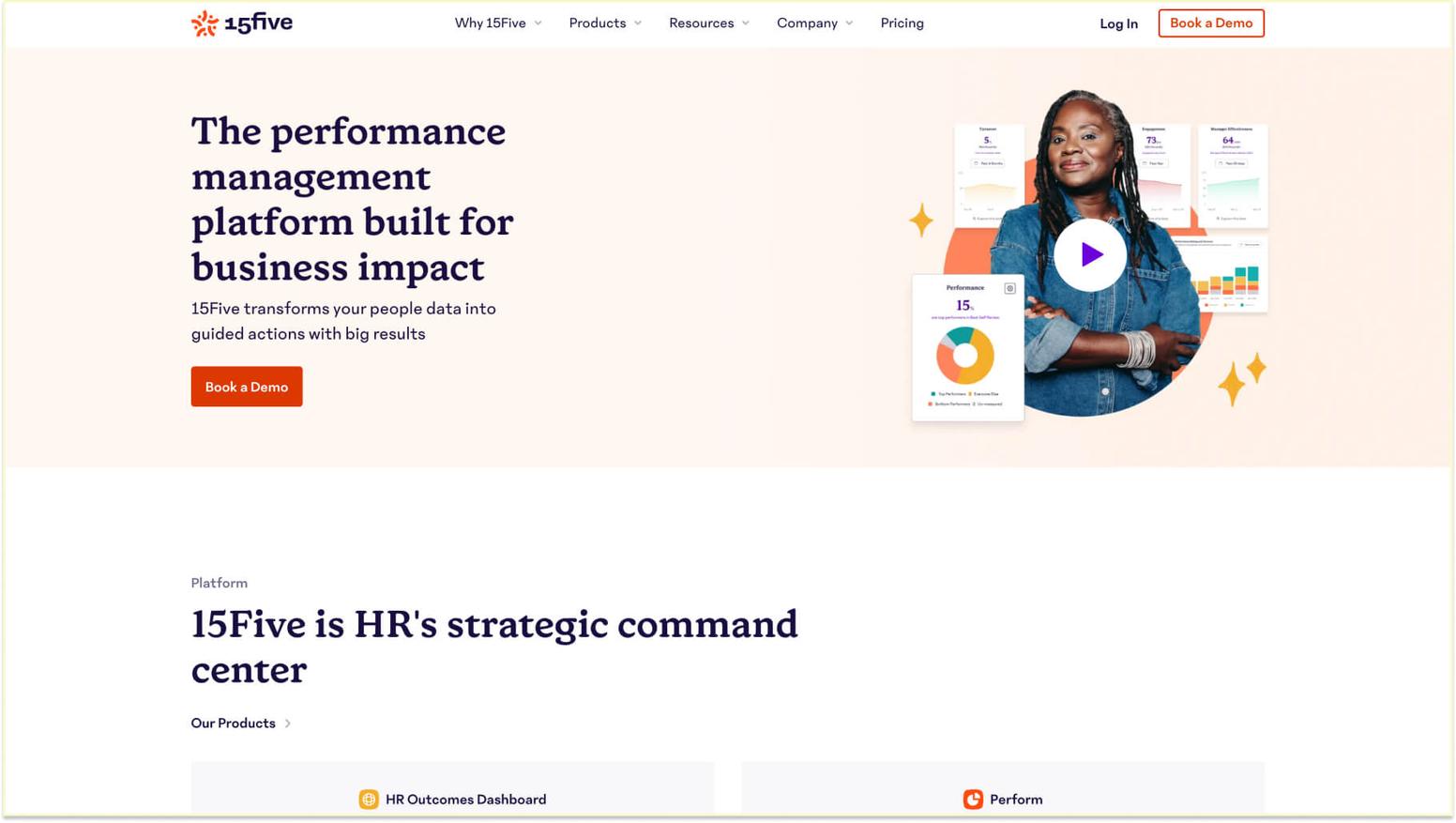
About 15Five: 15Five combines employee engagement surveys with continuous performance management in a platform designed for mid-sized organizations. The software offers pulse surveys, eNPS tracking, and OKR management that help leaders boost employee engagement. 15Five emphasizes manager effectiveness through regular check-ins and feedback tools that improve communication and strengthen workplace culture.
15Five main features:
- Weekly pulse surveys and eNPS tracking capabilities
- Continuous performance management and OKR tracking
- Manager effectiveness tools and coaching resources
- Integration with popular HR and communication platforms
15Five pricing:
- Engage: $4/user/month, billed annually
- Perform: $11/user/month, billed annually
- Total Platform: $16/user/month, billed annually
To learn more, view 15Five's pricing page.
15Five G2 score: 15Five has a G2 score of 4.6/5 based on user reviews.
What 15Five customers are saying on G2: “We have built a company wide OKR tied to our company wide average Pulse score. It is an easy check of how the company is "feeling" from week to week, and over the last 2 years, I have found it to be accurate, important and super easy for the team to adopt and stay consistent in use.”- Dan A., Small-Business (G2 Review for 15Five).
2. Leapsome
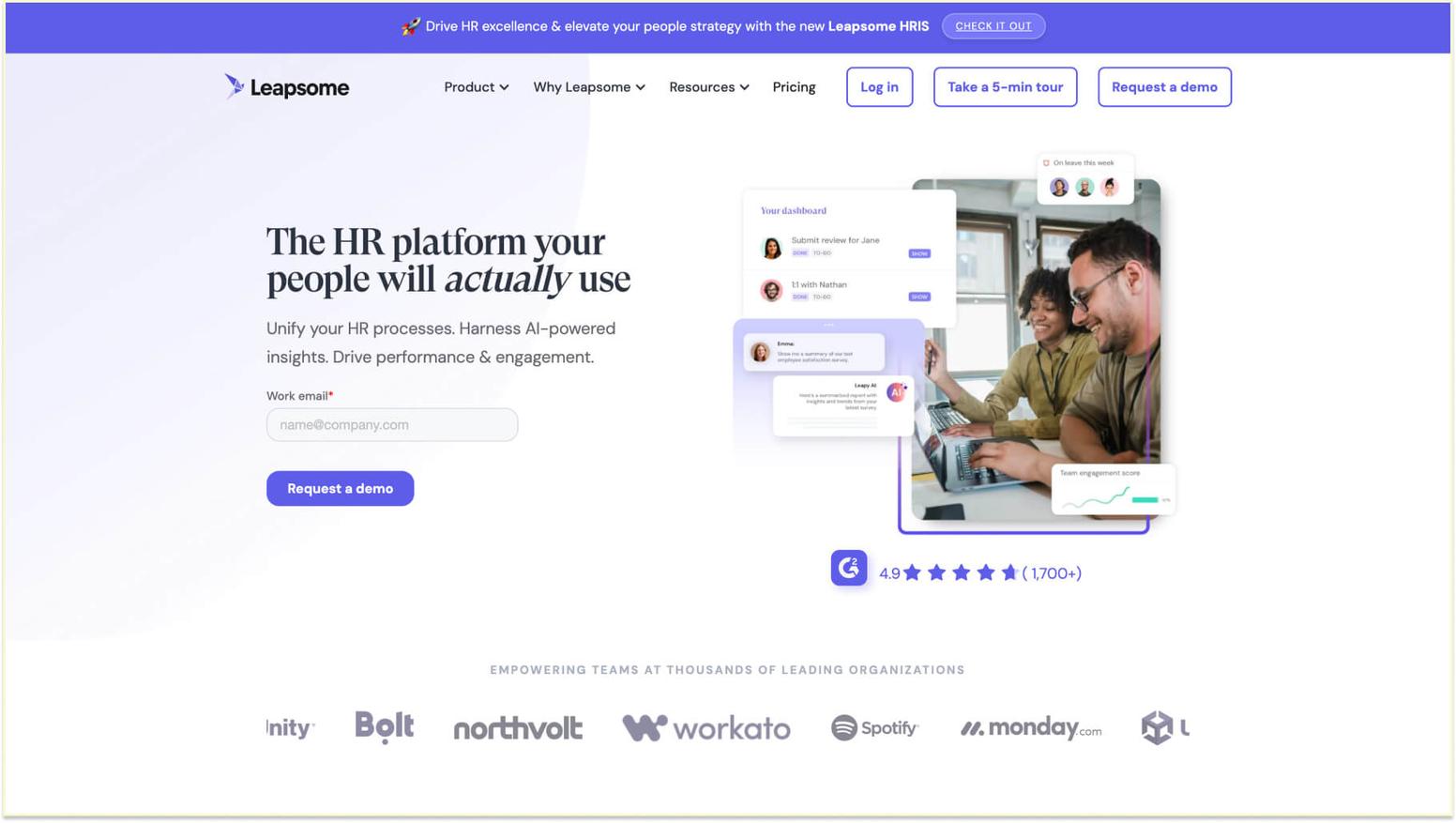
About Leapsome: Leapsome provides employee engagement survey software integrated with performance management and learning tools. The platform helps mid-market organizations measure employee sentiment while connecting feedback to development and growth opportunities. Leapsome offers customizable survey templates, real-time analytics, and action-planning features that turn survey results into meaningful organizational change.
Leapsome main features:
- Customizable employee engagement and pulse survey templates
- Performance review and goal management integration
- Learning and development program capabilities
- Real-time analytics and action planning dashboards
Leapsome pricing: Pricing is not listed on the website. To learn more about pricing, you'll need to schedule a demo/sales call with Leapsome.
Leapsome G2 score: Leapsome has a G2 score of 4.9/5 based on user reviews.
What Leapsome customers are saying on G2: “It is step to step process implementation of sales pattern , customer support , and a lot of feature to understand customer need .It also help to ease of interagtion customer mindset and win situation .It have a good dashboard GUI to understand also support avilable in a single call , once again thank you team leapsome because i was a layman and after half an hour training i became super user.” - SUMIT KUMAR O., Senior Technical Sales Engineer (G2 Review for Leapsome).
Budget-friendly options for startups and small businesses
1. Workleap/OfficeVibe
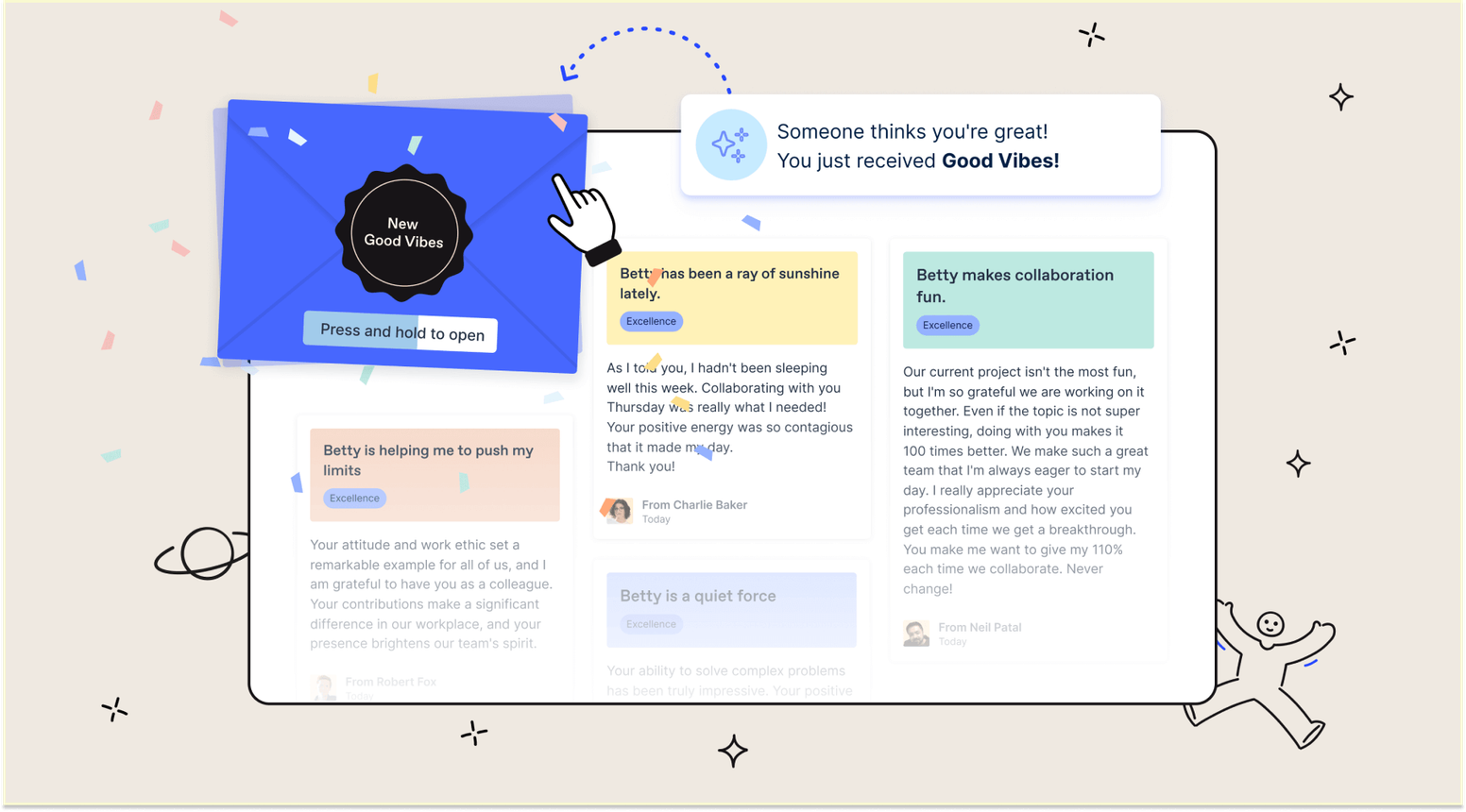
About Workleap/OfficeVibe: Workleap/OfficeVibe provides accessible employee engagement survey software designed for small businesses and startups. The platform offers pulse surveys, anonymous feedback channels, and team analytics that help smaller organizations measure employee sentiment. Workleap's affordable pricing and user-friendly interface enable resource-constrained teams to implement effective engagement measurement programs without overwhelming complexity.
Workleap/OfficeVibe main features:
- Weekly pulse surveys with anonymous feedback options
- Team engagement metrics and manager dashboards
- Good vibes, peer recognition features
- Affordable free plan for small teams
Workleap/OfficeVibe pricing:
- Officevibe: $5/month,10 users minimum
- Performance: $5/month,10 users minimum
- Compensation: $5/month,100 users minimum
To learn more, view Workleap/OfficeVibe’s pricing page.
Workleap/OfficeVibe G2 score: Workleap/OfficeVibe has a G2 score of 4.3/5 based on user reviews.
What Workleap/OfficeVibe customers are saying on G2: “Officevibe provides a regular stream of honest feedback and discussion between managers and employees across our company. GoodVibes has become THE way our employees appreciate and recognize one another. Our management team disucsses the data and anonymous responses on a monthly basis.” - Anthony B., President (G2 Review for Workleap).
2. SurveySparrow
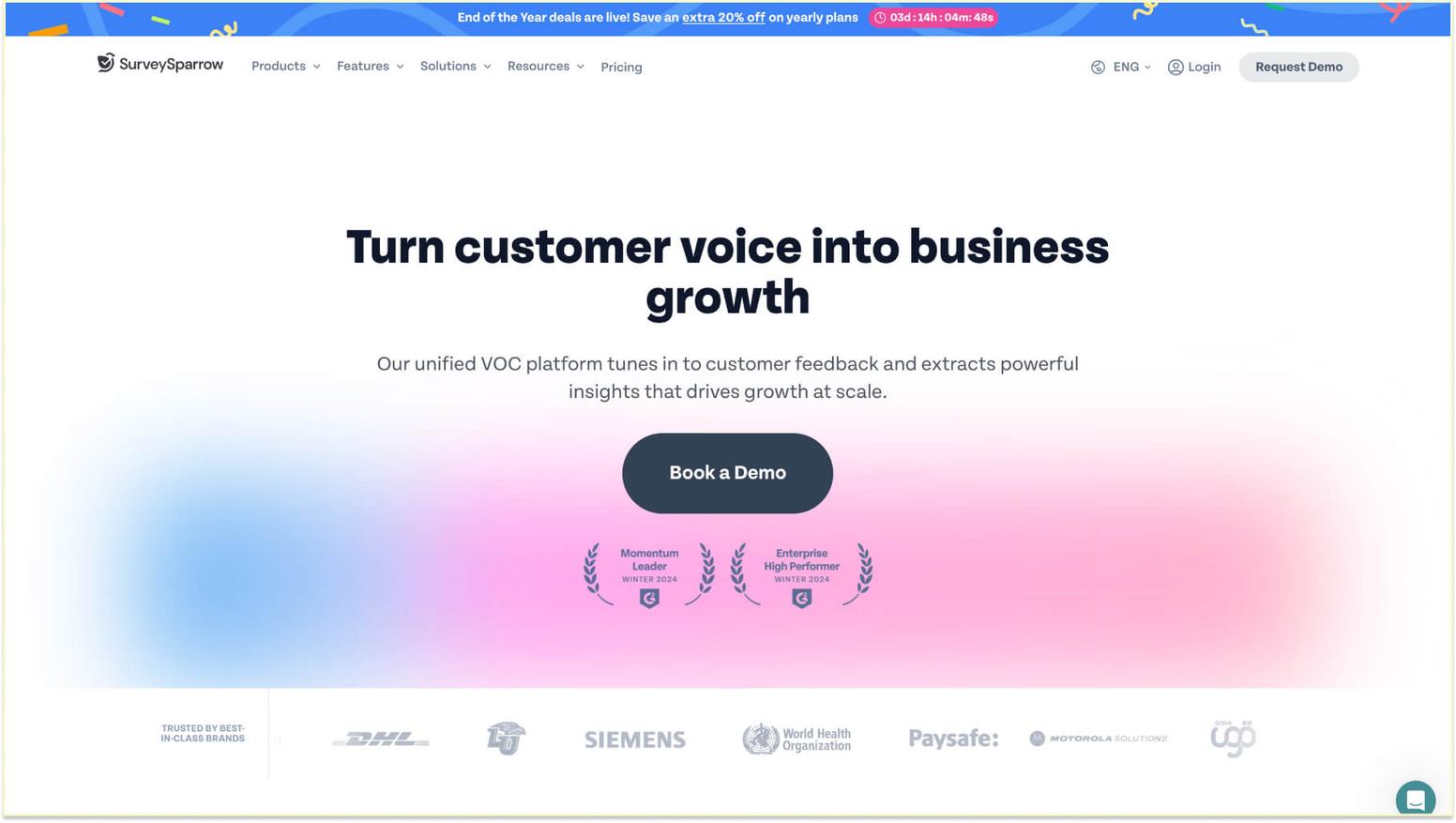
About SurveySparrow: SurveySparrow offers budget-friendly employee engagement survey software with conversational survey design that improves response rates. The platform provides customizable templates, automated scheduling, and basic analytics suitable for small organizations. SurveySparrow's chat-like survey interface creates more engaging experiences that encourage employees to provide honest feedback about their workplace environment.
SurveySparrow main features:
- Conversational survey design improving completion rates
- Automated survey scheduling and reminder capabilities
- Basic analytics and reporting dashboards
- Integration options with communication platforms
SurveySparrow pricing:
- Basic: $19/user/month, billed annually
- Starter: $26/user/month, billed annually
- Business: $52/user/month, billed annually
- Professional: $162/user/month, billed annually
- Enterprise: contact sales for exclusive features
To learn more, view SurveySparrow's pricing page.
SurveySparrow G2 score: SurveySparrow has a G2 score of 4.4/5 based on user reviews.
What SurveySparrow customers are saying on G2: “It produces attractive surveys that are a good experience for the participant. The interface is fairly straightforward and attractive on the backend too. There are good reporting features and export formats (e.g. to SPSS, CSV, and Google Sheets). I really like the audio questions, which automatically transcribe the participants answer as they speak. I can see that being very useful in my work. The branching and display logic is good, allowing control for blocks of questions as well as individual questions and answer options within a question. It allows piping. There are options for scheduling emails and reminders. It's easy to create different links that you can use to track the different channels through which you are sharing your survey. After using it for a year in our company of 16 people, we have decided that the features are good enough that we can switch away from Qualtrics, which has become cost prohibitive. I also like that there are options to push the data automatically to Google Sheets. Customer support is also good, with quick answers to questions via the chat.” - Claire Q., Senior Research Associate (G2 Review for SurveySparrow).
3. CultureMonkey
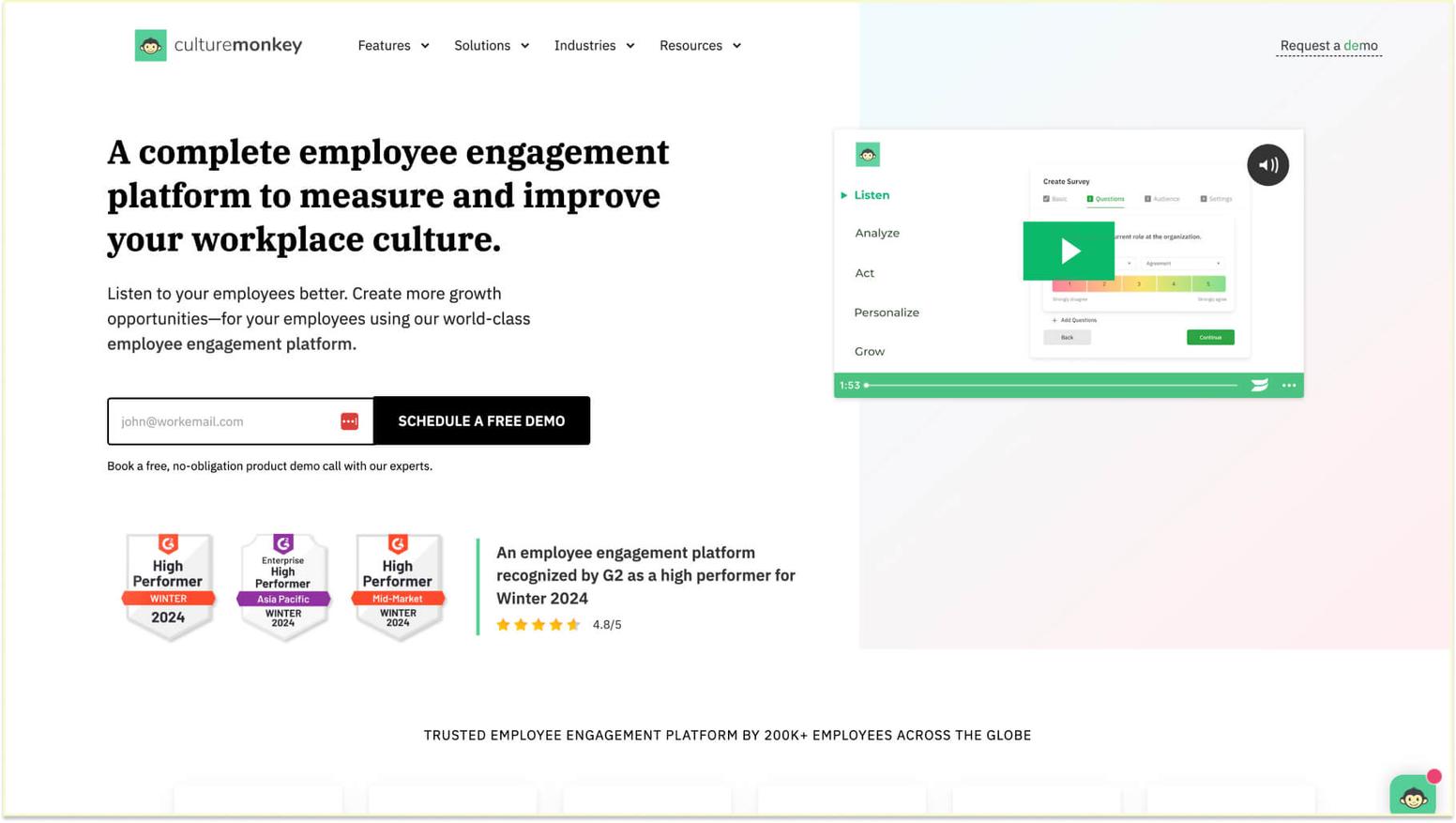
About CultureMonkey: CultureMonkey delivers employee engagement survey software tailored for small businesses seeking affordable measurement solutions. The platform offers pre-built survey templates, pulse survey capabilities, and dashboards that track engagement trends. CultureMonkey's straightforward approach helps resource-constrained organizations implement regular employee feedback collection without requiring extensive HR expertise or significant investment.
CultureMonkey main features:
- Pre-built employee engagement survey templates
- Customizable pulse survey scheduling options
- Advanced dashboards with manager-level analytics
- Action planning tools for improvement initiatives
CultureMonkey pricing: Pricing is not listed on the website. To learn more about pricing, you'll need to schedule a demo/sales call with CultureMonkey.
CultureMonkey G2 score: CultureMonkey has a G2 score of 4.7/5 based on user reviews.
What CultureMonkey customers are saying on G2: “Culture Monkey has the most advanced dashboards that I have come across in a lot of tools that i have evaluated or worked with in the past. There are customized reports and views available, split by manager level, locations, departments and roles. The best feature is the manager-level cuts and the action planning where we can actively involve stakeholders and make them a part of the solution to improve engagement scores across the org.” - Pallavi D., Mid-Market (G2 Review for CultureMonkey).
Best employee engagement survey software comparison and features

Evaluating the best employee engagement survey software requires understanding which capabilities matter most for your organization. Different platforms excel at different aspects of survey design, administration, and analysis. Comparing features across employee engagement survey software options helps identify the best fit. The right platform should simplify survey processes while maximizing insight generation.
Survey design and customization capabilities
Flexible survey design enables organizations to tailor questions to their specific culture and priorities. The best platforms offer validated question libraries alongside tools for custom question creation. Customization should include branching logic, varied question types, and appropriate recognition methods. Survey design capabilities directly impact the quality of employee feedback gathered.
Design features to evaluate include:
- Pre-built validated question libraries
- Custom question creation flexibility
- Point Likert scale option variety
- Conditional branching logic
- Mobile-friendly survey formats
Analytics dashboards and reporting functionality
Strong analytics transform raw survey data into valuable insights that drive strategic decisions. The best pulse survey tools offer intuitive dashboards that make patterns immediately visible. Reporting should support both executive summaries and detailed drill-down analysis. Analytics capabilities determine how effectively organizations can act on survey results.
Analytics features to consider include:
- Real-time results visualization
- Demographic and team-level segmentation
- Trend tracking over multiple surveys
- Heat maps identifying problem areas
- Exportable reports for stakeholder communication
Integration options with HRIS and communication tools
Seamless integration with existing systems reduces administrative burden and increases survey participation rates. Integration with HRIS platforms enables automatic employee roster updates and demographic segmentation. Communication tool integration allows survey distribution through familiar channels employees already use. The best platforms offer robust integration options that fit diverse technology environments.
Integration capabilities include:
- HRIS synchronization for employee data
- Slack and Microsoft Teams deployment
- Single sign-on authentication
- Calendar integration for scheduling
- API access for custom integrations
Employee engagement survey providers and implementation strategies
Choosing between different employee engagement survey providers involves considering more than just software features. Implementation approach, ongoing support, and organizational readiness all influence success with engagement surveys. Various providers deliver differing levels of service and guidance throughout the survey lifecycle. Matching provider capabilities to organizational needs ensures smooth implementation and sustained value.
Full-service providers with consulting and support
Full-service engagement survey vendors provide comprehensive support, including survey design, implementation, and results interpretation. These providers offer expertise that helps organizations maximize value from their engagement measurement investment. Consulting support proves valuable for organizations new to engagement surveys or facing complex challenges. Full-service options cost more but significantly reduce internal resource requirements.
Full-service benefits include:
- Expert survey design guidance
- Implementation of project management
- Results analysis and interpretation
- Action planning facilitation
- Ongoing measurement strategy support
Self-service platforms with template libraries
Self-service platforms empower internal teams to manage engagement surveys independently using provided tools and templates. These options work well for organizations with HR expertise and sufficient internal resources. Template libraries provide starting points that reduce deployment time. Self-service flexibility allows customization without waiting for vendor support.
Self-service advantages include:
- Lower ongoing costs
- Faster deployment timelines
- Greater customization control
- Internal capability development
- Flexibility in timing and frequency
Hybrid solutions with guided implementation
Hybrid approaches combine platform self-service capabilities with available expert guidance when needed. These solutions offer flexibility for organizations that want support without full-service costs. Hybrid models allow organizations to build internal capabilities while accessing expertise for complex challenges. The best hybrid providers offer scalable support that adapts to organizational needs.
Hybrid solution features include:
- On-demand expert consultation
- Comprehensive training resources
- Community forums for peer learning
- Tiered support level options
- Implementation assistance available
Employee engagement survey software for pulse and continuous feedback

Modern employee engagement survey software supports both comprehensive annual surveys and frequent pulse measurements. Continuous feedback approaches capture changes in employee sentiment more rapidly than annual surveys alone. The best platforms enable flexible measurement cadences that match organizational rhythms. Combining approaches provides a comprehensive understanding of employee engagement over time.
Real-time pulse survey capabilities
Pulse surveys provide quick snapshots of employee engagement survey question responses between comprehensive annual measurements. These brief surveys typically contain 5 to 10 questions and take 1 to 2 minutes to complete. Real-time results enable leaders to track sentiment changes and respond quickly to emerging concerns. Pulse capabilities help maintain ongoing dialogue with employees throughout the year.
Pulse survey features include:
- Quick deployment and completion
- Automated scheduling options
- Real-time results visibility
- Trend tracking across pulses
- Mobile-optimized completion experience
Always-on feedback channels and suggestion systems
Beyond structured surveys, engagement platforms increasingly offer continuous feedback collection through digital channels. These always-on systems enable employees to share concerns and ideas whenever they arise. Anonymous submission options encourage honest feedback about sensitive topics. Continuous feedback supplements periodic surveys with real-time insight into employee experience.
Continuous feedback options include:
- Anonymous suggestion boxes
- Topic-specific feedback channels
- Manager feedback request tools
- Idea submission platforms
- Response and follow-up tracking
Automated scheduling and reminder workflows
Automation features reduce administrative burden while improving survey participation rates. Scheduled survey deployment ensures consistent measurement without manual intervention. Automated reminders encourage completion without creating excessive burden on participants. Smart scheduling avoids survey fatigue by managing frequency and timing appropriately.
Automation capabilities include:
- Pre-scheduled survey deployment
- Intelligent reminder sequences
- Completion rate monitoring
- Automatic report generation
- Manager notification workflows
Employment engagement survey best practices and timing strategies
Successful employment engagement surveys require thoughtful planning around timing, frequency, and implementation approach. Survey best practices have evolved based on research and organizational experience. Following proven strategies helps maximize survey participation and data quality. Strategic timing ensures surveys capture representative employee sentiment.
Annual comprehensive survey timing and frequency
Annual comprehensive surveys provide detailed baseline measurements of engagement across all important dimensions. Most organizations conduct comprehensive surveys during relatively stable periods, avoiding major disruptions. Annual timing allows sufficient time to implement improvements between measurements. Comprehensive surveys typically require more questions but deliver deeper insights.
Annual survey best practices include:
- Avoid major holidays and busy seasons
- Allow adequate time for communication
- Plan for results sharing and action planning
- Maintain consistent timing year over year
- Communicate purpose and confidentiality clearly
Quarterly pulse survey scheduling approaches
Quarterly pulse survey templates track engagement trends and measure progress on improvement initiatives. More frequent measurement enables faster identification of emerging issues. Pulse surveys should complement rather than replace comprehensive annual measurement. Strategic pulse timing captures sentiment during key organizational moments.
Quarterly pulse strategies include:
- Consistent scheduling creates rhythm
- Brief surveys minimize survey fatigue
- Focus on priority engagement drivers
- Track changes from the annual baseline
- Enable rapid response to concerns
Event-triggered surveys for onboarding and transitions
Event-triggered surveys capture feedback during critical moments in the employee lifecycle. Onboarding surveys reveal early impressions that predict long-term engagement. Exit surveys provide insights about why employees leave. Transition surveys measure how employees experience organizational changes.
Event-triggered survey applications include:
- New hire onboarding experience assessment
- Promotion and role change feedback
- Return from leave check-ins
- Post-reorganization sentiment capture
- Exit interview data collection
Employee engagement survey examples and question templates

Access to proven employee engagement survey examples accelerates survey development and improves data quality. Template libraries provide starting points validated through research and organizational experience. Customizing templates ensures surveys address organization-specific priorities while maintaining measurement validity. The right templates help organizations ask questions that generate actionable insights.
Sample surveys for different industries and company sizes
Different industries face unique workforce challenges that benefit from tailored survey approaches. Healthcare organizations may emphasize questions about burnout and patient care quality. Technology companies might focus heavily on innovation, climate, and career growth. Tailoring templates to industry context improves relevance and actionability.
Industry customization considerations include:
- Regulatory compliance requirements
- Industry-specific engagement drivers
- Workforce demographic considerations
- Competitive talent market factors
- Operational environment influences
Question libraries organized by engagement drivers
Research identifies consistent drivers of employee engagement that should inform survey question selection. Organizing questions by driver helps ensure comprehensive coverage of important factors. Driver-based organization also simplifies analysis and action planning. The best question libraries map items to validated engagement frameworks.
Key engagement driver categories include:
- Manager effectiveness and support
- Career development opportunities
- Organizational purpose alignment
- Recognition and appropriate recognition practices
- Team collaboration and dynamics
Customizable templates with proven response rates
High response rates ensure survey data represent the full workforce rather than only motivated respondents. Template design influences completion rates through question clarity and survey length. Templates with proven response rates incorporate best practices for participant engagement. Starting with validated templates increases confidence in survey results.
Response rate optimization includes:
- Concise and clear question wording
- Reasonable survey length expectations
- Mobile-friendly format design
- Progress indicators during completion
- Professional and inviting appearance
How Matter can help with engagement surveys and continuous feedback
Matter provides a comprehensive platform that simplifies engagement measurement while connecting feedback to employee recognition. The platform integrates smoothly with Slack and Microsoft Teams, where employees are already engaged. Matter's approach makes participation effortless while generating actionable insights for improvement. Organizations using Matter create continuous feedback cultures that boost employee engagement.
Matter's 5-star eNPS system that simplifies survey completion
Matter uses a research-validated 5-point Likert scale, which improves response rates compared to traditional 11-point eNPS formats. The simpler scale reduces cognitive burden and increases completion rates on mobile devices. Fully labeled response options eliminate confusion about what each score means. This approach efficiently generates reliable employee net promoter score data.
Matter's eNPS advantages include:
- Higher completion rates than 11-point scales
- Clearer response option interpretation
- Mobile-optimized survey experience
- Research-validated measurement approach
- Quick completion time encourages participation
Pulse survey automation with customizable frequencies
Matter automates the deployment of pulse survey best practices, so organizations can maintain consistent measurement without manual effort. Customizable scheduling enables weekly, monthly, or quarterly pulse surveys based on organizational preference. Automated reminders encourage completion without burdening HR teams. The platform handles survey process administration while leaders focus on acting on results.
Automation features include:
- Flexible scheduling configuration
- Intelligent reminder sequences
- Completion tracking dashboards
- Manager notification capabilities
- Integration with communication workflows
Real-time analytics dashboards tracking engagement trends
Matter's analytics provide immediate visibility into engagement scores and trends across the organization. Dashboard visualizations make patterns obvious without requiring statistical expertise. Leaders can drill down into specific teams, departments, or demographics. Real-time data enables faster response to emerging concerns.
Analytics capabilities include:
- Live engagement score tracking
- Trend visualization over time
- Segmentation by team and demographic
- Comparison and benchmarking views
- Exportable reports for stakeholders
Frequently asked questions about engagement surveys
Q: What is an employee engagement survey?
A: An employee engagement survey is a structured feedback tool measuring the emotional commitment employees have toward their organization. These surveys assess whether workers feel motivated to contribute discretionary effort beyond basic job requirements. Engagement surveys help organizations understand what drives employees to excel. The data informs strategies that boost engagement and improve organizational outcomes.
Q: What are the best employee engagement survey questions?
A: The best employee engagement questions measure twelve core drivers, including manager effectiveness, career growth, and purpose alignment. Questions should assess whether employees feel valued, supported, and connected to the company's mission. Effective surveys combine validated question libraries with organization-specific items addressing unique priorities. The right mix generates actionable insights that guide improvement efforts.
Q: How often should you conduct employee engagement surveys?
A: Organizations should conduct comprehensive annual surveys, supplemented by quarterly or monthly pulse surveys, to support continuous measurement. Annual surveys provide deep baseline measurements across all engagement dimensions. More frequent pulse tracking trends and measures progress on improvement initiatives. The combination ensures organizations maintain a current understanding of employee sentiment.
Q: What is the difference between an engagement survey and a pulse survey?
A: Engagement surveys provide comprehensive measurement across all important dimensions, typically including 50-75 questions annually. Pulse surveys offer brief check-ins with 5-10 questions measuring key indicators between comprehensive surveys. Comprehensive surveys deliver depth while pulses provide frequency and agility. Most organizations benefit from combining both approaches strategically.
Q: Which employee engagement survey software is best?
A:The best survey software depends on organizational size, complexity, and resource availability. Matter excels for organizations wanting simple, effective measurement integrated with recognition. Evaluating features against requirements helps identify the optimal fit.
Q: How do you increase employee engagement survey participation rates?
A:High participation requires clear communication about confidentiality, survey purpose, and how results will drive action. Mobile accessibility removes barriers for employees without constant access to a computer. Leadership endorsement and a reasonable survey length significantly improve completion rates. Following up on previous survey results demonstrates that participation leads to meaningful organizational change.
Final thoughts about engagement surveys and building feedback culture
Employee engagement surveys provide essential data to understand workforce sentiment and drive improvement initiatives. Effective employee engagement surveys transform vague impressions into actionable insights that guide leadership decisions. Organizations that commit to regular measurement demonstrate a genuine interest in employee experience. The combination of comprehensive annual surveys and continuous pulse measurements provides a comprehensive understanding.
Connecting engagement surveys to recognition programs significantly amplifies the impact of both initiatives. Surveys identify what drives employee satisfaction, while recognition reinforces positive behaviors and celebrates progress. This integrated approach creates feedback loops that continuously improve workplace culture. Organizations that link measurement with action see measurable improvements in engagement over time.
Matter provides a complete solution that simplifies engagement measurement through its 5-star eNPS surveys and automated pulse scheduling. The platform offers comprehensive question libraries, real-time analytics dashboards, and seamless integration with peer-to-peer recognition. Matter transforms engagement measurement from an annual event into a continuous feedback culture. The result builds trust, improves retention, and drives measurable business results. More of Matter's platform data on survey participation is published at Matter's research hub.
Ready to transform your employee engagement survey program? Schedule a demo with a Matter expert today and discover how our platform can help you measure engagement effectively, close the feedback loop with recognition, and create a culture of continuous improvement.

![39+ Employee Engagement Survey Examples [2026 Guide & Ideas]](https://cdn.sanity.io/images/kqqb5xry/production/25935096834238b3bb728390b5af938c53abb7f7-800x600.jpg?w=720&q=75&fit=max&auto=format)
![49+ Employee Engagement Survey Questions [2026 Guide]](https://cdn.sanity.io/images/kqqb5xry/production/4d901490615b37aeb81f024d7f5666a52dc8aa8b-800x600.jpg?w=720&q=75&fit=max&auto=format)
![30+ Employee Engagement Survey [Questions and Tips in 2026]](https://cdn.sanity.io/images/kqqb5xry/production/1bc18c86b50f7f053e22c9e5670e185d3f1fb583-800x600.jpg?w=720&q=75&fit=max&auto=format)