
Selecting the best eNPS software can feel overwhelming when organizations face countless platforms offering different features, integration capabilities, and pricing models for accurately measuring employee net promoter score. At Matter, we recognize this challenge and believe that understanding what eNPS is and what eNPS stands for transforms platform evaluation from overwhelming to strategic. Knowing what a good eNPS score is matters critically when selecting eNPS survey software with proper benchmarking tools because it helps you identify platforms that provide industry comparisons and meaningful context for your employee loyalty data.
Organizations committed to measuring employee loyalty systematically need platforms that automate recurring eNPS surveys, deliver actionable insights through intuitive interfaces, and connect feedback directly to recognition and rewards programs. The right knowledge of eNPS software's real-time tracking capabilities helps organizations implement effective feedback programs that drive engagement improvements and retention by enabling immediate responses to shifts in employee sentiment. When HR teams understand how different eNPS tools measure employee sentiment across various rating scales, they can select solutions that maximize response rates while providing comprehensive data for continuous improvement.
What is eNPS software?
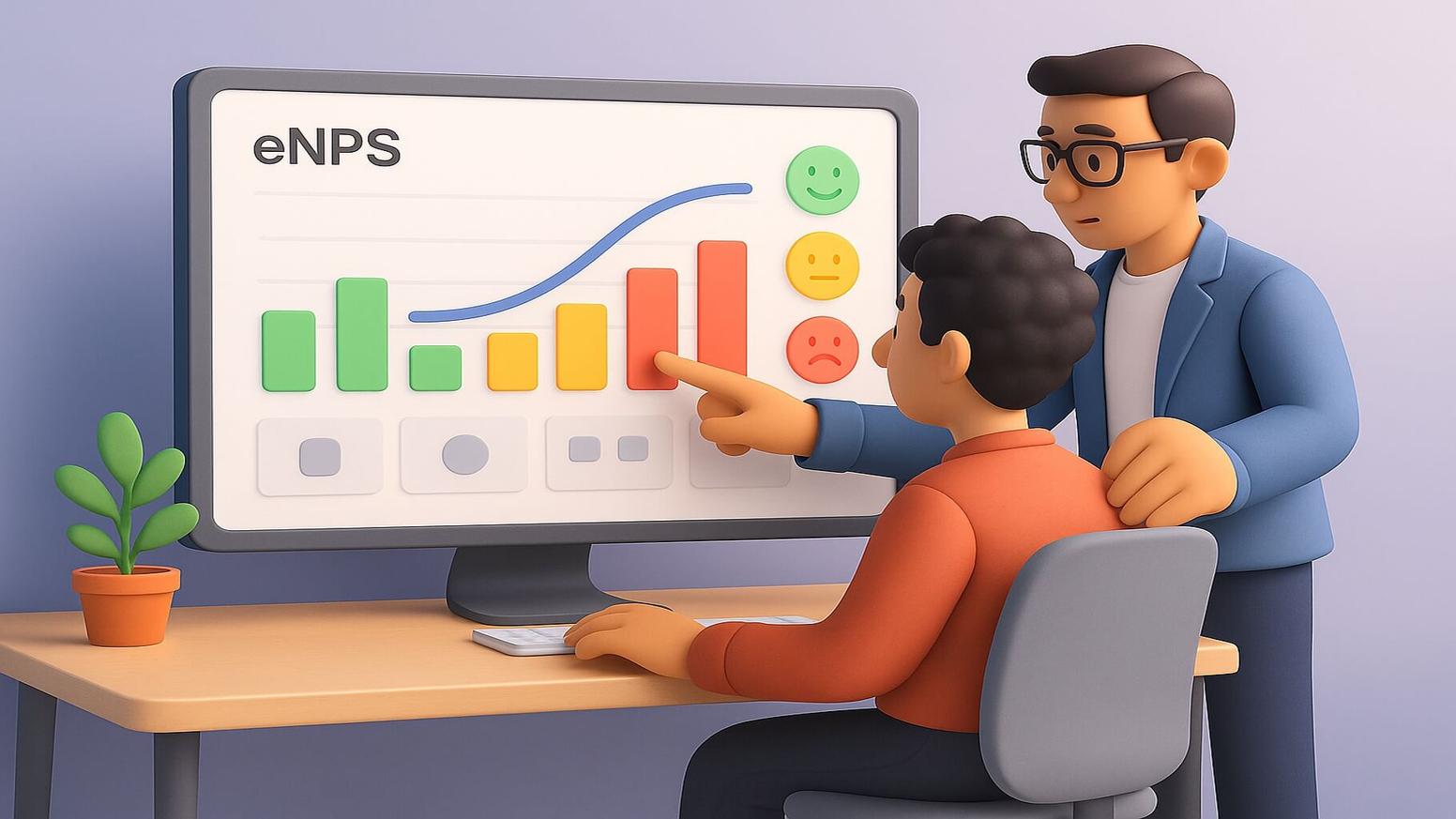
eNPS software platforms enable organizations to systematically assess and monitor employee loyalty through automated surveys that quantify the likelihood of employees recommending their workplace to others. These specialized tools transform raw feedback into meaningful employee experience data by calculating employee net promoter scores and identifying trends that impact engagement, productivity, and retention. Understanding what eNPS is helps organizations select high-quality eNPS survey software that goes beyond simple data collection by integrating with workplace communication tools, automating survey distribution, and providing real-time dashboards that enable managers to respond quickly to changes in employee sentiment.
Understanding employee net promoter score (eNPS) software fundamentals
Employee net promoter score software evaluates assessing workplace loyalty by inquiring about employees' likelihood to recommend their employer as a place to work. The traditional approach uses a 0-10 rating scale, categorizing respondents as promoters (those rating your organization highly), passives (neutral employees), or detractors (unhappy employees who wouldn't recommend your workplace). However, innovative platforms like Matter use a simplified 5-star rating system that improves response rates by reducing completion time and eliminating confusion about what different numerical ratings mean.
The core eNPS calculation subtracts the percentage of detractors from the percentage of promoters. This produces a score ranging from negative values, which indicate serious culture problems, to positive scores that reflect strong employee satisfaction and loyalty. Organizations use this metric to benchmark their employee feedback programs against industry standards and track how engagement initiatives impact employee loyalty over time. Understanding how to calculate eNPS ensures organizations apply the methodology correctly. Advanced eNPS software platforms automate this calculation process while providing department-level segmentation that helps leadership identify which teams need support and which managers are creating exceptional employee experiences.
Core features that define quality eNPS survey software platforms
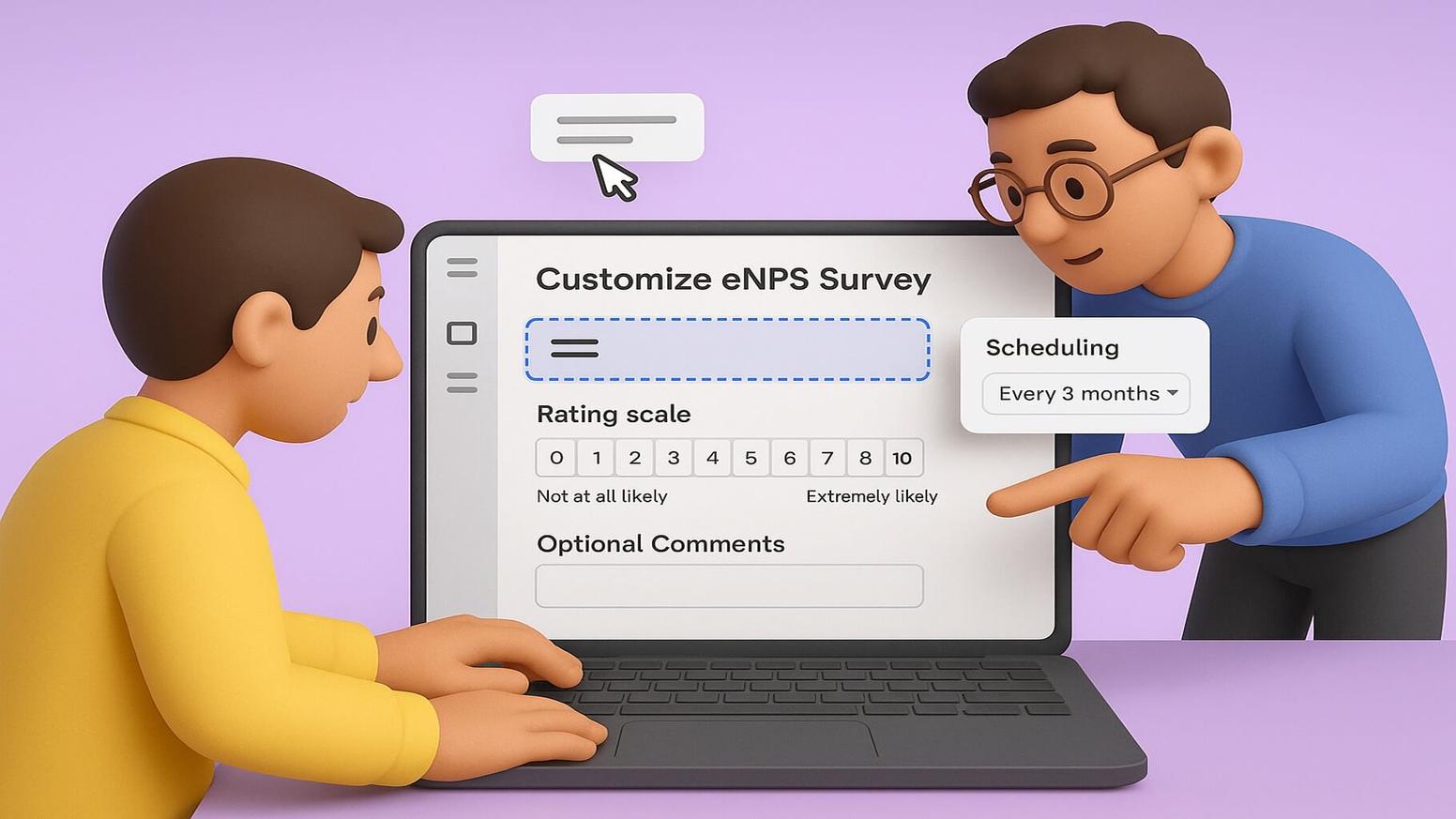
Quality eNPS survey software includes automated survey distribution, eliminating manual scheduling while ensuring consistent measurement cycles. The best platforms offer customizable survey frequencies, allowing organizations to measure eNPS quarterly, monthly, or even weekly, depending on their continuous improvement goals and organizational needs. Organizations around the world use these tools to analyze employee satisfaction patterns and identify trends before they impact retention. Integration with existing workplace tools like Slack and Microsoft Teams ensures employees can provide honest feedback without leaving their daily communication platforms, significantly improving participation rates.
Real-time tracking and reporting capabilities distinguish excellent eNPS software from basic survey tools by enabling immediate visibility into team sentiment and engagement trends. Organizations can discover patterns in employee loyalty through real-time insights that surface as responses arrive. Comprehensive platforms provide manager dashboards that show department-level scores, track changes over time, and highlight areas requiring intervention before small issues become major retention risks. A comprehensive solution includes anonymous response collection that protects employee privacy while encouraging authentic feedback, and advanced analytics transform eNPS data into actionable insights that guide recognition programs, manager effectiveness training, and company culture initiatives.
How eNPS software differs from general employee engagement tools
eNPS software focuses specifically on measuring employee loyalty and likelihood to recommend, providing a single, powerful metric that correlates strongly with retention and business performance. General employee engagement tools typically measure broader dimensions, including job satisfaction, manager relationships, career development opportunities, and work-life balance, through comprehensive survey batteries with dozens of questions. While pulse survey software often includes eNPS as one component, dedicated eNPS platforms excel at frequent, focused measurement that tracks loyalty trends without overwhelming employees with lengthy surveys.
The specialized nature of eNPS software enables higher survey frequency and faster completion times because employees answer only one or two core questions rather than extensive engagement assessments. This focused approach produces cleaner trend data and enables organizations to correlate specific initiatives (like launching new employee recognition programs or adjusting compensation) with changes in employee loyalty. Organizations often use eNPS software alongside broader engagement tools, leveraging the eNPS metric as a quick pulse check between comprehensive engagement surveys while maintaining continuous visibility into workforce sentiment.
What are the benefits of using eNPS survey software?
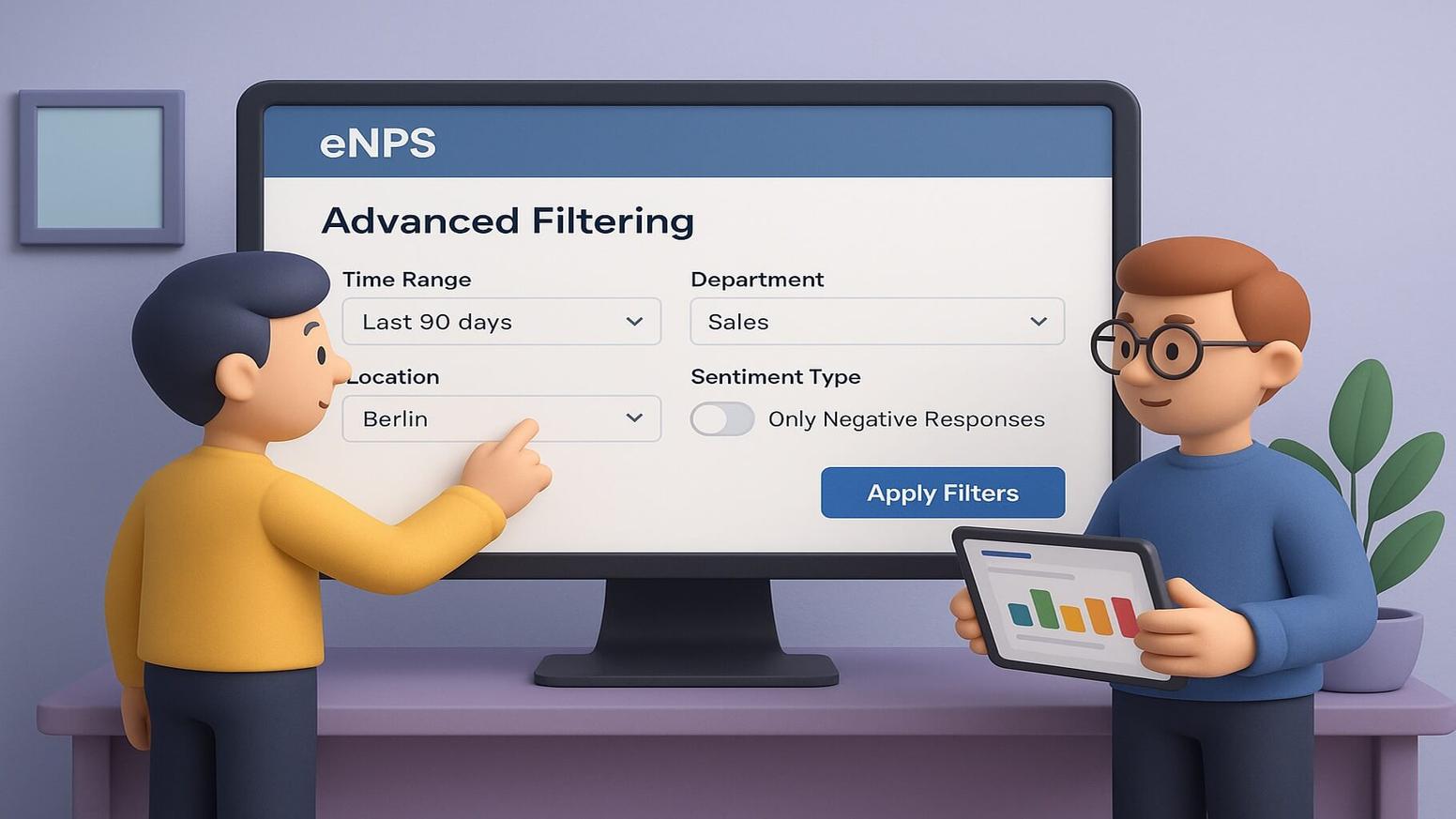
Organizations using dedicated eNPS survey software gain systematic visibility into employee loyalty trends that directly impact retention, productivity, and company culture. These platforms transform sporadic feedback collection into continuous listening programs that help hr teams and managers identify engagement issues before they escalate into turnover problems. By automating survey distribution and eNPS calculation processes, eNPS software eliminates manual work while ensuring consistent measurement cycles that produce reliable trend data for strategic decision-making.
Automating eNPS measurement with real-time tracking and alerts
Automated eNPS measurement eliminates the manual scheduling, distribution, and calculation work that often prevents organizations from conducting frequent employee sentiment checks. The best eNPS software platforms distribute surveys through integrated channels like Slack or email, automatically calculate scores as responses arrive, and update dashboards in real time so managers never have to wait for data analysis. This automation ensures consistent measurement cycles that produce comparable data over time, enabling organizations to track whether engagement initiatives actually improve employee satisfaction or if recent events negatively impacted team morale.
Real-time alerts notify managers immediately when eNPS scores drop below acceptable thresholds or when individual team members provide detractor-level feedback that may indicate serious concerns. This immediate visibility enables prompt manager interventions and demonstrates to employees that their feedback matters because leadership responds quickly to concerns. Organizations that use real-time eNPS tracking report significantly higher survey participation because employees see their input driving tangible improvements rather than disappearing into static reports.
Integrating with recognition platforms for actionable insights
eNPS software integration with employee recognition platforms creates closed-loop feedback systems where positive sentiment triggers celebration, while negative scores prompt supportive interventions. Platforms like Matter connect survey data directly to recognition tools, enabling managers to celebrate promoters who actively recommend the organization while automatically flagging detractor feedback for follow-up conversations. This integration transforms eNPS from a passive measurement tool into an active engagement driver that reinforces positive behaviors and addresses concerns systematically.
Recognition integration helps organizations understand which managers create promoter-rich teams by correlating eNPS scores with recognition activity data and identifying best practices to replicate across the organization. When employees see their positive feedback leading to increased recognition and their concerns generating a genuine leadership response, participation rates improve because the survey feels meaningful rather than perfunctory. These integrated systems enable HR teams to identify specific recognition approaches that correlate with higher loyalty scores and to recommend these practices to underperforming teams.
Benchmarking employee net promoter scores against industry standards
Industry benchmarking capabilities help organizations understand whether their eNPS score reflects competitive performance or signals serious engagement challenges relative to similar companies. Quality eNPS software provides comparative data segmented by industry, company size, and region, enabling leadership to set realistic improvement targets based on what high-performing organizations achieve. Organizations can also review eNPS benchmark data to understand industry standards. This external perspective prevents companies from becoming complacent about scores that seem acceptable internally but actually lag behind competitors who attract top talent more effectively.
Benchmarking data also helps justify engagement investments by demonstrating how improved eNPS scores correlate with lower turnover costs, greater productivity, and better business performance in successful organizations. Organizations can identify whether low scores stem from systemic issues affecting their entire industry or company-specific problems requiring immediate attention and targeted solutions. Access to benchmark trends helps predict future talent challenges by revealing whether workforce expectations are shifting across industries and whether current engagement approaches will remain effective as workplace dynamics evolve.
Why selecting the best eNPS software is important
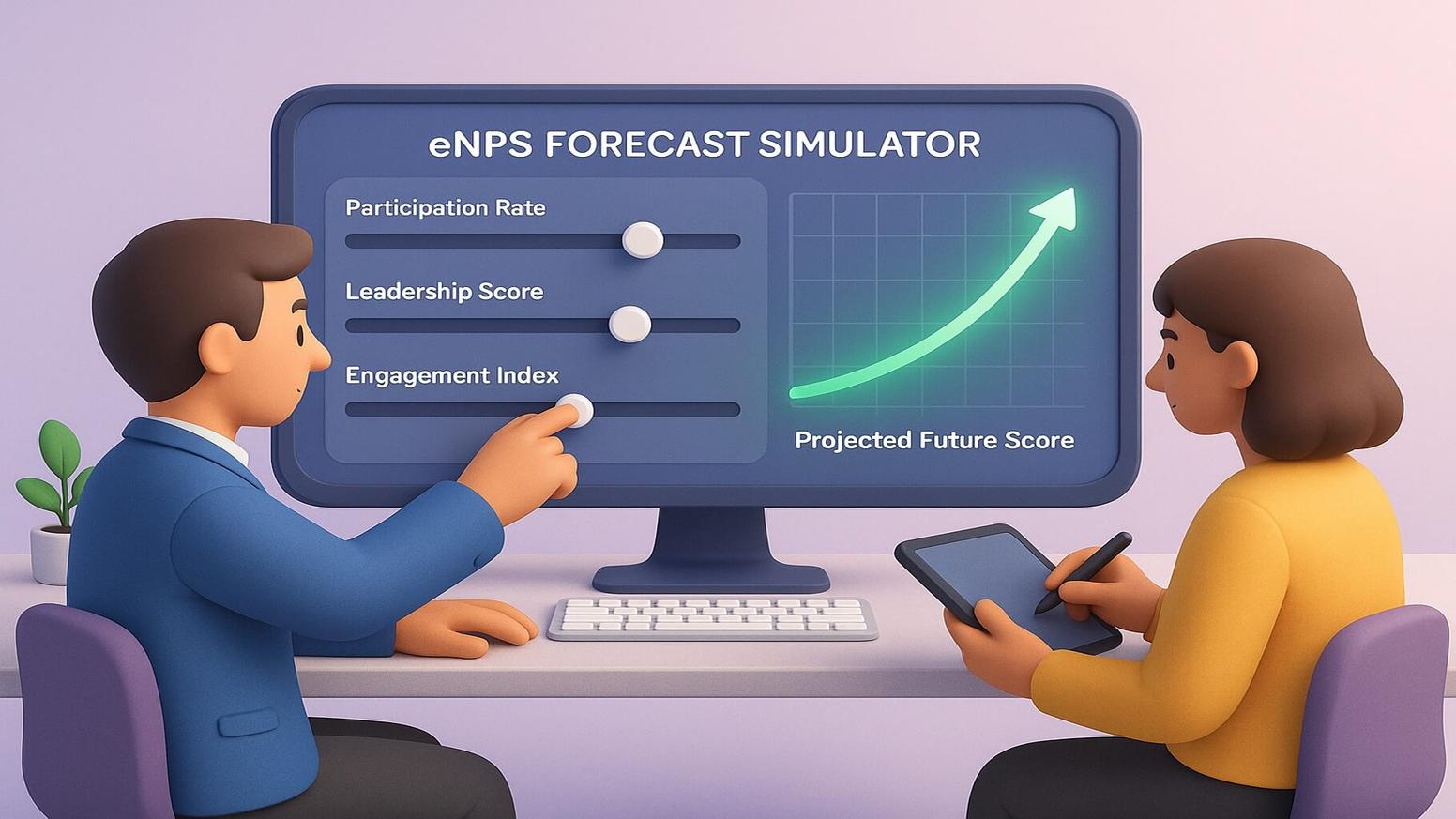
Selecting the appropriate eNPS software impacts every dimension of your employee feedback program, from initial response rates through long-term engagement improvements and retention outcomes. The wrong platform creates survey fatigue through clunky interfaces, produces unreliable data through inconsistent measurement approaches, and wastes HR team time with manual processes that could be automated. Organizations across industries have learned this lesson, from tech startups to established media organizations like the Associated Press (AP), which relies on AP eNPS systems to measure satisfaction across global news production teams. Organizations that invest in quality eNPS survey software gain immediate visibility into workforce sentiment, respond faster to emerging issues, and build cultures where employees feel heard and valued.
Ensuring accurate employee loyalty measurement and trend analysis
Accurate measurement begins with a survey design that captures authentic employee sentiment without introducing bias through confusing rating scales or leading questions. The best eNPS software platforms use research-backed methodologies that produce consistent, comparable data across measurement periods, enabling organizations to confidently track whether engagement initiatives actually improve employee loyalty or merely create temporary enthusiasm. Organizations can also explore pulse survey tools for complementary measurement approaches. Platform features like anonymous response collection, mobile-optimized interfaces, and simplified rating systems minimize measurement errors while maximizing participation across diverse employee populations.
Reliable trend analysis requires platforms that maintain data consistency over time, enabling meaningful comparisons between quarterly measurements and identification of seasonal patterns that might otherwise be misinterpreted as engagement problems. Quality eNPS software provides statistical confidence indicators that help HR teams distinguish between meaningful score changes and normal variation, preventing overreaction to minor fluctuations. Organizations need platforms that segment data by department, location, tenure, and other relevant factors while maintaining employee anonymity, allowing targeted interventions without compromising the trust that enables honest feedback.
Scaling feedback programs efficiently as organizations grow
As organizations expand, manual eNPS measurement approaches break down when hr teams can no longer personally manage survey distribution, follow-up, and analysis across multiple locations and departments. Scalable eNPS software automates these processes while maintaining data quality and enabling department-level autonomy, allowing managers to run pulse surveys for their teams without burdening central HR functions. Cloud-based platforms support global deployment with multi-language capabilities and regional customization that respects cultural differences while maintaining measurement consistency for enterprise-wide comparisons.
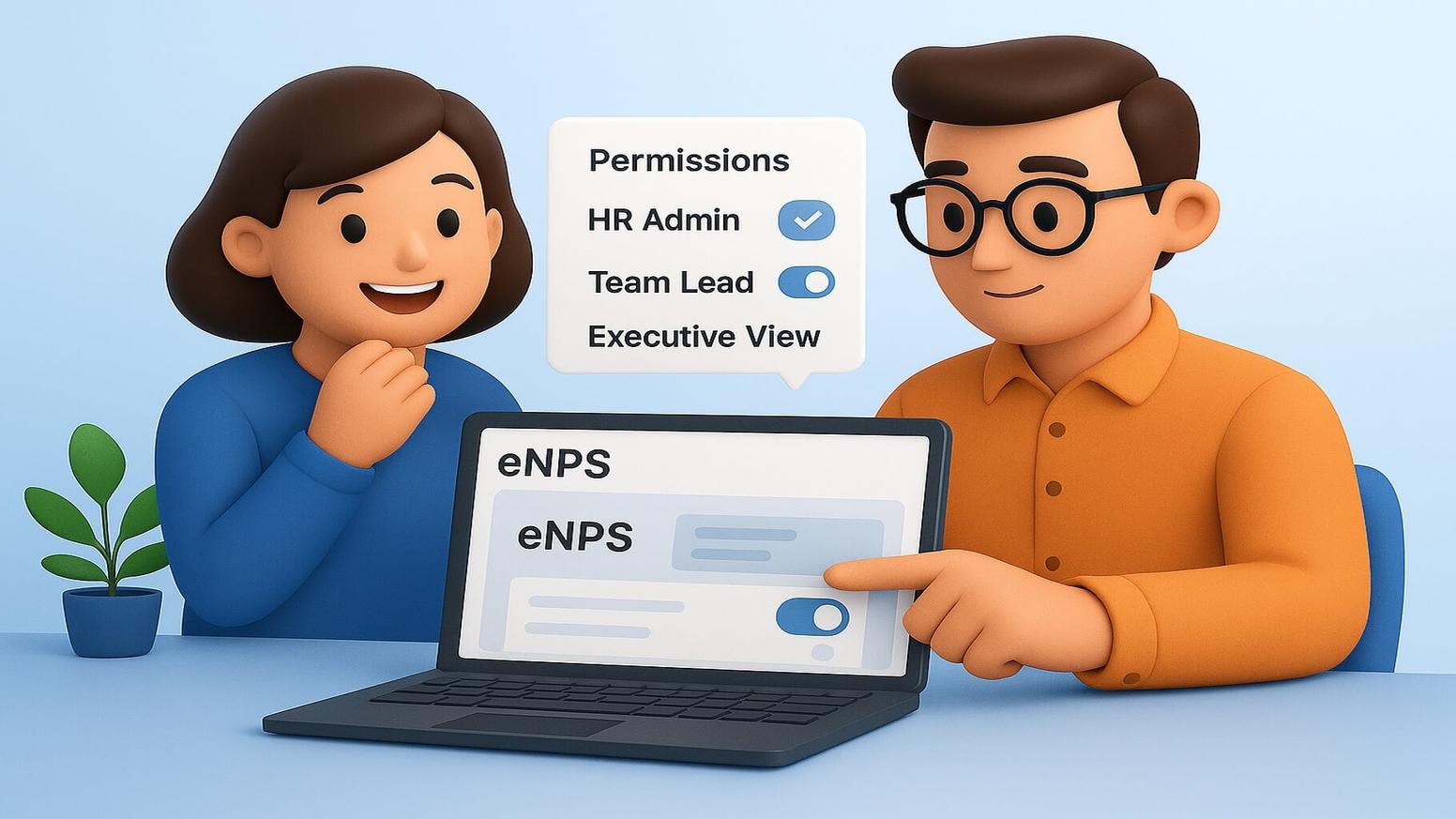
Efficient scaling requires platforms that integrate with existing HRIS systems to automatically update employee rosters, eliminating manual roster maintenance as headcount grows through hiring or contract additions. The best eNPS survey software provides tiered access controls that enable local managers to view their team data while protecting individual anonymity and preventing comparison gaming between departments. Organizations experiencing rapid growth need platforms that handle increased survey volume without performance degradation while providing executive dashboards that surface company-wide trends without overwhelming leaders with excessive detail.
Connecting eNPS insights to recognition and rewards programs
eNPS data becomes actionable when organizations connect survey insights directly to recognition programs that celebrate promoters and rewards systems that address the concerns driving detractor responses. The most effective platforms enable managers to identify high-scoring employees who deserve recognition for creating positive team environments. These tools also flag low scores that may indicate burnout, interpersonal conflicts, or role misalignment requiring career development conversations. This connection ensures that feedback drives tangible improvements in workplace satisfaction rather than generating reports that collect dust as engagement continues to decline. Organizations that act on feedback consistently see improvements in overall satisfaction levels across their workforce.
Organizations that integrate eNPS surveys with reward systems can automatically trigger appreciation when teams achieve improvement milestones or maintain consistently high loyalty scores over extended periods. These automated connections reduce manager workload while ensuring recognition happens consistently rather than sporadically when individual managers remember to celebrate success. Platforms that support this integration help HR teams demonstrate clear ROI from engagement investments. By tracking how recognition spending correlates with eNPS improvements and retention rate changes, organizations can measure impact across different organizational units.
15 best eNPS software platforms with integrations
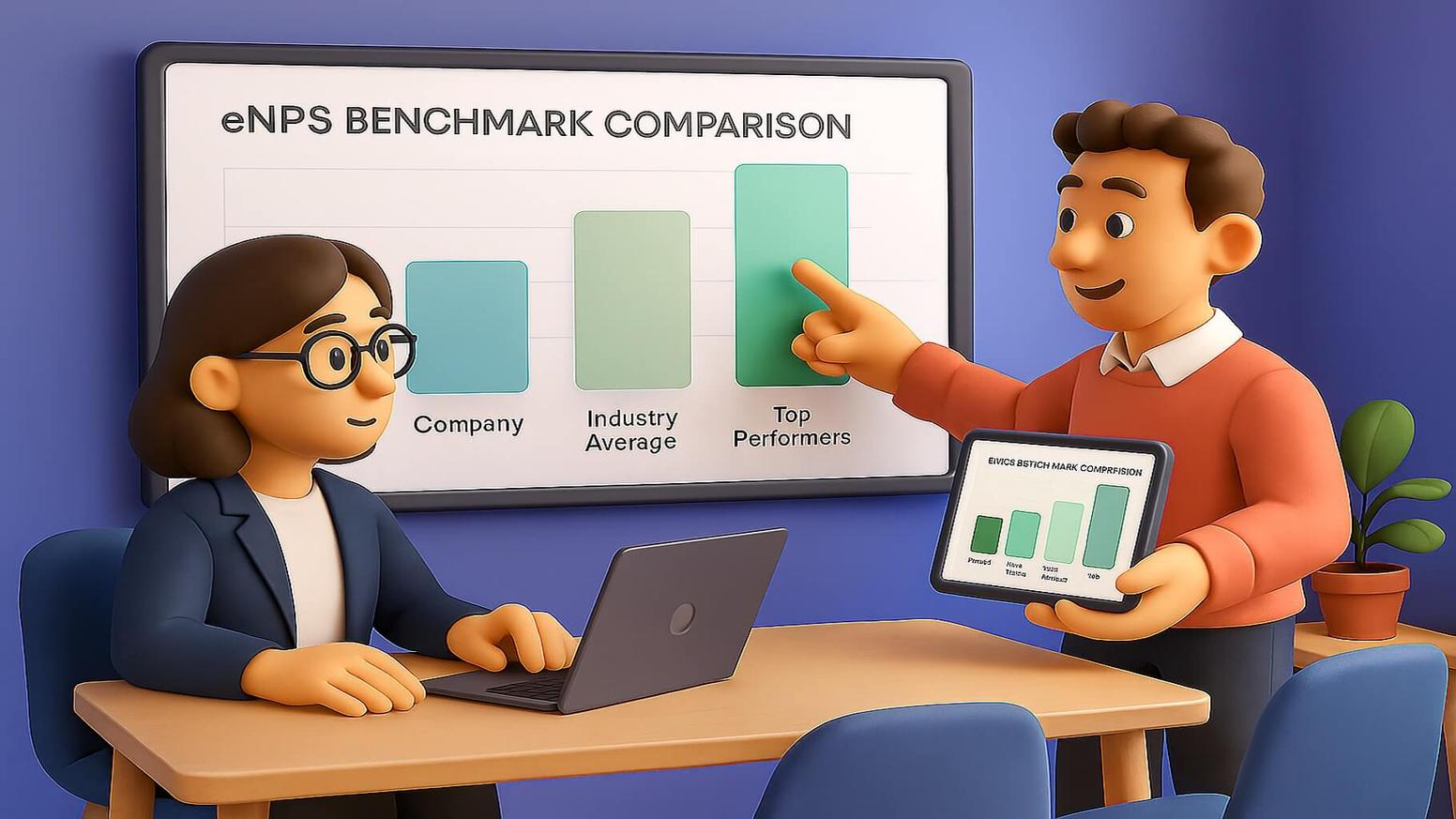
The employee experience technology landscape includes diverse eNPS software options, ranging from enterprise solutions with advanced predictive analytics to budget-friendly platforms that offer core measurement capabilities. Major organizations across industries use these tools, from technology companies to media organizations like the Associated Press, which developed an eNPS specifically for news production environments requiring rapid sentiment tracking.
Organizations should evaluate platforms based on their specific needs, including company size, existing technology stack, budget constraints, required integrations with recognition or rewards systems, and desired analytics sophistication. The following platforms represent leading solutions across different organizational contexts, each offering unique features that address specific measurement and engagement challenges.
5 enterprise eNPS software solutions
Enterprise organizations require eNPS software that handles thousands of employees across multiple locations while providing sophisticated analytics, predictive intelligence, and integration with complex HRIS ecosystems. These platforms typically offer advanced features, including department-level benchmarking, manager enablement tools, predictive models identifying retention risks, and white-glove implementation support. While enterprise solutions involve higher costs and longer implementation timelines, they provide the scalability, security, and analytical depth that large organizations need to drive meaningful culture change at scale.
1. Matter
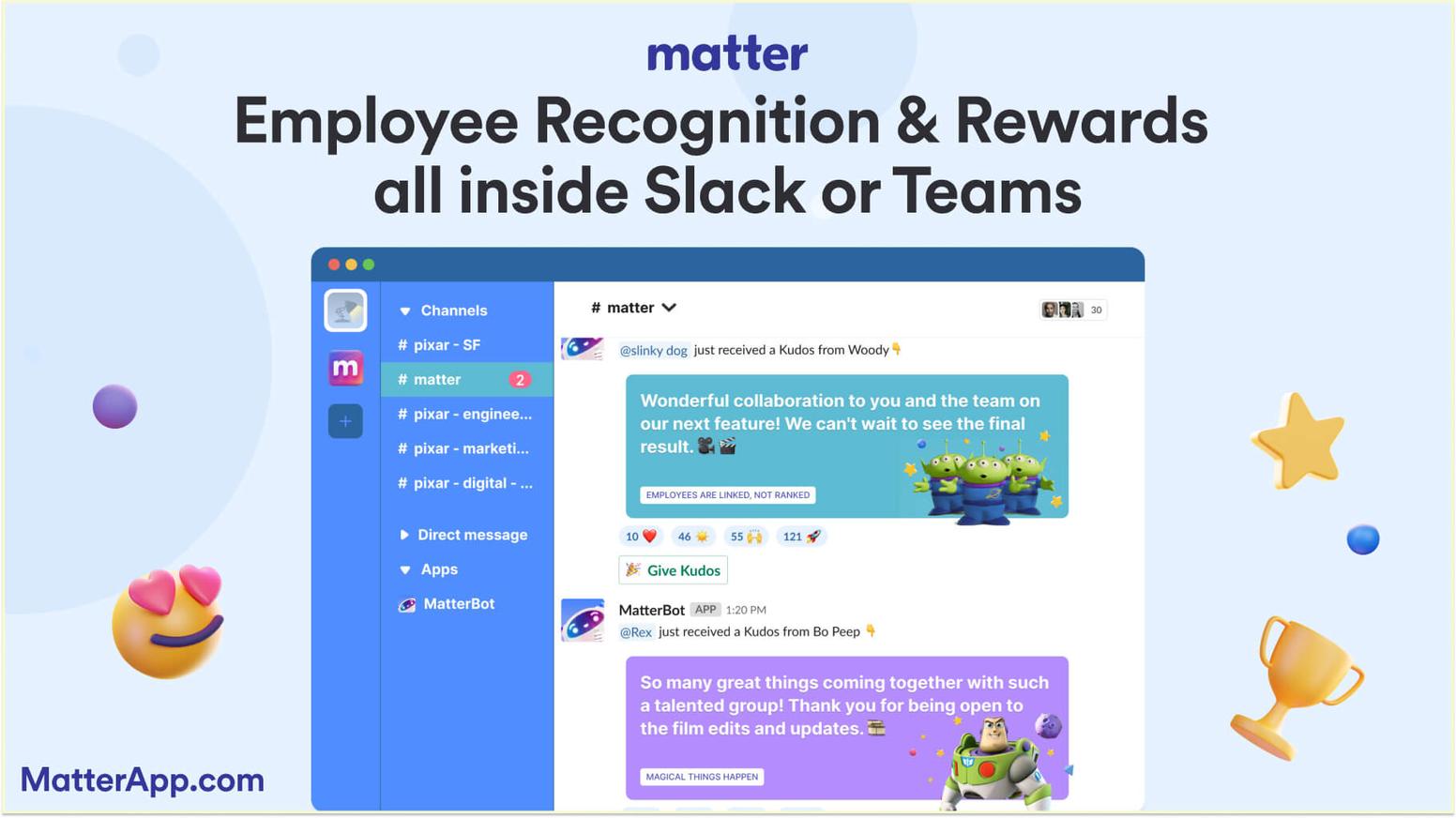
About Matter: Matter is a forward-thinking Slack-first and Teams-first recognition platform that integrates powerful eNPS measurement directly into daily workplace communication channels. Its research-backed 5-point Likert scale (1-5) maximizes response rates by reducing survey completion time and eliminating confusion about numerical scale meanings that plague traditional 0-10 approaches. Matter's methodology calculates eNPS where only 5 (strongly agree) equals promoters, only 4 (agree) equals passives, and 1 through 3 (strongly disagree, disagree, and neutral) equals detractors. Matter's intuitive design enables organizations to deploy automated eNPS surveys in minutes, with customizable frequencies and immediate dashboard visibility that help managers respond to shifts in employee sentiment quickly.
Matter goes beyond standalone eNPS measurement by connecting survey data directly to its recognition and rewards systems, creating closed-loop feedback programs where positive scores trigger celebration while concerns prompt supportive manager interventions. The platform automates recurring surveys via Slack and Teams, enabling employees to provide honest feedback without leaving their primary communication tools and significantly improving participation rates. With robust analytics showing trends over time, department-level comparisons, and integration with leading HRIS systems, Matter transforms eNPS from a static measurement into an active engagement driver that helps organizations build cultures where employees feel valued and heard.
Matter main features:
- Seamless Slack and Microsoft Teams integration for instant feedback collection without disrupting workflows
- Research-backed 5-point Likert scale (1-5) maximizing response rates through reduced completion time
- Real-time dashboards providing immediate visibility into team sentiment and engagement trends
- Native recognition and rewards integration connecting eNPS insights to appreciation programs
- Automated survey distribution with customizable frequencies supporting continuous feedback
- Anonymous response collection protecting employee privacy while encouraging authentic feedback
- Department-level segmentation, identifying which teams thrive and which need support
Matter pricing:
- Free Forever: $0/user/month
- Basic: $1/user/month, billed annually
- Pro: $3/user/month, billed annually
- Pro + Surveys: $5/user/month, billed annually
To learn more, view Matter's pricing page.
Matter G2 score: Matter has a G2 score of 4.7/5 based on user reviews.
What Matter customers are saying: "Matter helps us connect and interact while showing people what kind of culture we strive for — we want people to be themselves and feel free to play and have fun at work!” - Leah Howse, Head of Staff at BRIO (Customer Story).
2. Qualtrics EmployeeXM
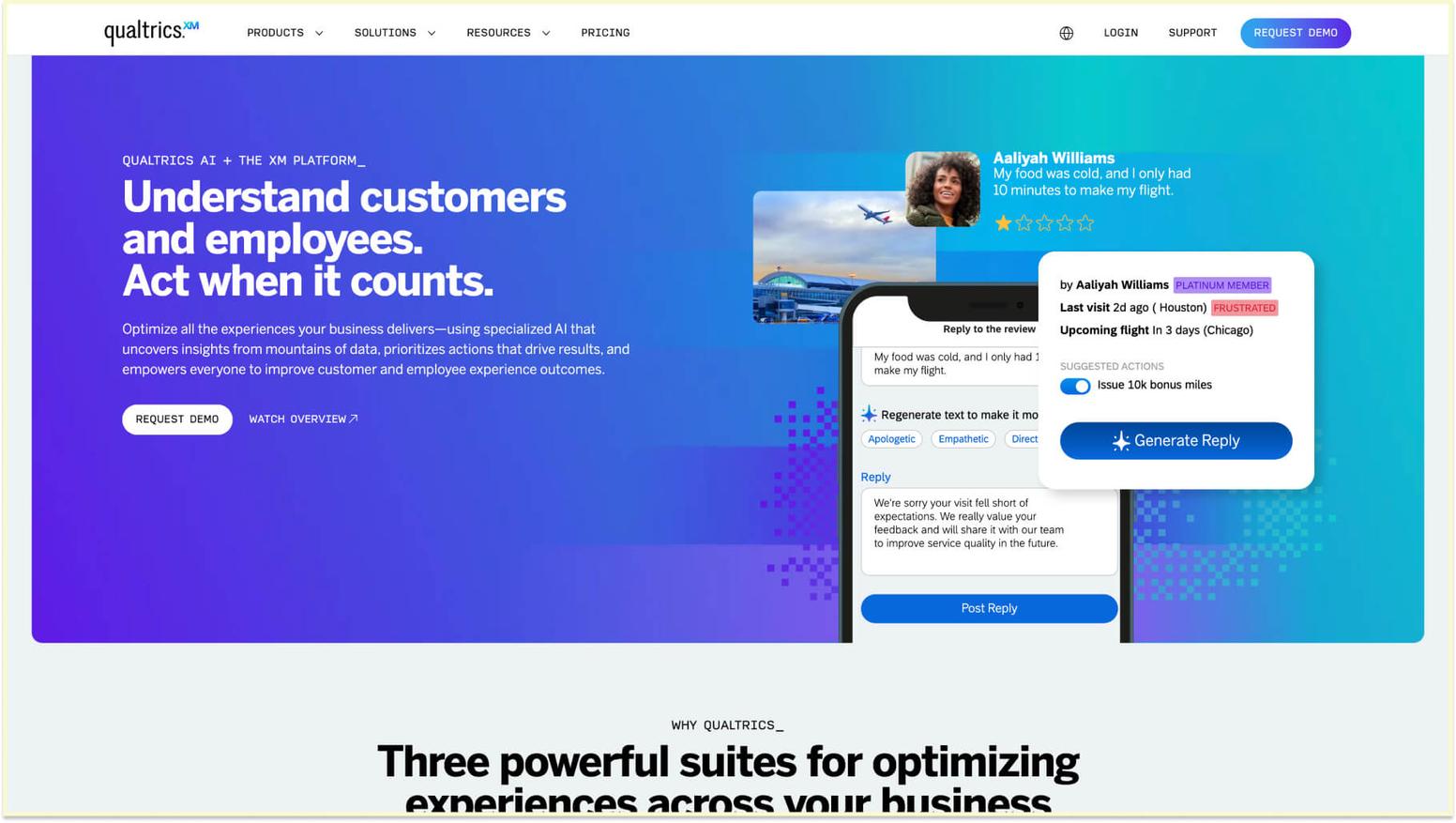
About Qualtrics EmployeeXM: Qualtrics EmployeeXM offers enterprise experience management solutions with advanced analytics capabilities and predictive intelligence that help organizations identify retention risks before they materialize. The platform provides sophisticated segmentation, allowing detailed analysis of eNPS data across different employee groups. Advanced analytics and benchmarking features help organizations compare their scores against industry standards and identify trends over time.
Qualtrics EmployeeXM main features:
- Enterprise-grade survey capabilities with comprehensive experience management
- Advanced analytics and industry benchmarking for competitive insights
- Sophisticated segmentation for detailed analysis across employee groups
- Action planning tools for translating insights into improvement initiatives
Qualtrics EmployeeXM pricing: Pricing is not listed on the website. To learn more about pricing, you'll need to schedule a demo/sales call with Qualtrics EmployeeXM.
Qualtrics EmployeeXM G2 score: Qualtrics EmployeeXM has a G2 score of 4.4/5 based on user reviews.
What Qualtrics EmployeeXM customers are saying on G2: “Preston Donohoo, with Red Pepper, has been fantastic to partner with. He is thorough, excellent at training and his customer support is outstanding. He made our implementation go very smoothly. We have found the Qualtrics engagement survey and 360s tools easy to use, with the ability to dive deep into our results. We would definitely recommend Qualtrics to others.” - Kelli G., Global Talent Manager (G2 Review for Qualtrics EmployeeXM).
3. Culture Amp
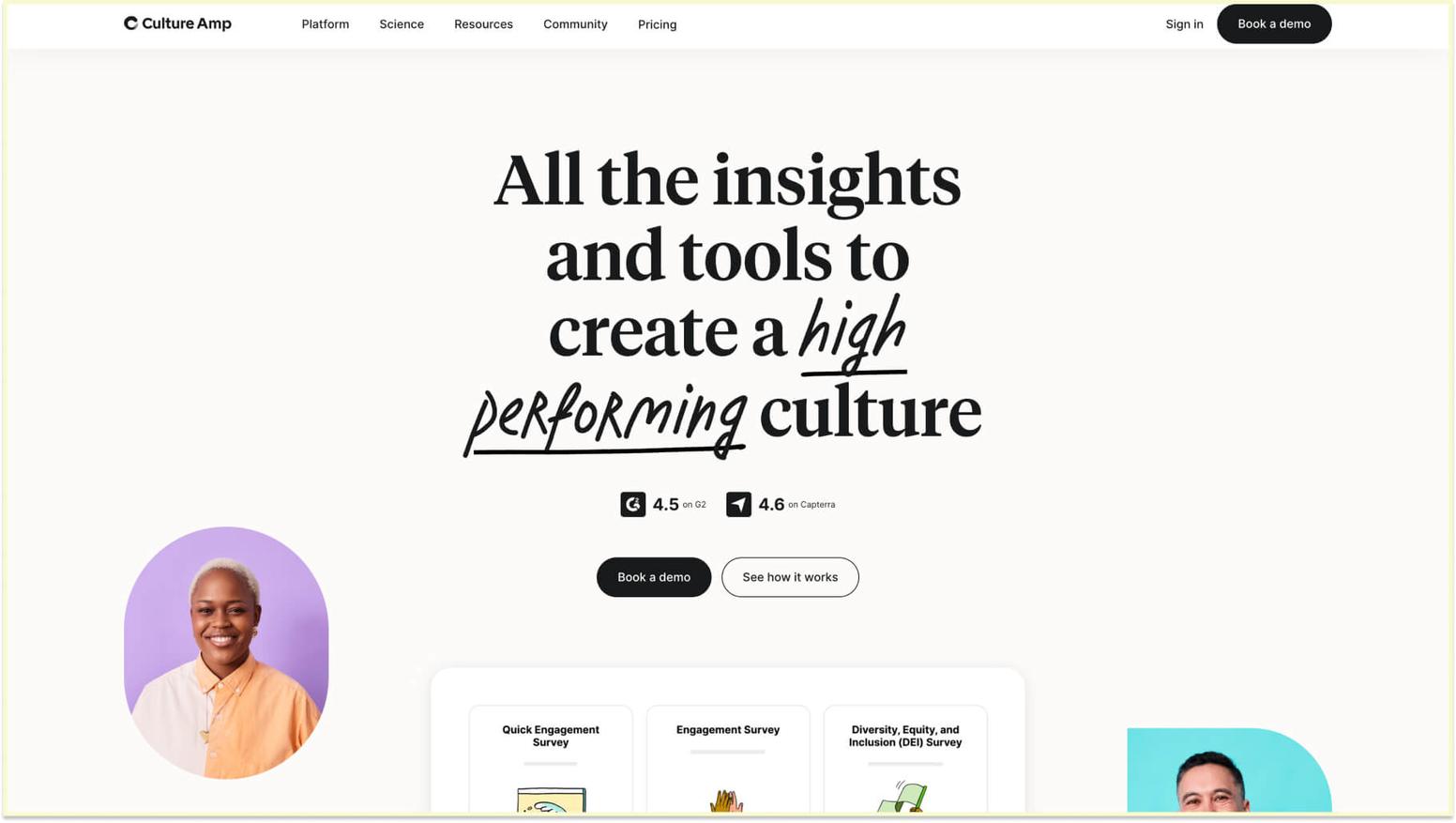
About Culture Amp: Culture Amp provides research-backed eNPS survey methodology with extensive industry benchmarking data that helps organizations understand how their employee loyalty compares to competitors. The platform's strength lies in its action-planning features, which help organizations develop specific initiatives based on eNPS results. Sophisticated analytics identify correlations between eNPS scores and other employee engagement metrics.
Culture Amp main features:
- Research-backed survey templates with validated question sets, ensuring reliable measurement
- Comprehensive industry benchmarking enabling competitive analysis across sectors
- Action planning tools guiding managers through appropriate responses to survey feedback
- Sophisticated analytics identifying correlations with other engagement metrics
Culture Amp pricing:
- Engage: contact the sales team for exclusive features
- Perform: contact the sales team for exclusive features
- Develop: contact the sales team for exclusive features
- People Analysis: contact the sales team for exclusive features
To learn more, view Culture Amp’s pricing page.
Culture Amp G2 score: Culture Amp has a G2 score of 4.5/5 based on user reviews.
What Culture Amp customers are saying on G2: “I’ve been using this software for a while now, and one of its standout features is how well-organized the system is. Everything is laid out in a clear and intuitive way, making it easy to navigate. Additionally, the punctuality of the communications is exceptional – notifications and updates are always timely, ensuring that I stay on top of tasks and deadlines. It’s a reliable tool for those who value efficiency and clear communication. Highly recommended!” - Anna L., SEO Consultant (G2 Review for Culture Amp).
4. Glint
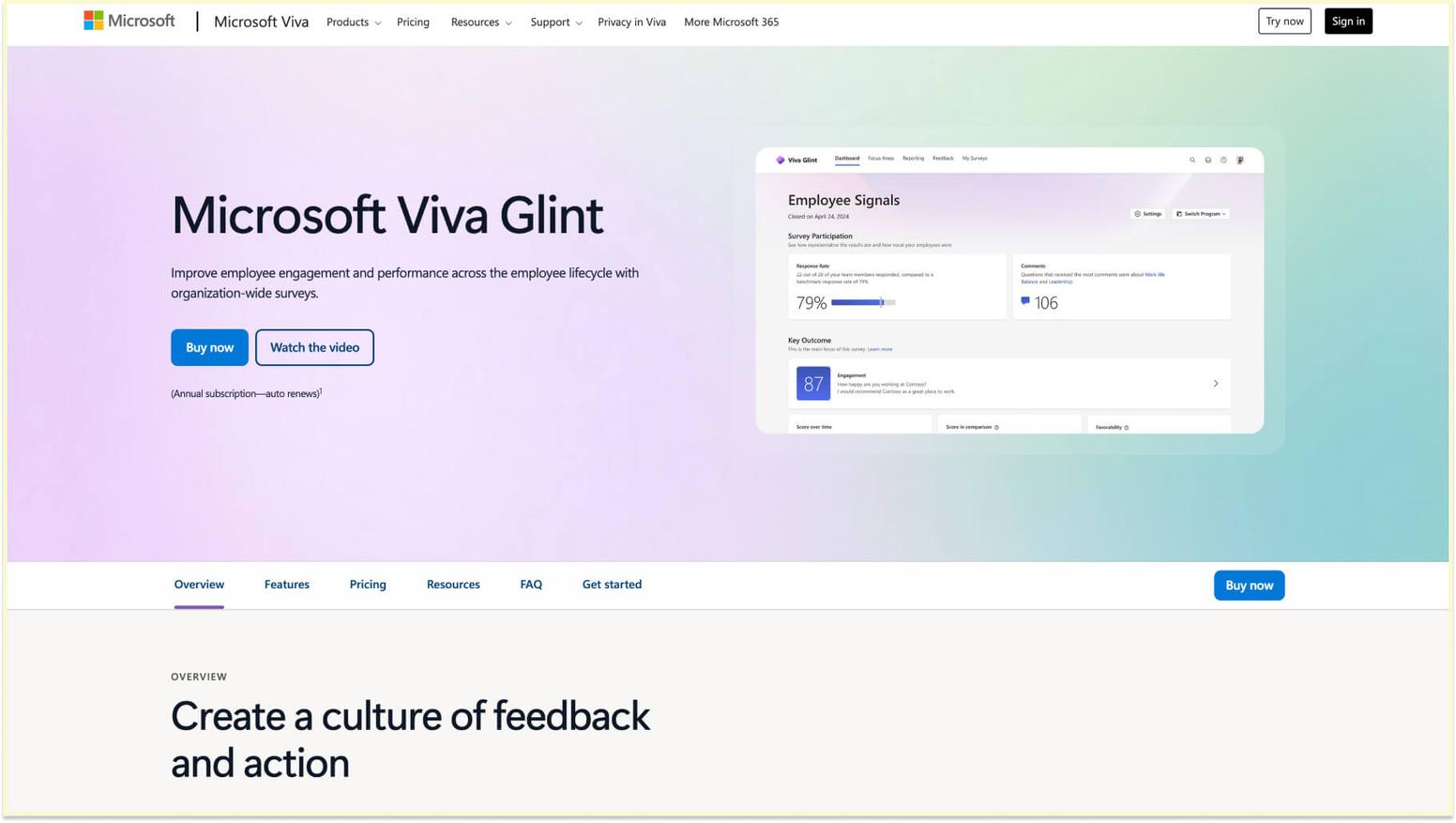
About Glint: Glint offers continuous listening platforms with real-time eNPS tracking and manager enablement dashboards that help team leaders respond effectively to shifts in employee sentiment. The platform's analytics correlate eNPS trends with business performance metrics, helping organizations demonstrate tangible ROI from engagement investments.
Glint main features:
- Continuous listening approach enabling frequent eNPS measurement without survey fatigue
- Real-time dashboards with immediate score updates as employee responses arrive
- Predictive analytics identifies retention risks and forecasts future engagement trends
- Manager enablement tools providing suggested actions based on team-specific feedback
Glint pricing:
- Microsoft Viva Employee: $2.00 user/month (Annual commitment)
- Microsoft Viva Workplace: $6.00 user/month (Annual commitment)
- Microsoft Viva Suite: $12.00 user/month (Annual commitment)
To learn more, view Glint’s pricing page.
Glint G2 score: Glint has a G2 score of 4.6/5 based on user reviews.
What Glint customers are saying on G2: “Good depiction of data, easy to view formats with a variety of different cuts of data available. Not super user-friendly, requires too many clicks to filter the data needed.” - Anjali A., Human Resources Consultant (G2 Review for Software).
5. WorkTango
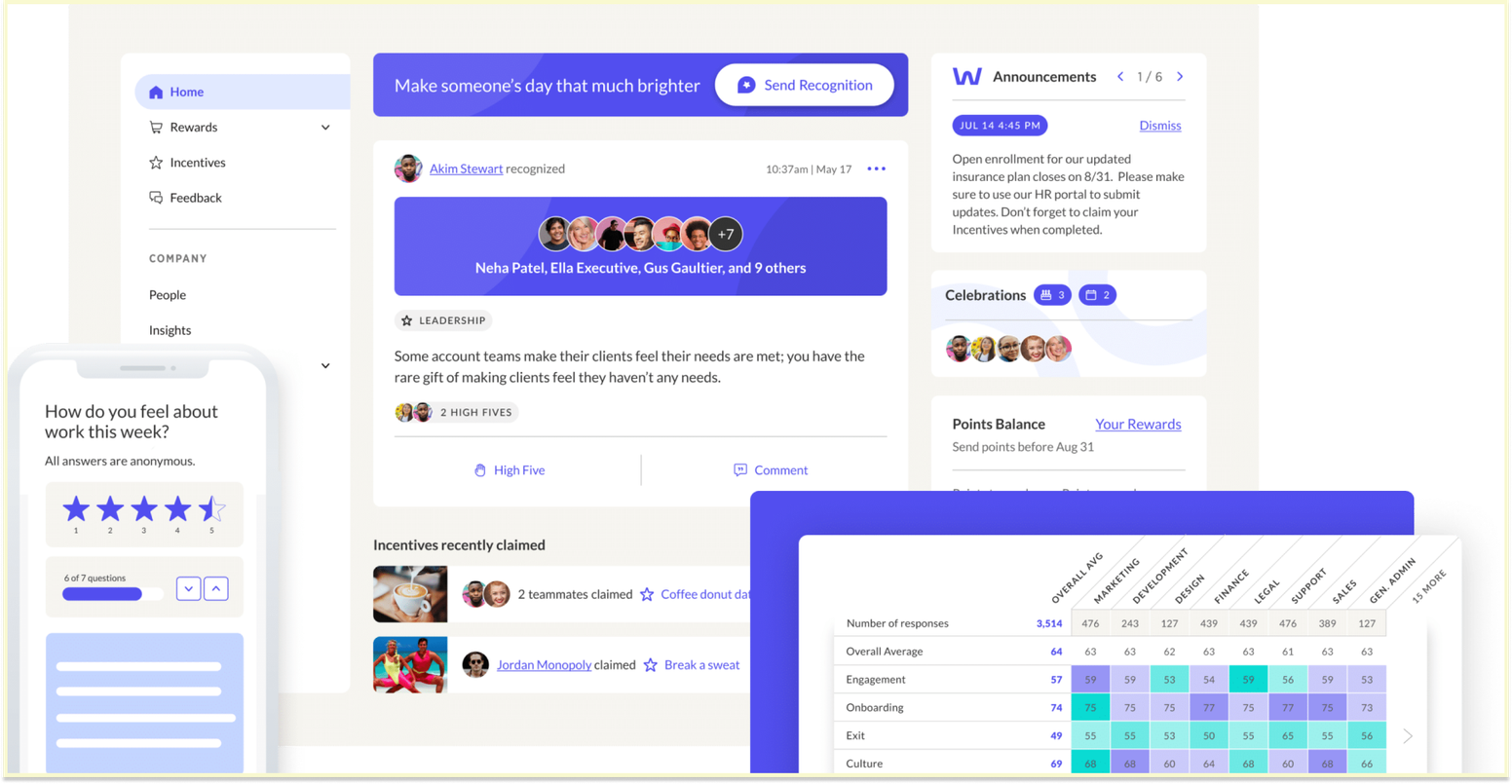
About WorkTango: WorkTango combines recognition and survey platforms to measure employee experience holistically through integrated feedback and appreciation systems. The platform connects sentiment measurement directly to recognition and rewards programs, creating closed-loop systems where feedback drives visible improvements.
WorkTango main features:
- Combined recognition and survey capabilities eliminate the need for separate platforms
- Integration between feedback collection and rewards programs, enabling immediate response
- Analytics correlating recognition activity with engagement score improvements
- Manager dashboards providing visibility into team sentiment and recognition patterns
WorkTango pricing: Pricing is not listed on the website. To learn more about pricing, you'll need to schedule a demo/sales call with WorkTango.
WorkTango G2 score: WorkTango has a G2 score of 4.6/5 based on user reviews.
What WorkTango customers are saying on G2: “Many bugs, inability to put in feature requests in a meaningful way, inability to add "all employees" to a perform cycle (must add individually or by department), lack of documentation or instruction on how to set-up a perform card or leverage modules for their best impact. Seems like there is a focus on certain tools (Feedback) but not on others (Perform) - not encouraging when we leverage perform the most out of all the modules. Also, an inability to use in-line GIF images in recognition module - a number of competitors offer this feature and it adds a lot of personality to the process.” - Verified User in Internet (Customer G2 Review).
5 mid-market eNPS survey software options
Mid-market organizations need eNPS software that balances advanced capabilities with reasonable pricing and implementation complexity that doesn't require dedicated IT teams. These platforms typically offer core measurement features, workplace tool integrations, and sufficient analytics for strategic decision-making without the extensive customization options and white-glove support that enterprise solutions provide. The following options serve growing organizations seeking professional eNPS measurement without enterprise-level budget commitments.
6. Matter
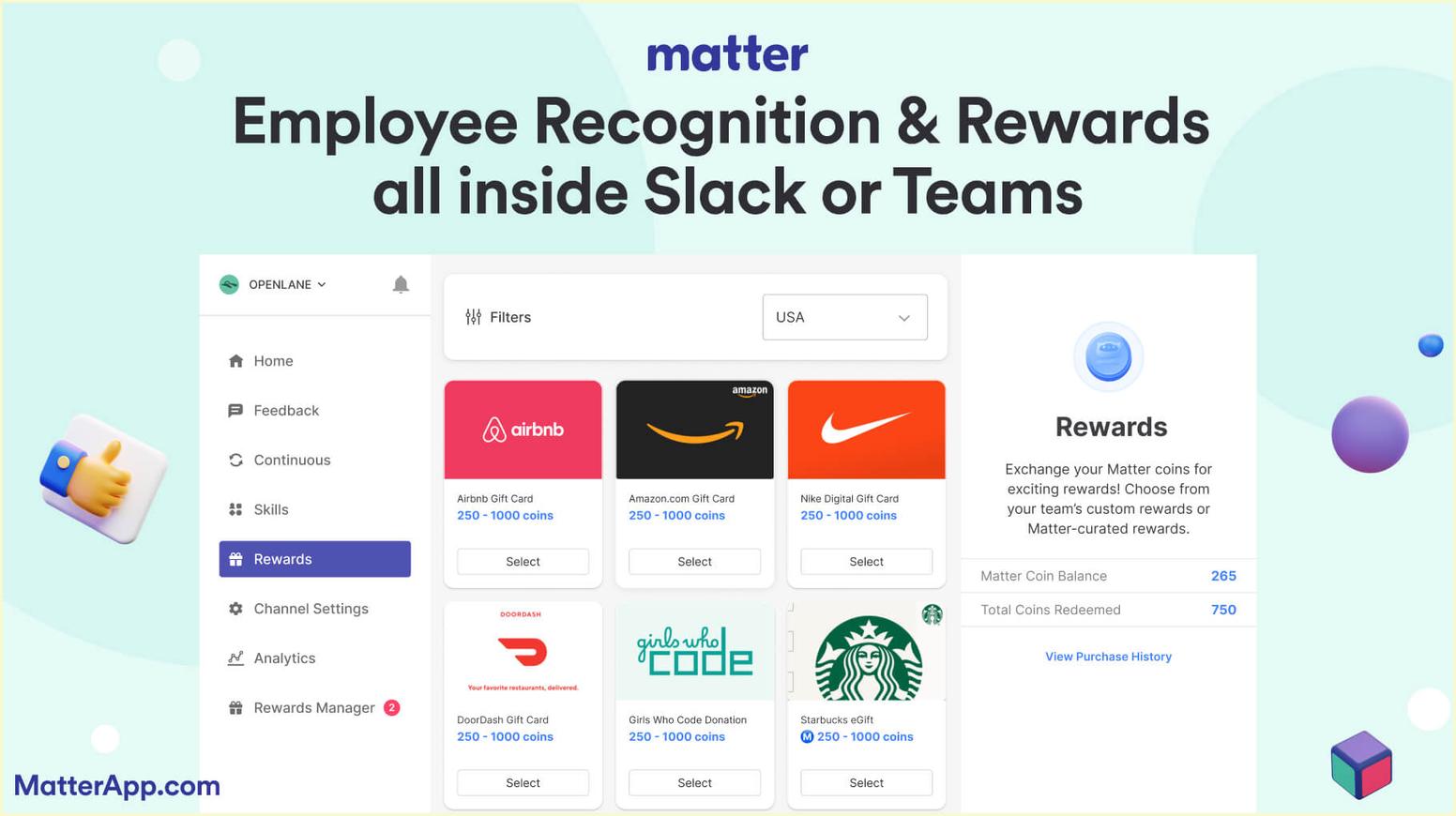
About Matter: Matter serves mid-market organizations exceptionally well by combining enterprise-grade eNPS capabilities with pricing that fits growing company budgets and setup processes that take minutes rather than months. The platform's research-backed 5-point Likert scale (1-5) achieves significantly higher response rates than traditional approaches by eliminating confusion about scale meanings and reducing survey completion time. Matter's methodology calculates eNPS where only 5 (strongly agree) equals promoters, only 4 (agree) equals passives, and 1 through 3 (strongly disagree, disagree, and neutral) equals detractors. Matter's Slack and Teams integration ensures employees encounter surveys in their daily workflows rather than through separate portals, which creates friction and reduces participation.
Matter's automated survey distribution handles recurring eNPS measurement without ongoing HR team involvement, while providing real-time dashboards that surface engagement trends in real time. The platform's native integration with its recognition and reward systems creates powerful feedback loops where positive sentiment triggers celebration and declining scores prompt supportive manager interventions. With setup completed in under two minutes and pricing starting with a fully-functional free plan, Matter eliminates the traditional barriers that prevent mid-market organizations from implementing professional eNPS measurement programs.
Matter main features:
- Affordable pricing with 10x higher response rates via Slack and Teams
- Research-backed 5-point Likert scale (1-5) methodology for maximum usability
- Quick setup in minutes with intuitive design
- Real-time Slack and Teams integration, eliminating separate login requirements
- Automated survey scheduling ensures consistent measurement without manual work
- Combined recognition platform creating closed-loop feedback systems
Matter pricing:
- Free Forever: $0/user/month
- Basic: $1/user/month, billed annually
- Pro: $3/user/month, billed annually
- Pro + Surveys: $5/user/month, billed annually
To learn more, view Matter's pricing page.
Matter G2 score: Matter has a G2 score of 4.7/5 based on user reviews.
What Matter customers are saying: "I was astonished at the start because I was used to feedback tools being very unemotional and static. That’s why I love Matter, because it provides necessary structure for an organization while allowing feedback to be enjoyable and personable.” - Dominik Bernhart, Chief Happiness Officer at COBE (Customer Story).
7. Lattice
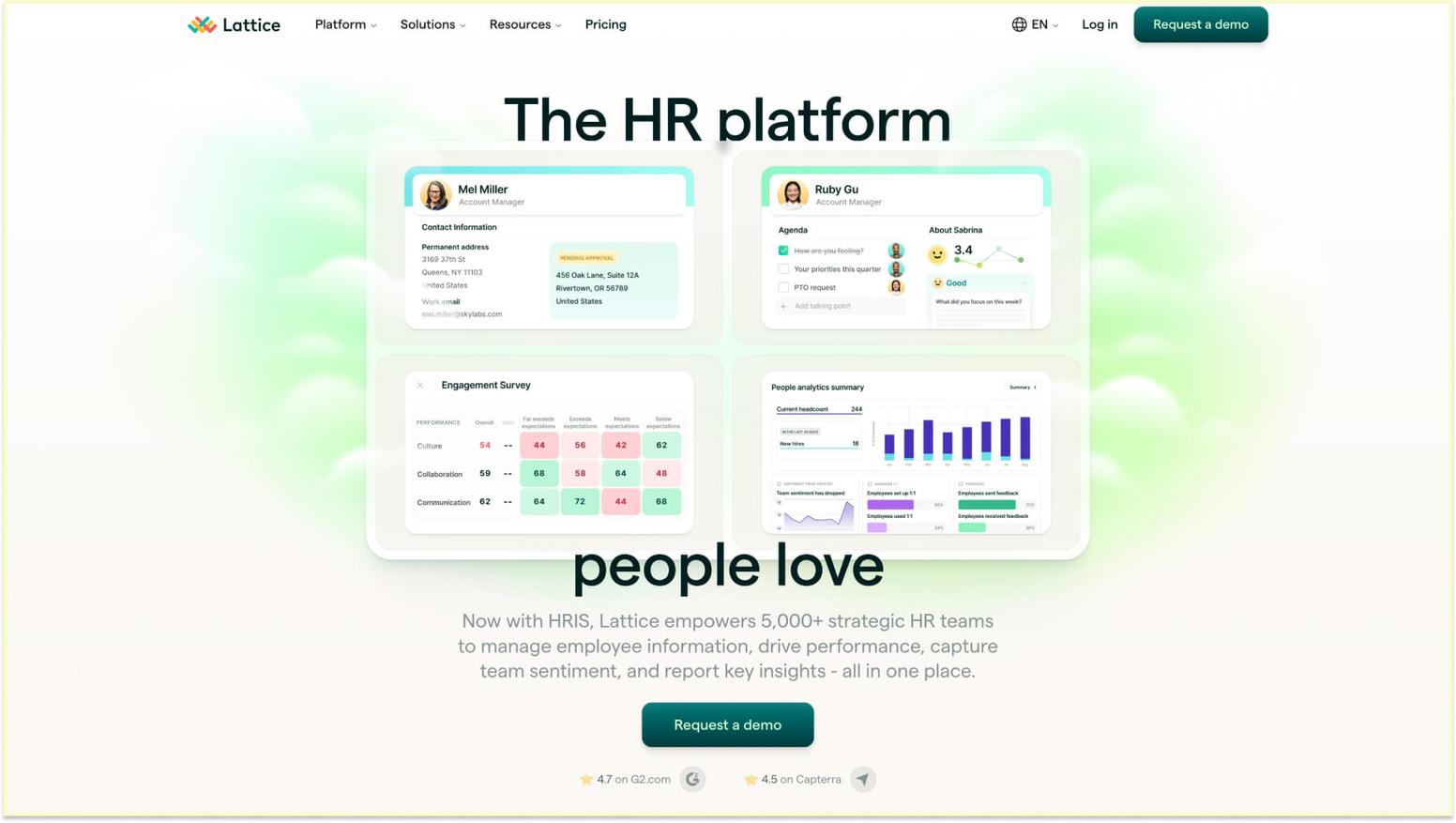
About Lattice: Lattice combines performance management and engagement measurement in a unified platform that helps organizations correlate eNPS trends with individual development and team performance. The platform integrates with communication tools and HR systems, providing a comprehensive view of the employee experience from hiring through ongoing development.
Lattice main features:
- Combined performance and engagement measurement on a single platform
- Integration with HRIS systems and communication tools like Slack
- Manager dashboards showing team engagement alongside performance data
- Goal setting and OKR features connecting engagement to business objectives
Lattice pricing:
- Talent Management: $11/seat/month
- Foundation: $11/seat/month
- Engagement: $4/seat/month
- Grow: $4/seat/month
- Compensation: $6/seat/month
To learn more, view Lattice’s pricing page.
Lattice G2 score: Lattice has a G2 score of 4.7/5 based on user reviews.
What Lattice customers are saying on G2: “Ease of use and ease of implementation. The implementation time commitment was hours not weeks. We initially implemented all modules except Grow, Comp, and Engage and manged to configure and test all modules in less than two weeks. The product team is very receptive to feedback and also able to help come up with creative workarounds for functional gaps. The customer support is great and very responsive.” - Matthew H., Senior Human Resources Manager (G2 Review for Lattice).
8. 15Five
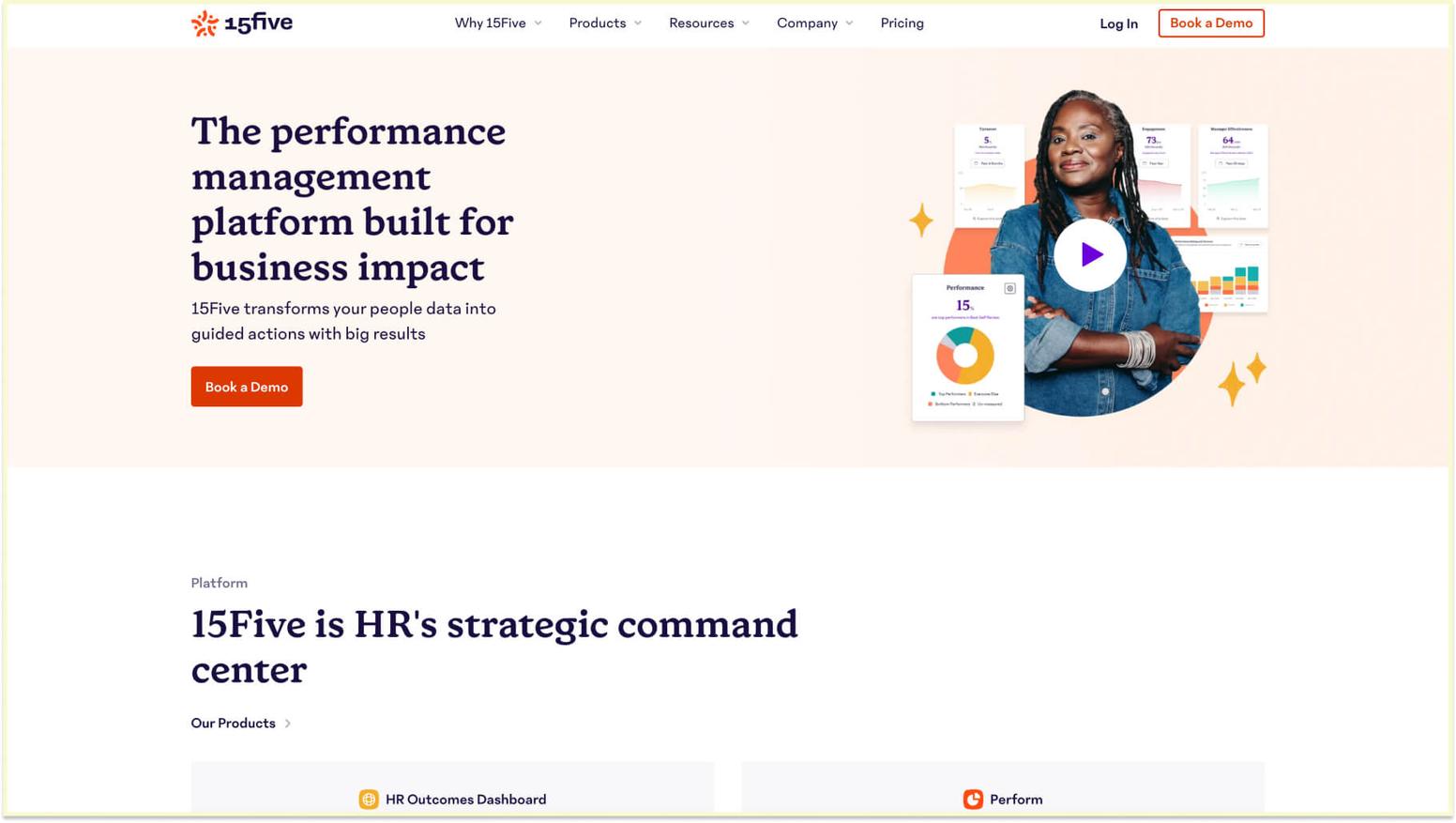
About 15Five: 15Five embeds eNPS tracking in weekly check-ins that capture ongoing employee sentiment without requiring separate survey campaigns. The platform's OKR alignment capabilities connect engagement metrics to business goals, demonstrating how employee loyalty affects organizational performance and the achievement of strategic objectives.
15Five main features:
- Weekly check-in integration embedding eNPS measurement in regular workflows
- Manager training resources explaining how to respond to different score levels
- OKR alignment connecting engagement data to business goal achievement
- Performance review integration correlating engagement with individual outcomes
15Five pricing:
- Engage: $4/user/month, billed annually
- Perform: $11/user/month, billed annually
- Total Platform: $16/user/month, billed annually
To learn more, view 15Five's pricing page.
15Five G2 score: 15Five has a G2 score of 4.6/5 based on user reviews.
What 15Five customers are saying on G2: “We have built a company wide OKR tied to our company wide average Pulse score. It is an easy check of how the company is "feeling" from week to week, and over the last 2 years, I have found it to be accurate, important and super easy for the team to adopt and stay consistent in use.”- Dan A., Small-Business (G2 Review for 15Five).
9. TINYpulse
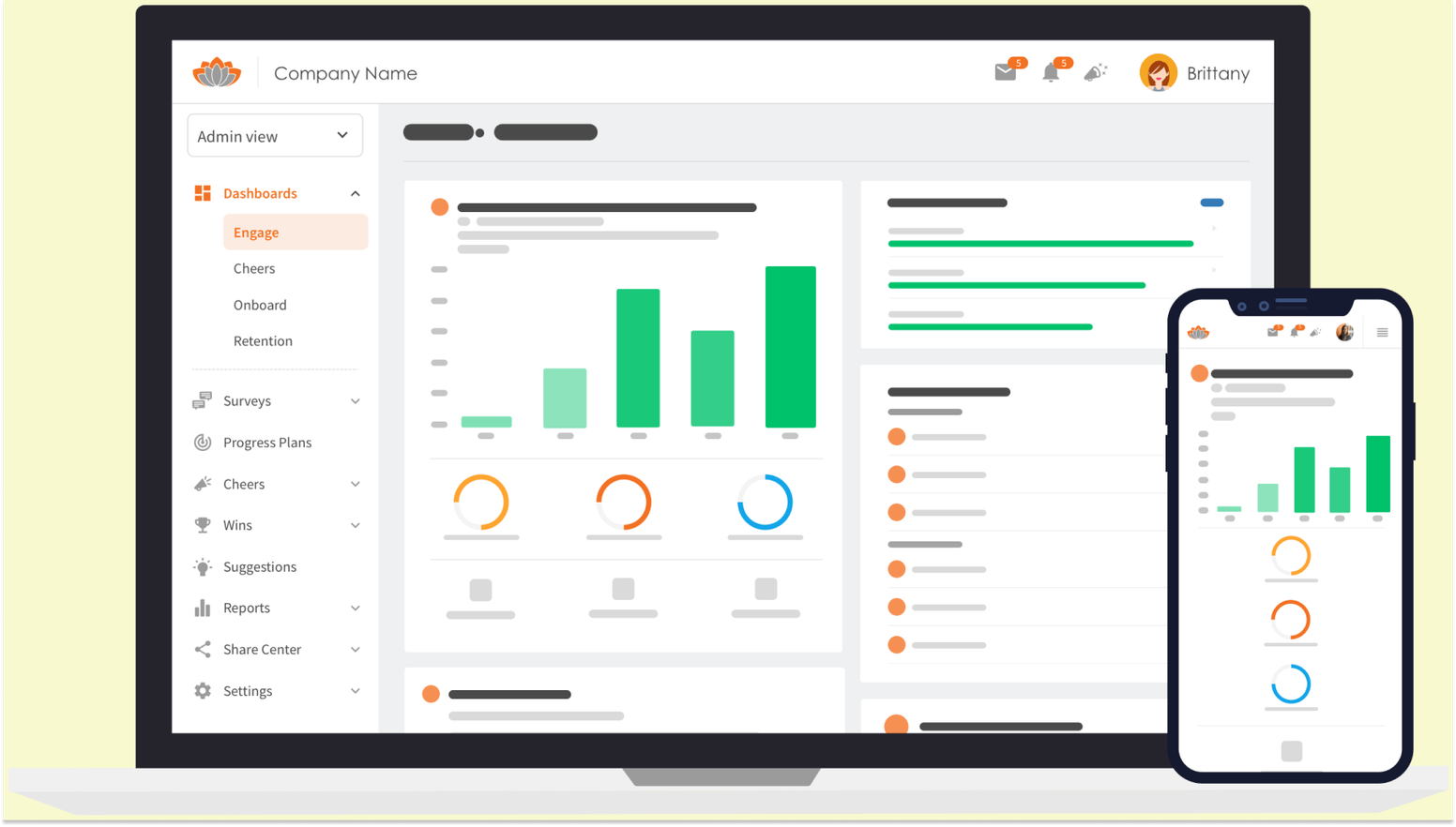
About TinyPulse: TinyPulse emphasizes anonymous eNPS surveys that encourage honest feedback by protecting employee privacy. The platform's engagement analytics dashboard presents eNPS data alongside other key employee experience metrics, while regular pulse check capabilities enable frequent measurement without survey fatigue through brief, focused questions.
TinyPulse main features:
- Anonymous surveys for encouraging honest employee feedback
- Recognition and peer feedback features for positive reinforcement
- Engagement analytics dashboard with comprehensive metrics
- Regular pulse checks without survey fatigue
TinyPulse pricing: Pricing is not listed on the website. To learn more about pricing, you'll need to schedule a demo/sales call with TinyPulse.
TinyPulse G2 score: TinyPulse has a G2 score of 4.9/5 based on user reviews.
What TinyPulse customers are saying on G2: “Every part of it. It claims to be anonymous, but I was told it is not and that that is a false and misleading statement.” - Verified User in Automotive.
10. Achievers
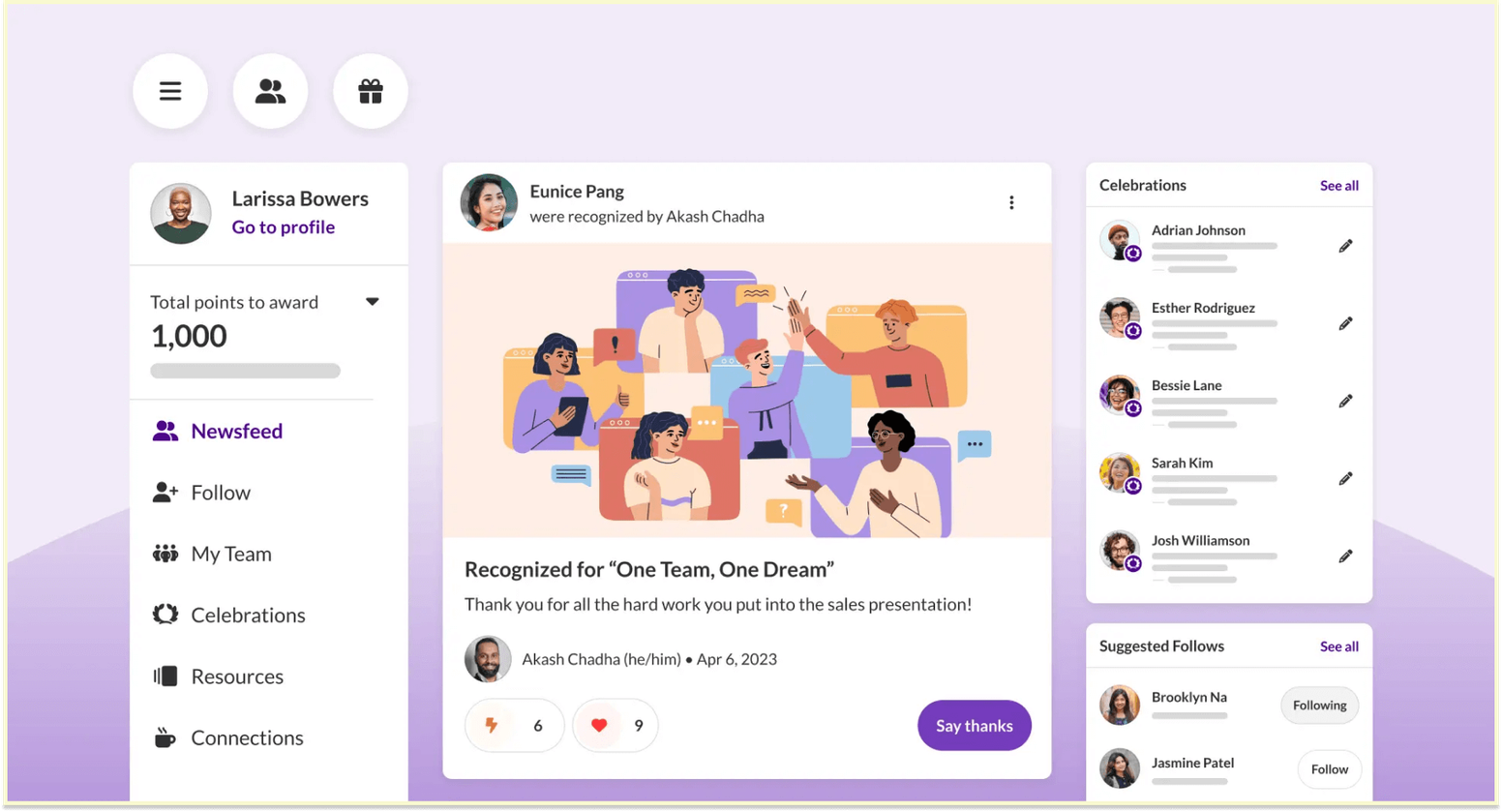
About Achievers: Achievers provides recognition platforms with embedded eNPS measurement capabilities that connect sentiment tracking directly to appreciation programs. The platform's social recognition walls create public celebration spaces that reinforce positive company culture, while eNPS data identifies teams that need additional support.
Achiever main features:
- Recognition platform with integrated eNPS measurement capabilities
- Public recognition walls celebrating employee contributions and achievements
- Points-based rewards system redeemable for merchandise and gift cards
- Manager insights correlating recognition activity with engagement scores
Achievers pricing: Pricing is not listed on the website. To learn more about pricing, you'll need to schedule a demo/sales call with Achievers.
Achievers G2 score: Achievers has a G2 score of 4.7/5 based on user reviews.
What Achievers customers are saying on G2: “Achievers reporting is very disconnected. You need to pull multiple reports in order to see everything needed and/or to create the report that we need for our business teams. When requesting reports from their data team (that are currently separate reports), we are led to believe the report will be created only to find out that the data team cannot provide the requested data. There have also been several bugs in reporting that make our teams not feel confident in the data being provided.” - Verified User in Insurance (Customer G2 Review).
5 budget-friendly eNPS software platforms
Small teams and startups need eNPS measurement capabilities without enterprise-level budget commitments or implementation complexity. Budget-friendly platforms often provide core measurement features through simplified interfaces, but may limit customization, integration depth, or advanced analytics compared to premium solutions. These options enable resource-constrained organizations to begin systematic eNPS tracking and establish baseline measurements before potentially upgrading to more sophisticated platforms as they grow.
11. Matter
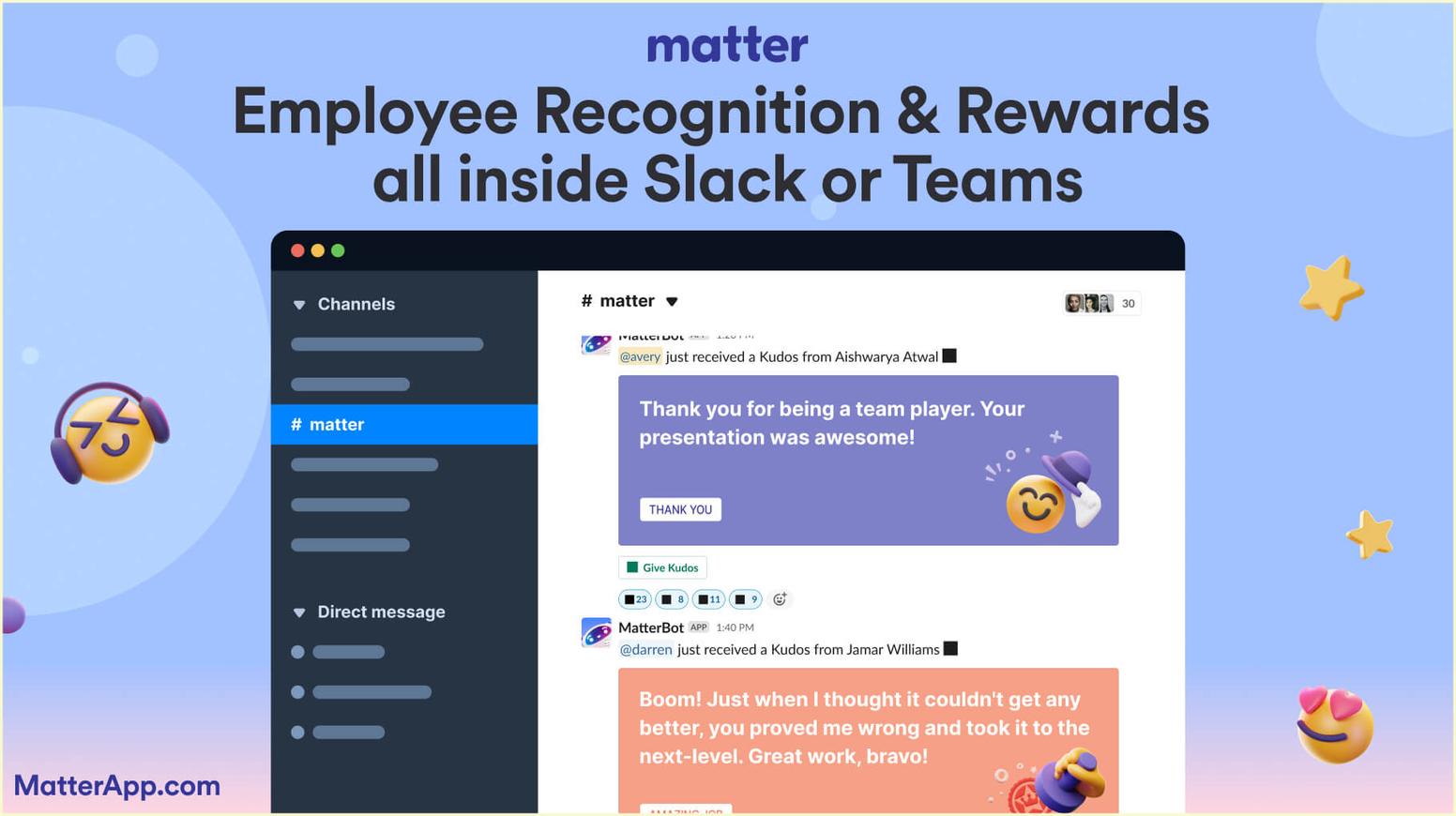
About Matter: Matter offers exceptional value for budget-conscious organizations through its Free Forever plan that includes core eNPS functionality without artificial feature limitations or time restrictions. The platform's research-backed 5-point Likert scale (1-5) requires no training while achieving higher response rates than complex numerical scales that confuse employees. Matter's methodology uses only 5 (strongly agree) for promoters, only 4 (agree) for passives, and 1 through 3 (strongly disagree, disagree, and neutral) for detractors. Matter's low per-user cost starting at just $1 monthly for paid features makes it affordable even for small teams while providing enterprise-grade capabilities, including real-time tracking, automated distribution, and recognition integration.
Matter eliminates the traditional tradeoff between affordability and quality by delivering professional eNPS measurement through an interface so simple that organizations deploy surveys within minutes of signing up. The platform's Slack and Teams integration means employees don't need separate logins or app downloads, removing friction that typically reduces participation in budget survey tools. With comprehensive analytics, department segmentation, and connection to its recognition and rewards features, Matter proves that budget-friendly eNPS software doesn't require sacrificing the capabilities that drive meaningful engagement improvements.
Matter main features:
- Free Forever plan, including core eNPS measurement without feature restrictions
- Research-backed 5-point Likert scale (1-5), maximizing response rates through easy adoption
- Low per-user cost starting at $1 monthly for growing teams
- Real-time dashboards providing immediate visibility into engagement trends
- Automated survey distribution, eliminating manual work for resource-constrained hr teams
- Native Slack and Teams integration requiring no separate app downloads
Matter pricing:
- Free Forever: $0/user/month
- Basic: $1/user/month, billed annually
- Pro: $3/user/month, billed annually
- Pro + Surveys: $5/user/month, billed annually
To learn more, view Matter's pricing page.
Matter G2 score: Matter has a G2 score of 4.7/5 based on user reviews.
What Matter customers are saying: “The reward options that you can redeem Matter coins for are unrivaled! Definitely the most extensive selection of companies/gift cards to choose from.” - Chris Miller, E-Commerce Manager at DYODE (Customer Story).
12. SurveyMonkey
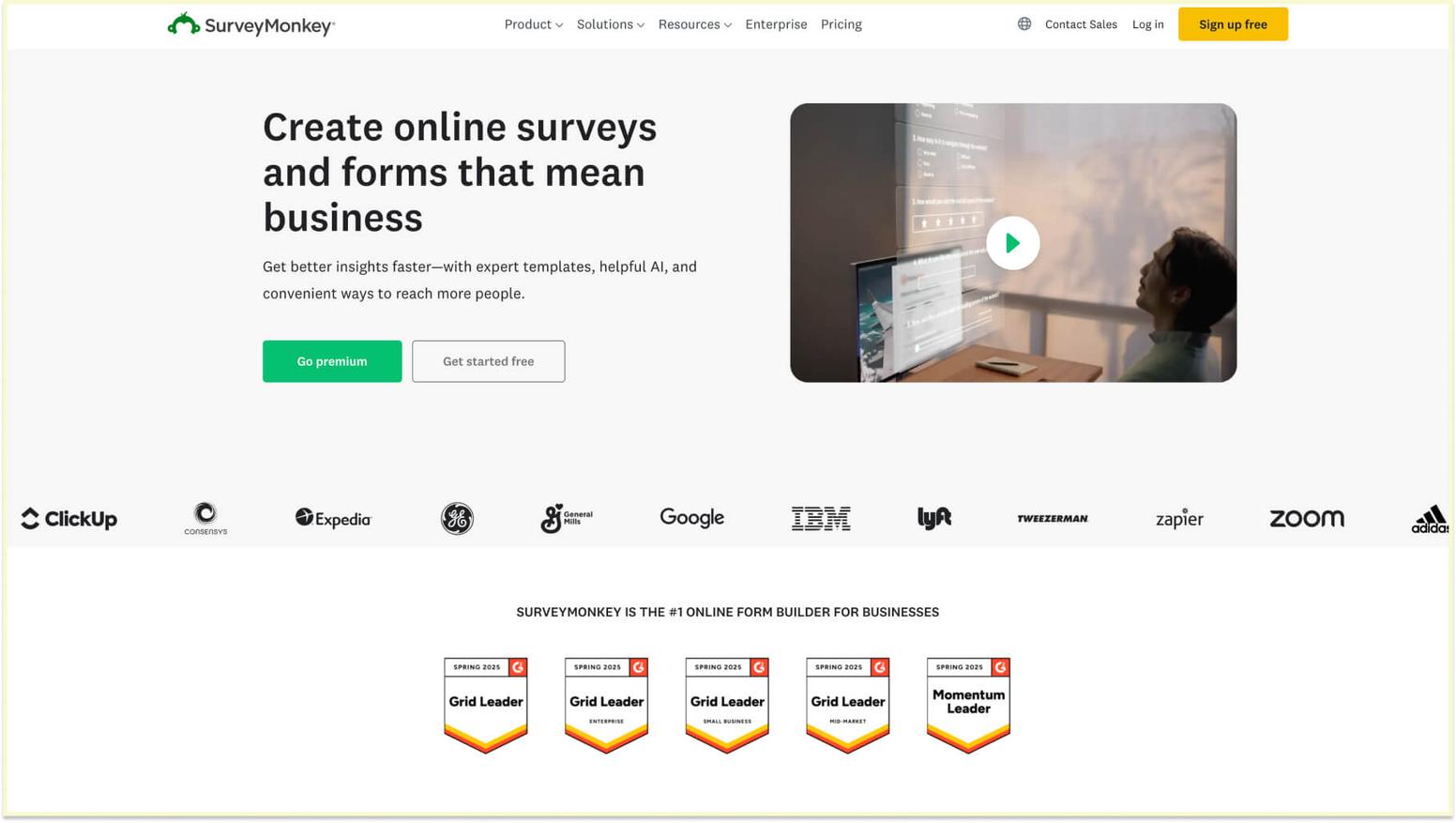
About SurveyMonkey: SurveyMonkey provides pre-built eNPS survey templates enabling immediate deployment without custom question design or survey building expertise. The platform supports customizable rating scales, including traditional options that organizations can test to identify what maximizes their specific employee response rates.
SurveyMonkey main features:
- Pre-built eNPS templates ready for immediate deployment
- Customizable rating scales for maximum participation
- Basic analytics showing response trends and score calculations
- Data export enabling analysis in spreadsheets or other analytics tools
SurveyMonkey pricing:
- Team Advantage: $25/user/month, starting at 3 users, billed annually
- Team Premier: $75/user/month, starting at 3 users, billed annually
- Enterprise: Talk to sales for pricing
To learn more, view SurveyMonkey’s pricing page.
SurveyMonkey G2 score: SurveyMonkey has a G2 score of 4.4/5 based on user reviews.
What SurveyMonkey customers are saying on G2: “The free plan lets you create surveys with up to 25 responses. For most real-world uses, that's very limiting. The basic paid plan doesn't cut it either. If you need to export your data, you're looking at the higher tiers that run closer to $100/month. Additionally, the survey customization options can be a lot better. The competitors in this space offer advanced customization that SurveyMonkey is definitely missing.” -Nitin M., Product Manager (G2 Review for SurveyMonkey).
13. Google Forms
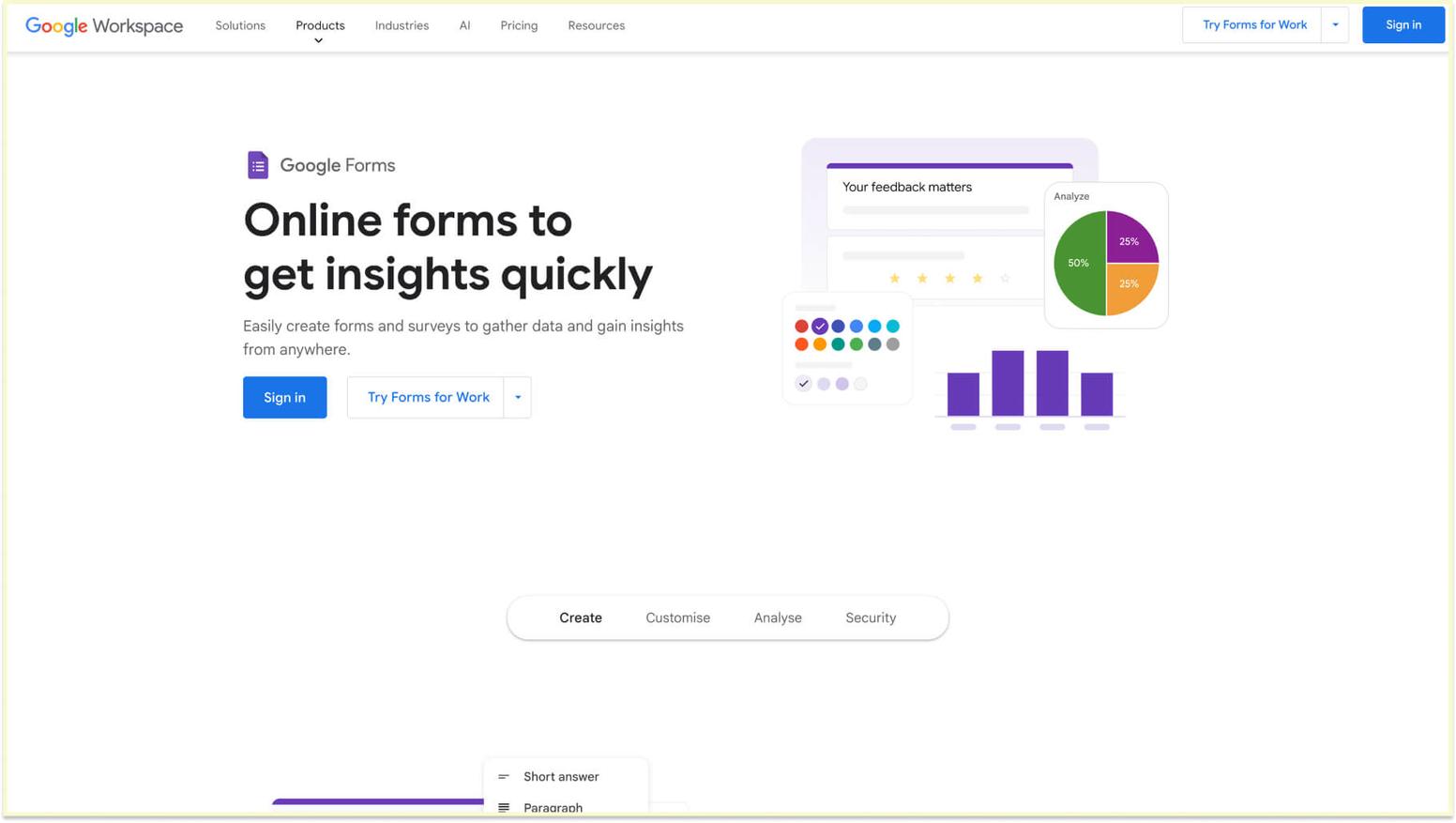
About Google Forms: Google Forms offers completely free survey creation and distribution for organizations with existing Google Workspace accounts. The platform provides flexible scale configuration that supports different eNPS methodologies, but lacks advanced features such as automated scheduling or sophisticated analytics.
Google Forms main features:
- Completely free survey creation and distribution for all users
- Flexible scale configuration supporting various eNPS rating approaches
- Integration with Google Sheets for basic data analysis
- Mobile-responsive surveys accessible across devices
Google Forms pricing:
- Starter: $6.30 user per month
- Standard: $12.60 user per month
- Plus: $22 user per month
- Enterprise Plus: Talk to sales for pricing
To learn more, view Google Forms pricing page.
Google Forms G2 score: Google Forms has a G2 score of 4.6/5 based on user reviews.
What Google Forms customers are saying on G2: “Honestly, I enjoy using Google Workspace overall, though it can be somewhat challenging when the internet connection is unstable, as most of its tools require being online. Additionally, with so many apps like Docs, Sheets, Drive, and Meet, it can feel a bit overwhelming at first. However, once you become familiar with the platform, everything tends to run very smoothly.” - Girishchand B., Test Engineer Level 2 (G2 review for Google Forms).
14. Typeform
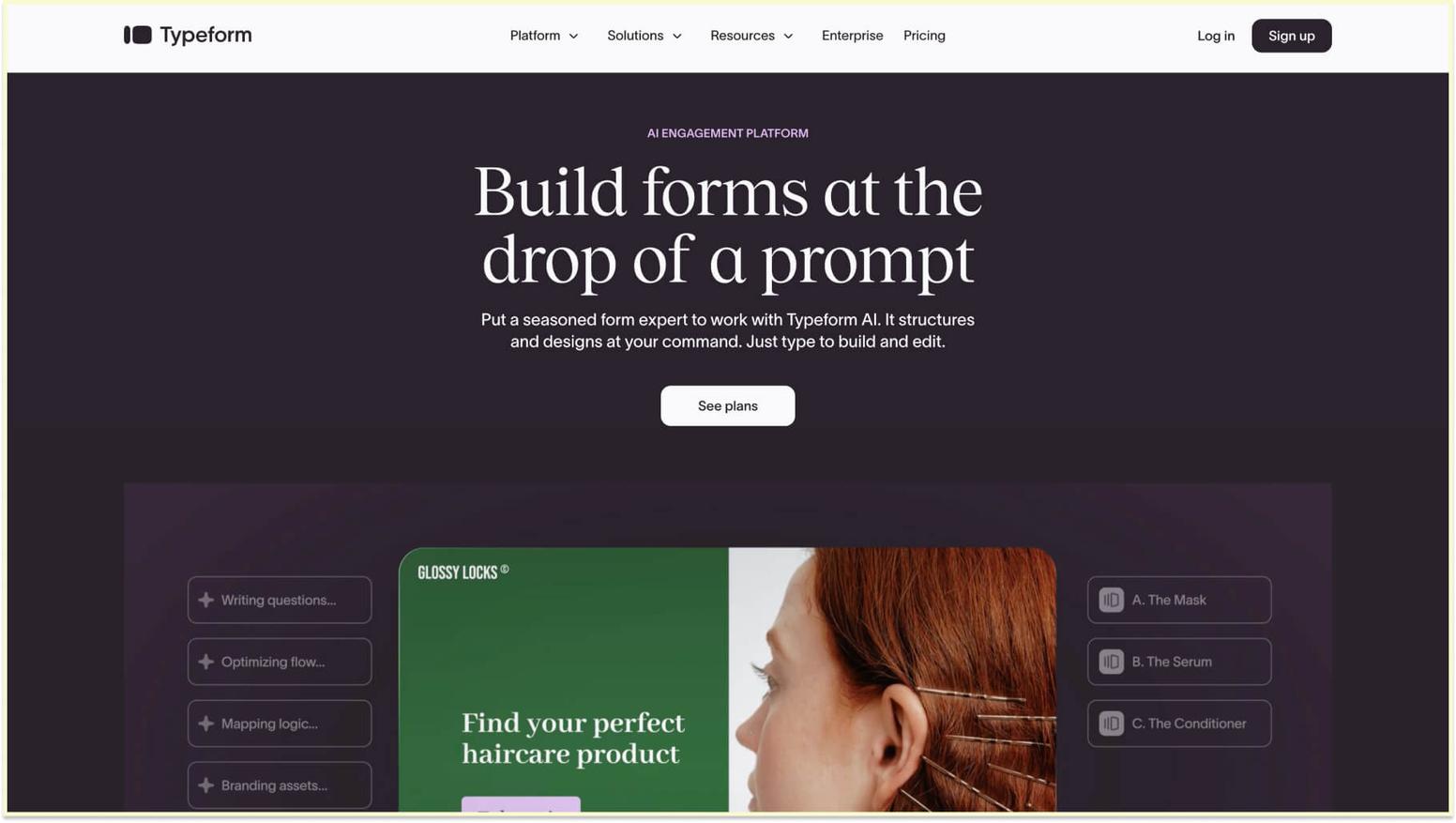
About Typeform: Typeform creates conversational survey experiences with engaging user interfaces that improve completion rates compared to traditional form-based tools. The platform's customizable rating systems enable organizations to design eNPS surveys matching their brand aesthetics while testing different question formats.
Typeform main features:
- Conversational survey design with engaging user interfaces
- Customizable rating systems enabling brand-aligned survey experiences
- Mobile-optimized forms ensure accessibility across device types
- Integration with email platforms for automated survey distribution
Typeform pricing:
- Basic: $25 per month
- Plus: $50 per month
- Business: $83 per month
- Enterprise: Talk to sales for pricing
To learn more, view Typeform’s pricing page.
Typeform G2 score: Typeform has a G2 score of 4.5/5 based on user reviews.
What Typeform customers are saying on G2: “Typeform was fast and easy to use. No struggling to figure out how it works. I wish all platforms were this easy! I was able to find and send links to clients, I use it several times a week and will likely increase my use of typeform, It was easy to plug in to my app platform at Passion.io.” - Michele D. P., Workshop Facilitator & TSM Recovery Coach (G2 Review for Typeform).
15. Jotform
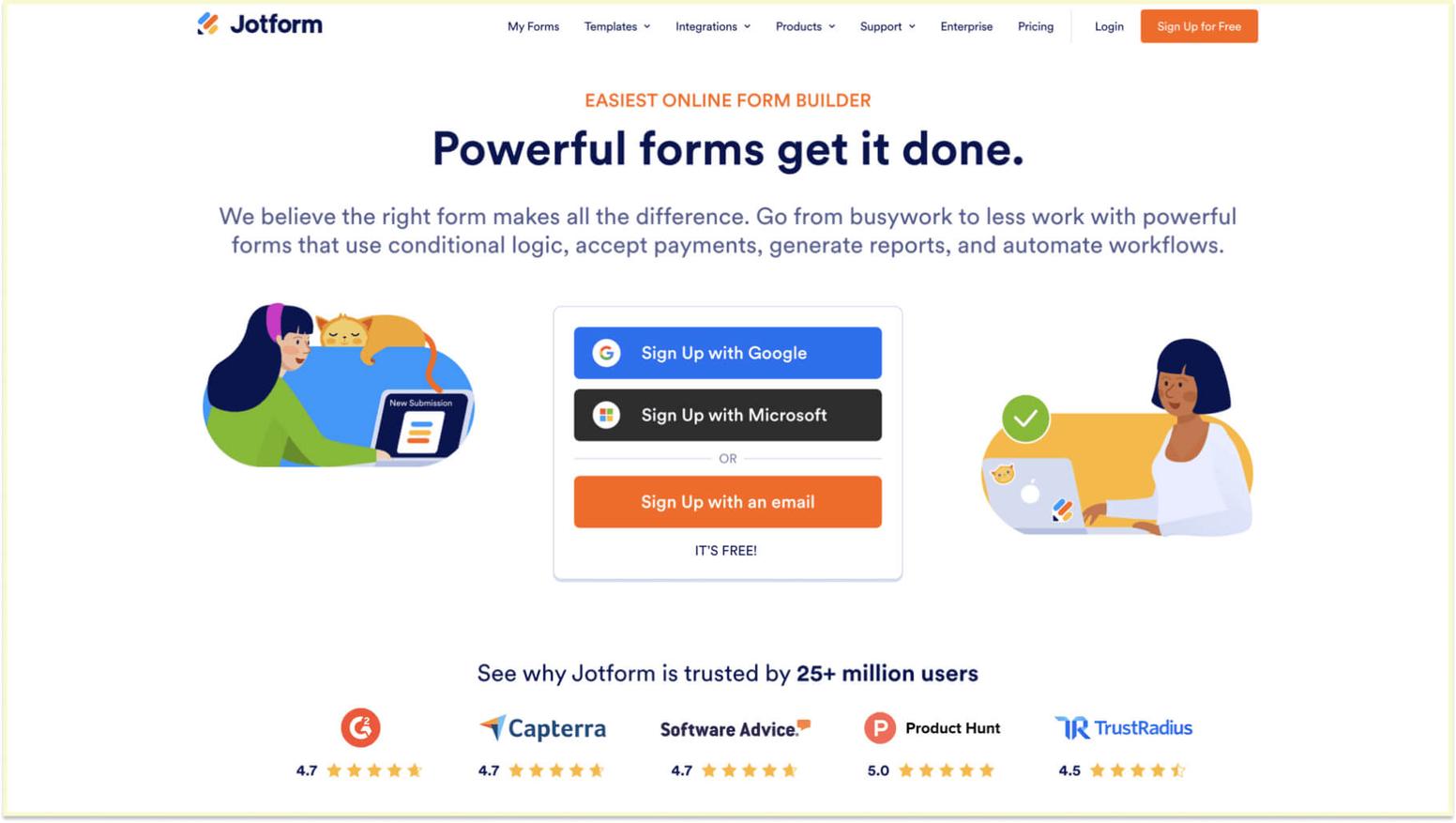
About Jotform: Jotform provides drag-and-drop form builders with pre-built eNPS templates that simplify survey creation for users without technical expertise. The platform's configurable rating scales support different eNPS approaches, allowing organizations to experiment with various methodologies.
Jotform main features:
- Drag-and-drop form builder simplifying survey creation without coding
- Pre-built eNPS templates accelerating deployment for new users
- Configurable rating scales supporting traditional and alternative approaches
- Mobile-responsive forms accessible across device types
Jotform pricing:
- Starter: $0/month (All features included)
- Bronze: $34/month, billed annually
- Silver: $39/month, billed annually
- Gold: $99/month, billed annually
- Enterprise: Custom price, talk to sales for pricing
To learn more, view Jotform's pricing page.
Jotform G2 score: Jotform has a G2 score of 4.7/5 based on user reviews.
What Jotform customers are saying on G2: “JotForm's builder is really useful and has so many field options and vairables which gives you a lot of customisation ability. It's an intiuituve no-code system that you can build fairly complex systems and process with to meet common business needs and customise them to meet your specific requirements. The support team and community have also been helpful. As it has been around for some time now, you can usually find a post similiar to your challenge, but if not you can submit a request for help and they come back to you in good time. It has a large amount of integrations which we have found helpful to move data around securely.” - Nathan C., Technology & Efficiency Manager (G2 Review for Jotform).
Key integrations for eNPS software
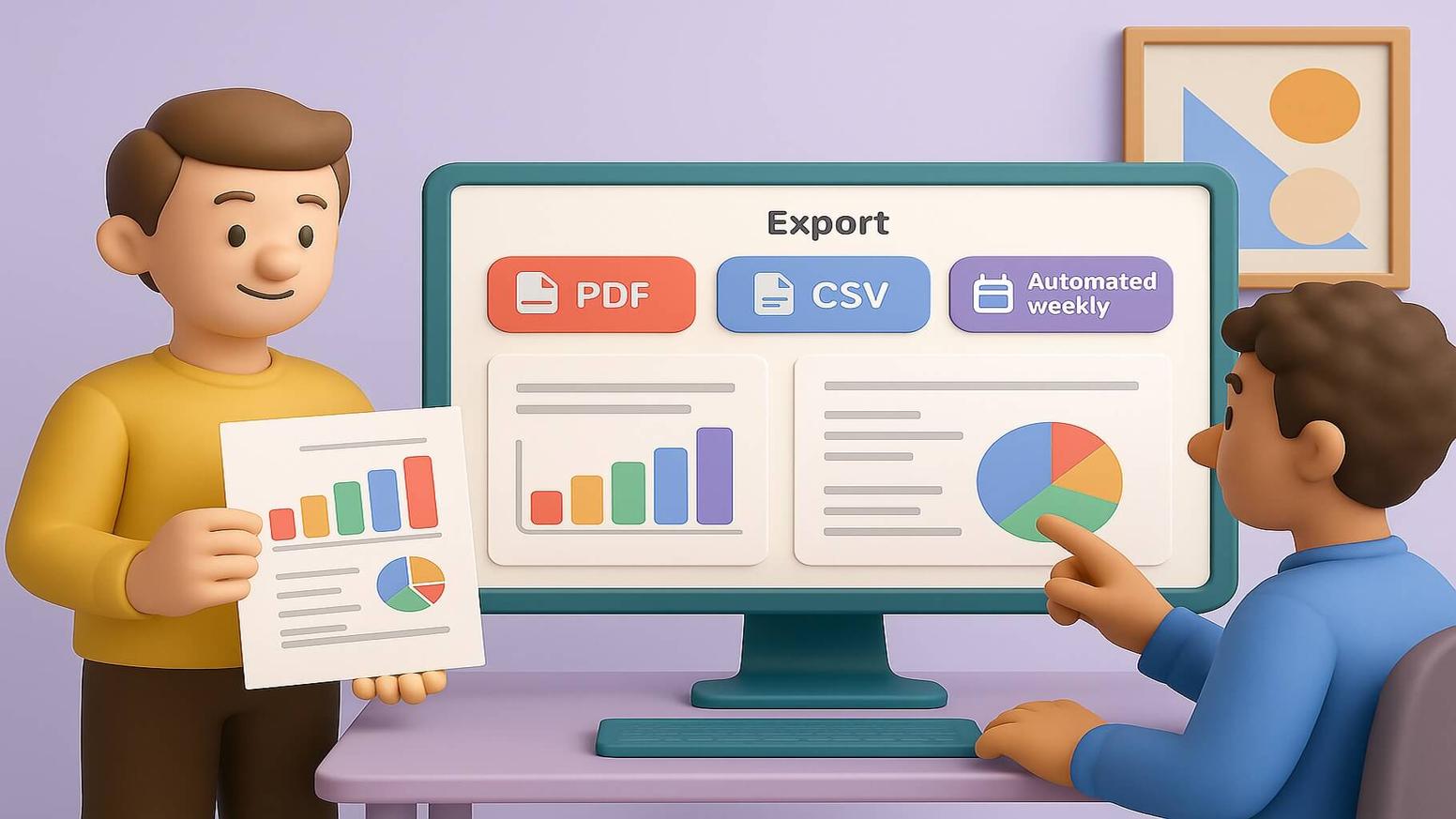
eNPS software becomes significantly more valuable when integrated with rewards and recognition platforms that transform survey data into actionable appreciation programs. These integrations create closed-loop feedback systems where positive sentiment triggers celebration through gift cards, experiences, or public recognition, while detractor feedback prompts supportive manager interventions. Research shows that organizations that improve employee loyalty often see corresponding increases in customer satisfaction, as engaged employees deliver better service experiences that drive higher customer NPS scores. Organizations using integrated systems report higher survey participation because employees see their feedback generating tangible improvements rather than disappearing into static reports that never influence workplace experiences or reach the intended audience.
Recognition platform integrations driving engagement improvements
Integrating eNPS measurement with recognition systems enables organizations to automatically celebrate promoters identified through eNPS questions while providing managers with tools to systematically address detractor concerns. When eNPS surveys identify highly engaged employees, integrated platforms can trigger recognition workflows, allowing managers to reward team members who create positive environments. These connections enable correlation analysis between recognition activity and engagement scores, helping hr teams understand whether appreciation programs actually drive loyalty improvements or if other factors matter more. Organizations across industries, from tech companies to media organizations, using an eNPS system for news production environments, benefit from connecting recognition to sentiment data.
Integrated platforms track which employees receive the most peer recognition and compare this data against eNPS responses, identifying top performers who deserve additional career development investments. Gift card and rewards redemption options that align with diverse employee preferences ensure rewards systems feel meaningful rather than generic across different demographic groups and generational cohorts. Organizations implementing recognition integrations report improved survey response rates because employees understand that positive feedback leads to tangible recognition opportunities.
Reward system integrations enabling meaningful appreciation
Comprehensive reward catalogs integrated with eNPS platforms enable organizations to celebrate survey participation or recognize teams achieving improvement milestones. Organizations can automatically trigger reward distributions when department scores exceed specific thresholds or when individual employees consistently provide constructive feedback that drives positive changes. Companies around the world discover the benefits of this approach for improving satisfaction across diverse workforces through internationally redeemable digital rewards accommodating diverse preferences across geographic regions and cultural contexts.
Automated reward fulfillment eliminates manual processes that typically delay appreciation and reduce its motivational impact on employee behavior. Immediate reward distribution upon achieving eNPS goals creates powerful reinforcement that encourages continued participation and genuine feedback. Organizations using integrated reward systems report reduced HR administrative burden while maintaining consistent reward delivery that demonstrates leadership commitment to engagement improvements through systematic employee satisfaction tracking.
Experience-based reward integrations creating lasting impact
Advanced integration capabilities enable organizations to offer experience-based rewards beyond traditional gift cards, including opportunities for professional development, wellness activities, or charitable contributions. When eNPS surveys identify highly engaged teams, organizations can reward entire departments with shared experiences that further strengthen team recognition and collaborative relationships. These meaningful rewards improve overall satisfaction and create lasting positive associations with the organization, which enhances satisfaction across different demographic groups.
Experience-based rewards often create stronger emotional connections than monetary incentives because they generate memorable moments that employees associate with their organization long after the reward experience concludes. Charity donation options particularly resonate with employees whose personal values emphasize giving back, enabling organizations to support individual philanthropic interests while celebrating engagement achievements. Organizations implementing experience-based approaches report enhanced survey participation because employees value options unavailable through typical corporate rewards programs.
What is the best eNPS software for your organization?
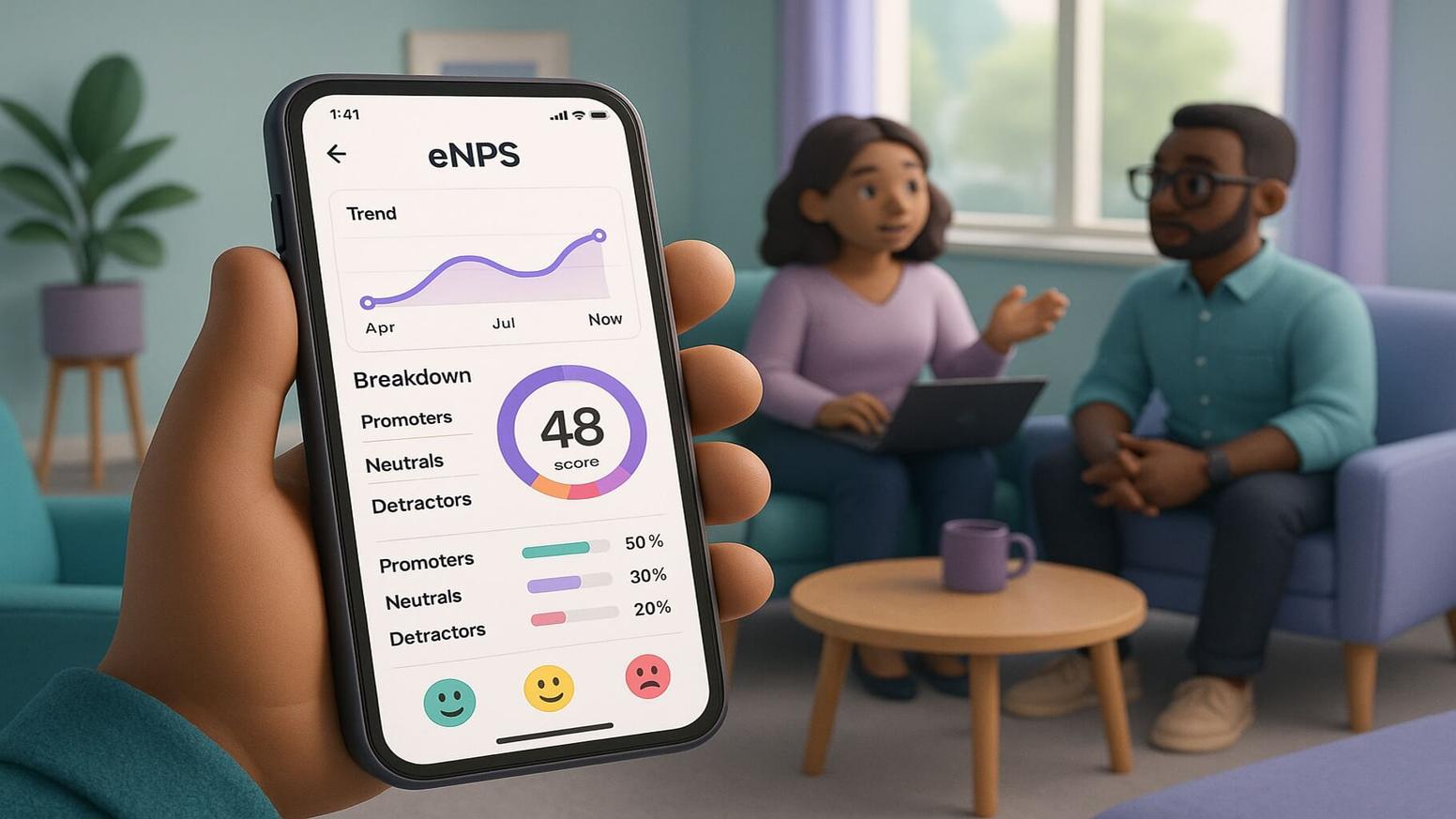
Selecting the best eNPS software requires evaluating your organization's specific needs, including company size, existing technology infrastructure, budget constraints, required analytics sophistication, and integration priorities with recognition or HRIS systems. Small startups with limited budgets prioritize different features than global enterprises managing thousands of employees across multiple countries and regulatory environments. The optimal platform balances current organizational requirements with anticipated growth needs, ensuring your investment remains valuable as headcount expands and engagement strategies evolve over time.
Evaluating eNPS software's real-time tracking capabilities
Real-time tracking transforms eNPS from a periodic measurement into continuous listening programs that enable immediate responses to shifts in employee sentiment. Organizations should evaluate whether platforms provide instant dashboard updates as survey responses arrive or if they batch-process data, creating delays between feedback submission and manager visibility. Selecting the right eNPS survey tool with proper real-time capabilities is critical for effective measurement. The best eNPS software real-time tracking includes automated alerts that notify relevant managers when scores drop below acceptable thresholds. These alerts also flag individual responses that indicate serious concerns requiring immediate attention and supportive interventions.
Consider whether platforms enable customizable alert triggers, allowing organizations to define what score changes warrant immediate notification versus which trends can be addressed during regular review cycles. Real-time capabilities should extend beyond simple dashboards to include mobile app notifications, ensuring managers receive critical feedback even when away from their computers. Organizations operating across multiple time zones need platforms providing continuous processing rather than end-of-day batch updates that delay manager awareness of emerging issues.
Comparing platforms based on integration ecosystems
Integration capabilities determine whether eNPS software operates as an isolated measurement tool or becomes part of a comprehensive employee experience technology stack. Evaluate which workplace communication tools (Slack, Teams, email) each platform supports for survey distribution, as native integration within daily communication channels significantly improves response rates compared to separate survey portals requiring additional logins. Organizations around the world, from small startups to large enterprises like AP, need platforms that speak to their existing technology investments. Consider exploring various employee engagement survey tools to find the best integration fit for your organization's needs. Platforms with robust integration capabilities connect sentiment data to recognition platforms, HRIS systems, performance management tools, and business intelligence dashboards, creating comprehensive views of workforce dynamics. These integrations enable organizations to analyze how employee satisfaction correlates with performance metrics, attendance patterns, and retention rates across departments.
Organizations should prioritize platforms that integrate with existing systems rather than requiring wholesale technology replacements to enable eNPS measurement. Consider whether integrations support bidirectional data flow, enabling eNPS platforms to access employee demographic data for segmentation while simultaneously pushing engagement scores into HRIS systems for correlation with retention and performance metrics. API availability matters for organizations with custom-built HR technology stacks that require flexible integration beyond pre-packaged connections.
Assessing pricing models and scalability for growth
Pricing models vary dramatically across eNPS software platforms, from free basic plans through per-user monthly fees to enterprise contracts with minimum annual commitments. Organizations should evaluate the total cost of ownership, including base platform fees, integration costs, implementation services, and ongoing support, rather than focusing solely on advertised per-user rates. Consider whether pricing scales linearly with headcount or includes volume discounts that reduce per-employee costs as organizations grow, making certain platforms more economical at different size thresholds.
Scalability extends beyond pricing to include technical performance, with some platforms degrading response times or limiting feature access when employee counts exceed specific thresholds. Evaluate whether platforms impose restrictions on survey frequency, maximum respondents per survey, or data retention periods that might constrain future measurement needs as engagement programs mature. Organizations anticipating significant growth should prioritize platforms offering consistent functionality and pricing across different employee count tiers. Avoid solutions that require plan migrations, as these can disrupt established measurement programs and create data continuity challenges.
Best practices for reliable eNPS data
Even the best eNPS software delivers poor results when surveys are sent without a plan. Three habits separate programs that produce trustworthy eNPS data from programs that produce noise: timing, question design, and closing the loop.
Time eNPS surveys for participation
Mid-week mornings tend to yield higher eNPS response rates than Mondays or Fridays. Beyond the day of the week, timing that respects employees' schedules looks like this:
- Avoid major deadlines when attention is focused elsewhere and engagement is lower.
- Skip holiday periods when participation and workforce composition differ from normal patterns.
- Create a predictable rhythm so employees anticipate recurring eNPS surveys and expect to give feedback.
- Vary occasional send times to capture perspectives from different shift patterns.
Design eNPS questions that reveal drivers
Effective eNPS questions balance brevity with enough context to explain why someone is a promoter or a detractor. The core recommendation question should use plain language that works for every employee, regardless of tenure. Principles that improve data quality:
- Clear, jargon-free wording accessible to all employees across the organization.
- Specific follow-up questions that identify actionable drivers rather than vague sentiment.
- Balanced response options, with no leading language that biases results.
- A short survey that respects employees' time while capturing the context you need.
Close the feedback loop with visible action
Employees disengage from eNPS surveys quickly if their responses appear to disappear. Visible action builds trust and keeps participation up in later rounds:
- Share aggregated eNPS results transparently while protecting individual anonymity.
- Communicate planned actions, connecting feedback to specific improvement initiatives.
- Provide progress updates showing how those initiatives address the concerns raised.
- Recognize participation by thanking employees for contributing to workplace improvement.
How Matter can help with eNPS measurement
Transforming eNPS measurement from a periodic survey exercise into a continuous engagement driver requires integrating automated feedback collection directly with recognition and rewards programs. This approach demonstrates leadership commitment to acting on employee input. Companies across industries, from technology firms to media companies like AP, discover the benefits of this integrated approach for improving employee satisfaction. The platform's research-backed 5-point Likert scale (1-5) simplifies survey completion while achieving higher response rates than traditional 0-10 scales that confuse employees and extend completion times.
Key methodology highlights include:
- Simplified scoring: The 5-point scale uses only 5 (strongly agree) for promoters, only 4 (agree) for passives, and 1 through 3 (strongly disagree, disagree, and neutral) for detractors
- Native integration: Slack and Teams connectivity means employees encounter surveys in their daily workflows rather than through separate portals
- Reduced friction: Eliminating external portals increases participation across distributed workforces
Automated eNPS survey distribution through Slack and Teams
Manual survey distribution work disappears when recurring eNPS measurements are automated through Slack and Teams channels, where employees already spend their workdays communicating and collaborating. Survey frequencies can be customized based on continuous improvement goals, with options ranging from weekly pulse checks to quarterly comprehensive measurements. Automated distribution ensures consistent measurement cycles, producing reliable trend data while eliminating the manual scheduling and reminder work that typically prevents resource-constrained HR teams from conducting frequent employee sentiment assessments.
Native integration with workplace communication tools eliminates the need for separate logins and portal navigation, which typically suppresses survey participation rates. Employees receive survey prompts directly in Slack or Teams, provide feedback through familiar interfaces, and return to their work without disruption or context switching.
Benefits of seamless survey delivery include:
- Higher completion rates: Familiar interfaces encourage participation without frustration
- Authentic sentiment: Responses reflect genuine feelings rather than irritation from clunky tools
- Zero context switching: Employees provide feedback without leaving their workflow
- Consistent timing: Automated scheduling ensures reliable measurement cycles
Real-time tracking with instant dashboards and alerts
Real-time dashboards update immediately as employee responses arrive, giving managers instant visibility into team sentiment and enabling rapid responses to emerging concerns before they escalate into retention risks. Customizable alert systems notify relevant managers when eNPS scores drop below acceptable thresholds or when individual responses indicate serious issues requiring immediate supportive interventions. This immediate visibility transforms eNPS from a backward-looking measurement into a forward-looking early warning system that identifies engagement challenges while there is still time to address underlying causes.
Dashboard segmentation enables both department-level analysis, showing which teams excel, and organization-wide views, revealing company culture trends affecting all employees. Managers access team-specific insights without seeing individual responses, protecting employee anonymity while providing the data needed for targeted improvements.
Key dashboard capabilities include:
- Segmented views: Department-level and organization-wide analysis available simultaneously
- Privacy protection: Managers see team insights without accessing individual responses
- Executive summaries: High-level trends surface without overwhelming leadership with excessive detail
- Role-appropriate insights: Stakeholders at all levels receive data matched to their decision-making responsibilities
Native recognition and rewards integration for improving scores
Connecting eNPS measurement directly to recognition and rewards features creates closed-loop feedback systems where positive scores trigger celebration and declining scores prompt supportive manager interventions. Teams that achieve eNPS improvement milestones or consistently maintain high loyalty scores can be automatically celebrated. This demonstrates that employee feedback drives tangible appreciation rather than disappearing into static reports. Integration also enables correlation analysis between recognition activity and engagement trends, helping leadership understand whether appreciation programs actually drive loyalty improvements.
The coin-based reward system enables employees to redeem recognition for digital gift cards, charitable donations, or company swag, catering to diverse preferences across different demographic groups. Tracking how recognition spending correlates with improvements in eNPS and changes in retention rates helps demonstrate ROI from engagement investments.
Recognition integration advantages include:
- Closed-loop feedback: Positive scores trigger celebration, while declining scores prompt intervention
- Correlation analysis: Understanding the relationship between recognition activity and engagement trends
- Flexible redemption: Gift cards, charitable donations, and company swag options appeal to diverse preferences
- ROI demonstration: Clear connections between recognition spending and eNPS improvements
- Increased participation: Employees engage more actively in surveys when feedback generates visible improvements
Frequently asked questions about eNPS software
Q: What is the best eNPS software for enterprise organizations?
A: The best eNPS software for enterprises should offer advanced analytics, predictive intelligence, global deployment capabilities, and integration with major HRIS systems. Enterprise platforms need to support thousands of employees with real-time tracking, sophisticated benchmarking, and department-level segmentation for actionable insights. Look for solutions that balance comprehensive features with ease of use and quick implementation times.
Q: How do eNPS software integrations with rewards platforms work?
A: eNPS software integrations connect employee feedback with recognition programs through automated workflows. When surveys identify promoters, organizations can automatically trigger rewards or recognition, while detractor feedback can prompt manager interventions with support resources. Effective integrations enable organizations to celebrate positive sentiment immediately and address concerns systematically, creating closed-loop systems where employees see their feedback driving tangible improvements.
Q: What features should the best eNPS survey software include?
A: The best eNPS survey software should offer automated survey distribution, real-time eNPS calculation and tracking, anonymous response collection, trend analysis dashboards, benchmark comparisons, integration with workplace tools, department-level segmentation, and the ability to connect feedback with recognition and rewards programs for closed-loop action. User-friendly rating systems, including research-backed 5-point Likert scales, help maximize response rates.
Q: Does eNPS software's real-time tracking improve response rates?
A: Yes, eNPS software real-time tracking significantly improves response rates by enabling immediate manager notifications, allowing timely follow-up with employees, and demonstrating that feedback leads to action. Platforms with real-time dashboards and research-backed rating systems achieve higher response rates than delayed reporting because employees see that their input matters.
Q: How much does the best eNPS software typically cost?
A: The best eNPS software ranges from free options to enterprise solutions costing higher amounts per employee monthly. Mid-market platforms typically cost between $1 and $5 per user monthly. Pricing depends on features such as real-time tracking, integrations, benchmarking data, and support levels, with most offering tiered plans to meet different organizational needs.
Q: What is a good eNPS score?
A: Any positive eNPS score above 0 is acceptable, scores above 10 are good, scores above 30 are great, and scores above 50 are excellent. eNPS scores range from -100 to 100. What counts as a good score varies by industry and company size, so internal trend tracking and peer benchmarking are more valuable than the absolute number alone.
Q: How often should companies conduct eNPS surveys?
A: Most companies run eNPS surveys quarterly to balance trend tracking against survey fatigue. Some deploy monthly pulse surveys with an eNPS question for continuous feedback. The right frequency depends on company size, pace of change, and capacity to act on results. Quarterly works well for most mid-sized businesses, while larger enterprises often prefer monthly tracking.
Q: What are good eNPS survey questions to ask?
A: Start with the core question about likelihood to recommend, then follow with "What is the primary reason for your score?" and "What would make you more likely to recommend us?" These follow-ups capture the qualitative feedback that explains the number and point to areas for improvement in job satisfaction, career growth, work-life balance, and manager effectiveness.
Final thoughts about eNPS software
Selecting the best eNPS software is essential for organizations committed to measuring and improving employee loyalty systematically through data-driven engagement programs. Quality eNPS survey software with real-time tracking, robust integrations with recognition and rewards systems, and comprehensive benchmarking capabilities transforms raw feedback into actionable insights that guide strategic decisions affecting workplace culture, retention, and business performance. Organizations around the world, from startups to established enterprises, that invest in professional eNPS measurement tools gain competitive advantages through early identification of engagement risks, targeted interventions addressing specific team challenges, and continuous improvement approaches that keep them ahead of competitors in talent attraction and retention. These platforms enable organizations to systematically track employee satisfaction and respond to emerging concerns before they impact productivity.
Matter stands out by combining automated eNPS measurement using a research-backed 5-point Likert scale (1-5) with native recognition and rewards that help organizations not just track scores but actively improve them through meaningful employee engagement. The platform's methodology uses only 5 (strongly agree) for promoters, only 4 (agree) for passives, and 1 through 3 (strongly disagree, disagree, and neutral) for detractors. The platform's seamless Slack and Teams integration eliminates friction that suppresses participation, while its real-time dashboards enable immediate responses to emerging concerns before they escalate into retention problems. By connecting eNPS data directly to appreciation programs and providing managers with actionable insights rather than overwhelming data dumps, Matter transforms employee feedback from a compliance exercise into a powerful engagement driver that builds cultures where employees feel valued, heard, and motivated to recommend their workplace to others.
Ready to implement the best eNPS software for your organization? Schedule a demo with a Matter expert today and discover how our platform can help you measure employee loyalty with real-time tracking, integrate seamlessly with your tools, and create a culture of continuous improvement.

![29+ eNPS Survey Questions for Employees [2026 Guide]](https://cdn.sanity.io/images/kqqb5xry/production/79ed301d0081f29310816886bc9fe1c0253a149c-800x600.jpg?w=720&q=75&fit=max&auto=format)
![19+ eNPS Survey Questions for Employees [2026 Examples]](https://cdn.sanity.io/images/kqqb5xry/production/28137ecca2090eeb56f13e159bfc35c4df05f92d-800x600.jpg?w=720&q=75&fit=max&auto=format)