

Understanding employee sentiment is critical for organizational success, yet many companies struggle to capture authentic feedback that drives meaningful change. At Matter, we recognize that measuring employee loyalty through eNPS surveys provides invaluable insights into workplace culture, retention risks, and engagement levels. The employee net promoter score survey has become a vital instrument for organizations aiming to transform data into actionable strategies that enhance the employee experience, decrease attrition, and foster more cohesive teams. Choosing the right eNPS survey software can make the difference between collecting feedback and actually creating a positive workplace transformation.
What is an eNPS survey?
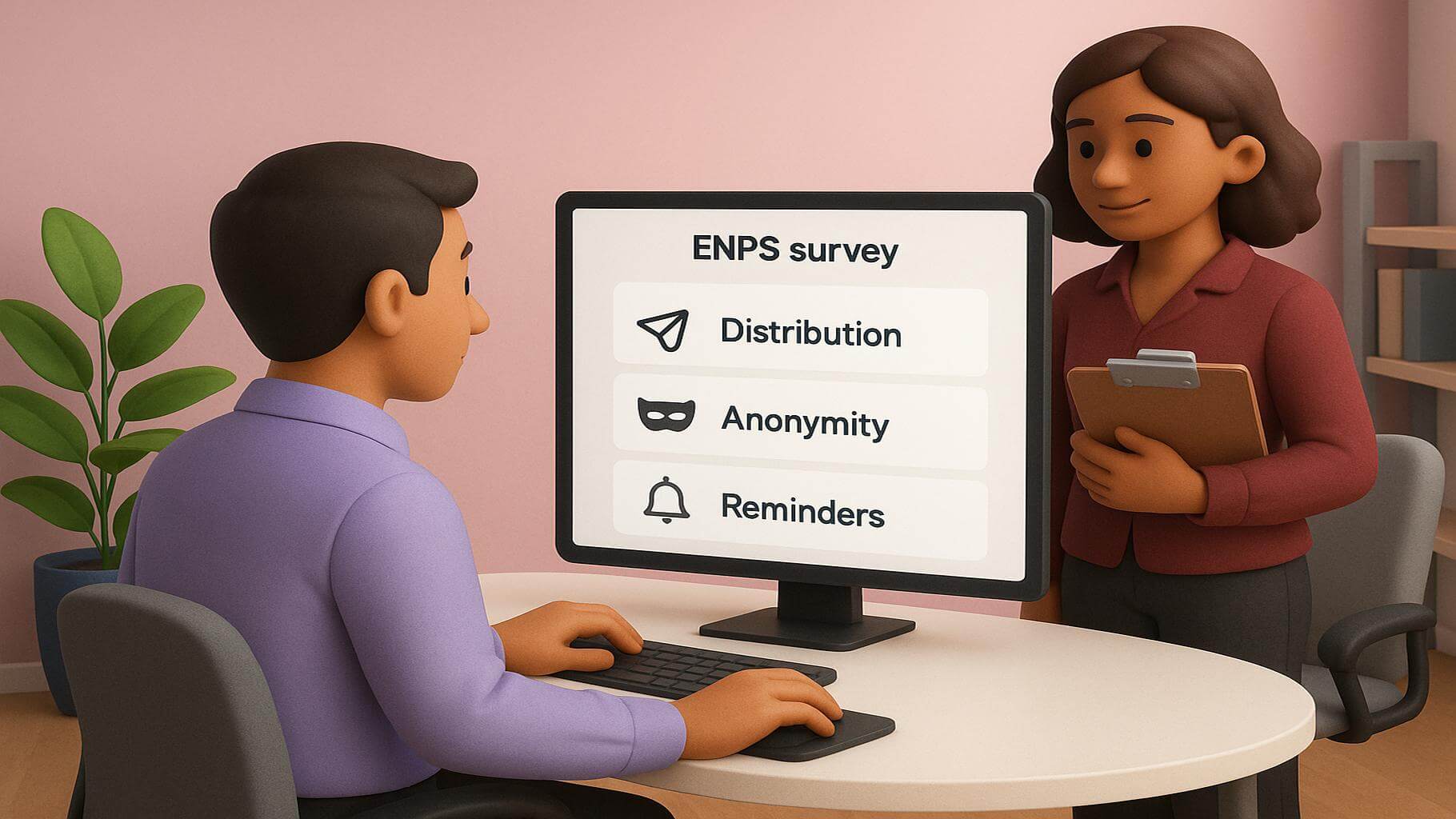
Employee net promoter score surveys represent a streamlined approach to gauging how employees feel about their organization. Unlike traditional, lengthy questionnaires, an eNPS survey focuses on a single core question that gauges whether team members would recommend their workplace to others. This simple yet powerful methodology has transformed how organizations measure employee satisfaction and predict retention patterns.
The beauty of eNPS surveys lies in their ability to cut through survey fatigue while still capturing valuable insights. Organizations can quickly deploy these assessments, gather honest feedback, and identify areas requiring immediate attention. The eNPS system provides a clear, trackable metric that leadership teams can use over time, making it easier to measure the impact of culture initiatives and workplace improvements.
Understanding the employee net promoter score survey framework
The employee net promoter score framework adapts the customer loyalty measurement system for internal use. At its core, eNPS inquires about employees' likelihood of recommending their organization as a workplace, utilizing a standardized rating scale. This question alone can reveal deep insights into employee sentiment, workplace culture, and overall organizational health.
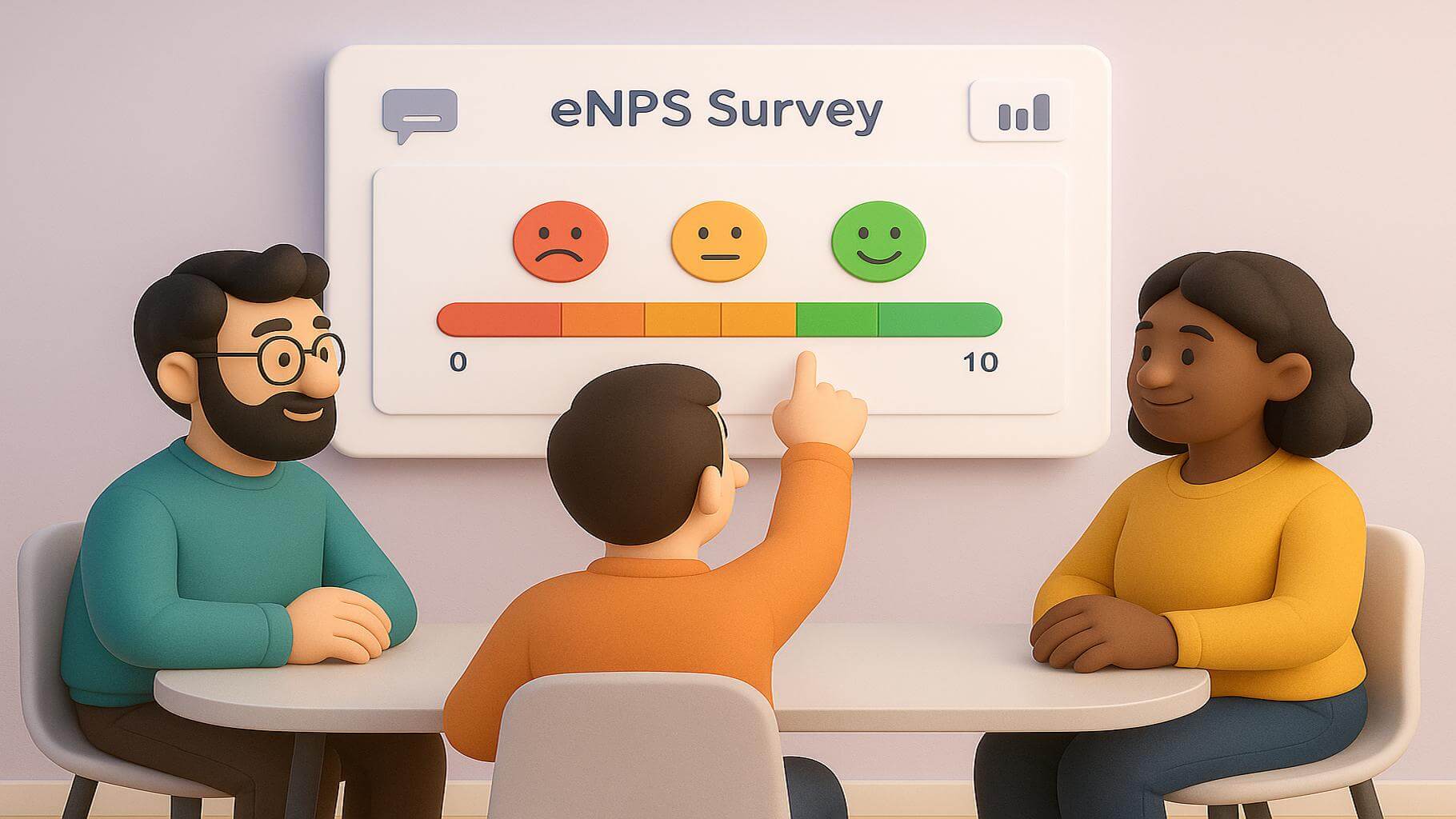
Modern eNPS survey tools typically use either a 5-point or an 11-point scale, each with distinct advantages. The scoring system categorizes respondents into three groups: Promoters (highly satisfied employees who actively advocate for the organization), Passives (satisfied but not enthusiastic team members), and Detractors (dissatisfied employees who may harm morale or leave). Organizations determine eNPS by subtracting the proportion of Detractors from the proportion of Promoters, resulting in a score that spans from -100 to 100.
The eNPS measure goes beyond simple satisfaction by focusing on advocacy. When employees are willing to recommend their workplace, it indicates they're not just content but genuinely proud of where they work. This metric correlates strongly with business performance, as engaged employees who speak positively about their organization contribute to better recruitment, retention, and overall business success.
How eNPS survey questions measure employee loyalty
Effective eNPS survey questions go beyond the core likelihood-to-recommend question. While the primary question establishes the baseline score, follow-up questions provide context that transforms raw numbers into actionable insights. Organizations that master the art of asking the right questions can pinpoint exactly what drives employee loyalty in their unique environment.
The most valuable eNPS surveys include open-ended questions that invite employees to explain their scores in their own words. Questions like "What is the primary reason for your score?" or "What would make you more likely to recommend us?" unlock qualitative data that reveals specific pain points or strengths. These responses help HR teams understand whether concerns relate to career growth opportunities, work-life balance, team morale, or other factors.
Organizations should also consider the timing and frequency of eNPS question deployments. Pulse surveys that include eNPS measurement allow companies to track sentiment shifts in real time rather than waiting for annual reviews. This continuous listening approach helps identify trends before they become critical issues, enabling proactive interventions that preserve employee engagement levels.
The difference between the eNPS survey and traditional employee surveys
Traditional employee surveys often overwhelm participants with dozens of questions covering every conceivable workplace aspect. While comprehensive, these lengthy assessments frequently suffer from low response rates and survey fatigue. In contrast, eNPS surveys deliver powerful insights through focused questioning that respects employees' time while still capturing essential sentiment data.
The streamlined nature of eNPS surveys makes them ideal for regular deployment. Organizations can measure eNPS quarterly or even monthly without burdening their workforce. This frequency enables leadership to spot trends and respond quickly to emerging issues. Traditional surveys, due to their length and complexity, typically occur at most once a year, meaning problems can fester for months before detection.
Another key distinction lies in the metric's simplicity and universality. The eNPS score provides a single, easily understood number that stakeholders across all levels can grasp immediately. This clarity facilitates better communication about employee satisfaction and makes it easier to benchmark against industry standards or track progress over time. While traditional surveys might generate hundreds of data points, the eNPS calculation offers a focused view that drives decision-making.
What are the benefits of eNPS surveys?
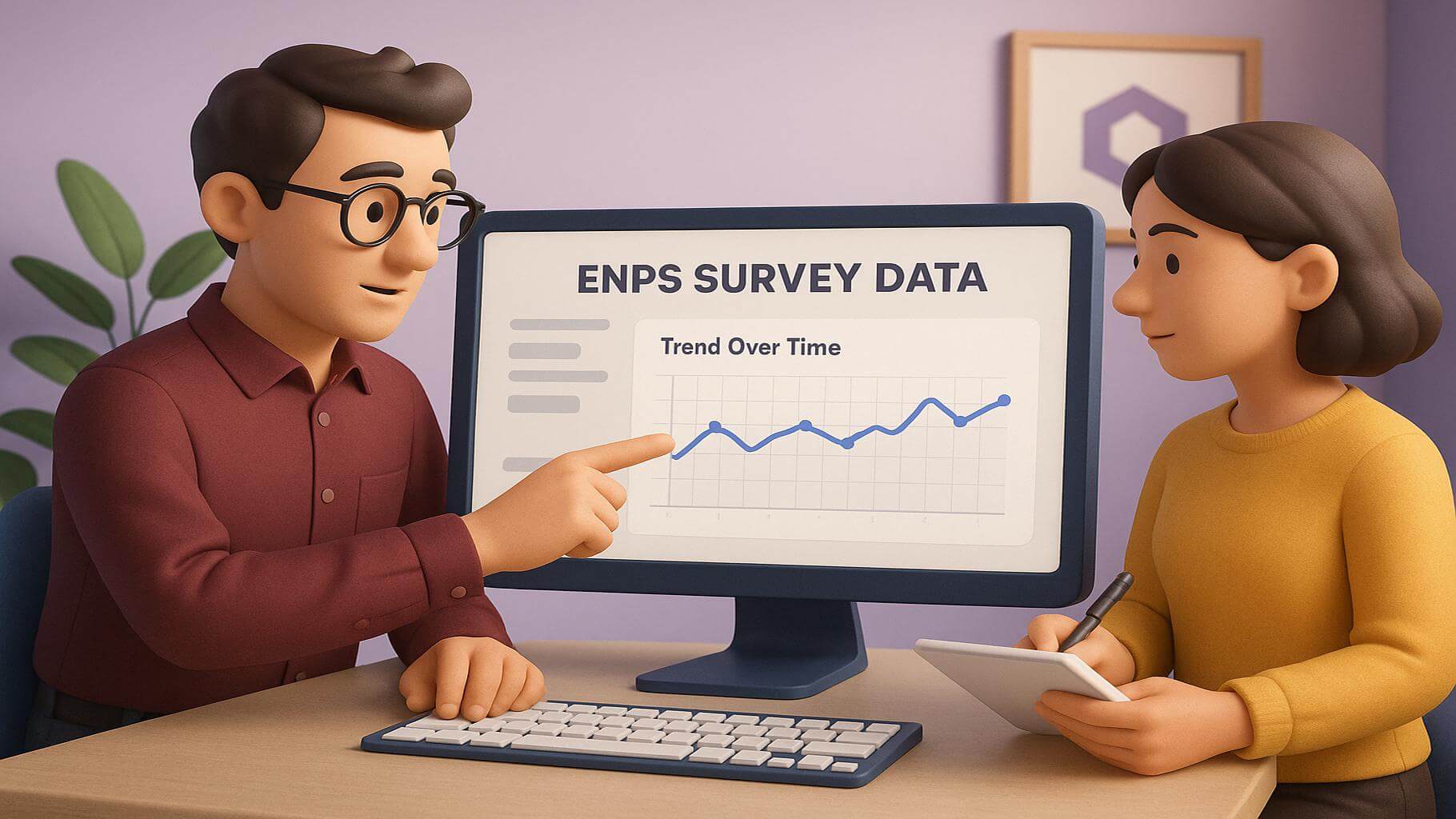
Organizations implementing eNPS surveys gain immediate access to critical workforce intelligence that informs strategic decisions. The simplicity of eNPS measurement doesn't diminish its power; rather, it amplifies the metric's utility by making employee sentiment accessible and actionable. Companies that regularly measure eNPS discover patterns that would remain hidden in more complex assessment systems.
The benefits extend far beyond data collection. Regular eNPS surveys signal to employees that their opinions matter and that leadership actively seeks their input. This demonstration of care and attention strengthens the relationship between team members and management. When employees see their feedback driving meaningful changes, their investment in the organization's success deepens naturally.
Identifying retention risks through eNPS survey data
eNPS data serves as an early warning system for retention challenges. Detractors identified through eNPS surveys are significantly more likely to leave within the next year, making this metric invaluable for workforce planning. Organizations can analyze eNPS results by department, tenure, or other demographics to pinpoint where retention risks are highest and deploy targeted interventions.
The predictive power of eNPS extends beyond identifying flight risks. By tracking individual scores over time, organizations can spot employees whose satisfaction is declining before they reach the Detractor category. This proactive approach allows managers to engage in meaningful conversations, address concerns, and potentially prevent turnover before resignation becomes the employee's only perceived option.
Retention isn't just about keeping bodies in seats; it's about maintaining institutional knowledge and preserving high-quality talent. When organizations use eNPS insights to improve workplace conditions, they create environments where satisfied employees choose to stay and grow. The cost savings from improved retention, combined with the productivity gains from an engaged workforce, make eNPS surveys among the highest-ROI tools in the HR arsenal.
Benchmarking employee satisfaction across departments
eNPS surveys provide unparalleled opportunities for internal benchmarking. By comparing scores across different teams, locations, or business units, organizations can identify pockets of excellence and areas needing support. This granular view helps leadership understand how factors such as management styles, workload distribution, and resource allocation affect employee sentiment across different contexts.
Smart organizations use eNPS benchmarks to facilitate peer learning. When one department consistently achieves higher scores, leadership can study that team's practices and share successful strategies across the organization. This internal knowledge transfer accelerates improvement by allowing teams to learn from proven approaches rather than starting from scratch with every initiative.
External eNPS benchmarks offer additional context by showing how an organization stacks up against industry peers. While internal trends remain more valuable for driving specific improvements, understanding where your scores fall relative to competitors helps set realistic goals. Organizations can measure employee satisfaction against published benchmarks for their sector, identifying whether challenges are unique or reflect broader industry patterns requiring innovative solutions.
Creating targeted improvement strategies from eNPS survey results
Raw eNPS scores gain meaning when translated into specific action plans. Employee engagement survey results that include eNPS metrics help organizations prioritize initiatives based on what matters most to their workforce. Rather than implementing generic programs, teams can focus resources on addressing the specific concerns that drive scores in their unique environment.
The combination of quantitative scores and qualitative feedback creates a powerful foundation for strategic planning. When employees across multiple departments mention inadequate career growth opportunities, for example, leadership knows that investing in professional development programs will likely improve engagement levels. This targeted approach delivers better returns than scattering resources across numerous initiatives without a clear direction.
Successful improvement strategies include feedback loops that demonstrate responsiveness. When organizations share how they're acting on eNPS insights, employees see that their input drives real change. This transparency builds trust and often improves future response rates as team members recognize their participation leads to meaningful outcomes rather than disappearing into a data void.
Why the eNPS survey is important
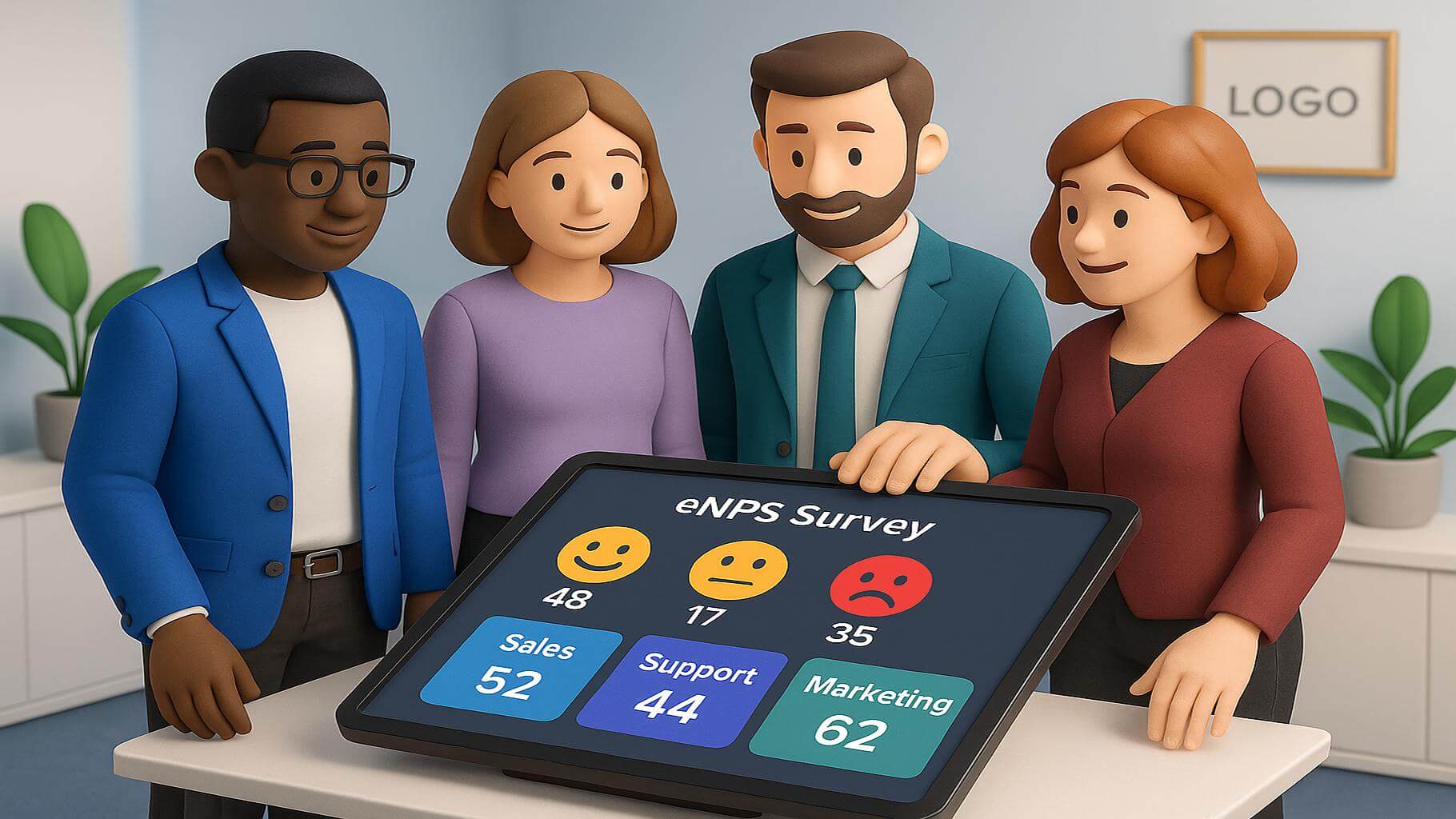
The importance of eNPS surveys extends beyond simple measurement to become a strategic asset for forward-thinking organizations. In a period where talent retention and employee experience directly influence competitive advantage, comprehending workforce sentiment is not optional; it is vital. Organizations that neglect employee feedback risk blindly managing their most valuable asset, their people, without the insights needed to optimize engagement.
eNPS surveys democratize feedback by giving every employee a voice regardless of their position or tenure. This inclusivity ensures that leadership hears from team members who might not speak up in other contexts. The anonymity typical of eNPS surveys further encourages honest feedback, as employees can share concerns without fear of repercussions.
The connection between eNPS scores and employee turnover
Research consistently demonstrates strong correlations between eNPS scores and turnover rates. Organizations with high eNPS scores enjoy greater employee retention, while those with low or negative scores face constant churn. This relationship exists because eNPS captures the same sentiment that drives resignation decisions: whether employees view their workplace positively enough to recommend it to others.
The predictive value of eNPS for turnover makes it an essential tool for workforce planning. HR teams can use eNPS data to forecast hiring needs and identify departments requiring additional attention. When scores decline in specific areas, leadership can investigate root causes and implement interventions before losing critical team members whose departure might trigger cascading effects.
Beyond predicting departures, eNPS insights help organizations understand why people leave. The qualitative feedback accompanying eNPS scores often reveals patterns that exit interviews miss. Departing employees may soften their critiques during exit conversations, but eNPS surveys conducted while they're still engaged can capture more candid assessments that inform retention strategies.
Using the eNPS survey meaning to understand workplace culture
eNPS scores serve as a cultural barometer, reflecting how well an organization's stated values align with employee experiences. When scores consistently trend upward, it suggests that initiatives aimed at improving company culture are resonating. Conversely, stagnant or declining scores signal misalignment between leadership intentions and team member perceptions that requires attention.
The eNPS measure indicates whether efforts to create a positive work environment and culture are succeeding. Organizations that invest heavily in culture programs sometimes discover, through eNPS feedback, that their initiatives aren't landing as intended. This reality check, while potentially uncomfortable, provides invaluable guidance for recalibrating approaches to achieve desired cultural outcomes.
Understanding workplace culture through eNPS requires looking beyond overall scores to examine subgroup differences. Significant score variations between departments, demographic groups, or tenure cohorts reveal cultural inconsistencies that deserve investigation. These disparities often indicate that the employee experience varies dramatically depending on which team someone joins or which manager they report to.
How regular eNPS surveys drive continuous improvement
Organizations committed to continuous improvement treat eNPS surveys as ongoing conversations rather than periodic checkups. Regular employee pulse survey deployments create feedback rhythms that keep leadership attuned to workforce sentiment. This cadence enables faster response to emerging issues and helps organizations track whether interventions are working as intended.
The iterative nature of regular eNPS measurement transforms how organizations approach employee engagement. Instead of annual initiatives that may or may not address actual concerns, leadership can adopt an agile approach to culture management. When a particular initiative moves scores in the wrong direction, teams can quickly pivot rather than waiting months to discover the misstep.
Continuous eNPS tracking also helps normalize feedback as a standard business practice. When surveys become routine, employees view participation as part of organizational life rather than an unusual event. This normalization typically improves response quality and rates as team members understand that their input genuinely influences decision-making and that leadership values their perspectives.
1. Matter
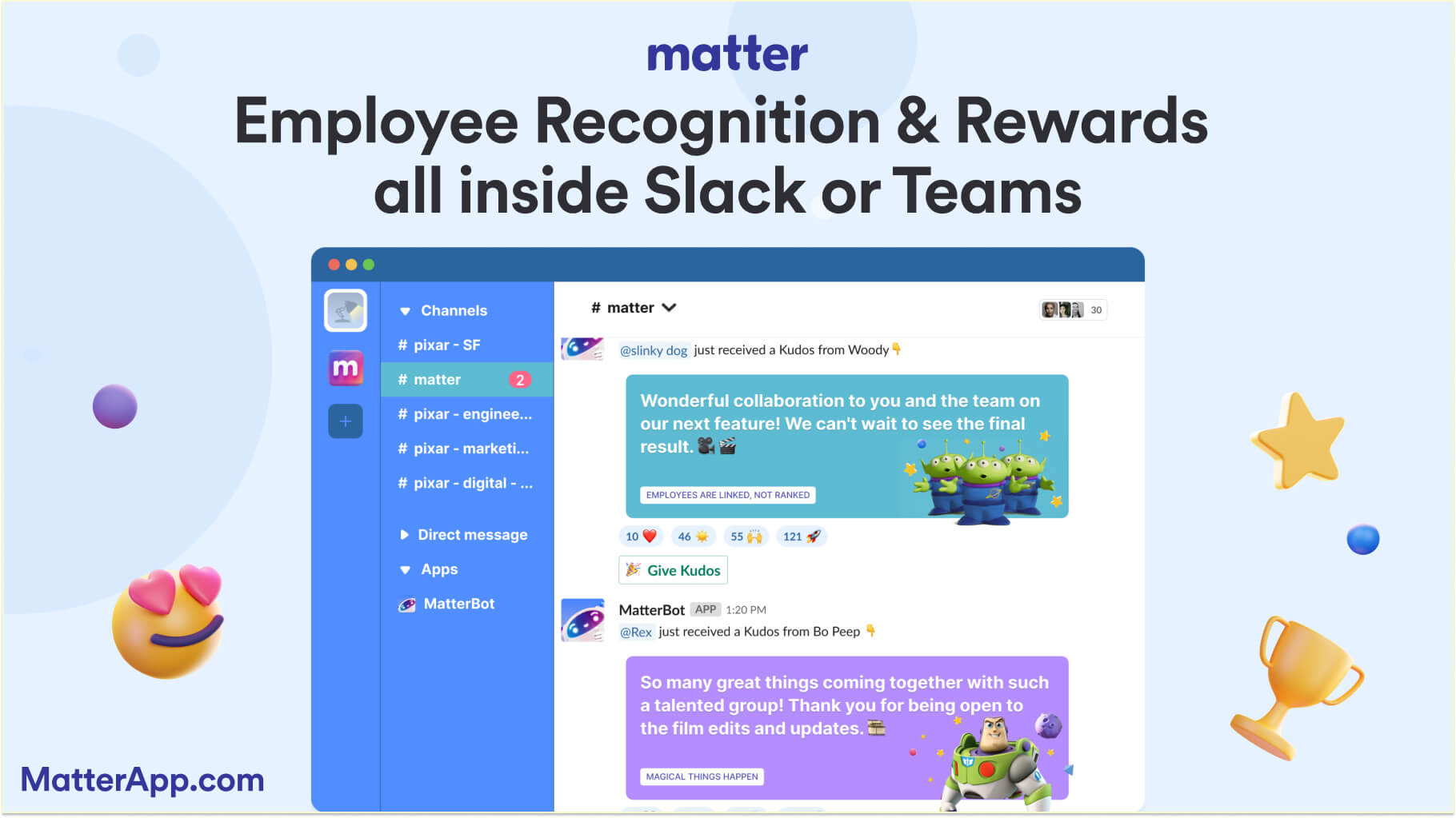
About Matter: Matter is a forward-thinking Slack-first and Teams-first platform that seamlessly combines employee recognition with powerful survey capabilities, including eNPS measurement. Its intuitive design allows organizations to deploy eNPS surveys directly within the communication tools employees use daily, dramatically improving response rates. Matter's 5-point eNPS scale offers a more user-friendly approach that reduces respondent burden while maintaining the predictive power organizations need to understand employee loyalty.
Matter stands out for integrating eNPS feedback with employee recognition and rewards programs, creating a comprehensive employee experience platform. The platform uses a research-backed 5-point Likert scale for eNPS questions, where strongly agree counts as Promoters, agree as Passives, and neutral to strongly disagree responses indicate Detractors. This approach respects employees' time while delivering actionable insights that hr teams can immediately apply.
Matter main features:
- Seamless Slack and Teams integration for instant feedback collection
- Advanced analytics and benchmarking capabilities with real-time dashboards
- Enterprise-grade security and compliance features protecting sensitive employee data
- Automated survey scheduling and distribution with customizable frequency
- 5-point eNPS scale proven to increase response rates while maintaining accuracy
Matter pricing:
- Free Forever: $0/user/month
- Basic: $1/user/month, billed annually
- Pro: $3/user/month, billed annually
- Pro + Surveys: $5/user/month, billed annually
To learn more, view Matter's pricing page.
Matter G2 score: Matter has a G2 score of 4.7/5 based on user reviews.
What Matter customers are saying: “Matter has completely changed how we celebrate each other’s work. It is no longer a quick email that gets buried or a comment that only a few people hear. Now recognition is out in the open, shared instantly, and seen by the whole team. People feel appreciated in real time, and that energy is contagious.” - Clark Atkinson, People Strategy, Infrastructure & Total Rewards Lead (Customer Story).
2. Qualtrics
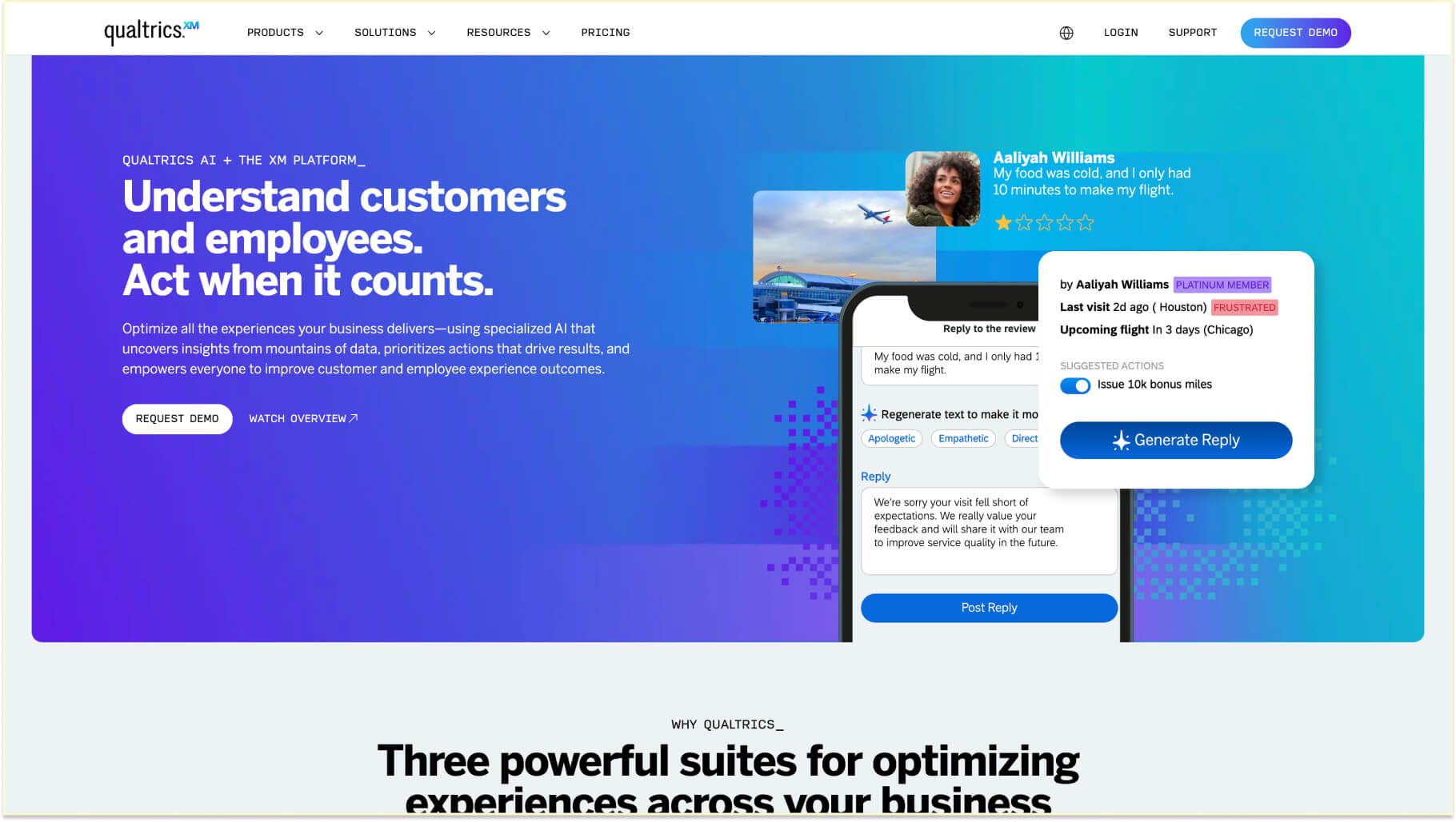
About Qualtrics EmployeeXM: Qualtrics EmployeeXM is a comprehensive experience-management platform designed to help organizations measure, understand, and improve the employee experience from hire to retire. The Employee Experience (EX) solution enables companies to capture feedback via engagement surveys, pulse checking, lifecycle assessments, and eNPS tracking.
Qualtrics EmployeeXM main features:
- Supports the traditional 0 to 10 eNPS question with automatic promoter, passive, and detractor scoring.
- Provides analytics and dashboards that allow organizations to segment results by teams, locations, and demographic groups.
- Includes AI-powered text analysis that identifies sentiment and patterns in employee comments.
- Offers multi-language survey deployment for global teams.
Qualtrics EmployeeXM pricing: Pricing is not listed on the website. To learn more about pricing, you'll need to schedule a demo/sales call with Qualtrics EmployeeXM.
Qualtrics EmployeeXM G2 score: Qualtrics has a G2 score of 4.4/5 based on user reviews.
What Qualtrics EmployeeXM customers are saying on G2: “Preston Donohoo, with Red Pepper, has been fantastic to partner with. He is thorough, excellent at training and his customer support is outstanding. He made our implementation go very smoothly. We have found the Qualtrics engagement survey and 360s tools easy to use, with the ability to dive deep into our results. We would definitely recommend Qualtrics to others.” - Kelli G., Global Talent Manager (G2 Review for Qualtrics EmployeeXM).
3. Culture Amp
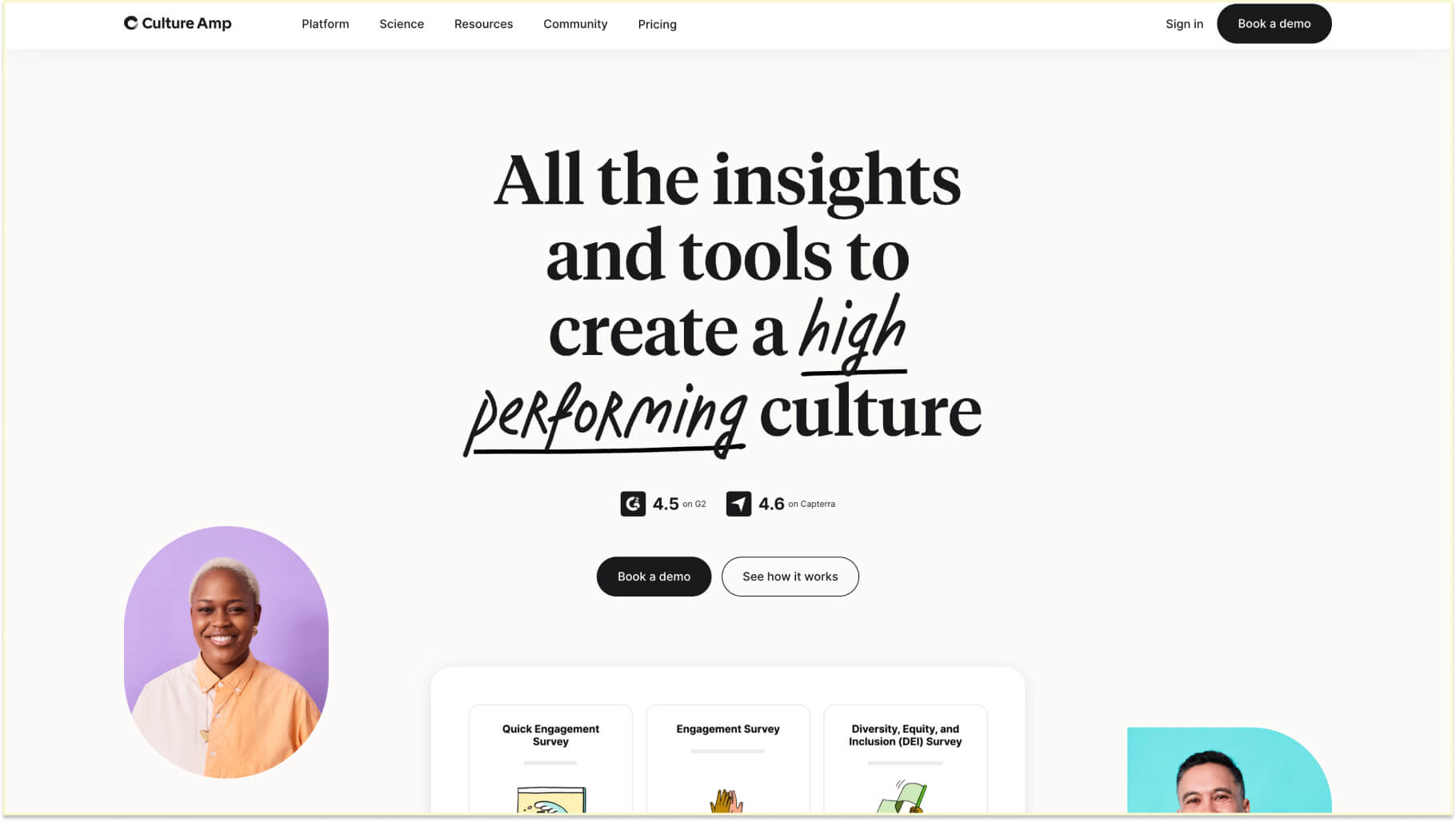
About Culture Amp: Culture Amp is an employee experience platform that helps organizations measure engagement, understand employee sentiment, and connect feedback to meaningful improvement. The company provides tools for running engagement surveys, pulse checks, eNPS assessments, and performance reviews in one system. The platform is designed around behavioral science and organizational psychology, which ensures that survey questions and recommendations reflect research-backed best practices.
Culture Amp main features:
- Provides research-backed survey templates that include eNPS questions and follow-up items.
- Offers analytics dashboards that allow segmentation by department, location, and demographic group.
- Includes AI-powered summaries that identify themes and sentiment in employee comments.
- Supports multi-language surveys and global deployment needs.
Culture Amp pricing:
- Engage: contact the sales team for exclusive features
- Perform: contact the sales team for exclusive features
- Develop: contact the sales team for exclusive features
- People Analysis: contact the sales team for exclusive features
To learn more, view Culture Amp’s pricing page.
Culture Amp G2 score: Culture Amp has a G2 score of 4.5/5 based on user reviews.
What Culture Amp customers are saying on G2: “I’ve been using this software for a while now, and one of its standout features is how well-organized the system is. Everything is laid out in a clear and intuitive way, making it easy to navigate. Additionally, the punctuality of the communications is exceptional – notifications and updates are always timely, ensuring that I stay on top of tasks and deadlines. It’s a reliable tool for those who value efficiency and clear communication. Highly recommended!” - Anna L., SEO Consultant (G2 Review for Culture Amp).
4. Glint
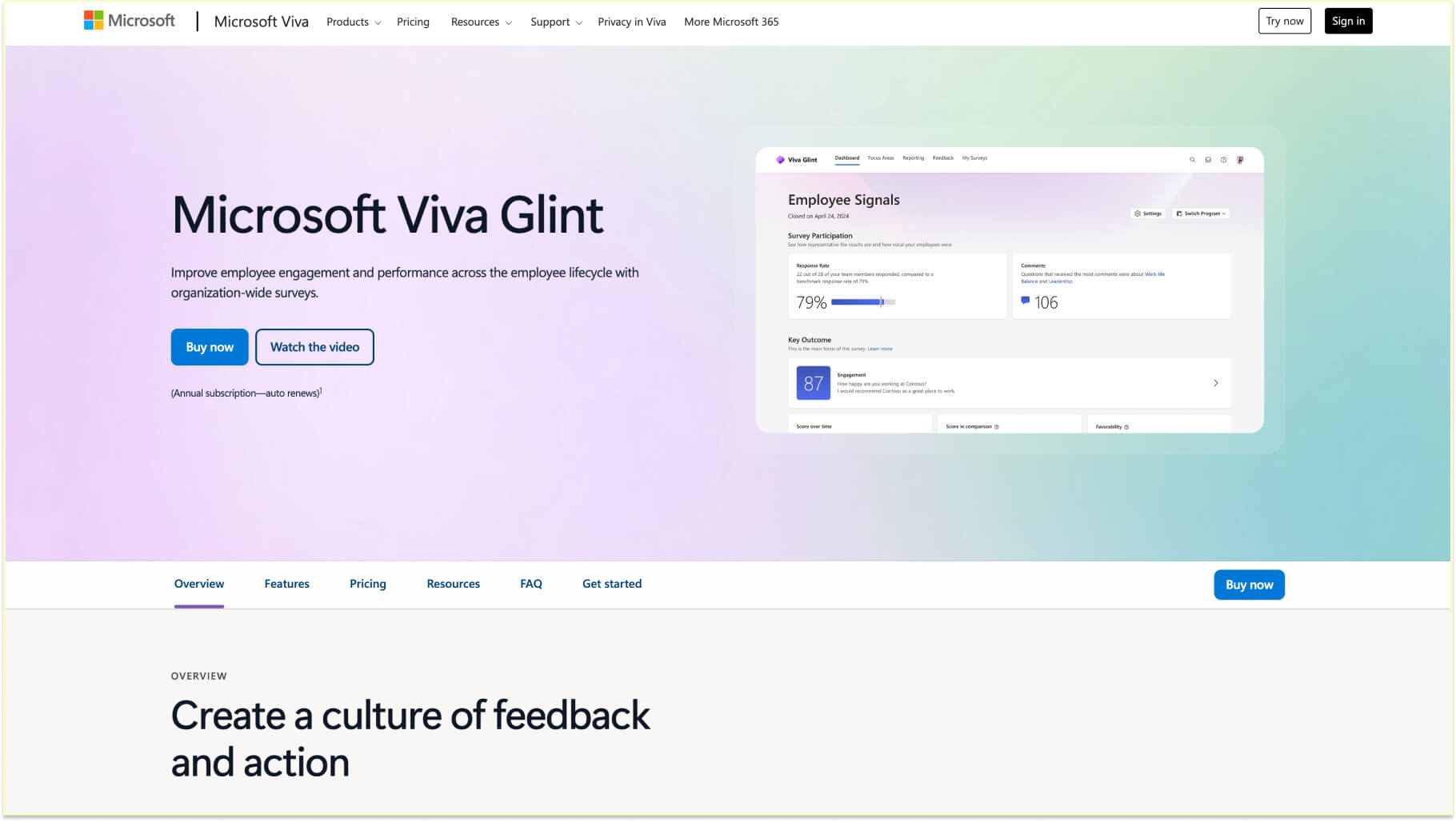
About Glint: Glint is an employee feedback and engagement platform that provides organizations with ongoing listening capabilities, actionable insights, and the ability to connect data to change. It supports recurring engagement surveys, onboarding and exit lifecycle surveys, special topic templates (such as culture or diversity), and 360° feedback programs. The platform is part of the broader Microsoft Viva suite and is built to scale for global enterprises, offering translations, segmentation, and integration with the Microsoft ecosystem.
Glint main features:
- Offers research-based survey templates, including recurring engagement and lifecycle programs.
- Provides analytics dashboards and driver impact analysis that show which survey items most strongly affect outcomes.
- Supports global deployment with multi-language translations, configurable survey cycles, and configurable thresholds for anonymity.
- Integrates into the Microsoft ecosystem (including Microsoft Teams and the Microsoft 365 environment) for seamless user experience and adoption.
Glint pricing:
- Microsoft Viva Employee: $2.00 user/month (Annual commitment)
- Microsoft Viva Workplace: $6.00 user/month (Annual commitment)
- Microsoft Viva Suite: $12.00 user/month (Annual commitment)
To learn more, view Glint’s pricing page.
Glint G2 score: Glint has a G2 score of 4.6/5 based on user reviews.
What Glint customers are saying on G2: “Good depiction of data, easy to view formats with a variety of different cuts of data available. Not super user-friendly, requires too many clicks to filter the data needed.” - Anjali A., Human Resources Consultant (G2 Review for Software).
5. WorkDay
About WorkDay: WorkDay is an employee listening platform designed to help organizations collect continuous feedback, understand employee sentiment, and act on insights at scale. The system uses a real-time "always-on" feedback model that enables employees to share input frequently rather than relying only on annual surveys. Workday Peakon Employee Voice provides engagement surveys, eNPS assessments, onboarding and exit surveys, and specialized listening programs that run throughout the employee lifecycle.
WorkDay main features:
- Provides continuous listening with recurring eNPS questions and trend tracking.
- Offers automated insights and recommended actions based on employee responses.
- Includes manager dashboards that show engagement levels, drivers, and changes over time.
- Supports multi-language surveys and global deployment requirements.
WorkDay pricing:
- Workday Adaptive Planning: Free for 30 days
- Workday Adaptive Planning: contact sales to request pricing
- Workday Adaptive Planning Close & Consolidation: contact sales to request pricing
To learn more, view WorkDay’s pricing page.
WorkDay G2 score: WorkDay has a G2 score of 4.0/5 based on user reviews.
What WorkDay customers are saying on G2: “I've found Workday to be a reliable application for handling holiday and HR activities at my company. Its user-friendly interface makes requesting leave and checking balances easy and efficient. Real-time updates ensure I always know my leave status without chasing paperwork. I appreciate the integration with other HR functions, which provides a central hub for important information. While there can be some lag during busy times, overall, Workday simplifies holiday management and enhances transparency for both employees and HR teams.” - Saurabh Y., Senior Engineer (G2 Review for WorkDay).
5 mid-market eNPS survey tools
Mid-market organizations need eNPS survey tools that balance sophisticated features with reasonable pricing and implementation complexity. These platforms offer robust functionality without the overhead of enterprise solutions, making them ideal for growing companies that have outgrown basic tools but don't need full enterprise capabilities.
1. Matter
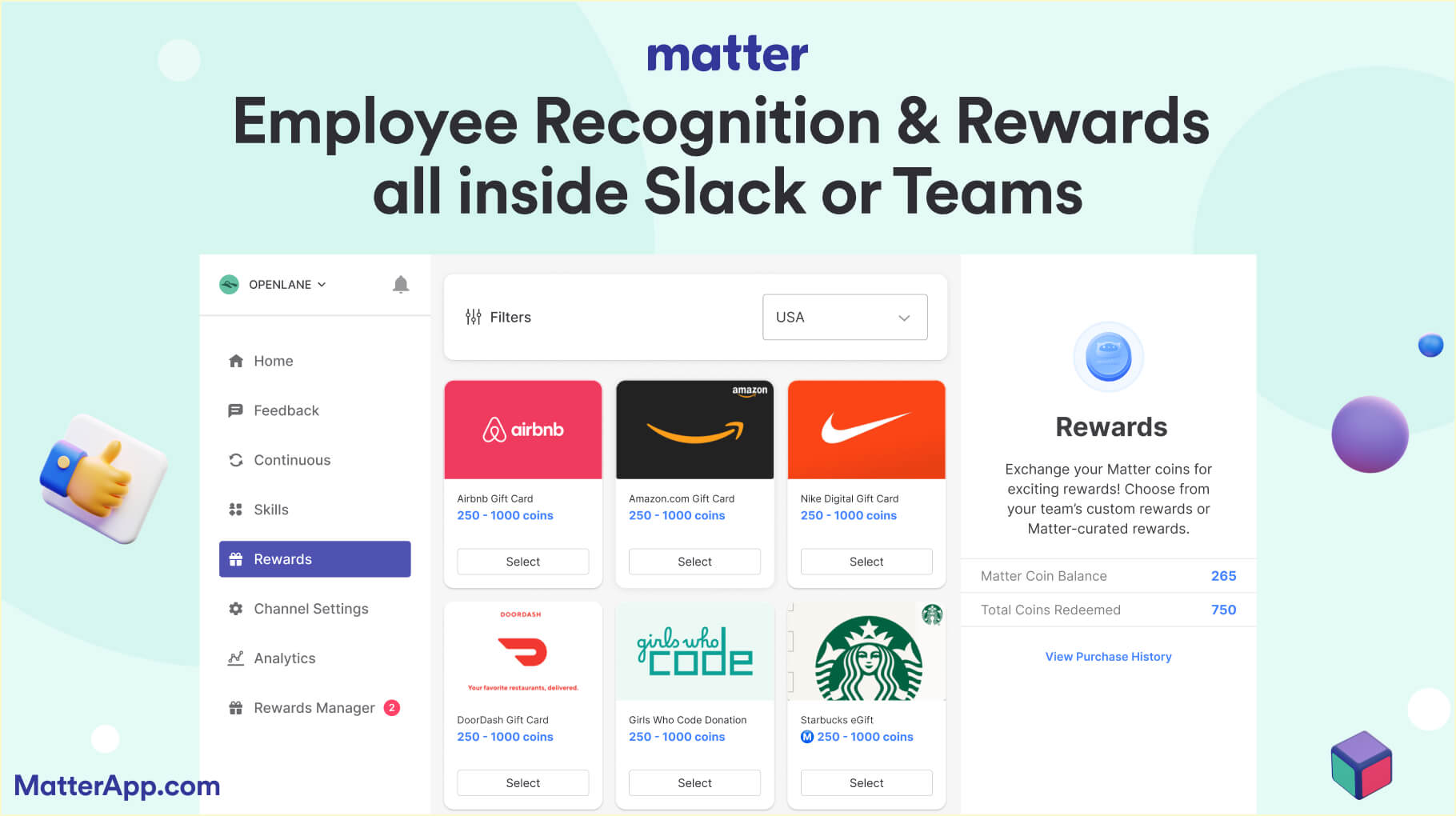
About Matter: Matter serves mid-market organizations exceptionally well by offering enterprise-grade features at accessible price points. The platform's quick 2-minute setup eliminates lengthy implementation projects, allowing teams to start collecting eNPS data almost immediately. Matter's balance of advanced analytics with user-friendly interfaces makes it perfect for organizations that need powerful insights without dedicated survey specialists.
Matter main features:
- Quick 2-minute setup with immediate deployment capabilities
- Balance of advanced features and affordability with flexible pricing tiers
- Automated survey scheduling and reminders reduce administrative burden
- Real-time analytics that surface eNPS insights as responses arrive
Matter pricing:
- Free Forever: $0/user/month
- Basic: $1/user/month, billed annually
- Pro: $3/user/month, billed annually
- Pro + Surveys: $5/user/month, billed annually
To learn more, view Matter's pricing page.
Matter G2 score: Matter has a G2 score of 4.7/5 based on user reviews.
What Matter customers are saying: "Matter helps us encourage behaviors that align with our company values and can allow us to recognize and reward those who exemplify our values." - Autumn Amescua, Chief Culture & People Officer at SXSW (Customer Story).
2. Lattice
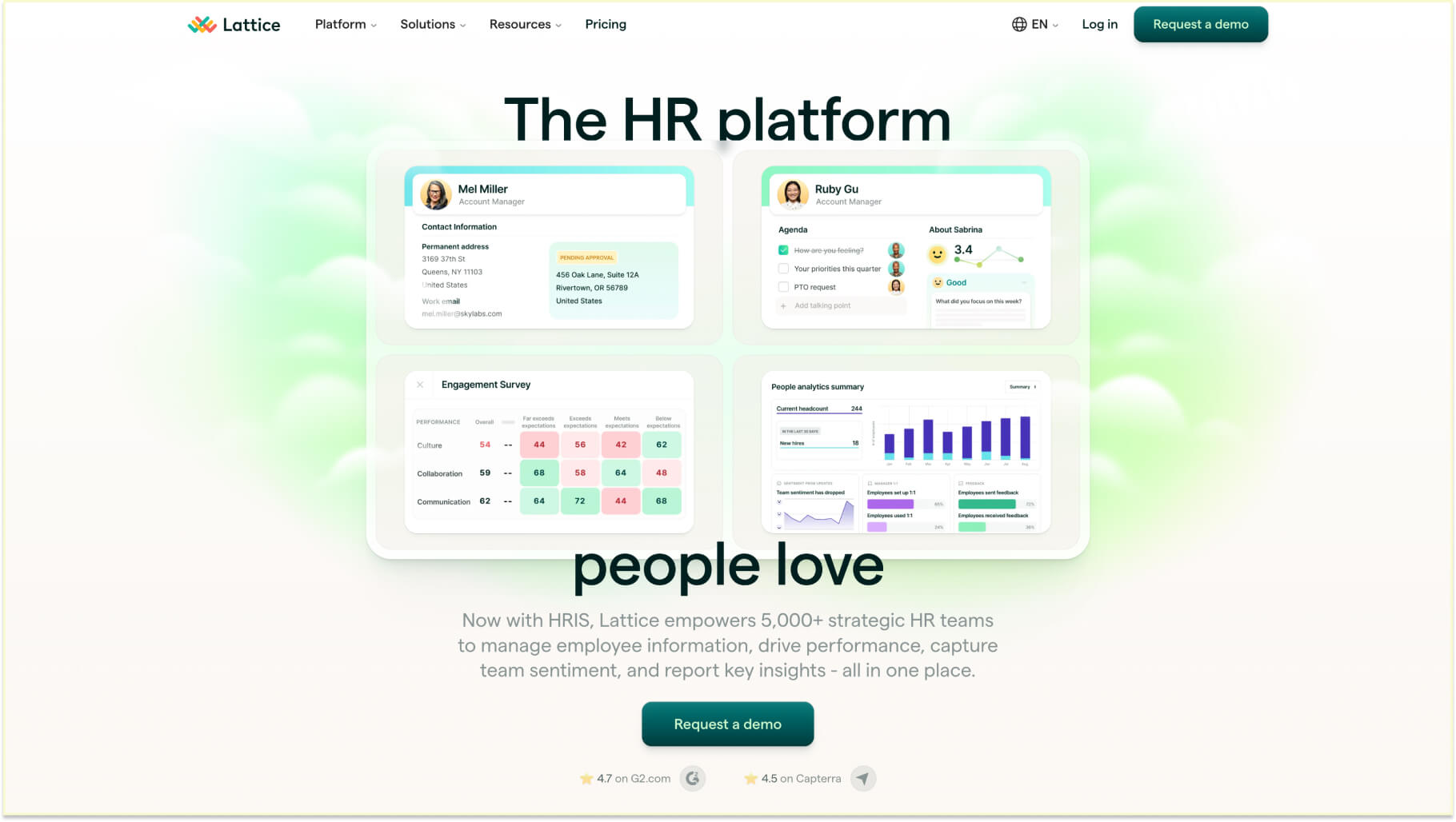
About Lattice: Lattice is an integrated people platform that supports performance management, employee engagement, goal setting, development, and analytics. The platform is built for organizations that want to align individual contributions with business outcomes and make managers more effective. Lattice helps HR teams simplify people operations, drive engagement, and provide leaders with insight into workforce sentiment and growth. The system supports multi-module deployments so companies can select engagement surveys, performance reviews, OKRs, compensation tools, and HR integrations in a modular way.
Lattice main features:
- Enables the addition of an eNPS question (scale 0-10) within Pulse, Engagement, or Survey workflows.
- Offers real-time analytics of eNPS results, with distribution of Promoters / Passives / Detractors and trend tracking over time.
- Allows filtering and segmentation of eNPS results by demographic or organizational groups (teams, departments, etc.).
- Supports global deployment with multi-language survey capabilities and customizable question wording for the eNPS item.
Lattice pricing:
- Talent Management: $11/seat/month
- Foundation: $11/seat/month
- Engagement: $4/seat/month
- Grow: $4/seat/month
- Compensation: $6/seat/month
To learn more, view Lattice’s pricing page.
Lattice G2 score: Lattice has a G2 score of 4.7/5 based on user reviews.
What Lattice customers are saying on G2: “Ease of use and ease of implementation. The implementation time commitment was hours not weeks. We initially implemented all modules except Grow, Comp, and Engage and manged to configure and test all modules in less than two weeks. The product team is very receptive to feedback and also able to help come up with creative workarounds for functional gaps. The customer support is great and very responsive.” - Matthew H., Senior Human Resources Manager (G2 Review for Lattice).
3. 15Five
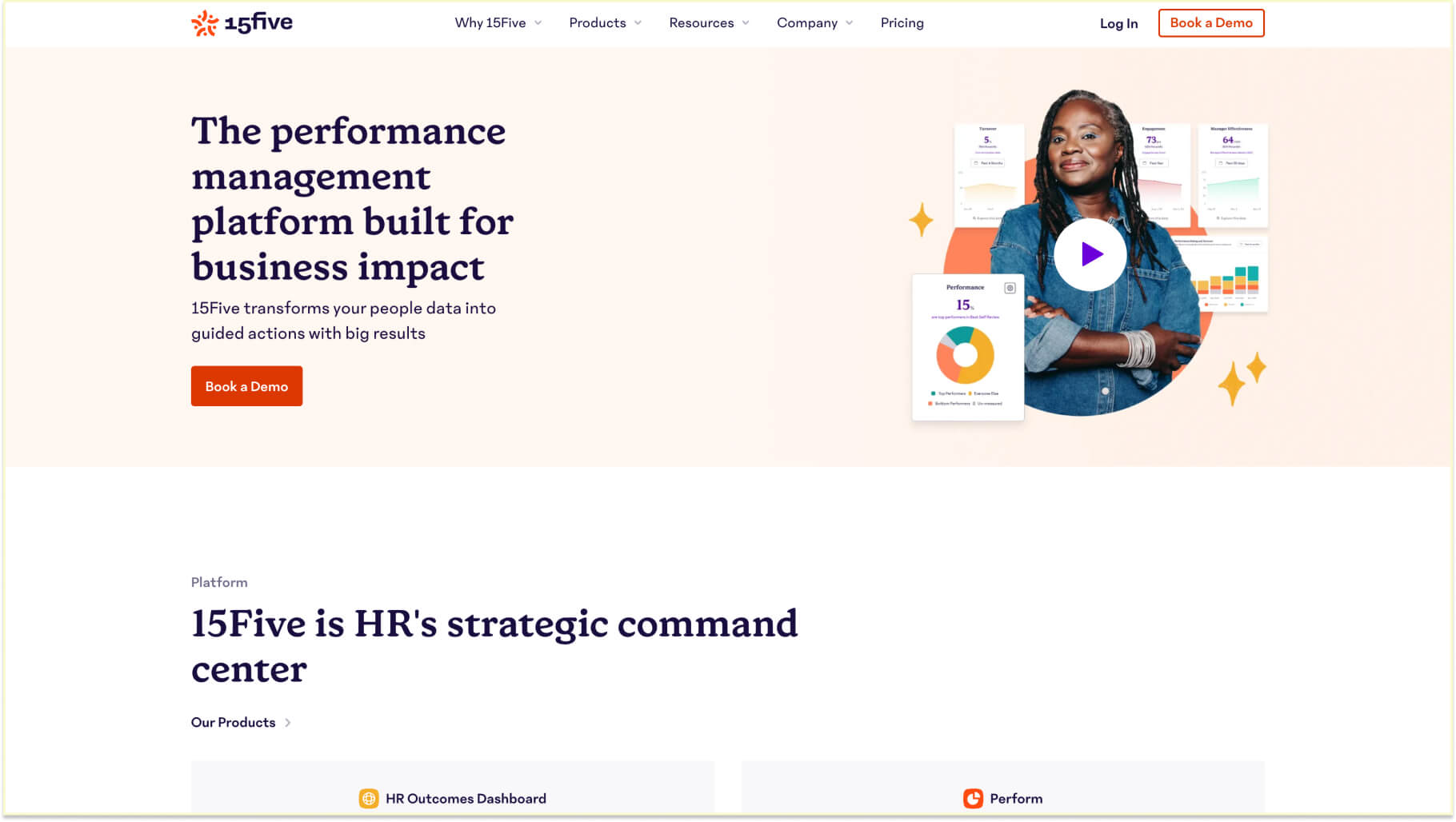
About 15Five: 15Five is a performance management and employee engagement platform built to help businesses create effective managers, engaged teams, and strong organizational outcomes. The platform combines continuous feedback, engagement surveys, eNPS measurement, goal-setting, and performance review workflows to give organizations clarity on how employees feel and how to act on that insight. With more than 3,000 organizations using the solution, 15Five emphasizes simplicity, quick time to value, and manager-driven insights.
15Five main features:
- Supports the standard 0–10 eNPS question within engagement survey campaigns.
- Provides an eNPS report that shows the overall score, distribution, and trends over time.
- Allows filtering and segmentation of eNPS results by demographic groups, teams, and other organizational categories.
- Integrates eNPS visibility into broader engagement and performance workflows so leaders can view sentiment alongside other feedback metrics.
15Five pricing:
- Engage: $4/user/month, billed annually
- Perform: $11/user/month, billed annually
- Total Platform: $16/user/month, billed annually
To learn more, view 15Five's pricing page.
15Five G2 score: 15Five has a G2 score of 4.6/5 based on user reviews.
What 15Five customers are saying on G2: “We have built a company wide OKR tied to our company wide average Pulse score. It is an easy check of how the company is "feeling" from week to week, and over the last 2 years, I have found it to be accurate, important and super easy for the team to adopt and stay consistent in use.”- Dan A., Small-Business (G2 Review for 15Five).
4. TINYpulse
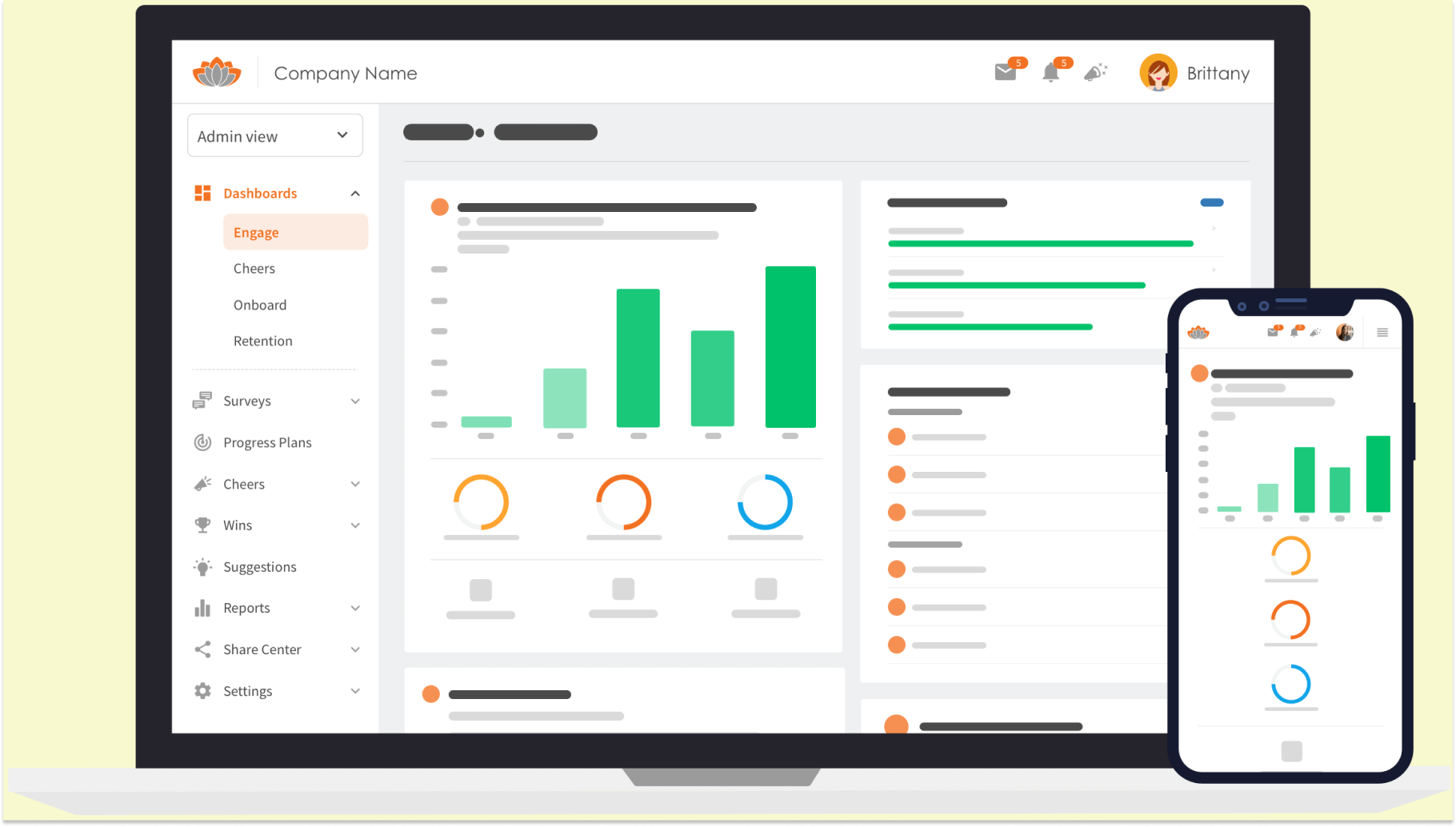
About TinyPulse: TinyPulse is an employee feedback and engagement platform designed to help organizations gather quick, honest input from employees through short, frequent pulse surveys. The platform prioritises anonymity to encourage open and candid responses, which makes it useful for teams that want to uncover issues that may not surface through traditional surveys. TINYpulse supports engagement measurement, eNPS tracking, peer recognition, and simple feedback workflows, making it accessible for small to mid-sized organizations that want lightweight but effective employee listening capabilities. The system focuses on ease of use, fast deployment, and straightforward reporting so that leaders can act quickly on feedback.
TinyPulse main features:
- Provides an eNPS question within pulse and engagement surveys using the standard 0–10 scoring model.
- Allows anonymous responses to help employees share honest sentiments about their workplace experience.
- Includes reporting that displays eNPS trends, promoter and detractor breakdowns, and changes over time.
- Supports basic segmentation options to compare eNPS scores across different teams or groups.
TinyPulse pricing: Pricing is not listed on the website. To learn more about pricing, you'll need to schedule a demo/sales call with TinyPulse.
TinyPulse G2 score: TinyPulse has a G2 score of 4.9/5 based on user reviews.
What TinyPulse customers are saying on G2: “There is no way to turn off the comment boxes which allows people to share any and all feedback, whether relevant or not. Many people question the anonymity of it so it's hard to get responses even when private messaging.” - Verified User in Higher Education.
5. Workleap/Officevibe

About Workleap/Officevibe: Workleap/Officevibe, part of GSoft, is an employee engagement platform that helps organizations run automated pulse surveys, measure eNPS, and analyse team sentiment. The platform is designed to make engagement measurement simple by sending regular surveys that gather quick, continuous insights from employees. Workleap/Officevibe offers science-backed questions, clear reporting dashboards, and tools that help managers turn feedback into action. It is widely used by teams that want lightweight, easy-to-launch surveys that support both engagement and manager-employee conversations. The platform also integrates with workplace tools and supports global organizations with flexible deployment options.
Workleap/Officevibe main features:
- Includes a built-in eNPS question as part of automated weekly pulse surveys.
- Provides engagement dashboards that break down promoter, passive, and detractor scores.
- Offers science-backed question libraries created with input from organizational psychology research.
- Supports multi-language engagement surveys for global teams.
Workleap/Officevibe pricing:
- Officevibe: $5/month,10 users minimum
- Performance: $5/month,10 users minimum
- Compensation: $5/month,100 users minimum
To learn more, view Workleap/Officevibe's pricing page.
Workleap/Officevibe G2 score: Workleap/Officevibe has a G2 score of 4.3/5 based on user reviews.
What Workleap/Officevibe customers are saying on G2: “Officevibe provides a regular stream of honest feedback and discussion between managers and employees across our company. GoodVibes has become THE way our employees appreciate and recognize one another. Our management team discusses the data and anonymous responses on a monthly basis.” - Anthony B., President (G2 Review for Workleap).
5 budget-friendly eNPS survey tools
Small teams and budget-conscious organizations don't need to sacrifice quality feedback when measuring eNPS. Several affordable solutions offer core eNPS functionality that provides valuable insights without significant financial investment. These tools prove that effective employee sentiment measurement doesn't require enterprise budgets.
1. Matter
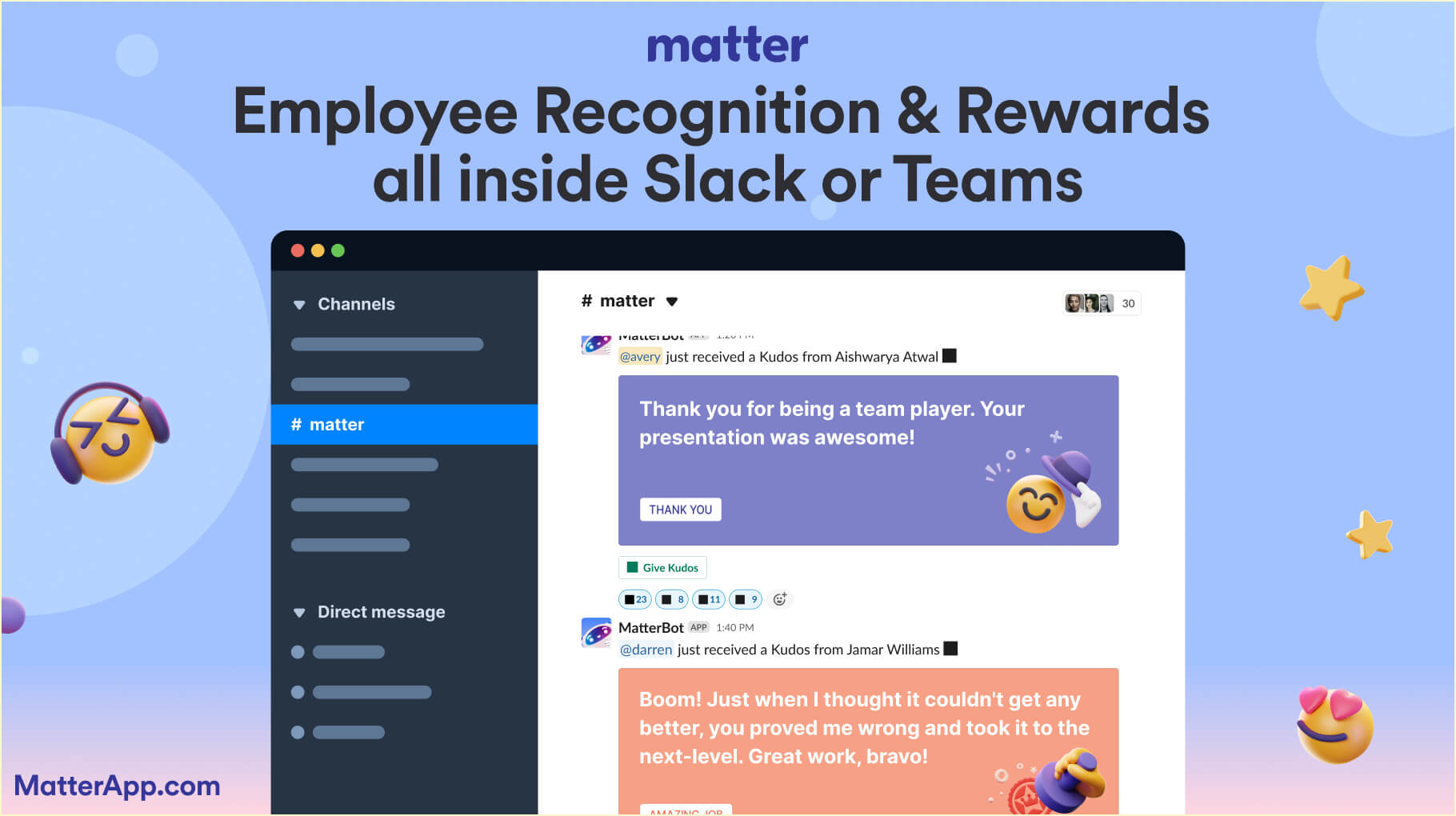
About Matter: Matter's Free Forever plan makes it the most accessible enterprise-quality eNPS survey tool available. Small teams can access professional eNPS measurement, automated distribution, and basic analytics without any financial commitment. As organizations grow, Matter's pricing scales reasonably while adding advanced features that support increasingly sophisticated needs.
Matter main features:
- Free Forever plan with core eNPS functionality, including survey creation and distribution
- Low per-user cost starting at just $1 per month for enhanced features
- No setup fees or long-term commitments, allowing flexible scaling
Matter pricing:
- Free Forever: $0/user/month
- Basic: $1/user/month, billed annually
- Pro: $3/user/month, billed annually
- Pro + Surveys: $5/user/month, billed annually
To learn more, view Matter's pricing page.
Matter G2 score: Matter has a G2 score of 4.7/5 based on user reviews.
What Matter customers are saying: "Being a high-performance team, Matter helps us take a moment out of our busy day to share heartfelt gratitude with kudos." - Sam Udotong, CTO & Co-founder at Fireflies.ai (Customer Story).
2. SurveyMonkey
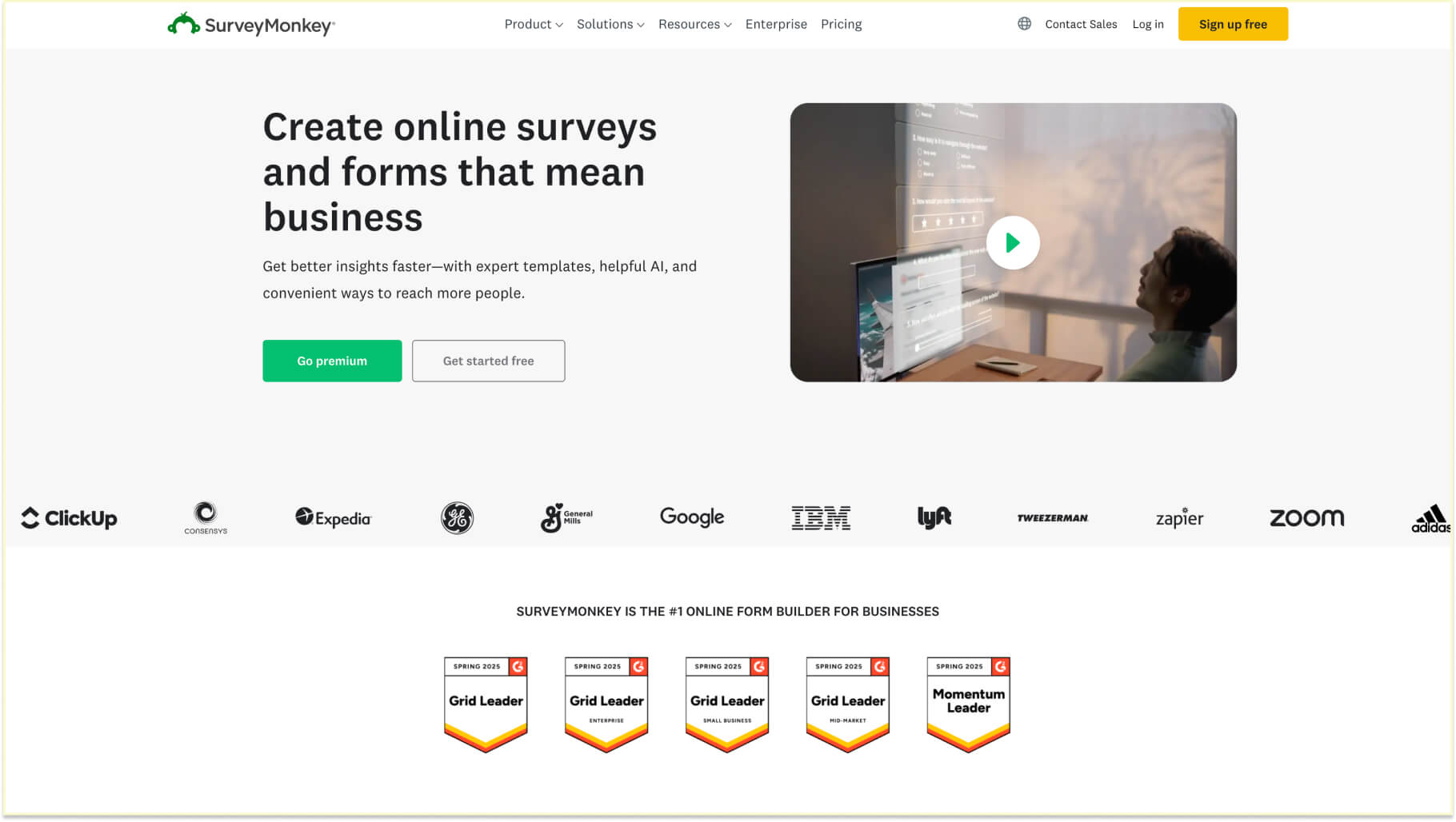
About SurveyMonkey: SurveyMonkey is a widely used online survey platform that helps organizations create and distribute surveys for feedback, research, and measurement. It provides flexible survey design tools, templates, and basic analytics suited for teams that want a simple way to collect employee input, including eNPS. SurveyMonkey is commonly used by small businesses and mid-sized organizations that need fast survey creation without complex setup. While not an employee-experience platform, it offers enough functionality for teams that want a straightforward and cost-effective approach to measuring employee sentiment.
SurveyMonkey main features:
- Offers pre-built eNPS survey templates using the standard 0–10 scoring model.
- Provides basic analytics that display promoter, passive, and detractor breakdowns.
- Supports customization of the eNPS question and follow-up items.
- Allows data export for additional analysis in spreadsheets or other tools.
SurveyMonkey pricing:
- Team Advantage: $25/user/month, starting at 3 users, billed annually
- Team Premier: $75/user/month, starting at 3 users, billed annually
- Enterprise: Talk to sales for pricing
To learn more, view SurveyMonkey's pricing page.
SurveyMonkey G2 score: SurveyMonkey has a G2 score of 4.4/5 based on user reviews.
What SurveyMonkey customers are saying on G2: “The free plan lets you create surveys with up to 25 responses. For most real-world uses, that's very limiting. The basic paid plan doesn't cut it either. If you need to export your data, you're looking at the higher tiers that run closer to $100/month. Additionally, the survey customization options can be a lot better. The competitors in this space offer advanced customization that SurveyMonkey is definitely missing.” -Nitin M., Product Manager (G2 Review for SurveyMonkey).
3. Google Forms
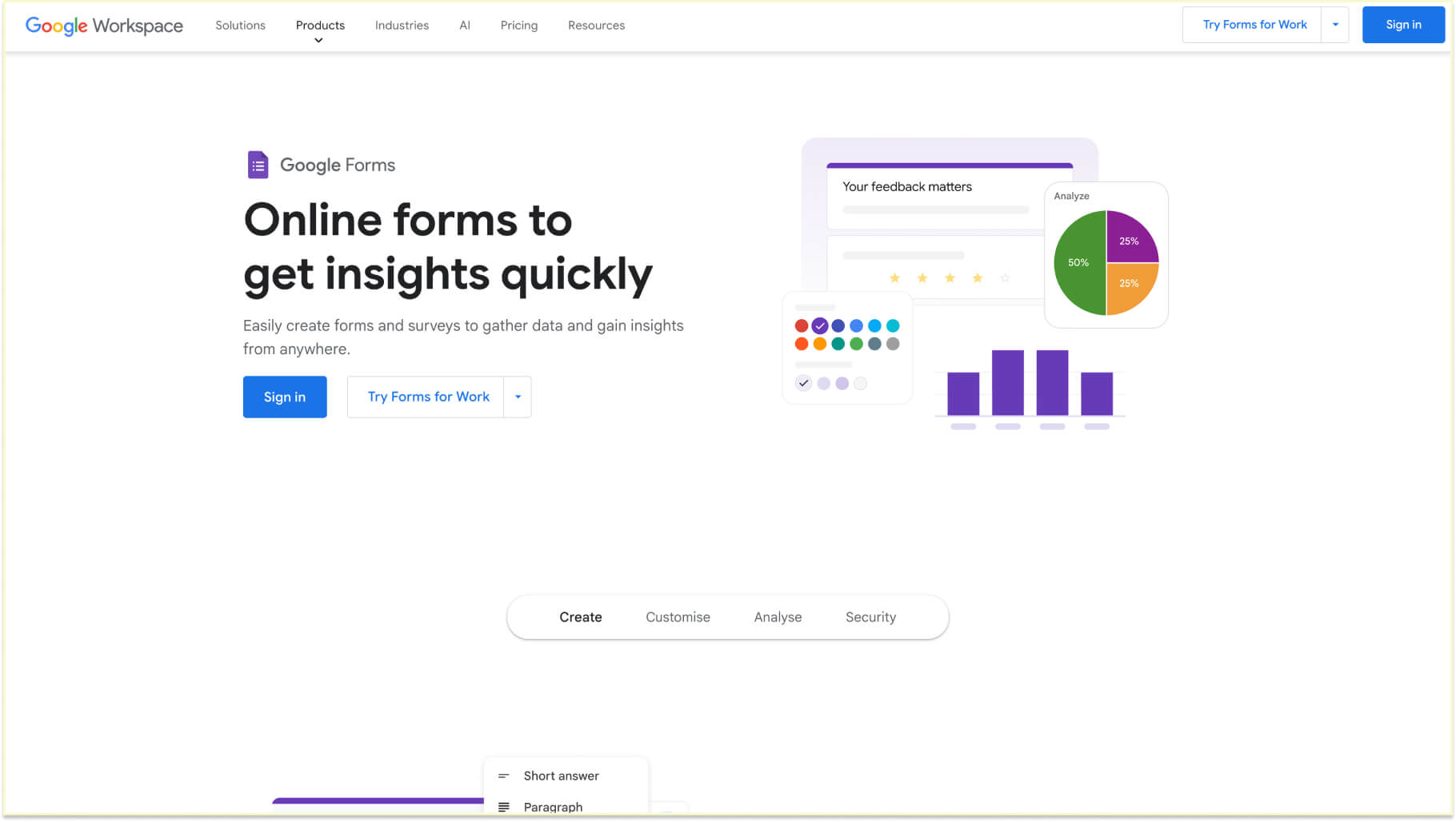
About Google Forms: Google Forms is a free survey and data-collection tool that is part of the Google Workspace suite. It allows organizations to create simple surveys quickly and distribute them by link, email, or website embedding. Google Forms is frequently used by small teams and organizations that need a cost-effective way to gather basic employee feedback, including eNPS responses. While it lacks advanced analytics and engagement-focused features, it offers an easy, accessible option for teams beginning to measure employee sentiment with minimal setup or technical requirements.
Google Forms main features:
- Allows manual creation of an eNPS question using the standard 0–10 scale.
- Provides automatic response collection with real-time charts and basic summary statistics.
- Supports unlimited responses and survey sharing through links, email, or website embedding.
- Exports results directly to spreadsheets for additional analysis.
Google Forms pricing:
- Starter: $6.30 user per month
- Standard: $12.60 user per month
- Plus: $22 user per month
- Enterprise Plus: Talk to sales for pricing
To learn more, view Google Forms pricing page.
Google Forms G2 score: Google Forms has a G2 score of 4.6/5 based on user reviews.
What Google Forms customers are saying on G2: “Honestly, I enjoy using Google Workspace overall, though it can be somewhat challenging when the internet connection is unstable, as most of its tools require being online. Additionally, with so many apps like Docs, Sheets, Drive, and Meet, it can feel a bit overwhelming at first. However, once you become familiar with the platform, everything tends to run very smoothly.” - Girishchand B., Test Engineer Level 2 (G2 review for Google Forms).
4. Typeform
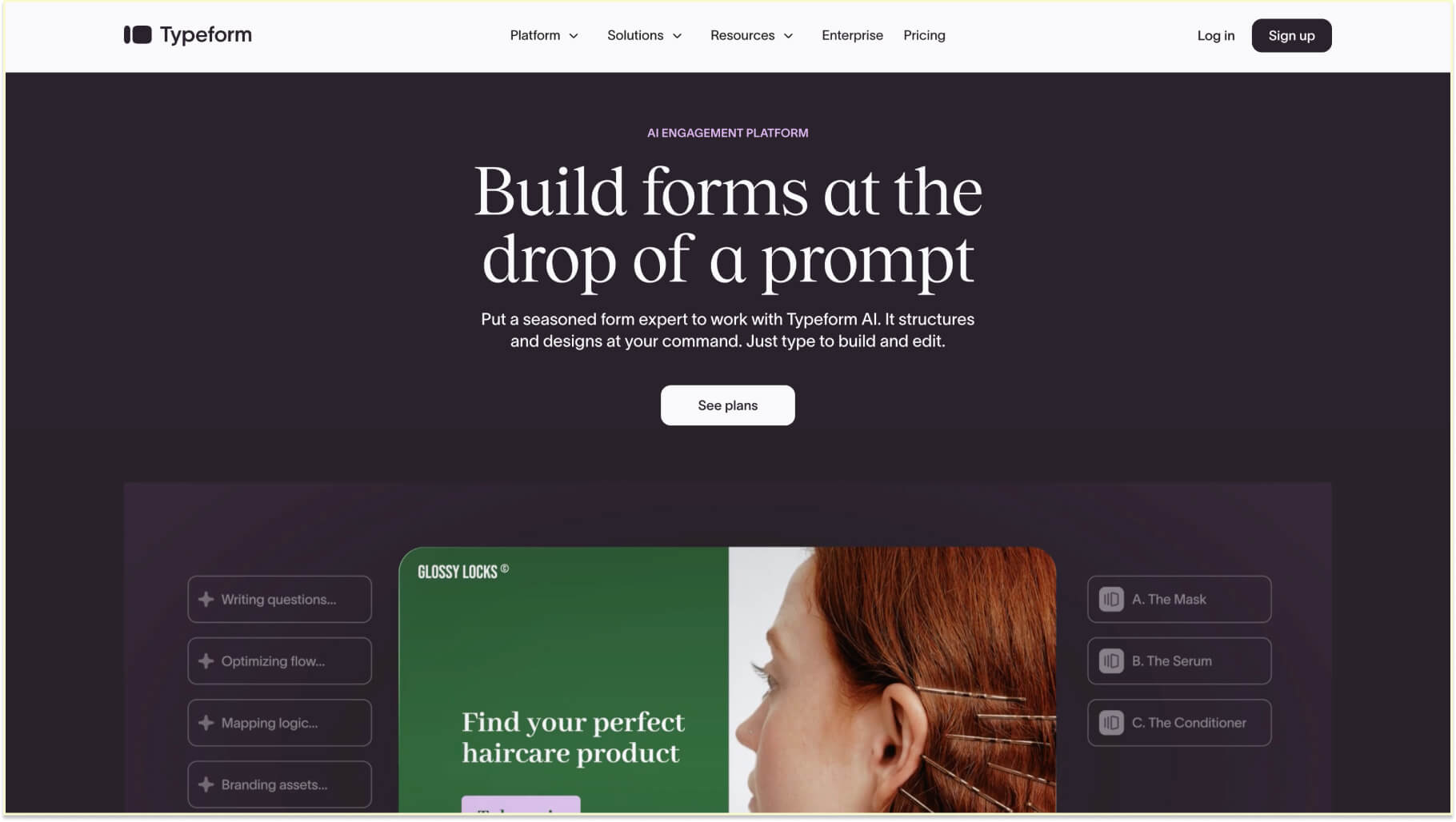
About Typeform: Typeform is an online form and survey platform known for its conversational and visually engaging survey design. The platform places an emphasis on developing an experience that is both more engaging and user-friendly, which, in comparison to more conventional survey formats, has the potential to result in greater completion rates. Typeform is used by organizations that want modern, mobile-friendly surveys that feel approachable and easy to complete. While not a specialized employee-experience platform, Typeform offers sufficient flexibility for teams that want to collect employee sentiment, including basic eNPS responses, through a clean and simple interface.
Typeform main features:
- Supports creation of a custom eNPS question using the standard 0–10 scoring format.
- Provides a conversational survey layout designed to improve respondent engagement.
- Includes basic analytics with response summaries and distribution charts.
- Offers integrations with spreadsheet tools and external platforms for extended analysis.
Typeform pricing:
- Basic: $25 per month
- Plus: $50 per month
- Business: $83 per month
- Enterprise: Custom per month
To learn more, view Typeform's pricing page.
Typeform G2 score: Typeform has a G2 score of 4.5/5 based on user reviews.
What Typeform customers are saying on G2: “The user interface could be improved for applying design settings. Some of the options are buried in the brand and theme screens. It would be nice to have more control over where the questions and the answers appear on the screen, the layouts are pretty limited. On the data analysis side, it would be nice to have the ability to check questions that are tests so they are eliminated from the results. Right now I have to create a draft survey to test and once it is approved I have to copy the survey and give people a new link to the live version so I can utilize the reports.” - Jennifer N., Data Analyst & Community Engagement (G2 Review for Software).
5. Jotform
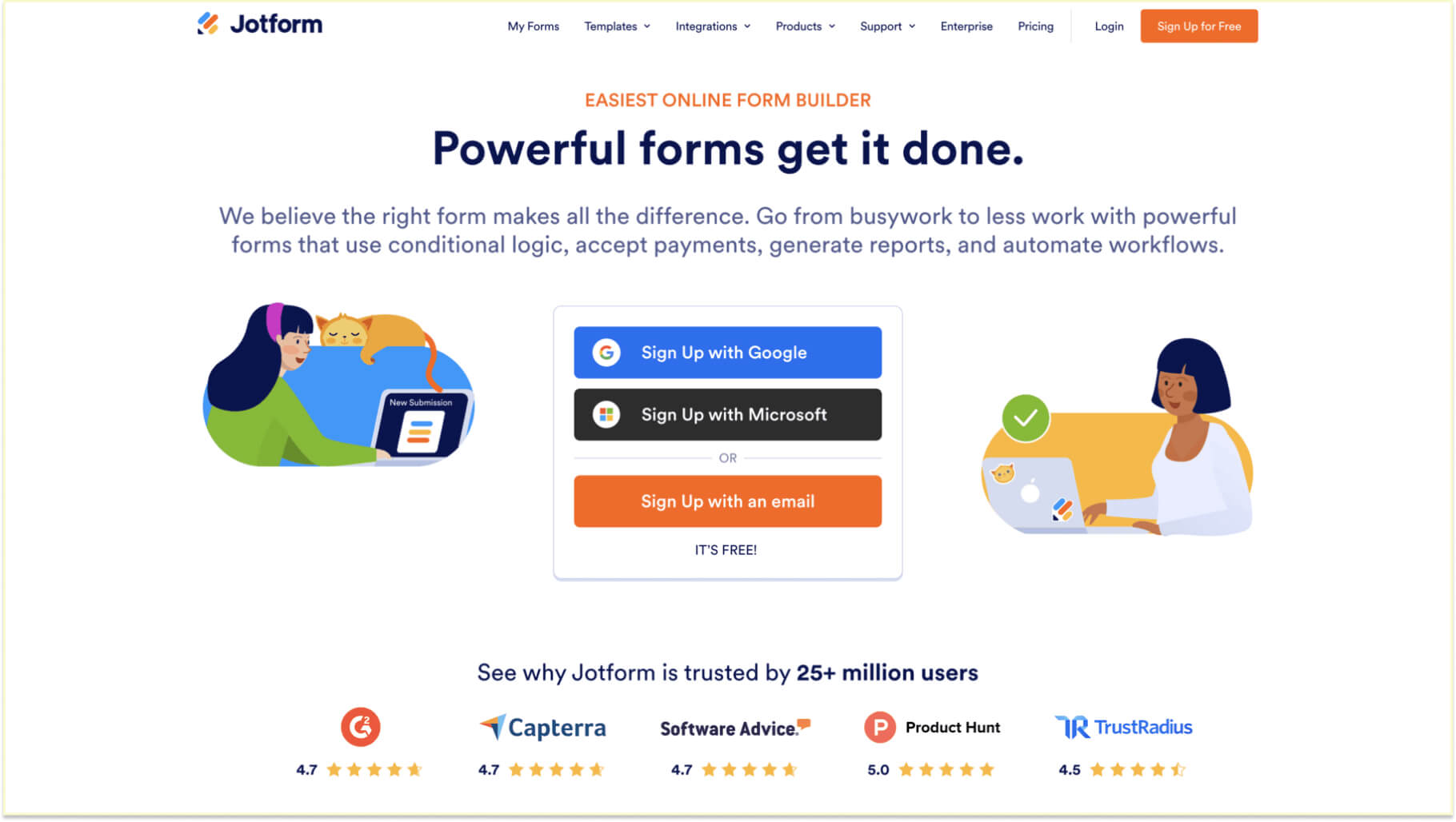
About Jotform: Jotform is an online form and survey builder that allows organizations to create custom forms, quizzes, and surveys without coding. The platform is designed for ease of use, offering a drag-and-drop interface and a large library of templates. Jotform is frequently used by small to mid-sized teams that need a simple way to gather feedback, including employee sentiment and eNPS responses. In addition to enabling a diverse range of application cases, it interacts with a large number of business tools, which makes it adaptable for organizations that are looking for a survey alternative that is both easily accessible and highly customizable.
Jotform main features:
- Provides survey templates that include eNPS-style questions, which can be edited or customized.
- Supports creation of a 0–10 eNPS question using scale and rating fields.
- Includes reporting tools that display distribution charts, summaries, and response trends.
- Allows data export to spreadsheets and other tools for deeper analysis.
Jotform pricing:
- Starter: $0/month (All features included)
- Bronze: $34/month, billed annually
- Silver: $39/month, billed annually
- Gold: $99/month, billed annually
- Enterprise: Custom price, talk to sales for pricing
To learn more, view Jotform's pricing page.
Jotform G2 score: Jotform has a G2 score of 4.7/5 based on user reviews.
What Jotform customers are saying on G2: “JotForm's builder is really useful and has so many field options and vairables which gives you a lot of customization ability. It's an intuitive no-code system that you can build fairly complex systems and process with to meet common business needs and customize them to meet your specific requirements. The support team and community have also been helpful. As it has been around for some time now, you can usually find a post similar to your challenge, but if not you can submit a request for help and they come back to you in good time. It has a large amount of integrations which we have found helpful to move data around securely.” - Nathan C., Technology & Efficiency Manager (G2 Review for Jotform).
How Matter can help with eNPS surveys

Matter transforms eNPS measurement from a periodic checkup into an ongoing conversation that drives continuous improvement. The platform's native integration with Slack and Microsoft Teams positions surveys directly within employees' daily workflows, eliminating the friction that typically suppresses response rates. When participation becomes effortless, organizations gain more complete, representative data that truly reflects workforce sentiment.
The platform's approach to eNPS surveys balances statistical rigor with user experience. Matter employs a 5-point eNPS scale that research has validated as equally effective as traditional 11-point scales while requiring less cognitive effort from respondents. This optimization matters because it respects employees' time and attention, leading to more thoughtful responses and higher completion rates.
Automated eNPS survey distribution and collection
Matter's automation capabilities eliminate the administrative burden typically associated with running regular eNPS surveys. Organizations can configure survey schedules once, and the platform handles distribution, reminder sending, and response collection automatically. This set-it-and-forget-it approach ensures consistent measurement without requiring ongoing HR time investment.
The automated distribution system adapts to employees' schedules and preferences. Matter can schedule surveys to arrive at optimal times when response rates are highest, and its intelligent reminder system nudges non-respondents without overwhelming them. This thoughtful automation maintains the cadence needed for continuous employee engagement tracking while respecting individual workload variations.
Collection automation extends beyond simple distribution. Matter aggregates responses in real time, applying privacy protections while making data immediately available for analysis. This instant feedback loop allows organizations to spot concerning trends as they emerge rather than discovering problems weeks after survey closure.
Real-time analytics and actionable insights
Matter's analytics transform raw eNPS data into clear, actionable insights that guide strategic decisions. The platform's dashboards surface key metrics immediately, showing current scores, trends over time, and comparisons across different organizational segments. This accessibility ensures that insights reach decision makers quickly enough to inform timely interventions.
The analytics capabilities go beyond simple score reporting. Matter identifies themes in open-ended responses using natural language processing, automatically categorizing feedback into topics such as compensation, management quality, and work environment concerns. This automated analysis saves HR teams countless hours they would otherwise spend manually reviewing comments.
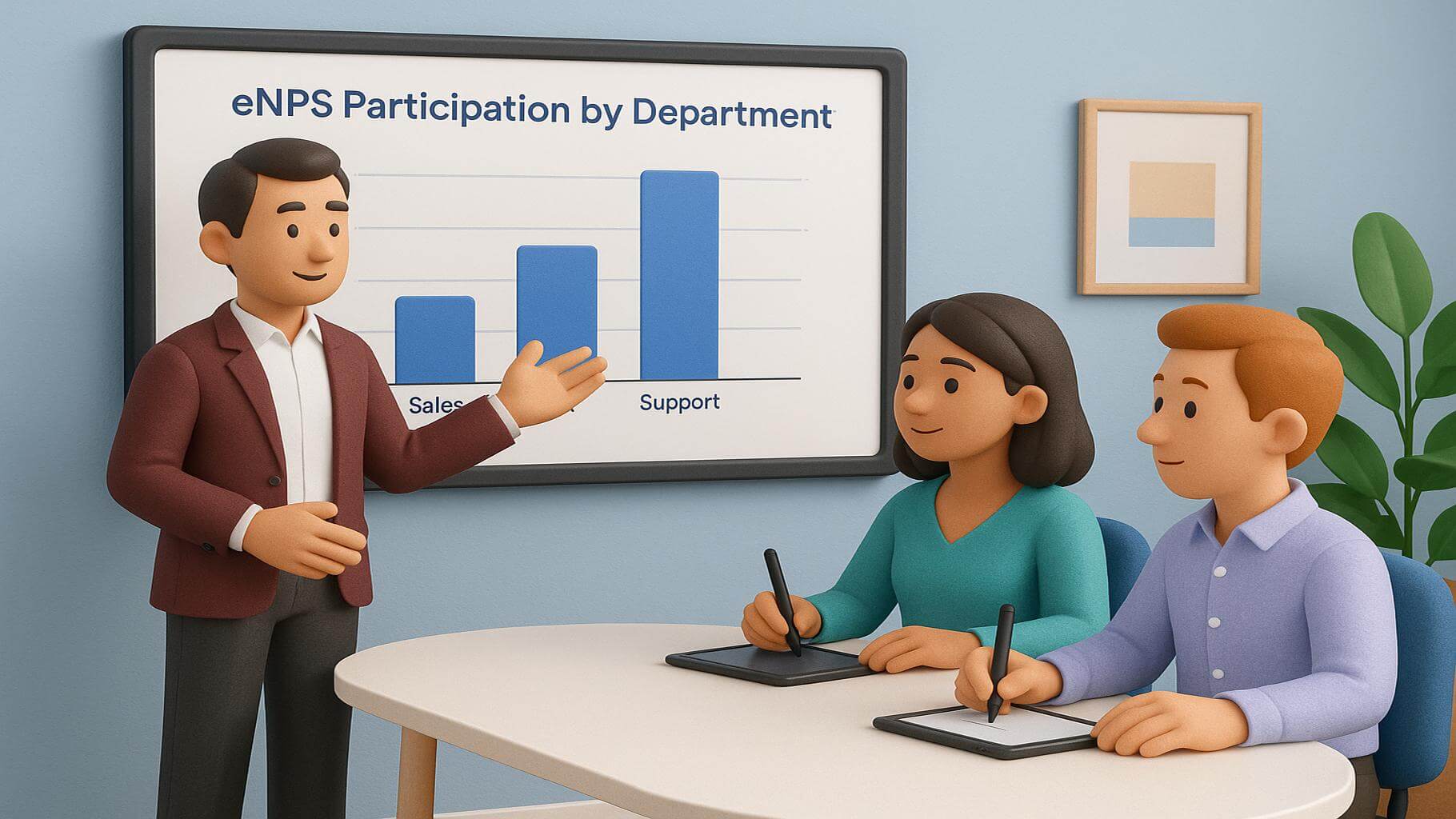
Real-time reporting enables organizations to track response rates as surveys progress, identify which departments are participating fully, and gain deeper insights into sentiment patterns as they develop. This visibility enables proactive engagement with teams showing low participation or concerning trends, turning eNPS measurement into a dynamic management tool rather than a static report.
Integration with recognition and rewards programs
Matter's unique advantage lies in its seamless integration of eNPS measurement with employee rewards. Organizations using Matter don't just identify problems through surveys; they can immediately deploy recognition to reinforce positive behaviors and reward teams with high scores. This integration creates a virtuous cycle in which measurement informs action, and recognition drives improvement.
The platform allows organizations to celebrate teams that improve their eNPS scores, making progress visible and rewarding. When employees see that their feedback leads not just to promises but to tangible recognition of improvement efforts, their investment in future surveys deepens. This visible responsiveness builds trust and demonstrates that leadership genuinely values employee input.
Matter's employee reward system can also support retention efforts identified through eNPS surveys. Organizations can deploy targeted recognition programs to departments showing declining scores, using appreciation and team rewards to address morale concerns before they trigger departures. This proactive approach transforms eNPS from a measuring stick into an intervention tool.
Frequently asked questions about eNPS survey
Q: What is an eNPS survey, and how does it work?
A: An eNPS survey measures employee loyalty by asking "How likely are you to recommend this company as a place to work?" on a 0-10 or 5-point scale. Respondents scoring 9-10 (or strongly agree) are Promoters, 7-8 (or agree) are Passives, and 0-6 (or neutral to strongly disagree) are Detractors. In order to calculate the eNPS score, one must first subtract the percentage of Detractors from the percentage of Promoters. This will result in a number that can range anywhere from -100 to +100.
Q: What are good eNPS survey questions to ask?
A: The best eNPS survey questions include the core question "How likely are you to recommend us as a workplace?" followed by "What is the primary reason for your score?" and "What would make you more likely to recommend us?" These follow-up questions capture qualitative feedback that explains the numerical score and identifies specific areas for improvement in employee satisfaction, career growth opportunities, work-life balance, and team morale.
Q: How often should organizations conduct eNPS surveys?
A: Most organizations conduct eNPS surveys quarterly to balance trend tracking with survey fatigue avoidance. Some companies deploy monthly pulse surveys with eNPS questions for continuous feedback. The ideal frequency depends on organization size, change pace, and response capacity. Quarterly surveys work well for most mid-sized companies, while larger enterprises often prefer monthly tracking, and smaller teams may survey semi-annually.
Q: What is a good eNPS survey score?
A: Any positive eNPS score (above 0) is acceptable, scores above 10 are good, scores above 30 are great, and scores above 50 are excellent. eNPS scores range from -100 to 100. However, a good eNPS score varies by industry and company size, making internal trend tracking and peer benchmarking more valuable than absolute numbers.
Q: What eNPS survey software features matter most?
A: Essential eNPS survey software features include anonymous response collection, automated survey scheduling, real-time analytics dashboards, trend tracking over time, and workplace platform integration with Slack or Teams. The best eNPS tools also offer action-planning features to translate data into improvements, benchmarking capabilities against industry standards, customizable survey templates, and mobile optimization to increase response rates.
Q: What is the eNPS survey meaning for retention?
A: eNPS scores strongly predict employee retention because Detractors are significantly more likely to leave within 12 months, while Promoters stay longer and refer quality candidates. Organizations with high eNPS scores experience lower turnover costs, reduced hiring expenses, stronger employer brands, and better talent attraction through employee referrals. A declining eNPS score serves as an early warning system for retention risks.
Final thoughts about the eNPS survey
eNPS surveys provide the foundation for understanding employee sentiment and driving meaningful workplace improvements. The right eNPS survey tool makes it easy to collect honest feedback, identify trends as they emerge, and take action that genuinely improves retention and employee engagement. Organizations that embrace regular eNPS measurement position themselves to respond proactively to workforce concerns rather than reacting to departures after the damage is done.
Matter offers a comprehensive solution that combines eNPS measurement with employee rewards programs, creating a complete platform for building employee loyalty and satisfaction. By integrating surveys directly into communication tools, automating distribution and analysis, and connecting insights to employee recognition programs, Matter transforms how organizations understand and respond to their workforce. The platform's user-friendly approach respects employees' time while delivering the deep insights that employee engagement survey tools need to drive strategic improvements.
Ready to transform employee feedback into meaningful action? Schedule a demo with a Matter expert today and discover how our platform can help you measure employee loyalty, identify improvement opportunities, and create a culture of continuous improvement.