
Organizations invest significant resources into welcoming new hires, yet many struggle to measure whether their efforts truly resonate. At Matter, we understand the challenge of differentiating surface-level happiness metrics from deeper indicators of long-term success. Designing effective onboarding survey questions and onboarding satisfaction survey templates transforms satisfaction measurement from a compliance exercise to a strategic retention tool. Capturing authentic responses through well-crafted onboarding experience survey questions helps predict turnover and performance outcomes during the critical first 90 days.
What is an onboarding satisfaction survey?

An onboarding satisfaction survey is a structured feedback tool designed to measure how new hires perceive their initial workplace experience. These surveys capture employee sentiment about orientation quality, manager support, and resource availability during the onboarding process. HR professionals use this data to identify what aspects of the onboarding program resonate with new employees. Obtaining important insights that will drive continual development in the manner in which organizations welcome and integrate talent is the purpose of this endeavor.
Definition and purpose of satisfaction measurement
Satisfaction measurement in onboarding focuses on quantifying how new hires feel about their early workplace experiences. This approach helps organizations collect feedback at strategic intervals throughout the employee lifecycle. The purpose extends beyond simple happiness metrics to understanding whether new team members have the resources needed to succeed. Effective measurement lays the foundation for data-driven decisions on onboarding investments and process improvements.
- Captures real-time employee experience data during critical first weeks
- Identifies gaps between expectations set during the recruitment process and reality
- Provides actionable data for improving onboarding training and materials
- Creates baseline metrics for tracking satisfaction trends over time
How satisfaction surveys differ from engagement surveys
Satisfaction surveys focus specifically on the onboarding experience and immediate workplace perceptions, while an engagement survey measures broader emotional commitment to the organization over time. Onboarding surveys ask about training sessions, job description clarity, and initial interactions with the manager. Engagement surveys explore motivation, discretionary effort, and long-term career development intentions.
- Satisfaction surveys are time-bound to the onboarding period
- First engagement survey measures deeper organizational connection
- Both contribute to understanding the overall employee experience
- Combining insights from both provides comprehensive retention data
Key components of effective satisfaction assessments
Effective onboarding satisfaction assessments include questions across multiple dimensions of the new hire experience. A well-designed pulse survey approach comprehensively addresses preparation, orientation, training effectiveness, and team integration. A good onboarding survey balances quantitative ratings with open-ended questions for qualitative insights. The assessment should align with organizational values while providing benchmarkable data.
- Clear rating scales that are easy for respondents to understand
- Questions covering all phases of the onboarding process
- Space for new employees to provide constructive feedback
- Logical flow that respects the respondent's time and attention
What are the benefits of onboarding satisfaction surveys?
Implementing onboarding surveys delivers measurable benefits for organizations committed to improving new-hire experiences. These surveys provide early warning signals about potential retention risks before they become costly departures. Organizations gain visibility into which aspects of their onboarding program work well and which need adjustment. The benefits extend from individual employee success to broader business success metrics.
Early detection of at-risk new hires
New-hire onboarding surveys reveal satisfaction issues before they lead to voluntary turnover. Early detection allows managers to intervene with additional support, resources, or clarification of job responsibilities. This proactive approach demonstrates that the organization values employee feedback and acts on concerns. Identifying at-risk new hires early protects the investment made during the recruitment process.
- Flags declining satisfaction before resignation decisions are made
- Enables targeted manager conversations about specific concerns
- Reduces surprise departures that disrupt team productivity
- Improves new hire retention rates through timely intervention
Identification of process bottlenecks and friction points
Gathering feedback through structured surveys reveals exactly where new employees encounter obstacles. These friction points might include unclear job expectations, inadequate onboarding materials, or insufficient manager availability. Understanding bottlenecks helps organizations streamline the overall onboarding process for future hires. Process improvements benefit every subsequent new employee who joins the organization.
- Pinpoints specific training sessions that need enhancement
- Reveals gaps in resource allocation during the orientation process
- Identifies communication breakdowns between departments
- Highlights technology or tool access issues that slow productivity
Data-driven optimization of onboarding investments
Employee onboarding surveys provide the data needed to justify and optimize program spending. Organizations can measure improvements in employee engagement survey results against specific investments in training or resources. This evidence-based approach helps secure executive support for continued program enhancements. Data-driven decisions ensure resources flow toward improvements that matter most to new hires' experiences.
- Quantifies return on investment for onboarding program changes
- Provides evidence for budget requests and resource allocation
- Enables comparison of satisfaction across different onboarding approaches
- Creates accountability for continuous improvement in new hire outcomes
Why onboarding satisfaction survey templates are important

Survey templates provide a structured foundation for consistent satisfaction measurement across all departments. Without standardized templates, organizations risk collecting inconsistent data that cannot be compared meaningfully. Templates ensure every new hire receives the same opportunity to provide feedback on their experience. This standardization is essential for identifying patterns and measuring improvement over time.
Consistency in data collection across departments
Standardized onboarding survey questions eliminate variation, making cross-departmental comparisons impossible. When each department uses the same template, organizations can identify challenges and best practices across the company. This consistency reveals whether satisfaction differences stem from departmental practices or individual manager approaches. Comparable data enables meaningful benchmarking and targeted improvement efforts.
- Eliminates survey design variation between hiring managers
- Enables accurate comparison of onboarding experience across teams
- Creates a reliable baseline for measuring satisfaction improvements
- Supports fair assessment of department-level onboarding effectiveness
Reduction in survey design time and errors
Pre-built templates save HR professionals significant time that they would otherwise spend designing surveys from scratch. Professional templates incorporate proven question formats and appropriate response scales. This reduces the risk of poorly worded questions that confuse respondents or bias results. Instead of discussing survey design, teams can focus on analyzing the results.
- Accelerates the deployment of new hire onboarding surveys
- Incorporates research-backed question design principles
- Minimizes risk of leading questions or response bias
- Frees HR resources for higher-value analysis activities
Ability to benchmark satisfaction across cohorts
Templates enable organizations to track satisfaction trends across different hiring cohorts over time. This longitudinal view shows whether changes to the onboarding program produce measurable improvements. Benchmarking helps organizations understand their performance relative to industry standards. Cohort analysis identifies seasonal patterns or manager-specific variations in new hire outcomes.
- Tracks satisfaction evolution across quarterly or annual cohorts
- Identifies long-term trends in onboarding effectiveness
- Reveals the impact of program changes on new hire perceptions
- Supports strategic planning for future onboarding investments
Pairing satisfaction measurement with employee recognition initiatives creates a comprehensive approach to new hire engagement that addresses both feedback collection and positive reinforcement.
10+ essential onboarding satisfaction survey questions for immediate feedback
The first week determines how new hires perceive their decision to join the organization. Immediate feedback surveys capture impressions while experiences are fresh and actionable. These onboarding survey questions focus on preparation, welcome experience, and initial resource access. Gathering feedback early enables a rapid response to issues that could otherwise compound.
10 first-day and first-week survey questions:
- How well did your manager prepare for your arrival on day one?
- Were your workspace and technology tools ready when you started?
- Did you receive a clear overview of your first week's activities?
- How welcome did you feel during your initial orientation process?
- Were you introduced to the key stakeholders you need to work with?
- Did you receive all the necessary tools and access credentials promptly?
- How clear was the explanation of your job description and expectations?
- Were your questions during the first week addressed satisfactorily?
- How would you rate the quality of your initial training sessions?
- Did you understand where to find help when needed?
First-day welcome and preparation satisfaction
The first day creates lasting impressions that shape how new hires view the organization. Survey questions should assess whether the team prepared adequately for the arrival. New employees notice whether their workspace, equipment, and access credentials are ready. These details signal organizational competence and respect for new team members.
- Assess manager preparation and availability on day one
- Evaluate workspace readiness and technology access
- Measure the warmth of welcome from immediate team members
- Gauge overall impression of organizational preparedness
Orientation program effectiveness assessment
Orientation introduces new hires to company culture, policies, and essential procedures. Effective hire onboarding survey questions assess whether orientation provides balanced information delivery with engagement. Too much information overwhelms, while too little leaves new employees confused about expectations. The assessment should determine whether the orientation process achieved its learning objectives.
- Rate relevance and clarity of orientation content
- Evaluate the pace and duration of orientation activities
- Assess the quality of presenters and materials used
- Measure understanding of company policies and procedures
Initial resource and tool access satisfaction
New employees cannot perform their job effectively without proper tools and system access. Survey questions should identify delays or gaps in provisioning that hinder productivity. Quick resolution of access issues demonstrates organizational efficiency and support. This feedback helps IT and operations teams improve provisioning processes, and an employee pulse survey deployed during the first week captures these critical early impressions before they fade.
- Identify any missing tools or technology access
- Assess the timeliness of the credential and system setup
- Evaluate the quality of technical support received
- Measure satisfaction with physical workspace setup
10+ critical onboarding satisfaction survey template questions for milestone check-ins

The 30, 60, and 90-day milestones reveal how effectively new hires are integrating. These checkpoint surveys assess training quality, manager relationships, and team belonging. Hire onboarding surveys at these intervals capture evolving perceptions as new hires gain experience. Milestone check-ins identify issues that emerge after initial orientation excitement fades.
10 milestone check-in survey questions:
- How effectively has your training prepared you to perform your role?
- How would you rate the quality of your relationship with your manager?
- Do you regularly receive comments on your performance and progress?
- How included do you feel within your immediate team?
- Are you clear about what success looks like in your role?
- How well do your actual job responsibilities match the job description?
- Do you have opportunities to connect with colleagues across departments?
- How supported do you feel when facing challenges in your work?
- Is the pace of your onboarding training appropriate for your learning?
- Do you see a clear career development path in this organization?
Training quality and relevance satisfaction
Training effectiveness determines how quickly new hires become productive contributors. Survey questions should assess whether the training content aligns with actual job responsibilities. New employees should feel confident in applying what they have learned to real-world situations. Training relevance directly impacts both satisfaction and early performance outcomes.
- Evaluate alignment between training content and daily work
- Assess training pace and format effectiveness
- Measure confidence gained through training sessions
- Identify gaps between training and actual job requirements
Manager relationship and support satisfaction
The manager relationship significantly influences new hire retention and engagement. Survey questions should explore communication frequency, feedback quality, and accessibility. New hires need managers who guide without micromanaging. Strong manager relationships create psychological safety for asking questions and admitting mistakes.
- Rate manager availability and responsiveness
- Assess quality and frequency of performance feedback
- Evaluate the manager's support for overcoming obstacles
- Measure trust and comfort in manager interactions
Team integration and belonging satisfaction
Feeling like part of the team drives employee engagement and reduces the risk of early turnover. Survey questions should assess social integration, opportunities for collaboration, and a sense of belonging. Team integration extends beyond introductions to meaningful work relationships. New team members who feel included contribute more actively to team success, and employee rewards for peer mentors who welcome new hires reinforce this supportive behavior.
- Evaluate the quality of relationships with immediate teammates
- Assess inclusion in team activities and decisions
- Measure sense of belonging within the broader organization
- Identify barriers to collaboration with colleagues
15+ comprehensive onboarding experience survey questions for final assessment
The 90-day mark represents a critical transition from onboarding to full organizational membership. Final assessment surveys capture comprehensive perspectives on the entire onboarding experience. These new-hire onboarding surveys ask new hires to reflect on their journey and their likely future. The data informs strategic decisions about the design and resources of the onboarding program.
15 final assessment survey questions:
- How would you rate your overall onboarding program experience?
- Did the onboarding adequately prepare you to succeed in your role?
- Were your expectations from the interview process met during onboarding?
- How clear is your understanding of performance expectations now?
- Do you feel you have established meaningful relationships with colleagues?
- How well does the reality of the job match what was described?
- Do you have all the necessary tools and resources to excel?
- How would you rate the overall company culture based on your experience?
- Were there any aspects of onboarding that should be improved?
- Do you feel valued and appreciated by your manager and team?
- How likely are you to recommend this company to others seeking jobs?
- Do you see a future for yourself in this organization?
- What was the most valuable part of your onboarding experience?
- What aspects of onboarding need the most improvement?
- How prepared do you feel to contribute to business success?
Overall onboarding program satisfaction rating
A single overall rating question provides a high-level measure of program effectiveness. This question enables quick benchmarking against previous cohorts and industry standards. The overall rating should be complemented by specific dimension questions for actionable insights. Tracking this metric over time reveals whether improvements are producing measurable results.
- Capture a single summary rating for easy benchmarking
- Track trends across hiring cohorts and departments
- Compare against industry standards for onboarding satisfaction
- Use as a headline metric for program effectiveness reporting
Career development expectations versus reality
New hires join with expectations about growth opportunities shaped during the recruitment process. Survey questions should assess whether reality aligns with the promises made during the hiring process. Misalignment between expectations and reality drives early turnover among high-potential employees. Honest assessment helps organizations address gaps and set realistic expectations.
- Compare promised career development opportunities with reality
- Assess the clarity of career progression paths
- Evaluate manager conversations about growth opportunities
- Identify gaps between expectations and actual development support
Likelihood to recommend the company to others
The recommendation question serves as an employee Net Promoter Score for onboarding. New hires who would recommend the company demonstrate strong early engagement, and tracking this metric through an employee engagement pulse survey helps monitor advocacy levels beyond the initial onboarding period. This question reveals overall sentiment about the employee experience thus far. Low recommendation scores signal potential retention risk requiring immediate attention.
- Identify promoters who will help attract future talent
- Flag detractors at risk of early departure
- Benchmark against organizational eNPS standards
- Track improvement in new hire advocacy over time
Best onboarding survey examples from high-performing companies

Industry leaders customize their onboarding surveys to reflect the unique characteristics of their workforces. These examples demonstrate how organizations adapt standardized templates for specific contexts. Learning from diverse approaches helps organizations design surveys that fit their culture. Best onboarding survey questions balance consistency with relevance to specific roles.
Technology industry satisfaction survey models
Technology companies often emphasize rapid ramp-up and technical skill development in surveys. Questions focus on access to development environments, documentation quality, and opportunities for pair programming. Employee onboarding surveys in tech assess whether new engineers can ship code quickly. Satisfaction measurement includes evaluation of tooling, code review processes, and technical mentorship.
- Technical environment readiness and tool access questions
- Code review and documentation quality assessment
- Pair programming and mentorship satisfaction
- Sprint participation and contribution opportunity evaluation
Healthcare sector onboarding assessment examples
Healthcare organizations must balance satisfaction measurement with compliance and safety priorities. Surveys assess understanding of protocols, patient safety procedures, and regulatory requirements. New hires in healthcare need confidence that they can perform their job effectively without causing harm. Questions address both clinical competence development and cultural integration.
- Patient safety protocol understanding verification
- Compliance training completion and comprehension
- Clinical competence confidence assessment
- Team communication and handoff satisfaction
Retail and service industry template adaptations
Retail organizations often onboard large numbers of employees with varying schedules and locations. Surveys must work for frontline workers who may have limited computer access. Questions focus on customer service training, product knowledge, and manager support availability. Mobile-friendly survey design enables gathering feedback from distributed workforces, and employee rewards programs that recognize successful onboarding completion motivate both new hires and their trainers.
- Customer service training effectiveness assessment
- Product and policy knowledge confidence measurement
- Manager availability and support evaluation
- Schedule and shift communication satisfaction
How to create effective customer onboarding satisfaction survey programs
While this guide focuses on employee onboarding, the principles apply to customer onboarding as well. Organizations that excel at employee onboarding often apply similar rigor to customer success. Customer onboarding satisfaction surveys measure implementation experience and initial value realization. The goal is to ensure customers achieve expected outcomes from their investment.
Adapting employee surveys for client onboarding
Core survey design principles translate effectively from employee to customer contexts. Questions shift focus from workplace integration to product implementation and adoption. Customer surveys assess whether promised capabilities match the actual functionality experienced. The goal remains identifying satisfaction gaps before they lead to churn.
- Translate role clarity questions to feature adoption questions
- Adapt the manager support questions to the customer success manager evaluation
- Convert team integration questions to user adoption metrics
- Apply training effectiveness concepts to product education
Measuring B2B customer implementation satisfaction
Business customers investing in new solutions need structured opportunities for feedback. Implementation surveys capture perceptions of project management, training quality, and technical support. Early satisfaction signals predict long-term retention and expansion potential. Measurement should occur at project milestones similar to employee onboarding checkpoints, and pulse survey software designed for employee feedback often adapts well to customer success applications.
- Assess project management effectiveness and communication
- Evaluate training quality and documentation usefulness
- Measure technical support responsiveness and competence
- Capture overall implementation experience satisfaction
Using satisfaction data to reduce customer churn
Satisfaction data reveals which customers are at risk before they decide to leave. Proactive outreach based on low satisfaction scores prevents avoidable churn. Patterns in satisfaction data inform product and service improvements. Reducing churn delivers measurable financial returns on survey program investment.
- Identify at-risk customers through satisfaction score analysis
- Trigger intervention workflows based on survey responses
- Aggregate feedback to inform product development priorities
- Demonstrate program ROI through churn reduction metrics
Onboarding feedback examples that drive meaningful change

Raw survey data only creates value when translated into actionable improvements. These onboarding feedback examples illustrate how organizations use responses productively. Understanding feedback patterns helps HR professionals prioritize improvement initiatives. The idea is to establish a continuous improvement cycle driven by employee feedback.
Positive feedback that identifies best practices
Positive onboarding feedback reveals what aspects of the program work exceptionally well. Organizations should analyze positive responses to understand success factors. These best practices can be standardized and replicated across departments. Celebrating positive feedback also encourages managers to maintain effective behaviors.
- Identify specific activities that generate high satisfaction
- Document manager behaviors that new hires appreciate
- Recognize departments with consistently positive feedback
- Scale successful practices across the organization
Constructive feedback that reveals improvement areas
Constructive feedback highlights specific aspects of onboarding that need attention. Rather than viewing criticism negatively, organizations should appreciate honest input. Employees feel valued when they see their feedback produce visible changes. Addressing constructive feedback demonstrates the organization's commitment to improvement, and recognizing and rewarding those who provide thoughtful suggestions encourages continued participation.
- Categorize improvement suggestions by theme and frequency
- Prioritize changes based on impact and implementation effort
- Communicate planned improvements back to feedback providers
- Track satisfaction changes after implementing suggestions
Actionable suggestions from new hire perspectives
New hires often provide specific suggestions based on recent experience elsewhere. These fresh perspectives identify improvement opportunities that long-tenured employees overlook. Encourage employees to share what other organizations did well during their onboarding. New employees bring valuable feedback about industry best practices.
- Capture specific improvement recommendations from respondents
- Compare suggestions against current process limitations
- Evaluate the feasibility and potential impact of suggested changes
- Implement high-value suggestions and acknowledge contributors
10+ onboarding survey best practices for maximum impact
Implementing onboarding surveys effectively requires attention to timing, communication, and follow-through. These best practices ensure surveys generate actionable data while maintaining high response rates. Best onboarding survey questions alone cannot guarantee success without proper execution. Following established practices maximizes the return on investment in the survey program.
10 proven best practices for onboarding surveys:
- Deploy surveys at consistent milestone intervals for all new hires
- Keep individual surveys brief with focused question sets
- Communicate clearly why feedback matters to the organization
- Ensure confidentiality or anonymity appropriate to the context
- Send surveys during working hours for optimal response rates
- Use simple rating scales that minimize cognitive burden
- Include open-ended questions for qualitative insights
- Act visibly on feedback to build trust in the process
- Share aggregate results with new hire cohorts
- Continuously refine questions based on data quality analysis
Timing surveys for optimal response quality
Survey timing significantly impacts both response rates and data quality. Deploy surveys when new hires can reflect meaningfully on recent experiences. Avoid sending surveys during particularly stressful periods or major deadlines. Consistent timing across all new hires enables valid comparison and trend analysis.
- Schedule surveys at standardized milestone intervals
- Avoid holiday periods and end-of-quarter stress peaks
- Send during working hours when attention is available
- Allow adequate time for completion without rushing
Communicating survey purpose and confidentiality
Clear communication about the survey purpose encourages honest, thoughtful responses. New hires should understand how their feedback will be used and protected. Transparency about confidentiality builds trust, enabling candid input. Communication should explain the connection between feedback and organizational improvement.
- Explain how survey responses inform program improvements
- Clarify confidentiality protections and data handling
- Describe who will see individual versus aggregate results
- Connect survey participation to organizational values
Acting on feedback and closing the loop
The most important best practice is to visibly act on feedback received. When new hires see changes resulting from their input, future participation increases. Closing the feedback loop demonstrates respect for employee voice. Organizations that act on feedback build cultures of continuous improvement, and supplementing surveys with effective pulse survey questions throughout the year maintains ongoing dialogue with employees.
- Implement visible changes based on survey findings
- Communicate improvements back to feedback providers
- Acknowledge specific suggestions that influenced changes
- Track satisfaction improvements following implemented changes
Common mistakes in onboarding satisfaction survey template design
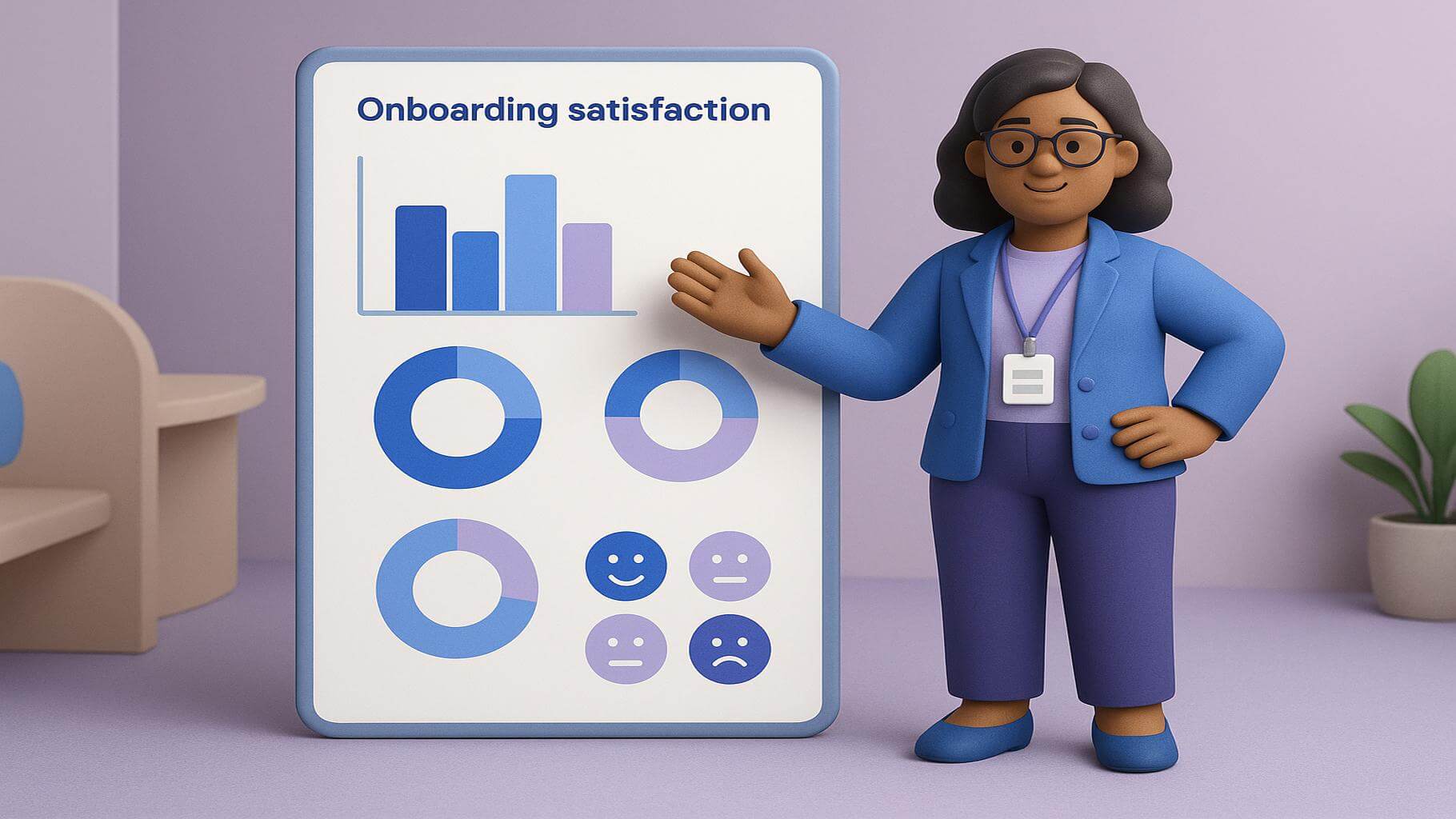
Even well-intentioned survey programs fail when design mistakes undermine data quality. Recognizing common pitfalls helps organizations avoid preventable errors. These mistakes reduce response rates, bias results, or generate unusable data. Learning from others' mistakes accelerates the maturity of survey programs.
Asking too many questions that reduce completion
Survey fatigue is the primary reason new hires abandon onboarding surveys before completion. Excessively long surveys signal that the organization does not respect employee time. Each additional question beyond necessity reduces response rates and data quality. Prioritize questions ruthlessly based on actionable value.
- Limit surveys to essential questions that drive decisions
- Combine similar questions to reduce overall length
- Test completion time and target under 10 minutes
- Remove questions that do not inform specific actions
Using complex language that confuses respondents
Survey questions should use simple, clear language that all new hires understand. Jargon, acronyms, and complex phrasing create confusion and inconsistent interpretation. Ambiguous questions generate unreliable data that cannot guide decisions. Test survey language with diverse reviewers before deployment.
- Write at a reading level accessible to all new employees
- Avoid organizational jargon and undefined acronyms
- Use concrete examples to clarify abstract concepts
- Pilot test questions for consistent interpretation
Failing to segment questions by onboarding phase
Asking about experiences that have not yet occurred frustrates respondents. Questions should match the onboarding phase when the survey is deployed. Irrelevant questions reduce perceived survey value and response quality. Phase-appropriate questions demonstrate thoughtful survey design, and programs that use kudos employee recognition to thank survey participants see higher completion rates in subsequent surveys.
- Match question content to actual new hire experiences
- Avoid asking about future activities or distant memories
- Customize question sets for each milestone survey
- Remove questions about experiences unique to certain roles
Onboarding survey question examples for different employee types
Different employee types have distinct onboarding needs that require tailored survey questions. Generic surveys may miss critical satisfaction dimensions for specialized roles. Customization ensures every new employee can provide relevant feedback. Balance standardization for benchmarking with customization for relevance.
Remote worker satisfaction questions
Remote employees face unique challenges around technology, communication, and isolation. Hire onboarding survey questions for remote workers should assess the effectiveness of virtual orientation. Questions should explore whether remote new hires feel connected despite physical distance. Reliability of technology and satisfaction with virtual collaboration tools deserve special attention.
- Assess virtual orientation program quality and engagement
- Evaluate technology setup and remote access reliability
- Measure connection and belonging despite physical distance
- Explore communication frequency and quality with managers
Frontline employee onboarding assessments
Frontline employees often have limited computer access and irregular schedules. Surveys must accommodate mobile completion and varied shift patterns. Questions should focus on practical job training and preparation for customer interaction. Manager availability during non-standard hours deserves specific assessment.
- Evaluate hands-on job training quality and sufficiency
- Assess schedule communication and shift preparation
- Measure manager accessibility during working hours
- Explore customer interaction confidence and preparation
Leadership role integration surveys
New leaders face expectations about quick impact while learning organizational dynamics. Survey questions should assess clarity about authority, decision rights, and stakeholder relationships. Leadership onboarding includes understanding political dynamics and cultural norms. New leaders need feedback on whether they have the context needed for effective decisions, and robust employee engagement survey tools allow organizations to customize question sets for executive-level respondents.
- Evaluate clarity about decision authority and boundaries
- Assess stakeholder mapping and relationship-building support
- Measure understanding of organizational culture and norms
- Explore the strategic context and priority communication quality
How to analyze onboarding satisfaction survey results effectively
Collecting data creates no value without thoughtful analysis and interpretation. Effective analysis reveals patterns, trends, and actionable insights from survey responses. Organizations need systematic approaches to transform raw data into decisions. Analysis skills enable survey programs to generate measurable business impact.
Identifying satisfaction score trends over time
Trend analysis reveals whether onboarding improvements are producing measurable results. Tracking scores across cohorts shows the trajectory of program effectiveness. Declining trends signal emerging problems requiring immediate attention. Improving trends validate investment in program enhancements.
- Track average satisfaction scores across consecutive cohorts
- Identify seasonal patterns in new hire satisfaction
- Compare trends across departments and manager groups
- Correlate program changes with subsequent score movements
Correlating satisfaction with retention outcomes
The ultimate validation of onboarding satisfaction surveys is their relationship to retention. Organizations should analyze whether low satisfaction scores predict early departures. This correlation demonstrates the survey program's value to executive leadership. Strong correlations enable proactive intervention with at-risk new hires.
- Compare satisfaction scores of departed versus retained employees
- Calculate the predictive accuracy of satisfaction for turnover
- Identify satisfaction thresholds that predict retention risk
- Use correlation data to prioritize improvement initiatives
Segmenting data by department and manager
Aggregate data obscures variation that matters for targeted improvement. Segmentation reveals which departments or managers excel at onboarding, and implementing employee rewards ideas that recognize top-performing managers reinforces effective onboarding behaviors. This analysis enables both intervention in struggling areas and recognition of excellence. Segmented insights inform differentiated support and resource allocation.
- Compare satisfaction across departments and locations
- Identify managers with consistently high or low scores
- Analyze whether role type influences satisfaction patterns
- Explore tenure cohort differences in survey responses
Creating an onboarding satisfaction survey template library
A comprehensive template library supports all survey needs throughout the new hire journey. Templates should cover every milestone from day one through the 90-day transition. Standardized templates ensure consistency while allowing appropriate customization. The library becomes an organizational asset that improves over time.
Day one quick pulse templates
Day one surveys should be brief pulse checks focused on immediate impressions. These templates capture whether basic preparation met new hire expectations. Quick surveys respect the busy nature of first days while gathering essential data. Focus on elements that can be addressed immediately if problems exist.
- Limit to five essential questions maximum
- Focus on preparation, welcome, and resource readiness
- Enable immediate issue identification and resolution
- Design for mobile completion during orientation breaks
Week one comprehensive assessment templates
End-of-first-week surveys can be more comprehensive while experiences remain fresh. These templates assess the quality of the initial orientation process, the start of training, and team introductions. Week one surveys reveal whether the foundation for success has been established. Balance thoroughness with respect for the new employee's time.
- Include questions across orientation, training, and integration
- Assess the manager and team interaction quality
- Evaluate clarity about immediate priorities and expectations
- Capture initial impressions of company culture
30-60-90 day milestone templates
Milestone templates progressively shift focus from initial experience to integration and performance. The 30-day survey assesses training effectiveness and emerging concerns. The 60-day survey explores relationship development and clarity of performance. The 90-day survey captures overall satisfaction and future outlook, and dedicated pulse survey tools streamline the deployment and analysis of these milestone assessments.
- 30-day: Training completion and initial productivity
- 60-day: Relationship development and performance feedback
- 90-day: Overall satisfaction and retention indicators
- Each milestone builds on previous survey insights
Technology solutions for onboarding satisfaction surveys
Modern survey technology automates manual processes and generates real-time insights. The right platform reduces administrative burden while improving data quality. Technology selection should align with organizational needs, scale, and integration requirements. Investing in appropriate tools accelerates survey program maturity.
Automated survey deployment and reminders
Automation ensures every new hire receives surveys at appropriate intervals without manual tracking. System triggers based on start dates eliminate the risk of missed surveys. Automated reminders increase response rates without HR team intervention. This automation scales survey programs efficiently as hiring volumes grow.
- Trigger surveys automatically based on employee start dates
- Send reminder notifications to non-respondents systematically
- Track completion status across all active new hires
- Scale programs without proportional administrative effort
Real-time dashboard and reporting features
Real-time dashboards provide immediate visibility into survey responses as they arrive. Leaders can monitor satisfaction trends without waiting for periodic reports. Dashboards enable rapid response to concerning patterns or specific issues. Visual reporting makes survey data accessible to stakeholders across the organization.
- View response rates and scores as surveys are completed
- Monitor trends through intuitive visual representations
- Filter data by department, manager, or other dimensions
- Share dashboards with appropriate stakeholders automatically
Integration with HRIS and onboarding platforms
Survey tools that integrate with existing HR systems reduce duplicate data entry. Integration enables automatic survey targeting based on HRIS employee data. Connected systems provide comprehensive views of the new-hire experience, and platforms that combine surveys with peer-to-peer recognition help new hires feel welcome from their first day. Seamless integration improves data accuracy and administrative efficiency.
- Connect survey triggers to HRIS employee records
- Pull demographic data automatically for segmentation
- Push survey results into employee profiles for context
- Enable unified reporting across HR technology systems
Benchmarking onboarding satisfaction survey metrics
Benchmarks provide context for interpreting satisfaction scores meaningfully. Without benchmarks, organizations cannot assess whether scores represent success or concern. Both industry standards and internal trends inform benchmark development. Effective benchmarking enables goal setting and progress measurement.
Industry standards for satisfaction scores
Different industries demonstrate varying satisfaction norms based on workforce characteristics. Organizations should research relevant industry benchmarks for realistic expectations. Benchmarks help contextualize scores and set appropriate improvement targets. Exceeding industry benchmarks signals a competitive advantage in talent management.
- Research published industry benchmark data for relevant sectors
- Adjust expectations based on role type and seniority
- Consider regional and demographic factors in comparisons
- Track position relative to benchmarks over time
Red flags that predict early turnover
Certain satisfaction patterns reliably predict early departure risk. Scores below critical thresholds on key questions warrant immediate attention. Declining scores across survey milestones signal deteriorating experience. Recognizing red flags enables proactive retention intervention.
- Satisfaction scores below the defined critical thresholds
- Declining trend across consecutive milestone surveys
- Low recommendation likelihood scores at 90 days
- Negative open-ended comments about the manager or the culture
Excellence indicators for world-class onboarding
High-performing organizations demonstrate consistently elevated satisfaction scores. Excellence indicators include high recommendation rates and low early turnover. These organizations show minimal variance across departments and managers, and tracking eNPS as part of onboarding surveys provides a standardized metric for comparing new-hire advocacy across cohorts. Studying excellence indicators helps organizations define aspirational targets.
- Recommendation scores above industry benchmarks
- Minimal variation across departments and managers
- Strong correlation between satisfaction and retention
- Positive sentiment in open-ended feedback comments
How to improve response rates for onboarding satisfaction surveys

High response rates ensure survey data represent the full new hire population. Low response rates introduce bias, undermining data reliability and validity. Proven strategies exist for maximizing participation without compromising data quality. Response rate optimization deserves ongoing attention in mature survey programs.
Mobile-friendly survey design principles
New employees increasingly prefer completing surveys on mobile devices. Surveys must render properly on various screen sizes without usability issues. Mobile-optimized surveys reduce completion friction and improve response rates. Test surveys on multiple devices before deployment.
- Design surveys with mobile-first interface principles
- Use tap-friendly response options for small screens
- Minimize text entry requirements on mobile devices
- Test across device types and operating systems
Optimal survey length and question count
Shorter surveys consistently achieve higher completion rates. Each additional question should justify its cost in potential response rate reduction. Optimal length balances information gathering with respondent burden. Test completion times to ensure surveys respect the new employee's time.
- Target completion times under 10 minutes
- Limit questions to those driving specific decisions
- Use skip logic to reduce irrelevant questions
- Monitor completion rates and adjust length accordingly
Incentive strategies that maintain data integrity
Thoughtful incentives can boost response rates without biasing responses. Incentives should reward participation rather than specific response patterns. Small rewards demonstrate appreciation while maintaining survey integrity, and leveraging team rewards for departments that achieve high response rates creates healthy competition around survey participation. Communicate clearly that incentives are for completion, not particular answers.
- Offer small incentives that encourage participation
- Separate the incentive from the response content to prevent bias
- Use entry into prize drawings rather than guaranteed rewards
- Communicate that honest feedback is valued regardless of content
Using onboarding satisfaction data to build business cases
Survey data becomes powerful when translated into business case arguments. Leaders respond to evidence connecting satisfaction to financial outcomes. Building compelling business cases secures resources for program improvements. Data-driven arguments overcome resistance to onboarding investments.
Calculating ROI of onboarding improvements
Return-on-investment calculations demonstrate the financial value of survey-driven improvements. Calculate the costs of turnover avoided through improved new hire retention. Compare improvement costs against retention benefits to quantify returns. Compelling ROI arguments secure executive support and budget approval.
- Quantify turnover costs, including recruitment and productivity loss
- Calculate retention improvements attributable to program changes
- Compare investment costs against turnover cost savings
- Present clear ROI ratios to justify continued investment
Demonstrating impact on executive leadership
Executives need concise, compelling presentations connecting surveys to business outcomes. Translate satisfaction data into a language that executives understand and value. Connect satisfaction improvements to strategic priorities and key business goals. Regular reporting maintains executive awareness and support.
- Summarize key findings in executive-friendly formats
- Connect satisfaction trends to strategic priorities
- Highlight risks identified and addressed through surveys
- Demonstrate program contribution to organizational success
Linking satisfaction to performance metrics
The strongest business cases connect satisfaction to downstream performance outcomes. Analyze whether satisfied new hires achieve productivity milestones faster. Explore the correlation between satisfaction and performance review ratings, and comprehensive employee engagement survey questions help track how onboarding satisfaction influences long-term engagement metrics. Performance linkage demonstrates strategic value beyond retention alone.
- Correlate satisfaction scores with time to productivity
- Compare performance ratings across satisfaction levels
- Analyze whether engaged employees exceed performance targets
- Use performance linkage to strengthen investment justification
How Matter can help with onboarding satisfaction surveys
Matter provides a comprehensive platform for systematically measuring and improving onboarding satisfaction. The platform combines scientifically designed survey templates with automated processes to ensure consistent feedback collection. Organizations using Matter gain insights that drive measurable improvements in new hire experiences. Integration with recognition and rewards creates a unified approach to building engagement from day one.
Pre-built satisfaction survey templates for every milestone
Matter offers customizable survey templates designed for different time milestones. These science-backed templates can be used immediately or customized to meet specific organizational needs. Templates incorporate best practices in question design and response scale construction. Organizations save significant time while benefiting from proven survey approaches.
- Day 7 template capturing immediate onboarding impressions
- Day 30 template assessing training completion and integration
- Day 60 template exploring performance clarity and relationships
- Day 90 template measuring overall satisfaction and retention likelihood
5-point eNPS system that simplifies satisfaction measurement
Matter uses a 5-point Likert scale that research demonstrates is more reliable than traditional 11-point scales. This approach reduces respondent confusion while maintaining measurement validity. The 5-point scale works exceptionally well on mobile devices, where new hires often complete surveys. Simplified scoring improves response rates and data quality simultaneously.
- Research-backed 5-point scale improves measurement reliability
- Mobile-optimized response format increases completion rates
- Clear promoter, passive, and detractor classification
- Easy comparison across departments and cohorts
Automated workflows that trigger surveys at optimal times
Surveys deploy automatically based on each new hire's start date. This automation ensures consistent timing without requiring HR teams to manually track. Automated reminders increase response rates while reducing administrative burden. The system scales efficiently as hiring volumes fluctuate.
- Automatic triggers based on employee start dates
- Customizable timing for each milestone survey
- Automated reminder notifications to non-respondents
- Real-time analytics showing response rates and scores
Matter combines survey capabilities with recognition features, functioning as an employee recognition platform that supports new hires from day one through full integration.
Frequently asked questions about onboarding satisfaction surveys

Q: What should an onboarding satisfaction survey template include?
A: Include questions about preparation, first-day experience, training quality, manager support, resource adequacy, team integration, and overall satisfaction across multiple touchpoints. Effective templates balance standardized questions for benchmarking with customization for organizational relevance.
Q: When should you deploy onboarding satisfaction survey questions?
A: Deploy at strategic milestones, including day one, end of first week, 30 days, 60 days, and 90 days, to track satisfaction evolution and identify challenges early. Consistent timing enables valid comparison across cohorts and trend analysis.
Q: How is a customer onboarding satisfaction survey different from employee surveys?
A: Customer surveys focus on product implementation, vendor support quality, and business value realization rather than workplace integration and cultural fit. Core design principles translate, while specific question content differs significantly.
Q: What are the onboarding survey best practices for getting honest feedback?
A: Ensure anonymity when appropriate, use neutral question phrasing, keep surveys brief, communicate how feedback will be used, and always close the feedback loop. Acting visibly on feedback builds trust for future survey participation.
Q: How many onboarding satisfaction survey questions should you ask?
A: Limit surveys to 8-12 questions per checkpoint to maximize completion rates while gathering sufficient data for actionable insights. Prioritize questions that directly inform decisions and improvements.
Q: What satisfaction score indicates a successful onboarding experience?
A: Satisfaction scores above 4.0 on a 5-point scale generally indicate positive experiences. Benchmarks vary by industry and should be tracked over time for trends rather than evaluated as isolated snapshots. Organizations that pair satisfaction measurement with an employee rewards system often see higher scores because new hires receive positive reinforcement.
Final thoughts on onboarding satisfaction surveys
Well-designed onboarding satisfaction surveys transform how organizations welcome and integrate new hires. These surveys provide early warning signals that enable proactive retention interventions before valuable employees depart. The data gathered informs continuous improvement in onboarding programs that deliver a competitive advantage. Organizations that excel at gathering feedback and acting on insights consistently outperform competitors in talent retention.
Recognition and rewards naturally complement satisfaction measurement in building engaged employees. Satisfaction data reveals opportunities to celebrate managers who excel at welcoming new team members. Peer mentors who support new hires deserve acknowledgment through recognition programs. Teams that consistently deliver exceptional first impressions merit rewards for their contributions to organizational success.
Matter provides a complete solution with expertly crafted satisfaction survey templates for every onboarding milestone. The intuitive 5-point Likert scale drives higher response rates while delivering reliable measurement. Automated workflows ensure every new hire receives surveys at optimal times without manual tracking. Integrated recognition tools transform satisfaction measurement into a strategic program delivering measurable improvements in retention, and combining surveys with employee recognition software creates a unified approach to building engagement from day one.
Ready to systematically measure and improve onboarding satisfaction? Schedule a demo with a Matter expert today and discover how our platform can help you deploy proven survey templates, capture honest feedback, and create a culture of continuous improvement.