

Organizations today face a common challenge when implementing employee pulse surveys: knowing exactly what to measure without overwhelming teams with scattered questions. At Matter, we recognize that companies face significant challenges defining clear measurement goals when they use pulse surveys to capture meaningful employee feedback, yet risk creating surveys that gather data without driving action. Many organizations launch employee pulse survey programs and initiatives with vague goals or attempt to measure everything at once, leading to declining response rates, respondent exhaustion, and unused data that doesn't drive improvements. Understanding and defining clear objectives matters because well-defined goals transform your surveys from routine check-ins into strategic instruments that reveal workplace attitudes, identify workplace trends, and guide meaningful changes while building continuous feedback cultures where every survey serves a clear purpose.
What is a pulse survey and pulse survey definition?
Understanding what pulse surveys are and how they function sets the foundation for creating effective measurement objectives that deliver valuable insights. Unlike traditional surveys that occur once or twice a year, pulse surveys provide a regular, ongoing way to measure progress and track sentiment in real time. This frequent feedback approach enables organizations to stay closely connected to employee experiences and respond quickly to emerging concerns. By establishing clear measurement frameworks from the start, organizations can ensure their pulse surveys generate actionable data rather than simply collecting information.
Defining pulse surveys and their measurement framework
A pulse survey is a brief, frequent survey tool designed to capture employee perceptions and workplace sentiments quickly and consistently. These surveys typically include only a few questions, making them easy for employees to complete in just a few minutes. The pulse survey format allows organizations to gather feedback regularly, whether weekly, biweekly, or monthly pulse cycles, creating an early warning system for potential issues before they escalate. Organizations use pulse surveys to measure employee engagement, track satisfaction levels, and identify trends that traditional surveys might miss due to their infrequent timing.
How pulse surveys differ from traditional feedback tools
Unlike traditional surveys, such as annual engagement surveys, that provide comprehensive but infrequent snapshots, pulse surveys offer frequent feedback that captures how employees feel in the moment. Annual surveys often include dozens of questions and generate extensive information gathered over time, but they can't capture the dynamic nature of workplace pulse changes. Pulse surveys provide real-time insights through their short format and regular cadence, enabling organizations to use them as an agile feedback mechanism. This approach encourages candid input because employees can see how their feedback leads to tangible changes between survey cycles, creating a more responsive feedback loop than annual engagement surveys allow and supporting peer-to-peer recognition initiatives.
The core components of effective pulse survey programs
Effective pulse surveys share several key characteristics that support their objectives and maximize participation. These foundational elements distinguish successful pulse survey programs from those that struggle with low engagement or fail to generate meaningful insights. Organizations that intentionally design their surveys around these core components see higher response rates and more actionable feedback. Understanding and implementing these characteristics creates the infrastructure needed for sustainable, valuable pulse survey programs.
- Focused question design: Short pulse surveys concentrate on specific topics rather than attempting to cover everything at once, which helps maintain engagement with pulse surveys
- Consistent timing: Regular pulse surveys follow a predictable schedule that allows organizations to track progress and identify seasonal or cyclical patterns through pulse surveys
- Clear communication: Successful programs explain why each survey gathers feedback and how the data analysis will inform workplace improvements
- Action orientation: The most effective pulse survey programs connect findings directly to concrete changes and keep employees informed about how their honest responses shape decisions
Organizations that master these components create engagement survey programs that employees trust and actively participate in over time. This trust forms the foundation for honest, meaningful feedback that actually reflects workplace realities rather than surface-level responses. When employees see consistent application of these principles, they become more willing to share candid perspectives about challenges and opportunities. The result is a robust feedback system that generates insights leadership can confidently use to guide organizational decisions and improvements.
Understanding measurement objectives for organizational success
Setting clear measurement goals transforms your surveys from routine check-ins into powerful tools that drive organizational improvements and strengthen company culture. When you define what you want to measure and why, your employee pulse surveys become strategic instruments that generate data analysis leading to meaningful action. Without well-defined objectives, organizations risk collecting vast amounts of data without clear direction for interpreting or acting on the information. Clear objectives provide the focus needed to turn employee feedback into targeted interventions that address specific organizational needs and challenges.
Primary objectives of employee pulse surveys
The most common objectives of employee pulse survey programs are to measure sentiment and track workplace health indicators. Organizations typically focus on understanding employee engagement levels, assessing employee satisfaction with the work environment, gauging confidence in leadership, and measuring perceptions of work-life balance. Pulse surveys measure these areas by asking targeted survey questions that reveal how employees feel about specific aspects of their experience.
Additional objectives include monitoring team dynamics, evaluating the impact of recent changes, identifying potential retention risks, and gathering feedback on specific initiatives or programs. When you run employee pulse surveys with clearly defined objectives, you create a foundation for turning raw feedback into strategic decisions. Each objective should connect to a specific organizational need or strategic priority. Well-chosen objectives ensure your pulse survey program addresses the issues that matter most to your organization's success.
How clear objectives improve survey results
Well-defined objectives significantly enhance the quality and usefulness of your employee responses by focusing your efforts and improving participation. When employees understand what each survey aims to accomplish, they provide more thoughtful responses because they can see the direct connection between their input and organizational improvements. Clear objectives also guide your survey question design, ensuring every question serves a specific measurement purpose rather than including items simply because they seem interesting.
This focused approach helps avoid survey fatigue by demonstrating respect for employee time and showing that each pulse survey serves a distinct purpose. Organizations with specific objectives can also analyze data more effectively because they know exactly which metrics to track and how to interpret changes over time. Clear objectives create a framework for consistent measurement across survey cycles. This consistency enables meaningful comparisons and trend analysis that reveal how your workplace is evolving.
Aligning objectives with business goals
The most effective measurement goals directly support broader organizational priorities and strategic initiatives. When you align your employee pulse survey goals with business objectives, you create pulse survey programs and surveys that measure factors directly impacting performance, retention, innovation, and growth. For example, if your organization prioritizes innovation, your pulse surveys might focus on measuring psychological safety, idea sharing, and support for experimentation.
This alignment ensures the feedback leads to actions that advance both employee well-being and business success. Regular pulse surveys that align with strategic goals also help leadership teams understand how changes in workplace culture affect key performance indicators, creating a clear line of sight between employee sentiment and organizational outcomes. When surveys measure what truly matters to business results, they command more attention and resources from leadership. This strategic alignment elevates pulse surveys from HR initiatives to business-critical tools.
Consider how your employee pulse survey strategy might connect to retention efforts, productivity improvements, or cultural transformation initiatives. Strong alignment between survey objectives and business priorities ensures leadership views pulse surveys as strategic tools rather than administrative tasks. This connection also makes it easier to secure resources and support for acting on survey insights. When objectives clearly tie to outcomes that matter to the organization, survey programs gain credibility and influence across all levels of leadership.
15 essential measurement objectives every organization should consider
Organizations benefit most from pulse survey programs and employee pulse surveys when they select objectives that address their unique challenges while covering fundamental aspects of employee experience. These 15 objectives provide a comprehensive framework for measuring what matters most in your workplace culture and driving continuous improvement through targeted feedback collection. By concentrating on these critical areas, companies may ensure that their pulse surveys capture both current issues and long-term cultural trends. The objectives span engagement, culture, and improvement opportunities, offering a balanced approach to organizational listening.
4 objectives focused on measuring employee engagement
Objective 1: Assess overall engagement levels and energy
This fundamental objective tracks whether employees feel motivated, committed, and energized by their work. An employee engagement pulse survey focused on this goal measures enthusiasm, connection to organizational purpose, and willingness to contribute discretionary effort. Survey questions for this objective explore how employees feel about their roles, their belief in the organizational mission, and their day-to-day work satisfaction.
Objective 2: Evaluate recognition and appreciation practices
Understanding whether employees feel valued and appreciated directly impacts engagement and retention. This objective measures how frequently employees receive constructive feedback, whether their contributions are acknowledged, and whether employee recognition programs feel fair and meaningful. Organizations use pulse surveys to identify gaps in appreciation and determine whether recognition programs effectively support employee morale.
Objective 3: Monitor connection to team and organizational purpose
This objective examines whether employees understand how their work contributes to larger goals and feel connected to their teammates. Pulse surveys measure feelings of belonging, clarity about organizational direction, and alignment between individual values and company culture. When you use pulse survey methods and track these factors through regular feedback, you can identify disconnection early and address it before it impacts performance.
Objective 4: Track autonomy and empowerment perceptions
Employee engagement flourishes when people feel trusted to make decisions and own their work. This objective measures whether employees have appropriate control over their work methods, feel their opinions matter, and believe they can influence outcomes. An employee engagement pulse survey aimed at this goal assesses whether organizational structures support or hinder employee empowerment.
4 objectives tracking workplace culture and satisfaction
Objective 5: Measure psychological safety and trust
Psychological safety is the foundation of a strong workplace culture in which employees feel free to take chances and speak openly. This objective assesses whether team members can share ideas without fear of embarrassment, admit mistakes openly, and challenge decisions respectfully. Pulse surveys focused on psychological safety reveal whether your work environment truly encourages candid responses or inadvertently silences important perspectives.
Objective 6: Assess collaboration and team dynamics effectiveness
Strong team relationships drive both satisfaction and performance, making this a crucial objective for team pulse survey programs. Survey questions explore whether team members communicate effectively, support each other, resolve conflicts constructively, and work toward shared goals. Organizations that use pulse survey approaches and measure team dynamics regularly can identify friction points before they damage relationships or project outcomes.
Objective 7: Evaluate work-life balance and well-being
Employee satisfaction depends heavily on sustainable workloads and respect for personal time. This objective measures stress levels, workload manageability, flexibility in work arrangements, and overall well-being. When you gather feedback on work-life balance through pulse surveys, you create opportunities to address burnout risks and to demonstrate the organization's commitment to employee health. Organizations can support these efforts through employee rewards programs that recognize sustainable work practices.
Objective 8: Monitor diversity, equity, and inclusion progress
Creating inclusive workplaces requires ongoing measurement and attention. This objective tracks whether all employees feel respected, have equal opportunities, can bring their authentic selves to work, and see fair treatment across the organization. Regular pulse surveys focused on inclusion help organizations move beyond annual surveys and address concerns in real time.
4 objectives identifying improvement opportunities
Objective 9: Identify process inefficiencies and workflow obstacles
Employees experience operational challenges firsthand, making them valuable sources of process improvement insights. This objective uses pulse surveys to gather feedback on bottlenecks, unnecessary procedures, and opportunities to streamline work. Organizations that regularly collect this type of employee feedback can quickly address frustrations and improve productivity.
Objective 10: Detect early warning signs of disengagement or turnover
Preventing turnover starts with identifying dissatisfaction early through feedback mechanisms. This objective measures job satisfaction, career development opportunities, and intent to stay with the organization. Management pulse survey programs focused on retention can spot concerning trends and enable proactive interventions before valuable employees leave. Connecting insights with employee recognition ideas helps address retention risks.
Objective 11: Evaluate change initiative effectiveness
When organizations implement new programs or changes, a change management pulse survey objective tracks how well transitions are proceeding. Survey questions assess understanding of changes, comfort with new processes, adequacy of support and training, and overall change acceptance. This frequent feedback allows leadership to address resistance and confusion quickly rather than waiting for annual engagement surveys.
Objective 12: Gather input on specific policies or programs
Sometimes organizations need targeted feedback on particular initiatives rather than broad culture assessments. This objective uses pulse surveys to evaluate specific programs, policies, or resources, asking employees whether new offerings meet their needs and add value. The focused nature of these pulse surveys and surveys ensures you gather actionable feedback on the specific topics requiring input.
Pulse survey examples that demonstrate clear objectives
Seeing how different types of pulse surveys connect to specific objectives helps organizations design more effective measurement strategies. These examples show how survey design, question selection, and timing all align with the intended goals of different pulse survey approaches. By examining real-world applications, organizations can better understand how to match their survey format to their measurement priorities. Each example demonstrates practical ways to implement objectives through thoughtfully constructed surveys.
Quick pulse survey examples for weekly check-ins
Weekly pulse surveys typically focus on immediate concerns and immediate needs rather than deep cultural assessment. A quick check-in survey might include three survey questions measuring current workload, recent obstacles, and support needs. For example, a survey aimed at monitoring work-life balance might ask about this week's stress levels, whether deadlines feel manageable, and whether employees have the resources they need. These brief surveys work well because they gather feedback without overwhelming participants, respect employee time with only a few questions, and provide real-time feedback that enables rapid response.
Another weekly pulse example focuses on team collaboration by asking about recent team interactions, communication effectiveness, and any blockers requiring leadership attention. This approach helps organizations use pulse surveys to maintain team health between more comprehensive engagement surveys. The brevity of these surveys ensures teams can provide quick feedback without disrupting their workflow. Regular check-ins on collaboration enable managers to address team dynamics issues before they escalate into larger problems.
Comprehensive engagement pulse survey examples
More thorough employee engagement pulse survey programs run monthly or quarterly and connect to broader objectives around employee sentiment and satisfaction. A comprehensive survey focused on multiple engagement dimensions might include 10-15 questions covering recognition, development opportunities, manager effectiveness, work environment quality, and organizational direction. These surveys provide deeper insights than weekly check-ins while still maintaining the frequent feedback cadence that makes pulse programs valuable.
For instance, a quarterly engagement survey targeting the objectives of measuring engagement and identifying improvement opportunities would include questions about career growth satisfaction, confidence in leadership decisions, pride in organizational achievements, and specific workplace improvement suggestions. Unlike annual engagement surveys, these pulse surveys allow organizations to track progress on engagement initiatives throughout the year and make adjustments based on evolving employee perceptions. The quarterly cadence strikes a balance between frequent feedback and survey fatigue, giving organizations regular touchpoints without overwhelming employees. This timing also aligns well with business cycles and quarterly goal reviews, making it easier to connect survey insights to ongoing strategic planning and team rewards programs.
Event-triggered survey examples with specific goals
Event-triggered pulse surveys respond to specific organizational moments rather than following a set calendar schedule. After major changes, all-hands meetings, training programs, or significant announcements, organizations deploy targeted pulse survey efforts and employee pulse surveys with objectives directly related to the event. A change management pulse survey following a reorganization might measure understanding of new structures, comfort with role changes, and confidence in the transition plan. These surveys capture immediate reactions and employee sentiment while experiences are fresh, enabling leaders to address concerns before they compound.
Another example involves post-training pulse surveys that measure learning effectiveness, relevance to daily work, and plans to apply new skills. By implementing employee pulse surveys around key moments, organizations gather feedback when it's most actionable and demonstrate responsiveness to employee needs. Event-triggered surveys capture reactions while experiences are fresh, leading to more detailed and accurate feedback. This approach also shows employees that their input directly shapes how the organization approaches similar events in the future.
Organizations can enhance these programs by integrating pulse survey software that automates deployment and tracks responses efficiently across different survey types. Automation reduces the administrative burden of managing multiple survey formats and ensures consistent delivery and tracking of surveys. Modern platforms also provide real-time dashboards that help leaders monitor response rates and identify when follow-up might be needed. The right technology transforms pulse surveys from manual processes into streamlined systems that scale across the organization.
How to set effective objectives for your employee pulse surveys

Creating measurement objectives that drive meaningful improvements requires thoughtful planning and strategic alignment with organizational needs. The process of defining these objectives shapes everything from question design to data analysis approaches and determines whether your survey results lead to genuine workplace enhancements. Without this upfront strategic work, organizations risk launching surveys that generate data without direction. Clear objective-setting ensures every aspect of your pulse survey program works together toward specific, measurable goals.
Identifying key metrics and success indicators
Start by determining which specific metrics matter most to your organization's current priorities and challenges. Consider what you need to measure to track progress, which aspects of employee experience to monitor, and which indicators would signal success or concern. Effective objectives include clear metrics such as engagement scores, satisfaction ratings, or specific behavioral indicators that can be tracked over time through regular pulse surveys. Ask yourself what data you need to make informed decisions about workplace culture, what early warning system indicators would help you prevent problems, and which employee perceptions directly impact business outcomes.
The most actionable objectives focus on measurable factors that your organization can influence through policy changes, leadership actions, or program adjustments. When you identify trends through pulse surveys, you want to ensure those trends connect to factors within your control that you can address. Consider which metrics would provide valuable insights to leadership, where you currently have blind spots in understanding sentiment, and what aspects of the work environment most significantly impact retention and performance.
Creating SMART objectives for pulse surveys
Transform general goals into effective measurement objectives by applying the SMART framework to ensure specificity, measurability, achievability, relevance, and time-bound characteristics. A vague objective like "understand engagement" becomes more powerful when refined to "measure weekly engagement through three core questions and track whether scores improve by 10% over the next quarter." This specificity removes ambiguity about what success looks like and creates accountability for achieving results. SMART objectives also make it easier to communicate your measurement strategy to stakeholders and gain their support. This specificity guides survey question design, establishes clear success criteria, and creates accountability for acting on survey results.
When writing pulse survey questions aligned with SMART objectives, ensure each question directly measures the defined target and contributes to your understanding of progress toward the goal. For example, if your objective is to measure perceptions about recent policy changes, your survey questions should explicitly ask about those policies rather than general satisfaction. The specificity of SMART objectives helps maintain engagement by eliminating unnecessary questions and focusing only on information that serves your defined goals. Time-bound objectives also create natural review points for analyzing data and assessing whether your pulse survey strategy needs adjustment.
Prioritizing objectives based on organizational needs
Organizations often identify more potential objectives than they can effectively pursue simultaneously. Prioritization ensures your pulse surveys remain focused and actionable rather than overwhelming participants with too many topics. Consider your organization's most pressing challenges, upcoming changes requiring monitoring, and areas where employee feedback could most significantly impact decisions. Rank potential objectives based on urgency, alignment with strategic goals, and capacity to act on feedback you'll receive.
Most organizations find success by focusing on three to five primary objectives per survey cycle, enabling deep exploration without causing survey fatigue or respondent exhaustion. As you implement pulse surveys and address initial concerns, you can rotate objectives to cover different aspects of workplace culture over time. This approach maintains fresh survey questions, demonstrates responsiveness by cycling back to previously addressed topics to measure progress, and keeps pulse surveys feeling relevant rather than repetitive.
Organizations seeking to connect survey insights with recognition can explore pulse survey questions that identify opportunities for celebrating employee contributions and achievements. This integration creates a positive feedback loop where surveys not only identify problems but also highlight successes worth recognizing. By connecting measurement to appreciation, organizations reinforce the behaviors and outcomes they want to see more of. This approach transforms surveys from diagnostic tools into drivers of positive cultural change.
Pulse survey questions examples aligned with objectives
The connection between your measurement objectives and the specific survey questions you ask determines whether you'll gather feedback that truly serves your goals. Well-designed questions translate abstract objectives into concrete measurements that reveal how employees feel and what changes might improve their experience. Questions must be crafted carefully to avoid bias while still targeting the specific information your objectives require. The quality of your questions has a direct impact on the validity and usefulness of the data you collect.
Questions for engagement measurement objectives
When your objective is to measure employee engagement and energy levels, your survey questions should directly assess motivation, commitment, and connection to work. Sample questions aligned with engagement objectives include metrics that capture both emotional and behavioral aspects of engagement. These questions should be specific enough to provide actionable insights while remaining simple enough for employees to answer quickly. Consistency in how you ask these questions over time enables meaningful trend analysis.
- Question: "On a scale of 1-10, how energized do you feel about your work this week?"
- Objective served: Tracks immediate engagement fluctuations and identifies periods of high or low motivation
- Question: "I feel excited about the impact my work creates."
- Objective served: Measures purpose-driven engagement and connection to organizational mission
- Question: "How likely are you to recommend this organization as a great place to work?"
- Objective served: Functions as a predictor of both engagement and retention, providing an overall satisfaction indicator
- Question: "I have opportunities to do work that I find meaningful."
- Objective served: Assesses whether employees feel their roles align with their strengths and interests
These engagement-focused survey questions provide valuable insights when asked consistently across multiple pulse survey cycles, allowing you to identify trends and measure progress toward engagement improvement goals. The questions balance quantitative ratings with qualitative insights about what drives or hinders engagement. Regular measurement using the same questions creates baseline data that makes changes more visible and meaningful. This consistency also helps employees understand that their feedback is being tracked and taken seriously over time, often tying into kudos and employee recognition celebrations.
Pulse survey questions on leadership effectiveness
Leadership quality significantly impacts employee perceptions across multiple dimensions, making it a common focus area for measurement objectives. When evaluating management effectiveness and gathering feedback on leadership practices, consider questions that target specific leadership behaviors and outcomes. These questions help identify both strong leadership practices worth replicating and areas that may need additional support or development. Regular measurement of leadership effectiveness creates accountability and encourages continuous improvement among managers.
- Question: "My manager provides timely feedback that helps me improve."
- Objective served: Measures coaching effectiveness and the quality of manager-employee feedback loops
- Question: "Leadership decisions align with our stated organizational values."
- Objective served: Assesses trust in leadership and perceived integrity of decision-making
- Question: "I feel comfortable sharing honest feedback with my manager."
- Objective served: Evaluates psychological safety in the manager-employee relationship and encourages honest feedback
- Question: "Leadership effectively communicates the reasoning behind major decisions."
- Objective served: Measures transparency and helps identify communication gaps in change management pulse survey contexts
A management employee pulse survey program using these questions can track leadership effectiveness over time and identify specific managers or teams needing additional support in building strong employee relationships. This data-driven approach to leadership development ensures resources go where they're most needed. Tracking leadership metrics alongside team engagement scores often reveals strong correlations, highlighting the impact of management quality on overall workplace satisfaction. Organizations can use these insights to refine leadership training programs and set development priorities.
Questions designed for culture assessment goals
Workplace culture objectives require questions that capture norms, values, and the social environment shaping daily experiences. Effective pulse surveys focused on company culture might include questions that assess whether stated values align with lived experiences. Culture questions often require more nuanced wording since cultural norms can be subtle and difficult to quantify. The best culture questions encourage employees to reflect on concrete behaviors and interactions rather than abstract concepts.
- Question: "I can be my authentic self at work without fear of negative consequences."
- Objective served: Measures inclusion and psychological safety across diverse employee groups
- Question: "When mistakes happen, the focus is on learning rather than blaming."
- Objective served: Assesses whether organizational culture supports innovation and risk-taking
- Question: "Collaboration feels natural and supported in my team."
- Objective served: Evaluates team dynamics and the effectiveness of collaboration structures
- Question: "Work expectations allow me to maintain a healthy work-life balance."
- Objective served: Measures sustainable workload practices and organizational respect for employee well-being.
These culture-focused questions help organizations track progress toward desired workplace culture characteristics and identify areas where actual culture diverges from aspirational values. When combined with employee engagement survey tools that track responses over time, these questions become powerful instruments for cultural transformation. Cultural change happens gradually, making consistent measurement essential for detecting shifts and understanding what's working. Segmenting culture data by department or team can reveal pockets of strong culture that other parts of the organization can learn from.
Using pulse survey platforms and pulse survey tool capabilities to achieve objectives
The right pulse survey software can significantly enhance your ability to achieve your measurement objectives by streamlining survey delivery, improving response rates, and providing sophisticated data analysis capabilities. Technology transforms pulse surveys from manual processes into automated systems that consistently gather feedback and generate actionable insights. Modern platforms remove the technical barriers that once made frequent surveys difficult to manage at scale. The best tools integrate seamlessly with existing workplace systems, making participation effortless for employees.
Employee pulse survey tools with employee pulse survey objective tracking
Modern employee pulse survey tools offer features specifically designed to help organizations define, track, and measure progress toward their survey objectives. These platforms typically include objective-setting interfaces where you can articulate your goals, select relevant survey questions from libraries aligned with common objectives, and establish baseline metrics against which to measure progress. The best tools allow you to tag each question with its corresponding objective, making it easy to analyze data through the lens of what you're trying to accomplish rather than just reviewing raw responses.
Advanced platforms also provide benchmark data that show how your survey results compare with those of similar organizations, helping you understand whether your metrics indicate strong performance or areas that need attention. When you run employee pulse surveys through tools with employee pulse survey objective tracking, you can quickly generate reports showing progress toward each goal, identify which objectives are improving versus stagnating, and adjust your survey strategy based on what the data reveals. This capability ensures your pulse surveys remain strategic instruments rather than becoming routine exercises without a clear purpose.
Features that support multiple survey objectives
Comprehensive employee pulse survey tools recognize that organizations typically pursue several objectives simultaneously and need flexibility in survey design. Look for platforms that offer question branching to customize what employees see based on their previous responses or organizational segment, question libraries organized by common objectives such as engagement, culture, and well-being, and the ability to deploy different survey types, ranging from quick weekly check-ins to more comprehensive monthly assessments. These features enable you to implement pulse surveys that address multiple goals without overwhelming participants or creating respondent fatigue.
Integration capabilities represent another crucial feature for organizations with broad objectives.
When your pulse survey software connects to recognition platforms, performance management systems, or collaboration tools like Slack and Teams, you create opportunities to act on feedback immediately and close feedback loops more effectively. For instance, if a survey indicates that team members need more appreciation, integrated systems can prompt managers to provide recognition directly within the workflow. This connection between measurement and action strengthens the impact of your survey objectives and enables seamless delivery of employee rewards.
Analytics that measure objective achievement
The analytical capabilities of your pulse survey tools determine how effectively you can assess whether you're achieving your objectives and identify the next actions. Essential analytics features include trend tracking that shows how metrics change over time across multiple pulse survey cycles, segmentation analysis that reveals differences between departments, teams, or employee groups, correlation analysis that identifies which factors most strongly influence your key objectives, and predictive analytics that highlight risks such as potential turnover or engagement declines. These capabilities transform results into strategic intelligence guiding organizational improvements.
Effective pulse surveys also benefit from analytics that automatically flag significant changes or concerning patterns requiring attention. For example, if engagement suddenly drops in a specific team or if responses indicate rising stress levels, analytics can trigger alerts that prompt leadership to investigate and intervene. This early warning system ensures that key signals buried in survey data are not missed and that issues are addressed before they become more serious. When you combine these analytical capabilities with comprehensive pulse survey tools designed for ease of use, you create a powerful system for continuous organizational listening and improvement.
Analyzing pulse survey results to measure objective success
Collecting pulse results represents only the first step in achieving your objectives; the real value emerges when you analyze survey results systematically and translate insights into meaningful action. Thoughtful analysis transforms raw feedback into a clear understanding of organizational strengths, areas for improvement, and progress toward your defined goals. Without rigorous analysis, even the best survey data remains just numbers on a screen rather than insights that drive decisions. Organizations that excel at pulse surveys invest as much effort in analyzing results as they do in collecting them.
Tracking progress toward defined objectives
Measuring whether you're achieving your survey objectives requires establishing clear baseline metrics and consistently tracking changes over time. Start by documenting your initial survey results for each objective, creating a baseline against which to measure progress in subsequent pulse survey cycles. As you repeat pulse surveys focused on the same objectives, plot trend lines showing whether key metrics are improving, declining, or remaining stable. This longitudinal view reveals patterns that single-survey snapshots cannot capture, such as seasonal fluctuations in work-life balance or gradual improvements in engagement following cultural initiatives.
When you track progress, look beyond simple average scores to understand distribution and variance in employee responses. If overall engagement scores improve but a specific department's scores decline, that nuance requires attention even though aggregate numbers look positive. Similarly, pay attention to response rates as indicators of survey health; declining participation may signal respondent exhaustion or loss of confidence that feedback leads to action. Regular progress reviews should compare current results against your SMART objectives, assess whether improvement rates meet your targets, and identify which objectives are progressing well and which require strategy adjustments.
Identifying patterns in survey results data
Effective data analysis goes beyond tracking individual metrics to uncover relationships between different aspects of employee experience. Look for patterns such as correlation between recognition frequency and engagement scores, connections between work environment satisfaction and team dynamics ratings, or links between leadership effectiveness perceptions and retention intent. When you identify trends across multiple survey questions, you develop a more complete picture of what drives employee sentiment in your organization and which interventions might have the greatest impact.
Segmentation analysis represents another powerful approach to understanding survey responses. Break down your results by department, tenure, role level, or other relevant categories to see whether different employee groups share similar experiences or face distinct challenges. You might discover that new employees have different concerns than tenured team members, or that certain departments struggle with issues not present elsewhere.
These insights help you tailor interventions to address specific group needs rather than applying one-size-fits-all solutions based on organization-wide averages. Organizations can enhance their analysis by connecting survey insights with eNPS measurements to understand both engagement and loyalty. Segmented analysis often reveals hidden patterns that aggregate data masks. By understanding how different groups experience the workplace, organizations can design more targeted and effective improvement initiatives.
Using results to refine future objectives
The insights you gain from analyzing responses should continuously inform and refine your objectives for future survey cycles. If certain objectives consistently show strong performance, you might shift focus to other areas that need attention while maintaining occasional check-ins on the stable ones. Conversely, if objectives prove too broad or difficult to measure meaningfully, refine them to be more specific and actionable for subsequent surveys. This iterative approach ensures your pulse survey program evolves based on organizational learning and changing needs.
Survey results often reveal new questions worth exploring that you hadn't considered in your original objectives. For example, if open-ended responses frequently mention a particular concern not directly addressed in your structured questions, consider adding an objective focused on that topic. Similarly, when interventions succeed in improving metrics related to one objective, you might need to establish new objectives that address the next level of organizational development. This responsive approach to objective refinement keeps your pulse surveys relevant. It demonstrates to employees that leadership genuinely listens to their feedback and adjusts accordingly, often implementing employee reward ideas based on survey insights.
Organizations looking to connect pulse insights with recognition can explore reward strategies that address areas of improvement identified through survey data. This connection between measurement and rewards creates a complete system for identifying issues, addressing them, and reinforcing positive changes. When employees see survey feedback leading to both improvements and recognition, their trust in the survey process deepens. This virtuous cycle encourages ongoing participation and honest feedback.
Quick measurement objectives for agile feedback collection
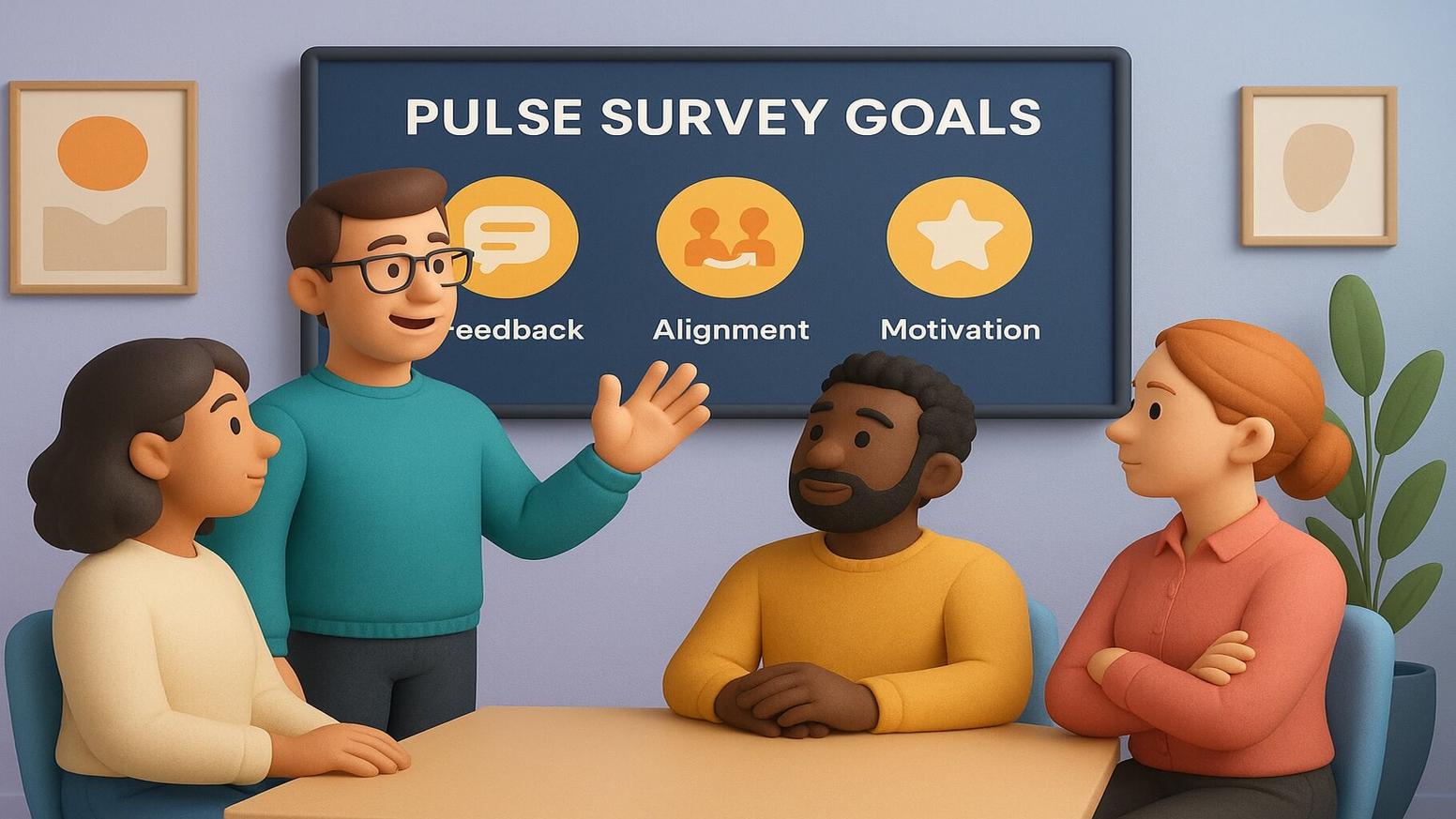
Organizations increasingly need agile feedback mechanisms that provide real-time insights without causing survey fatigue or respondent exhaustion, or overwhelming employees with lengthy questionnaires. Quick pulse surveys serve distinct objectives that require different approaches from comprehensive engagement assessments, focusing on speed, simplicity, and immediate actionability. The key advantage of quick pulses is their ability to capture timely information without disrupting workflow. These brief check-ins maintain connection with employees while respecting their time and attention.
Setting objectives for brief weekly surveys
Weekly pulse surveys work best when focused on narrow, time-sensitive objectives rather than broad organizational topics. Ideal objectives for frequent surveys include monitoring immediate workload and stress levels, checking in on specific ongoing initiatives or changes, gathering rapid feedback following major events or announcements, and maintaining a connection with remote or distributed team members. These focused objectives can be addressed through surveys with only a few questions, which typically take less than 2 minutes to complete.
When setting objectives for quick pulse surveys, prioritize topics where frequent feedback enables faster response and more effective intervention. For instance, if your objective is identifying workflow obstacles, weekly surveys can surface issues. At the same time, they're still fresh and solvable, whereas waiting for monthly or quarterly surveys might mean problems persist unnecessarily. The frequent cadence of these surveys creates a continuous feedback loop where employees see their input promptly addressed, building trust in the survey process and encouraging honest responses in future cycles.
Balancing speed with meaningful insights
Quick pulse surveys face the challenge of gathering valuable insights without sufficient depth to fully understand complex issues. To achieve this balance, focus each brief survey on a single primary objective rather than trying to cover multiple topics superficially. A weekly survey with three carefully designed questions targeting a single goal provides more valuable insights than a longer survey that attempts to measure everything at once. This focused approach also helps maintain participation by keeping the burden minimal while still providing the data needed for informed decision-making.
Consider alternating objectives across weeks if you need to regularly monitor multiple areas.
One week might focus on work-life balance, the next on collaboration effectiveness, and the following on development opportunities. This rotation ensures you gather feedback on various topics throughout the month while keeping individual surveys brief and targeted. Organizations that effectively use pulse surveys as agile tools recognize that not every objective requires weekly measurement; some metrics change slowly enough that monthly or quarterly assessment suffices, freeing weekly surveys to focus where frequent feedback truly adds value and connects to employee rewards system implementations.
Using quick pulses for real-time sentiment tracking
One of the most powerful objectives for quick pulse surveys involves capturing employee sentiment as it evolves in response to organizational changes, market conditions, or seasonal factors. Real-time feedback through brief, frequent surveys creates an organizational listening system that functions like a continuous temperature check on workplace health. This objective works well for organizations in fast-paced industries, companies undergoing significant changes, or teams working on high-pressure projects where sentiment can shift rapidly.
To use quick pulses effectively for sentiment tracking, establish a simple, consistent core question or set of questions that appear in every survey, supplemented by rotating questions addressing current topics. For example, you might always include a basic engagement question and work environment rating, then add two to three timely questions relevant to current organizational priorities. This structure provides longitudinal data on core metrics while maintaining flexibility to address emerging issues. When analyzing data from these pulse surveys and efforts, look for sudden shifts or trends that warrant immediate attention, using real-time insights to guide conversations between managers and their teams.
Organizations can supplement quick pulse objectives with employee engagement survey questions designed to capture deeper insights during less frequent comprehensive surveys. This dual approach balances the need for frequent touchpoints with the value of periodic deep dives into employee experience. Quick pulses track day-to-day fluctuations while comprehensive surveys provide the detailed understanding needed for major initiatives. Together, these complementary approaches create a robust organizational listening system.
Common mistakes when setting pulse survey objectives
Even organizations committed to regularly gathering feedback can undermine the effectiveness of their pulse surveys by making strategic errors in how they define and pursue objectives. Understanding these common pitfalls helps you design more effective pulse surveys that truly serve your organizational needs and generate actionable insights. Many of these mistakes stem from enthusiasm about measurement without sufficient planning around what to do with the data. Awareness of these common errors helps organizations avoid wasting time and resources on poorly designed survey programs.
Defining too many objectives at once
One of the most common pitfalls is attempting to accomplish too much with a single pulse survey program, such as generating questionnaires that seek to assess everything from engagement to well-being to leadership to culture all at once. While a comprehensive understanding appeals to organizations, pursuing too many objectives at once leads to overly long surveys, lower response rates, and participant overload. This approach also scatters focus, making it difficult to analyze data meaningfully or take targeted action based on what you learn. When you try to measure everything, you often end up with surface-level insights about many topics rather than a deep understanding of what truly matters.
Organizations fall into this trap because they recognize multiple important areas deserving attention and fear missing crucial information by being too selective. However, effective pulse surveys require discipline in prioritization, focusing on a manageable number of core objectives while accepting that some topics will need to wait for future survey cycles. A better approach involves identifying your top three to five objectives for each survey period, then rotating additional objectives across different cycles to ensure comprehensive coverage over time without overwhelming participants in any single survey. This focused strategy yields higher-quality survey data because employees can thoughtfully engage with fewer, more important questions rather than rushing through lengthy surveys.
Creating vague or unmeasurable goals
Another common mistake involves setting objectives that sound meaningful but lack the specificity needed for effective measurement and action planning. Vague objectives like "understand culture better" or "improve engagement" don't provide clear guidance for writing pulse survey questions, establishing success metrics, or determining what actions to take based on results. Without measurable criteria, you can't assess whether your pulse surveys are achieving their intended purpose or whether changes you implement actually improve the areas you're targeting.
Effective objectives specify exactly what you want to measure, why it matters, and how you'll know whether you're succeeding. Instead of a vague goal like "improve culture," a measurable objective would be "increase the percentage of employees who agree they can voice concerns without fear of negative consequences from 65% to 80% over the next six months." This specificity clarifies what survey questions to ask, establishes a clear target for success, and creates accountability for taking action that moves the metric. When you gather feedback through pulse surveys with vague objectives, you often end up with information that you don't understand the implications of or how to use for organizational improvement.
Failing to align objectives with action planning
Perhaps the most damaging mistake involves setting measurement objectives without considering how you'll act on the feedback you receive. This disconnect leads to surveys that measure things your organization cannot or will not address, creating frustration when employees provide candid input but see no resulting changes. When you implement pulse surveys asking about work-life balance but lack the flexibility to adjust workload expectations or policies, you collect data without the ability to respond meaningfully. This pattern damages trust in the survey process and ultimately reduces participation as employees conclude their input doesn't matter.
Before finalizing survey objectives, ask yourself what specific actions your organization could take if results reveal problems in each area you plan to measure. If you can't identify concrete responses to potential findings, reconsider whether that objective belongs in your current survey. Effective objectives connect directly to decisions you need to make or changes you have the authority and resources to implement.
For instance, if you're measuring satisfaction with development opportunities, ensure you have the budget and capacity to expand training programs if survey data indicates this need. This alignment between objectives and action capacity ensures your pulse surveys drive genuine improvements rather than becoming performative exercises. Nothing damages employee trust faster than asking for feedback on issues the organization cannot or will not address. Careful objective selection prevents this common pitfall and maintains the credibility of your pulse survey program.
Organizations can strengthen their action planning by connecting survey insights to pulse survey template resources designed to facilitate follow-up and intervention strategies. Templates provide proven structures for translating survey findings into concrete action plans. Using standardized frameworks for action planning ensures consistency across different teams and survey cycles. This systematic approach to follow-through is what separates organizations that get value from surveys from those that just collect data.
Best practices for achieving survey objectives

Successfully achieving your survey objectives requires more than just asking good questions; it demands strategic execution, clear communication, and ongoing refinement of your approach. These best practices help organizations maximize the value they derive from pulse surveys and build sustainable feedback cultures. The most successful pulse survey programs treat measurement as an ongoing process rather than a one-time event. Continuous improvement in how you conduct and act on surveys compounds over time, leading to increasingly valuable insights and stronger employee engagement.
Communicating objectives clearly to participants
Transparency about your measurement goals enhances both response rates and the quality of feedback received. When employees understand what you're trying to measure and why it matters, they can provide more thoughtful, relevant responses rather than simply clicking through the questions. Begin each survey with a brief explanation of its purpose, such as "This week we're focusing on understanding work-life balance to identify support opportunities" or "This survey measures the effectiveness of our recent policy changes to guide next steps." This context helps employees see how their input contributes to specific improvements. Integrating employee recognition platform tools with pulse surveys strengthens the connection between feedback and appreciation.
Beyond individual survey introductions, communicate your broader pulse survey strategy and objectives through company meetings, internal communications, and manager conversations. Share what you've learned from previous surveys, explain how feedback has informed decisions, and outline what topics you'll focus on in upcoming cycles. This comprehensive communication demonstrates that leadership values employee input and takes the survey process seriously. When employees understand the connection between providing feedback and seeing organizational changes, they're more likely to participate consistently and share candid perspectives that truly reflect their experiences.
Reviewing and adjusting objectives regularly
Survey objectives shouldn't remain static indefinitely; they need regular evaluation to ensure they still serve organizational needs and generate actionable insights. Schedule quarterly or semi-annual reviews where you assess whether current objectives are producing useful data, whether organizational priorities have shifted, requiring a different measurement focus, and whether you've achieved initial goals and should move to new areas. This review process prevents your pulse surveys from becoming stale or irrelevant as circumstances change.
During objective reviews, examine both quantitative and qualitative signals. Look at which survey questions generate the most meaningful insights and which feel redundant or less valuable. Review open-ended response themes to identify emerging topics employees want to address.
Examine response rates to see which survey types or objectives resonate more with your workforce. Use these insights to refine your objectives, update survey questions, and adjust survey frequency to maintain an effective balance between gathering feedback and maintaining engagement. Regular reviews also provide opportunities to identify trends showing improvement or decline, allowing you to celebrate progress and adjust strategies for persistent challenges.
Connecting survey objectives to recognition programs
One of the most powerful ways to achieve measurement objectives is to link pulse survey insights directly to recognition and appreciation initiatives. When survey data reveals achievements, milestones, or positive trends, use that information to celebrate successes publicly and reinforce desired behaviors. For example, if pulse surveys show significant improvement in collaboration scores within a particular team, recognize that team's efforts and highlight practices others might adopt.
This connection demonstrates that you're not just collecting data but actively noticing and valuing what employees accomplish. When recognition flows naturally from survey insights, employees see the direct value of participating honestly. This integration transforms surveys from assessment tools into engines of positive reinforcement and cultural change.
Recognition programs also serve as natural extensions of survey objectives focused on engagement, morale, and culture. If your objective is to increase perceptions of appreciation, your pulse surveys can measure current recognition levels, while your employee recognition software provides the mechanism to improve those metrics. Platforms that integrate pulse surveys with recognition capabilities create seamless feedback loops in which survey insights directly inform who gets recognized and for what, while recognition patterns provide additional data on which behaviors and achievements the organization values. This integration ensures your measurement objectives and improvement actions work together rather than existing as separate, disconnected initiatives.
How Matter can help with survey objectives

Organizations pursuing meaningful measurement objectives need platforms that simplify survey creation, automate feedback collection, and connect insights to action. Matter provides comprehensive solutions designed to help you define clear objectives, measure progress effectively, and build recognition-rich cultures that reinforce the behaviors and outcomes you're targeting through your surveys. The platform was built with the understanding that effective pulse surveys require both measurement excellence and the ability to act on findings quickly. Matter's integrated approach ensures survey insights flow seamlessly into recognition and improvement initiatives.
Survey capabilities designed for multiple objectives
Matter simplifies pulse survey creation with ready-to-use survey types, including Pulse, eNPS, Onboarding, and Exit surveys. The platform's Slack-first and Teams-first approach delivers a 10x increase in response rates by meeting employees where they already work. These survey types address common organizational objectives while allowing customization to match your unique context and goals. Whether you're measuring employee engagement, tracking leadership effectiveness, evaluating change initiatives, or gathering feedback on specific programs, Matter provides the survey capabilities to support your objectives.
The platform's survey features include customizable questions that let you tailor surveys while maintaining proven measurement frameworks, automated scheduling that ensures consistent deployment without manual effort, and seamless integration with Slack and Microsoft Teams that eliminates the friction of navigating to separate survey platforms. This flexibility ensures you're not constrained by rigid templates while still benefiting from expert-designed frameworks that avoid common survey design pitfalls. Matter's approach helps you implement pulse surveys quickly without sacrificing quality or strategic alignment.
Analytics for continuous, real-time insights
Matter's analytics capabilities provide continuous, real-time insights into employee engagement and potential turnover. The platform automatically tracks key metrics aligned with your goals, monitors changes over time to show progress trends, segments results by team, department, or other relevant categories, and identifies significant changes requiring attention. These features ensure you don't just collect pulse results but actually understand what the data means and where to focus improvement efforts.
The analytics dashboard provides at-a-glance views of your progress toward organizational health metrics, making it easy for leadership teams to stay informed without diving into detailed survey data analysis. You can track key indicators and receive insights when results reveal concerning patterns or significant changes. This proactive approach to analyzing pulse survey results ensures you catch problems early and respond quickly with appropriate interventions. The platform also generates reports that highlight key takeaways, saving significant time compared to manual data analysis while ensuring consistent, thorough examination of survey responses.
Integrated system connecting surveys to recognition
What truly sets Matter apart is the seamless integration between pulse surveys and recognition capabilities, creating a complete system for listening to employees and responding with appreciation and action. When survey results identify teams or individuals demonstrating behaviors aligned with organizational values, Matter makes it easy to recognize those achievements immediately within the same platform. This integration closes feedback loops rapidly, showing employees that their responses lead to concrete recognition of their contributions and progress.
The platform's analytics also reveal connections between recognition patterns and survey outcomes, helping you understand how appreciation impacts engagement, satisfaction, and other key metrics. You can see whether teams receiving more frequent recognition show higher survey scores, identify which types of recognition correlate with improved satisfaction, and adjust your recognition strategies based on the data. This evidence-based approach to recognition ensures your appreciation efforts genuinely support your survey objectives rather than operating as separate, uncoordinated initiatives. By connecting measurement and recognition in a single integrated system, Matter helps you build the feedback culture and high-performing workplace your objectives aim for.
Organizations can explore additional guidance through pulse survey best practices resources that complement pulse survey programs. These resources provide detailed frameworks for implementing every aspect of successful pulse survey initiatives. Following established best practices helps organizations avoid common pitfalls and accelerate their path to survey maturity. The accumulated wisdom in these resources represents insights from thousands of organizations that have refined their pulse survey approaches over time.
Frequently asked questions about measurement objectives
Q: What are the main pulse survey objectives organizations should set?
A: Focus on three core areas: measuring employee engagement and satisfaction, assessing workplace culture and well-being, and identifying specific improvement opportunities. Prioritize objectives around engagement levels, work-life balance, leadership effectiveness, team dynamics, and early detection of potential issues. Align objectives with your current organizational challenges and strategic goals.
Q: How many objectives should a pulse survey have?
A: Most successful pulse surveys focus on three to five primary objectives per survey cycle. This focused approach prevents respondent exhaustion, keeps surveys brief and manageable, allows deeper exploration of each objective, and makes data analysis and action planning more effective. Rotate additional objectives across cycles to ensure comprehensive coverage.
Q: What is the difference between survey objectives and goals?
A: Objectives are more specific and measurable than goals. A goal might be "improve employee engagement," while an objective would be "increase the percentage of employees rating their engagement as eight or higher from 60% to 75% over six months." Objectives include clear metrics, specific targets, and defined timeframes.
Q: How do pulse survey question examples align with objectives?
A: Effective questions directly measure the specific aspects your objectives target. When measuring psychological safety, ask about comfort with sharing ideas or admitting mistakes, rather than general satisfaction. Each question should serve a clear purpose connected to defined objectives, with no questions included simply because they seem interesting.
Q: Can quick pulse survey formats achieve meaningful objectives?
A: Yes, brief surveys with only a few questions effectively achieve focused objectives, particularly those requiring real-time feedback or frequent measurement. Quick pulses work well for monitoring immediate workload, tracking response to recent changes, or maintaining regular connection with remote teams. Focus each survey on a single primary objective rather than expecting short surveys to provide deep insights into complex issues.
Q: How do you measure if pulse survey objectives are achieved?
A: Establish baseline metrics before starting your program, then track changes over time through repeated surveys. Compare current results against SMART objective targets, analyze trends to determine whether metrics move in the desired direction, segment data to ensure improvements across all employee groups, and assess whether survey insights actually inform organizational decisions and actions.
Final thoughts about survey measurement objectives
Clear, well-defined measurement objectives represent the foundation of effective organizational listening and continuous improvement strategies. When you approach pulse surveys with specific goals in mind, you transform them from routine exercises into powerful tools that generate actionable insights, drive meaningful workplace enhancements, and build cultures where employees feel genuinely heard. The most successful organizations recognize that gathering feedback without clear objectives leads to data accumulation without direction, while purposeful measurement creates the foundation for strategic action and measurable progress.
The process of defining and pursuing survey objectives requires ongoing attention, regular refinement, and genuine commitment to acting on what you learn. As your organization evolves, your objectives should evolve with it, reflecting current priorities while maintaining the continuous feedback loops that keep you connected to employee experiences. When you combine clear objectives with platforms that simplify measurement and integrate recognition, you create comprehensive systems supporting both employee well-being and organizational success.
Matter provides the comprehensive solutions you need to set meaningful measurement objectives, track progress effectively, and build recognition-rich cultures that reinforce the behaviors and outcomes your pulse surveys target. With integrated analytics, survey types tailored to common objectives, and seamless integration of feedback and recognition through employee rewards software, Matter helps organizations transform pulse surveys from data-collection exercises into strategic tools that drive genuine workplace improvements. The platform eliminates the technical complexity that often prevents organizations from implementing effective pulse survey programs. By handling the operational details, Matter frees leadership teams to focus on interpreting insights and taking action.
Ready to implement pulse surveys with clear, measurable objectives? Schedule a demo with a Matter expert today and discover how our platform helps you set objectives, measure results, and create a culture of continuous improvement. Our team will work with you to understand your specific measurement needs and show you how Matter can support your pulse survey goals. See firsthand how the platform's analytics and recognition features work together to drive meaningful organizational change.

![39+ Pulse Survey Examples [2026 Questions & Templates]](https://cdn.sanity.io/images/kqqb5xry/production/9e8648b1fd4001957a65d32fc1b12e7e633e6765-800x600.jpg?w=720&q=75&fit=max&auto=format)

![Pulse Survey Guide: 45+ Questions, Types & Examples [2026]](https://cdn.sanity.io/images/kqqb5xry/production/0c7ac615f94d30f86462e61485438a7d05814f6a-800x600.jpg?w=720&q=75&fit=max&auto=format)