



Body Language
Uses engaging and approachable gestures, facial expressions, and postures.
Spotlight
Inclusiveness is identified as one of Matter’s top soft skills that is linked to performance, development, and career success.

Creates an environment that values individual and group differences.
Inclusive leadership involves giving a voice to team members who may have previously felt marginalized, disengaged, or that their opinions were not valued. People perform better and are more adaptable when they feel included and respected.
Inclusiveness is not just important for hiring and retention, but also for product innovation. Teams who embrace an inclusive mindset often find themselves gaining a competitive edge when entering new, untapped markets.
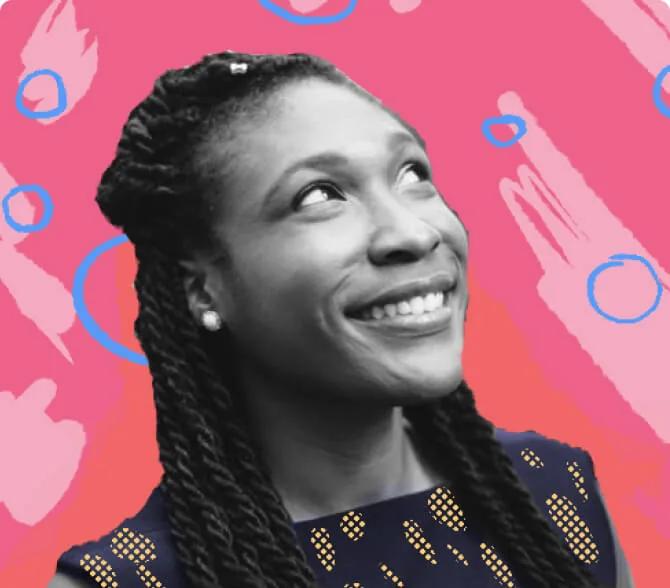
Diversity and inclusion doesn’t stop with hiring. No one knows this better than the Pinterest’s head of diversity & inclusion. Beyond increasing the social network’s hiring rate for women by 26% in 2017, Morgan also helped the launch of key product features to make Pinterest a more inclusive platform. One of those product features enabled users of color on the platform to customize their beauty related search by their skin tone.

As she moved up the ranks from intern to chief diversity and inclusion officer at Target, Wanga experienced first-hand that not every voice is heard and treated equally. Under her guidance, the company rolled out its first-ever performance-based diversity and inclusion goals. These goals gave employees at all levels, especially those from underrepresented backgrounds, a platform to voice their feedback directly to the executive team.

During his time heading Lyft’s diversity and inclusion efforts, Meyer understood that bias checking is essential to promoting inclusiveness among team members. He played an integral role in launching unconscious bias training programs at Lyft. These programs helped hiring managers and employees recognize and prevent implicit biases in interviews and at work.
When each team member is understood and included in the group, they become more motivated to put in their best efforts for each other. The sharing of ideas improves, as do the quality of work and efficiency of the team.
Transparent communication is critical to having a highly functioning team. The more information is shared throughout the team, the better aligned and motivated everyone is when collaborating together.
When every team member feels included at work, they are more eager to invest in their role and career. When an individual in a team grows in skills and abilities, the whole team benefits.
Building an inclusive culture does not mean you are sacrificing quality or lessening expectations for a role. Inclusive leaders understand the benefits that come from hiring people from all backgrounds and different abilities.
Avoid generalizing an entire population or group just because of personal anecdotes or stereotypes. Making decisions based on stereotypes and assumptions may lead to unwanted implicit biases.
It’s not enough to say you’re including everyone or are working on a plan to do so. Inclusiveness is a value that needs to be constantly practiced and implemented, not something that’s mentioned for press coverage or hiring efforts.
Using acronyms invariably is a time saver, but when you need a key to decipher what is being conveyed, it’s time to re-evaluate just what is being accomplished. Inclusive leaders know there’s nothing wrong with keeping it plain and simple.
In the world of modern technology, we often find ourselves in a meeting with people video conferencing from home or across the globe. It’s easy to forget or leave out those who are not physically in the room. Make it a point to address those who are on the video conference and make sure their opinion is heard.
Leaders are often privy to more information than the average employee. Non-inclusive leaders tend to selectively share details with only certain members of the team, which causes dissension. Transparent communication is critical to having a highly functioning team. The more you can share, the better aligned the team is.
Your words choices have meanings to people. Using old adages without fully understanding their origins can be off-putting. Some examples heard in the workplace include, ”going off the reservation,” and ”open the kimono”. Slight changes to phraseology completely change the tone and prevent a leader from alienating and/or offending your peers.
Do your best to ensure that everyone speaks in a meeting. If needed, prompt those who are quieter with questions such as, “What are your thoughts,” or “How would you approach this problem?” If someone is interrupted, make sure to address it at the moment. You can do this by saying, “I don’t think the current speaker finished speaking.”
Everyone is prone to bias. We are all running fast in our day-to-day jobs and our brains are trained to take shortcuts to help us make the most of our pressured hours. The problem is, this can result in making hasty assumptions about a person or situation. To lead more inclusively, you must be on the lookout for your own brand of unconscious bias.
Have you ever heard yourself address your team with ”guys?” Leaders commonly make this mistake when the team, in fact, is made up of both men and women. Using gendered language can leave some women feeling left out since they are not ”guys.” Instead of saying guys, say ”Hey, team”.
Inclusiveness shouldn’t be practiced in a vacuum. Improve your Inclusiveness by exploring and developing these complementary skills.