
63% say recognition loses meaning the moment AI writes it
AI now drafts our emails, summarizes our meetings, and, increasingly, writes our thank-you's. Recognition tools, performance reviews, even the "great job on the launch!" message from your manager may have passed through a model before it reached you.
So we asked over 1,000 working professionals a blunt question: when AI enters the picture, does appreciation still land?
The answer: appreciation survives AI. The AI-written thank-you doesn't.
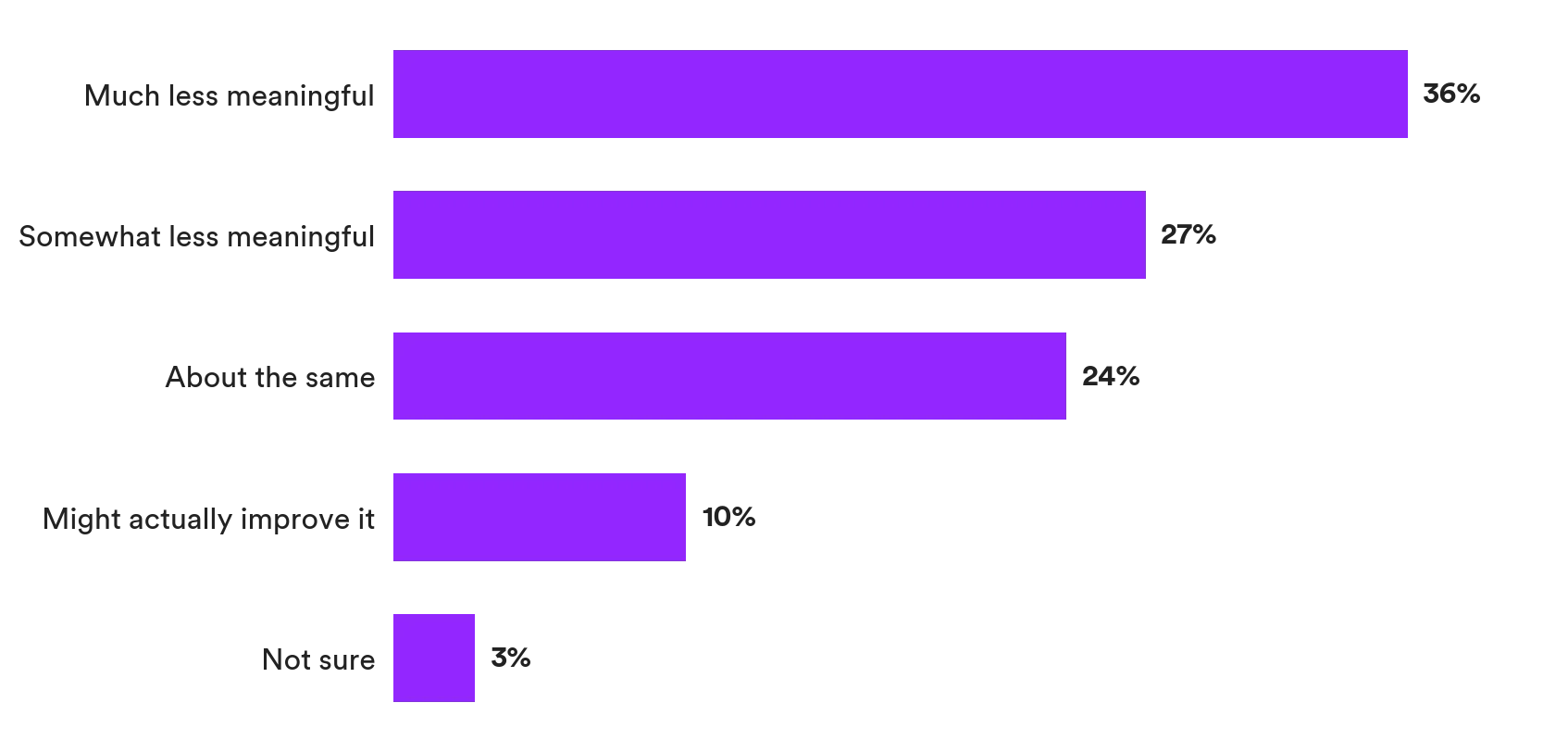
Asked whether recognition would feel less meaningful if they knew the message was written or heavily edited by AI, 36% said much less meaningful and another 27% said somewhat less: 63% in total. Only 1 in 10 believe AI might actually improve the message.
The words still matter. Who wrote them matters more.
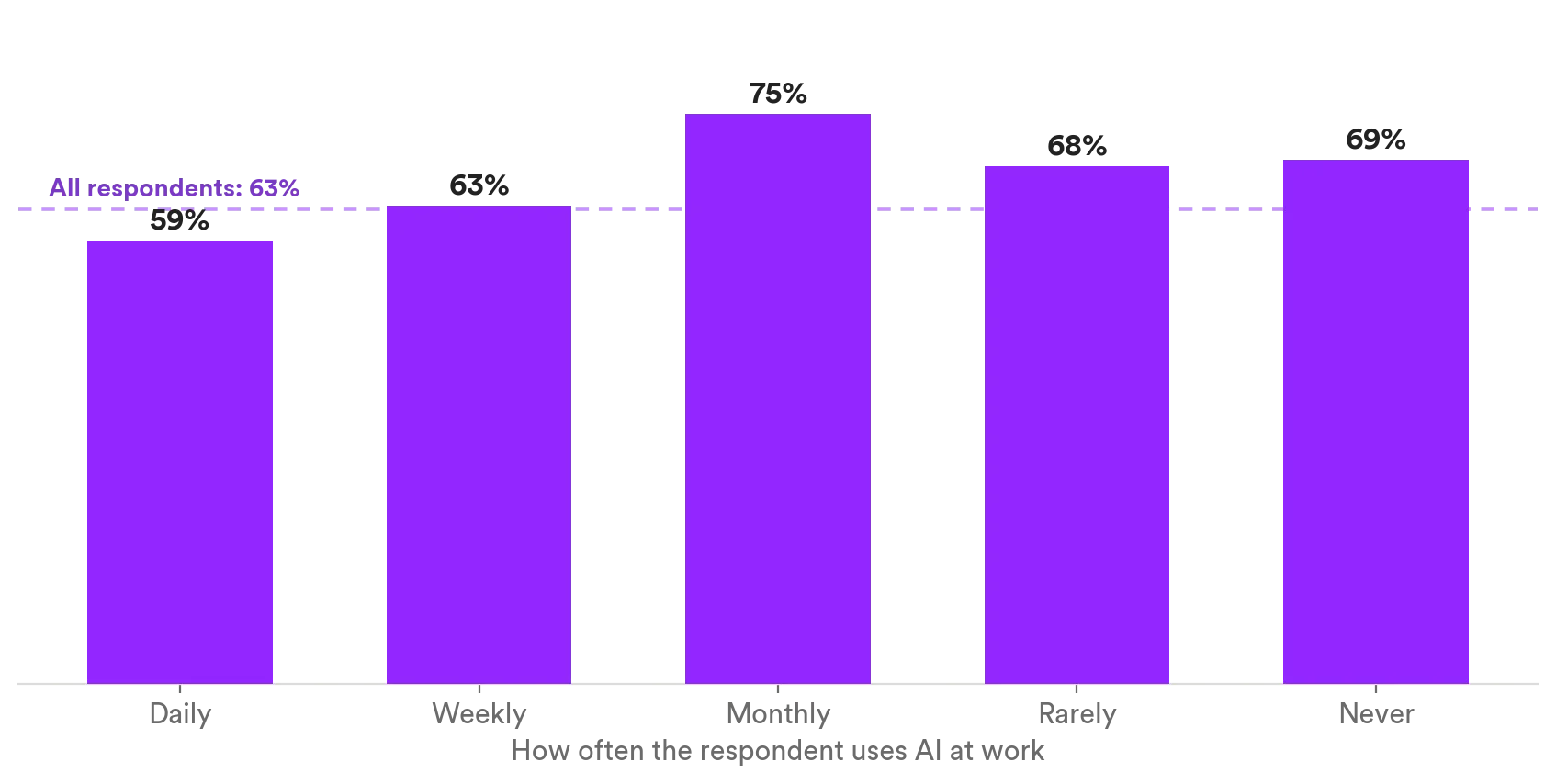
The adoption paradox: even daily AI users don't want AI writing their thank-you's
You might expect resistance to fade with familiarity. It softens; it doesn't fade. 59% of people who use AI every single day still say an AI-written recognition message means less. Among people who never use AI, it's 69%. The gap is real (p < .01), but the floor never drops below roughly 6 in 10.
Employees aren't rejecting AI. They're drawing a line around the one message that only counts when a human means it.
People are twice as uncomfortable with AI deciding recognition as with AI monitoring them
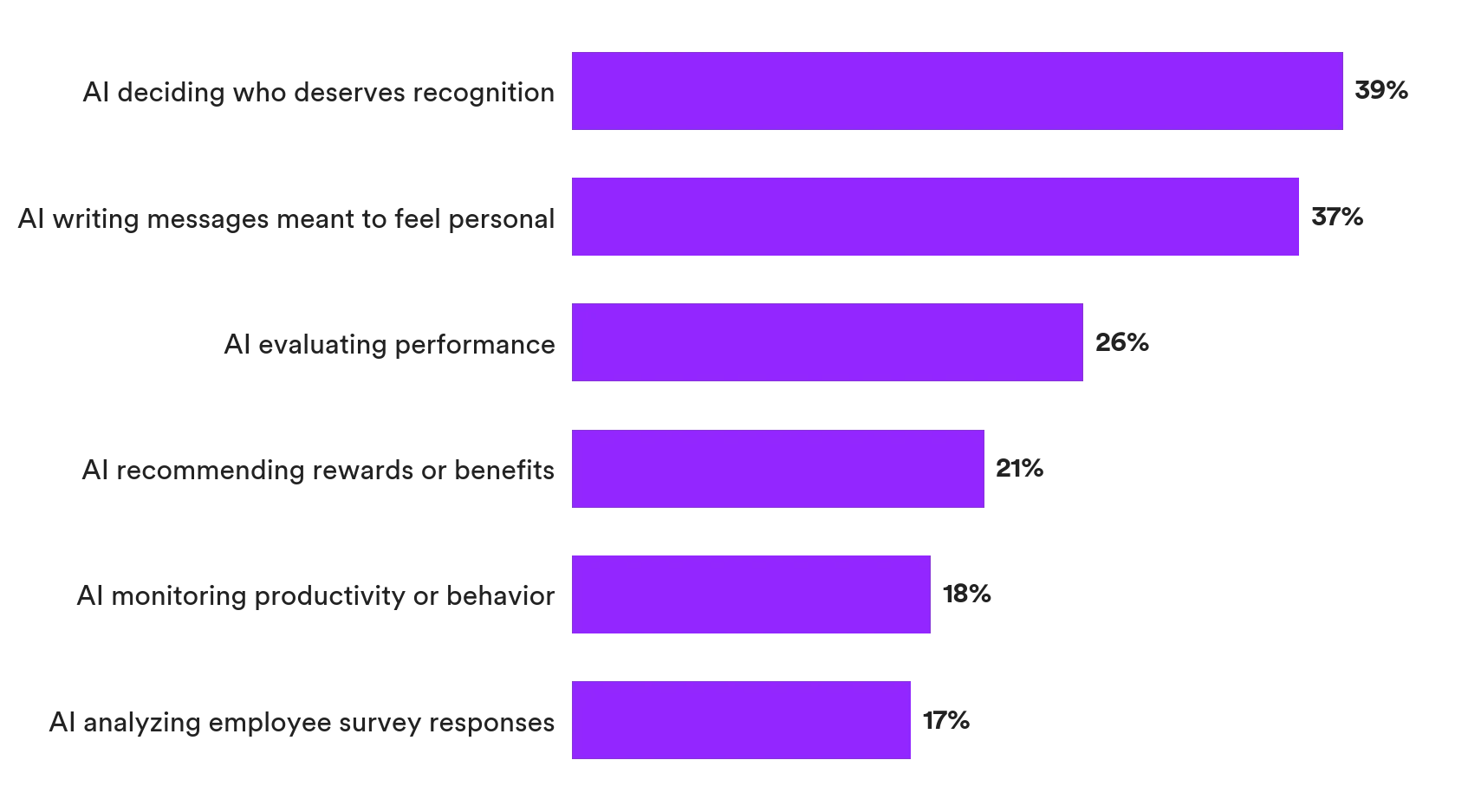
When we listed six workplace uses of AI and asked which felt uncomfortable, the top two weren't surveillance or performance scores. They were AI deciding who deserves recognition (39%) and AI writing messages meant to feel personal (37%), both ranked above AI evaluating performance (26%) and roughly double AI monitoring productivity (18%).
Appreciation is the most human-guarded territory at work. More than being watched. More than being scored.
Nearly half say AI has muddied who deserves credit
48% of professionals say AI has made it harder to tell who actually deserves credit for work, including 15% who say much harder. Among daily and weekly AI users, it crosses 50%.
Who should get the credit when AI helps? The most common answer: the employee who used it well (44%), then the whole team (33%). Only 13% think the AI itself deserves a nod.
"AI is making it easier to produce poor work quickly." — survey respondent
"It just makes credit not feel meaningful." — survey respondent
45% say AI makes work feel less human, but heavy users disagree
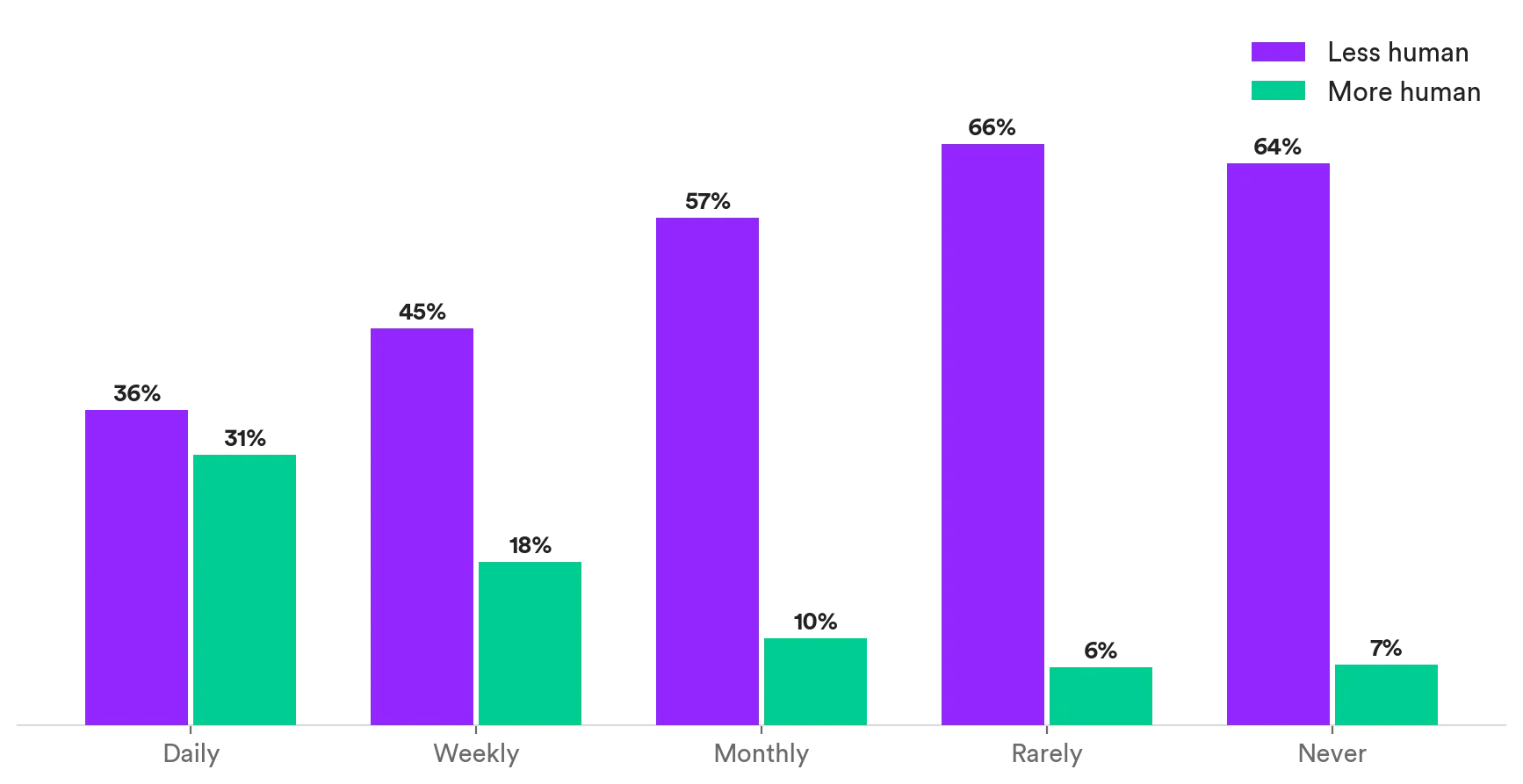
Overall, professionals say AI is making work less human by a 2-to-1 margin (45% less vs. 22% more). But slice it by exposure and the story flips: daily AI users are nearly split (36% less vs. 31% more human), while people who rarely or never touch AI say "less human" at 64–66%.
Familiarity breeds nuance. Distance breeds dread.
The one place employees welcome AI
Here's the twist: employees are net positive on AI analyzing survey feedback. 30% say they'd be more honest knowing AI reads the open-ended responses, vs. 16% less honest. And the #1 condition for trusting AI-analyzed feedback, chosen by 51%: a human reviews the AI's summary before any decision gets made.
AI can read the feedback. It just can't write the thank-you, and it can't have the final word.
Methodology
Matter surveyed 1,021 employed U.S. professionals between June 30 and July 13, 2026, recruited through an independent third-party research panel (Cint). The sample skews toward people leaders (67% manager level or above); recognition-frequency findings vary by less than 6 points across role levels. Percentages may not total 100 due to rounding. Findings are free to cite with attribution and a link to this page.