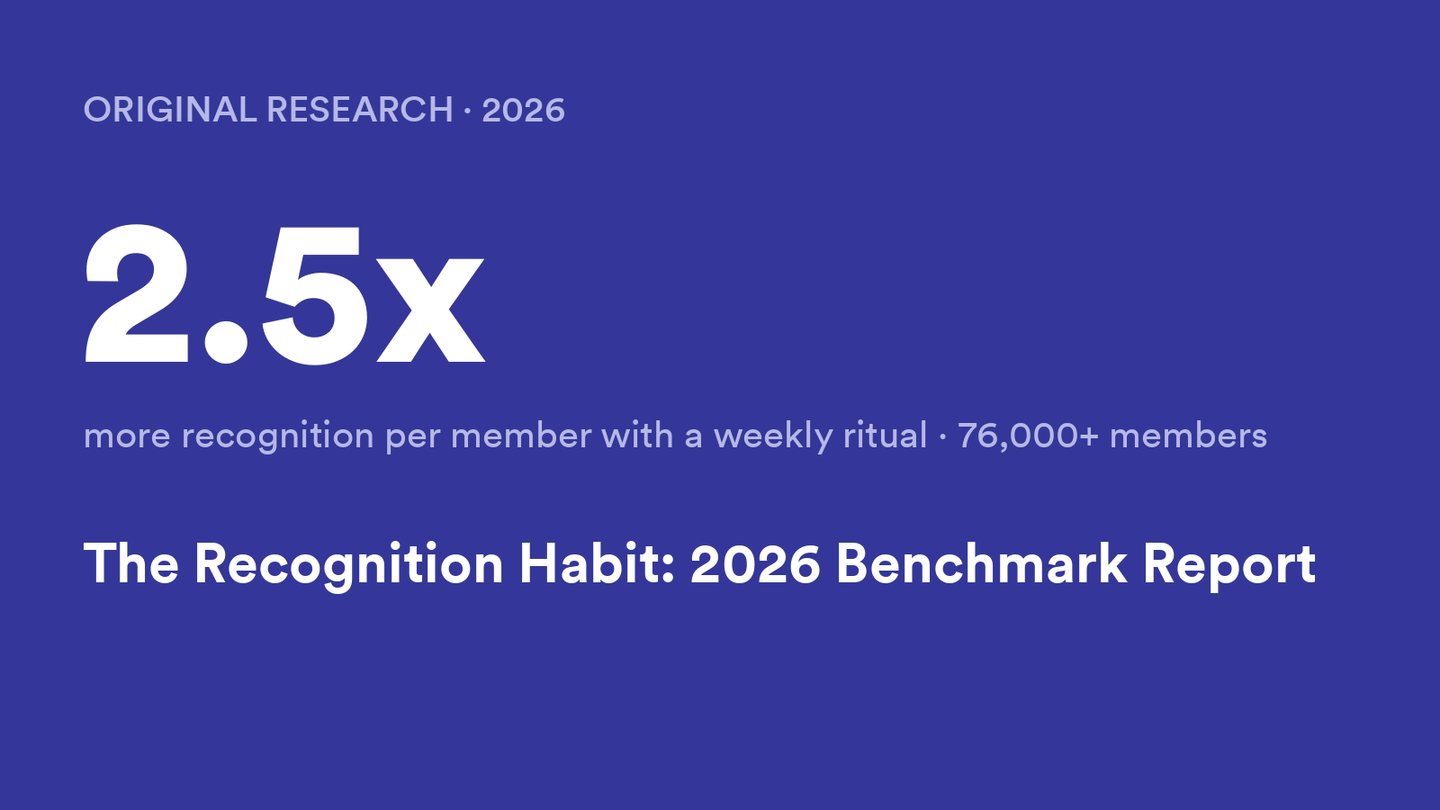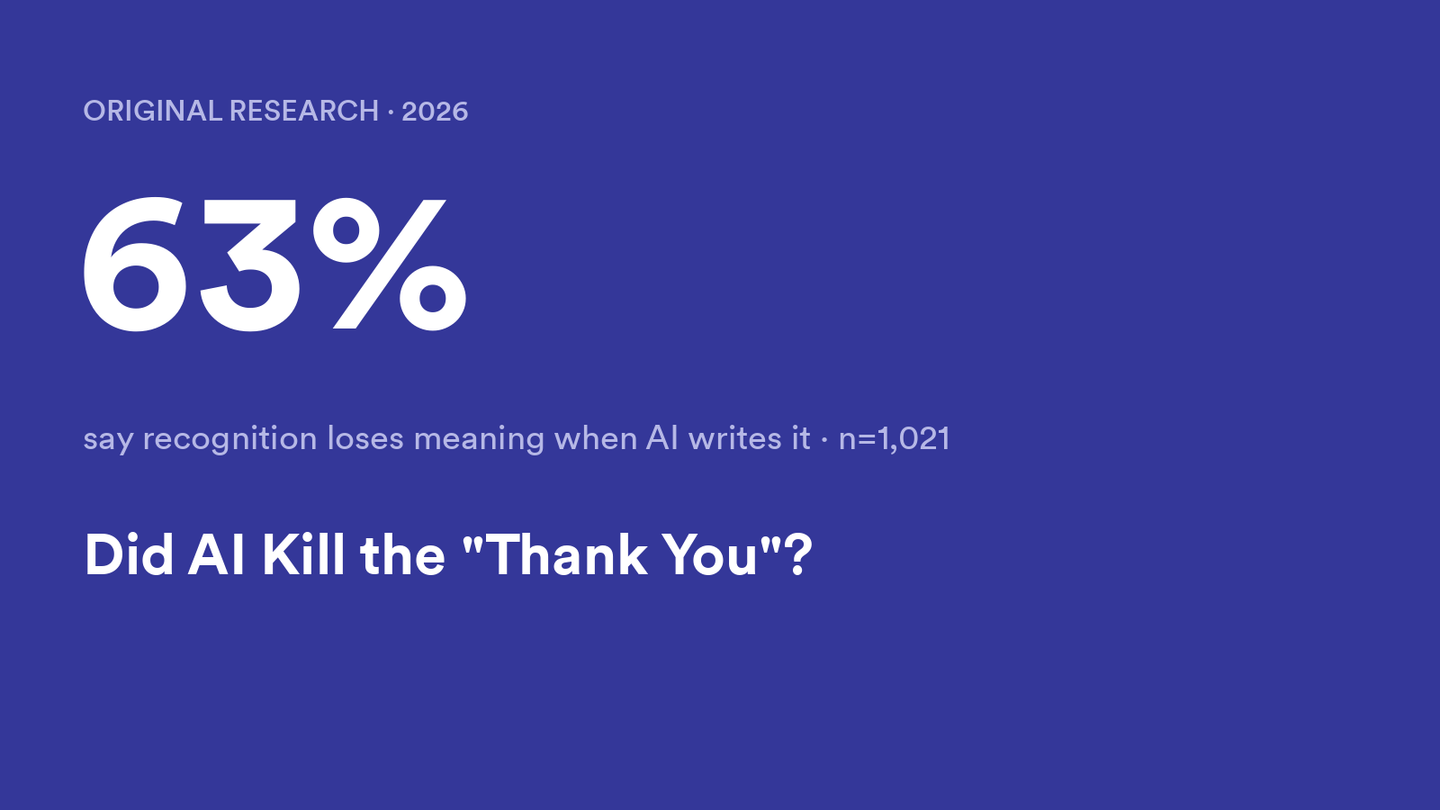

A third of employees are running on empty
Every company says people are its greatest asset. Then we asked 1,021 professionals how often anyone actually tells them so.
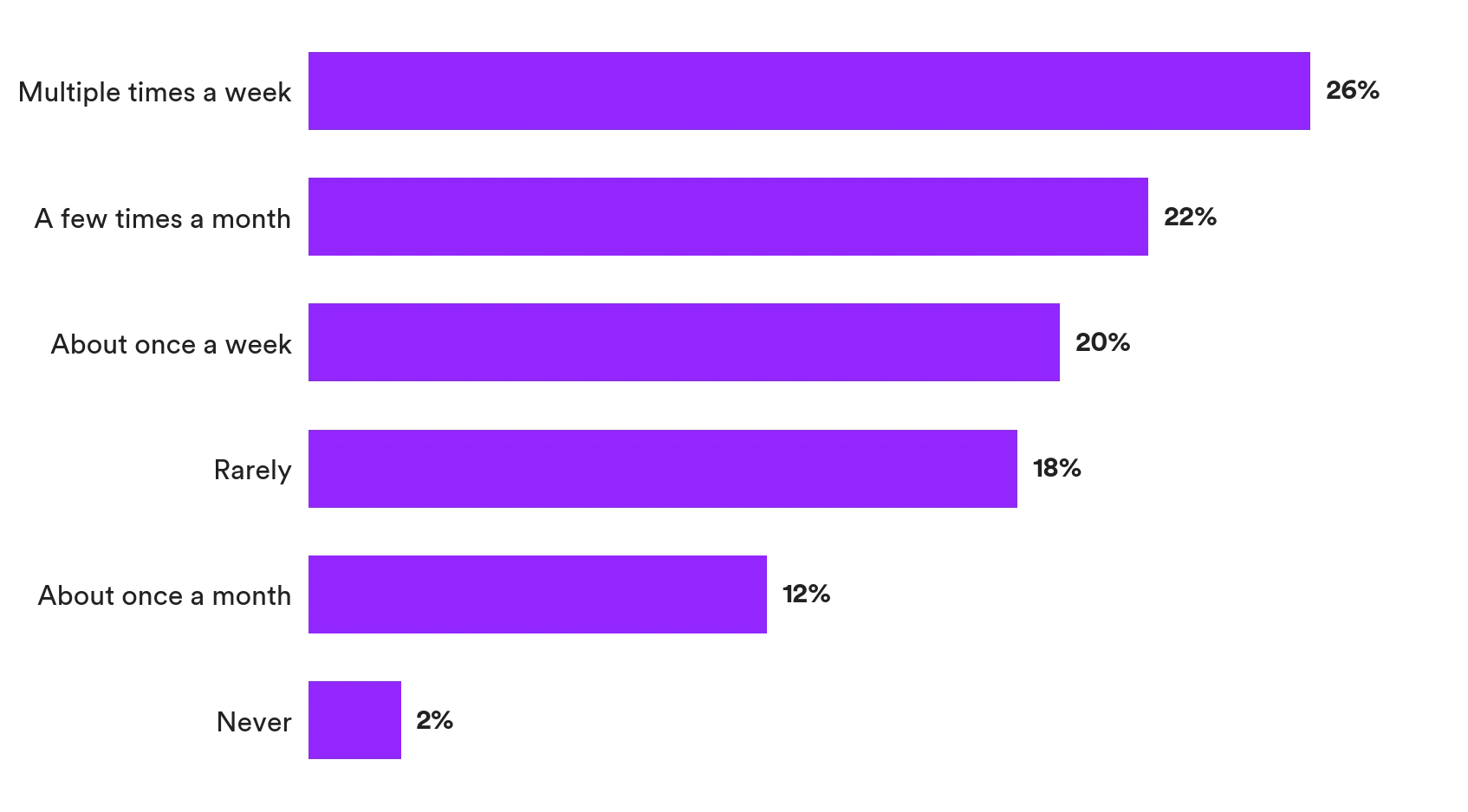
45% of professionals receive genuine recognition at least weekly. But 33% get it about once a month or less, including 21% who say rarely or never.
Recognition isn't rare because work isn't happening. It's rare because nobody built the habit.
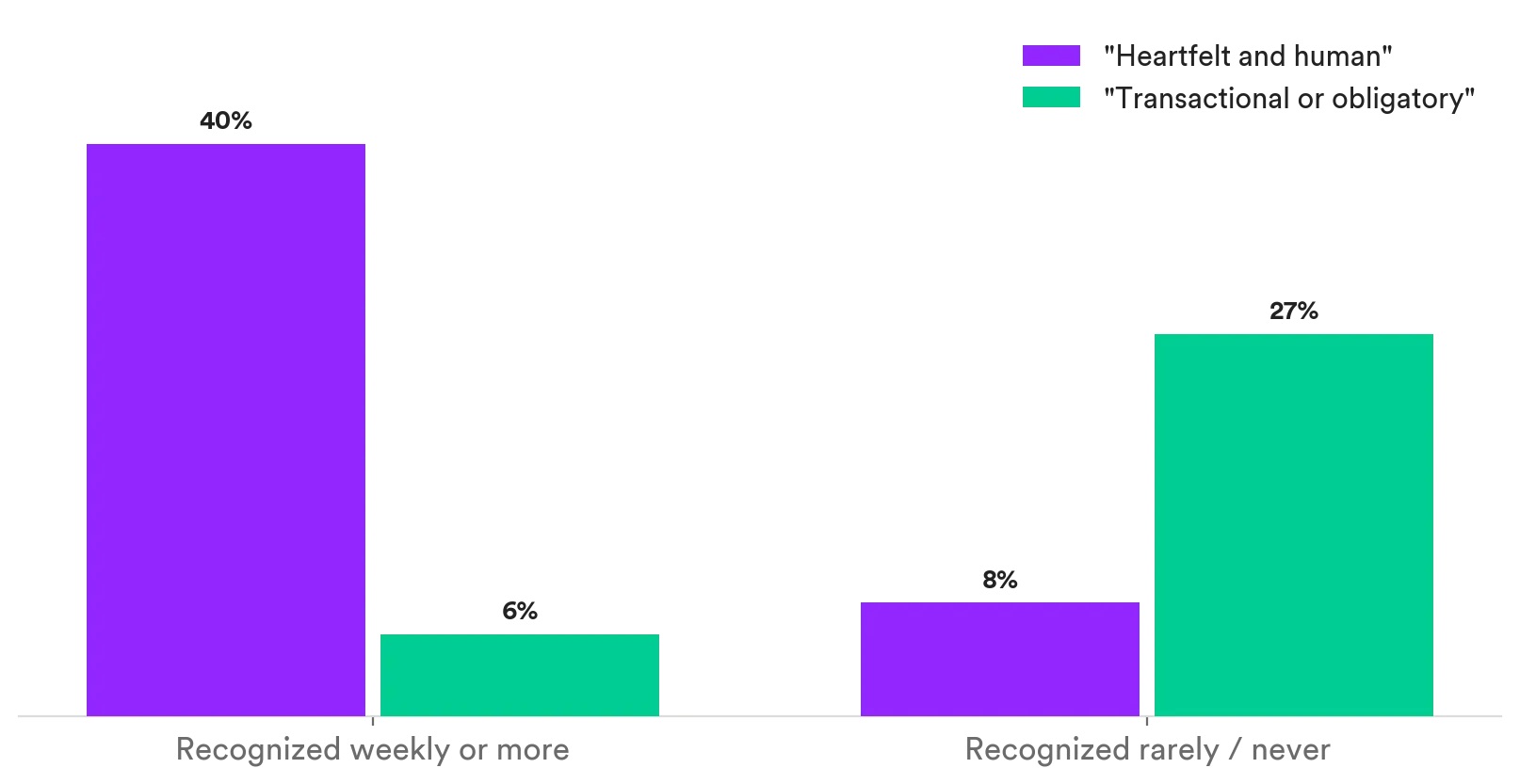
Frequent recognition feels heartfelt. Scarce recognition feels obligatory.
Here's the finding that should end the "less is more special" myth. Among employees recognized weekly or more, 40% describe the recognition they get as heartfelt and human, and just 6% call it transactional. Among those recognized rarely or never, it flips: 8% heartfelt, 27% transactional.
Scarcity doesn't make appreciation precious. It makes it feel like a checkbox.
Under-recognized employees are 3x more likely to say only money means anything
Asked what kind of recognition means the most, well-recognized employees rarely pick money: just 10% of weekly-recognized employees choose a monetary reward as most meaningful. Among the rarely-or-never recognized, it triples to 30%.
Read that as a warning, not a preference. When appreciation disappears, cash becomes the only signal left that anyone noticed. Companies without a recognition culture end up paying for the thank-you's they never said.

Sincere words beat money for meaning. Cash still tops the rewards list. Both are true.
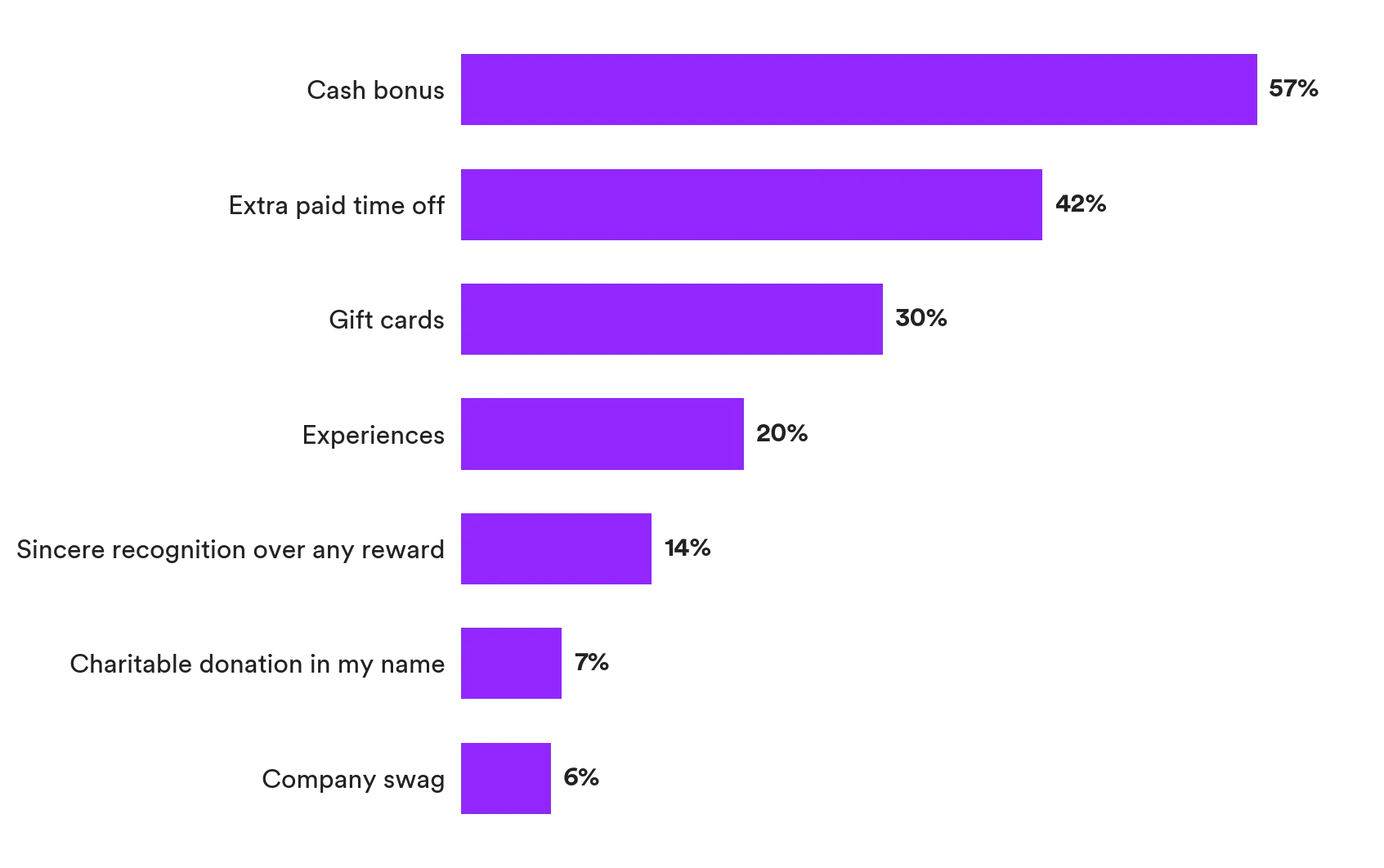
What means most overall: simply being thanked sincerely (21%) and a specific, personal message (20%) — 41% choose pure words, versus 17% who pick a monetary reward. But ask which rewards feel meaningful and cash wins decisively (57%), ahead of extra PTO (42%) and gift cards (30%). And even inside the rewards question, 14% chose "I'd rather have sincere recognition than a reward."
The takeaway isn't words or money. It's that rewards can't do recognition's job, and recognition can't do rewards'. Programs that treat them as interchangeable fail at both.
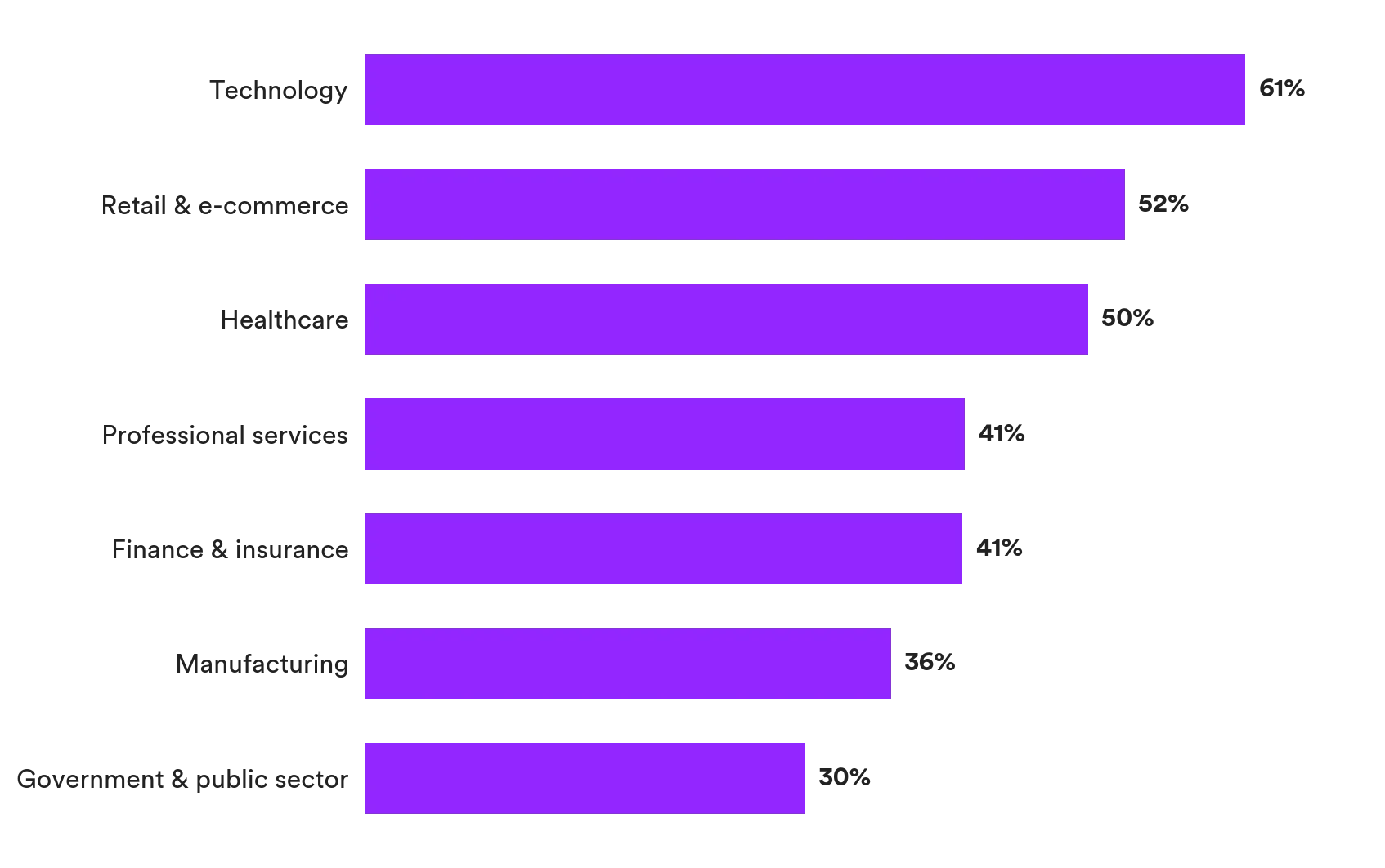
Tech runs on appreciation. Government and manufacturing run without it.
Weekly-or-better recognition by industry: Technology leads at 61%, with Retail (52%) and Healthcare (50%) close behind. At the bottom: Manufacturing (36%) and Government & public sector (30%), where roughly 3 in 10 employees say they're recognized rarely or never.
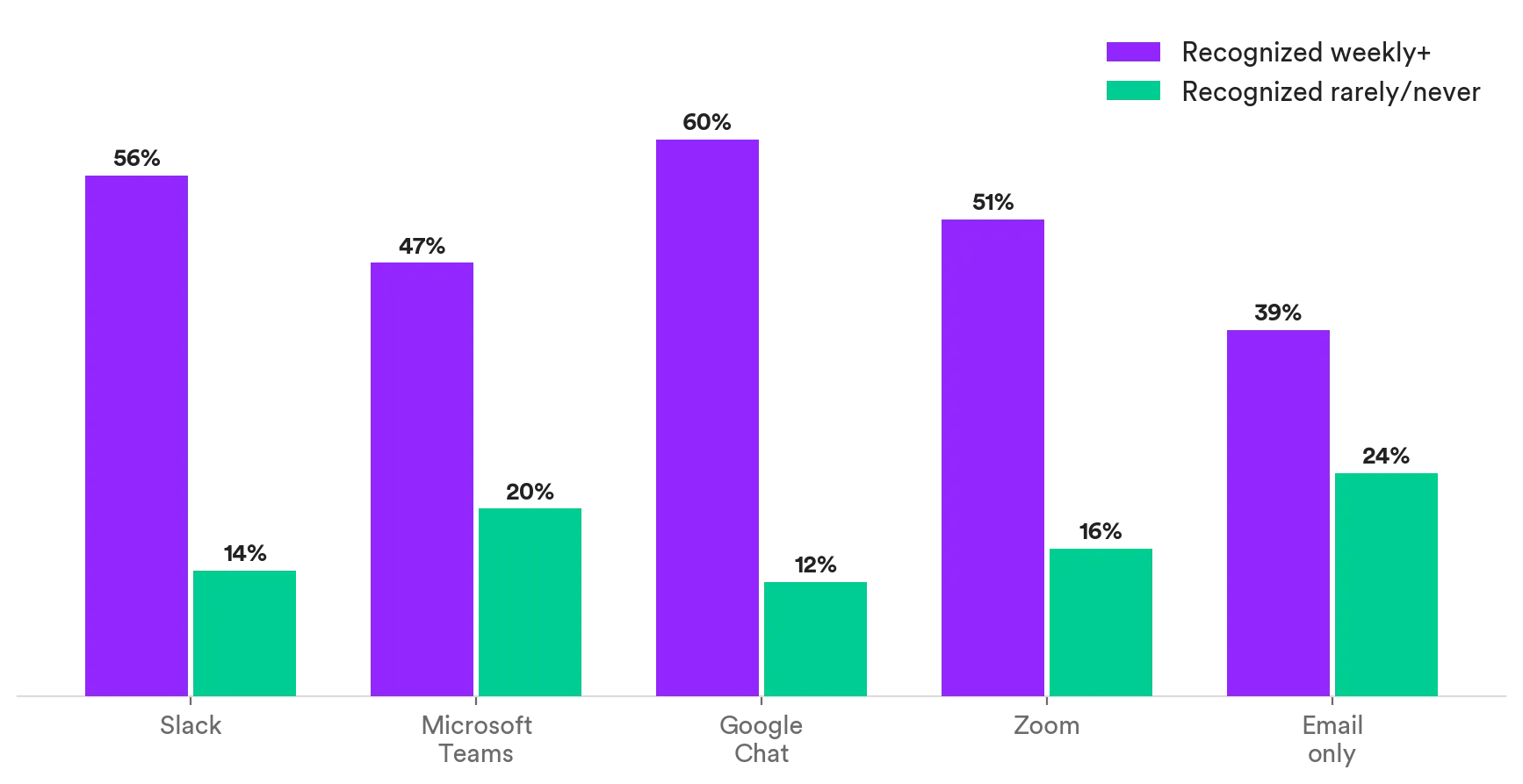
Chat-first workplaces recognize far more often than email-only ones
Recognition tracks the tools people talk in. Where real-time chat is part of the stack, weekly-or-better recognition runs highest (Google Chat workplaces at 60%, Slack workplaces at 56%) versus 47% in Microsoft Teams workplaces and just 39% where email is the only channel. Slack users are 42% more likely than email-only employees to be recognized weekly, and email-only employees are nearly twice as likely to be recognized rarely or never (24% vs. 13%).
Real-time channels lower the cost of a thank-you to nearly zero, and the thank-you's follow.
One more twist: the office isn't helping
Conventional wisdom says remote work killed recognition. The data disagrees: fully on-site employees are the most likely to be recognized rarely or never (23.5%), while hybrid employees fare best (15%). Proximity doesn't produce appreciation. Habits do.
Methodology
Matter surveyed 1,021 employed U.S. professionals between June 30 and July 13, 2026, recruited through an independent third-party research panel (Cint). The sample skews toward people leaders (67% manager level or above); recognition-frequency findings vary by less than 6 points across role levels. Percentages may not total 100 due to rounding. Findings are free to cite with attribution and a link to this page.