

Building a workplace where employees feel heard requires more than annual check-ins. At Matter, we recognize that organizations face significant challenges when selecting an employee pulse survey platform from among dozens that claim to transform engagement measurement. Companies struggle to find solutions that balance powerful analytics with ease of use while ensuring teams actually participate. Traditional approaches often leave HR teams overwhelmed by complex implementations and platforms that create administrative burdens rather than actionable insights. Selecting the right employee survey platform transforms feedback from a quarterly burden into a strategic advantage, providing real-time insights that help leaders build continuous feedback cultures and drive measurable improvements in workplace culture and employee satisfaction.
What is a pulse survey?
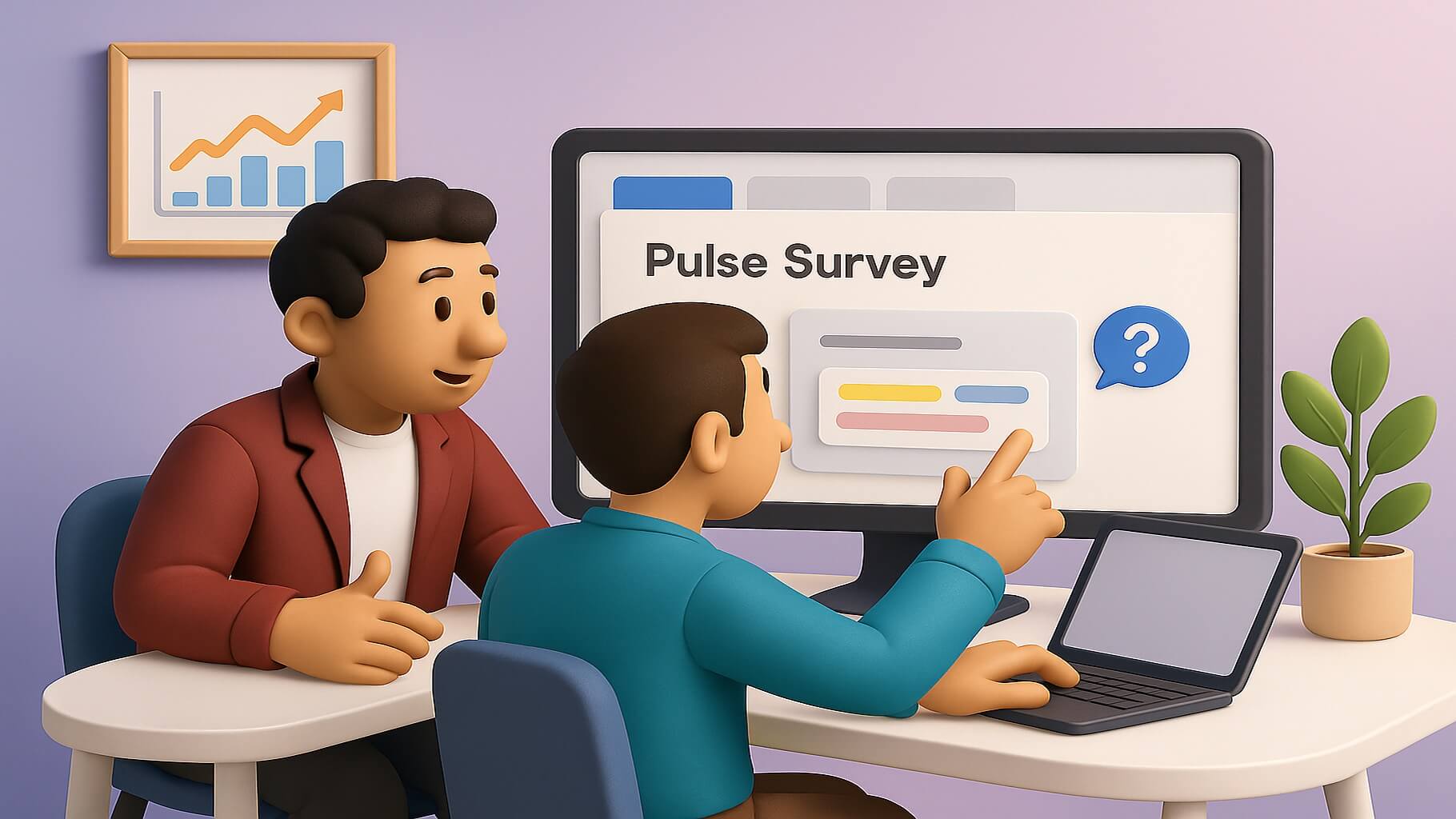
Employee pulse surveys delivered through regular pulse checks represent a modern approach to measuring employee sentiments through brief, frequent questionnaires that capture real-time feedback about workplace experiences. Unlike traditional surveys that organizations conduct annually or quarterly, these pulse surveys typically contain fewer than ten questions and run on weekly, biweekly, or monthly schedules. Regular pulse surveys help you spot patterns and fix problems before they become serious issues. The methodology focuses on specific topics like team effectiveness, leadership effectiveness, or recent company changes, making it easier for employees to share candid feedback quickly without survey fatigue.
The measurement approach behind pulse surveys emphasizes speed and relevance over comprehensive data collection. Organizations deploy these quick check-ins to maintain a constant pulse on employee experience and company culture. Questionnaire items often use simple rating scales or multiple-choice formats, enabling employees to respond in under five minutes. This brevity increases participation rates significantly compared to lengthy annual assessments. Companies can measure employee engagement more dynamically, spot declining employee satisfaction early, and implement targeted interventions through employee recognition programs that respond to feedback. The continuous listening model helps organizations track progress toward goals, evaluate the impact of new initiatives, and foster positive work environments responsive to employee rewards strategies.
Defining pulse surveys and their measurement approach
Employee survey tools function as regular temperature checks, measuring specific aspects of the employee experience through targeted questions delivered via survey platforms. The methodology emphasizes frequency over depth, allowing organizations to collect feedback consistently while minimizing the time employees spend completing surveys. These employee survey tools typically measure engagement metrics like job satisfaction, manager effectiveness, communication quality, and alignment with company values. Organizations design questionnaire items to be straightforward and relevant, often rotating topics to cover different aspects of company culture throughout the year. This approach ensures teams remain engaged in the survey process rather than experiencing burnout from repetitive or overly complex questionnaires that lead to survey fatigue.
The measurement framework combines quantitative ratings with opportunities for qualitative feedback, providing both data points and context to inform decisions. Survey platforms calculate engagement scores, identify trends over time, and benchmark results against prior surveys or industry standards using advanced analytics. These analytics help leaders understand which factors most significantly impact employee retention and team effectiveness. Organizations use these actionable insights to prioritize initiatives, allocate resources effectively, and demonstrate to employees that their feedback leads to tangible improvements. The regular cadence creates accountability, as leaders must address concerns raised in one survey cycle before the next deployment begins.
How pulse surveys differ from annual engagement tools
Annual employee pulse surveys typically include comprehensive questionnaires covering every aspect of the employee experience, often containing over fifty questions that take significant time to complete. These traditional surveys provide detailed snapshots of organizational health, but occur infrequently, meaning issues might persist for months before leaders become aware of them. The extensive nature of annual assessments can lead to survey fatigue, where employees feel overwhelmed by lengthy questionnaires and provide less thoughtful responses. Results from these employee pulse surveys often arrive weeks after completion due to the time required for analysis, delaying organizational response to critical concerns about job satisfaction or workplace culture.
Pulse surveys delivered through pulse checks offer a nimble alternative by focusing on specific topics, delivering results quickly, and enabling organizations to act on feedback in near real-time. The shorter format respects employees' time while maintaining high participation rates year-round with survey tools optimized for frequent use. Organizations can adjust survey questions based on current priorities, recent changes, or emerging concerns about customer satisfaction metrics or employee sentiment, making the feedback collection process more relevant and timely. Survey responses provide immediate visibility into how employees feel valued within the organization, allowing leaders to implement interventions quickly and measure their effectiveness through subsequent pulse checks. This agile approach complements rather than replaces annual assessments, with many organizations using both methods to balance comprehensive measurement with continuous monitoring.
The role of software in pulse survey success
Employee survey platform automates the entire feedback collection process, from scheduling deployments to analyzing results and generating reports that provide valuable insights. Automation takes care of repetitive tasks like reminder emails, response compilation, and data visualization. HR can focus on the important work: analyzing feedback and taking action. Automation ensures these employee survey tools deploy consistently, reminders reach non-respondents at optimal times, and results populate dashboards instantly as employees submit responses. The technology handles the complexity of managing different survey schedules, question rotations, and demographic segmentation without requiring constant oversight from administrators managing HR management systems.
Modern survey platforms include features that enhance participation and data quality, such as mobile-friendly, easy-to-use app interfaces, anonymous response options that encourage honest responses, and integration with workplace communication platforms like Slack and Teams. These integrations meet employees where they already work, reducing friction in the feedback collection process and encouraging honest feedback about organizational culture. Advanced platforms provide sophisticated analytics, including sentiment analysis, trend identification, and predictive modeling, that help organizations understand not just current employee engagement levels but also factors that influence future employee retention. The best employee survey tools transform raw feedback data into valuable insights through intuitive dashboards, automated reports, and recommendations that guide leadership action based on reliable data from survey findings.
Benefits of using an employee pulse survey platform
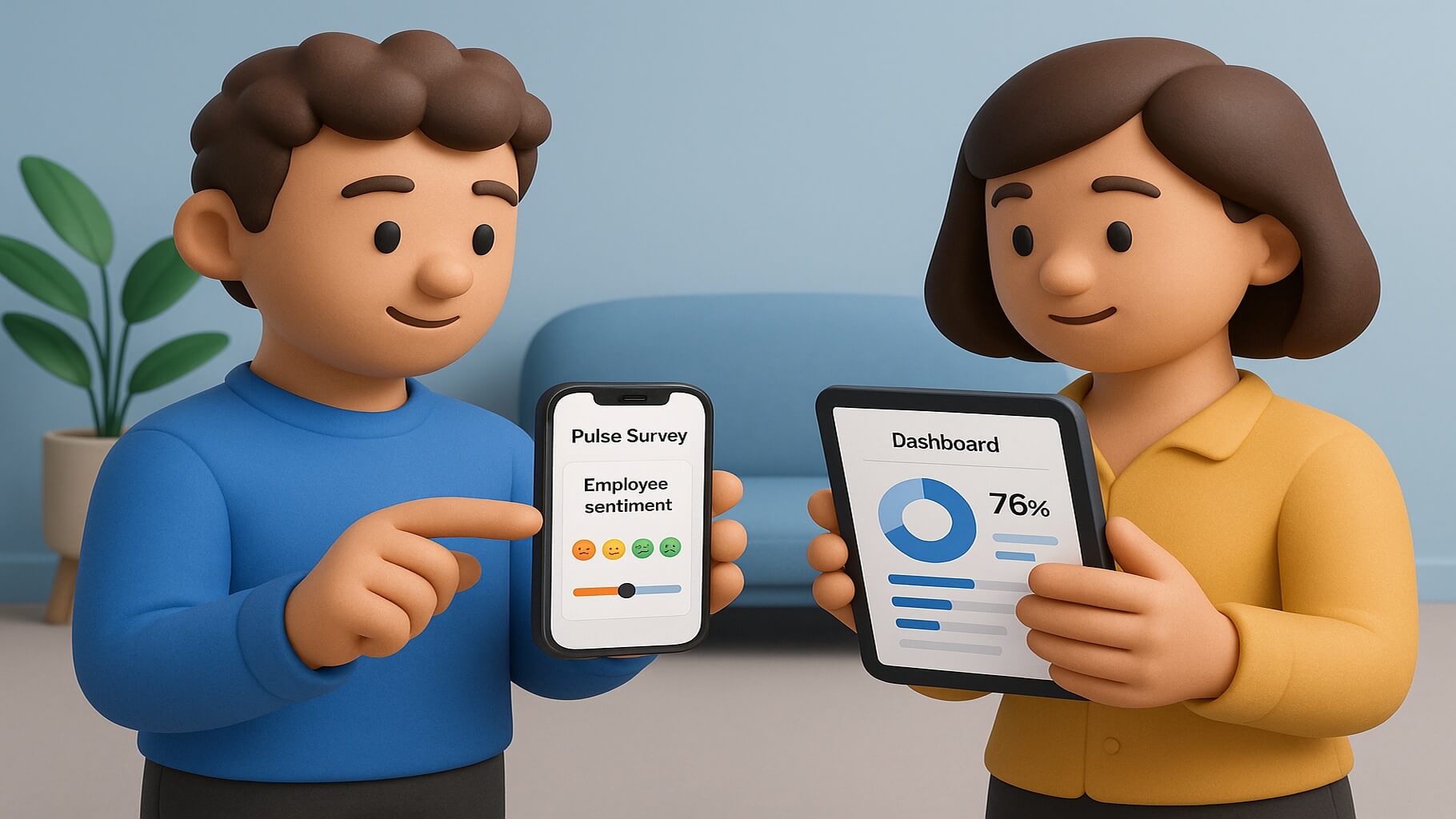
Organizations that implement employee pulse surveys via dedicated survey platforms experience significant improvements in how they collect feedback, analyze engagement data, and respond to employee concerns. Automation handles the tedious work that would otherwise take hours. HR teams spend their time on initiatives that actually move the needle rather than survey administration. The survey platform provides capabilities that manual methods simply cannot match, including real-time analytics, automated workflows, and sophisticated reporting that reveals patterns across different teams, departments, or demographic groups. Companies that invest in these platforms typically see higher participation rates, faster response times to emerging issues, and more meaningful improvements in employee satisfaction and retention through recognition and rewards programs.
The technology enables organizations to create surveys that employees actually want to complete by offering mobile-friendly interfaces, varied question formats, and concise questionnaires that respect people's time. Software platforms also ensure data security and privacy, critical considerations when encouraging honest responses about sensitive workplace topics. By removing technical barriers and automating routine tasks, these tools democratize feedback collection, enabling organizations of all sizes to implement continuous listening programs that foster transparency and open communication through employee engagement tools.
Automating feedback collection and analysis
Employee survey platform eliminates repetitive manual work by automatically scheduling survey deployments, sending reminders to participants, and compiling responses without human intervention. Administrators configure survey frequencies once, and the system handles deployment indefinitely, ensuring consistency regardless of team availability or competing priorities. Automated reminders increase participation by reaching non-respondents at strategic intervals without appearing pushy or creating an administrative burden from manual tracking. The best employee survey tool options track completion rates in real time, identifying departments or groups with low engagement so leaders can proactively address participation barriers through targeted communication.
Analysis automation offers an even greater benefit, as survey tools process responses instantly and generate insights that would take days or weeks to produce manually. Advanced analytics automatically identify trends, correlations, and outliers, highlighting areas requiring immediate attention. Employee survey platform segments survey findings by department, tenure, role, and other demographics, revealing how different employee groups experience the workplace. Natural language processing analyzes open-ended responses, categorizes themes, and detects sentiment to provide qualitative insights at scale. These capabilities transform feedback data from overwhelming spreadsheets into actionable intelligence that guides decision-making and demonstrates ROI for engagement initiatives.
Real-time insights through advanced analytics
Traditional survey methods often create frustrating delays between feedback collection and actionable insights, but modern employee survey tools deliver real-time visibility into employee sentiment as responses arrive. Dashboards update continuously, allowing leaders to monitor participation, track engagement metrics, and identify concerning trends without waiting for formal reports. This immediacy enables organizations to respond quickly to declining employee satisfaction, addressing issues before they impact employee retention or team effectiveness. Real-time data also helps leaders evaluate whether recent interventions successfully improved conditions, creating tight feedback loops that enhance organizational agility and informed decisions.
Survey platforms go beyond simple averages and percentages, applying statistical techniques that reveal deeper patterns in engagement data. Correlation analysis identifies which factors most strongly influence overall satisfaction, helping organizations prioritize limited resources on initiatives with the greatest potential impact. Trend analysis tracks how metrics evolve, distinguishing temporary fluctuations from sustained changes that warrant intervention.
Benchmarking features compare your organization's survey findings against industry standards or internal targets, providing context that helps leaders assess whether engagement levels meet expectations. Advanced platforms analyze past survey data to predict where engagement might drop. You can catch potential issues early and fix them before they show up as problems in your next survey.
Save time with automation
Manual survey processes consume significant time for HR teams, who must build questionnaires, distribute them via email, chase down non-respondents, compile responses from various sources, and create presentations for leadership. An employee survey platform automates these tasks, reducing the time required to run pulse surveys from days to minutes. HR professionals can focus on strategic work like interpreting results, designing interventions, and partnering with leaders rather than managing survey logistics. The efficiency gains make it feasible to conduct pulse surveys more frequently, gathering feedback monthly or even weekly, without increasing workload on teams managing talent development.
Software platforms also standardize processes, ensuring surveys follow consistent formats, questions remain comparable across cycles, and results track reliably over time through customizable survey templates. This standardization improves data quality and makes trend analysis more meaningful, as variations in methodology no longer confound comparisons across survey periods. Customizable survey templates provide starting points that incorporate best practices while allowing organizations to create surveys tailored to their company-specific needs. Workflow automation extends beyond survey deployment to include tasks such as generating reports, scheduling review meetings via performance management integrations, and assigning action items based on survey findings. These capabilities create comprehensive systems that manage the entire feedback cycle, from survey design through action planning and effectiveness measurement.
What is the best employee pulse survey platform?

Determining the best employee survey platform requires understanding your organization's unique needs, existing technology ecosystem, and engagement measurement goals. No single platform serves all organizations perfectly, as different survey tools excel in different areas, such as ease of use, depth of analytics, integration capabilities, and pricing models. Small teams might prioritize affordability and quick implementation, while enterprises typically require advanced features like sophisticated benchmarking, dedicated support, and robust security compliance. The best employee survey tool for your organization balances necessary functionality with budget constraints, ensuring you invest in capabilities you'll actually use rather than paying for features that remain idle.
Organizations should evaluate potential solutions against specific criteria that align with their engagement measurement strategy and organizational culture, using kudos employee recognition programs. Consider factors like how easily the platform integrates with your existing HR systems, whether it offers mobile-friendly survey experiences that boost participation, and how intuitive the administrator interface feels for team members who'll manage the pulse surveys. The right choice enables your organization to gather insights effectively, act on feedback quickly through team rewards initiatives, and demonstrate clear ROI through improvements in employee satisfaction, retention, and performance. Companies that carefully assess their requirements before selecting a survey platform experience smoother implementations, higher adoption rates, and better outcomes from their engagement measurement programs.
Evaluating software based on organizational needs
Organizations must first clarify their objectives before evaluating specific platforms to avoid selecting employee survey tools that don't align with actual requirements. Small companies with fewer than one hundred employees often need straightforward solutions that team members can implement quickly without extensive training or IT support. These organizations typically prioritize affordability, ease of use, and basic analytics over enterprise-grade features they won't utilize. Mid-market companies balancing growth with resource constraints seek platforms that offer scalability, enabling them to start with essential features and expand capabilities as their needs evolve, as reflected in improved job satisfaction metrics.
Industry-specific needs also influence selection, as regulated sectors such as healthcare and finance require platforms that meet strict compliance standards for data privacy and security. Companies in highly competitive talent markets might prioritize features that help them differentiate their employee experience and enhance employee retention through targeted interventions. Organizations with remote or distributed workforces need survey tools that integrate seamlessly with communication platforms like Slack or Teams, meeting employees where they already collaborate. The evaluation process should involve stakeholders from HR, IT, and leadership who can assess whether platforms address technical requirements, usability expectations, and strategic goals, while accounting for the organization's cultural considerations.
Key features that define best-in-class platforms
Best-in-class employee survey platforms share several characteristics that set them apart from basic questionnaire builders or generic form software. Robust automation capabilities ensure employee pulse surveys deploy on schedule, reminders reach appropriate recipients, and results compile automatically without manual intervention. Flexible question libraries provide pre-built, customizable survey templates covering common engagement topics while allowing customization to address organization-specific concerns. Survey logic enables dynamic questionnaires that adapt based on previous responses, ensuring employees only answer relevant questions and complete surveys quickly through survey process optimization.
Mobile optimization ensures surveys display correctly on smartphones and tablets, accommodating how employees actually access workplace tools. Analytics transform raw feedback data into actionable insights through interactive dashboards, trend analysis, demographic segmentation, and statistical significance testing. The ability to create surveys with anonymous or confidential response options encourages honest responses on sensitive topics without fear of repercussions, helping employees speak freely. Integration capabilities connect survey platforms with HR information systems, communication tools, and employee recognition platforms, creating seamless experiences and enabling data-driven workflows. Comprehensive reporting features allow administrators to generate custom reports for different audiences, from executive summaries for leadership to detailed action plans for managers focused on performance reviews. Security and compliance features, including data encryption, access controls, and audit trails, protect sensitive employee information and meet regulatory requirements.
Comparing top employee pulse survey platform options
The market offers numerous employee survey platform options, ranging from specialized tools to comprehensive employee experience suites that include survey capabilities. Dedicated survey tools typically provide focused functionality optimized for frequent, brief feedback collection, with intuitive interfaces and streamlined workflows enabled by efficient survey processes. These platforms often implement quickly and cost less than comprehensive suites, making them attractive to organizations that prioritize speed to value. However, they may require integration with other HR systems and typically lack capabilities beyond survey management.
Comprehensive employee experience platforms combine engagement surveys with features like employee recognition, performance management, and onboarding workflows, creating integrated solutions that address multiple HR needs. These platforms enable organizations to connect survey insights directly to action programs, such as recognizing employees based on feedback or adjusting policies in response to concerns about workplace culture. The integration eliminates data silos and provides a holistic view of the employee experience, though implementations typically require more time and investment. Organizations must weigh the benefits of all-in-one solutions against the simplicity and lower cost of point solutions, considering factors such as current technology gaps, integration capabilities, and their long-term HR technology strategy when comparing the best employee survey tools.
15 best employee pulse survey software platforms comparison
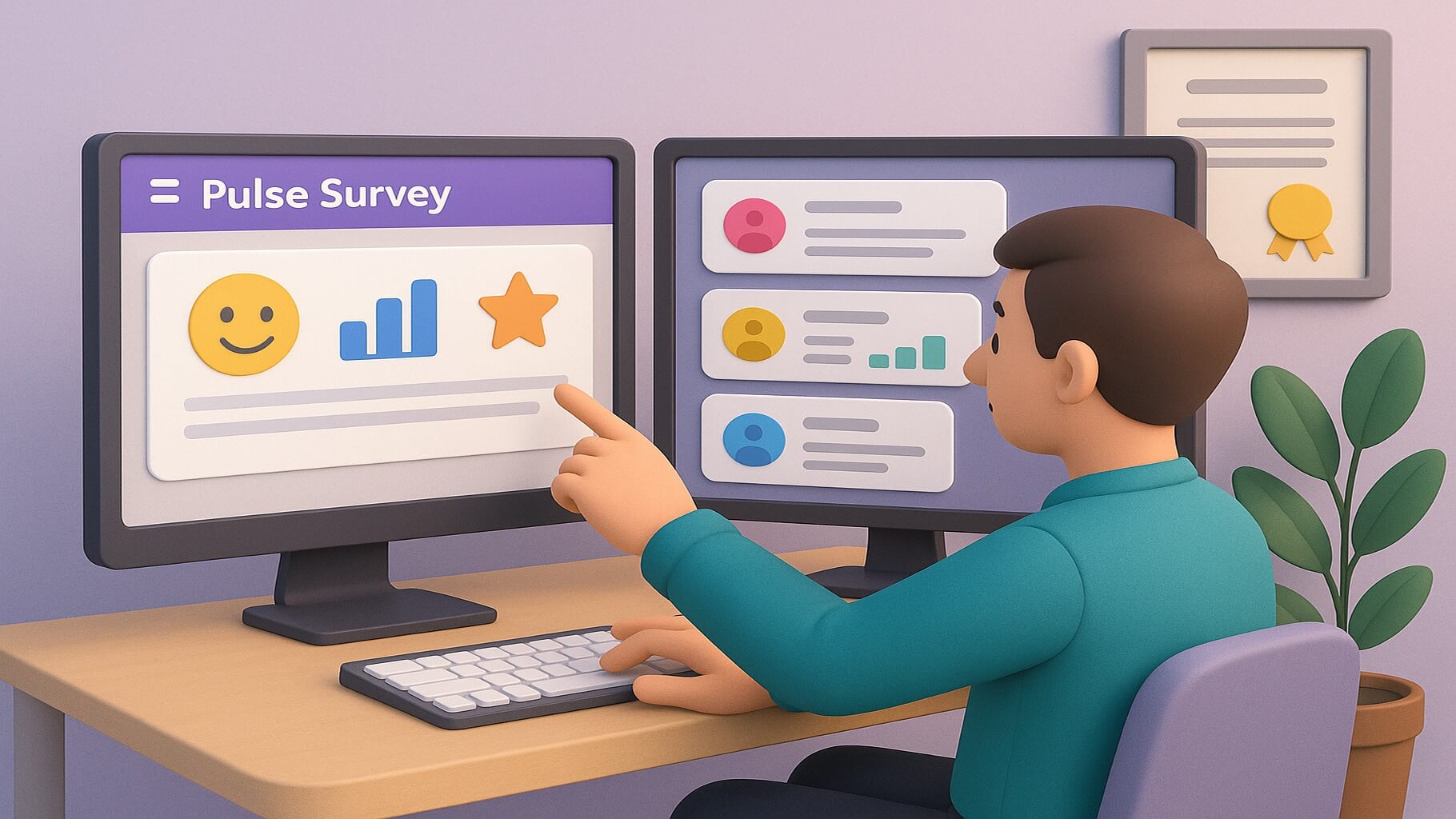
Survey tool platforms vary significantly in capabilities, pricing, and ideal use cases, making it essential to understand how each option serves different organizational needs. The following comparison examines fifteen leading platforms across three categories. Enterprise-level solutions offer advanced features and scalability for large organizations. Mid-market tools balance functionality with affordability for growing companies, while budget-friendly options provide essential capabilities at accessible price points and often integrate with employee rewards programs. Each platform brings unique strengths, whether through sophisticated analytics, seamless integrations, or innovative approaches to encouraging participation and acting on feedback through peer-to-peer recognition.
Organizations should evaluate these platforms beyond features and pricing, considering implementation timelines, customer support quality, user experience for both administrators and survey participants, and how well each solution aligns with existing technology ecosystems. The right choice depends on organizational size, budget, technical sophistication, and specific requirements around data security, reporting capabilities using feedback analysis tools, or integration needs. This comparison provides insights to help narrow options and identify platforms worthy of deeper evaluation through demos and trials.
5 enterprise-level pulse survey platforms
Enterprise organizations require survey platforms that scale to thousands or tens of thousands of employees while maintaining performance, security, and sophisticated analytics capabilities. These solutions typically include features like single sign-on integration, advanced role-based access controls, dedicated customer success managers, and comprehensive API access for custom integrations. Enterprise platforms must meet rigorous security and compliance standards, often holding certifications like SOC 2, ISO 27001, or industry-specific compliance attestations. The following platforms are leading enterprise options, each offering robust capabilities for large-scale employee feedback programs that use customized surveys.
1. Matter

About Matter: Matter is a Slack-first and Teams-first employee engagement platform designed to simplify and amplify both pulse surveys and peer-to-peer recognition. Its customizable kudos cards enable employees to celebrate achievements, express gratitude, and align recognition with company values, while powerful survey capabilities measure engagement through pre-built templates and custom questionnaires. Matter's Feedback Friday automation ensures regular recognition becomes part of workplace culture, creating natural connections between measuring engagement and acting on feedback. The intuitive design allows leaders to set up and integrate the platform in minutes, making it a seamless addition to any workplace.
Matter goes beyond simple surveys with its unique integration of feedback collection and recognition programs. The weekly coin reset encourages authentic, timely appreciation rather than hoarding recognition points. Beautiful kudos card images and customizable templates allow teams to celebrate milestones, achievements, and company values in ways that resonate with their culture. The platform automates birthday and work anniversary celebrations while simultaneously providing real-time analytics on engagement trends, demographic segmentation, and participation rates. With robust integration into Slack and Microsoft Teams, Matter transforms both surveys and recognition into natural, engaging parts of daily workflows.
Matter main features:
- Pre-built survey templates with customizable questions covering engagement, manager effectiveness, and workplace culture
- Real-time analytics with demographic segmentation and trend analysis showing engagement evolution over time
- Seamless integration of pulse surveys with recognition programs, enabling immediate action on feedback
- Automated Feedback Friday reminders, and weekly coin reset for authentic recognition
Matter pricing:
- Free Forever: $0/user/month
- Basic: $1/user/month, billed annually
- Pro: $3/user/month, billed annually
- Pro + Surveys: $5/user/month, billed annually
To learn more, view Matter's pricing page.
Matter G2 score: Matter has a G2 score of 4.7/5 based on user reviews.
What Matter customers are saying: “Since adding Matter, we’ve seen employee morale thrive! We’re so grateful for a tool that’s easy to integrate into our culture.” - Caterina Toscano, Senior Director, Media and Influencer Marketing at Moontide (Customer Story).
2. Qualtrics EmployeeXM
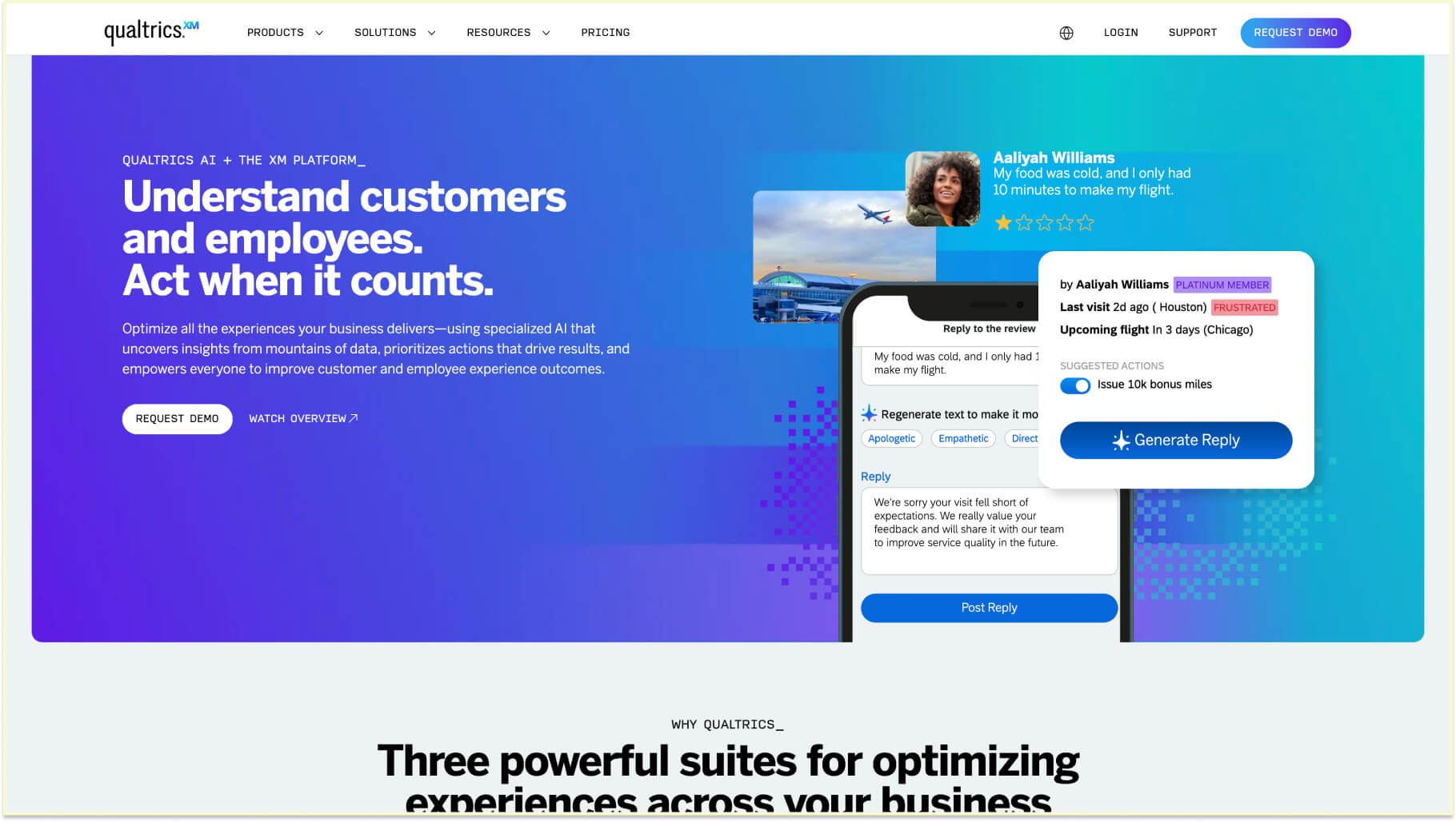
About Qualtrics EmployeeXM: Qualtrics EmployeeXM offers an enterprise-grade experience management platform that extends beyond employee engagement surveys to encompass customer satisfaction, brand perception, and product research. The platform's sophisticated research capabilities enable organizations to design complex surveys using advanced question logic, randomization, and experimental designs. Qualtrics provides powerful analytics, including statistical analysis, predictive modeling, and text analytics that process open-ended responses at scale, making it suitable for organizations requiring comprehensive research capabilities beyond pulse surveys.
Qualtrics EmployeeXM main features:
- Advanced survey design tools with complex logic, randomization, and experimental capabilities
- Sophisticated statistical analysis, predictive modeling, and natural language processing
- Industry-specific benchmarking databases and extensive consulting services
- Pre-built connectors and flexible APIs for enterprise system integration
Qualtrics EmployeeXM pricing: Pricing is not listed on the website. To learn more about pricing, you'll need to schedule a demo/sales call with Qualtrics EmployeeXM.
Qualtrics EmployeeXM G2 score: Qualtrics has a G2 score of 4.4/5 based on user reviews.
What Qualtrics EmployeeXM customers are saying on G2: “Preston Donohoo, with Red Pepper, has been fantastic to partner with. He is thorough, excellent at training and his customer support is outstanding. He made our implementation go very smoothly. We have found the Qualtrics engagement survey and 360s tools easy to use, with the ability to dive deep into our results. We would definitely recommend Qualtrics to others.” - Kelli G., Global Talent Manager (G2 Review for Qualtrics EmployeeXM).
3. Achievers
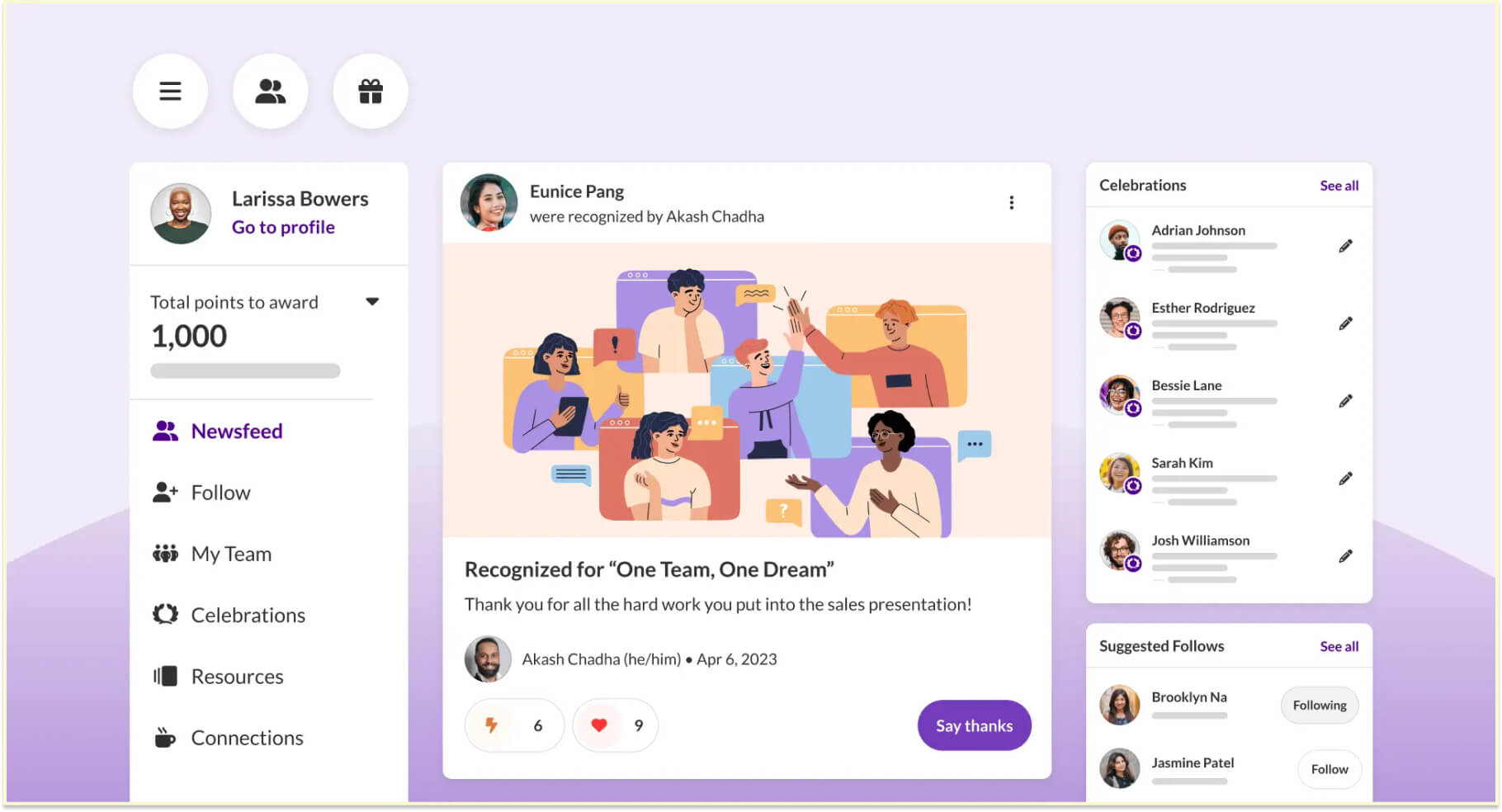
About Achievers: Achievers combines social recognition with survey capabilities, creating a unified platform that enables organizations to both measure and enhance employee engagement through integrated feedback and appreciation programs. The platform emphasizes frequent recognition aligned with company values, using gamification elements to encourage participation and foster positive work environments. Survey features include customizable questionnaires, automated scheduling, and analytics dashboards tracking engagement metrics over time.
Achievers main features:
- Social recognition platform with gamification elements integrated with pulse surveys
- Comprehensive benchmarking capabilities drawing from an extensive customer database
- Analytics correlating recognition frequency with engagement survey scores
- Integration with major HRIS systems, SSO providers, and communication tools
Achievers pricing: Pricing is not listed on the website. To learn more about pricing, you'll need to schedule a demo/sales call with Achievers.
Achievers G2 score: Achievers has a G2 score of 4.7/5 based on user reviews.
What Achievers customers are saying on G2: “It was hard to get our leaders to adapt to this. Would have liked to be able to award cash vs. prizes through this system. Employees did not find meaning in prizes as they took away from their take home pay.” - Verified User in Banking (Customer G2 Review).
4. WorkTango
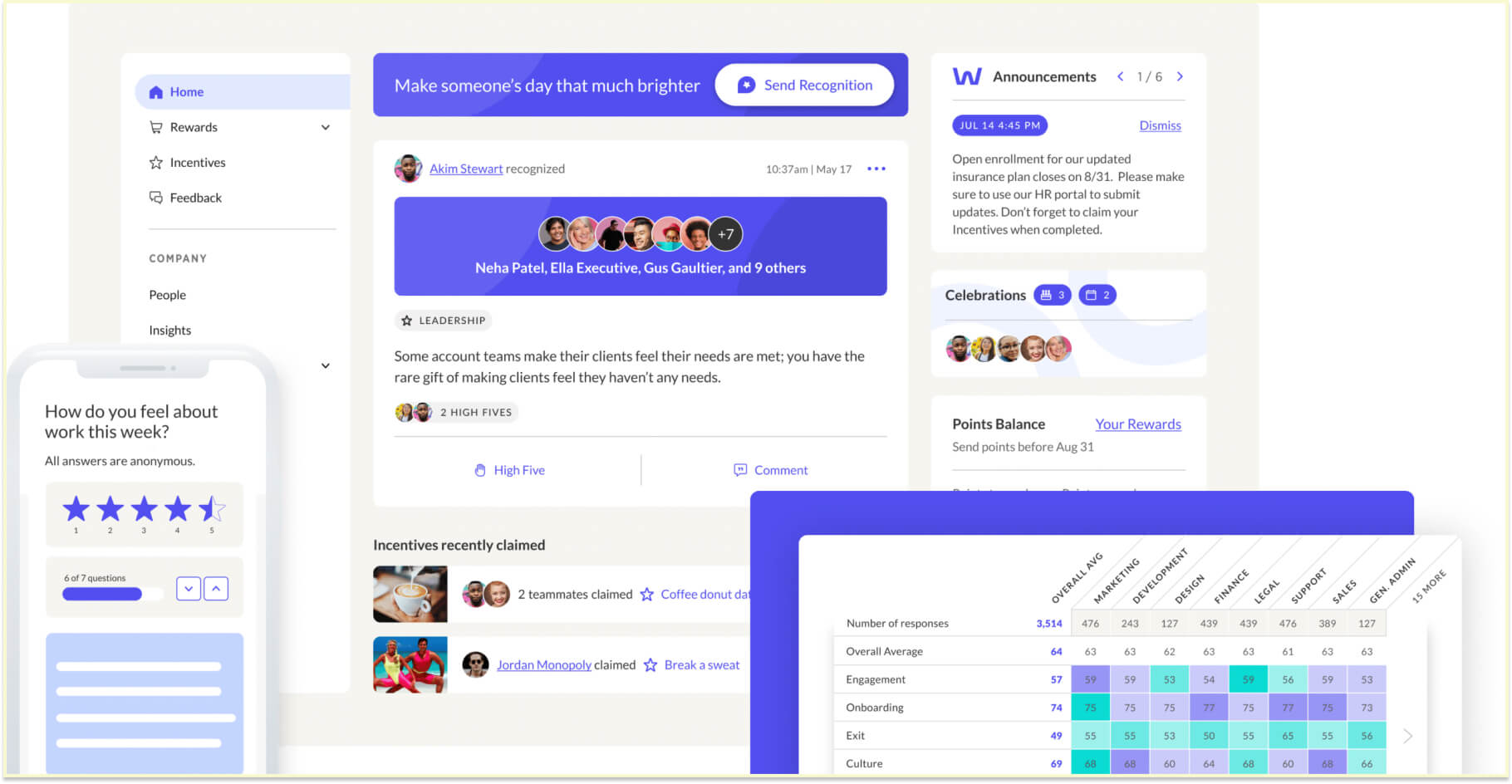
About WorkTango: WorkTango delivers a combined surveys and recognition platform that emphasizes continuous feedback through pulse checks, supplemented by longer employee engagement surveys when a comprehensive assessment is necessary. The platform's survey design tools provide flexibility to create brief questionnaires alongside more detailed assessments, with always-on suggestion boxes where employees can submit ideas and feedback at any time. WorkTango emphasizes action planning, providing frameworks that help leaders convert survey insights into concrete initiatives with assigned owners and progress tracking.
WorkTango main features:
- Flexible survey tools supporting both quick pulse checks and comprehensive assessments
- Always-on suggestion boxes for continuous employee feedback beyond scheduled surveys
- Real-time engagement tracking with dashboards for executives and frontline managers
- Integrated rewards and recognition functionality responding to survey insights
WorkTango pricing: Pricing is not listed on the website. To learn more about pricing, you'll need to schedule a demo/sales call with WorkTango.
WorkTango G2 score: WorkTango has a G2 score of 4.6/5 based on user reviews.
What WorkTango customers are saying on G2: “I tried to sell back points that were awarded to me so I could give more to others. The demo made it seem like this was an immediate point transfer. It was difficult and not immediate. It takes a lot of points to earn a meaningful award.” - Verified User in Biotechnology (Customer G2 Review).
5. Workhuman

About Workhuman: Workhuman primarily focuses on enterprise recognition and celebration programs, with survey integration that enables organizations to measure the impact of their appreciation initiatives on employee engagement and retention. The platform's social celebration tools create public recognition moments that reinforce company values and strengthen employee connections. Survey capabilities provide regular check-ins to measure how recognition programs influence key engagement drivers, such as belonging, purpose, and psychological safety.
Workhuman main features:
- Enterprise recognition platform with survey integration for measuring program impact
- Social celebration tools creating public recognition moments aligned with values
- Analytics connecting recognition activity data with survey findings and business outcomes
- Integration with major HR systems for recognition workflows triggered by events
Workhuman pricing: Pricing is not listed on the website. To learn more about pricing, you'll need to schedule a demo/sales call with Workhuman.
Workhuman G2 score: Workhuman has a G2 score of 4.7/5 based on user reviews.
What Workhuman customers are saying on G2: “One potential drawback of Workhuman Social Recognition is that, while it effectively promotes frequent recognition, it might sometimes lead to recognition fatigue if not managed well. Employees might feel overwhelmed or desensitized if recognition becomes too routine or if the recognition feels superficial rather than meaningful. Additionally, for larger organizations, the volume of recognition can sometimes make it challenging to highlight truly outstanding contributions, as significant achievements might get lost in the sheer number of recognitions. Finally, some users might find the platform's analytics overwhelming or difficult to navigate without proper training.” - Verified User in Pharmaceuticals (Customer G2 Review).
5 mid-market software solutions
Mid-market organizations require survey tool platforms providing robust functionality without enterprise-level complexity or pricing, balancing powerful features with intuitive interfaces that small HR teams can manage effectively. These platforms typically implement quickly, offer flexible pricing that accommodates growth, and provide essential capabilities such as survey automation, analytics, and integrations with common workplace tools. The following solutions serve companies with hundreds to a few thousand employees, offering scalability without requiring extensive IT resources or dedicated survey administrators.
1. Matter
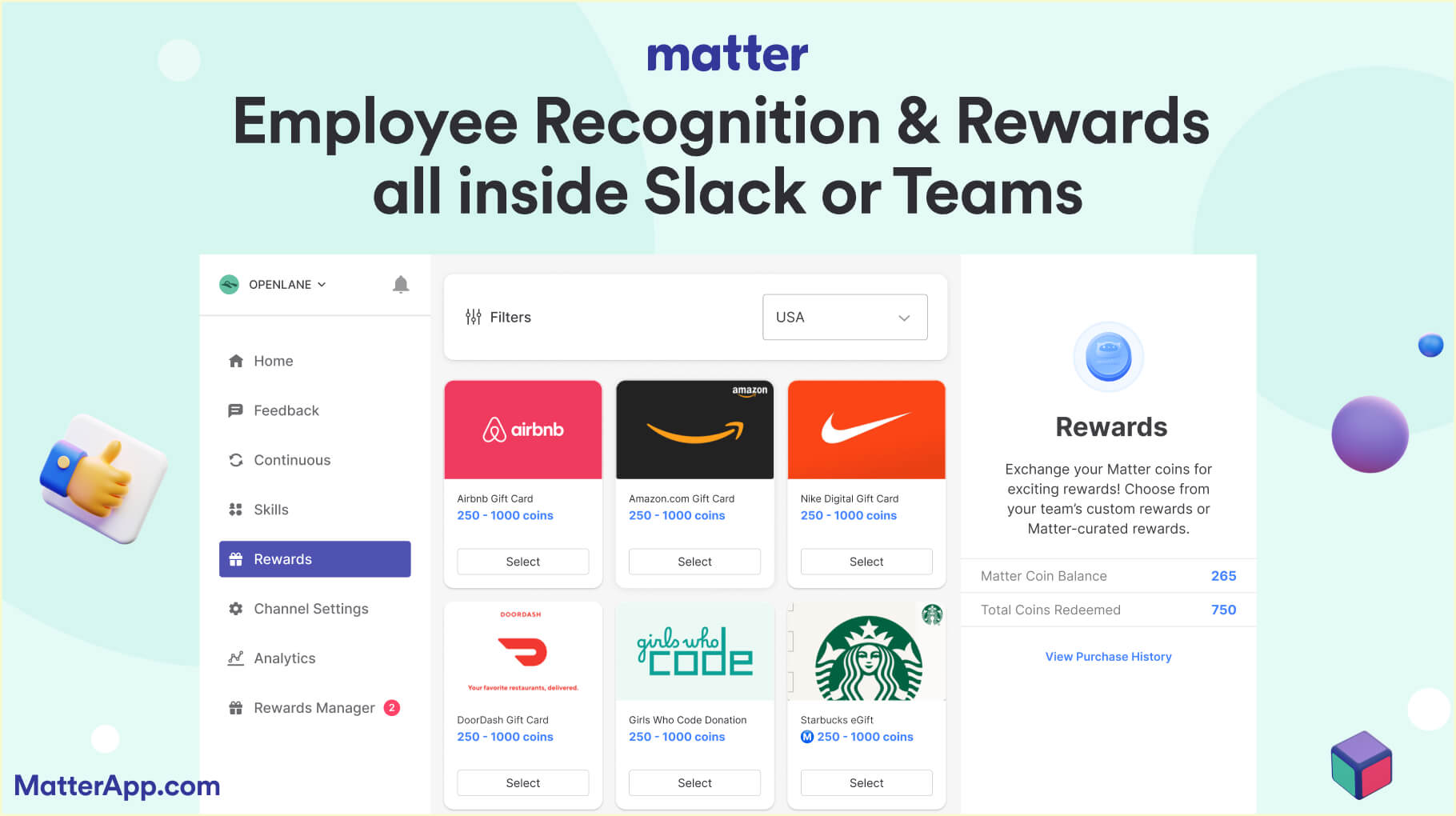
About Matter: Matter is a Slack-first and Teams-first platform that makes it ideal for growing companies seeking an integrated solution that combines employee engagement surveys with recognition and rewards. The platform's emphasis on automation reduces the burden on small HR teams, with features such as scheduled survey deployment, automated reminders, Feedback Friday prompts for consistent recognition, and self-service survey creation that require minimal ongoing management. Implementation takes minutes rather than weeks, as Matter's integration leverages existing authentication and organizational structures, eliminating complex setup processes.
The integrated approach provides significant value for mid-market organizations by connecting survey insights directly to recognition actions, enabling companies to celebrate teams showing high engagement or acknowledge managers who excel at supporting their people based on feedback data. Pre-built survey templates address common mid-market concerns such as communication effectiveness, manager support, and career development opportunities. At the same time, customizable kudos cards enable teams to celebrate achievements, milestones, and company values in personalized ways. The weekly coin reset ensures recognition remains authentic and timely, preventing employees from hoarding coins and encouraging regular appreciation.
Matter main features:
- Pre-built survey templates with automation features, reducing the HR team's workload
- Real-time analytics with demographic segmentation showing engagement trends
- Customizable kudos cards with beautiful images celebrating achievements and milestones
- Slack and Teams integration brings surveys directly into the daily workflow
Matter pricing:
- Free Forever: $0/user/month
- Basic: $1/user/month, billed annually
- Pro: $3/user/month, billed annually
- Pro + Surveys: $5/user/month, billed annually
To learn more, view Matter's pricing page.
Matter G2 score: Matter has a G2 score of 4.7/5 based on user reviews.
What Matter customers are saying: "Matter helps us encourage behaviors that align with our company values and can allow us to recognize and reward those who exemplify our values." - Autumn Amescua, Chief Culture & People Officer at SXSW (Customer Story).
2. Motivosity
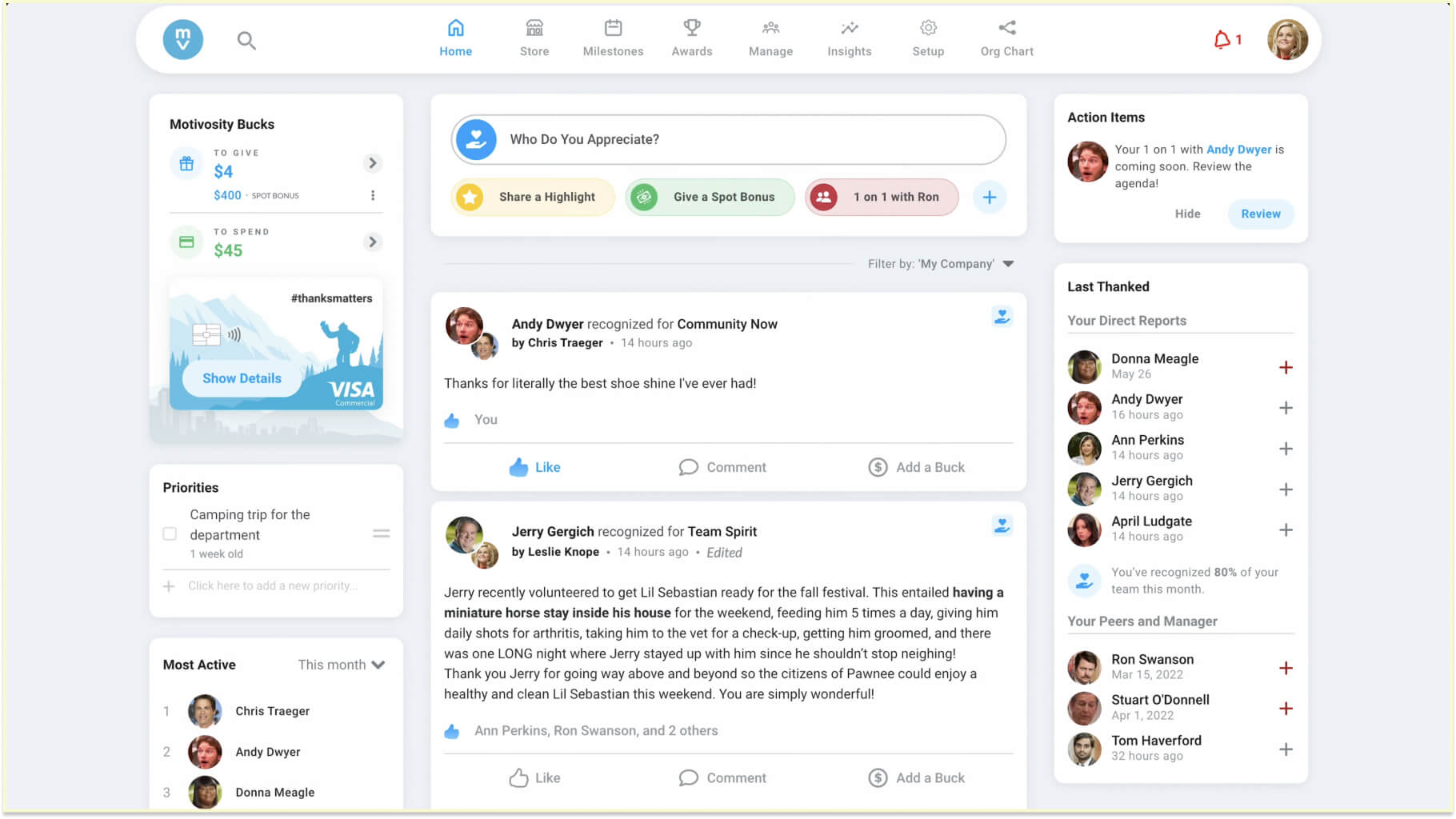
About Motivosity: Motivosity differentiates itself by combining personality insights with survey capabilities, helping organizations understand not only engagement levels but also the interpersonal dynamics that influence team effectiveness. The platform's personality assessment tools provide employees with insights about their working styles, communication preferences, and collaboration approaches. Employee connection tools help organizations build workplace culture by facilitating introductions between employees and creating opportunities for cross-functional collaboration.
Motivosity main features:
- Personality assessment tools integrated with pulse survey capabilities
- Employee connection features facilitate introductions and cross-functional collaboration
- Recognition and feedback, combined with a platform that has continuous feedback loops
- Analytics revealing which connection initiatives most significantly impact engagement
Motivosity pricing:
- Celebrating People
- Building Culture
- Scalling Globally
To learn more, view Motivosity’s pricing page.
Motivosity G2 score: Motivosity has a G2 score of 4.7/5 based on user reviews.
What Motivosity customers are saying on G2: “We are using a ton of the management tools now. They are riddled with bugs. Calendar invites work... sometimes. Sometimes meetings are canceled on one calendar but not the other. Sometimes it will only show on one calendar. This is a weekly occurrence. We sync names and accounts from our HR tool and last week the sync lost ALL OUR DATA. I hear it was our fault... cool story. If the HR person can't sync safely or roll back when it LOSES ALL OUR DATA, then what point is it to put data into it. The login page sucks, it logs me out ALL the freaking time. The eNPS calculates horribly and if you reorg all your historical data is toast or just not useful anymore. It doesn't really work. Refreshing screens reverts you to its favorite random page in the bread crumb of that area of the application. Management tool calculations with succession planning and such don't work (all filled out, the hex still isn't all filled out). I could go on and on.” - Verified User in Computer Software (Customer G2 Review).
3. Culture Amp
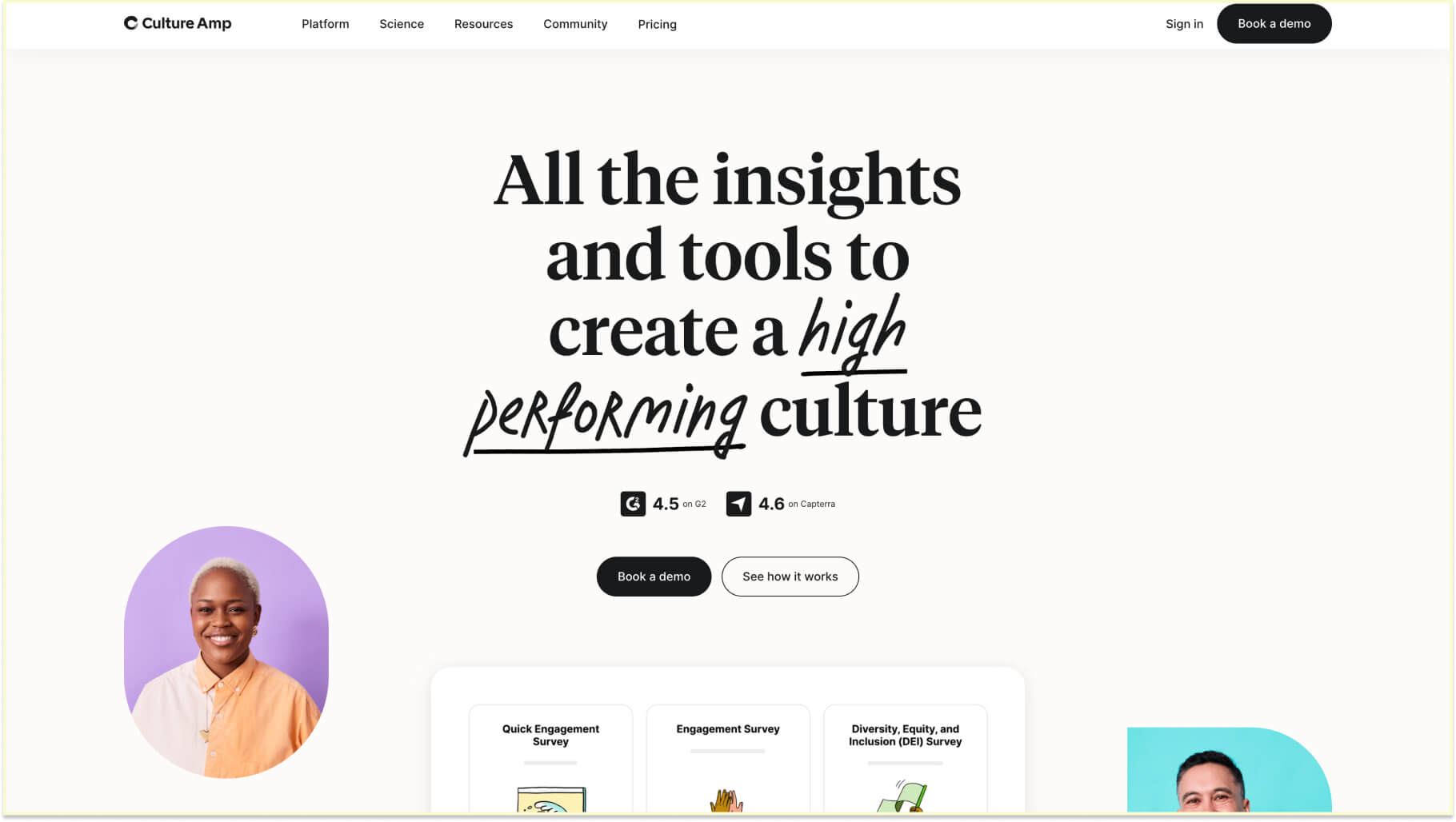
About Culture Amp: Culture Amp provides a comprehensive employee experience platform combining engagement surveys with performance management and employee development tools. The platform offers 40+ research-backed survey templates designed by organizational psychologists and data scientists, covering everything from pulse surveys to onboarding and exit surveys. Culture Amp's science-backed approach helps organizations measure engagement drivers, understand what motivates employees, and create effective strategies that retain and engage their workforce.
Culture Amp main features:
- 40+ customizable survey templates covering the entire employee lifecycle
- AI-powered insights and comment analysis for actionable recommendations
- Science-backed pulse surveys for quick assessment of organizational changes
- Comprehensive benchmarking against thousands of organizations
- Predictive analytics to forecast turnover and retention risks
Culture Amp pricing:
- Engage: contact the sales team for exclusive features
- Perform: contact the sales team for exclusive features
- Develop: contact the sales team for exclusive features
- People Analysis: contact the sales team for exclusive features
To learn more, view Culture Amp’s pricing page.
Culture Amp G2 score: Culture Amp has a G2 score of 4.5/5 based on user reviews.
What Culture Amp customers are saying on G2: “I’ve been using this software for a while now, and one of its standout features is how well-organized the system is. Everything is laid out in a clear and intuitive way, making it easy to navigate. Additionally, the punctuality of the communications is exceptional – notifications and updates are always timely, ensuring that I stay on top of tasks and deadlines. It’s a reliable tool for those who value efficiency and clear communication. Highly recommended!” - Anna L., SEO Consultant (G2 Review for Culture Amp).
4. Workleap/OfficeVibe
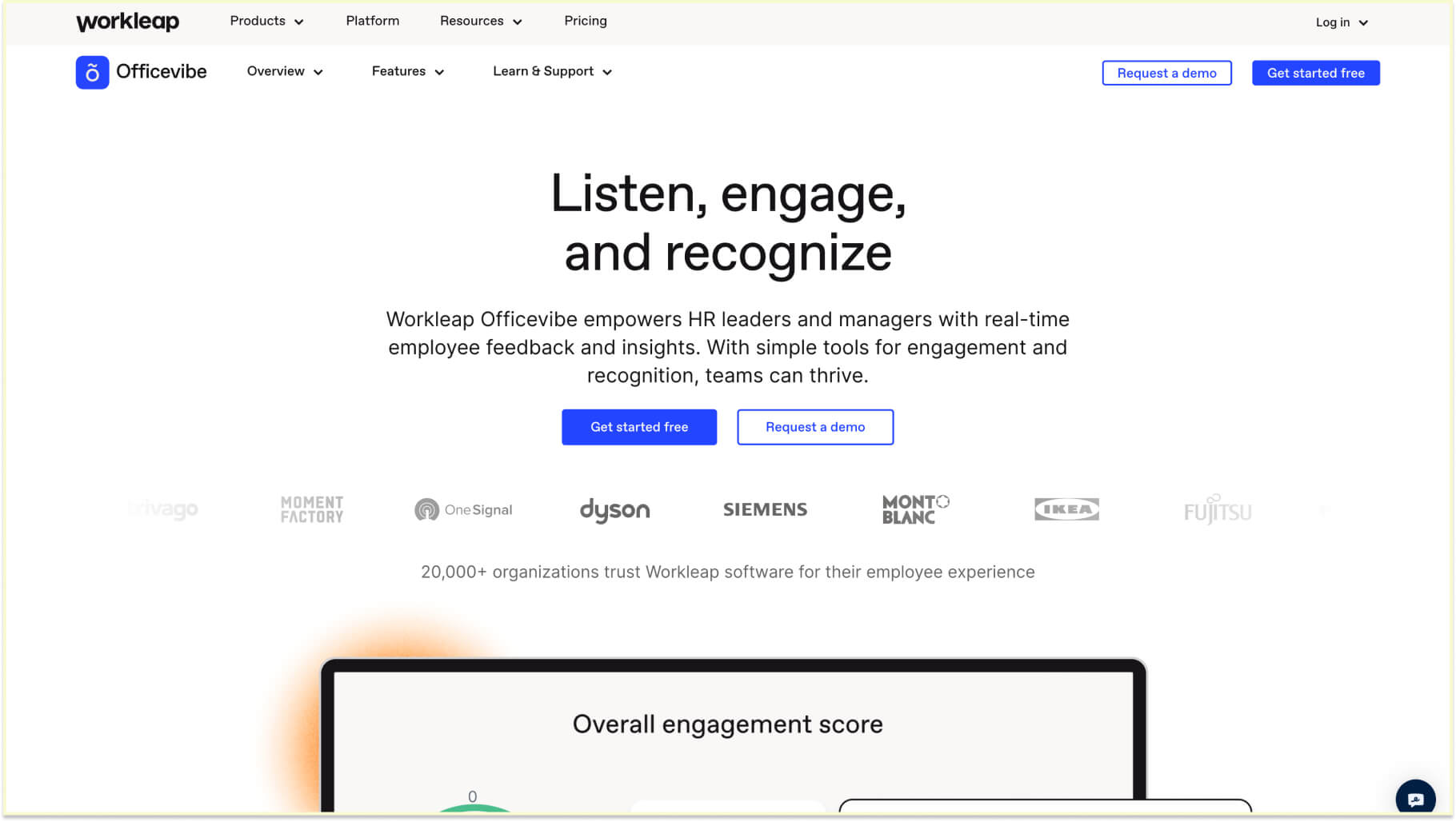
About Workleap/OfficeVibe: Workleap/OfficeVibe delivers a user-friendly pulse survey platform that makes employee engagement measurement simple and actionable. The platform features 122 science-backed questions covering 10 key engagement drivers, delivered through bite-sized weekly surveys that take just minutes to complete. Officevibe's focus on simplicity and manager empowerment makes it particularly appealing to mid-sized organizations seeking to implement continuous listening without overwhelming employees or HR teams.
Workleap/OfficeVibe main features:
- Weekly pulse surveys with five targeted questions for continuous insights
- Anonymous feedback tools encourage honest employee responses
- Good Vibes recognition system for peer-to-peer appreciation
- Real-time reporting with AI-powered insights and summaries
- Team health metrics with conversation starters for managers
Workleap/OfficeVibe pricing:
- Officevibe: $5/month,10 users minimum
- Performance: $5/month,10 users minimum
- Compensation: $5/month,100 users minimum
To learn more, view Workleap/OfficeVibe’s pricing page.
Workleap/OfficeVibe G2 score: Workleap/OfficeVibe has a G2 score of 4.3/5 based on user reviews.
What Workleap/OfficeVibe customers are saying on G2: “Officevibe provides a regular stream of honest feedback and discussion between managers and employees across our company. GoodVibes has become THE way our employees appreciate and recognize one another. Our management team disucsses the data and anonymous responses on a monthly basis.” - Anthony B., President (G2 Review for Workleap).
5. 15Five
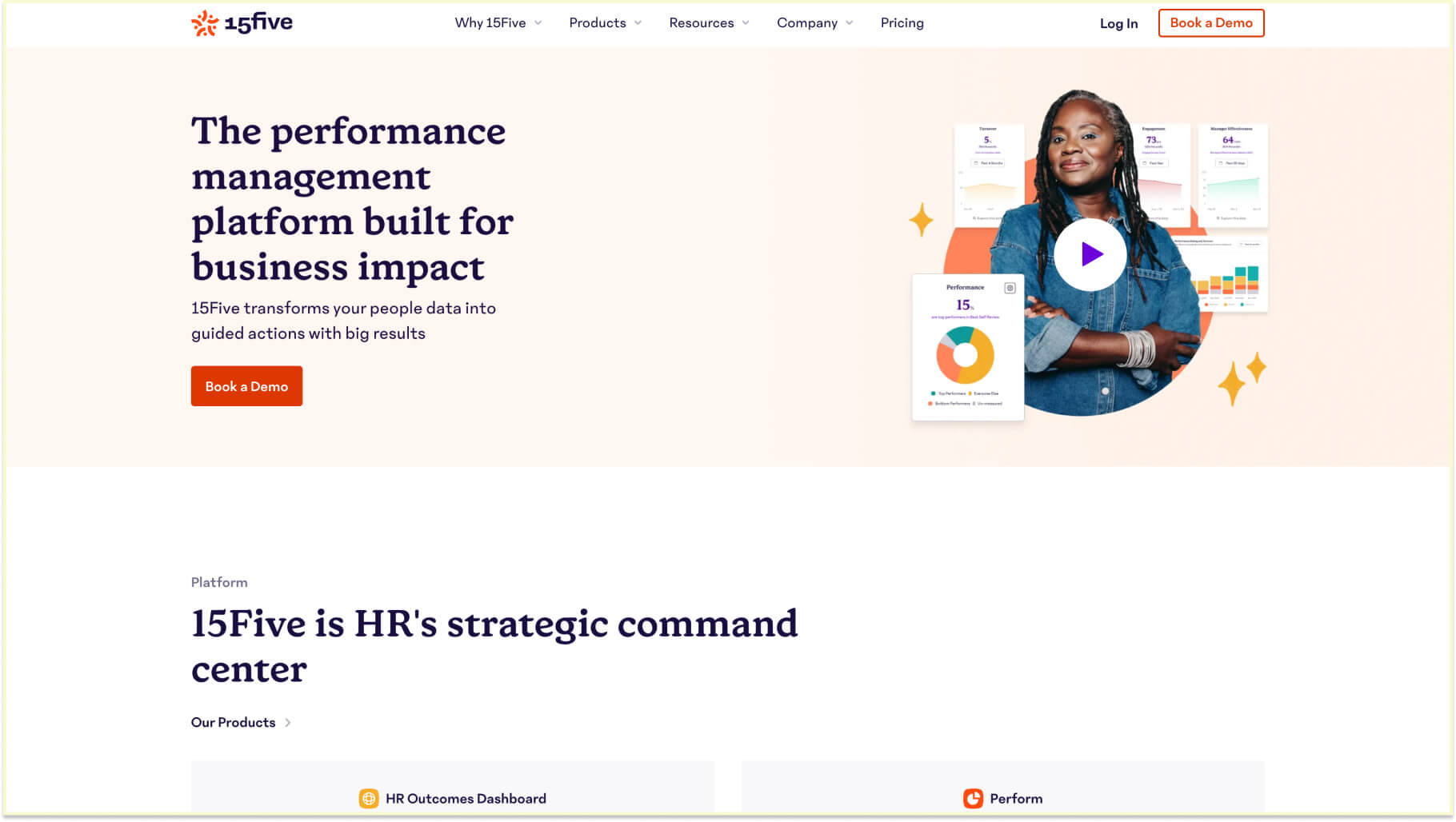
About 15Five: 15Five combines performance management with engagement surveys, creating a platform where continuous feedback and recognition integrate seamlessly with pulse survey capabilities. The platform emphasizes frequent manager-employee check-ins alongside engagement measurement, helping organizations understand both what employees accomplish and how they feel about their work. 15Five's research-backed surveys include engagement assessments, manager effectiveness tracking, and lifecycle surveys that capture feedback at critical moments throughout the employee journey.
15Five main features:
- Research-backed engagement surveys measuring 17 drivers of engagement
- AI-powered Predictive Impact Model identifying high-impact improvement areas
- Manager effectiveness surveys with competency-based assessments
- Lifecycle surveys for onboarding, role changes, and other critical moments
- Integration with performance reviews and goal tracking
15Five pricing:
- Engage: $4/user/month, billed annually
- Perform: $11/user/month, billed annually
- Total Platform: $16/user/month, billed annually
To learn more, view 15Five’s pricing page.
15Five G2 score: 15Five has a G2 score of 4.6/5 based on user reviews.
What 15Five customers are saying on G2: “We have built a company wide OKR tied to our company wide average Pulse score. It is an easy check of how the company is "feeling" from week to week, and over the last 2 years, I have found it to be accurate, important and super easy for the team to adopt and stay consistent in use.”- Dan A., Small-Business (G2 Review for 15Five).
5 budget-friendly employee pulse survey tools
Small organizations and startups require survey tools that provide essential capabilities at affordable price points, often seeking platforms with free plans or low per-user costs that scale affordably as companies grow. These budget-friendly options typically emphasize simplicity and ease of use over advanced features, recognizing that small HR teams need tools they can implement and manage without extensive training or technical support. The following platforms serve organizations with limited budgets seeking to establish continuous feedback practices without significant financial investment through employee incentive ideas.
1. Matter

About Matter: Matter offers a Free Forever plan providing small teams with comprehensive survey capabilities at no cost, including survey creation, automated deployment, and basic analytics sufficient for organizations beginning their engagement measurement journey. The platform includes beautiful kudos card images and customizable templates that allow even small teams to celebrate achievements and milestones in meaningful ways. As organizations grow or require advanced features such as unlimited surveys, sophisticated segmentation, Feedback Friday automation, or integration with Matter's full recognition platform, they can upgrade to paid tiers starting at just $1 per user per month.
The cost-effective pricing continues across higher tiers, as the Pro plan at $3 monthly and Pro + Surveys at $5 monthly provide full-featured capabilities, including unlimited employee engagement surveys, analytics, comprehensive recognition tools, and rewards functionality. The weekly coin reset encourages authentic recognition by preventing employees from hoarding coins, ensuring appreciation remains timely and genuine. Matter's all-inclusive approach ensures budget-conscious companies can conduct engagement surveys as frequently as needed without worrying about surprise bills or per-survey charges.
Matter main features:
- Free Forever plan with comprehensive survey capabilities for small teams
- Beautiful kudos card images and customizable templates for recognition
- Pre-built survey templates with automation and basic analytics
- Quick setup with minimal IT requirements and no implementation costs
Matter pricing:
- Free Forever: $0/user/month
- Basic: $1/user/month, billed annually
- Pro: $3/user/month, billed annually
- Pro + Surveys: $5/user/month, billed annually
To learn more, view Matter's pricing page.
Matter G2 score: Matter has a G2 score of 4.7/5 based on user reviews.
What Matter customers are saying: "Being a high-performance team, Matter helps us take a moment out of our busy day to share heartfelt gratitude with kudos." - Sam Udotong, CTO & Co-founder at Fireflies.ai (Customer Story).
2. Bucketlist Rewards

About Bucketlist Rewards: Bucketlist Rewards integrates recognition and rewards with survey functionality, offering a points-based engagement platform that accommodates small to mid-sized organizations through flexible pricing. The survey integration component allows companies to gather feedback while simultaneously running appreciation programs that boost morale and retention. The employee experience platform features include automated celebrations for birthdays and anniversaries, social recognition feeds, and analytics tracking both recognition activity and survey participation.
Bucketlist Rewards main features:
- Points-based engagement platform combining surveys and recognition
- Automated celebrations for birthdays, anniversaries, and milestones
- Social recognition feeds on analytics tracking participation
- Flexible pricing accommodating small to mid-sized organizations
Bucketlist Rewards pricing: Pricing is not listed on the website. To learn more about pricing, you'll need to schedule a demo/sales call with Bucketlist.
Bucketlist Rewards G2 score: Bucketlist Rewards has a G2 score of 4.8/5 based on user reviews.
What Bucketlist customers are saying on G2: “Registering for Bucketlist was not easy because of the delay in verifying emails. It might have been contributed to my work email, but I'm not sure. I also wish there other ways to earn points outside of merit.” - Verified User in Information Technology and Services.
3. Assembly

About Assembly: Assembly provides a budget-friendly engagement platform that combines recognition tools with survey capabilities, serving small- to mid-sized organizations through accessible pricing models that scale with company growth. Workflow automation features extend beyond employee surveys to include recognition triggers based on performance milestones, project completions, or tenure celebrations. Analytics track correlations between recognition frequency and survey outcomes, helping organizations understand which appreciation strategies most effectively improve engagement.
Assembly main features:
- Budget-friendly platform combining recognition and survey capabilities
- Workflow automation for recognition triggers and survey deployment
- Analytics tracking correlations between recognition and engagement
- Question libraries and customizable templates for easy survey creation
Assembly pricing:
- Celebrate: $2 per member/month, billed annually
- Empower: $4 per member/month, billed annually
- Enterprise: contact sales team for exclusive features
To learn more, view Assembly’s pricing page.
Assembly G2 score: Assembly has a G2 score of 4.8/5 based on user reviews.
What Assembly customers are saying on G2: “Honestly, there isn't anything I dislike. The only thing I've encountered is that there is a company that is not partnered with Assembly that several of us at my company would love to be able to redeem gift-cards for.” - Verified User in Consumer Services.
4. HeyTaco
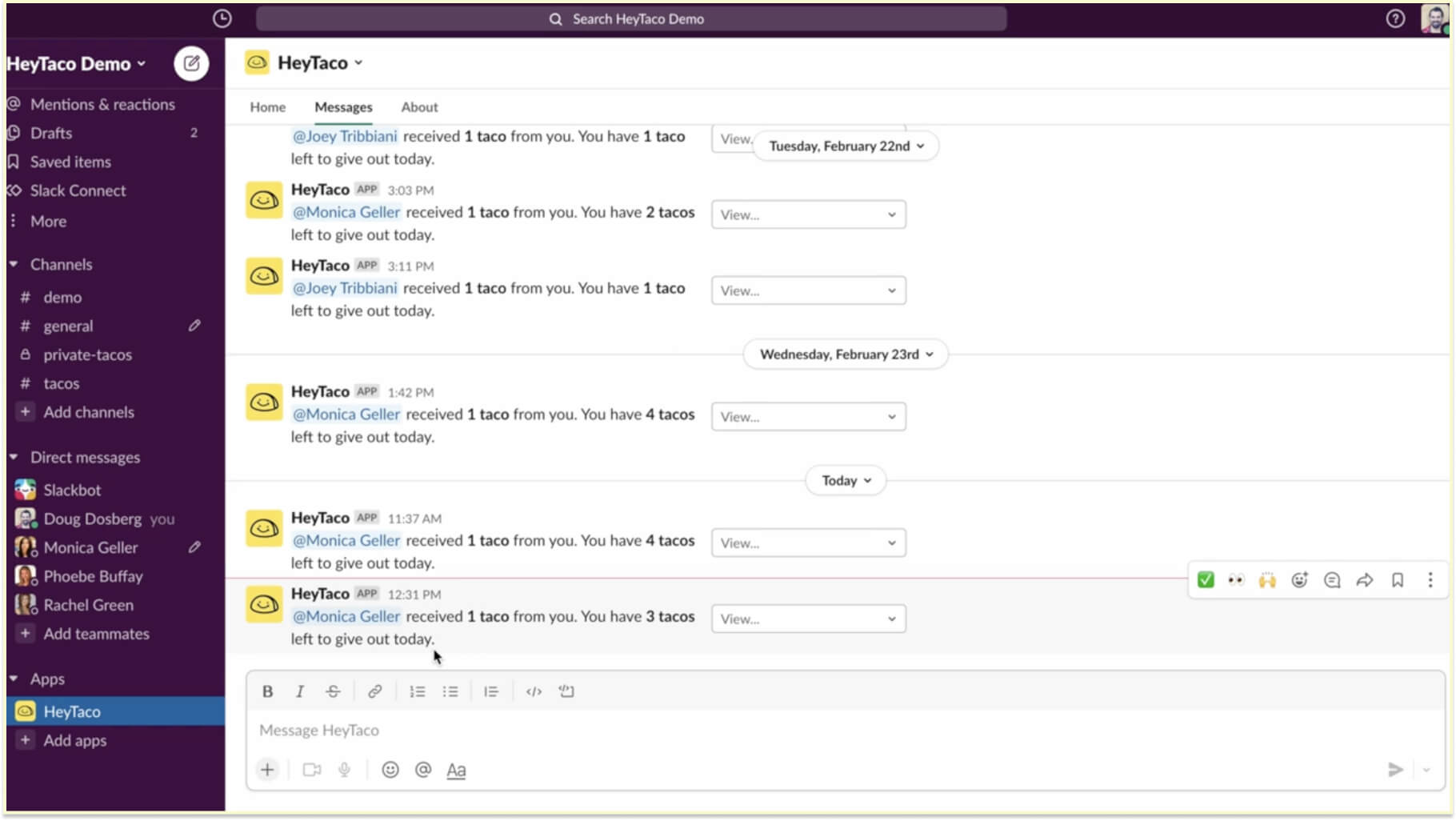
About HeyTaco: HeyTaco takes a unique approach by gamifying peer recognition through a taco-based system integrated with Slack and Teams, while offering simple feedback tools that complement the lighthearted appreciation program. The platform's Slack and Teams integration eliminates the need for separate logins, making recognition and employee surveys accessible directly within the tools employees already use daily. HeyTaco's affordable pricing makes it particularly attractive to startups and small companies seeking to establish recognition cultures without significant investment.
HeyTaco main features:
- Gamified taco-based recognition system integrated with Slack and Teams
- Simple pulse survey tools for measuring engagement and program impact
- No separate login required through Slack/Teams integration
- Affordable pricing suitable for startups and small companies
HeyTaco pricing:
- Classic: $3/user/month
- Deluxe: $5/user/month
- Supreme: contact sales team for exclusive features
To learn more, view HeyTaco’s pricing page.
HeyTaco G2 score: HeyTaco has a G2 score of 4.8/5 based on user reviews.
What HeyTaco customers are saying on G2: “Wonderfully easy to give thanks to team members. The UX on the redemption page is clunky.” - Verified User in Information Technology and Services.
5. Workday

About Workday: Workday offers a continuous listening platform powered by AI and machine learning to measure employee engagement through intelligent pulse surveys. The platform uses sophisticated algorithms to personalize survey questions, asking the right questions at the right time in over 60 languages. Workday’s advanced analytics include natural language processing to surface common themes from employee comments, attrition prediction modeling using over 20,000 data points, and personalized insights delivered to every manager for immediate action.
Workday main features:
- AI-powered continuous listening with personalized survey experiences
- eNPS (Employee Net Promoter Score) tracking and engagement measurement
- Natural language processing to extract meaning from feedback
- Attrition prediction model to forecast turnover risks
- True Benchmark technology adjusting for demographic variations
Workday pricing:
- Workday Adaptive Planning: Free for 30 days
- Workday Adaptive Planning: contact sales to request pricing
- Workday Adaptive Planning Close & Consolidation: contact sales to request pricing
To learn more, view Workday’s pricing page.
Workday G2 score: Workday has a G2 score of 4.0/5 based on user reviews.
What Workday customers are saying on G2: “I've found Workday to be a reliable application for handling holiday and HR activities at my company. Its user-friendly interface makes requesting leave and checking balances easy and efficient. Real-time updates ensure I always know my leave status without chasing paperwork. I appreciate the integration with other HR functions, which provides a central hub for important information. While there can be some lag during busy times, overall, Workday simplifies holiday management and enhances transparency for both employees and HR teams.” - Saurabh Y., Senior Engineer (G2 Review for WorkDay).
Employee pulse survey tools vs pulse survey platforms

Survey methodology remains consistent whether organizations use standalone employee survey tools or comprehensive platforms, but the surrounding capabilities differ significantly between these approaches. Understanding the distinction helps companies make informed decisions about which solution type best fits their needs, resources, and long-term employee experience strategies. Standalone tools focus specifically on survey creation, distribution, and basic analysis, offering streamlined functionality at accessible price points. Comprehensive platforms integrate employee surveys with additional capabilities such as recognition programs, performance management, and employee development, creating unified ecosystems for managing the entire employee experience.
Understanding tools versus comprehensive platforms
Standalone employee survey tools excel at one thing: providing focused functionality optimized for creating and deploying brief, frequent questionnaires. These survey tools typically offer intuitive interfaces, minimal setup requirements, and straightforward pricing based solely on usage. Organizations choosing standalone tools often already have robust HR technology stacks and seek specialized solutions filling specific gaps rather than replacing multiple existing systems. The focused nature means teams can implement quickly, train users easily, and avoid paying for unneeded features. However, standalone tools require manual processes or custom integrations to connect feedback data with other HR systems, potentially creating data silos.
Comprehensive platforms integrate survey functionality with complementary capabilities, creating integrated solutions that address multiple employee experience needs simultaneously.
These platforms enable organizations not only to measure engagement through employee engagement surveys but also to act on feedback through recognition programs, connect survey insights to performance conversations, and link engagement data to talent development initiatives. The integration eliminates data silos, provides holistic employee profiles that combine survey responses with recognition activity and performance metrics, and creates automated workflows that trigger actions based on feedback. Organizations benefit from managing fewer vendor relationships, reducing the total cost of ownership through consolidation, and providing employees with a unified experience rather than disconnected tools.
When to choose standalone employee pulse survey tools
Standalone employee survey tools make sense for organizations with established HR technology ecosystems where adding one more system doesn't create excessive complexity. Companies might choose specialized survey tools when they already have strong employee recognition platforms, comprehensive HRIS systems, and effective performance management solutions that simply lack survey capabilities. The focused functionality often delivers best-in-class survey features. These platforms excel at sophisticated question logic, extensive question libraries, and statistical feedback analysis. Many offer specialized capabilities, such as multilingual support or offline survey collection, that broader platforms can't match.
Budget considerations sometimes favor standalone survey tools, particularly when organizations need only survey capabilities and would waste money on integrated features they won't use. Startups or small companies might implement simple survey platforms to establish feedback practices, planning to adopt more comprehensive solutions later as their needs evolve. Organizations operating in industries with strict data isolation requirements might prefer standalone tools that can be deployed in segregated environments separate from other HR systems. Technical teams with strong integration capabilities may choose best-of-breed standalone survey tools, building custom connections between systems rather than accepting the limitations of pre-built platform integrations.
Benefits of integrated platform approaches
Integrated platforms create natural connections between measuring employee engagement through surveys and improving it through recognition, learning opportunities, or performance conversations. When surveys reveal declining satisfaction in a particular department, leaders using integrated platforms can immediately launch recognition campaigns celebrating that team's accomplishments, demonstrating responsiveness to feedback. The connection between survey insights and action programs closes feedback loops more quickly, showing employees that their input matters and drives tangible change. Integrated analytics reveal relationships between different aspects of employee experience, such as how recognition frequency correlates with engagement scores or how participation in learning programs influences career satisfaction.
Employee experience improves through unified platforms as people interact with consistent interfaces, maintain single logins across HR tools, and experience coherent programs rather than disconnected initiatives. HR teams managing integrated platforms benefit from consolidated reporting that provides a complete picture of the employee experience rather than fragmented feedback data across multiple systems. The operational efficiency of managing a single vendor relationship, a single implementation, and a single renewal cycle reduces administrative burden and typically lowers the total cost of ownership compared to licensing multiple specialized tools. Organizations building long-term employee experience strategies often find that integrated platforms provide a better foundation for future expansion as needs evolve.
Key features of the employee engagement pulse employee survey tool
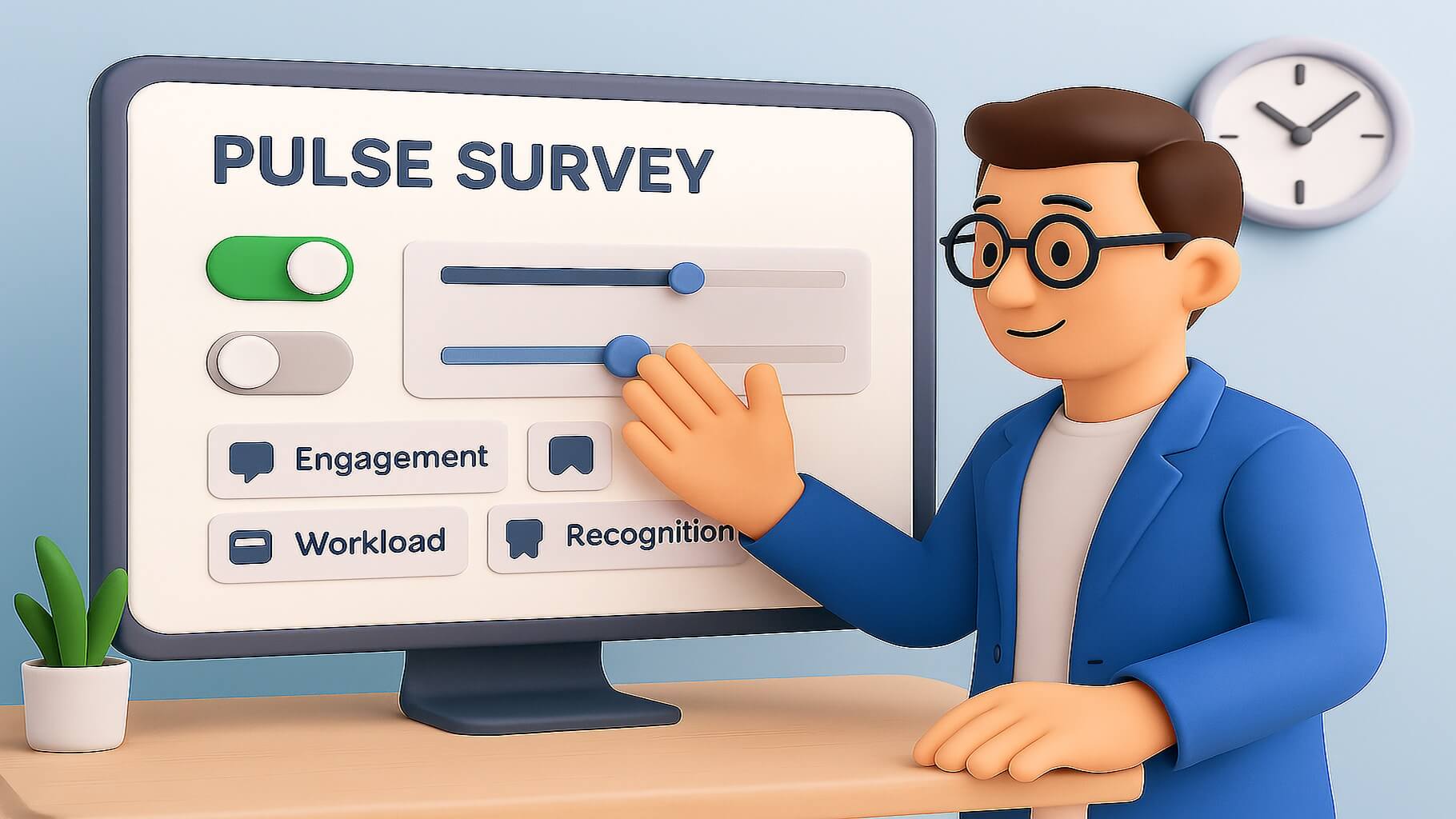
Effective survey platforms do more than just create questionnaires. The best employee engagement survey tools include sophisticated automation, analytics, and integration capabilities. These features maximize participation, generate actionable insights, and streamline the entire feedback process from deployment to action planning.
Organizations evaluating employee survey tools should prioritize features directly supporting their engagement measurement objectives while ensuring platforms provide flexibility to adapt as strategies evolve. The most impactful features reduce administrative burden, encourage honest responses, and transform raw feedback data into intelligence that guides decision-making and drives measurable improvements in employee satisfaction and retention.
Understanding which features truly matter helps organizations avoid paying for unnecessary complexity while ensuring they don't select underpowered tools that limit program effectiveness.
Critical capabilities typically fall into three categories: automation features that eliminate manual work and ensure consistency, analytics capabilities that transform survey responses into meaningful insights, and integration functionality that connects surveys with broader HR technology ecosystems. Companies should assess how each feature supports specific goals, whether boosting participation rates, accelerating time-to-insight, or enabling data-driven action planning through rewards programs.
Automation and scheduling capabilities
Survey automation eliminates repetitive tasks that otherwise consume significant HR team time, starting with the ability to schedule employee engagement surveys at regular intervals without manual intervention. Organizations configure survey frequencies once, defining whether pulse checks deploy weekly, biweekly, or monthly, and the system handles all subsequent deployments automatically. Smart scheduling features avoid sending surveys during holidays, peak business periods, or times when specific employee groups are unavailable, increasing participation by respecting employees' time and attention. Automated reminder systems reach non-respondents at strategic intervals, using escalation logic that intensifies outreach without appearing harassing or creating survey fatigue among employees who have already completed surveys.
Randomization and rotation capabilities ensure employees don't experience identical surveys repeatedly, maintaining engagement by varying question order or alternating between topic areas. Conditional logic automates survey personalization, showing different questions based on employee demographics, previous surveys, or their position within the organization, making surveys more relevant while reducing overall completion time. Automated reporting schedules generate and distribute summary reports to designated leaders without manual intervention, ensuring stakeholders receive timely updates on engagement trends. Workflow automation extends beyond surveys to include tasks like creating action items in project management systems based on concerning results, scheduling follow-up meetings after survey cycles are complete, or triggering recognition programs when teams demonstrate high engagement.
Analytics, reporting, and benchmarking tools
Analytics transform raw feedback data into actionable intelligence through statistical techniques, revealing patterns that simple averages miss. Sentiment analysis processes open-ended responses at scale, categorizing themes, detecting emotional tone, and quantifying the prevalence of different topics, without requiring manual review of every comment through feedback analysis. Correlation analysis identifies which specific factors most strongly predict overall engagement, helping organizations prioritize interventions where they'll achieve maximum impact. Trend analysis tracks how metrics evolve, distinguishing meaningful changes from normal variation and highlighting inflection points requiring investigation. Predictive analytics forecast future engagement trajectories based on historical patterns, enabling proactive management before declining trends become crises.
Demographic segmentation reveals how different employee populations experience the workplace, comparing engagement levels across departments, locations, tenure cohorts, and job functions to identify groups that need targeted support. Heat mapping and visualization tools make complex response data accessible through intuitive graphics, enabling leaders at all levels to quickly understand survey outcomes without statistical expertise. Benchmarking capabilities compare your organization's scores against industry standards, competitors, or your own historical performance using the employee net promoter score methodology, providing context to assess whether engagement levels meet expectations. Customizable dashboards enable different stakeholders to view relevant metrics: executives see high-level trends, while frontline managers access detailed team-specific data. Automated insights generation uses machine learning to surface noteworthy findings, ensuring busy leaders don't miss important patterns buried in detailed reports.
Integration with workplace communication platforms
Native integration with Slack and Teams brings employee surveys directly into communication tools employees already use daily, eliminating separate logins, unfamiliar interfaces, and the friction that reduces participation. Employees receive survey notifications through channels they monitor constantly, dramatically increasing visibility compared to email invitations that might get overlooked in crowded inboxes. Single sign-on through these platforms leverages existing authentication, simplifying access while maintaining security and providing seamless experiences. In-app survey completion enables employees to respond without leaving their workflow, reducing the effort required to participate and boosting completion rates significantly.
Integration with HRIS systems enables automated synchronization of employee data, including organizational structure, demographics, and employment status, ensuring survey platforms maintain current information without manual updates. This synchronization supports accurate segmentation, personalization, and targeting while reducing administrative burden. Calendar integrations help schedule survey-related meetings, block time for result reviews, or avoid deploying employee engagement surveys during busy periods identified through shared calendars. Project management tool connections enable the automatic creation of action items based on survey outcomes, the assignment of owners, and the tracking of progress toward addressing concerns identified through feedback. Performance reviews integrate link engagement data with performance conversations, helping managers understand how their leadership influences satisfaction. Recognition platform connections enable celebrating high-performing teams identified through survey results or acknowledging managers who excel at supporting their people.
Best practices for implementing an employee pulse survey tool
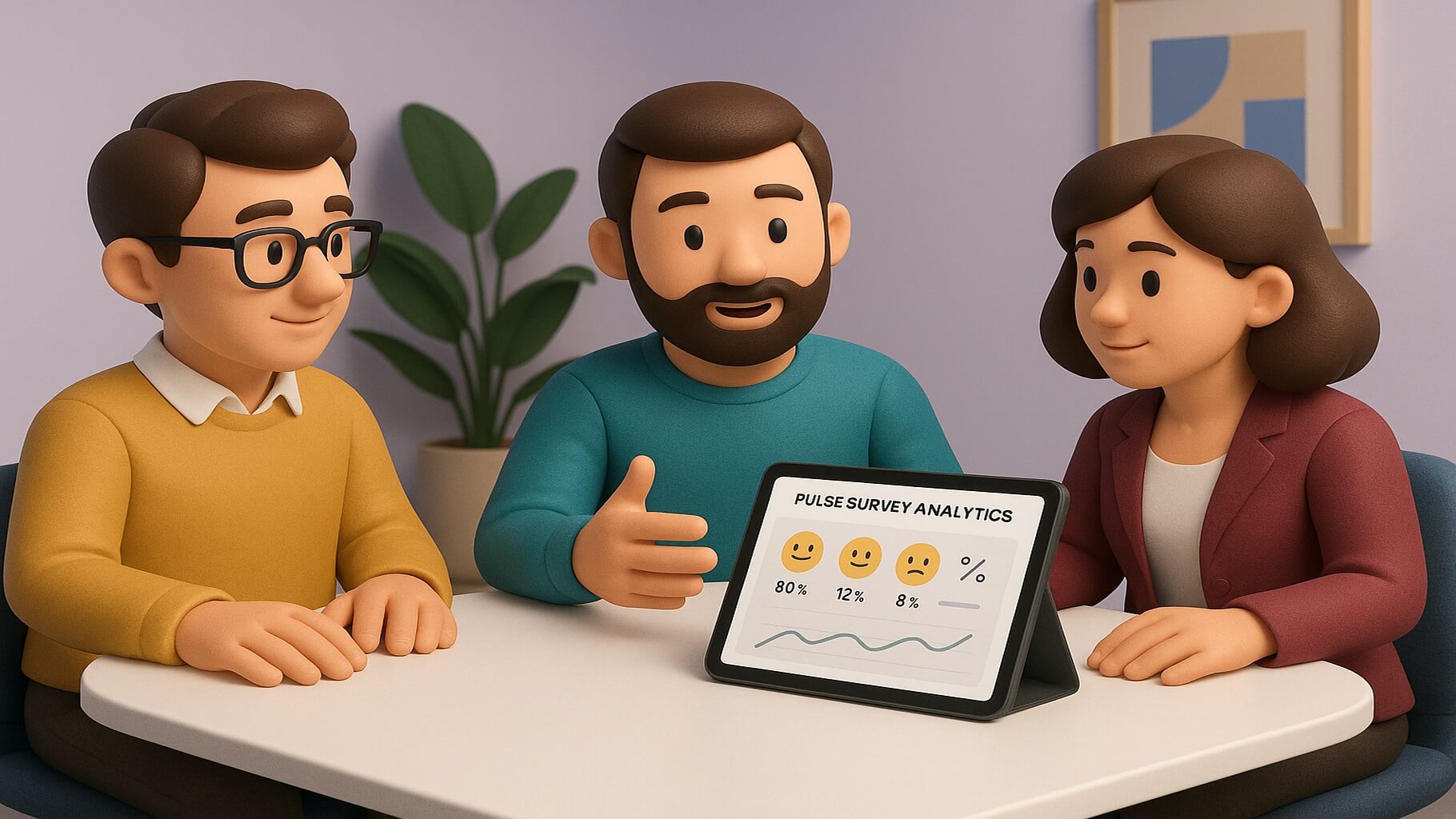
Successful survey tool implementation requires more than selecting appropriate software and configuring technical settings. Organizations must carefully plan their feedback strategy, clearly communicate the purpose to employees, and establish processes that ensure survey insights translate into meaningful action through pulse survey tools. Best practices span the entire implementation lifecycle from initial selection through ongoing program management, addressing both technical and cultural considerations. Companies that follow structured approaches typically achieve higher participation rates, generate better quality data, and realize greater returns on their employee survey tool investments through improvements in employee satisfaction and retention.
Common implementation pitfalls include rushing deployment without adequate planning, failing to communicate the purpose and intended use of feedback, neglecting to act on survey results, or overwhelming employees with excessive survey frequency. Organizations succeeding with employee surveys invest time upfront in defining clear objectives, gaining leadership commitment to acting on the findings, and designing communication strategies that build trust in the feedback-collection process. They establish regular cadences for reviewing results, assigning action owners, and communicating changes back to employees, driven by their feedback, creating virtuous cycles where participation increases as people see their input driving improvements through recognition and rewards.
Selecting software that matches organizational goals
Organizations should begin by clearly articulating what they hope to achieve through employee engagement surveys, whether improving retention, increasing employee satisfaction, enhancing manager effectiveness, or something else entirely. These objectives guide software selection by highlighting which features matter most and which represent unnecessary complexity. Companies focused on retention might prioritize predictive analytics to identify flight risk, while organizations emphasizing manager development need robust segmentation that shows team-level differences. Startups seeking to establish basic feedback practices need simple, affordable survey tools they can implement quickly, while enterprises require sophisticated platforms supporting complex organizational structures.
The selection process should involve stakeholders beyond HR, including IT teams who'll handle implementation and integration, leaders who'll act on survey results, and employee representatives who can assess whether platforms create positive experiences encouraging participation. Organizations should evaluate multiple options through demos and trials, testing actual use cases rather than relying solely on feature lists or vendor claims about best employee survey tool capabilities. Reference calls with current customers provide insights about implementation challenges, ongoing support quality, and how platforms perform at scale. Companies should assess not only current needs but also anticipated future requirements, ensuring the selected platforms can grow with the organization without requiring replacement in 2 or 3 years.
Training teams on platform utilization
Effective training extends beyond showing administrators how to create surveys to include education on survey design best practices, analytics interpretation, and strategies for acting on feedback. HR teams managing survey programs need deep platform knowledge, including automation capabilities, reporting options, and troubleshooting common issues with the employee survey tool. However, they also benefit from training in survey methodology, covering topics such as question design, avoiding bias, determining appropriate frequency, and ensuring anonymity when needed. This comprehensive training helps organizations avoid common mistakes that undermine data quality or employee trust in the process.
Manager training is another critical component, as frontline leaders often receive team-level survey results that require interpretation and action. Managers need guidance on how to discuss results with their teams, interpret scores relative to organizational benchmarks, identify concerning trends, and develop action plans addressing issues raised through feedback. Training should emphasize that low scores represent opportunities for improvement rather than personal failures, encouraging constructive responses. Organizations should also provide resources helping managers communicate about employee surveys with their teams, including talking points explaining the purpose, sample messages encouraging participation, and frameworks for sharing results transparently.
Connecting survey insights to recognition programs
Organizations maximizing survey impact establish clear connections between the feedback they gather and actions they take in response, with recognition programs providing particularly effective mechanisms for demonstrating responsiveness through employee recognition software. When employee engagement surveys identify teams or managers with high engagement scores, leaders can publicly recognize these successes and celebrate the behaviors and practices that create positive experiences. This recognition reinforces desired leadership approaches while showing all employees that response data influences organizational decisions. Similarly, when engagement improves in areas that previously scored low, organizations should acknowledge the leaders and team members who contributed to positive changes through reward initiatives.
Integrated platforms enabling direct connections between survey results and recognition actions simplify this process by automating workflows that might otherwise require manual coordination. For example, systems might automatically prompt leaders to recognize managers whose teams show high engagement or suggest acknowledgment when participation rates exceed targets.
The visibility created through recognition programs helps communicate that surveys matter, encouraging continued participation by demonstrating tangible outcomes. Organizations should build recognition into their survey action planning, identifying opportunities to celebrate progress alongside addressing concerns, creating balanced approaches that build momentum rather than focusing solely on problems.
Common challenges with the employee pulse survey tool

Organizations implementing survey programs often encounter challenges that can undermine program effectiveness if not addressed proactively. Understanding common obstacles enables companies to plan for these issues, implementing preventive measures during initial setup rather than troubleshooting problems after they've damaged participation rates or data quality. Challenges typically fall into three categories: cultural issues around participation and trust, technical concerns about security and integration, and practical difficulties managing data across systems through ENPS measurement. Companies succeeding with employee surveys anticipate these challenges and build mitigation strategies into their implementation plans.
The most persistent challenges involve getting employees to participate consistently and provide honest feedback, particularly when trust in leadership remains low or when employees question whether their input influences decisions. Technical challenges in integrating survey platforms with existing HR systems can delay implementation or create data quality issues that require ongoing maintenance. Organizations must balance the frequency needed for effective measurement against the risk of survey fatigue, finding cadences that maintain participation without overwhelming employees through team rewards and incentives. Addressing these challenges requires both technical solutions, such as improved integration approaches, and cultural interventions to build trust in the feedback collection process.
Overcoming low adoption and participation rates
Low participation rates undermine survey effectiveness by creating non-representative samples that reflect only the perspectives of engaged employees rather than capturing the full workforce experience. Organizations combat low participation through multiple strategies, starting with clear communication about the survey's purpose, how results will be used, and how feedback has influenced previous decisions. Transparency builds trust, particularly when leaders acknowledge concerns raised in earlier employee surveys and share specific actions taken in response. Companies should emphasize confidentiality or anonymity provisions protecting employees who share candid feedback, addressing fears that criticism might trigger retaliation.
Making employee engagement surveys convenient increases participation by using mobile-friendly designs and integrating with communication platforms like Slack and Teams, meeting employees where they already work. Brief survey lengths that respect people's time encourage completion, as employees resist lengthy questionnaires that disrupt their workflow.
Organizations should test different deployment times to identify when employees are most receptive to completing surveys, rather than sending them during busy periods or when specific groups are unavailable. Incentives can significantly boost participation rates. Consider recognizing teams with high completion rates, running prize drawings among respondents, or simply giving people time during work hours to complete surveys. Making participation easy and visible shows you value employees' time and input.
Managing data security and privacy concerns
Response data contains sensitive information about workplace experiences, individual sentiments, and potentially identifying details requiring robust security protections. Organizations must ensure survey platforms meet industry security standards, including data encryption both in transit and at rest, secure authentication, and regular security audits. Privacy compliance matters, especially with regulations like GDPR and CCPA. Your platform should protect personal data, collect proper consent upfront, and give employees the ability to access or delete their survey responses. Companies in regulated fields face additional compliance hurdles. Healthcare and finance organizations, for example, need survey platforms with enhanced security and data protection features.
Confidentiality provisions protecting individual survey responses from identification remain critical for encouraging honest feedback, particularly on sensitive topics such as leadership effectiveness or workplace culture. Platforms must prevent reverse-engineering of individual responses, even when small demographic groups segment survey results. Organizations should establish clear policies on who can access raw survey data versus aggregated reports, and implement role-based access controls to limit visibility. Regular audits ensuring these controls function as intended help maintain trust. Companies should communicate their security measures and privacy protections to employees, demonstrating commitment to protecting sensitive feedback and addressing concerns that might prevent participation.
Integrating with existing HR systems
Technical integration between survey platforms and existing HR technology stacks creates significant value by automating data synchronization, enabling unified reporting, and triggering workflows based on survey results. However, integration projects often prove more complex and time-consuming than expected, particularly when connecting employee survey tools with legacy HRIS systems lacking modern APIs. Organizations should assess integration requirements early in the selection process, verifying that candidate platforms offer appropriate connectors or APIs to support the required data flows. Companies may need to involve IT resources or engage integration consultants to build connections that survey vendors don't provide out of the box.
Data synchronization challenges arise when different systems maintain conflicting information about organizational structure, employee demographics, or employment status. Organizations must establish authoritative data sources and implement processes ensuring information remains consistent across platforms. Without proper integration, HR teams face significant manual work in exporting data from survey platforms and importing it into other systems for feedback analysis or action planning. The administrative burden can become overwhelming, undermining the efficiency benefits that drove survey software adoption. Companies should budget adequate time and resources for integration work, treating it as a critical implementation component rather than an afterthought, and maintain ongoing processes to ensure connections continue to function as systems evolve.
Choosing the right employee pulse survey tool
Choosing the right employee pulse survey tool requires careful evaluation of your organization's specific needs and constraints. The platform you select affects more than just data collection. It influences adoption rates, administrative workload, and the quality of insights you can generate. Different approaches like pulse survey vs engagement survey methodologies serve different purposes, so understanding your goals matters. Involve multiple stakeholders in the decision, evaluate thoroughly beyond initial feature lists, and take time to find a platform that actually fits how your team works. Rushing the decision often leads to expensive mistakes like choosing tools that don't integrate with existing systems or prove too complicated for daily use.
Match features to your actual needs
Feature assessment should start with clear prioritization of must-have capabilities versus nice-to-have enhancements, ensuring organizations don't pay for unnecessary complexity while avoiding underpowered platforms that limit program effectiveness. Must-have features include a few core capabilities. You need survey creation tools that handle your question types and logic.
Automation should handle deployment and reminders without constant manual work. Basic analytics must show engagement trends and highlight areas needing attention. Integration with your main communication platform is essential for driving participation. Nice-to-have features might include statistical survey analysis, sophisticated benchmarking, multilingual support, or specialized capabilities supporting unique organizational requirements through pulse survey objectives.
Organizations should evaluate features within the context of their actual workflows, testing whether platforms support how teams will really use the employee survey software rather than how vendors demonstrate it in controlled demos. For example, companies planning frequent employee surveys need robust automation and question rotation capabilities, while organizations conducting less frequent checks might prioritize more sophisticated analytics.
Remote organizations require mobile-optimized experiences and integration with digital communication tools, while companies with significant on-site workforces might need solutions supporting offline survey collection. The assessment process should involve testing platforms through trials using real survey content and deployment scenarios, revealing usability issues that wouldn't emerge from simple feature comparisons.
Compare pricing and actual costs
Survey software pricing varies widely, from free plans supporting basic functionality to enterprise licenses costing thousands per month, making careful cost analysis essential to avoid budget surprises. Organizations should understand different pricing models, including per-user-per-month subscriptions, per-survey charges, per-response fees, or annual platform licenses. Each model creates different cost structures as usage scales, with per-user pricing growing linearly with headcount. In contrast, per-survey models might actually decrease costs when conducting frequent checks across large populations. Companies should project the total cost of ownership over multi-year periods, accounting for anticipated growth in employees and expanding usage as programs mature through pulse survey examples.
Total cost calculations should include expenses beyond software licensing, such as implementation fees, training costs, ongoing support charges, and internal labor required for administration and integration maintenance. Organizations should assess whether platforms include sufficient support in base pricing or charge separately for services such as dedicated customer success managers, priority technical support, or professional services assistance.
Hidden costs sometimes emerge from limitations such as restricted survey templates requiring custom design work, inadequate included support forcing expensive service purchases, or integration challenges requiring consultant engagement. Companies should request detailed pricing breakdowns that show all potential costs and clarify what happens when usage exceeds plan limits, to avoid unexpected charges during peak survey periods.
Evaluating vendor support and implementation
Vendor support quality significantly impacts implementation success and ongoing program effectiveness, making it a critical evaluation criterion alongside features and pricing. Pay attention to support quality when evaluating platforms. Check whether vendors provide dedicated customer success managers or just general support queues. Look for multiple ways to get help, like phone and email, with clear response-time commitments. Make sure adequate support is included in base pricing rather than sold as an expensive add-on. Companies can evaluate support quality through reference calls with current customers who can share their actual experiences rather than relying solely on vendor promises about the best employee survey tools.
Implementation services help organizations launch successfully, with offerings ranging from basic platform training to comprehensive consulting, and help design effective survey strategies using pulse survey questions for employees. Companies should understand which implementation support is included and which requires additional fees, and assess whether their internal teams have sufficient expertise to implement without extensive vendor assistance.
Organizations lacking survey methodology expertise benefit from vendors that offer consulting services or provide extensive resources, such as survey templates, question libraries, and best-practice guides. Ongoing vendor commitment matters through regular platform updates, adding features and improving functionality, active user communities where customers can share experiences, and clear product roadmaps showing future development direction, ensuring platforms won't stagnate.
How Matter can help with employee survey tool needs

Matter provides comprehensive survey capabilities integrated with recognition and rewards functionality, creating unified solutions that help organizations both measure and improve employee engagement. The platform's design prioritizes ease of use, ensuring HR teams can launch effective programs within minutes without extensive training or technical expertise. Matter's Slack and Teams integration brings employee engagement surveys directly into employees' daily workflows, dramatically increasing participation while providing a familiar, comfortable experience that encourages honest responses.
Organizations choosing Matter gain a partner committed to their engagement measurement success, providing not just software but also guidance, templates, and ongoing support ensuring programs achieve intended outcomes. The platform's flexible pricing accommodates organizations at every stage of growth, from startups using the Free Forever plan to enterprises requiring advanced capabilities through Pro + Surveys subscriptions. Matter distinguishes itself through tight integration between employee surveys and recognition programs, enabling organizations to act on feedback immediately by celebrating successes, acknowledging improvements, and showing appreciation to teams and leaders driving positive engagement.
This connection between measurement and action demonstrates to employees that their survey responses drive real change, creating virtuous cycles in which participation and engagement steadily improve.
Comprehensive platform combining surveys and recognition
Matter's integrated approach addresses a fundamental challenge many organizations face when survey results identify engagement gaps, but leaders lack mechanisms to respond quickly. The platform combines survey capabilities with robust recognition tools, enabling immediate action on feedback through appreciation programs that celebrate teams with high engagement or acknowledge managers who excel at supporting their people. Beautiful kudos card images and customizable templates allow organizations to celebrate achievements, milestones, and company values in personalized, meaningful ways that resonate with their culture. This integration creates natural workflows connecting measurement to action, eliminating the common disconnect where survey results sit in reports while nothing tangible changes. Employees see their feedback driving visible recognition and appreciation, building trust in the process, and encouraging continued participation in future employee surveys.
The recognition functionality extends beyond simple thank-you messages to include Matter's unique coin-based reward system, where employees can redeem recognition for gift cards, charitable donations, or company swag. The weekly coin reset ensures recognition remains authentic and timely, preventing employees from hoarding coins and encouraging regular appreciation that reflects current contributions. Organizations can structure recognition programs that respond directly to survey insights, such as providing bonus coins to departments that improve engagement scores or celebrating individual managers whose teams consistently report high satisfaction. Feedback Friday automation ensures regular recognition becomes part of workplace culture, prompting teams to acknowledge each other's contributions weekly.
Automated celebrations for birthdays and work anniversaries complement employee engagement surveys by ensuring no recognition moment gets missed, building cultures of appreciation that surveys consistently measure. The comprehensive platform approach means organizations manage a single vendor relationship, maintain a single implementation, and provide employees with a unified experience rather than disconnected survey and recognition tools.
Easy implementation with pre-built templates
Matter eliminates implementation barriers that often delay survey programs by providing pre-built survey templates covering common engagement topics, including manager effectiveness, communication quality, career development, work-life balance, and organizational culture. These templates incorporate best practices in question design, ensuring organizations gather meaningful data without requiring survey methodology expertise. Similarly, customizable kudos cards come with pre-built templates for celebrating birthdays, work anniversaries, achievements, and company values, allowing teams to personalize recognition from day one. HR teams can launch their first engagement survey within minutes, selecting relevant templates, scheduling deployment, and letting automation handle the rest. The quick time-to-value is particularly beneficial for organizations that need to establish feedback practices rapidly or respond to emerging engagement concerns without lengthy setup processes.
Customization capabilities allow organizations to modify templates to address industry-specific needs, company-specific priorities, or unique cultural considerations while retaining the sound survey design principles embedded in the templates. Companies can create their own question libraries, reusing successful prompts across multiple survey cycles, ensuring consistency that enables trend analysis over time. Beautiful kudos card images can be customized to reflect company branding, inside jokes, or specific milestones, adding personal touches that make recognition more meaningful. Matter's question rotation automatically varies which items appear in each survey, maintaining employee engagement by preventing repetitive surveys while still measuring core engagement drivers consistently. The platform handles scheduling complexity, including avoiding holidays, respecting time zones across distributed workforces, and sending reminders at strategic intervals without overwhelming non-respondents or annoying those who have already completed surveys.
Automated workflows and real-time analytics
Matter's automation capabilities extend throughout the entire survey lifecycle, reducing administrative burden while ensuring consistency that maximizes data quality. Automated deployment schedules employee engagement surveys at defined intervals without manual intervention, freeing HR teams to focus on interpreting results and driving action rather than managing survey logistics. Smart reminders reach non-respondents through Slack or Teams, using gentle encouragement that boosts participation without creating annoyance. Workflow automation extends to post-survey processes, automatically generating reports, scheduling result review meetings, and even triggering recognition programs based on survey findings.
Real-time analytics provide immediate visibility into participation rates, engagement trends, and areas requiring attention as survey responses arrive. Dashboards update continuously, eliminating the need for manual data exports, processing, and visualization, enabling leaders to monitor progress and identify concerning patterns without delay. Demographic segmentation reveals how different employee groups experience the workplace, comparing departments, locations, or tenure cohorts to pinpoint teams needing targeted support. Trend analysis tracks how engagement metrics evolve over successive cycles, distinguishing meaningful changes from normal variation and highlighting inflection points warranting investigation. Matter transforms raw survey data into intelligence that guides decision-making through intuitive visualizations, automated insights that highlight noteworthy findings, and recommendations that help leaders prioritize actions based on survey results.
Frequently asked questions about employee survey tool
Q: What's the best employee survey tool?
A: There's no single "best" platform since needs vary by organization size and goals. Look for tools with automated deployment, clear analytics, mobile access, and integration with your communication platforms. The right choice balances functionality with ease of use so people actually complete surveys.
Q: How do employee engagement survey tools differ from regular survey platforms?
A: Some platforms only collect and analyze feedback, while others combine surveys with recognition and performance features. Integrated tools let you act on survey insights immediately, like recognizing teams that scored well, rather than just collecting data that sits in spreadsheets.
Q: What features matter most in survey tools?
A: Start with customizable templates, scheduling automation, and mobile-friendly design. You'll also want real-time results you can filter by department or team. Advanced platforms add trend tracking, sentiment analysis, and connections to recognition programs so feedback leads to action.
Q: Can survey tools connect with recognition platforms?
A: Yes, many modern platforms combine both. This lets you celebrate teams based on survey results or recognize managers who get strong feedback. When employees see surveys leading to recognition and changes, participation improves naturally.
Q: How much do employee survey tools cost?
A: Pricing varies widely. Some platforms offer free plans for small teams, while paid options typically range from $1 to $10 per user monthly. Cost depends on features needed, like unlimited surveys, advanced analytics, or recognition integration.
Q: What separates different pulse survey platforms?
A: Main differences include how easy they are to use, quality of analytics, integration options, and pricing structure. Some excel at mobile experience, others at automation or real-time reporting. The best platform for you depends on whether you need basic feedback collection or full engagement management.
Final thoughts about employee survey tool
Selecting the right employee survey software transforms engagement measurement from a periodic burden into a strategic capability that helps organizations build cultures where employees feel valued and heard. The most effective platforms combine powerful analytics with ease of use, ensuring HR teams can implement quickly and employees participate consistently.
Organizations succeed when they choose software matching their specific needs rather than pursuing the most feature-rich or expensive options without regard for actual requirements. The integration of surveys with employee recognition software creates particularly powerful combinations, enabling companies not only to measure engagement but also to act immediately on feedback through appreciation programs.
Comprehensive platforms like Matter deliver better results than standalone survey tools by connecting feedback collection with action programs, automating workflows that close the loop between employee input and organizational response. The combination of employee engagement surveys with recognition, rewards, and analytics provides comprehensive solutions for measuring and improving engagement across all organizational sizes. Companies implementing these integrated approaches typically achieve higher participation rates, generate more meaningful insights, and drive greater improvements in employee satisfaction and retention compared to organizations using disconnected point solutions.
Ready to transform your employee engagement with a powerful survey tool? Schedule a demo with a Matter expert today and discover how our platform can help you measure engagement, automate surveys, and create a culture of continuous improvement.