

Building effective feedback strategies means choosing the right measurement method, not just a tool. At Matter, we see organizations struggle to choose between pulse surveys and annual assessments. Many leaders want actionable insights but worry about survey fatigue and the burden on employees.
The difference between quick check-ins and comprehensive evaluations matters: the wrong choice delays responses, causes missed opportunities, and disconnects leaders from true employee sentiment. Yearly surveys keep companies waiting for feedback. Poorly run short surveys burden staff without real change.
A solid feedback strategy lets leaders make decisions quickly and show employees they are heard by offering regular opportunities to share their views.
What is a pulse survey?
Employee pulse surveys are a modern way to measure employee sentiment using brief, frequent check-ins that gather real-time feedback. Unlike traditional yearly employee surveys, these quick assessments foster ongoing dialogue between employees and leadership.
These short surveys typically have only a few questions focused on specific parts of the employee experience, making them easy to complete and analyze. When combined with employee rewards ideas, pulse surveys help organizations act on feedback right away through meaningful recognition.
Defining pulse surveys and their measurement approach
An employee pulse survey functions like regularly taking your organization's temperature, rather than waiting for an annual health check. These brief assessments usually contain between three and ten questions designed to measure specific aspects of workforce engagement, satisfaction, or sentiment.
The brief nature makes them easy for employees to complete in just a few minutes, reducing the time burden while still providing valuable insights. Organizations often focus each quick check-in on a particular theme, including leadership effectiveness, work-life balance, or recent organizational changes.
How pulse surveys operate through frequent feedback
The power of employee pulse surveys lies in their frequency and consistency. Most organizations conduct these brief check-ins weekly, biweekly, or monthly, establishing a regular rhythm of feedback. This frequent approach allows leaders to spot trends, measure emerging issues, and track the effects of interventions in real time.
Unlike yearly surveys that provide one snapshot, pulse surveys deliver continuous data and help normalize feedback within workplace culture.
The strategic role of pulse surveys in engagement
Employee pulse surveys are early warning systems. Leaders identify concerns before they become major problems. Regular check-ins show employees their voice matters and support ongoing feedback, not a yearly event. Leaders get current information to make agile decisions about initiatives or workplace changes. Used well, these tools help leaders respond quickly, celebrate wins, and stay connected to staff.
What is the purpose of a pulse survey in organizations?
Organizations implement employee pulse surveys to stay connected with their workforce and respond proactively to changes in employee sentiment. The primary purpose extends beyond simply collecting data to creating a responsive, employee-centric culture where feedback leads to meaningful action.
These brief assessments enable leaders to maintain awareness of how employees feel about their work environment, leadership, and overall experience throughout the year.
Measuring real-time employee sentiment and trends
The primary purpose of employee pulse surveys is to capture employees' immediate reactions and feelings to specific topics or recent events. This real-time measurement capability allows organizations to understand how employees respond to changes, new policies, or workplace initiatives as they unfold.
By regularly measuring employee sentiments, leaders gain insights into whether their strategies are working or need adjustment. Frequent pulse surveys enable organizations to measure trends across multiple data points, revealing whether employee satisfaction is improving, declining, or remaining stable over time.
Identifying issues before they escalate
Pulse survey software helps organizations spot problems early. If leaders see lower scores or negative feedback, they can act fast, not months later. This saves money by reducing turnover and productivity loss. Early actions show employees that their feedback matters and builds trust.
Creating continuous feedback loops for improvement
Employee pulse surveys establish a rhythm of communication where employees know they'll have regular opportunities to share input and see results. This creates a virtuous cycle in which employees provide feedback, organizations take action, and employees observe the impact of their voices.
The continuous nature of these quick assessments means organizations can test different approaches, measure their effectiveness through subsequent surveys, and refine strategies based on data. This iterative improvement process leads to more effective workplace engagement strategies and a culture that values ongoing learning and adjustment.
Pulse survey vs engagement survey: understanding the core differences
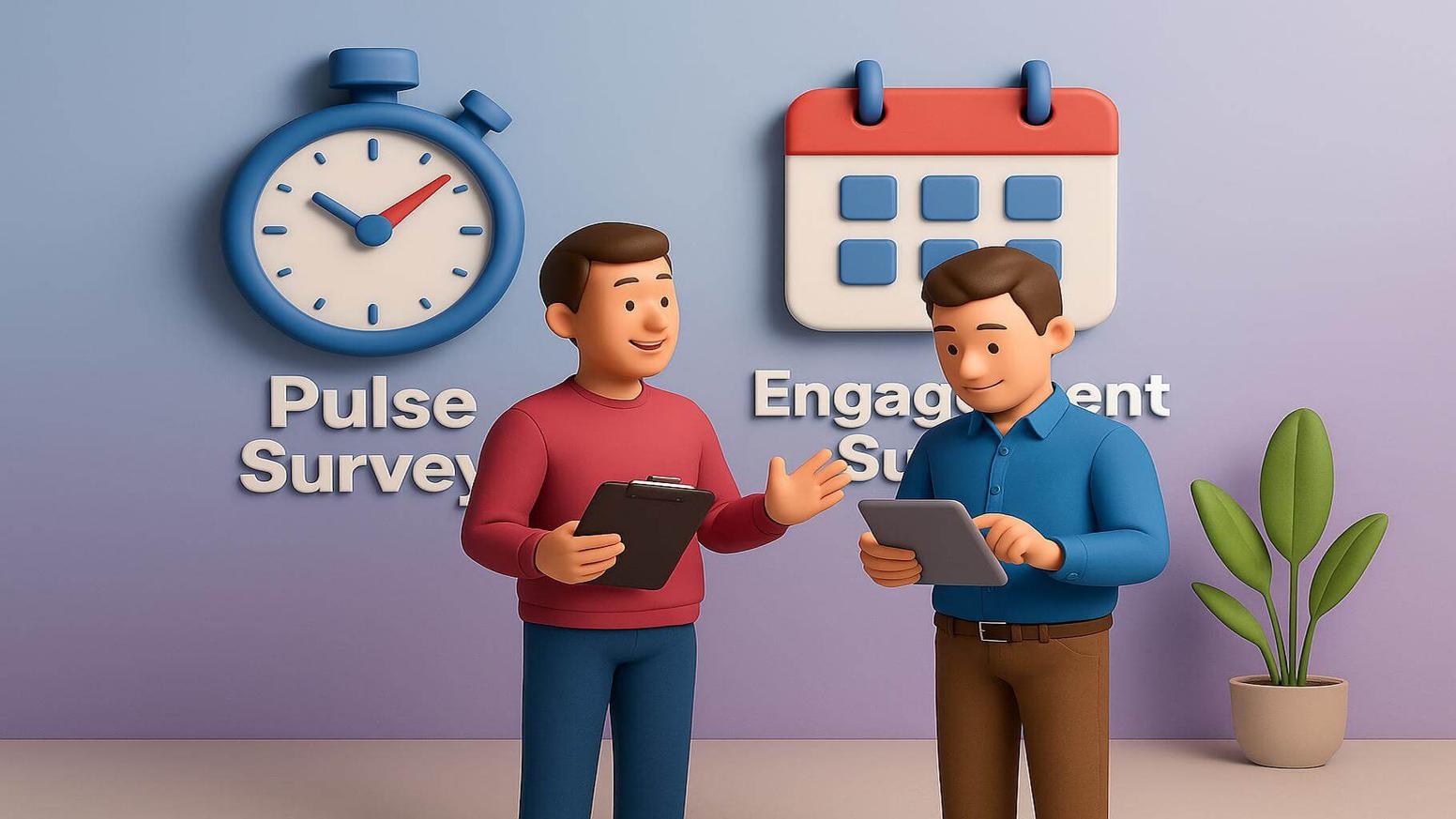
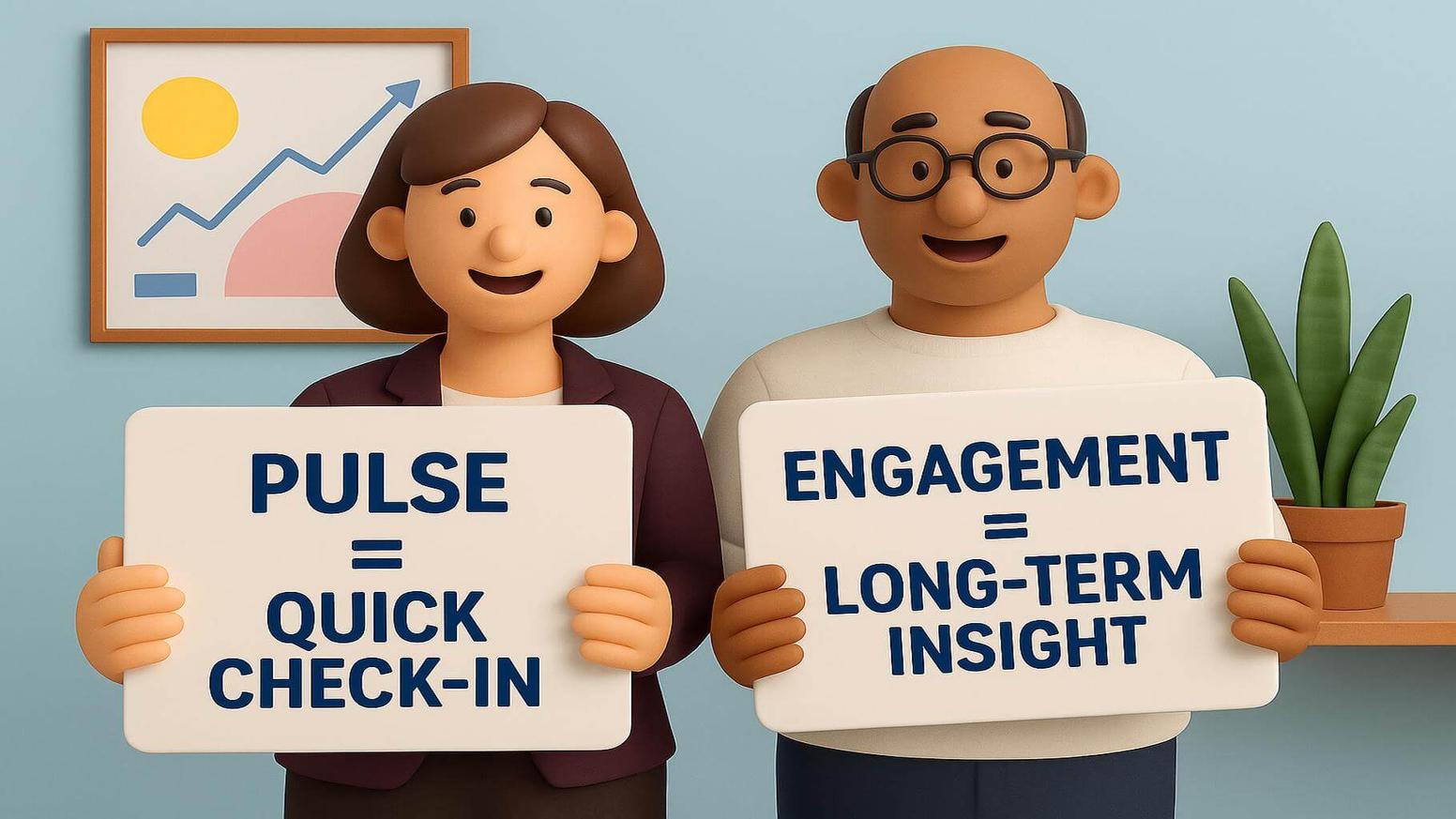
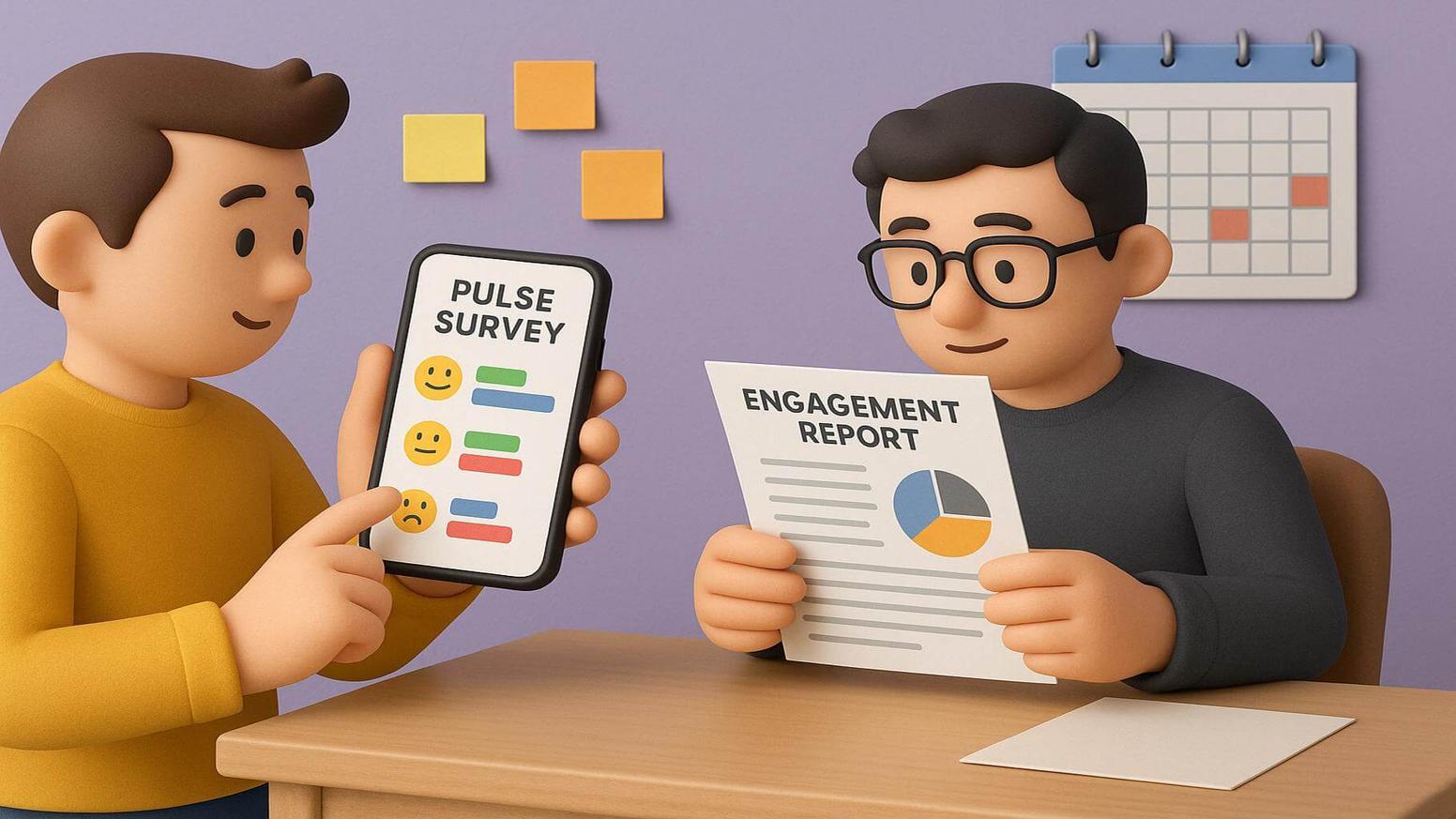
The key differences between pulse surveys and engagement surveys stem from their distinct measurement philosophies. Pulse surveys are brief and frequent, allowing quick responses to changes, while engagement surveys are comprehensive annual assessments meant for deep analysis.
Pulse surveys provide fast, ongoing insights, whereas engagement surveys emphasize detail and a broader, holistic understanding. Identifying these differences clearly helps leaders make informed choices for their organization.
Frequency and timing differences explained
The most obvious difference between these survey types lies in how often organizations conduct them. Traditional engagement surveys typically run annually or sometimes quarterly, providing periodic snapshots of the employee experience. Annual engagement surveys represent major events that require significant preparation, communication, and follow-up effort from human resources teams.
In contrast, employee pulse surveys run on much shorter cycles, such as weekly measurements, biweekly check-ins, or monthly assessments, creating an ongoing conversation with employees.
Survey frequency changes how organizations use the feedback. Annual assessments inform long-term planning and large initiatives, while pulse surveys support quick, tactical decisions. Employees find short pulse surveys less burdensome, while annual surveys give a comprehensive view but require more time. Clarifying this contrast helps leaders understand the operational impact of each approach.
Question depth and survey length comparisons
Engagement surveys dive deep into multiple aspects of the employee experience through comprehensive question sets. A typical annual engagement survey might include 40 to 100 questions covering topics such as job satisfaction, manager support, career development, company values, work-life balance, and other dimensions of the workplace experience.
These surveys aim to provide a complete picture of what drives or hinders engagement across the organization.
In contrast, pulse surveys contain only three to ten questions, focusing on one or two themes per check-in. This allows employees to respond quickly and enables organizations to monitor specific topics over time without overwhelming staff. Pulse surveys explore topics such as leadership or recent policy changes in a rotating, manageable way.
Data collection and analysis approach variations
Each survey type requires a distinct analysis approach. Annual engagement surveys create large datasets suitable for statistical analysis and identifying long-term trends, such as correlations and drivers of engagement. These surveys provide comprehensive cross-sectional insights into organizations. Pulse surveys, in comparison, provide smaller, more frequent data points for tracking ongoing trends and timely interventions.
Employee pulse surveys generate simpler datasets that emphasize trends and changes over time rather than complex correlations. The analysis focuses on whether scores are improving or declining, which questions show the most significant changes, and where quick interventions might make the biggest difference.
This streamlined analysis approach allows organizations to review data quickly and share insights with leaders within days rather than weeks. Frequent pulse surveys also enable organizations to track how specific interventions affect scores by comparing results before and after implementing changes.
12 differences between pulse survey and engagement survey explained
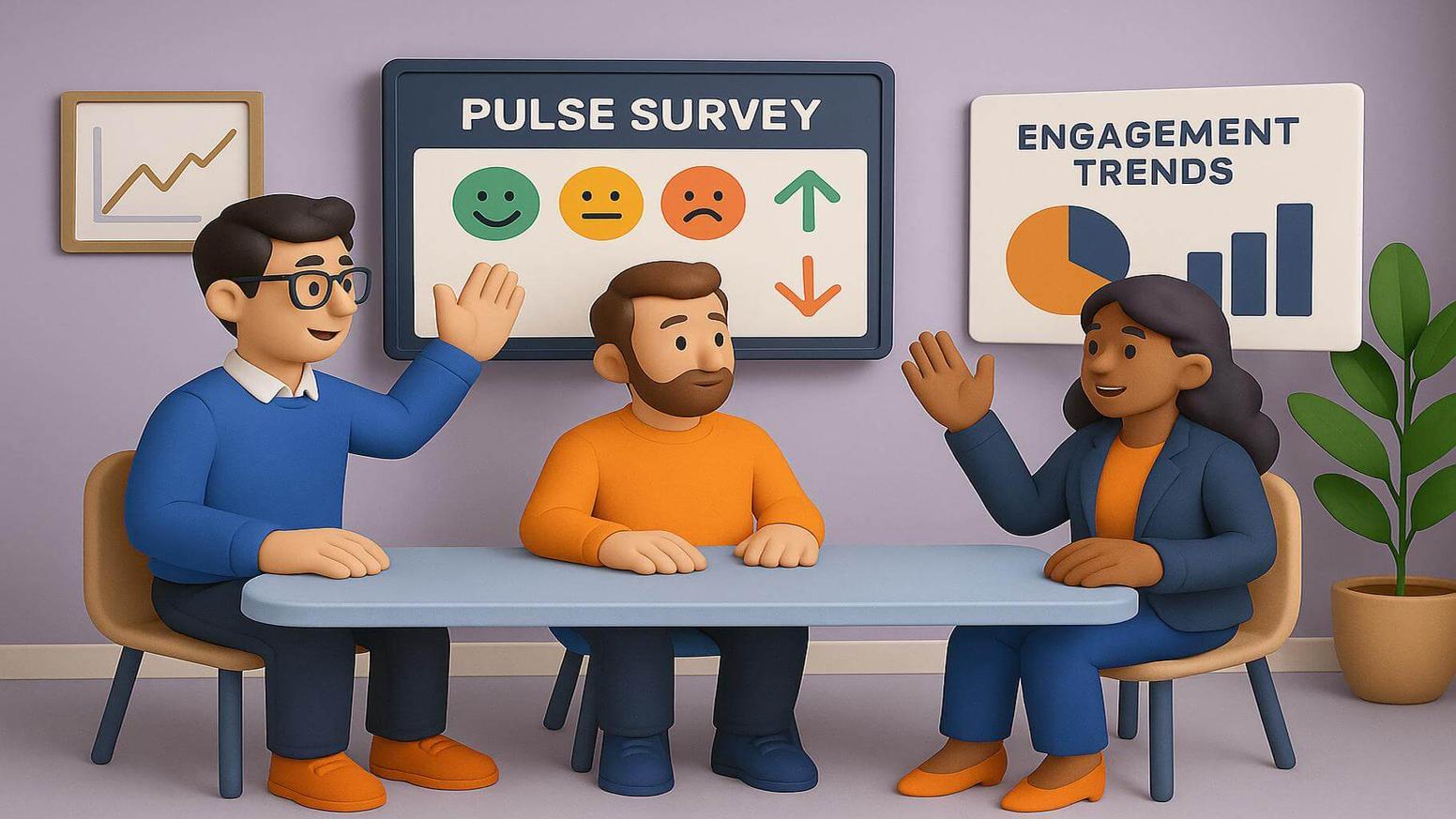
Organizations benefit from understanding the nuanced distinctions between these survey approaches beyond just frequency and length. The twelve key differences outlined below reveal how employee pulse surveys and engagement surveys serve complementary but distinct roles in measuring and improving workforce engagement. Each difference highlights specific advantages and appropriate use cases for both survey types.
12 key distinctions between survey approaches
- Duration and completion time: Annual surveys require 15-30 minutes to complete, while employee pulse surveys take only 2-5 minutes, respecting employees' time constraints and busy schedules.
- Question focus: Engagement surveys assess broad organizational themes, whereas employee pulse surveys target specific, timely topics relevant to current priorities or recent changes.
- Data stability: Annual engagement surveys provide stable baseline data for year-over-year comparisons, while employee pulse surveys capture dynamic, changing conditions that reflect current reality.
- Action planning scope: Annual assessment results typically drive organization-wide strategic initiatives, whereas employee pulse survey insights lead to tactical, localized improvements within teams or departments.
- Resource requirements: Implementing annual surveys demands significant preparation, communication, and analysis resources, whereas employee pulse surveys require less administrative overhead through automated systems.
- Employee expectations: Annual surveys create anticipation for comprehensive organizational changes, whereas employee pulse surveys set expectations for quick wins and responsive adjustments.
- Statistical robustness: Annual engagement survey datasets support sophisticated statistical analysis and predictive modeling, while employee pulse surveys provide trend data and directional indicators.
- Communication needs: Engagement surveys require extensive communication campaigns to ensure participation and explain results, whereas employee pulse surveys benefit from simple, frequent reminders integrated into the workflow.
- Response burden: Traditional employee surveys can cause survey fatigue when done too frequently, while employee pulse surveys avoid this through their brief nature and rotating topics.
- Anonymity considerations: Annual engagement surveys almost always guarantee anonymity to encourage honest feedback, while employee pulse surveys sometimes use identifiable responses to enable follow-up conversations.
- Benchmark availability: Engagement surveys often include industry benchmarks for comparison, whereas employee pulse surveys typically compare internal trends rather than external standards.
- Change measurement velocity: Annual surveys measure long-term change and organizational evolution, while employee pulse surveys detect short-term shifts and immediate reactions to events.
Engagement surveys focus on comprehensive annual insights
Traditional employee engagement survey tools provide the most thorough assessment of how employees feel about working for an organization. These surveys explore every facet of the employee experience, asking questions about everything from immediate manager relationships to belief in company strategy and opportunities for career growth.
The comprehensive nature means organizations receive a complete diagnostic report identifying strengths to celebrate and weaknesses requiring attention.
The depth of employee engagement surveys makes them ideal for understanding the root causes behind engagement levels. When employees express dissatisfaction with career development opportunities, the survey might include follow-up questions exploring whether the issue involves insufficient training resources, unclear advancement paths, or a lack of manager support.
This detailed information helps organizations design targeted interventions addressing the actual problems rather than symptoms. Organizations typically conduct engagement surveys annually, giving enough time for action plans to take effect before measuring again.
Engagement surveys also excel at establishing baselines and tracking long-term progress. By asking the same questions year after year, organizations can see whether their engagement improvement efforts are working over time. The stable, comprehensive datasets from annual surveys support workforce planning, talent management strategies, and cultural transformation initiatives that require sustained effort across multiple years.
Pulse surveys prioritize agile and frequent measurement.
Employee pulse surveys represent a fundamentally different philosophy focused on staying current with rapidly changing workplace dynamics. Instead of waiting an entire year to check how employees feel, organizations use these brief check-ins to maintain continuous awareness of employee sentiment.
This agility is particularly advantageous during times of change, when organizations must observe how employees adapt to new initiatives, leadership transitions, or market challenges.
The frequent feedback model also helps organizations test and iterate their approaches. If an organization introduces a new employee recognition program, it can use employee pulse surveys to evaluate early reactions, identify areas for improvement, and assess whether those improvements improve employee satisfaction.
This rapid feedback cycle accelerates learning and enables organizations to optimize initiatives much faster than annual measurement allows.
Employee pulse surveys also reduce the risk that problems will go unnoticed for extended periods. If employee morale declines due to workload concerns or communication issues, these brief assessments can detect trends within weeks rather than waiting until the next annual survey. This early detection system helps organizations maintain workforce engagement rather than recovering from engagement crises.
How each survey type serves different strategic purposes
Organizations achieve the best results by recognizing that employee pulse surveys and engagement surveys complement each other rather than competing. Engagement surveys serve as the foundation for strategic planning, providing comprehensive insights that inform long-term priorities and major initiatives. These surveys answer big questions about organizational culture, leadership effectiveness, and systemic factors affecting employee satisfaction across the entire workforce.
Employee pulse surveys function as the operational tool for monitoring progress and responding to immediate needs. They help leaders understand whether their strategic initiatives are landing well with employees, whether specific teams face unique challenges that require attention, and how recent events or changes are impacting morale.
The combination of both approaches creates a complete feedback system where strategic direction comes from engagement surveys and tactical execution receives guidance from employee pulse surveys.
This complementary relationship means organizations should avoid choosing one survey type over the other. Instead, the most effective measurement strategies incorporate both employee engagement surveys for depth and brief check-ins for frequency, creating a comprehensive approach to understanding and improving workplace experience.
Why is a pulse survey important for modern workplaces?
Modern workplaces operate in rapidly changing environments where waiting an entire year for employee feedback no longer effectively meets organizational needs. The traditional model of annual surveys made sense in more stable business conditions, but today's organizations face constant change through digital transformation, remote work adoption, competitive pressures, and evolving employee expectations.
Employee pulse surveys emerged as a solution to help organizations stay responsive in these dynamic conditions.
Enabling rapid response to employee feedback
The brief window between identifying issues and implementing solutions often determines whether organizations can prevent problems from escalating. When pulse survey questions reveal concerning trends or specific pain points, leaders can act within days or weeks rather than waiting months for the next survey cycle.
This rapid response capability transforms feedback from a passive measurement activity into an active management tool that drives continuous improvement.
Quick action on employee pulse survey feedback also strengthens employee trust in the survey process. When employees see their input leading to visible changes, they understand that providing honest feedback matters and produces results. This reinforcing cycle encourages continued participation and more candid responses in future assessments, creating higher-quality data for organizational decision-making.
Organizations using employee pulse surveys effectively often share results and action plans quickly with employees. This transparency demonstrates accountability and keeps the feedback loop moving, showing that leadership takes employee voice seriously. The combination of frequent measurement and rapid response creates an engaged, responsive organizational culture where feedback drives meaningful change.
Reducing survey fatigue through brief check-ins
Survey fatigue represents a significant concern for organizations trying to gather employee input. When employees face long, complicated surveys frequently, response rates drop, and the quality of feedback declines. Pulse survey app tools address this challenge by keeping each survey brief and focused, requiring minimal time investment from employees. The short format respects busy schedules while still providing valuable insights.
The focused nature of employee pulse surveys also makes the questions more relevant and engaging for employees. Rather than answering dozens of questions about topics that might not feel immediately important, employees respond to a few targeted questions about current, relevant subjects. This relevance increases engagement with the survey process and encourages thoughtful responses rather than rushing through to finish.
Organizations can further reduce survey fatigue by varying question topics, ensuring that employees aren't repeatedly answering identical questions every week. This variety keeps the surveys interesting while still providing the trend data that makes employee pulse surveys valuable for tracking changes over time.
Supporting data-driven decision making in real-time
Leaders making decisions about policies, programs, or organizational changes benefit enormously from current data about employee sentiment. Employee pulse surveys provide this real-time intelligence, helping leaders understand how employees might react to proposed changes or how well recent initiatives are working. This information reduces the guesswork in leadership decisions and increases confidence that actions will produce desired outcomes.
The continuous stream of data also enables more sophisticated analysis over time. Organizations can correlate changes in employee sentiment with specific events, see how different initiatives impact various demographic groups, and identify which factors most strongly influence overall engagement. These insights help refine workplace engagement strategies and allocate resources toward the interventions that deliver the greatest impact.
Real-time data from employee pulse surveys also supports agile management practices where leaders continuously adjust approaches based on feedback and results. Instead of implementing a major initiative and waiting a year to evaluate success, leaders can monitor progress through brief check-ins and make mid-course corrections as needed.
This adaptive approach increases the likelihood of success and reduces wasted effort on strategies that aren't working.
Engagement pulse survey questions, examples, and frameworks
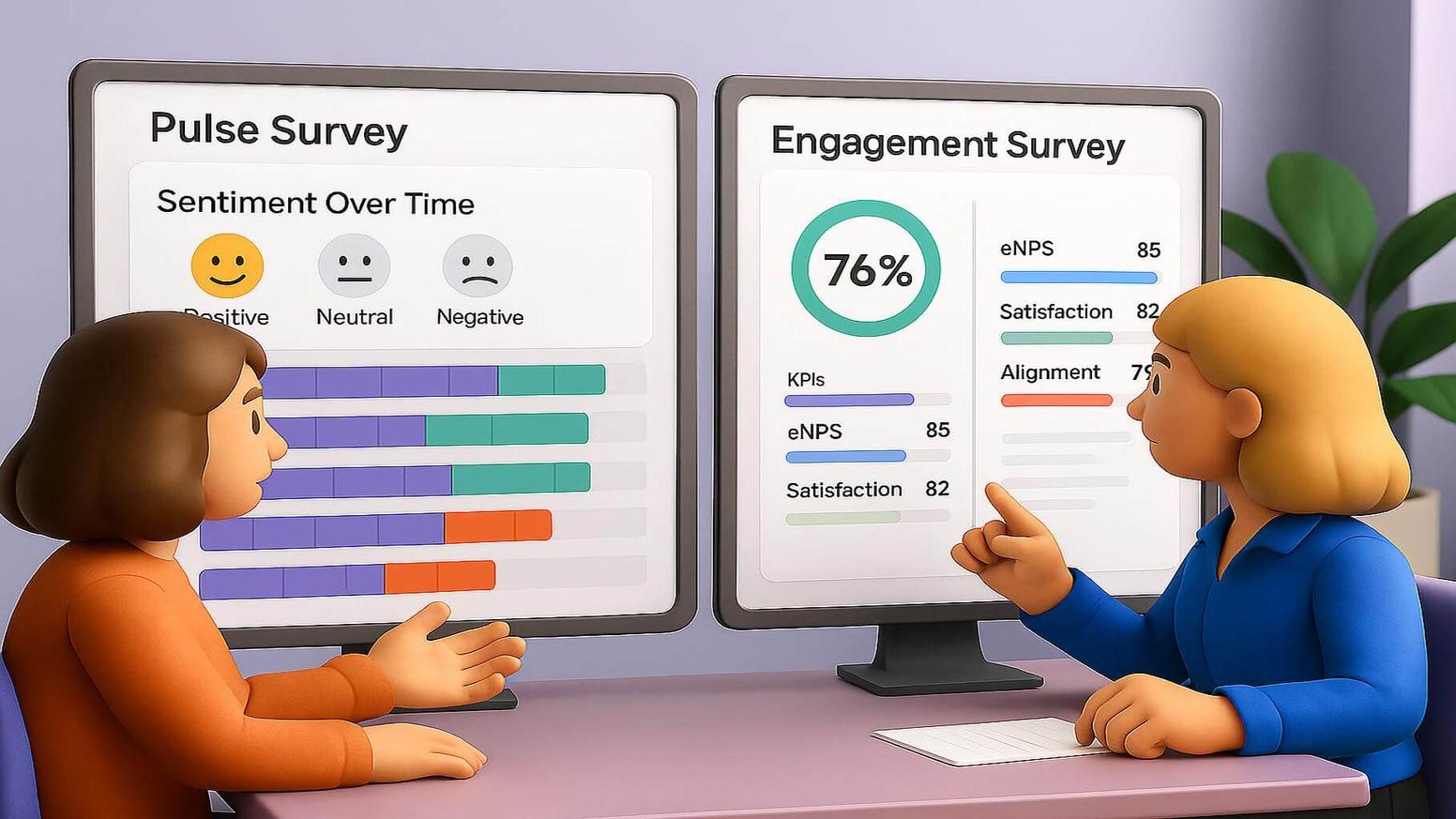
Creating effective survey questions requires understanding what you want to measure and how to ask questions that generate actionable insights. Both employee pulse surveys and employee engagement survey tools benefit from carefully crafted questions that employees understand clearly and can answer honestly. The examples and frameworks below illustrate how organizations can design questions for different measurement purposes.
Quick engagement questions for pulse surveys
Effective quick engagement questions balance brevity with the ability to capture meaningful information. The best questions focus on specific aspects of engagement that organizations can influence through action. Simple rating scales asking employees to rate their agreement or satisfaction with statements provide quantifiable data while remaining quick to answer.
Organizations can explore various pulse survey examples to find formats that work for their teams.
Examples of effective quick engagement questions for employee pulse surveys include:
- How satisfied are you with the recognition you receive for your work contributions this month?
- To what extent do you feel informed about important company decisions and changes?
- How well does your manager support your professional development and growth?
- How manageable is your current workload, given available resources and time?
- How confident are you in the organization's direction and strategic priorities?
These questions cover important engagement drivers, including employee recognition, communication, manager support, workload, and organizational confidence. Organizations can rotate through different questions each cycle to build a comprehensive picture of engagement over time while keeping individual surveys brief.
Comprehensive engagement survey question sets
Annual engagement surveys include extensive questions that explore every dimension of the employee experience. These comprehensive surveys typically organize questions into themes or categories, making it easier for employees to provide focused feedback for each topic. The detailed question sets enable sophisticated analysis of how different factors relate to overall engagement.
A comprehensive annual assessment might include question categories including immediate team dynamics, manager effectiveness, senior leadership, career development, compensation and benefits, work environment, company culture, company values, work-life balance, job satisfaction, and numerous other themes. Within each category, multiple questions explore different aspects to build a detailed understanding.
For instance, questions about career development might include ratings of training opportunities, advancement possibilities, career discussion quality with managers, support for skill development, and clarity about career paths. This multi-question approach provides nuanced insights that single questions cannot capture, helping organizations understand exactly which aspects of career development need improvement.
Combining both approaches for complete insights
Organizations achieve the most comprehensive understanding of workforce engagement by strategically combining employee pulse surveys and employee engagement survey software. The annual engagement survey establishes baseline measurements across all important dimensions and identifies priority areas requiring focus.
Throughout the year, employee pulse surveys can then monitor progress on those priority areas, track how interventions are working, and catch emerging issues that weren't visible in the annual survey.
This combined approach creates both depth and frequency in measurement. Leaders have detailed diagnostic information from engagement surveys to guide strategy and current information from employee pulse surveys to inform tactics. Recognition programs and other engagement interventions benefit from both the comprehensive planning enabled by engagement surveys and the real-time monitoring provided by employee pulse surveys.
Organizations implementing this combined strategy should ensure questions in employee pulse surveys align with themes from the annual engagement survey. This alignment allows direct comparison between brief check-in data and comprehensive data, making it easier to track whether scores on key engagement drivers improve from one annual survey to the next. The complementary measurement approach provides the most complete picture of workforce engagement possible.
Pulse surveys employee engagement measurement strategies
Implementing effective measurement strategies requires more than just selecting the right survey type. Organizations need thoughtful approaches to survey design, timing deployment, communicating their purpose, and using results to drive improvement. The strategies below help organizations maximize the value of both pulse surveys and employee engagement tracking and engagement surveys for measuring and improving workplace engagement.
Designing pulse surveys for engagement tracking
Successful engagement tracking begins with clear objectives about what you want to measure and why. Organizations should identify the key engagement drivers most important to their culture and business success, then design questions targeting those drivers using pulse survey template resources. Rotating through different engagement themes keeps surveys fresh while building comprehensive engagement data over time.
The frequency of employee pulse surveys matters significantly for engagement tracking. Weekly brief check-ins might feel too frequent for many organizations, potentially creating a response burden despite the brief format. Monthly assessments strike a good balance for most organizations, providing frequent feedback without overwhelming employees.
Employee pulse survey tools can help automate scheduling to find the optimal frequency. Some organizations find biweekly schedules work well, offering more data points while remaining manageable.
Question consistency and variation both play important roles in effective design. Maintaining a core set of questions you ask regularly enables trend tracking and identifies whether engagement metrics improve or decline over time.
Supplementing these core questions with rotating questions that explore different topics provides comprehensive coverage without making the survey too long. This balanced approach gives organizations both stability for comparison and flexibility to explore timely issues.
Establishing baseline metrics through engagement surveys
Annual engagement surveys serve as the foundation for measuring engagement by establishing comprehensive baseline data. These surveys should use validated question sets that research has shown correlate with important business outcomes, including productivity, retention, and performance. Many organizations use standardized surveys that enable comparison with industry benchmarks, providing context about whether engagement levels are competitive.
The first annual engagement survey an organization conducts provides the baseline against which all future progress gets measured. This makes the initial survey particularly important, as it identifies starting points, reveals strengths and weaknesses, and guides strategic priorities for engagement improvement.
Organizations should invest in thorough communication about the survey purpose, ensure strong participation, and conduct rigorous analysis of results to establish this foundation.
After establishing baseline metrics, organizations can track how engagement changes year over year. Improvements in engagement scores validate that initiatives are working, while declining scores signal the need for different approaches. This long-term tracking, provided by annual surveys, complements the short-term monitoring enabled by employee pulse surveys, creating a complete measurement system.
Using pulse data to monitor engagement trends
The primary value of data from pulse survey tools comes from tracking trends rather than analyzing individual survey results. A single employee pulse survey provides limited information, but multiple employee pulse surveys over time reveal whether engagement is improving, declining, or remaining stable.
Organizations should create simple dashboards or reports that visualize trends, making it easy for leaders to spot concerning patterns or positive momentum.
Analyzing trends involves looking for both gradual changes and sudden shifts. Gradually declining scores over several months might indicate systemic issues requiring attention, whereas sudden drops are often due to specific events or changes that upset employees. Both patterns provide valuable information, but they require different responses.
Gradual declines require strategic solutions that address root causes, while sudden drops often benefit from quick communication and explanation.
Organizations should also analyze trends across different employee segments, including departments, locations, tenure groups, and other relevant categories. Engagement trends often vary across different parts of the organization, and identifying these variations helps target interventions where they're needed most.
Recognition programs and initiatives might work well for some groups but need adjustment for others, and employee pulse survey trend analysis reveals these differences.
Pulse survey engagement questions best practices
Crafting effective survey questions requires understanding psychological principles, survey methodology, and practical considerations about what makes questions easy to answer honestly. The best practices below help organizations design questions that generate high-quality, actionable data while respecting employees' time and encouraging participation.
Crafting effective pulse survey engagement questions
The most effective questions share several characteristics that make them powerful measurement tools. Questions should be specific rather than vague, focusing on concrete aspects of the employee experience rather than abstract concepts. Instead of asking whether someone is "engaged," effective questions focus on observable factors that drive engagement, such as recognition frequency, workload manageability, and communication effectiveness.
Clear, simple language ensures all employees understand questions the same way, enabling meaningful comparison across responses. Technical jargon, complex sentence structures, and ambiguous terms reduce question quality by introducing variability in interpretation. Questions should use common vocabulary that resonates with employees at all organizational levels and in all roles.
Questions should also avoid leading language or assumptions that might bias responses. Asking "How satisfied are you with our excellent benefits program?" presumes the benefits are excellent and may discourage honest feedback. Neutral phrasing, such as "How satisfied are you with your benefits?" allows employees to provide authentic ratings without feeling pressured to respond positively.
Balancing question depth with survey frequency
One of the most important design decisions involves determining how much detail each employee pulse survey should capture. While comprehensive questions provide rich information, they take longer to answer and may reduce response rates when used in frequent brief assessments. Simple rating-scale questions are brief but might miss important nuances in employee sentiment.
Most successful employee pulse surveys use primarily rating scale questions that employees can answer quickly by selecting a number or response option. Organizations might include one or two open-ended comment opportunities for employees who want to provide additional context, but making all questions open-ended would defeat the purpose of brief, frequent check-ins.
This balanced approach respects employee time while capturing both quantitative trends and qualitative insights.
The frequency of employee pulse surveys should also influence question selection. Weekly brief check-ins need to be extremely brief, with perhaps just two or three questions, while monthly surveys can include five to seven questions without feeling burdensome. Organizations should test different frequencies and lengths to find what works best for their culture and generates the highest response rates.
Ensuring questions align with engagement drivers
Research consistently identifies certain factors that drive workforce engagement across industries and organization types. Effective employee pulse surveys focus on these proven engagement drivers rather than on random aspects of the workplace experience. Key drivers typically include meaningful work, manager support, recognition and rewards, career development, organizational leadership, team relationships, and alignment with company values.
By focusing questions on these core drivers, organizations ensure they're measuring factors that actually matter for engagement rather than peripheral issues. This focus also helps organizations track whether their engagement initiatives targeting these drivers are producing desired results. If an organization implements a new recognition program, employee pulse surveys should include recognition questions to monitor its impact.
Organizations should regularly review whether their questions still measure the most relevant engagement drivers for their specific context. Business priorities shift, organizational challenges evolve, and what matters most to employees changes over time. Periodic question review ensures surveys remain relevant and continue to provide valuable insights for decision-making.
When to use engagement pulse survey approaches
Understanding when to deploy employee pulse surveys versus engagement surveys helps organizations get the most value from each survey type. Different situations call for different measurement approaches, and using the right tool at the right time improves the quality of insights and the efficiency of measurement efforts.
The scenarios below illustrate ideal use cases for each employee rewards program survey approach.
Scenarios ideal for pulse survey deployment
Organizations should turn to employee pulse surveys when they need current information about specific topics or want to monitor rapidly changing situations. During organizational changes, including restructuring, leadership transitions, or significant policy updates, brief check-ins help leaders understand how employees are responding and whether additional communication or support is needed. Frequent measurement enables organizations to track sentiment week by week as changes unfold.
Employee pulse surveys also excel when organizations want to test new initiatives or programs. Rather than waiting until the next annual survey to evaluate success, organizations can use brief assessments to gather early feedback, identify problems quickly, and make adjustments while programs are still new.
This rapid feedback accelerates learning and increases the likelihood that new initiatives will succeed by enabling timely refinement.
Organizations experiencing specific challenges, such as high turnover in certain departments, declining productivity, or employee complaints about particular issues, can deploy targeted employee pulse surveys to understand the scope and nature of the problems. These focused assessments help diagnose issues more precisely than annual surveys allow, enabling more effective interventions.
Situations requiring comprehensive engagement surveys
Annual engagement surveys remain the best choice when organizations need comprehensive diagnostic information about their culture, engagement levels, and employee experience. During strategic planning cycles, leadership transitions, or major cultural transformation initiatives, the depth provided by engagement surveys proves invaluable for understanding organizational strengths and weaknesses.
Engagement surveys also work best when organizations want to compare their performance against industry benchmarks or track long-term progress. The standardized nature of many engagement surveys enables these comparisons, providing context about whether the organization's engagement levels are competitive. This external perspective helps organizations set realistic goals and understand where they stand relative to other employers competing for similar talent.
Organizations using engagement surveys to establish accountability and drive systematic improvement benefit from the comprehensive nature and formality of annual surveys. When engagement scores are tied to leader performance reviews or organizational goals, the thoroughness and statistical rigor lend credibility to the measurement. This formal assessment creates appropriate weight and importance for engagement as a strategic priority.
Hybrid strategies combining both methodologies
The most sophisticated measurement strategies leverage both employee pulse surveys and engagement surveys together in complementary ways. Organizations might conduct annual engagement surveys to establish comprehensive baselines and identify strategic priorities, then use quarterly or monthly employee pulse surveys to monitor progress on those priorities throughout the year. This hybrid approach provides both depth and frequency for maximum insight.
Some organizations use employee pulse surveys to maintain engagement momentum between annual surveys by keeping feedback collection visible and regular. The brief assessments might include a few consistent questions tracking overall engagement, plus rotating questions exploring different topics each cycle. This approach keeps employee voice active throughout the year while still preserving the comprehensive assessment value of annual surveys.
Another effective hybrid strategy is to use employee pulse surveys to inform and improve the annual engagement survey process. If brief check-ins reveal particular issues that are generating strong employee sentiment, organizations can ensure the next annual survey includes questions that explore those topics in depth.
This responsive approach ensures engagement surveys stay current with the most important employee concerns rather than measuring outdated issues.
How to combine pulse surveys and engagement surveys effectively
Successfully implementing both survey types requires careful planning for how they fit together, when each type deploys, and how organizations use insights from both sources. The strategies below help organizations create integrated measurement approaches that maximize value while avoiding redundancy or survey fatigue.
Creating complementary survey strategies
An effective combined survey strategy begins with defining distinct roles for each survey type. Annual engagement surveys should serve as a comprehensive diagnostic tool measuring all important engagement dimensions and identifying strategic priorities.
Throughout the year, employee pulse surveys should focus on monitoring those priorities, tracking progress on related initiatives, and catching emerging issues that weren't visible in the annual survey.
Organizations should map out the entire measurement calendar, showing when each survey type will deploy. This calendar helps ensure spacing between different surveys and allows time for action planning between measurement cycles.
A typical calendar might include an annual engagement survey each fall, followed by quarterly employee pulse surveys in winter, spring, and summer. This spacing provides regular feedback without overwhelming employees.
The question strategy should also show an intentional connection between survey types. Employee pulse survey questions can include simplified versions of key questions from the annual engagement survey, enabling direct comparison of score changes between the two surveys. This alignment makes it easier to track whether scores on key engagement drivers improve throughout the year.
Timing pulse surveys between engagement surveys
Strategic timing of employee pulse surveys maximizes their value for monitoring progress and maintaining engagement momentum. Organizations should typically schedule the first employee pulse survey about two to three months after the annual engagement survey, allowing enough time for action planning and initial implementation of improvement initiatives.
This brief assessment can check whether employees are aware of actions being taken and whether early reactions are positive.
Subsequent employee pulse surveys should be spaced evenly throughout the year, providing regular checkpoints without feeling excessive. Quarterly employee pulse surveys work well for many organizations, offering consistent measurement while respecting employee time. Organizations in rapidly changing industries or experiencing significant transitions might opt for monthly employee pulse surveys to stay more closely connected with employee sentiment.
The final employee pulse survey before the next annual engagement survey serves as a valuable preview, helping organizations understand whether they're on track for improvement. If brief check-in scores show positive trends, the annual survey will likely reflect those improvements.
If employee pulse surveys reveal concerning patterns, organizations have time to intensify efforts before the annual survey. This forward-looking use of data helps organizations feel more confident about comprehensive survey results.
Integrating insights from both survey types
The real power of combining survey types lies in integrating insights from both sources into a unified understanding of workforce engagement. Leaders should review employee pulse survey trends in the context of annual engagement survey baselines, looking for connections between what the comprehensive survey identified as priorities and what brief check-ins reveal about progress on those priorities.
Organizations can create integrated dashboards or reports showing both annual engagement scores and employee pulse survey trends together. These visual representations make it easy to see relationships between different measurement sources and identify whether trends align with annual measurements.
When trends diverge, this might signal that employee pulse surveys are capturing different aspects of engagement or that significant changes have occurred since the annual survey.
Action planning should also integrate insights from both survey sources. Annual engagement surveys identify what to work on strategically, while employee pulse surveys reveal how well those efforts are working and whether adjustments are needed. This combined intelligence leads to more effective engagement strategies than relying on either survey type alone.
Organizations implementing team rewards or recognition programs benefit from tracking both baseline engagement survey data and ongoing employee pulse survey feedback about program reception.
Common mistakes when choosing between survey types
Organizations sometimes struggle to implement effective survey strategies, making preventable mistakes in how they choose, deploy, and use brief assessments and engagement surveys. Understanding these common pitfalls helps organizations avoid wasted effort and maximize the value of their measurement approaches through pulse survey best practices. The mistakes below are among the most frequent challenges organizations encounter.
Relying solely on annual engagement surveys
While annual engagement surveys provide a valuable, comprehensive assessment, relying solely on them leaves organizations operating in the dark for most of the year. A company that conducts engagement surveys only once a year might not identify significant morale issues until months after they begin, missing opportunities for early intervention.
Employees may also feel their voices matter less when feedback opportunities come so infrequently.
Organizations that rely exclusively on annual surveys often struggle with survey fatigue despite the infrequent timing. When the survey is the only major feedback opportunity each year, organizations sometimes try to make it comprehensive by including too many questions. These marathon surveys decrease response rates and the quality of feedback as employees rush to finish.
The lack of interim measurement also makes it difficult to track whether engagement initiatives are working. Organizations launch programs based on annual survey findings, then wait an entire year to learn if those programs improved engagement. This delayed feedback slows organizational learning and may lead to ineffective programs continuing for too long or to abandoning promising initiatives prematurely.
Overusing pulse surveys without action planning
Some organizations enthusiastically embrace employee pulse surveys but fall into the trap of measurement without action. Conducting frequent employee pulse surveys without acting on the feedback frustrates employees and damages trust in the survey process. When employees see their responses producing no visible changes or improvements, they disengage from future surveys and feel their input doesn't matter.
Overly frequent employee pulse surveys can also create survey fatigue, even when individual surveys remain brief. If employees receive survey requests weekly or multiple times per week, the cumulative burden becomes significant. Frequent surveying may be perceived as intrusive rather than supportive, thereby diminishing response rates and the overall quality of feedback.
Organizations sometimes use employee pulse surveys as a substitute for genuine communication and dialogue with employees. While surveys provide valuable data, they can't replace direct conversations, town halls, and other forms of two-way communication. Relying too heavily on surveys without balancing them with face-to-face engagement limits understanding and may miss important nuances that surveys can't capture.
Failing to connect survey insights to recognition
A critical but often overlooked mistake involves treating survey measurement as separate from recognition and reward systems. Employee engagement surveys and employee pulse surveys frequently identify recognition gaps as major drivers of dissatisfaction, yet organizations sometimes fail to connect these insights to concrete recognition improvements. Understanding that employees feel under-recognized doesn't drive improvement unless organizations implement systematic recognition solutions.
Organizations should view survey data and employee recognition programs as complementary tools that work together. Survey insights reveal where recognition gaps exist, which teams need more support, and whether recognition initiatives are making a difference. Recognition programs provide a mechanism for addressing the gaps identified by surveys. This integration creates a complete system for measuring and improving workforce engagement.
Organizations that successfully connect surveys to employee recognition use employee pulse survey data to track how recognition programs impact employee sentiment. Questions about recognition frequency, meaningfulness, and satisfaction provide direct feedback about whether recognition efforts are working.
This real-time monitoring enables organizations to refine recognition approaches and demonstrate to employees that their survey feedback drives tangible improvements in how they experience appreciation.
How Matter can help with pulse survey vs engagement survey decisions
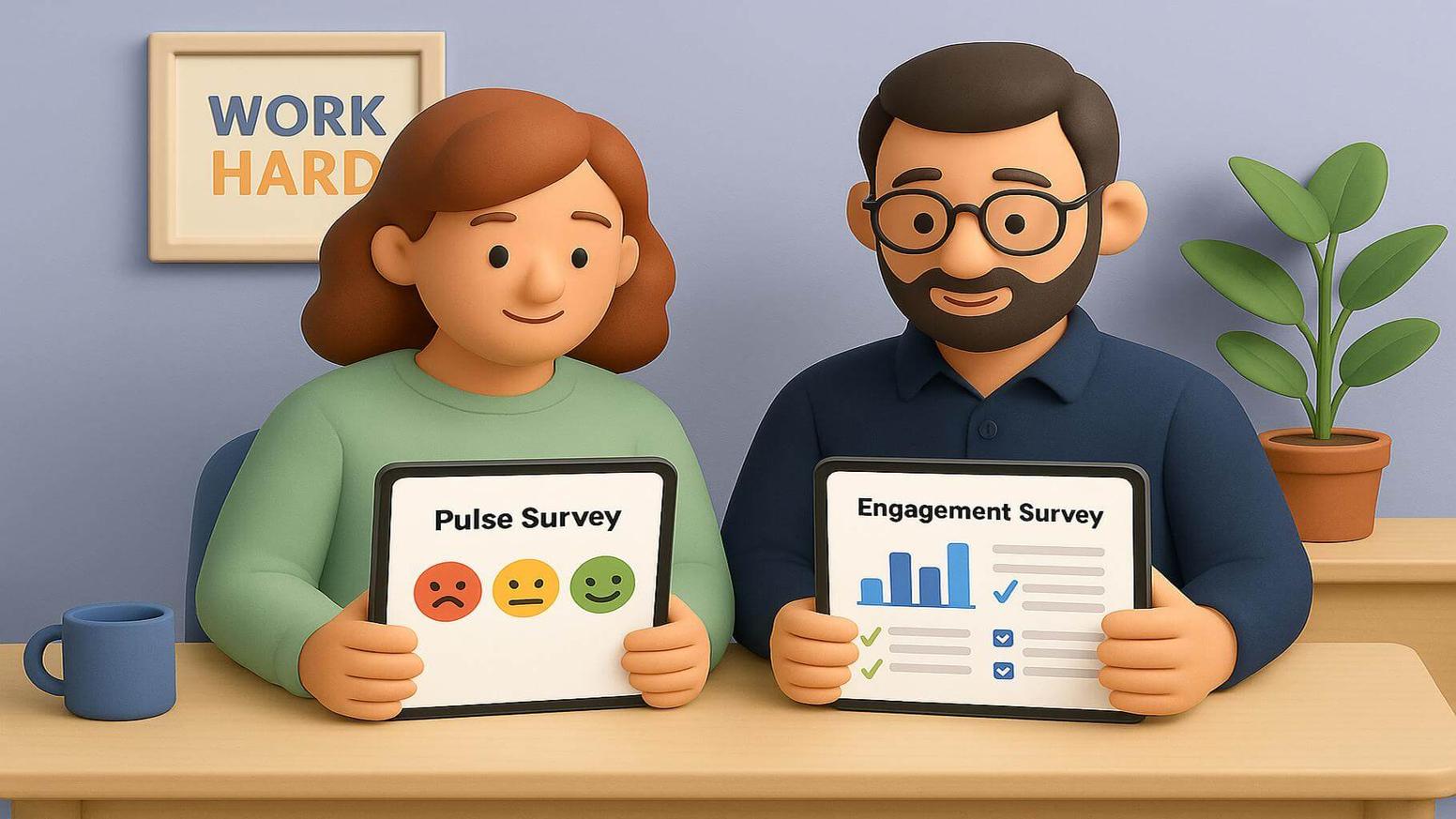
Organizations implementing measurement strategies benefit enormously from platforms that simplify survey creation, distribution, and analysis while connecting feedback to meaningful recognition. Matter provides comprehensive tools supporting both employee pulse surveys and engagement surveys, making it easier for organizations to gather insights and take action based on what employees share.
Unified platform supporting both survey approaches
Matter offers organizations a single platform for managing all types of employee feedback, eliminating the need for multiple disconnected survey tools. The platform supports creating and deploying both comprehensive engagement surveys and brief employee pulse surveys, enabling organizations to choose the right measurement approach for each situation.
This unified approach simplifies administration, ensures consistent data storage, and makes it easier to analyze trends across different survey types.
The platform integrates directly with Slack and Microsoft Teams, allowing organizations to deliver surveys where employees already work rather than requiring them to visit separate websites. This seamless integration significantly improves response rates by reducing friction in the survey process. Employees can complete brief check-ins directly within their communication tools, taking just minutes without leaving their workflow.
Matter's analytics capabilities provide a clear visualization of both employee pulse survey trends and engagement survey results, helping leaders quickly understand what the data reveals. The platform identifies concerning trends, highlights areas of strength, and makes it easy to compare results across teams, locations, or time periods. This user-friendly analysis helps organizations move quickly from data collection to insight-driven action.
Pre-built templates for pulse and engagement surveys
Organizations benefit from Matter's library of templates and employee recognition software integrated with engagement survey question sets that incorporate best practices and proven question formats. These templates save significant time in survey design while ensuring that questions are clear, unbiased, and focused on actionable engagement drivers.
Organizations can use the provided templates or customize them to fit their specific culture and priorities.
The pre-built templates cover common employee pulse survey topics, including manager effectiveness, workload and stress, recognition satisfaction, communication quality, and many other important engagement factors. For comprehensive engagement surveys, Matter provides complete question sets organized by theme, making it easy to build thorough assessments without having to start from scratch.
This template library helps organizations avoid common question design mistakes and ensures surveys measure what actually matters.
Organizations can also create and save their own templates based on questions that work well for their unique context. This flexibility allows companies to standardize their approach while maintaining consistency in how they measure engagement over time. The combination of standard templates and custom options provides the right balance of convenience and flexibility for diverse organizational needs.
Integrated analytics connecting surveys to recognition
Matter's unique strength lies in connecting survey insights directly to recognition and reward opportunities. When employee pulse surveys or engagement surveys reveal that employees feel under-recognized, Matter makes it simple to implement systematic recognition improvements. The platform's customizable kudos cards enable peer-to-peer recognition aligned with company values, while automation features, including Feedback Friday, ensure consistent appreciation.
The employee recognition platform includes Matter's coin-based reward system, which allows employees to redeem recognition for digital gift cards, charitable donations, or custom rewards. The weekly coin reset encourages authentic, ongoing recognition rather than saving points indefinitely. This culture of frequent recognition supports the continuous feedback philosophy that makes employee pulse surveys effective.
Organizations can track how recognition frequency and quality impact engagement scores over time, using employee pulse surveys to measure whether recognition initiatives drive the intended improvements. Matter's integrated analytics show connections between recognition activity and engagement trends, helping organizations understand whether their investment in recognition programs produces meaningful returns.
This closed-loop system transforms survey measurement from an isolated activity into an integrated component of an engagement strategy.
Frequently asked questions about pulse survey vs engagement survey
Q: What is the difference between a pulse survey and an engagement survey?
A: The primary differences involve frequency, length, and purpose. Employee engagement surveys are comprehensive assessments typically conducted annually, with extensive question sets that cover all aspects of the employee experience. Employee pulse surveys are brief check-ins conducted frequently, including weekly or monthly, with just a few questions focused on specific current topics.
Engagement surveys provide strategic insights for long-term planning, while employee pulse surveys enable tactical responses to immediate conditions.
Q: Why is a pulse survey important compared to engagement surveys?
A: Employee pulse surveys provide real-time visibility into employee sentiment, allowing organizations to respond quickly to emerging issues before they escalate. Frequent feedback helps leaders stay connected to the workforce's feelings during changes and enables tracking whether initiatives are working without waiting for the next annual survey.
Employee pulse surveys complement rather than replace engagement surveys by adding agility to measurement approaches.
Q: What is the purpose of a pulse survey versus an engagement survey?
A: Pulse survey objectives focus on continuous monitoring, rapid issue identification, and maintaining ongoing dialogue with employees about current experiences through peer-to-peer recognition and feedback systems. Annual assessment purposes center on comprehensive diagnosis, strategic planning, and establishing baseline measurements for long-term tracking. Both purposes are valuable and serve different organizational needs within complete feedback strategies.
Q: Can you use pulse surveys for employee engagement measurement?
A: Yes, employee pulse surveys effectively measure workforce engagement when they include questions about key engagement drivers, including recognition, manager support, workload, communication, and alignment with organizational goals. While individual employee pulse surveys provide limited information, tracking trends across multiple brief assessments reveals whether engagement is improving or declining.
Organizations often combine employee pulse survey engagement tracking with annual comprehensive assessments to provide comprehensive measurement.
Q: What are good engagement pulse survey questions?
A: Effective questions focus on specific, actionable aspects of engagement rather than abstract concepts. Examples include rating satisfaction with recognition received, assessing the manageability of the workload, evaluating confidence in organizational direction, and measuring how informed employees feel about company decisions. The best questions use simple language, avoid bias, and connect directly to factors organizations can influence through action.
Q: Should organizations use both pulse surveys and engagement surveys?
A: Most organizations benefit from using both survey types strategically. Annual employee engagement surveys provide the comprehensive foundation for understanding overall engagement and planning strategic initiatives. Throughout the year, employee pulse surveys monitor progress, catch emerging issues, and maintain regular feedback loops with employees.
This combined approach offers both the depth of annual assessment and the frequency of ongoing monitoring for optimal insights.
Final thoughts about pulse survey vs engagement survey
Understanding the differences between employee pulse surveys and engagement surveys enables organizations to build smarter, more effective feedback strategies that serve both strategic and tactical needs.
Rather than viewing these survey types as competing alternatives, successful organizations recognize that employee pulse surveys and engagement surveys complement each other by providing distinct insights at different time scales. The comprehensive depth of annual employee engagement surveys, combined with the frequent monitoring of employee pulse surveys, creates a complete measurement system.
Organizations that implement both survey approaches position themselves to be more responsive to employee needs while maintaining strategic focus on long-term engagement improvement.
The ability to recognize and address concerns promptly through employee pulse surveys prevents minor issues from becoming major catastrophes, while the thoroughness of engagement surveys ensures nothing vital is overlooked. This balanced approach demonstrates to employees that their voice matters year-round, not just during annual survey season.
Combining both survey types with meaningful action, including recognition programs, manager development, and culture initiatives, transforms measurement from a compliance activity into a genuine tool for creating better workplaces.
Matter provides the tools and platform support needed to implement both employee pulse surveys and engagement surveys effectively while connecting insights directly to recognition and employee rewards that drive engagement improvement.
Ready to implement the right survey strategy for your organization? Schedule a demo with a Matter expert today and discover how our platform supports both employee pulse surveys and engagement surveys to help you measure engagement, gather insights, and create a culture of continuous improvement through integrated recognition capabilities.


![39+ Employee Engagement Survey Examples [2026 Guide & Ideas]](https://cdn.sanity.io/images/kqqb5xry/production/25935096834238b3bb728390b5af938c53abb7f7-800x600.jpg?w=720&q=75&fit=max&auto=format)
![#1 Guide to Engagement Surveys [2026 Guide & 30+ Examples]](https://cdn.sanity.io/images/kqqb5xry/production/1c846350b789fbdae518fde0925ed5787322cfed-800x600.jpg?w=720&q=75&fit=max&auto=format)