
Designing effective new employee onboarding survey questions can feel overwhelming when organizations must balance tactical process assessment with emotional experience evaluation. At Matter, we understand the challenges HR professionals face when trying to perfect their employee onboarding program while also addressing logistical gaps and cultural fit concerns. Creating survey questions for new employee onboarding requires understanding what new hires need at each stage of their integration journey. The right approach transforms the onboarding process from a simple formality into a strategic talent retention tool that drives business success.
What is a new employee onboarding survey?

A new employee onboarding survey is a structured feedback tool designed to capture new hires' perspectives during their critical integration period. These employee onboarding surveys systematically gather information about the onboarding experience, the effectiveness of training sessions, and workplace readiness. Organizations use this employee feedback to identify gaps in their onboarding process and make evidence-based improvements to their employee onboarding program. The objective is to convert subjective perceptions into quantifiable data that facilitates optimization and supports the success of new team members.
Definition and purpose of new hire feedback collection
New hire feedback collection involves systematically gathering input from new employees about their early experiences with the organization. This practice helps HR professionals determine whether the onboarding program meets expectations set during the recruitment and interview processes. The purpose extends beyond simple employee satisfaction measurement to include identifying specific process breakdowns that affect new hires. Organizations that collect feedback strategically can reduce early turnover and accelerate productivity while building company culture.
The onboarding survey serves as an early warning system for potential disengagement among new hires. When new employees feel their concerns are heard, they develop stronger connections to the organization and overall company culture. Regular feedback collection demonstrates organizational commitment to continuous improvement and helps employees feel valued throughout the employee lifecycle. This approach builds trust and encourages honest feedback from the start of the employment relationship.
Components of comprehensive onboarding surveys
Effective onboarding survey questions address multiple dimensions of the new hire onboarding experience across all touchpoints. Key areas include pre-boarding preparation, quality of the orientation process, effectiveness of training sessions, and manager support for new hires. Surveys should assess whether new employees received all the necessary tools and resources for their role and job responsibilities. Additional components evaluate team integration, cultural alignment with company culture, and clarity around job description expectations.
Question types should balance quantitative ratings with opportunities for open text survey responses. This combination provides both measurable metrics and rich qualitative insights that help organizations understand new hires' experiences. Survey length matters because overly long assessments cause fatigue and reduce response quality from new employees. Organizations should target specific checkpoints rather than trying to cover everything in a single onboarding questionnaire.
How surveys differ from informal check-ins
While informal conversations provide valuable context, they lack the consistency and comparability of structured pulse survey approaches. Implementing onboarding surveys ensures every new hire answers the same questions at the same milestones throughout the onboarding process. This standardization enables organizations to identify patterns across new-hire cohorts and to gather feedback systematically. Informal check-ins complement employee onboarding surveys but cannot replace systematic data collection efforts.
Surveys create documentation that tracks trends over time and across departments within the organization. Managers can compare their new hires' experiences with organizational benchmarks and regularly review survey responses. The data support evidence-based decisions rather than anecdotal impressions about the new hires' onboarding experience. Combined approaches that use both formal surveys and informal touchpoints yield the most complete picture of employee sentiment.
What are the benefits of new employee onboarding surveys?
Implementing onboarding surveys delivers measurable advantages that impact employee retention, productivity, and company culture. Organizations gain visibility into experiences that would otherwise remain hidden from leadership and team leaders. The feedback loop enables rapid iteration and continuous improvement of integration programs and the overall onboarding process. Strategic survey deployment creates a competitive advantage in talent acquisition and helps future hires have better experiences.
Systematic identification of process breakdowns
Employee onboarding surveys reveal where company processes fall short of new-hire expectations during onboarding. Issues such as missing equipment, unclear job descriptions, or inadequate initial training become apparent through survey responses. Without systematic feedback collection, these problems often go undetected until exit interviews. Early identification enables proactive intervention before frustration leads to resignation among new employees.
Survey data highlights patterns that individual conversations might miss when evaluating the onboarding process. When multiple new hires report similar issues, organizations can prioritize systemic fixes to their employee onboarding program. This systematic approach replaces reactive problem-solving with strategic process improvement for all new team members. The result is a more reliable and consistent positive onboarding experience for future hires joining the organization.
Evidence-based onboarding program improvements
Employee engagement survey data provides the foundation for targeted program enhancements to the onboarding process. Rather than guessing what new employees need, organizations can invest resources where they matter most for new hires. Survey results justify budget allocations and demonstrate program effectiveness to leadership and team leaders. This evidence-based approach increases the likelihood of sustainable improvements to the employee onboarding program.
Tracking survey responses over time reveals whether changes lead to the desired outcomes for new hires' experiences. Organizations can measure the impact of specific initiatives on new hire satisfaction and employee engagement. This measurement capability transforms onboarding from an art into a science that drives business success. Data-driven decisions lead to better outcomes for both new hires and the organization as a whole.
Early detection of at-risk new hires
New hires who report low satisfaction or unclear job expectations may be flight risks during their first week and beyond. Early survey deployment provides warning signals before disengagement becomes irreversible among new employees. Managers can intervene by providing additional support, clarifying expectations, or reallocating resources for struggling new hires. This proactive approach prevents regrettable turnover during the critical first months of the employee lifecycle.
Survey responses can trigger automated alerts when scores fall below the organization's thresholds. HR professionals can then reach out to understand concerns and provide assistance to new employees who need support. This safety net catches new hires who might otherwise suffer in silence, unable to share honest feedback. Early intervention demonstrates organizational commitment to employee success and helps employees feel valued.
Why new employee onboarding survey questions matter for retention
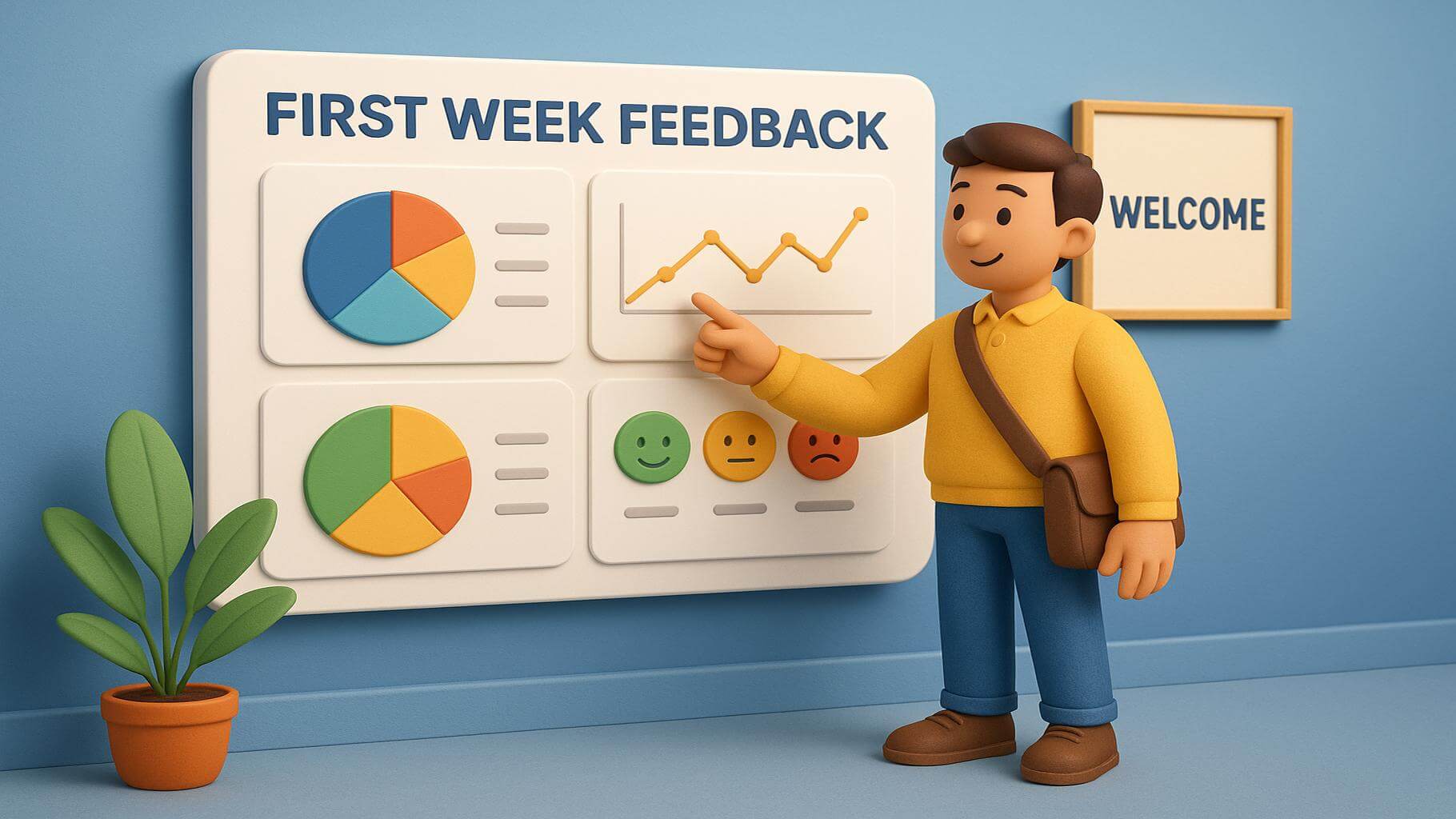
The connection between onboarding quality and employee retention is well established across industries. First impressions matter because they shape attitudes that persist throughout tenure and impact job satisfaction. Organizations that prioritize onboarding feedback see measurable improvements in retention metrics and employee engagement. Strategic survey deployment captures valuable insights that directly impact whether new hires stay or leave.
Impact of first impressions on long-term engagement
Research consistently shows that the onboarding experience predicts long-term employee engagement and job satisfaction. New employees form lasting opinions about their employer during the first week and subsequent weeks. These early impressions influence commitment levels, productivity, and the likelihood of recommending the organization to others. Survey data helps organizations understand and improve these critical first experiences for all new hires.
Engaged employees contribute more discretionary effort and demonstrate stronger organizational citizenship throughout the employee lifecycle. The foundation for engagement is built during onboarding, when expectations are set, and new hires feel welcome. Organizations that gather valuable insights during this period can optimize for long-term success and business success. Investing in early employee experience quality pays dividends throughout the entire employment relationship.
Connection between survey feedback and turnover reduction
Employee onboarding survey questions reveal factors that drive early departure decisions among new hires. When new hires report issues with manager support or unclear job responsibilities, team leaders can intervene. Organizations that act on onboarding feedback demonstrate responsiveness that builds loyalty and employee satisfaction. This feedback loop directly reduces voluntary turnover rates and improves employee retention.
Survey data identifies which aspects of the onboarding process most strongly predict new-employee retention. Organizations can focus improvement efforts on the highest-impact areas of the employee onboarding program. The investment in survey infrastructure pays for itself through reduced hiring process and onboarding training costs. Employee retention improvements create compound benefits over time for the entire organization.
ROI of optimizing the new employee experience
The cost of replacing an employee often exceeds one year of salary when all factors are considered. Optimizing the employee experience through survey-driven improvements significantly reduces replacement costs. Organizations that excel at onboarding see faster time-to-productivity and stronger performance outcomes from new hires. The return on investment from employee onboarding surveys typically exceeds implementation costs many times over.
Beyond direct cost savings, strong onboarding builds employer brand reputation in the recruitment process. New employees who have a positive onboarding experience share their stories with potential candidates considering the organization. This organic promotion reduces recruitment costs and attracts higher-quality applicants for future hires. The ripple effects of excellent onboarding extend far beyond individual new hires joining the team.
15+ essential new employee onboarding survey questions for orientation
Orientation represents the first formal interaction between new employees and their new workplace environment. Questions at this stage should assess preparation, the quality of welcome, and information delivery during orientation sessions. These employee pulse survey checkpoints capture impressions while memories remain fresh for new hires. Organizations should deploy these questions within the first week of employment to gather feedback effectively.
15 orientation assessment questions:
- Did you receive adequate information before your first day to feel prepared for your role?
- Were your login credentials and system access ready when you arrived at work?
- Did your manager or team make you feel genuinely welcomed during the orientation process?
- Was your workspace set up with everything needed to begin work on day one?
- Did the orientation program provide a clear overview of company culture and values?
- Were key policies and company processes explained understandably?
- Did you understand how your role contributes to organizational goals and business success?
- Were you introduced to the new team members you need to collaborate with?
- Did the orientation process pace allow adequate time for questions from new hires?
- Were the onboarding materials and training materials clear and easy to follow?
- Did you receive sufficient information about benefits and perks during orientation?
- Were the organization's mission and values explained clearly during training sessions?
- Did you understand the performance expectations for your first months on the job?
- Were technology tools and systems adequately demonstrated during onboarding training?
- Did the orientation meet your expectations based on the interview process and hiring process?
Pre-boarding communication and preparation assessment
Questions about pre-boarding reveal whether organizations set new hires up for success before day one. New employees should arrive knowing what to expect, where to go, and what onboarding materials to bring. Gaps in pre-boarding communication create anxiety and undermine confidence among new hires joining the organization. Survey questions should assess both information completeness and communication clarity throughout the recruitment process.
Effective pre-boarding reduces first-day stress and accelerates team integration for new employees. When new hires feel prepared, they can focus on learning rather than logistics during their first week. Organizations should ask whether communication timing meets new hire needs before their start date. These valuable insights help refine the pre-start communication sequence for future hires.
First-day welcome and introduction evaluation
The first day sets the tone for the entire employment relationship and impacts how hires feel about joining. Survey questions should capture whether new hires felt valued and welcomed by their new team members. The assessment should cover logistics such as workspace readiness and team introductions during the orientation process. Emotional components such as belonging and excitement deserve equal attention in new-hire surveys.
First-day experiences create lasting memories that shape employee narratives about the organization. Organizations should ask whether the first day matched expectations created during the hiring process. Gaps between recruiting promises and onboarding reality quickly damage trust and employee sentiment. Survey feedback helps ensure consistency between what candidates hear and what new hires experience.
Orientation program content and delivery feedback
Both content quality and delivery method impact orientation effectiveness for new employees. New employees should understand key policies, company processes, and cultural norms during their orientation. Survey questions should assess whether information was relevant, clear, and appropriately paced for new hires. Feedback about delivery format helps optimize future orientation sessions and onboarding training.
Organizations should gather feedback about which orientation components provided the most value to new hires. This helps prioritize content and eliminate topics that do not effectively serve new employees. Questions about information retention identify where reinforcement may be needed in the onboarding program. Continuous improvement of orientation content keeps programs current and effective for future hires.
10+ critical survey questions for new employee onboarding process evaluation

The onboarding process extends beyond orientation to include administrative setup and logistics for new hires. These new hire onboarding survey questions focus on operational readiness and company processes. Evaluating these elements ensures new hires can perform their job effectively from the start of employment. Process gaps create friction that undermines the overall onboarding experience for new employees.
10 process evaluation questions:
- Were all the required documents and paperwork completed efficiently during the onboarding process?
- Did you receive clear instructions for administrative company processes and procedures?
- Were your technology and equipment fully functional on arrival at work?
- Did you have access to all systems needed for your role and job responsibilities?
- Was your workspace comfortable and well-equipped with all necessary tools?
- Did facilities like parking and building access work smoothly during your first week?
- Were team communication tools properly configured for new team members?
- Did you understand how to request support or resources when needed?
- Were expense and reimbursement procedures clearly explained during onboarding?
- Did the administrative onboarding feel organized and professional throughout the process?
Administrative paperwork and system setup questions
New hires often complete significant paperwork during their first days at the organization. Survey questions should assess whether this process felt organized and efficient for new employees. Asking about document clarity helps identify confusing forms or instructions in the onboarding process. Feedback about processing time reveals administrative bottlenecks that slow down new hires.
Streamlined paperwork demonstrates organizational competence and respects new hire time during onboarding. Complex or redundant company processes create frustration during a sensitive period for new employees. Organizations should review survey responses to simplify administrative requirements for future hires. Digital solutions can often replace paper-based processes that slow the onboarding process.
Technology and equipment provisioning assessment
Technology readiness directly affects new-hire productivity during the first week on the job. Questions should assess whether the equipment was ready, configured, and functional with all the necessary tools. New hires should have access to perform their work and fulfill their job responsibilities without delay. Delays in provisioning create barriers to contribution and signal poor preparation to new employees.
Survey feedback on technology onboarding reveals gaps in IT processes that affect new hires' experiences. Organizations should track how often equipment issues delay new hire productivity during onboarding. Patterns in technology complaints identify systemic provisioning problems in the employee onboarding program. Resolving these issues benefits all future hires who join the organization.
Workspace and facilities readiness evaluation
Physical workspace readiness affects how new employees feel when they join the organization. Questions should assess whether the workspace was clean, equipped, and appropriately personalized for new hires. Facilities like restrooms, break rooms, and parking should be clearly identified during the orientation process. New hires should know how to navigate the physical environment during their first week.
Workspace issues seem minor, but leave new employees with an outsized negative impression. Organizations should ensure a dedicated space is ready before new hires arrive for their first day. Survey feedback identifies gaps between policy and practice in the onboarding process. Facilities improvements often require minimal investment but deliver significant experience gains for new hires.
10+ important employee onboarding survey questions about training
Training effectiveness determines how quickly new employees become productive contributors to the organization. These employee engagement survey questions assess the quality of learning programs and onboarding training. Evaluating training sessions helps organizations optimize development investments for new hires. Survey responses guide curriculum refinement and delivery improvements throughout the employee onboarding program.
10 training assessment questions:
- Did onboarding training prepare you to perform your core job responsibilities effectively?
- Was the training pace appropriate for your learning style and experience level?
- Were training sessions engaging and interactive for new employees?
- Did you have opportunities to practice new skills during the onboarding process?
- Were training materials accessible for future reference after initial training?
- Did trainers demonstrate expertise and answer questions effectively for new hires?
- Was the training content relevant to your actual job duties and job description?
- Did you receive adequate support when struggling with new concepts during training?
- Were learning resources available for independent study outside of training sessions?
- Did training build confidence in your ability to succeed in your role?
Training program relevance and quality assessment
Training must align with actual job requirements to provide value for new employees. Survey questions should assess whether the content matched real work demands and job responsibilities. New employees can identify gaps between training focus and role requirements during onboarding. This valuable feedback helps organizations adjust their curricula to be more relevant to new hires.
Quality indicators include trainer expertise, clarity of materials, and engagement levels during training sessions. New hires should feel that training time was well invested in their development. Questions about training delivery help identify ineffective methods in the employee onboarding program. Organizations should continuously iterate based on participant feedback from employee onboarding surveys.
Skill development pace and support evaluation
The learning pace should accommodate different experience levels and learning styles among new hires. Survey questions should assess whether onboarding training moved too fast, too slow, or at an appropriate pace. New hires should feel supported when encountering difficulties during initial training sessions. Adequate support resources must be available and accessible for all new employees.
Rushed training creates knowledge gaps that surface later as performance issues for new employees. Overly slow training wastes time and frustrates experienced new hires. Organizations should segment training by role complexity and prior experience for new team members. Survey feedback helps calibrate the pace for different audiences throughout the onboarding process.
Learning resource accessibility and effectiveness
Training materials should remain accessible for ongoing reference and skill reinforcement after onboarding. Survey questions should assess whether resources are easy for new employees to find and use. Digital learning platforms should be intuitive and reliable for all new hires. New employees should know where to find answers independently after initial training.
Effective learning resources reduce reliance on colleagues for basic information about company processes. Organizations should invest in searchable knowledge bases and documentation for new hires. Survey feedback identifies the resources new hires find most valuable during onboarding. Continuous improvement of learning materials benefits all future hires joining the organization.
10+ key onboarding survey questions for new hires about management

Manager relationships significantly impact new-hire success and employee retention. These new hire onboarding survey questions assess manager effectiveness during the onboarding period. Survey questions help organizations identify coaching opportunities for team leaders. Strong manager support accelerates new hire integration and performance throughout the employee lifecycle.
10 management assessment questions:
- Has your manager been accessible and available for questions during your onboarding?
- Did your manager set clear expectations for your first months and job responsibilities?
- Have you received regular feedback on your progress from your manager?
- Does your manager understand your career goals and aspirations for growth?
- Has your manager introduced you to key stakeholders and new team members?
- Do you feel comfortable bringing concerns about your role to your manager?
- Has your manager provided adequate coaching and guidance during onboarding?
- Are one-on-one meetings scheduled at an appropriate frequency for your needs?
- Does your manager recognize and acknowledge your contributions to the team?
- Has your manager helped you understand team dynamics and company culture?
Manager communication and availability questions
Accessible managers help new hires navigate challenges and build confidence during the onboarding process. Survey questions should assess whether managers respond promptly and helpfully to new employees. New employees need to feel comfortable asking questions without judgment from team leaders. Manager availability during onboarding predicts long-term relationship quality and employee engagement.
Communication style preferences vary between individuals and require flexibility from managers. Some new hires prefer scheduled check-ins, while others need spontaneous access during their first week. Survey feedback helps managers adapt their approach to the individual needs of new employees. Organizations should provide manager training on effective communication during onboarding for new hires.
Expectation clarity and goal-setting assessment
Clear expectations reduce anxiety and help new hires focus their efforts appropriately during the onboarding experience. Survey questions should assess whether job responsibilities match what was promised during the interview process. New employees should understand success metrics and performance standards for their role. Goal clarity prevents wasted effort on low-priority activities and helps new hires feel confident.
Unclear job expectations contribute significantly to early turnover among new employees. When responsibilities do not match the job description, trust erodes quickly between hires and managers. Organizations should ensure managers communicate expectations early and clearly to new hires. Survey feedback identifies where the company's processes for setting expectations need improvement.
Feedback frequency and coaching quality evaluation
Regular feedback accelerates learning and prevents the formation of bad habits during onboarding training. Survey questions should assess feedback timeliness, specificity, and constructiveness from team leaders. New hires should feel coached toward success rather than evaluated and judged during onboarding. Quality coaching simultaneously builds competence and confidence in new employees.
Coaching conversations should balance positive reinforcement with developmental guidance for new hires. New employees need to know what they are doing well, not just where to improve. Survey feedback reveals whether managers provide balanced, actionable input during the onboarding process. Organizations can use this data to improve manager coaching skills and support future hires.
Best new employee orientation survey questions for measuring success
Success metrics help organizations evaluate the effectiveness of their onboarding programs and employee satisfaction. These pulse survey software approaches measure outcomes that matter for employee retention. Tracking success indicators enables evidence-based program refinement for the employee onboarding program. Organizations should establish benchmarks and monitor trends over time for new hires' experiences.
8 success measurement questions:
- How confident do you feel in your ability to perform your role and job effectively?
- Do you understand how your work connects to company goals and business success?
- Would you recommend this organization to a friend seeking employment opportunities?
- Do you feel you belong at this organization and fit with the company culture?
- Does the company culture match what you expected from the hiring process?
- Are you satisfied with your decision to join this organization?
- Do you see a future for yourself here and career growth opportunities?
- Overall, how would you rate your onboarding experience as a new hire?
Role understanding and confidence assessment
Confidence predicts early performance and employee engagement levels among new employees. Survey questions should assess whether new hires feel prepared to contribute to the organization. Role understanding includes knowing priorities, stakeholders, and success criteria for job responsibilities. Confidence gaps identify areas requiring additional training or support during the onboarding process.
New employees who feel confident engage more actively and contribute sooner to business success. Low confidence signals that onboarding failed to build the necessary competence for new hires. Organizations should track confidence scores as leading indicators of success and employee satisfaction. Intervention for low-confidence new hires can prevent performance problems throughout the employee lifecycle.
Cultural fit and values alignment evaluation
Cultural fit influences both performance and the probability of employee retention for new employees. Survey questions should assess whether new hires feel comfortable with organizational norms and company culture. Values alignment creates meaning and motivation beyond transactional employment for new team members. New employees should see how their work connects to the larger purpose and company goals.
Misalignment between personal and organizational values creates friction over time for new hires. Early detection of cultural concerns enables intervention or adjustment during the onboarding experience. Survey feedback reveals whether cultural elements are clearly communicated to new employees. Organizations can use this data to improve cultural communication during the recruitment process.
Overall satisfaction and recommendation likelihood
Employee satisfaction during onboarding predicts long-term tenure and performance outcomes for new hires. Recommendation likelihood indicates genuine enthusiasm versus mere acceptance among new employees. These metrics enable comparison across time periods and organizational units for employee onboarding surveys. High scores signal effective onboarding, while low scores demand attention from HR professionals.
Organizations should track these metrics as key performance indicators for the employee onboarding program. Trend analysis reveals whether program changes result in the desired improvements in new hires' experiences. Comparison to industry benchmarks provides external context for evaluating the onboarding process. These measurements justify investment in onboarding program development and employee experience.
How to design effective new employee orientation surveys

Survey design significantly impacts response rates and data quality for employee onboarding surveys. Strategic question construction produces actionable insights that improve the onboarding process. A good onboarding survey design requires balancing comprehensiveness with respondent burden for new hires. Organizations should invest in thoughtful survey architecture to effectively gather valuable insights.
Structuring questions for actionable insights
Each question should connect to a specific action or decision for improving the onboarding experience. Vague questions produce vague answers that cannot guide improvement efforts for new hires. Survey designers should ask what they will do differently based on survey responses. Questions without clear action implications should be eliminated from the onboarding questionnaire.
Specific questions yield specific insights, enabling targeted interventions for new employees. Rather than asking about general employee satisfaction, ask about particular aspects of the onboarding process. Actionable surveys include questions about company processes, resources, and specific interactions during onboarding. This specificity enables precise diagnosis and remedy for issues affecting new hires.
Balancing quantitative ratings with qualitative feedback
Rating scales provide comparable data across respondents and time periods for employee onboarding surveys. Open-ended questions reveal nuances that ratings cannot capture about new hires' experiences. The best surveys strategically combine both approaches to gather comprehensive feedback. Quantitative data identifies problems, while qualitative data explains them for HR professionals.
Organizations should limit open-ended questions to avoid response fatigue among new hires. Targeted prompts produce more useful open-ended responses than generic invitations to share feedback. Qualitative feedback requires more effort but yields richer, more valuable insights into the onboarding experience. Both data types contribute to a comprehensive understanding of new employees.
Timing surveys throughout the onboarding journey
Single surveys cannot effectively capture the full onboarding experience for new hires. Pulse survey questions should be deployed at strategic milestones throughout the journey. Day-one, week-one, and month-one checkpoints each reveal different information about new hires' experiences. Ongoing pulse checks extend visibility beyond the initial onboarding integration period.
Survey timing should align with major onboarding phase transitions for new employees. Early surveys capture first impressions while memories remain fresh during the first week. Later surveys assess training effectiveness and team integration throughout the onboarding experience. Multiple touchpoints create a complete picture of the employee experience for new hires.
New employee survey questions for different onboarding phases
Different phases of onboarding require different assessment approaches for new hires. Early surveys focus on welcome and logistics, while later surveys assess team integration. Phase-appropriate questions produce more relevant and actionable survey responses from new employees. Organizations should design employee onboarding survey instruments that align with the journey stage.
Day-one pulse survey questions
Day-one surveys capture immediate reactions to the welcome experience for new employees. Questions should focus on preparation, logistics, and first impressions during the orientation process. Keep these new hire survey instruments brief since new hires have limited context on day one. Focus on aspects that can be quickly addressed if problems exist in the onboarding experience.
- Did you feel expected and welcomed on arrival at the organization?
- Was your workspace ready for you with all the necessary tools?
- Did you have clarity about the first-day agenda and the orientation process?
- Were you introduced to your immediate new team members?
Week-one comprehensive assessment questions
Week-one surveys can address broader onboarding topics in greater depth for new hires. New employees have completed orientation and begun onboarding training by this point. Questions should assess training quality, manager interaction, and resource adequacy during the first week. This new-hire orientation survey can be longer, since respondents have more experience to share.
- Did orientation provide a sufficient overview of the organization and company culture?
- Have you had adequate time with your manager during the first week?
- Are you clear about expectations for your initial projects and job responsibilities?
- Do you have access to the systems and tools you need for your role?
Month-one milestone evaluation questions
Month-one surveys assess early team integration and emerging concerns for new hires. By this point, new employees have formed opinions about company culture, team dynamics, and role fit. Questions should explore deeper indicators of employee satisfaction and commitment among new hires. This checkpoint often reveals issues that did not surface in earlier employee onboarding surveys.
- Do you feel integrated into your team and connected to new team members?
- Is the role what you expected based on the hiring process and job description?
- Is your manager giving you appropriate feedback on your performance?
- Would you make the same choice to join this organization again?
Common mistakes in new employee onboarding survey design
Avoiding common pitfalls improves the effectiveness and quality of employee onboarding surveys. Many organizations undermine their feedback efforts through preventable design errors. Learning from these mistakes helps design surveys that produce reliable, valuable insights. New-hire survey questions require careful construction to avoid these problems.
Asking too many questions causes survey fatigue
Long surveys reduce response rates and diminish response quality from new hires. Respondents who feel overwhelmed may abandon surveys or rush through their answers, leaving little honest feedback. The survey length should respect the time and attention limits of new employees. Organizations should ruthlessly eliminate questions that do not drive action for improving the onboarding process.
Optimal survey length varies by checkpoint but rarely exceeds fifteen questions for new hires. Every question should earn its place through a clear connection to improvement priorities for the onboarding experience. Shorter surveys completed thoughtfully by new employees outperform longer surveys completed carelessly. Organizations should test survey length and monitor completion rates for employee onboarding surveys.
Using vague language that produces unclear responses
Ambiguous questions generate ambiguous answers that resist interpretation by HR professionals. Words like 'adequate' or 'appropriate' mean different things to different respondents completing new-hire surveys. Specific questions about specific experiences produce specific insights about new hires' experiences. Survey language should be concrete and behavioral for all employee onboarding survey questions.
Questions should focus on observable facts rather than abstract judgments about new employees. Instead of asking whether training was good, ask whether onboarding training covered the necessary skills for the job responsibilities. This specificity enables precise diagnosis of problems and the formulation of solutions in the onboarding process. Organizations should pilot test questions to identify confusing language before deploying new-hire onboarding surveys.
Failing to act on feedback and close the loop
Surveys that produce no visible action damage credibility and future participation among new hires. New employees who share concerns expect acknowledgment and response from the organization. Organizations must demonstrate that onboarding feedback leads to improvement in the employee onboarding program. Closing the feedback loop encourages honest feedback in future employee onboarding surveys.
Communication about survey-driven changes reinforces the value of participation for new employees. Organizations should share how feedback influenced specific decisions about the onboarding process. Even when changes cannot be made, acknowledgment shows respect for the respondent's input from new hires. This transparency builds trust and sustains participation rates for employee onboarding surveys.
Onboarding survey examples from high-performing organizations

Learning from successful implementations helps organizations design effective employee onboarding surveys. Different industries emphasize different aspects of the onboarding experience for new hires. Employee engagement survey tools provide templates that can be customized for specific contexts. These onboarding survey examples illustrate best practices in action for new employees.
Technology company new hire survey models
Technology organizations often emphasize technical onboarding and proficiency with tools for new hires. Surveys assess whether developers have development environments configured correctly with all the necessary tools. Questions explore access to repositories, documentation, and development standards for job responsibilities. Technical readiness directly impacts time-to-productivity for new employees in tech roles.
Beyond technical elements, technology companies also assess cultural factors such as collaboration and innovation. Questions explore whether new hires feel comfortable proposing ideas during the onboarding experience. Psychological safety for experimentation and failure matters in creative environments for new employees. Surveys should capture both technical and cultural dimensions of the new hires' onboarding experience.
Healthcare organization orientation assessments
Healthcare settings emphasize compliance, safety, and credential verification for new employees. Surveys assess whether new hires understand regulatory requirements and safety protocols during onboarding training. Patient care standards and ethical guidelines require thorough coverage of the orientation process. Survey results confirm that the initial critical compliance training was effective for new hires.
Healthcare organizations also assess team dynamics and communication patterns for new team members. Patient outcomes depend on effective coordination among care team members in healthcare settings. Questions assess whether new hires understand handoff procedures and escalation paths during onboarding. Both compliance and collaboration elements warrant attention in new-employee surveys.
Professional services firm onboarding evaluations
Professional services emphasize client relationships and quality standards for new hires. Surveys assess whether new employees understand client service expectations during onboarding. Questions explore training sessions on methodology, tools, and quality assurance for job responsibilities. Professional development paths and mentorship relationships also warrant assessment in employee onboarding surveys.
These organizations often emphasize cultural values such as work-life balance and professional growth. Surveys examine whether new hires feel supported in developing expertise and in achieving job satisfaction. Questions about mentorship and learning opportunities reveal investment in talent development for new employees. Both immediate readiness and long-term development deserve attention in the onboarding process.
Advanced new employee onboarding survey questions for remote workers
Remote work creates unique onboarding challenges that require specific attention for new employees. Virtual environments lack the natural relationship-building of physical workplaces for new hires. New hire feedback survey questions for remote workers address these distinct concerns. Organizations must deliberately create connections that naturally form in offices for new team members.
8 remote onboarding questions:
- Did you receive equipment and technology before your start date at the organization?
- Were virtual orientation sessions engaging and interactive for new employees?
- Do you know who to contact when you have questions about job responsibilities?
- Have you had adequate video face time with your manager during the onboarding process?
- Do you feel connected to your teammates despite physical distance from new team members?
- Were collaboration tools properly introduced and demonstrated during onboarding training?
- Do you have a designated workspace that supports productivity and job effectiveness?
- Does the organization provide resources for remote work success for new hires?
Virtual onboarding experience assessment
Remote new hires miss physical cues that signal the organization's culture during onboarding. Surveys should assess whether virtual experiences effectively convey cultural elements to new employees. Questions explore whether technology worked smoothly during virtual training sessions. Remote onboarding requires more intentional connection-building than in-person alternatives for new hires.
Organizations should ask whether new hires felt included during virtual onboarding events. Engagement tactics such as breakout rooms and interactive polls affect the experience quality for new employees. Survey feedback helps refine virtual delivery for future hires joining the organization remotely. Continuous improvement is especially important for evolving remote onboarding practices.
Digital collaboration tool effectiveness
Remote employees depend entirely on digital tools for work and relationships with new team members. Surveys should assess whether tools were properly configured and explained during onboarding training. Questions explore whether new hires can navigate collaboration platforms confidently after initial training. Tool proficiency directly impacts remote worker productivity and job effectiveness.
Training on asynchronous communication norms deserves specific attention for new employees working remotely. Remote workers must understand expectations regarding response time and availability during onboarding. Survey questions should assess whether these norms were clearly communicated to new hires. Tool effectiveness encompasses both technical function and cultural usage patterns for new employees.
Remote connection and belonging evaluation
Belonging is harder to cultivate in virtual environments for new employees joining organizations. Surveys should directly assess whether new hires feel part of the team during onboarding. Questions explore the quality of relationships with the manager and colleagues for new team members. Social connections that naturally form in offices require deliberate cultivation for new remote hires.
Organizations should ask about opportunities for informal interaction and relationship-building for new employees. Virtual coffee chats and social channels foster a sense of belonging during the onboarding process. Survey feedback reveals whether connection efforts are working for remote new hires. Remote employee retention depends on solving the belonging challenge for new employees.
How to analyze new employee onboarding survey results
Collecting data is only valuable when followed by thoughtful analysis of employee onboarding survey responses. Pulse survey tools provide analytics capabilities that reveal patterns and trends. Analysis should focus on actionable insights rather than interesting statistics about new hires' experiences. Organizations should develop systematic approaches to review interpretations of survey responses.
Identifying patterns across new hire cohorts
Aggregate analysis reveals systemic issues affecting multiple new hires during onboarding. When patterns emerge across cohorts, organizational rather than individual causes are likely. Trending analysis shows whether experience quality is improving or declining for new employees. Cohort comparisons help evaluate the effectiveness of the employee onboarding program.
Organizations should segment data to identify subgroup patterns among new hires' experiences. Analysis by hiring source, role type, or department may reveal important differences in the onboarding experience. Geographic or demographic patterns may also emerge from careful analysis of employee onboarding surveys. Segmented, valuable insights enable targeted interventions to improve the onboarding process.
Segmenting data by department and manager
Manager effectiveness varies and significantly impacts the new-hire experience during onboarding. Analysis by the manager reveals coaching skill differences that warrant attention from team leaders. Top-performing managers can share practices with those who struggle to support new hires. This analysis helps organizations improve manager capability systematically for employee onboarding.
Department-level patterns may reflect differences in processes or resource constraints for new employees. Some departments may have more mature onboarding practices for new hires than others. Sharing best practices across departments elevates organizational performance for the onboarding experience. Departmental accountability encourages local ownership of onboarding quality for new team members.
Correlating survey responses with retention outcomes
Survey data becomes more powerful when connected to employee retention outcomes for new hires. Analysis should explore which survey items predict departure risk during the employee lifecycle. Early warning indicators enable intervention before new employees resign. Predictive models help organizations prioritize improvement investments in the employee onboarding program.
Organizations should track new hires from the survey through tenure milestones over time. The retention rate comparison between high- and low-satisfaction groups validates the survey's value. This analysis justifies continued investment in onboarding feedback programs for new employees. Predictive capability transforms employee onboarding surveys from measurement to prevention tools.
Survey questions for new employee onboarding by role type

Different roles face different onboarding challenges and priorities for new hires joining organizations. Employee pulse survey questions should reflect role-specific concerns for new employees. Customized surveys produce more relevant and actionable feedback from different types of new hires. Organizations should develop question variants for major role categories in their employee onboarding program.
Individual contributor onboarding questions
Individual contributors concentrate on skill development and task completion throughout onboarding. Questions should assess whether the technical onboarding training matched the role requirements and job responsibilities. Clarity about individual deliverables and success metrics matters greatly for new employees. Resource availability and tool proficiency deserve specific attention in new-hire onboarding surveys.
- Were training sessions relevant to your specific job responsibilities?
- Do you have clarity about your individual performance metrics?
- Are the tools and resources adequate for your work and role?
- Do you know how to escalate issues when you get stuck on tasks?
Management and leadership role questions
Managers and leaders face additional onboarding challenges beyond individual work for new hires. Questions should assess the understanding of team dynamics and performance for new team members. Clarity about decision authority and budget responsibility matters for manager onboarding. Leadership development resources and executive relationships deserve attention in employee onboarding surveys.
- Do you understand your new team members' strengths and development needs?
- Is your decision-making authority clearly defined for your role?
- Have you been introduced to important stakeholders and colleagues around the organization?
- Do you understand the strategic context for your team's work?
Specialized technical position questions
Technical roles may require specialized onboarding beyond standard programs for new employees. Questions should assess whether technical environments are properly configured with all the necessary tools. Access to specialized tools, data, and systems deserves specific attention for new hires. Technical mentorship relationships may require separate evaluation in new-hire onboarding surveys.
- Do you have access to all the technical environments you need for your role?
- Were specialized systems and tools adequately explained during onboarding training?
- Is technical documentation sufficient for independent work on job responsibilities?
- Do you have access to subject matter experts for guidance on technical questions?
Using the new employee onboarding process feedback for improvement
Feedback without action wastes respondent time and damages program credibility for employee onboarding surveys. Organizations must establish company processes for translating valuable insights into improvements. eNPS and employee engagement metrics guide prioritization of improvement initiatives. Systematic improvement processes ensure that onboarding feedback produces value for new hires.
Creating action plans from survey insights
Survey results should inform formal planning processes to improve the employee onboarding program. Responsible parties must be assigned to each identified improvement opportunity from new-hire surveys. Timelines and success metrics should accompany every action item for the onboarding process. This discipline transforms good intentions into actual improvements for new employees.
Action plans should distinguish between quick wins and longer-term initiatives for the onboarding experience. Some issues can be resolved immediately, while others require redesigning company processes. Categorizing by effort and impact helps prioritize the improvement portfolio for new hires. Resource allocation should reflect strategic priorities for the employee onboarding program.
Prioritizing changes based on impact and effort
Not all improvements deserve equal investment when analyzing employee onboarding survey results. Impact analysis helps identify the changes that matter most to new hires during onboarding. Effort estimation reveals what resources each improvement requires from the organization. Plotting improvements on impact-effort matrices guides prioritization decisions for new employees.
High-impact, low-effort improvements should receive immediate attention for the onboarding process. High-impact, high-effort improvements require strategic commitment from leadership and HR professionals. Low-impact improvements may not justify investment, regardless of the effort put into new hires. This framework ensures resources flow to the highest-value opportunities for improving the employee onboarding program.
Measuring improvement through follow-up surveys
Improvement initiatives should include success measurement through ongoing employee onboarding surveys. Follow-up surveys assess whether changes produced desired experience improvements for new hires. Before-and-after comparison demonstrates the effectiveness of the onboarding process. This measurement discipline enables continuous learning and refinement for future hires.
Organizations should celebrate improvements that register in survey data from new employees. Sharing success stories encourages continued investment in feedback-driven change for the onboarding experience. Failed initiatives offer lessons for future efforts to improve new hires' experiences. Measurement creates accountability for improvement commitments to the employee onboarding program.
Technology and tools for new employee onboarding surveys
Technology choices affect the effectiveness of employee onboarding surveys and administrative efficiency. Onboarding survey template capabilities vary significantly across platforms for new hire surveys. Organizations should select tools that match their specific needs and constraints for gathering feedback. The right technology enables survey programs that would otherwise be impractical for new employees.
Features to look for in survey platforms
Survey platforms should support multiple question types and branching logic for new-hire onboarding surveys. Mobile accessibility ensures new hires can respond conveniently during the onboarding experience. Real-time dashboards enable immediate insight rather than waiting for reports on new employees. Integration capabilities connect survey data with other HR systems for the employee onboarding program.
Automation features reduce administrative burden and ensure consistent deployment of employee onboarding surveys. Template libraries accelerate survey development for common use cases with new hires. Analytics capabilities should support segmentation and trend analysis of survey responses. Security and privacy features protect sensitive employee feedback from new employees.
Integration with HRIS and onboarding systems
Standalone survey tools create data silos that limit value for employee onboarding survey programs. Integration with HR information systems enables automatic survey triggering for new hires. New hire data should flow into surveys automatically during the onboarding process, eliminating manual entry. This integration ensures every new employee receives appropriate surveys at the right time.
Connecting survey data with employee records enables sophisticated analysis of new hires' experiences. Employee retention correlation becomes possible when survey and tenure data are linked. Performance correlation reveals whether onboarding quality predicts job effectiveness for new employees. Integration creates value that standalone tools cannot provide for the employee onboarding program.
Automation capabilities for survey deployment
Manual survey deployment does not scale and introduces inconsistency for employee onboarding surveys. Automated deployment based on start date ensures every new hire is surveyed during onboarding. Reminder sequences boost response rates without requiring HR professionals to intervene. Scheduled reports deliver valuable insights to stakeholders automatically for new employees.
Automation frees HR professionals to focus on improvement rather than on administering new-hire surveys. Survey programs can scale with organizational growth without a proportional increase in effort. Consistent deployment eliminates gaps that manual company processes create for new hires. Automation investment pays for itself through efficiency gains in the employee onboarding program.
Best practices for new employee orientation survey deployment

Deployment practices significantly impact response rates and data quality for employee onboarding surveys. Employee engagement survey software reaches its potential only when deployed effectively. Organizations should develop deployment protocols that maximize participation from new hires. Thoughtful deployment respects new employee time while gathering essential feedback.
Optimal timing for maximum response rates
Survey timing affects both response rates and response quality in new-hire onboarding surveys. Surveys sent immediately after key experiences capture fresh impressions from new employees. Delays allow memories to fade and reduce response accuracy about the onboarding experience. However, surveys sent too frequently can cause fatigue and annoyance among new hires.
Organizations should test different timing approaches and measure results for employee onboarding surveys. Response rate comparison reveals optimal deployment windows for gathering feedback from new employees. Timing may vary depending on the survey purpose and the checkpoint during the onboarding process. Continuous data-driven optimization improves deployment effectiveness for new-hire surveys.
Communication strategies that encourage participation
Clear communication about the survey's purpose increases participation among new hires. New employees should understand how their feedback will be used to improve the onboarding experience. The promise of confidentiality encourages honest feedback about sensitive topics during onboarding. Manager endorsement signals organizational commitment to onboarding and to gathering feedback from new employees.
Organizations should explain how the previous survey feedback has changed for future hires. This demonstration of action encourages future participation in employee onboarding surveys. Thank you messages acknowledge the respondent's time investment from new employees. Recognition of high response rates reinforces participation norms for new-hire surveys.
Ensuring psychological safety for honest feedback
New hires may hesitate to share concerns that could reflect poorly on them during onboarding. Confidentiality assurances must be credible and clearly communicated to new employees. Anonymous options may be necessary for sensitive topics in new-hire onboarding surveys. Employees who fear retaliation will not provide honest feedback about the onboarding process.
Organizations should consider confidential rather than fully anonymous surveys for new hires. Confidentiality enables follow-up while protecting the respondent's identity from managers. Clear communication about data access builds trust among new employees completing surveys. Psychological safety for feedback reflects broader organizational culture and employee experience.
How Matter can help with new employee onboarding surveys
Matter provides a comprehensive platform for gathering and acting on new hire feedback effectively. The platform combines survey deployment with recognition capabilities that reinforce positive behaviors. Employee recognition software from Matter simplifies processes that would otherwise be complex. Organizations can quickly and easily implement effective employee onboarding surveys for new employees.
Pre-built survey templates for every onboarding phase
Matter offers science-backed templates that address the most important questions at each milestone of onboarding. Organizations can use templates immediately or customize them for specific needs in their employee onboarding program. Template quality reduces the burden of survey design for HR professionals.
Templates incorporate best practices for question wording and structure in new-hire onboarding surveys. Survey length is optimized to achieve high response rates from new employees. Question sequencing follows logical patterns that improve the respondent experience during the onboarding process. These refinements took years to develop but are available immediately for gathering feedback.
5-point Likert scale system that simplifies feedback collection
Matter uses a 5-point Likert scale for feedback collection that balances simplicity with depth of insight. Research supports this approach as more user-friendly than traditional 11-point scales for new hires. Respondents find 5-point scales intuitive and quick to complete during the onboarding experience. Higher completion rates mean more comprehensive data about new employees from employee onboarding surveys.
The 5-point format works seamlessly on mobile devices, where new hires complete many surveys. Fully labeled response options eliminate confusion about the meaning of the scale in new-hire onboarding surveys. This approach produces reliable data while respecting respondents' time during the onboarding process. Survey methodology excellence is built into the platform for gathering valuable insights.
Automated workflows and real-time analytics dashboards
Surveys are deployed automatically based on each new hire's start date during onboarding. No manual intervention is required to ensure every new employee receives appropriate surveys. Reminder sequences boost response rates without requiring HR professionals to put in extra effort. Automation scales effortlessly as organizations grow and hire more employees.
Real-time dashboards display response rates, employee sentiment trends, and question-level scores for new hires. Open-text feedback is available alongside quantitative data from employee onboarding surveys. Organizations can continuously monitor the new-hire experience rather than wait for reports on the onboarding process. Immediate insight enables rapid response to emerging concerns for new employees.
Frequently asked questions about new employee onboarding surveys
Q: What should new employee onboarding survey questions include?
A: Include questions about pre-boarding preparation, orientation quality, training effectiveness, manager support, team integration, resource adequacy, and overall employee satisfaction across multiple touchpoints during the onboarding process.
Q: When should you send survey questions for new employee onboarding?
A: Deploy employee onboarding surveys at strategic milestones, including day one, end of first week, 30 days, 60 days, and 90 days, to capture the complete onboarding experience for new hires.
Q: How many employee onboarding survey questions should you ask?
A: Limit surveys to 10-15 questions per checkpoint to maximize completion rates while gathering sufficient valuable insights for meaningful program improvements to the onboarding process.
Q: What makes effective new employee orientation survey questions?
A: Effective questions are specific, actionable, unbiased, and directly tied to measurable outcomes like employee retention, productivity, and employee engagement rather than generic employee satisfaction ratings.
Q: How do you use the new employee survey question results?
A: Share aggregated results with managers and HR professionals, create action plans for identified issues, communicate improvements to new hires, and track metrics over time for the employee onboarding program.
Q: Should new employee onboarding surveys be anonymous?
A: Consider confidential rather than anonymous surveys to enable personalized follow-up while maintaining enough privacy to encourage honest feedback about sensitive topics during the onboarding experience.
Final thoughts about new employee onboarding surveys
Comprehensive new employee onboarding survey programs transform orientation from a formality into a strategic advantage for organizations. Organizations that systematically gather feedback and act on new hires' experiences reduce regrettable turnover and accelerate productivity. The investment in survey infrastructure pays for itself through improved employee retention and a positive onboarding experience. First impressions matter because they shape attitudes that persist throughout the entire employee lifecycle.
Survey feedback identifies managers who excel at welcoming new hires and peers who provide outstanding support to new team members. Mentors who accelerate new employee success also become visible through employee onboarding survey data. These valuable insights create opportunities for immediate recognition, reinforcing positive behaviors and building a culture of excellence. Connecting onboarding feedback to recognition creates a virtuous cycle of continuous improvement for new employees.
Matter provides a complete solution with expertly designed onboarding survey templates and an intuitive 5-point Likert-scale rating system for new-hire surveys. Higher response rates come from thoughtful survey design and seamless platform integration for gathering feedback. Integrated recognition tools transform orientation feedback into strategic programs that deliver measurable improvements to the onboarding process. From the very first day, organizations can build the foundation for employee satisfaction and business success.
Ready to transform your new employee experience with strategic survey feedback? Schedule a demo with a Matter expert today and discover how our platform can help you deploy proven onboarding surveys, capture meaningful insights, and create a culture of continuous improvement.


About the author

Sam Lepak is Head of Growth at Matter and a digital nomad who spends his days talking to customers and helping them solve their biggest people and culture problems. He brings a front-line perspective to every topic he writes about — shaped by real conversations with HR leaders, people managers, and founders navigating the complexities of building engaged, high-performing teams.
At Matter, Sam focuses on helping organizations understand how recognition, rewards, and employee feedback can transform workplace culture. His writing reflects what he hears directly from the customers Matter serves every day.