

Gathering meaningful feedback during the critical first 90 days determines whether new hires become long-term contributors or early departures. At Matter, we understand that designing effective onboarding experience survey questions can be challenging for HR professionals striving to identify process gaps before talented employees decide to leave. Many organizations struggle to ask the right questions at the right time, missing opportunities to intervene when new hire concerns are still addressable.
Employee onboarding surveys transform compliance activities into strategic retention tools when deployed thoughtfully throughout the new-hire journey. The feedback collected reveals actual employee experience rather than intended program design, highlighting gaps between what organizations plan and what new hires actually encounter. Without structured feedback collection, companies operate blindly during this high-stakes transition period.
This guide provides 75+ proven onboarding survey questions for every stage of the new hire experience. By implementing a strategic survey program, your organization can identify opportunities for improvement, boost retention, and build a stronger company culture from day one.
What is an onboarding experience survey?
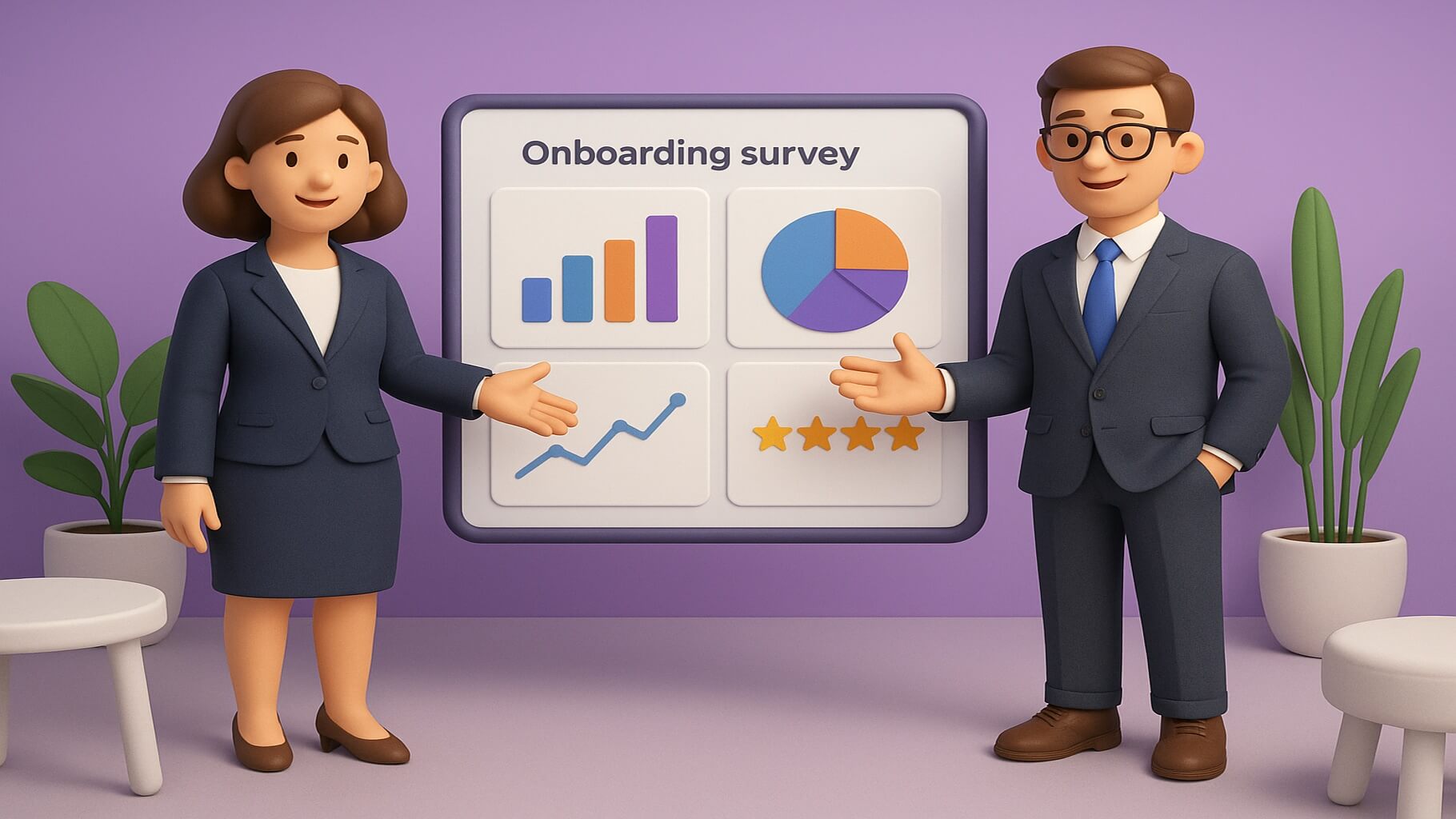
An onboarding experience survey collects feedback from new employees about their onboarding experience. These surveys measure satisfaction with training, manager support, team integration, and the overall effectiveness of the onboarding process. Organizations deploy onboarding surveys at multiple touchpoints during the first 90 days of employment. The collected feedback identifies strengths and gaps in how companies welcome new team members.
Employee onboarding surveys differ from general engagement surveys in their specific focus and timing. They target experiences unique to the first weeks and months of a new hire's tenure. Questions address job expectations, training effectiveness, and access to necessary resources. The goal is to capture sentiment when impressions matter most and new hires remember details.
Effective onboarding surveys combine quantitative ratings with open-ended feedback opportunities. Rating scales provide benchmarkable data while written responses offer context and specific suggestions. Organizations use survey responses to continuously refine their onboarding programs. A well-designed onboarding feedback survey creates dialogue between new hires and leadership.
The best onboarding survey questions focus on controllable factors that affect new-hire success. These include clarity of role expectations, quality of training materials, and manager availability. Surveys should avoid questions about factors outside organizational control or unrelated to onboarding. Focused questions generate feedback that HR teams can actually address.
Why onboarding surveys matter for new hire success
New-hire onboarding surveys provide essential visibility into the critical first-impression period. Research consistently shows that effective onboarding programs dramatically improve retention and productivity. Without structured feedback collection, organizations operate blindly during this high-stakes transition time. Onboarding surveys illuminate the new hire experience from the employee's perspective.
The first few months represent a make-or-break period for new employees as they evaluate their decision. Many new hires who leave within the first year make that decision within 90 days. Onboarding feedback surveys catch warning signs before departure decisions become final. Early intervention informed by survey data can reverse negative trajectories and retain valued talent.
Employee onboarding programs that incorporate regular feedback demonstrate organizational commitment to improvement. New employees feel valued when asked for input on their experience. This solicitation of feedback signals that leadership cares about getting onboarding right. The act of asking builds trust and engagement from day one.
Gathering feedback through surveys creates accountability for everyone involved in onboarding new hires. Managers receive data about their support effectiveness compared to peers. HR teams track whether standard processes work consistently across departments. This accountability drives continuous improvement and standardization of best practices.
Key components of an effective onboarding experience survey
Strong onboarding survey questions balance comprehensiveness with respect for the new hire's time. Each question should serve a clear purpose and drive actionable insights from responses. Question types should vary to maintain engagement and capture different kinds of information. The overall structure must flow logically through the onboarding journey stages.
Effective surveys include questions addressing these core areas of the onboarding process:
- Role clarity and alignment between the job description and actual responsibilities
- Training quality and access to necessary onboarding materials and resources
- Manager relationship and availability for questions and guidance
- Team integration and relationship building with new team members
- Technology setup and workspace readiness on the first day
- Company culture understanding and alignment with stated values
- Overall satisfaction with the onboarding experience and improvement suggestions
Question wording impacts response quality and should avoid leading toward particular answers. Neutral phrasing encourages honest feedback without suggesting expected responses. Scales should be consistent throughout to enable comparison across different question areas. Instructions must clarify how responses will be used and protected.
The survey length directly correlates with completion rates and response quality over time. Shorter surveys generate higher participation but may miss important feedback areas entirely. Finding the right balance requires testing and refinement based on observed response patterns. Most effective new hire survey programs include between ten and fifteen focused questions per touchpoint.
When to deploy onboarding surveys during the employee journey
Strategic timing maximizes the value organizations extract from employee onboarding surveys across time. Different survey touchpoints capture distinct aspects of the new hire onboarding experience. A multi-survey approach provides comprehensive coverage without overwhelming new employees with questions. Each deployment window offers unique insights unavailable at other stages.
Day 7 surveys for first-week impressions
Day 7 surveys capture first-week impressions while memories remain fresh and accurate. Questions focus on the quality of the orientation process, the effectiveness of initial training, and workspace readiness. This early feedback identifies immediate issues requiring urgent attention and quick resolution. First-week surveys demonstrate the organization's commitment to the new hire's success from the start.
Key areas to assess in day 7 surveys include:
- Pre-boarding communication quality and clarity of start date logistics
- First-day experience, including workspace readiness and team introductions
- Initial orientation, content relevance, and information overload concerns
- Technology setup completion and access to necessary systems
- Early impressions of manager availability and team welcoming behaviors
Day 30 surveys for initial role assessment
Day 30 surveys evaluate initial role performance and early progress in team integration. New employees have enough context to assess the accuracy of the job description at this point. Questions address the manager's support, the quality of performance expectations, and their clarity going forward. This checkpoint catches early misalignment before frustration builds over the course of weeks.
Important focus areas for day 30 check-ins include:
- Role clarity and alignment between expectations and actual responsibilities
- Manager relationship quality and availability for guidance and questions
- Training effectiveness in preparing for actual job requirements
- Team integration progress and collaboration opportunities experienced
- Initial challenges encountered and support received to address them
Day 60 surveys for deeper engagement evaluation
Day 60 surveys examine deeper engagement and emerging challenges as responsibilities increase substantially. New hires provide feedback on training effectiveness based on the actual job application. Questions clearly explore belonging, cultural fit, and visibility of career development opportunities. This timing catches issues affecting employee engagement before they become drivers of resignations.
Critical elements to measure at the 60-day mark include:
- Engagement level and connection to organizational mission and values
- Confidence in role performance and clarity on growth expectations
- Relationship strength with the immediate team and cross-functional colleagues
- Understanding of career development paths and advancement opportunities
- Overall satisfaction trajectory compared to initial expectations
Day 90 surveys for comprehensive assessment
Day 90 surveys provide a comprehensive assessment of the overall onboarding experience and outcomes. New employees evaluate their full journey and predict their long-term commitment level. Questions address whether they would recommend the organization to other job seekers. This milestone survey generates powerful insights into the overall effectiveness of the onboarding program. Many organizations complement these scheduled touchpoints with pulse survey programs that track sentiment continuously between major assessments.
What are the benefits of onboarding experience surveys?
Organizations implementing effective onboarding survey programs realize benefits across multiple business dimensions simultaneously. The insights generated inform decisions that affect retention, productivity, and organizational culture. A systematic approach to gathering feedback creates continuous improvement cycles. These benefits compound over time as onboarding processes become increasingly refined.
Improved retention through early intervention and support
Onboarding feedback surveys identify at-risk new hires before they decide to leave the organization. Early warning indicators in survey responses trigger proactive outreach and problem-solving efforts. Organizations that address concerns quickly demonstrate commitment, rebuilding new-hire confidence entirely. This intervention capability alone often justifies the survey program investment for most companies.
The connection between onboarding quality and new-hire retention is consistently observed in research studies. Employees who receive effective onboarding report higher job satisfaction and stronger intentions to stay longer regularly. Surveys help organizations understand which onboarding elements matter most for retention outcomes. This understanding enables focused investment in the highest-impact program components going forward.
Key retention benefits from onboarding surveys include:
- Early identification of at-risk employees before finalizing resignation decisions
- Data-driven insights connecting specific program elements to retention outcomes
- Opportunity to celebrate and reinforce practices generating positive feedback
- Safe feedback channels for concerns that employees hesitate to raise directly
Enhanced training programs based on real feedback
New-hire onboarding survey questions reveal specific gaps in the training materials and the delivery methods used. Feedback identifies topics that need additional coverage and areas where instruction is confusing. Organizations refine training content based on actual learner experience rather than assumptions alone. This feedback loop consistently accelerates training program improvement across onboarding cycles.
Survey responses highlight which training approaches resonate with different learning styles and preferences. Some new hires prefer self-paced online modules while others thrive in interactive sessions. Understanding these preferences enables more personalized training delivery going forward. Customization based on feedback simultaneously improves learning outcomes and new-hire satisfaction.
Training improvement insights from surveys include:
- Specific topics requiring additional coverage or clearer explanation
- Learning format preferences across different employee segments
- Gap analysis between training completion and actual job readiness
- Department-level variations in training effectiveness and needs
Stronger company culture from day one engagement
Onboarding surveys establish feedback as a cultural norm from the earliest moments of employment. New hires learn that the organization values their input and acts on suggestions received. This early impression shapes expectations and behaviors throughout their tenure. Culture-building begins immediately when feedback solicitation starts on day one.
Survey questions about company culture assess whether stated values align with the actual experience. New hires bring fresh perspectives, unclouded by organizational history or present politics. Their observations reveal culture gaps that long-tenured employees may overlook or accept. Organizations that extend this feedback culture through ongoing employee engagement survey programs reinforce their commitment to continuous improvement beyond the initial onboarding period.
Cultural benefits from onboarding feedback include:
- Establishing feedback as an organizational norm from day one
- Fresh perspective on the identification of culture gaps that long-tenured employees overlook
- Social integration measurement predicting engagement and retention
- Consistency assessment between stated values and actual behaviors
Why employee onboarding experience surveys are important

Measuring the onboarding experience provides unique insights unavailable through other assessment methods today. Direct feedback from new employees reveals their actual experience rather than intended design. This reality check identifies gaps between the onboarding program's design and its execution quality. Understanding real experience enables meaningful improvement rather than theoretical optimization only.
Impact on first-year retention rates and productivity
Employee onboarding surveys consistently generate data directly linking program quality to retention outcomes. Organizations tracking these metrics demonstrate clear relationships between survey scores and turnover rates. This evidence justifies substantial continued investment in onboarding program improvement initiatives. Data-driven insights replace assumptions in guiding retention strategy decisions.
New-hire productivity acceleration depends heavily on the quality of the onboarding process execution. Surveys measuring role clarity and training effectiveness correlate with time-to-productivity metrics. Organizations that optimize these factors based on feedback see faster contributions from new employees. Reduced ramp-up time directly translates into improved business performance.
Key productivity and retention impacts include:
- Direct correlation data between survey scores and actual turnover rates
- Time-to-productivity metrics connected to training effectiveness responses
- Cost avoidance calculations from reduced early turnover
- Segmented analysis revealing which employee groups face specific challenges
Connection between onboarding quality and employee engagement
New-hire onboarding directly influences long-term employee engagement throughout employment. Employees experiencing excellent onboarding report higher engagement even years after starting. This lasting impact makes onboarding investment one of the highest-return engagement strategies available. Surveys help organizations maximize this opportunity through continuous improvement approaches.
Engaged employees consistently contribute discretionary effort beyond minimum job requirements throughout their tenure. The foundation for this engagement forms during initial organizational experiences and impressions. Onboarding surveys assess whether early experiences build engagement or undermine it. Understanding this dynamic enables intervention before engagement patterns become fixed permanently.
Engagement drivers measured through onboarding surveys include:
- Role clarity reduces frustration and enables focused effort
- Manager relationship quality creates psychological safety
- Team integration, building belonging that motivates commitment
- Career path visibility inspires long-term organizational investment
ROI of optimizing the new hire experience
Quantifying the value of an onboarding survey program requires systematically connecting feedback to business outcomes measured. Organizations that calculate turnover costs demonstrate substantial savings from improved retention rates. Reduced turnover multiplied by replacement cost yields compelling return-on-investment figures. These calculations help secure leadership support for the ongoing survey program investment.
Beyond retention, optimized onboarding improves productivity metrics, generating additional business value over time. A faster ramp-up means quicker contributions to revenue-generation and operational-efficiency goals. Improvements in training effectiveness reduce wasted time on unproductive learning activities. These productivity gains compound across every new hire benefiting from program improvements.
ROI components from onboarding optimization include:
- Turnover cost savings from improved retention rates
- Productivity gains from accelerated time-to-contribution
- Engagement improvements driving customer satisfaction and innovation
- Talent acquisition advantages from a superior employer reputation
20+ best onboarding experience survey questions for first-week feedback
The first week shapes new hire perceptions more than any subsequent period in most cases. Capturing feedback while experiences remain vivid provides accurate data for improvement decisions. These survey questions address critical first-week factors that directly influence new employee success. Deploying a first-week onboarding survey demonstrates the organization's immediate commitment to new hires.
Pre-boarding and first-day experience questions
Pre-boarding communication sets expectations and builds excitement before the official start date arrives. These questions assess whether organizations prepare new employees for successful first days. Gaps identified here often represent simple fixes yielding significant experience improvements quickly.
Key pre-boarding elements to evaluate include:
- Clarity and completeness of information provided before the start date
- Manager outreach and connection before the first day of arrival
- Workspace and technology preparation upon arrival
- Welcome experience and initial team introductions
- Schedule communication for the first week's activities
20+ first-week onboarding survey questions:
- Did you receive adequate information about your start date logistics beforehand?
- How would you rate the clarity of pre-boarding communication received?
- Were you contacted by your manager before your first day began?
- Did someone greet you upon your arrival on your first day?
- How prepared did you feel walking into work on day one?
- Was your workspace ready and equipped when you arrived initially?
- Did orientation provide helpful information about the organization as a whole?
- How welcoming did team members make you feel during introductions?
- Were company policies explained clearly during your orientation session?
- Did you understand the schedule for your first week's activities?
Initial training and orientation feedback questions
Training effectiveness determines how quickly new employees become productive in their assigned roles. These questions evaluate whether onboarding training adequately prepares new hires for their responsibilities. Feedback identifies specific training gaps requiring attention before more hires experience them.
Training areas to assess in first-week surveys include:
- Quality and relevance of training materials provided
- Pace appropriateness for learning needs and absorption
- Trainer effectiveness in answering questions completely
- Resource accessibility during and after training sessions
- Connection between training content and actual job tasks
- How would you rate the quality of training materials provided?
- Did training sessions address topics relevant to your role specifically?
- Was the training pace appropriate for your learning needs present?
- Could you access the necessary resources during and after training?
- Did trainers answer your questions effectively and completely?
Technology and workspace setup questions
Technology problems create frustration, significantly undermining new-hire enthusiasm and productivity. These questions identify setup issues preventing new employees from working effectively immediately. Early identification enables quick resolution before frustration accumulates over time. Organizations using employee pulse survey tools can track ongoing technology satisfaction beyond the initial onboarding period.
Technology setup elements to evaluate include:
- Computer and software readiness on day one
- System and account access availability when needed
- IT support responsiveness for setup issues encountered
- Physical workspace quality and equipment availability
- Guidance on key technology systems usage
- Was your computer and software ready on your first day?
- Could you access necessary systems and accounts immediately when needed?
- Did you receive adequate IT support for initial setup issues?
- How would you rate the quality of your physical workspace provided?
- Were the necessary tools and equipment available when you needed them?
- Did someone explain how to use key technology systems clearly?
- How long did it take to resolve any technology issues encountered?
15+ new hire onboarding survey questions for 30-day check-ins
The 30-day milestone provides sufficient experience for evaluating the initial job performance reality. New employees now understand their roles well enough to accurately assess expectation alignment. These onboarding survey questions capture insights unavailable during the first week entirely. Manager and team relationships are sufficient for meaningful feedback collection.
Role clarity and expectation alignment questions
A clear understanding of job responsibilities predicts new-hire success better than most other factors. These questions assess whether the recruitment process created accurate expectations for new hires. Misalignment discovered at 30 days remains addressable through clarifying conversations initiated.
Role clarity elements to assess include:
- Match between the actual role and the job description presented
- Clarity and definition of job responsibilities
- Understanding of the role's contribution to team goals
- Manager communication of performance expectations
- Presence of expected responsibilities that have not materialized
15+ 30-day onboarding survey questions:
- How well does your actual role match the job description presented?
- Are your job responsibilities clear and well-defined at this point?
- Do you understand how your role contributes to team goals?
- Has your manager clarified performance expectations for your position?
- Are there responsibilities you expected that have not materialized yet?
Manager relationship and support questions
A manager's quality determines new-hire success more than any other factor measured. These questions evaluate whether managers provide adequate support during onboarding transitions. Issues identified here often require coaching intervention to improve outcomes achieved.
Manager support elements to evaluate include:
- Manager availability for questions and guidance
- Quality of feedback received on work performance
- Regularity of check-ins about onboarding progress
- Overall feeling of support from the direct manager
- Help understanding team dynamics and priorities
- How available has your manager been for questions and guidance?
- Do you receive helpful feedback on your work from your manager?
- Does your manager check in regularly about your onboarding progress?
- How supported do you feel by your direct manager overall?
- Has your manager helped you understand team dynamics and priorities?
Team integration and collaboration questions
Social integration affects retention and engagement as much as job fit factors. These questions assess whether new team members form connections supporting their success. Isolation identified through surveys requires intervention to build necessary relationships. Organizations can leverage employee recognition programs to highlight new hires demonstrating strong collaboration skills.
Team integration elements to assess include:
- Feeling of welcome from team members
- Opportunities for collaboration on projects
- Inclusion in meetings and discussions
- Comfort level asking team members questions
- Relationship building outside the immediate team
- How welcome do you feel by your team members right now?
- Have you had opportunities to collaborate with colleagues on projects?
- Do team members include you in meetings and discussions appropriately?
- How comfortable are you with asking team members questions when needed?
- Have you built relationships with colleagues outside your immediate team?
- Does your team provide adequate support for your success?
15+ employee onboarding survey questions for 90-day assessments

The 90-day milestone typically marks the end of onboarding and probationary periods. New hires have comprehensive experience, enabling a thorough evaluation of the onboarding program at this point. These employee onboarding survey questions capture the full journey perspective and future intentions. Responses now predict long-term retention and engagement outcomes with reasonable accuracy.
Long-term engagement and satisfaction questions
Overall satisfaction at 90 days strongly predicts whether new hires become long-term employees. These questions assess whether the onboarding experience lays the foundation for commitment and engagement. Responses guide strategic decisions about onboarding program priorities going forward.
Engagement elements to evaluate include:
- Overall satisfaction with the onboarding experience
- Likelihood of recommending the organization to others
- Vision of the long-term future with the organization
- Trajectory of initial enthusiasm since joining
- Current engagement level in daily work
15+ 90-day onboarding survey questions:
- How satisfied are you with your overall onboarding experience here?
- Would you recommend this organization to friends seeking employment?
- Do you see yourself working here for the foreseeable future?
- Has your initial enthusiasm about joining remained or changed?
- How engaged do you feel in your work currently?
Career development and growth opportunity questions
Visibility into career paths significantly affects retention, particularly among high-potential new hires. These questions assess whether onboarding communicates growth opportunities adequately to new employees. Gaps here require attention to retain ambitious employees long-term successfully. Organizations using pulse survey employee engagement tracking can monitor development satisfaction throughout employee tenures.
Career development elements to assess include:
- The comprehension of the many career opportunities available within the business
- Discussion of professional development goals with the manager or HR
- Visibility and accessibility of growth opportunities
- Organizational investment in employee development
- Preparation for future advancement through onboarding
- Do you understand potential career paths within this organization?
- Has anyone discussed your professional development goals with you?
- Are growth opportunities visible and accessible from your position?
- Do you feel the organization invests in employee development?
- Has onboarding prepared you for future advancement opportunities here?
Cultural fit and organizational alignment questions
Cultural alignment determines whether new hires thrive or struggle, regardless of skill match. These questions assess whether the company culture aligns with expectations set during recruitment. Misalignment discovered here requires an honest conversation about fit realities.
Cultural alignment elements to evaluate include:
- Match between actual culture and expectations
- Alignment of organizational values with personal values
- Consistency of leadership behavior with stated values
- Sense of belonging in organizational culture
- Authenticity of the organization compared to recruitment messaging
- How well does the actual company culture match what you expected?
- Do organizational values align with your personal values and priorities?
- Does leadership behavior reflect stated organizational values consistently?
- Do you feel you currently belong in this organizational culture?
- How authentic does the organization feel compared to recruitment messaging?
- Would you describe the overall company culture as positive and supportive?
Best practices for onboarding experience feedback answers analysis
Collecting onboarding feedback provides value only when organizations analyze and act on the insights it yields. Effective analysis transforms raw survey responses into actionable improvement priorities for teams. A systematic approach ensures no valuable feedback falls through analytical cracks unexamined. These best practices maximize the value derived from new-hire feedback.
How to identify patterns in onboarding feedback responses
Pattern identification reveals systemic issues affecting multiple new hires rather than isolated incidents. Look for themes that appear across multiple responses, indicating common experiences. Statistical analysis of rating distributions highlights areas that consistently perform below expectations. Text analysis of open-ended responses reveals specific issues behind numerical ratings.
Segmenting data by department, role, or time period reveals important variations in experiences. Some onboarding challenges may exist only in specific organizational areas or circumstances. This granular analysis enables targeted intervention rather than broad organizational changes. Understanding variation patterns prevents overgeneralization from limited feedback samples.
Effective pattern identification strategies include:
- Looking for themes appearing consistently across multiple responses
- Tracking responses over time to measure improvement effort results
- Comparing responses across questions measuring similar constructs
- Triangulating quantitative ratings with qualitative open-ended feedback
Converting feedback into actionable process improvements
Prioritize improvements based on the impact and feasibility assessment conducted systematically together. High-impact, low-effort improvements offer the best starting points for action plans developed. Create specific action items with clearly defined owners, timelines, and success metrics. Vague improvement intentions rarely translate into actual change without this specificity.
Involve stakeholders affected by proposed changes in solution design activities actively. Managers implementing onboarding improvements need input into feasibility and approach details. Cross-functional collaboration ensures solutions address root causes rather than symptoms only. Inclusive improvement processes build buy-in for change implementation efforts. Organizations can recognize teams implementing successful improvements through employee rewards programs that reinforce continuous improvement behaviors.
Steps for converting feedback to action include:
- Involving stakeholders affected by proposed changes in solution design
- Testing improvements with pilot groups before organization-wide rollout
- Measuring pilot results against pre-change baselines for validation
- Communicating changes made based on feedback to close the loop
Benchmarking your onboarding experience against industry standards
External benchmarks provide context for interpreting internal survey results meaningfully and accurately. Industry-specific benchmarks enable comparison with relevant peer organizations in the market. Generic benchmarks offer a broader perspective but less precise comparison value overall. Both benchmark types provide useful context for interpretation.
Purchase benchmarking data from survey vendors or industry research organizations available now. Many vendors provide anonymized comparison data from their client base for subscribers. Industry associations sometimes publish benchmarking studies relevant to their members. Multiple benchmark sources provide a more robust comparison context for analysis.
Benchmarking best practices includes:
- Purchasing benchmarking data from survey vendors or industry organizations
- Using internal benchmarks across departments or time periods for comparison
- Setting realistic improvement targets based on achievable excellence levels
- Tracking competitive positioning in talent markets through benchmark comparison
10+ onboarding survey examples across different industries

Different industries face unique onboarding challenges, requiring customized survey approaches. Understanding the industry context significantly improves question relevance and response quality. These examples demonstrate how organizations adapt core questions to the specific environments they encounter. Industry-specific questions supplement universal onboarding elements, which are assessed consistently.
Technology company onboarding survey templates
Technology organizations onboard employees into complex technical environments with rapid change present. Survey questions specifically address tool proficiency, codebase familiarity, and understanding of the development process. Remote work prevalence requires attention to the effectiveness of virtual onboarding and the quality of connections.
Technology-specific elements to assess include:
- Technical environment setup and configuration effectiveness
- Documentation adequacy for systems requiring use
- Development process and workflow clarity
- Code review and deployment procedure explanation
- Virtual onboarding effectiveness for remote team connections
Technology industry onboarding survey examples:
- How effective was your technical environment setup and configuration process?
- Did you receive adequate documentation for the systems you need to use?
- How clear is the development process and workflow in your team?
- Were code review and deployment procedures explained effectively to you?
- Do you have access to the necessary technical resources and expertise?
- How effective was virtual onboarding for building team connections remotely?
Healthcare organization new hire feedback examples
Healthcare onboarding involves compliance requirements, patient safety protocols, and credential verification processes. Survey questions specifically address regulatory training, clinical competency, and care team integration. The stakes of inadequate onboarding in healthcare require thorough feedback collection approaches. Organizations can implement pulse survey software to maintain ongoing feedback collection beyond initial onboarding in high-stakes healthcare environments.
Healthcare-specific elements to evaluate include:
- Compliance training adequacy for regulatory requirements
- Clinical orientation and competency assessment effectiveness
- Patient safety protocol understanding and role clarity
- Credential and access provisioning timeliness
- Care team integration and electronic health record training
Healthcare industry onboarding survey examples:
- Did compliance training adequately prepare you for regulatory requirements?
- How effective was your clinical orientation and competency assessment process?
- Do you understand patient safety protocols and your role in them?
- Were your credentials and access provided promptly?
- How well integrated do you feel with your care team currently?
- Did you receive adequate training on electronic health record systems?
Retail and hospitality onboarding question frameworks
Retail and hospitality on-board front-line employees who interact with customers often. Survey questions address customer service training, point-of-sale systems, and understanding of brand standards. High turnover in these industries makes efficient onboarding especially critical for success.
Retail and hospitality elements to assess include:
- Customer service training effectiveness and preparation
- Point-of-sale and inventory system proficiency
- Brand standards understanding and representation
- Product or menu knowledge adequacy
- Support during busy periods and safety training
Retail and hospitality onboarding survey examples:
- Did training prepare you to deliver excellent customer service effectively?
- How confident do you feel using point-of-sale and inventory systems?
- Do you understand brand standards and how to represent them properly?
- Was product or menu knowledge training adequate for customer questions?
- How supported do you feel during busy periods and peak times?
- Did you receive adequate training on safety and emergency procedures?
How to create effective onboarding experience feedback examples
Question design significantly impacts the quality and usefulness of feedback collected systematically. Thoughtful construction ensures that questions consistently elicit honest, actionable responses from new hires. These principles guide the creation of effective onboarding survey questions for any organization. Following best practices substantially improves response quality and analytical value.
Designing questions that elicit honest, actionable responses
Write questions in clear, simple language, avoiding jargon that new hires may not understand. Complex questions confuse respondents and yield unreliable responses that mislead analysis. Test questions with a small group before deployment to identify clarity issues. Revise any questions generating confused looks or requests for explanation immediately.
Focus questions on specific, observable experiences rather than abstract concepts or feelings alone. Specific questions generate actionable feedback, while vague questions typically yield unusable responses. Instead of asking about general satisfaction, ask about specific process elements experienced. This specificity enables targeted improvement rather than mere awareness of general dissatisfaction. Organizations can pair surveys with employee recognition and rewards programs to reinforce the desired behaviors identified through feedback.
Effective question design principles include:
- Focusing on specific, observable experiences rather than abstract concepts
- Avoiding leading questions suggesting desired responses
- Including questions about both positive and negative aspects
- Testing questions for clarity with representative respondents before launch
Balancing quantitative ratings with qualitative insights
Rating scales provide benchmarkable data enabling comparison and trend tracking over time. Consistent scale use across questions simplifies analysis and the respondent experience. Five-point scales offer adequate granularity without overwhelming respondents with too many choices. Include scale anchors that clarify what each rating level means.
Open-ended questions capture context and specifics that are typically unavailable through ratings alone. Follow-up questions asking "why" behind ratings reveal actionable insights for improvement. Limit open-ended questions to reduce survey fatigue and ensure high completion rates. Strategic placement of open-ended questions maximizes the insight value achieved.
Balance considerations for survey design include:
- Following-up ratings with open-ended "why" questions for context
- Making strategic questions required while allowing optional responses elsewhere
- Using conditional logic to probe low ratings more deeply
- Integrating both quantitative and qualitative analysis for insights
Timing your onboarding survey deployment for maximum response rates
Deploy surveys when new hires can focus without competing deadlines or distractions present. Mid-week deployments typically outperform Monday or Friday sends in terms of response rates. Avoid deployment during known busy periods or organizational events competing for attention. Timing optimization significantly impacts participation rates and the quality of the data achieved.
Send surveys at consistent intervals tied to the hire date rather than arbitrary calendar dates.
Automated deployment based on start date ensures consistent timing across all new hires. Manual deployment risks inconsistency and missed survey opportunities over time. Additionally, automation greatly lessens the amount of administrative work that HR teams have to do. Organizations can supplement scheduled onboarding surveys with targeted pulse survey questions at key moments to capture time-sensitive feedback.
Timing best practices include:
- Automating deployment based on hire date for consistency
- Setting clear response deadlines while allowing adequate completion time
- Communicating the survey purpose and confidentiality clearly up front
- Sending reminders at reasonable intervals without becoming annoying
Common mistakes in the onboarding survey for new hires design

Avoiding common pitfalls improves the effectiveness of onboarding surveys and the value of the feedback collected. Many organizations undermine their survey programs through preventable design and deployment errors. Recognizing these mistakes enables proactive avoidance rather than relying on learning from failure alone. These lessons come from extensive experience with observed onboarding survey programs.
Avoiding survey fatigue with streamlined question sets
Survey fatigue occurs when employees receive too many surveys or overly long individual surveys. New hires experiencing survey fatigue provide lower-quality responses or skip surveys entirely. Coordination across HR programs prevents overwhelming new employees with competing feedback requests. Streamlined question sets respect the respondent's time while gathering essential information needed.
Each question should justify its inclusion by clearly connecting to actionable insights. Questions retained from previous versions without a clear purpose should be removed decisively. Regular survey review identifies questions producing unused data that can be eliminated. Shorter surveys generate higher response rates and more thoughtful individual responses.
Strategies to prevent survey fatigue include:
- Justifying each question through a clear connection to actionable insights
- Regularly reviewing surveys to remove questions producing unused data
- Distributing multiple short surveys over time rather than single long surveys
- Providing accurate estimated completion times to set expectations
Ensuring psychological safety for honest feedback
New hires may fear negative consequences from providing honest, critical feedback to organizations. This fear suppresses valuable insights and undermines the entire survey program's purpose. Creating genuine psychological safety typically requires more than confidentiality promises alone. Demonstrating that feedback drives improvement without retaliation builds necessary trust.
Aggregate reporting prevents the identification of individual respondents providing specific feedback. Small team sizes may require combining data across groups for adequate anonymity. Communicate clearly how data will be reported to assure respondents of protection. Technology solutions can enforce anonymity rules automatically for consistent protection. Creating positive experiences through kudos employee recognition complements constructive survey feedback by building trust and psychological safety.
Psychological safety practices include:
- Aggregating reporting to prevent the identification of individual respondents
- Demonstrating responsiveness to past feedback through visible improvements
- Training managers on appropriate responses, avoiding defensive reactions
- Communicating clearly how data will be reported and protected
Preventing bias in question wording and response options
Question wording bias systematically skews responses in particular directions regardless of experience. Common biases include leading questions, loaded language, and social desirability pressure observed. Review questions for potential bias before deployment to audiences. External review by someone unfamiliar with the program often identifies overlooked biases.
Response option bias occurs when scales or choices systematically favor certain responses over others. Asymmetric scales with more positive than negative options bias toward positive responses. Ensure response options cover the full range of possible experiences equally. Balanced scales enable accurate measurement of actual sentiment distribution.
Bias prevention strategies include:
- Ensuring response options cover the full range of possible experiences equally
- Randomizing question order to mitigate order effects
- Prompting recall of specific timeframes to address recency bias
- Testing with split samples to reveal order effects requiring adjustment
15+ onboarding questions for remote and hybrid employees
Remote and hybrid onboarding present unique challenges that require targeted feedback-collection approaches. Physical distance significantly complicates training, relationship building, and cultural transmission for organizations. These questions address elements specific to distributed workforce onboarding situations encountered. Organizations with remote employees should supplement standard questions with these additions.
Virtual onboarding technology and communication questions
Technology serves as the primary interface for remote employee onboarding experiences today. Problems with virtual tools have an outsized negative impact compared to those observed in office environments. These questions identify technology barriers that immediately prevent remote new hires from succeeding.
Virtual technology elements to evaluate include:
- Effectiveness of virtual onboarding tools and platforms
- Technical difficulties experienced during remote training
- Explanation adequacy for video conferencing and collaboration tools
- Communication expectation, clarity, and preferred channel guidance
- Equipment and technology delivery timing before the start date
15+ remote and hybrid onboarding survey questions:
- How effective were virtual onboarding tools and platforms for your learning?
- Did you experience technical difficulties during the remote training sessions held?
- Were video conferencing and collaboration tools explained adequately for you?
- How clear were communication expectations and preferred channels to use?
- Did you receive equipment and technology in time for your start date?
Remote team connection and belonging questions
Building relationships remotely requires intentional effort beyond the organic office interactions available. These questions assess whether remote onboarding fosters the social connections new hires need. Isolation risks require proactive monitoring and intervention for remote employees specifically. Organizations using employee engagement survey tools can track remote employee belonging throughout employment tenures.
Remote connection elements to assess include:
- Feeling of connection to team members despite physical distance
- Adequacy of virtual face time with the manager
- Intentional relationship-building activities in remote onboarding
- Inclusion in team conversations and decisions
- Overall sense of belonging in the organization
- Do you feel connected to your team members despite physical distance?
- Have you had adequate virtual face time with your manager regularly?
- Were intentional relationship-building activities part of your remote onboarding?
- Do you consistently feel included in team conversations and decisions?
- How strong is your sense of belonging in this organization currently?
Work-from-home setup and support questions
Remote work effectiveness depends on adequate home office setup and ongoing support. These questions identify resource gaps preventing remote new hires from working effectively. Support needs may differ significantly from those of in-office employees and require attention.
Work-from-home elements to evaluate include:
- Home workspace adequacy for productive work
- Organization's provision of necessary equipment
- Internet connectivity reliability for video and collaboration
- Support resource accessibility when working remotely
- Remote work enables effective job performance
- Is your home workspace adequate for productive work requirements?
- Did the organization provide the necessary equipment for remote work success?
- Do you have reliable internet connectivity for video and collaboration needs?
- Are support resources accessible when working remotely?
- How well does remote work enable you to perform your job effectively?
- Did you receive guidance on work-from-home best practices and boundaries?
New hire experience improvement strategies from survey data

Collecting onboarding feedback creates responsibility to act on insights gathered through surveys. Improvement strategies translate feedback into tangible changes, benefiting future new hires. A systematic approach ensures survey insights drive meaningful program evolution over time. These strategies maximize the return on the survey program investment.
Creating action plans from onboarding feedback trends
Identify themes appearing consistently across multiple survey responses and time periods analyzed. Consistent themes indicate systemic issues warranting formal improvement initiatives undertaken. Create action plans with clearly defined owners, timelines, and success metrics. Formal plans ensure accountability for promptly addressing identified improvement opportunities.
Prioritize actions based on impact, feasibility, and alignment with current organizational priorities. Limited resources require focusing on the highest-value improvements rather than addressing everything simultaneously. Quick wins build momentum while larger initiatives proceed through longer timelines. Balanced portfolios of short- and long-term improvements maintain visibility into progress. Recognizing teams implementing successful improvements through employee reward ideas reinforces continuous improvement behaviors.
Action planning best practices include:
- Identifying consistent themes across multiple responses and time periods
- Assigning clear ownership with authority to drive completion
- Involving stakeholders in solution design for practical insights
- Maintaining balanced portfolios of quick wins and longer-term initiatives
Closing the feedback loop with new hires
Communicate survey results and planned actions to demonstrate responsiveness to feedback provided. New hires who see impact from their input become engaged feedback providers on an ongoing basis. This communication reinforces the value of participating in future surveys. Closing the loop strengthens the feedback culture organizations aim to build.
Share the improvements made based on previous feedback directly with incoming new hires. This demonstrates organizational commitment to continuous improvement based on employee input. New hires entering improved programs benefit from predecessors providing candid feedback earlier. This narrative reinforces the importance of providing honest feedback.
Feedback loop closure strategies include:
- Communicating survey results and planned actions broadly
- Sharing success stories of changes driven by new hire feedback
- Personal follow-up on individual concerns requiring urgent attention
- Creating channels for ongoing feedback beyond formal survey touchpoints
Measuring the impact of onboarding program changes
Establish baseline metrics before implementing changes to enable post-implementation impact measurement. Compare post-change survey results to baselines to quantify the improvement achieved by the changes. Statistical analysis determines whether observed changes exceed the expected normal variation. Rigorous measurement validates the investment in improvement and guides future priorities. Implementing pulse survey tools enables ongoing measurement of the impact of change over time.
Connect onboarding metrics to business outcomes, clearly demonstrating program value to leadership. Retention improvements, productivity gains, and engagement increases translate to business impact. Quantified business impact secures ongoing investment in onboarding program improvement efforts. Strategic positioning of onboarding programs influences organizational priority and resource allocation.
Impact measurement approaches include:
- Establishing baseline metrics before implementing changes
- Tracking leading indicators predicting retention and engagement outcomes
- Connecting onboarding metrics to business outcomes for leadership visibility
- Sharing success stories demonstrating improvement program impact
10+ follow-up onboarding experience survey questions for managers
Manager perspectives complement new hire feedback with alternative viewpoints on onboarding effectiveness. Managers observe new-hire integration from positions, enabling unique insights unavailable otherwise. These questions capture the manager's observations about the onboarding program's effectiveness. Combining manager and new hire feedback provides comprehensive assessment data.
Manager perspective on new hire integration
Managers witness the new hire's progress through daily interactions and performance observations. Their assessments validate or challenge new hires' self-reports based on survey responses. Discrepancies between perspectives identify perception gaps requiring attention and clarification. Manager insights add valuable context to new hire feedback analysis.
Manager integration observations to capture include:
- New hire preparedness for the role after onboarding completion
- Adequacy of onboarding coverage for the necessary job skills
- Speed of team integration observed
- Gaps in onboarding are impacting early performance
- Effectiveness of pre-boarding communication and preparation
10+ manager survey questions about new hire onboarding:
- How prepared was the new hire for their role after onboarding?
- Did onboarding adequately cover the necessary job skills and knowledge?
- How quickly did the new hire integrate with the team?
- Were there gaps in onboarding that impacted early performance?
- How effective was the pre-boarding communication and preparation process?
Training effectiveness from the manager's viewpoint
Managers observe the impact of training through the new hire's demonstrated job performance. Their perspective identifies whether training translates into actual job competence. Training that appears effective to new hires may prove inadequate from the manager's observation. This external validation substantially strengthens the assessment of training effectiveness.
Manager training observations to assess include:
- Training preparation adequacy for actual job responsibilities
- Additional training needs for new hires in specific roles
- Alignment of onboarding materials with current job requirements
- Knowledge gaps are evident after the formal training conclusion
- Effectiveness comparison between hands-on and formal instruction
- Did training prepare the new hire for actual job responsibilities?
- What additional training would benefit new hires in this role?
- How well did onboarding materials align with current job requirements?
- Were there knowledge gaps evident after formal training concluded?
- How effective was hands-on training compared to formal instruction?
Support needs for onboarding team members
Managers need support to onboard new team members effectively. These questions identify resource and training needs for managers in onboarding roles. Investing in manager capability improves onboarding outcomes across all new hires supported. Highlighting managers who excel at new-hire onboarding support through peer-to-peer recognition programs reinforces effective onboarding behaviors.
Manager support needs to evaluate:
- Adequacy of resources for effective new hire onboarding
- Support that would improve manager onboarding effectiveness
- Clarity of manager responsibilities in the onboarding process
- Information receipt about new hires before start dates
- Organizational support improvements during onboarding periods
- Do you have adequate resources to onboard new hires effectively?
- What support would help you be more effective at onboarding?
- How clear are your responsibilities in the new hire onboarding process?
- Do you receive adequate information about new hires before they start?
- How could the organization better support managers during onboarding periods?
How to measure onboarding survey success and ROI

Demonstrating survey program value requires systematic measurement that connects feedback to the outcomes achieved. Leadership support depends on clear evidence of the return on the survey program investment. These measurement approaches quantify impact and guide ongoing program optimization decisions. Strategic measurement positions onboarding surveys as drivers of business success.
Key metrics for evaluating onboarding program effectiveness
Response rates indicate whether surveys reach new hires and generate adequate data volumes. Low response rates limit analytical value and may indicate deployment or design issues. Track response rates over time and across segments, identifying participation patterns present. Targeted intervention addresses low participation in specific groups observed.
Score trends reveal whether onboarding programs improve, decline, or remain stable over time. Positive trends validate investment in improvement, while negative trends signal emerging issues. Segment-level trends identify which areas drive overall patterns observed in data. Trend analysis provides essential context for accurately interpreting current results. Incorporating eNPS measurement provides additional insight into overall employee sentiment during onboarding.
Key effectiveness metrics include:
- Response rates indicating survey reach and data volume adequacy
- Score trends revealing program improvement or decline over time
- Time-to-productivity metrics connecting onboarding to business outcomes
- Retention correlation analysis linking responses to actual turnover outcomes
Connecting onboarding feedback to retention and performance
Build statistical models to predict retention from observed onboarding survey response patterns. Machine learning approaches can identify complex relationships beyond simple correlation analysis. Predictive models enable proactive intervention by identifying at-risk new hires early. This capability transforms surveys from reactive measurement to proactive retention tools.
Compare retention rates across high and low survey score cohorts directly measured.
Substantial differences validate the survey's relevance to business outcomes important to leadership. Share these analyses with leadership to demonstrate the survey program's achieved business impact. Evidence-based advocacy secures ongoing investment in survey capabilities, maintained.
Retention and performance connections include:
- Statistical models predicting retention from response patterns
- Performance management data linked to survey responses
- Regression analysis controlling for confounding variables
- Cohort comparisons across high and low survey score groups
Demonstrating value to leadership and stakeholders
Translate survey findings into financial impact terms that leadership understands and values clearly. Retention improvements multiplied by turnover cost estimates demonstrate substantial savings achieved. Productivity acceleration creates revenue value, quantifiable with appropriate assumptions. Financial framing positions onboarding surveys as business investments rather than HR activities.
Create executive dashboards summarizing key onboarding metrics for ongoing leadership visibility. Visual representations communicate trends and patterns more effectively than detailed reports. Focus dashboards on metrics connected to strategic priorities that leadership cares about most. Dashboard design should enable quick assessment of program health and trends. Recognizing groups that achieve strong onboarding survey results through team rewards programs reinforces the program's importance.
Value demonstration strategies include:
- Translating findings into financial impact terms, leadership understands
- Creating executive dashboards summarizing key metrics visually
- Presenting case studies of specific improvements driven by insights
- Benchmarking against industry standards, demonstrating competitive positioning
Onboarding experience survey question frequency and timing
Strategic timing maximizes insight value while respecting new hire attention and capacity limits. Too frequent surveys create fatigue, while too infrequent surveys miss important moments entirely. Finding an optimal balance requires understanding feedback goals and constraints on the new-hire experience. These guidelines help organizations design effective survey deployment schedules.
Optimal survey schedule throughout the onboarding journey
Most organizations benefit from four survey touchpoints during the first 90 days of experience. Surveys capture distinct journey phases comprehensively. Each touchpoint addresses stage-appropriate questions while avoiding redundancy with other deployed touchpoints.
Flexibility within the standard framework accommodates organizational and role-specific needs present. Some roles may warrant additional touchpoints due to extended training periods encountered. High-risk positions might benefit from more frequent check-ins during critical periods. Customization based on context improves program relevance and value achieved.
Schedule optimization considerations include:
- Automating deployment based on hire date for consistency
- Coordinating manager survey timing with new hire surveys
- Customizing touchpoints for roles with extended training periods
- Maintaining flexibility while ensuring comprehensive journey coverage
Balancing feedback collection with new hire workload
New hires face substantial information overload during the initial weeks and months of employment. Adding survey burden risks overwhelming and undermining the onboarding experience itself. Shorter, focused surveys minimize time investment while still gathering essential feedback. Respect for new hire time demonstrates organizational values in practice.
Deploy surveys during relatively calm periods, avoiding known busy times or deadlines present. Training intensives, major project deadlines, and organizational events compete for attention significantly. Timing surveys between these periods improves response quality and completion rates. Knowledge of organizational rhythms informs optimal deployment timing decisions.
Workload balance strategies include:
- Deploying surveys during relatively calm periods
- Providing flexibility in response windows, accommodating varying workloads
- Communicating the expected completion time accurately
- Coordinating across HR programs to prevent survey overload
When to deploy pulse surveys vs comprehensive assessments
Pulse surveys provide frequent, brief sentiment checks between comprehensive onboarding assessments conducted. These short surveys track engagement trends without the extensive time investment required. Pulse surveys excel at early warning detection between scheduled comprehensive surveys. Matter's 5-point Likert scale makes pulse survey completion quick and consistent.
Comprehensive assessments provide depth, while pulse surveys provide frequency in feedback programs. Combining both approaches creates balanced coverage that addresses the different analytical needs. Comprehensive surveys enable detailed analysis, while pulse surveys track trends over time. This combination maximizes insight while minimizing the respondent burden experienced. Integrating both approaches through employee engagement survey software creates seamless feedback experiences.
Survey type selection considerations include:
- Using pulse surveys for frequent sentiment tracking between touchpoints
- Reserving comprehensive assessments for major milestone evaluations
- Implementing trigger-based surveys for specific events or concerns
- Analyzing pulse and comprehensive data together for integrated insights
Technology and tools for employee onboarding experience surveys
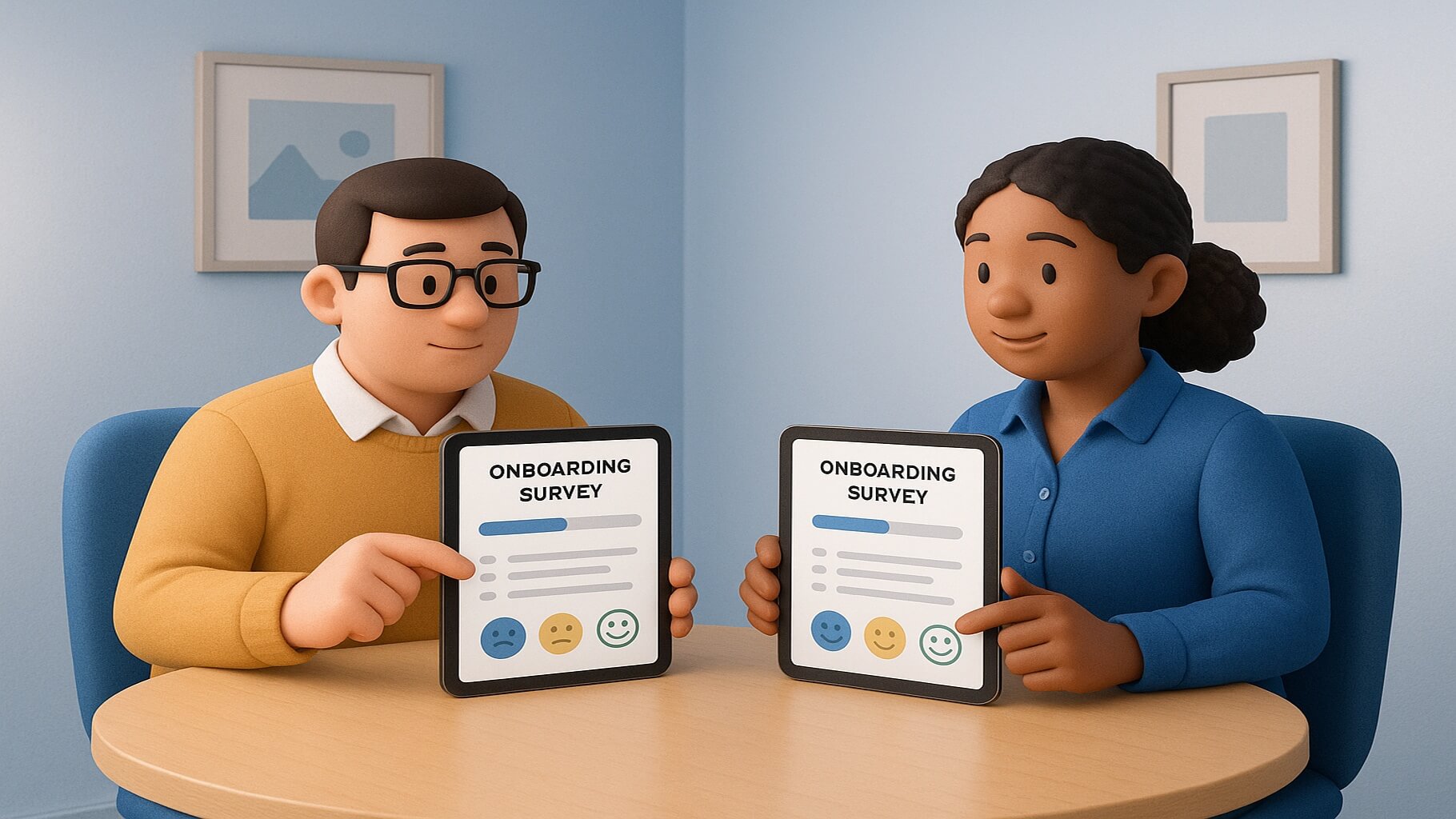
Technology enables organizations to deploy, analyze, and plan actions efficiently at scale. Manual approaches limit survey program sophistication and consume excessive administrative resources. Modern survey platforms provide capabilities that substantially transform the effectiveness of onboarding feedback programs. Selecting appropriate technology significantly impacts the program's success.
Features to look for in onboarding survey platforms
Automated deployment based on hire date ensures consistent timing without manual intervention. Look for platforms that trigger surveys automatically from HRIS hire date information feeds. Manual deployment creates inconsistencies and an administrative burden, effectively limiting program scale. Automation represents a must-have capability for serious onboarding survey programs.
Template libraries with science-backed questions accelerate survey creation by providing proven content. Pre-built templates that address common onboarding elements substantially reduce design effort. Customization capability enables adaptation to organizational context while leveraging expert design. Templates plus customization provide an optimal balance for most organizations. Selecting an employee recognition platform that includes survey capabilities creates integrated employee experience programs.
Essential platform features include:
- Automated deployment based on hire dates from HRIS integration
- Template libraries with science-backed question content
- Real-time analytics dashboards for immediate insight access
- Confidentiality protections build trust for honest feedback
Integration with HRIS and performance management systems
HRIS integration enables automatic survey triggering based on hire dates maintained in systems. Manual data transfer creates errors and an administrative burden, limiting the program's effectiveness. Bi-directional integration enables survey data to inform HRIS records and reporting produced. Integration reduces effort while substantially improving data accuracy and timeliness.
Performance management integration connects onboarding feedback to ongoing development tracking, which is maintained. Onboarding insights inform continuous goal-setting and development planning for new employees. Longitudinal view from onboarding through performance enables valuable trajectory analysis. Integrated systems provide comprehensive visibility into the employee experience for HR teams.
Integration benefits include:
- Automatic survey triggering from HRIS hire date information
- Single sign-on reduces login friction and improves participation
- Data warehouse integration enabling advanced analytics
- Performance management connection for longitudinal tracking
Mobile-friendly survey delivery for modern workforces
Mobile-optimized surveys enable respondents to respond from any device at convenient times. Many new hires prefer mobile interaction to desktop access for surveys. A poor mobile experience creates friction, reducing participation rates and the quality of completions. Mobile-first design should be the standard for modern survey platforms.
Push notifications on mobile devices significantly increase survey awareness and response rates. Email alone may get lost in busy inboxes, while push notifications grab attention. Multi-channel notifications delivered to respondents through their preferred channels improve participation rates. Notification preferences should be configurable, respecting individual communication preferences.
Mobile optimization requirements include:
- Mobile-first design enabling response from any device
- Push notifications increase awareness and response rates
- Offline capability for field workers or unreliable connectivity
- Progress saving, preventing lost responses from interruptions
How to increase response rates for onboarding surveys
Response rates determine the statistical validity and practical usefulness of survey data collected. Low participation limits analysis options and may introduce bias into the results generated. Maximizing response rates requires attention to multiple factors influencing participation decisions. These strategies address common barriers to survey participation.
Best practices for survey communication and timing
Communicate the survey purpose and how the results will drive improvement clearly upfront. New hires are more willing to participate when they understand the value of their feedback. Explain how previous feedback has improved the program for current new hires. Purpose clarity and demonstrated impact significantly motivate participation.
Deploy surveys during work hours when respondents can focus without personal time competing. Surveys sent after hours or on weekends may be ignored or completed distractedly. Work-time deployment signals organizational commitment to feedback as a legitimate work activity. This positioning encourages thoughtful, thorough response completion.
Communication best practices include:
- Deploying surveys from recognizable, trusted senders
- Providing clear completion deadlines with adequate response time
- Explaining survey purpose and how results drive improvement
- Sending reminders at reasonable intervals to non-respondents
Incentivizing participation without biasing responses
Small incentives can boost participation without biasing responses. Incentives for completion rather than content avoid influencing what respondents report. Drawing prizes among completers motivates participation without creating individual response pressure. Thoughtful incentive design increases participation while maintaining response integrity.
Recognition for participation rates can motivate managers to appropriately encourage team completion. Manager leaderboards showing completion rates create healthy competition, boosting participation. Recognition focuses on completion behavior rather than response content, preserving honesty. This approach enlists managers in actively promoting survey participation. Matter's coin-based reward system enables rewarding survey completion as part of broader employee rewards system programs without biasing responses.
Incentive strategies include:
- Offering small incentives for completion rather than specific answers
- Creating manager recognition for team completion rates
- Using coin-based rewards integrated with broader recognition programs
- Avoiding penalties for non-completion that create resentment
Creating a feedback-friendly onboarding culture
Establish feedback as a cultural expectation from the first day onward through consistent messaging. Orientation should include an explanation of the feedback culture and the set participation expectations. Early establishment of norms shapes behavior throughout the employment experience afterward. Cultural messaging reinforces survey participation as a valued behavior expected.
Leaders who visibly participate in feedback processes model the expected behavior for employees observing. Senior leadership completing surveys and discussing the results clearly demonstrates organizational commitment. Visible leadership engagement signals that feedback matters at all organizational levels. This modeling significantly influences behavior throughout the organization.
Culture-building strategies include:
- Establishing feedback expectations from day one through orientation
- Leaders modeling feedback, participation, and discussing results
- Manager conversations reinforcing survey participation expectations
- Celebrating improvements made from feedback publicly
Onboarding experience feedback answers: what to look for
Interpreting onboarding survey responses requires understanding what different patterns indicate meaningfully. Not all feedback carries the same urgency or actionability for improvement efforts. Knowing what to look for enables appropriate prioritization of response and intervention activities. These guidelines help interpret feedback effectively for maximum program value.
Red flags in new hire feedback that predict turnover
Strong negative responses to manager relationship questions indicate a high turnover risk. Manager quality consistently represents the strongest predictor of retention outcomes. Early intervention addressing manager-employee relationship problems can prevent impending departures. Prioritize response to manager-related concerns in feedback received.
Declining sentiment across successive surveys suggests a deteriorating experience requiring urgent attention. New hires whose scores drop from Day 30 to Day 60 face elevated turnover risk. This pattern indicates that initial optimism has given way to reality disappointment. Immediate outreach to understand and address concerns may prevent departure.
Key turnover warning signs include:
- Strong negative responses to manager relationship questions
- Declining sentiment across successive survey touchpoints
- Role-expectation misalignment is creating ongoing frustration
- Social isolation signals predicting belonging and connection problems
Positive indicators of successful onboarding
High scores on manager support questions predict retention and engagement strongly over time. Strong manager relationships create a foundation for long-term success and satisfaction. Celebrate and reinforce management behaviors that drive positive feedback from new hires. Manager excellence deserves recognition and replication across the organization.
Increasing scores across survey touchpoints indicate an improving experience and growing engagement. New hires whose sentiment strengthens over time are building commitment to stay. This positive trajectory suggests that effective onboarding program components are working well together. Reinforce factors contributing to positive trends through continued investment.
Positive success indicators include:
- High scores on manager support and availability questions
- Increasing scores across successive survey touchpoints
- Strong role clarity and expectation alignment responses
- Social connection and belonging indicators above benchmarks
Neutral responses and what they really mean
Neutral responses may actually indicate disengagement rather than true middle-ground sentiment. Respondents clicking the middle options may be rushing through without genuine consideration. Pattern analysis across questions reveals whether neutrality reflects experience or disengagement. Follow-up questions probing neutral responses can clarify meaning and intent. Tracking engagement gaps through employee recognition software can help address disengagement revealed in neutral responses.
Consistent neutral scores suggest respondent reluctance to provide extreme feedback in either direction. Cultural factors or personality traits may drive preference for moderate response selection. Understanding these patterns prevents misinterpreting neutrality as problematic satisfaction levels. Demographic or cultural segmentation may reveal systematic patterns of neutral responses.
Neutral response interpretation considerations include:
- Analyzing whether neutrality reflects disengagement or genuine sentiment
- Considering topic unfamiliarity as a potential neutral response driver
- Using open-ended follow-up questions for context and explanation
- Integrating quantitative and qualitative analysis for an accurate understanding
How Matter can help with onboarding experience surveys
Matter provides a comprehensive platform for collecting and acting on new hire feedback effectively. The platform integrates onboarding surveys with recognition and rewards to provide complete coverage of the employee experience. Organizations using Matter transform onboarding feedback from an administrative exercise into a strategic retention tool. Matter's Slack-first and Teams-first approach meets new hires where they already work.
Matter's automated onboarding survey deployment and tracking
Matter automates the deployment of onboarding surveys based on each new hire's start date. Surveys are sent without manual intervention required. This automation ensures consistent timing across all new hires without administrative burden. HR teams focus on insights and action rather than survey logistics.
Science-backed survey templates provide proven question content ready for immediate deployment. Templates address critical onboarding elements identified through research and practice evidence. Organizations can customize templates to address specific organizational context and priorities. This balance of expertise and customization optimizes the effectiveness of the survey.
Key Matter survey capabilities include:
- Automated deployment based on hire dates without manual intervention
- Science-backed templates with proven question content
- Real-time analytics tracking response rates and sentiment trends
- Integration with broader Matter analytics for comprehensive visibility
5-point Likert scale for simplified new hire feedback
Matter uses a 5-point Likert scale for surveys based on research demonstrating reliability advantages. This format proves more user-friendly than traditional 11-point scales on digital devices. Fully labeled response options eliminate confusion about what each rating means. Simplified response improves participation rates and data quality simultaneously.
The 5-point scale enables eNPS calculation and accurately identifies promoters, passives, and detractors. Promoters responding with strongly agree indicate likely recommendation and retention behavior. Detractors responding with 'disagree' or 'below' indicate elevated turnover risk. This segmentation enables targeted intervention based on commitment levels.
5-point Likert scale benefits include:
- Research-validated reliability matching longer scale formats
- User-friendly design improves participation and completion rates
- Natural language response options capturing genuine sentiment
- eNPS calculation capability for promoter and detractor identification
Integration with recognition and rewards for complete onboarding
Matter coins can reward survey completion, driving industry-leading participation rates. This incentive motivates completion without biasing response content through content-based rewards. Integration with the broader rewards ecosystem leverages existing engagement infrastructure. Survey completion becomes another valued behavior, earning recognition.
Recognition programs complement survey feedback by celebrating positive onboarding behaviors observed. New hires who demonstrate strong collaboration receive kudos, reinforcing the desired behaviors identified. This integration connects feedback collection with active culture-building activities. Surveys and recognition work together to strengthen the overall onboarding experience.
Integration benefits include:
- Coin rewards for survey completion are driving high participation rates
- Recognition programs reinforcing positive behaviors identified in feedback
- Automated celebration features recognizing milestones throughout onboarding
- Analytics combining survey and recognition data for comprehensive insights
Frequently asked questions about onboarding experience surveys
Q: What are the most important onboarding experience survey questions to ask new hires?
A: The most critical questions focus on role clarity, manager support, training effectiveness, and team integration. These factors most strongly predict retention and engagement during the first 90 days.
Q: When should you send an employee onboarding experience survey?
A: Deploy surveys at multiple touchpoints during the new hire journey. Day 7, Day 30, Day 60, and Day 90 surveys capture the complete onboarding experience effectively.
Q: How many questions should an onboarding survey for new hires include?
A: Keep surveys focused with 10-15 questions per touchpoint for optimal results. This length maximizes response rates while gathering actionable insights without creating survey fatigue.
Q: What makes good onboarding experience feedback examples?
A: Effective feedback examples include specific, actionable responses identifying both strengths and gaps. Good responses provide concrete examples and context, enabling targeted improvement.
Q: How do you analyze onboarding experience feedback answers?
A: Look for patterns across multiple responses and track metrics over time consistently. Segment data by department or role, and prioritize the issues impacting retention most.
Q: What is the difference between onboarding surveys and employee pulse surveys?
A: Onboarding surveys focus specifically on new hire experiences during the first 90 days. Pulse surveys measure ongoing engagement and can be deployed throughout the employee lifecycle.
Final thoughts on onboarding experience surveys
Effective onboarding experience surveys transform new hire feedback into strategic retention advantages for organizations. These surveys identify process gaps before talented employees decide to leave for other opportunities. Organizations that deploy comprehensive onboarding survey programs see improved retention and accelerated productivity. The investment in systematic feedback collection yields substantial returns through reduced turnover.
Recognition and rewards integration amplifies the impact of the survey program by providing positive reinforcement during onboarding. Celebrating early wins identified through feedback builds engagement from day one forward. Matter provides automated onboarding survey deployment with science-backed templates for immediate program launch. The platform's 5-point Likert scale delivers reliable insights while maximizing new hire participation.
Ready to transform your onboarding experience with data-driven insights? Schedule a demo with a Matter expert today and discover how our platform can help you gather actionable new hire feedback, identify process deficiencies at an early stage, and foster a culture of ongoing enhancement.