

Short answer: eNPS stands for employee Net Promoter Score. It is a single-question survey that asks employees how likely they are to recommend the organization as a place to work, usually on a 0 to 10 scale. Scores of 9 and 10 are promoters, 7 and 8 are passives, and 0 through 6 are detractors. The eNPS is the percentage of promoters minus the percentage of detractors, so it ranges from -100 to +100. The rest of this guide covers how to run the survey, calculate the score and act on it. Last verified September 2026.
Building meaningful employee feedback programs shouldn't start with confusion over unfamiliar acronyms. At Matter, we understand that organizations face genuine frustration when trying to measure employee loyalty, but encounter terminology like eNPS that feels more like industry jargon than a practical solution. Leaders need clear metrics that reveal workplace health and predict employee retention, yet they often find themselves stuck researching what eNPS is and what eNPS stands for instead of actually gathering insights. Traditional engagement approaches leave companies wondering which measurement framework to trust, how to interpret scores against meaningful benchmarks, and whether they're asking the right questions to capture authentic employee sentiment. Without clarity on how to implement employee net promoter score programs effectively, organizations miss critical opportunities. They fail to address dissatisfaction early, celebrate what's working well, and transform employee feedback into actionable improvements that strengthen company culture.
The employee net promoter score provides a straightforward path forward, but only when you understand both the fundamentals and the practical implementation details. At Matter, we've seen how confusion around what an eNPS measurement system is prevents organizations from leveraging one of the most powerful tools for gauging employee advocacy and predicting retention risks. When companies lack guidance on survey design, scoring interpretation, and connecting measurement to meaningful action, they struggle to build the continuous feedback loops that modern workplaces require. This uncertainty leaves teams reactive rather than proactive, waiting for exit interviews to understand problems instead of identifying them early through regular pulse survey measurement. This comprehensive guide cuts through the confusion, explaining everything from basic eNPS definitions through advanced benchmarking strategies and implementation best practices, ensuring you can confidently deploy this metric to create a workplace where engaged employees become enthusiastic advocates for your organization.
What is eNPS, and what does eNPS stand for
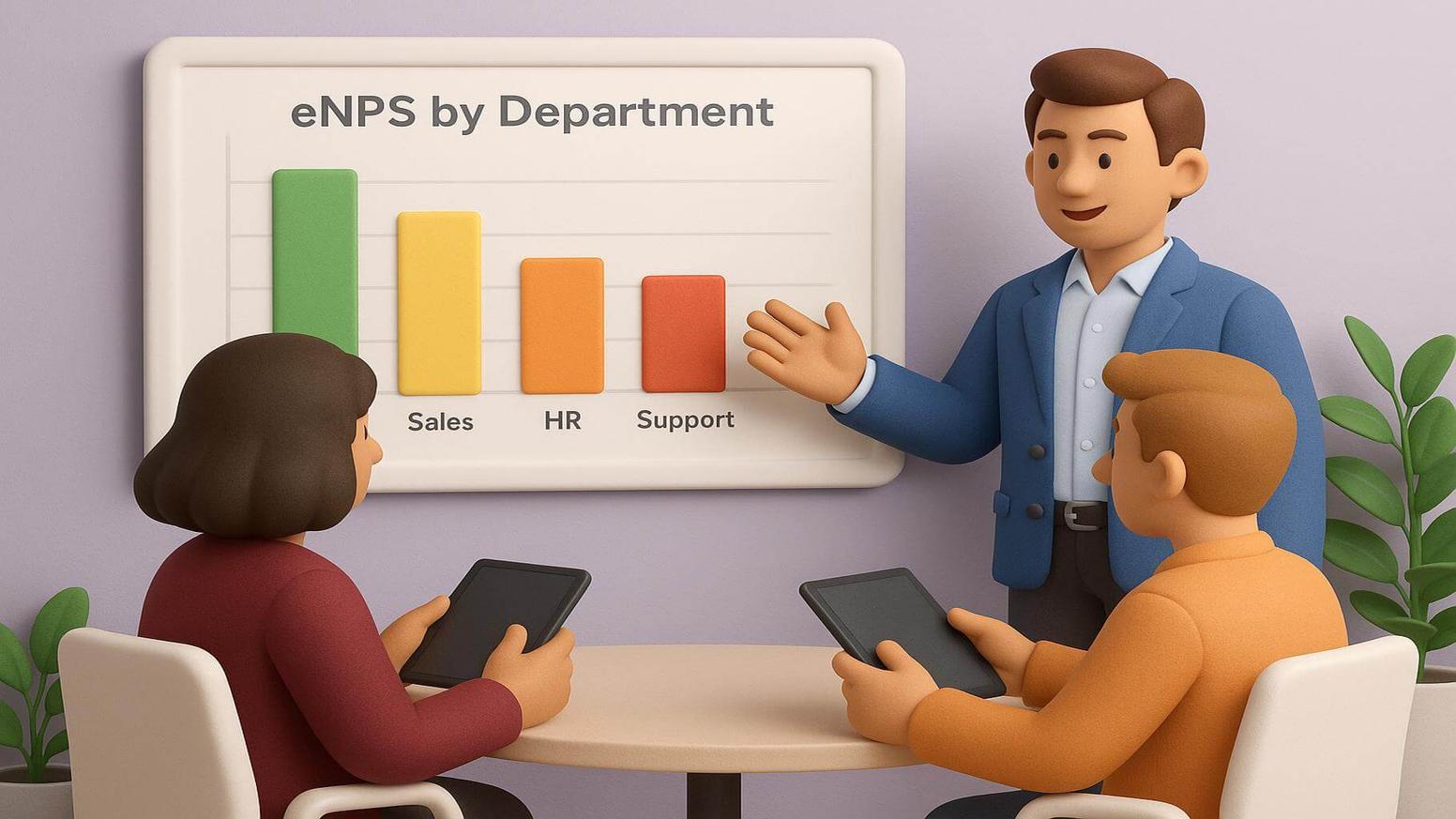
The employee net promoter score represents a powerful metric adapted from customer loyalty measurement. Organizations employ this simple methodology to assess the likelihood of employees recommending their workplace to others. Understanding what eNPS stands for and how this measurement system works enables survey initiatives that capture authentic employee sentiment without creating survey fatigue.
Defining eNPS and its full meaning
Employee Net Promoter Score, frequently abbreviated as eNPS, assesses employee loyalty through a single, straightforward inquiry. This metric borrows from the original Net Promoter Score methodology used in customer experience measurement. The eNPS system transforms employee advocacy into quantifiable data that hr teams can track over time. Organizations value this approach because it provides a clear snapshot of employee sentiment without requiring lengthy questionnaires. The simplicity of eNPS makes it available to organizations of all scales, ranging from ventures to multinational corporations.
Understanding what does eNPS stand for exactly
What does eNPS stand for becomes clear when you break down each component. The "e" prefix indicates employee-focused measurement, distinguishing it from customer-focused approaches. Net Promoter Score methodology asks respondents to rate their likelihood of recommendation, creating a standardized scale for comparison. This terminology originated in the early 2000s when Fred Reichheld introduced the concept for measuring customer loyalty. The adaptation to employee sentiment came later as organizations recognized the value of measuring employee experience through similar frameworks. Today, eNPS stands as one of the most recognized metrics for assessing employee satisfaction and predicting retention.
The origin and evolution of eNPS measurement
The net promoter score framework emerged from Fred Reichheld's 2003 customer loyalty research, where simple metrics proved more actionable than complex surveys. Organizations have since adapted this approach for employee engagement purposes, creating the employee net promoter score methodology. Early adopters found that asking employees about their likelihood to recommend their workplace provided meaningful insights into company culture and retention risks. The methodology evolved as organizations tested different survey frequencies and follow-up question strategies. Modern eNPS implementations combine the core question with supplementary inquiries that provide deeper insights into specific aspects of the employee experience. This evolution reflects growing recognition that measuring eNPS helps organizations maintain a great workplace where satisfied employees become natural advocates.
What is an eNPS, and how does it work
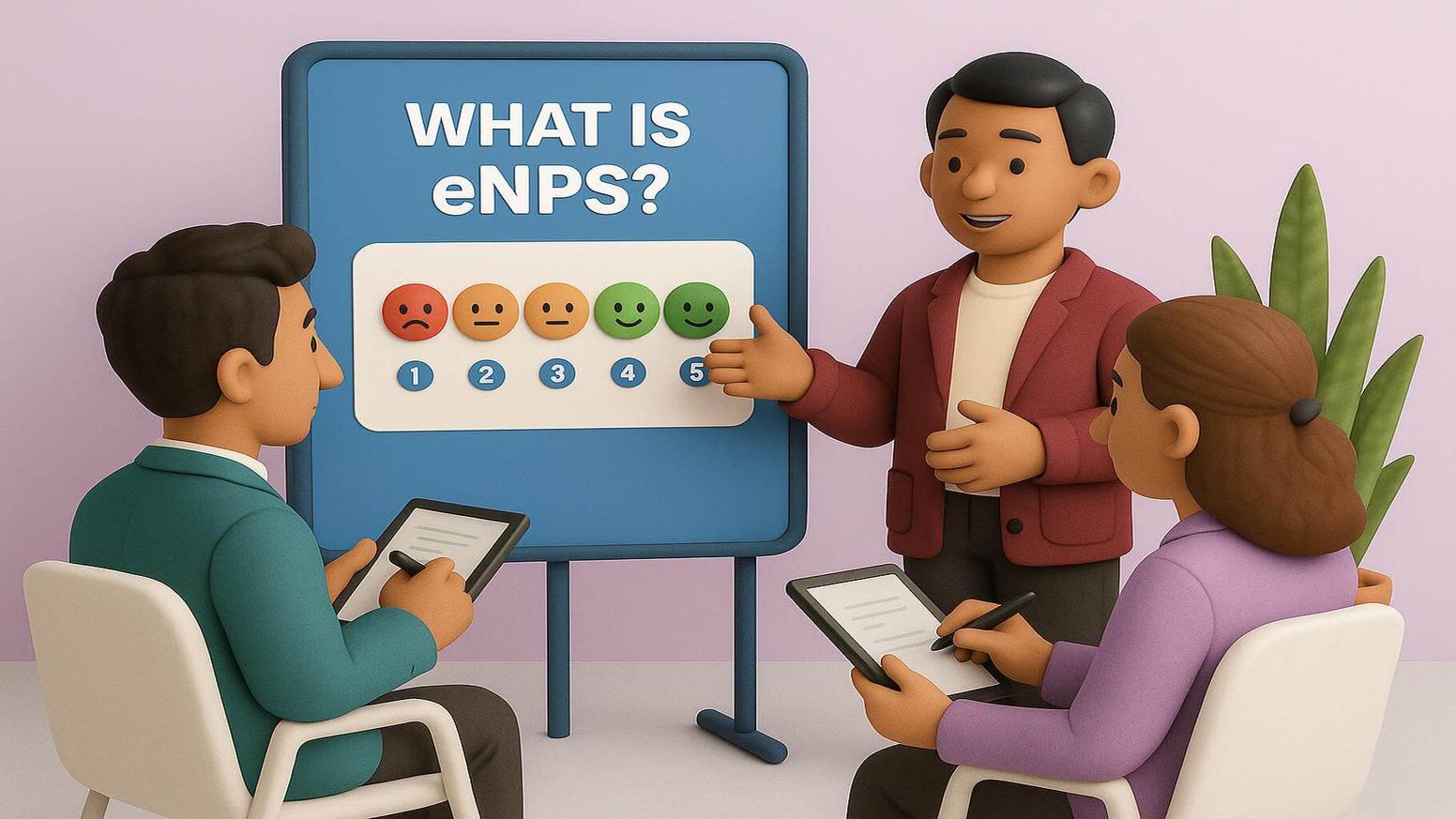
The eNPS measurement system operates on a simple premise that yields powerful insights. By asking employees a single core question about their likelihood to recommend the company, organizations capture a snapshot of overall employee loyalty. This approach works because it correlates strongly with other indicators of employee satisfaction and business success. The system categorizes responses into distinct groups, creating a framework for understanding what an eNPS measurement is and how it reflects workplace dynamics.
Explaining what is an eNPS measurement system
An eNPS measurement system asks employees to rate their likelihood of recommending the organization to others on a specific scale. Traditional implementations use scores ranging from zero to ten, while more modern approaches employ streamlined scales for better usability. The system then categorizes respondents based on their scores, identifying promoters who actively advocate for the organization and detractors who express dissatisfaction. This categorization provides HR teams with actionable data about employee populations and their sentiment levels.
The measurement system's strength lies in its ability to track changes over time, helping organizations monitor trends and assess the impact of workplace initiatives. Companies often integrate eNPS survey questions into their regular feedback cycles to maintain consistent measurement without overwhelming employees.
How eNPS captures employee sentiment
The system captures employee sentiment through its unique scoring approach. When employees respond to the likelihood-to-recommend question, their answers reveal more than simple satisfaction levels. High scores indicate employees feel engaged enough to put their reputation on the line by recommending the workplace. Low scores suggest employees experience challenges significant enough to discourage recommendations. This approach works because recommendation likelihood correlates with actual behaviors, such as staying with the company, performing at high levels, and contributing to a positive work environment. The eNPS scale identifies employees who feel various levels of connection to their organization, from passionate advocates to disengaged team members who might seek opportunities elsewhere.
The relationship between eNPS and employee loyalty
Employee loyalty manifests in multiple ways, from retention to discretionary effort. The eNPS score serves as a proxy measure for these loyalty indicators because employees who recommend their workplace typically demonstrate other positive behaviors. Research shows that higher eNPS scores correlate with lower turnover rates and increased productivity. Organizations with strong scores often see employees become natural brand ambassadors, helping attract high-quality talent through authentic recommendations. This relationship between eNPS and loyalty makes the metric valuable for predicting retention risks and identifying opportunities to strengthen workplace culture. Companies that track their scores over time can spot trends that signal shifts in employee sentiment before they affect retention or performance.
What is an eNPS score, and how is it calculated
Understanding what an eNPS score is requires grasping both the scoring system and the mathematical calculation behind it. This metric produces a single number that represents the overall balance between employee advocates and critics. The calculation method remains consistent across industries, enabling meaningful comparisons and benchmarking. Organizations track their score to assess workplace culture health and measure the impact of engagement initiatives over time.
Understanding what is an eNPS score fundamentally
An eNPS score represents the percentage difference between employees who are promoters and those who are detractors. Unlike averages that can mask important patterns, this scoring system highlights the distribution of employee sentiment across your organization. The resulting number can range from negative 100 to positive 100, with higher scores indicating more promoters than detractors. This fundamental approach to measuring employee advocacy provides a clear metric that leaders can track quarter over quarter. The score serves as a leading indicator for retention challenges and engagement opportunities, making it a cornerstone of many employee pulse survey programs. Organizations use their score to gauge progress toward creating environments where most employees feel valued and connected.
The scoring system from negative to positive
The eNPS scale categorizes employees into three distinct groups based on their responses. Promoters represent employees who rate their recommendation likelihood highest, typically showing strong engagement and satisfaction. Passives indicate employees who feel neutral or somewhat satisfied but lack the enthusiasm to actively recommend the workplace. Detractors encompass employees who rate their likelihood to recommend at the low end, signaling dissatisfaction or disengagement. The scoring system produces a net promoter score by focusing on the gap between promoters and detractors. A positive score means more employees advocate for the organization than criticize it. A negative score indicates employee dissatisfaction outweighs satisfaction, suggesting the need for immediate attention to workplace issues. This binary-like categorization helps organizations identify areas where they excel and opportunities for improvement in their employee experience strategies.
Step-by-step calculation process explained
The eNPS calculation follows a straightforward formula that anyone can apply. First, survey all employees or a representative sample with the core recommendation question. Second, categorize responses into promoters, passives, and detractors based on their scores. Third, calculate the percentage of respondents in each category. Fourth, subtract the percentage of detractors from the percentage of promoters to arrive at your final score. Passives don't directly affect the calculation but provide valuable context about employees who might sway either direction. For example, if 60% of employees rate as promoters, 20% as passives, and 20% as detractors, the employee net promoter score (ENPS) would be 40. While traditional eNPS uses a 0-10 scale, modern platforms like Matter employ simplified 5-point Likert scales that offer better mobile usability and reduce completion time while maintaining measurement validity. Organizations often track this calculation monthly or quarterly to understand how engagement initiatives impact overall sentiment, and those new to the process can reference guides on how to calculate eNPS for step-by-step support.
What is a good eNPS score for organizations?
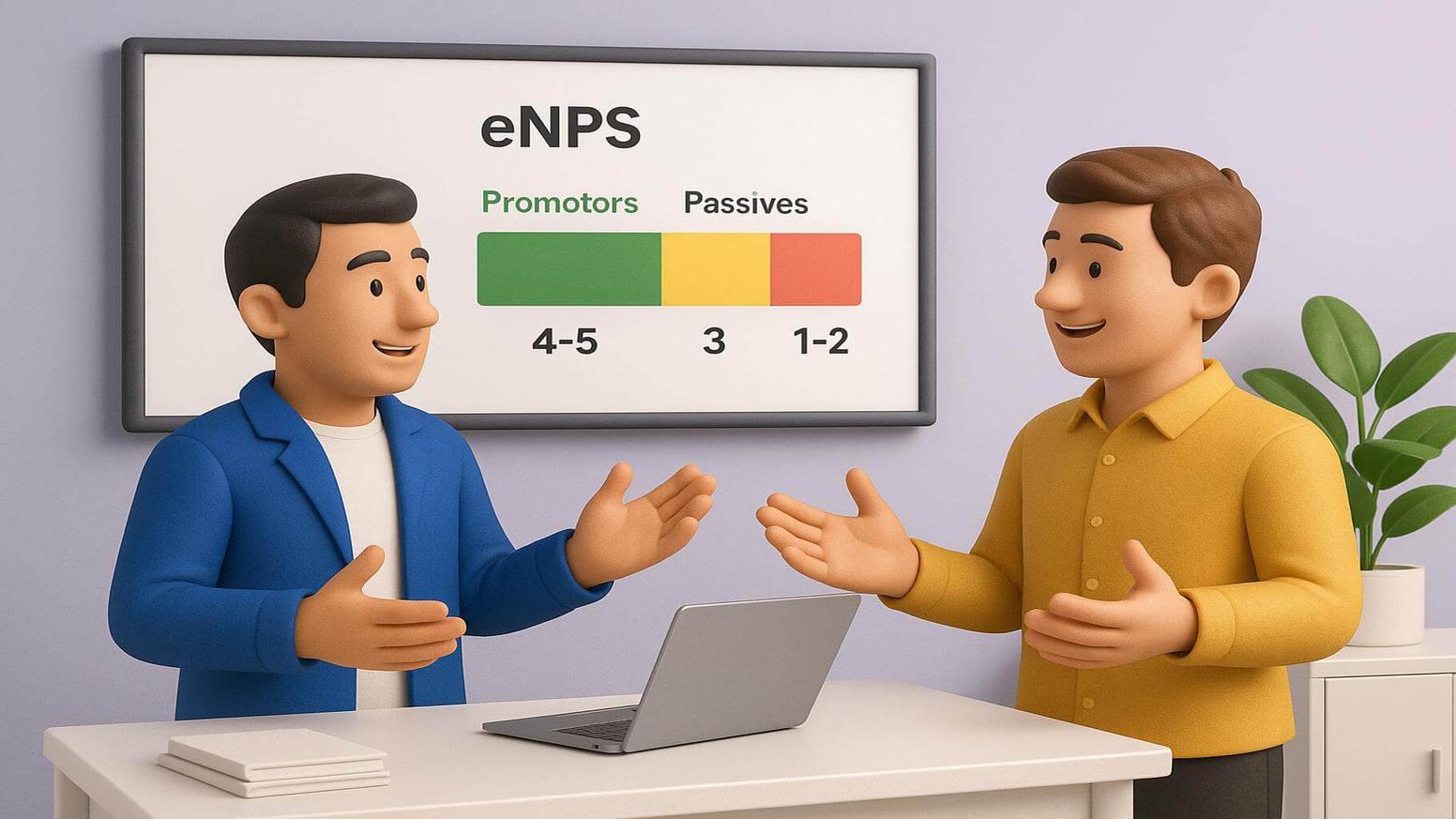
Organizations frequently ask what is a good eNPS score, but the answer requires context about your industry, company size, and current stage. While general benchmarks exist, the most meaningful comparison often involves tracking your own progress over time. Organizations should focus on improving their score rather than obsessing over absolute numbers. Understanding acceptable score ranges helps set realistic goals and identify when immediate action becomes necessary.
Defining what is a good eNPS score range
A good score typically falls above ten, indicating more promoters than detractors in your employee population. Scores between ten and thirty suggest acceptable levels of employee satisfaction with room for improvement. Organizations achieving scores above thirty demonstrate strong employee loyalty and a generally satisfied workforce. Excellent eNPS scores exceed fifty, representing workplaces where engaged employees significantly outnumber disengaged ones. These ranges provide general guidance, but context matters significantly. A company improving from negative twenty to positive ten has made tremendous progress, even though ten might seem modest in absolute terms. The key is understanding that any positive score indicates more employees would recommend the workplace than discourage others from joining, which represents a meaningful achievement for building a positive work culture.
Industry benchmarks and score standards
Different industries exhibit varying eNPS benchmark ranges, driven by sector-specific factors. Technology companies often achieve higher scores, typically ranging from twenty to forty, due to competitive benefits and feedback tools that enable rapid response cycles. Healthcare organizations frequently see scores between ten and thirty, reflecting the challenging nature of frontline medical work. Retail and hospitality sectors commonly experience lower ranges, from 5 to 25, due to high turnover and demanding customer-facing roles. Financial services companies typically score between fifteen and thirty-five, balancing competitive compensation with high-pressure environments. Professional services firms often achieve scores from twenty to forty, supported by career growth opportunities and strong team dynamics. These industry-specific benchmarks help organizations understand how their scores compare with those of similar companies facing similar challenges.
How to interpret your score results
Interpreting your eNPS score requires looking beyond the number itself to understand the underlying patterns. A score trending upward over time signals improving employee sentiment, even if the absolute number remains modest. Sudden drops in your score warrant immediate investigation to identify potential issues affecting employee satisfaction. Analyzing the distribution between promoters, passives, and detractors reveals more than the net score alone.
A company with 70% promoters and 30% detractors differs significantly from one with 40% promoters and 10% detractors, despite both yielding a score of 40. The context provided by follow-up questions helps explain why employees rate as they do. Organizations should examine score variations across departments, tenure levels, and demographics to identify specific areas needing attention. This nuanced interpretation enables targeted interventions that address root causes rather than symptoms.
The core eNPS question and survey structure
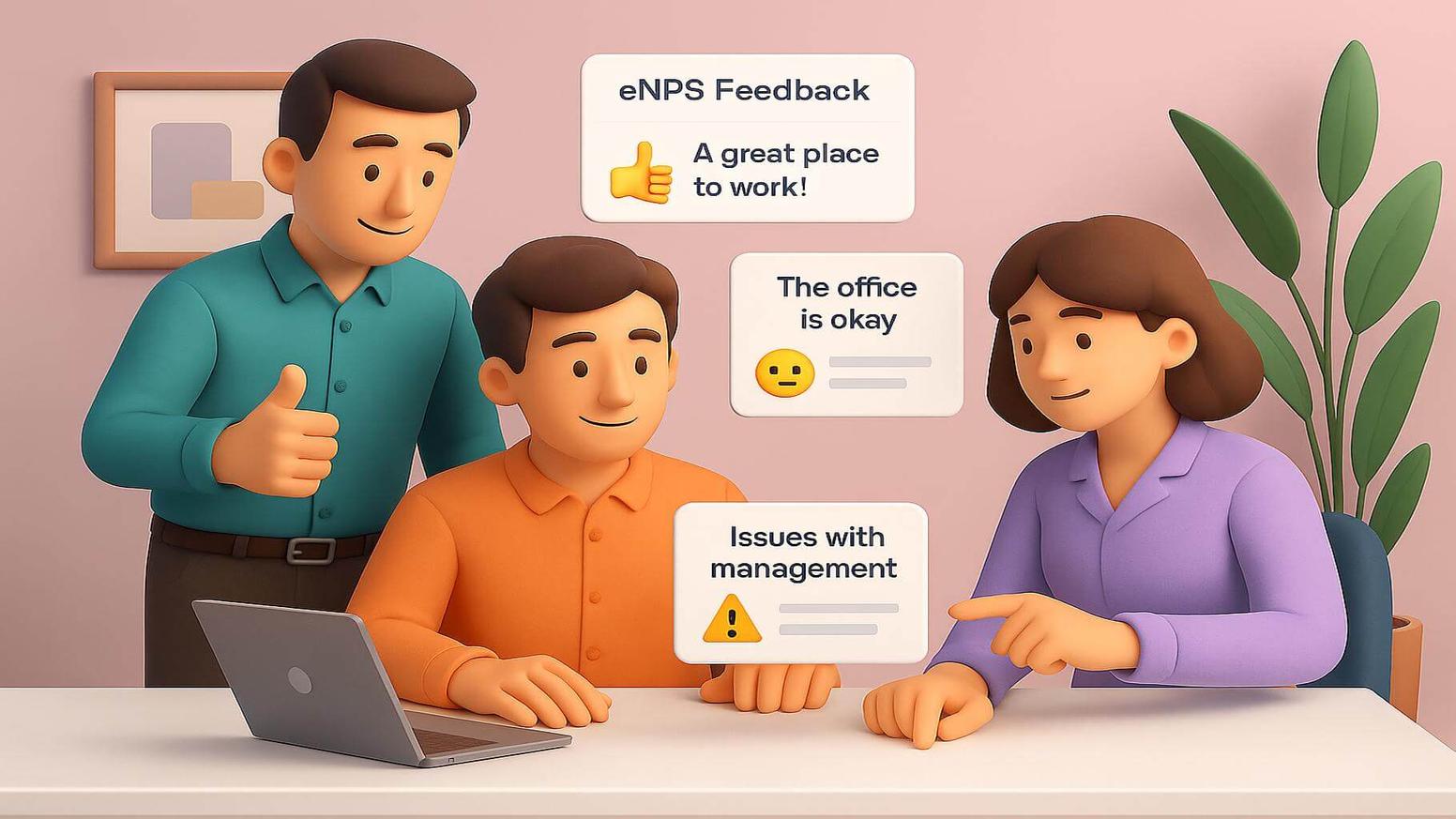
The eNPS survey centers on one primary question that captures employee loyalty. This focused approach reduces survey fatigue while providing meaningful data about employee sentiment. Effective survey structures balance simplicity with the need for actionable insights. Organizations must design their surveys carefully to encourage honest feedback and maximize response rates.
The primary question that defines eNPS
The primary question asks employees to evaluate the probability of recommending the organization as an attractive workplace to peers or colleagues. This straightforward inquiry works because it captures overall sentiment without asking about specific satisfaction factors.
The question format remains consistent across organizations, enabling benchmarking and comparison. Most implementations ask respondents to rate their likelihood using a numerical scale, though the specific range may vary. The phrasing emphasizes a personal recommendation, requiring employees to consider their overall experience holistically. This single-question approach contrasts with lengthy engagement surveys that can overwhelm respondents. Organizations often include this question as part of their regular feedback collection to track sentiment changes over time without creating survey fatigue.
Follow-up questions for deeper insights
While the core eNPS question provides a headline metric, follow-up questions unlock actionable insights. The most common supplementary question asks respondents to explain the reasoning behind their rating. This open-ended inquiry reveals specific factors driving employee sentiment, from leadership effectiveness to career growth opportunities. Organizations might also ask about the likelihood of staying with the company, satisfaction with specific workplace aspects, or suggestions for improvement. These additional eNPS questions transform the metric from a simple score into a diagnostic tool that identifies areas needing attention. The key is balancing the desire for deeper insights against the risk of survey fatigue. Most effective implementations keep total survey length under five minutes to maintain high completion rates. Strategic use of follow-up questions enables hr teams to dig deeper into issues flagged by low scores while celebrating practices that drive high ratings.
Survey design best practices for accuracy
Effective survey design significantly impacts the quality of eNPS data collected. Anonymous surveys typically yield more honest feedback than identified responses, especially regarding sensitive topics. Clear, concise language ensures all employees interpret questions consistently. Timing matters too, with surveys conducted during less stressful periods generally producing better response rates. Organizations should avoid surveying immediately after major changes or during peak work periods, when employees lack the time to respond thoughtfully. The survey distribution method influences participation, with eNPS tools integrated into daily workflows often achieving higher completion rates than separate survey platforms. Mobile-friendly formats accommodate employees who primarily access work systems on their phones. Pre-survey communication explaining the purpose and how results will be used increases participation by building trust. Following these best practices ensures the resulting eNPS score accurately reflects employee sentiment rather than survey design artifacts. Anonymity is close to universal on Matter: 98.2% of pulse surveys run anonymous, and over half of responses arrive within the first hour, per The Recognition Habit, Matter's 2026 Benchmark Report. More of Matter's platform data on survey participation is published at Matter's research hub.
15+ eNPS questions for comprehensive employee feedback
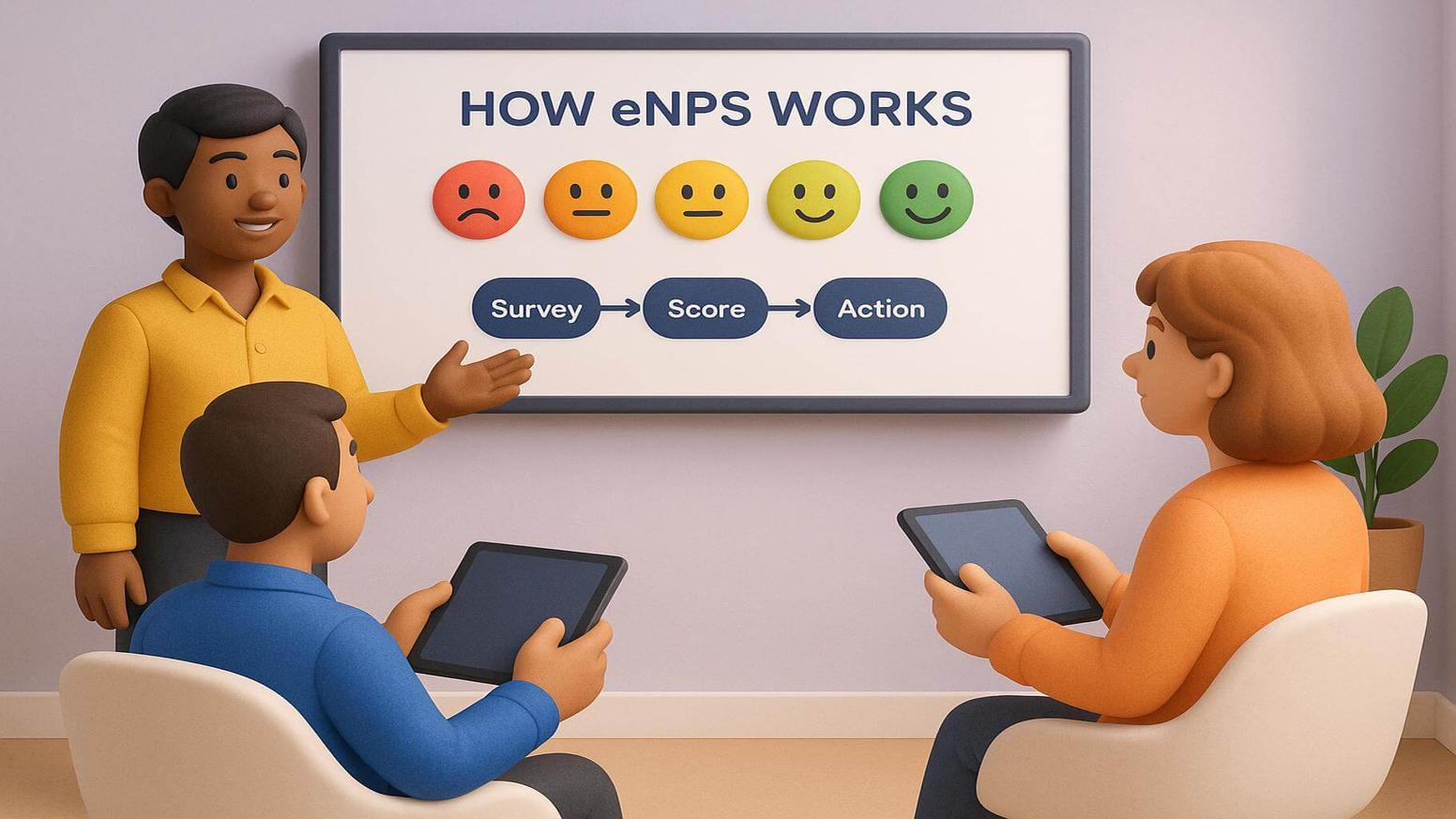
Expanding beyond the basic eNPS question provides richer insights into employee experience. A comprehensive question set explores multiple dimensions of workplace satisfaction while remaining manageable for respondents. Organizations should tailor their question selection based on current priorities and known areas of concern. These additional questions transform eNPS from a single data point into a diagnostic framework for understanding the drivers of employee sentiment.
Below are practical eNPS questions organized by category to help you gather meaningful employee feedback.
5 core eNPS questions every survey should include
These foundational questions capture key aspects of the employee experience and should serve as the backbone of your eNPS survey. They provide both quantitative scores and qualitative context that reveal why employees feel the way they do about your organization.
Core eNPS questions:
- On a scale ranging from firmly disagree to strongly agree, How probable are you to recommend our organization as a preferred employer to friends or colleagues?
- What is the primary reason for the rating you gave in the previous question?
- What single change would most improve your experience working here?
- How satisfied are you with your current department or team?
- How would you rate the effectiveness of your direct manager or leadership team?
The primary likelihood-to-recommend question establishes the foundation for your employee Net Promoter Score measurement. This core inquiry asks employees to consider whether they would stake their personal reputation by recommending the organization to others. Organizations track responses to this question over time to identify trends in employee advocacy and satisfaction. Changes in response patterns often signal shifts in workplace culture or the effectiveness of engagement initiatives. The simplicity of this single question makes it accessible across all measurement tools, from sophisticated platforms to basic survey forms.
The reason for rating open-ended questions is that they transform quantitative scores into actionable insights. By asking employees to explain their numerical rating, organizations uncover specific factors influencing sentiment. Promoters might cite strong leadership, career growth opportunities, or supportive team dynamics. Detractors often mention compensation concerns, workload issues, or inadequate resources. These qualitative responses reveal patterns that guide improvement efforts and provide the context needed to develop targeted interventions.
5 follow-up eNPS questions for deeper insights
These supplementary questions extend beyond core eNPS measurement to explore specific dimensions of employee experience that directly impact loyalty and satisfaction. Use these to understand the underlying drivers of your eNPS score and identify targeted improvement opportunities.
Follow-up eNPS questions:
- Do you consider that adequate opportunities for career progression and professional growth are accessible within the organization?
- How would you evaluate your current work-life equilibrium and the organization's level of flexibility?
- How fairly do you feel you are compensated compared to the value you bring and market standards?
- Do you have the tools, resources, and support you need to perform your job effectively?
- How would you rate the quality and transparency of communication from leadership?
Career growth and development opportunities significantly influence employee loyalty and satisfaction. Asking about professional development reveals whether employees see a future with the organization. Responses highlight gaps in training, mentorship, or advancement pathways that may drive turnover among high performers. Organizations committed to retaining top employees use these insights to strengthen development programs and create clearer career progression frameworks.
Work-life balance and flexibility questions address increasingly important aspects of employee satisfaction. Modern workers value autonomy and flexibility, making this dimension critical for attracting and retaining talent. Responses indicate whether current policies meet employee needs or whether adjustments might reduce stress and improve retention. This information guides policy development around remote work, flexible scheduling, and time-off practices. These pulse survey questions help organizations understand what matters most to their workforce.
5 supplementary eNPS questions by category
Specialized questions address specific stages or aspects of the employee journey. Select questions from these categories based on your organization's current priorities, recent changes, or known areas of concern. These targeted inquiries help diagnose specific issues affecting different employee populations.
Supplementary eNPS questions by category:
- How effective was your onboarding experience in preparing you for success in your role? (Onboarding)
- If you work remotely, do you feel adequately supported and connected to your team? (Remote Work)
- How would you rate the level of collaboration and teamwork within your department? (Team Collaboration)
- Do you feel your contributions are regularly recognized and appreciated by your manager and peers? (Recognition)
- How well do you feel the company's stated values align with your daily work experience? (Culture Alignment)
Onboarding experience questions capture early impressions that often predict long-term satisfaction. New employees form opinions quickly about whether they made the right choice joining the organization. Understanding onboarding effectiveness helps organizations refine processes that set new hires up for success. Poor onboarding experiences correlate with early turnover and difficulty building a connection to the company culture.
Remote work support questions became more important as flexible work arrangements became commonplace. Organizations need to understand whether remote employees feel connected, supported, and equipped to perform well. These questions identify gaps in technology, communication practices, or management approaches that disproportionately affect distributed team members.
Recognition and appreciation questions measure how well organizations acknowledge employee contributions. Regular recognition strongly correlates with employee satisfaction and retention. These eNPS survey questions help identify whether recognition practices reach all employees or primarily benefit certain groups. Organizations can use insights to strengthen appreciation programs and ensure recognition becomes a consistent part of workplace culture rather than an occasional occurrence.
eNPS score benchmarks by industry and company size

Contextualizing your eNPS score requires understanding relevant benchmarks. Different industries face unique challenges that influence typical score ranges. Company size also affects expected scores, with smaller organizations often achieving higher ratings due to closer relationships and greater agility. Geographic and cultural factors further influence what constitutes a strong score. Organizations should consider multiple benchmark dimensions when evaluating their performance.
Industry-specific eNPS score benchmarks
Industry characteristics significantly impact expected eNPS ranges, making cross-sector comparisons less meaningful than within-industry benchmarking. Understanding these patterns helps organizations set realistic goals and identify whether their scores reflect industry norms or specific organizational issues.
Technology sector companies typically achieve scores between twenty and forty, reflecting competitive compensation, strong growth opportunities, and modern workplace practices. Tech organizations often benefit from younger workforces with higher expectations for workplace innovation and flexibility. These companies frequently invest in eNPS software that enables continuous feedback and rapid response to emerging issues. Strong technology scores often correlate with robust stock option programs and opportunities to work on cutting-edge projects.
Healthcare industry benchmarks range from ten to thirty, influenced by demanding work conditions, emotional strain, and complex organizational structures. Healthcare workers often report high job meaning but struggle with workload, administrative burdens, and difficult patient interactions. Despite these challenges, many healthcare organizations maintain acceptable scores through strong team cultures and meaningful work. Scores at the higher end of this range typically reflect organizations that successfully support frontline workers with adequate staffing, resources, and recognition.
Retail and hospitality standards fall between five and twenty-five, reflecting high-turnover industries with demanding customer-facing roles. These sectors often struggle with schedule unpredictability, moderate compensation, and limited advancement opportunities. Organizations achieving higher scores typically invest in employee development, offer competitive benefits, and foster strong team cultures despite industry headwinds. Success in these sectors often requires creative approaches to workplace rewards that fit within budget constraints.
Financial services score ranges from 15 to 35, balancing competitive compensation with high-pressure environments and regulatory burdens. Financial organizations often see score variations between client-facing roles and back-office functions. Companies at the higher end typically offer strong career progression, substantial bonuses, and clear performance frameworks. Those struggling often face challenges with work-life balance, especially during busy periods or market volatility.
Professional services benchmarks range from twenty to forty, supported by intellectual challenge, career growth opportunities, and collaborative cultures. Consulting, legal, and accounting firms often achieve strong scores despite demanding hours because employees value skill development and the variety of clients. Organizations at the higher end excel at creating supportive learning environments and recognizing contributions effectively. Those with lower scores often struggle with utilization pressure or unclear partnership tracks.
Company size eNPS benchmarks
Organization size influences eNPS scores through its impact on communication, culture, and individual employee visibility. Smaller companies often achieve higher scores due to greater transparency, closer relationships, and faster response to employee concerns. Larger organizations face challenges in maintaining a consistent culture across divisions, but benefit from more robust programs and career opportunities.
Startups and small businesses with zero to 200 employees frequently score highest, often exceeding 40. Tight-knit teams, direct access to leadership, and clear impact visibility contribute to strong satisfaction. However, small companies also face volatility, as a few dissatisfied employees significantly impact overall scores. These organizations benefit from lightweight feedback tools that enable frequent check-ins without administrative burden.
Mid-market companies between two hundred and one thousand employees typically score between twenty and forty. These organizations balance startup agility with established processes and resources. They often experience growing pains as informal communication patterns become insufficient and culture becomes harder to maintain organically. Success at this stage requires intentional culture development and systems that ensure all employees feel connected to the company's mission and leadership.
Large enterprises with 1,000 to 5,000 employees generally achieve scores between 15 and 35. These organizations offer robust benefits, clear career paths, and sophisticated programs, but struggle with bureaucracy and communication challenges. Score variations between divisions often exceed overall company score variations, highlighting the importance of strong middle management and localized culture-building. Successful large organizations invest in technology and practices that maintain connection despite size.
Global corporations with more than 5,000 employees face the greatest challenges in maintaining a consistent culture and scores. Typical ranges span from ten to thirty, with significant geographic and divisional variation. These organizations must balance standardization with local adaptation, ensuring global initiatives resonate across diverse cultures and business contexts. The most successful global companies achieve consistency through clear values, strong local leadership, and sophisticated measurement systems that quickly identify and address pockets of low engagement.
Geographic and cultural eNPS variations
Cultural differences significantly impact both expected scores and the interpretation of results. What constitutes a good score varies by region based on communication norms, expectations around workplace relationships, and general response tendencies. Organizations operating globally must account for these variations when setting benchmarks and comparing locations.
North American eNPS benchmarks typically range higher than those of other regions, with scores generally falling between +25 and +35 in well-functioning organizations. This pattern reflects cultural optimism and strong feedback cultures that encourage direct expression of satisfaction or dissatisfaction. Employees in the United States and Canada often yield clearer distributions between promoters and detractors due to communication styles that favor explicit responses. The culture of positive feedback contributes to higher baseline expectations across this region.
European eNPS benchmarks show significant variation, with overall scores trending moderately at +10 to +20 across the continent. Countries emphasizing work-life balance, particularly Nordic nations, often report higher benchmarks within this range. Interestingly, Southern European cultures tend toward more generous scoring patterns compared to Northern European countries like the Netherlands, Belgium, and Finland, where respondents are less likely to award high marks. These differences reflect varying cultural norms around enthusiasm expression rather than actual satisfaction levels, and organizations operating across Europe must interpret scores with local context in mind.
Asia-Pacific score standards vary dramatically based on specific countries and their unique workplace cultures. The region shows highly variable results, ranging from negative scores in high-pressure economies to +30 in flexible, innovation-driven markets. Japanese organizations often see lower absolute scores, reflecting cultural tendencies toward modest response styles. Australian and New Zealand companies typically exhibit patterns more similar to those of North American organizations. Respect for hierarchy can influence how candid employees are in surveys, which affects score interpretation across this diverse region.
Cultural factors affecting scores extend beyond simple geographic divisions to include organizational context and workforce composition. Scores can vary significantly within organizations at the division or function level, with specific teams experiencing unique challenges that lead to diverse outcomes. Employees in leadership roles may report higher eNPS scores compared to those in frontline positions. Successful interpretation requires comparing your organization's scores against your own historical benchmarks rather than relying solely on cross-cultural comparisons, as each company has unique characteristics that influence results. Benefits of using eNPS for employee measurement
Organizations adopt eNPS measurement for numerous practical advantages. This metric offers simplicity without sacrificing meaningful insights into workplace health. The connection between scores and business outcomes makes eNPS attractive to leadership teams seeking actionable data. Understanding these benefits helps organizations maximize the value they extract from employee net promoter score programs.
Why organizations choose eNPS over other metrics
The eNPS approach resonates with leadership teams already familiar with customer NPS frameworks. This familiarity reduces training time and accelerates adoption across the organization. The single-number output communicates clearly to executives who want simple indicators of organizational health. Unlike complex engagement indices requiring interpretation, eNPS scores provide an intuitive assessment of whether employees would advocate for the workplace. Organizations appreciate that the core question asks about behavior rather than attitudes, as intentions to recommend correlate more strongly with actual loyalty than abstract satisfaction ratings. The metric's widespread adoption enables external benchmarking, helping companies understand their competitive position in attracting talent. These advantages make eNPS particularly appealing to organizations seeking straightforward yet meaningful measurement. Following pulse survey best practices helps organizations maximize the value extracted from this accessible metric.
Simplicity and clarity of eNPS results
The straightforward nature of eNPS measurement democratizes data access across the organization. Managers without statistical backgrounds can understand and act on their team scores. This accessibility encourages wider engagement with employee sentiment data rather than confining analysis to human resources specialists. The clear categorization into promoters, passives, and detractors provides a framework for discussing employee sentiment that everyone grasps quickly. This simplicity doesn't mean eNPS lacks sophistication, but rather that it communicates complex sentiment patterns through an accessible format. Organizations find that managers are more likely to embrace metrics they understand, leading to faster action on employee feedback and stronger cultures of continuous improvement. The clarity of eNPS results supports transparent communication about engagement levels and progress toward improvement goals.
Predicting retention through eNPS data
The strong correlation between eNPS scores and employee retention makes this metric particularly valuable for workforce planning. Employees who rate as promoters rarely leave voluntarily, making high scores a leading indicator of stable teams. Conversely, detractors show significantly higher turnover risk, enabling proactive retention interventions. This predictive power helps organizations allocate retention resources strategically, focusing on areas where intervention will have the greatest impact. Tracking score changes over time reveals emerging retention risks before they manifest as increased turnover. Organizations can test whether engagement initiatives actually influence retention by monitoring subsequent eNPS trends. This connection between measurement and meaningful business outcomes justifies investing in comprehensive eNPS programs and following through on employee feedback.
How to implement eNPS in your organization
Successful eNPS implementation requires thoughtful planning and clear communication. Organizations must balance measurement rigor with simplicity that encourages participation. The right implementation approach varies based on company size, culture, and existing feedback mechanisms. Following proven practices accelerates adoption and maximizes the value derived from employee sentiment measurement.
Setting up your first eNPS survey
Your eNPS journey begins with selecting the appropriate survey technology that integrates smoothly into employee workflows. Modern eNPS survey software solutions enable distribution via existing communication channels, such as email or workplace chat platforms. Configure your survey with the core recommendation question plus two or three follow-up questions to gather actionable context. Ensure anonymity settings encourage honest feedback without fear of repercussion. Pilot the survey with a small group to identify technical issues and gather feedback on question clarity before full rollout. Establish baseline expectations by communicating that first surveys often yield lower scores than subsequent measurements, as employees test whether the organization will act on feedback. Prepare to analyze and share results within two weeks of survey close to maintain momentum and demonstrate commitment to the process.
Determining survey frequency and timing
Organizations must balance the need for regular measurement with the risks of survey fatigue. Quarterly eNPS measurement provides sufficient frequency to track trends without overwhelming employees. Some organizations prefer semi-annual measurement, especially when supplementing eNPS with other engagement assessments. Avoid surveying during particularly stressful periods, such as year-end close, major product launches, or significant organizational changes. These timing decisions significantly impact response rates and data quality. Consider aligning survey distribution with natural organizational rhythms, such as following quarterly business reviews when employees have context about company performance. Consistency matters more than perfection, so establish a regular cadence and stick to it. This predictability helps employees anticipate surveys and builds the expectation that leadership will share results and actions taken in response to previous feedback.
Communicating the eNPS purpose to employees
Clear communication about why the organization is implementing eNPS measurement builds trust and participation. Explain that the goal is understanding employee sentiment to make the workplace better, not creating accountability mechanisms or identifying complainers. Emphasize anonymity protections and how aggregate data will be used. Share what leaders will do with the information and how results will be communicated back to the organization. Address common concerns about whether feedback actually influences decisions by committing to transparent follow-through. Consider having senior leaders explain their personal commitment to acting on survey insights. Effective communication acknowledges that surveys require employee time and effort, expressing appreciation for thoughtful participation. Organizations that invest in this upfront communication typically achieve higher response rates and more candid feedback than those treating surveys as routine administrative tasks. For additional guidance, explore strategies to increase employee engagement survey participation and maximize your measurement efforts.
Interpreting eNPS results and taking action
Collecting eNPS data represents just the first step toward improving employee experience. The real value emerges from thoughtful analysis and decisive action based on insights uncovered. Organizations that close the feedback loop by acting on survey results see scores improve over time. Those who survey without follow-through often experience declining participation and increasingly negative sentiment as employees lose faith in the process.
Understanding promoter, passive, and detractor responses
Each response category provides distinct insights into employee sentiment and engagement levels. Promoters represent your most engaged employees, those who actively advocate for the organization and typically deliver exceptional performance. These employees often serve as culture carriers, helping new hires integrate and maintain positive team dynamics. Understanding what drives promoter sentiment helps organizations replicate those conditions more broadly. Passives indicate employees who are generally satisfied but lack strong engagement or loyalty. These individuals remain vulnerable to attractive external opportunities and represent a group in which small improvements might shift them toward promoter status. Detractors signal employees experiencing significant dissatisfaction or disconnection from the organization. While some might be addressing temporary frustrations, others may be actively seeking new roles. The distribution across these categories reveals more than the net score alone, helping prioritize where to focus improvement efforts and retention interventions.
Analyzing patterns in eNPS feedback
Moving beyond headline scores requires examining patterns within the data. Compare scores across departments, tenure bands, and employee demographics to identify specific areas needing attention. Look for correlations between scores and other metrics, such as performance, promotion rates, or time since the last recognition event. Review open-ended responses to identify recurring themes in both positive and negative feedback. These qualitative insights often point toward root causes behind quantitative scores. Track how individual employees move between categories over time, if your measurement approach enables that visibility. Some organizations see employees oscillate, while others show more stable patterns, each telling a different story about workplace dynamics. Consider segmenting by participation rates, as low response rates from certain groups might indicate disengagement beyond what scores alone reveal. Conducting a thorough analysis of an employee engagement survey transforms raw scores into actionable insights about where and how to intervene.
Creating action plans from eNPS insights
Translating insights into action requires prioritization and clear accountability. Identify the top three themes from survey feedback that represent opportunities for meaningful impact. Develop specific initiatives addressing each theme with clear owners, timelines, and success metrics. Communicate these action plans broadly, ensuring employees understand how their feedback influenced organizational decisions. This transparency demonstrates a genuine commitment to improvement and encourages future participation. Implement quick wins alongside longer-term initiatives to maintain momentum and show immediate responsiveness. Measure progress through both behavioral indicators and subsequent eNPS measurements. Successful action planning balances addressing detractor concerns with amplifying what drives promoter enthusiasm. Organizations should also consider how recognition practices might reinforce desired cultural changes emerging from action plans. The most effective implementations treat eNPS as the beginning of an ongoing dialogue rather than a one-time measurement exercise.
eNPS vs other engagement metrics comparison
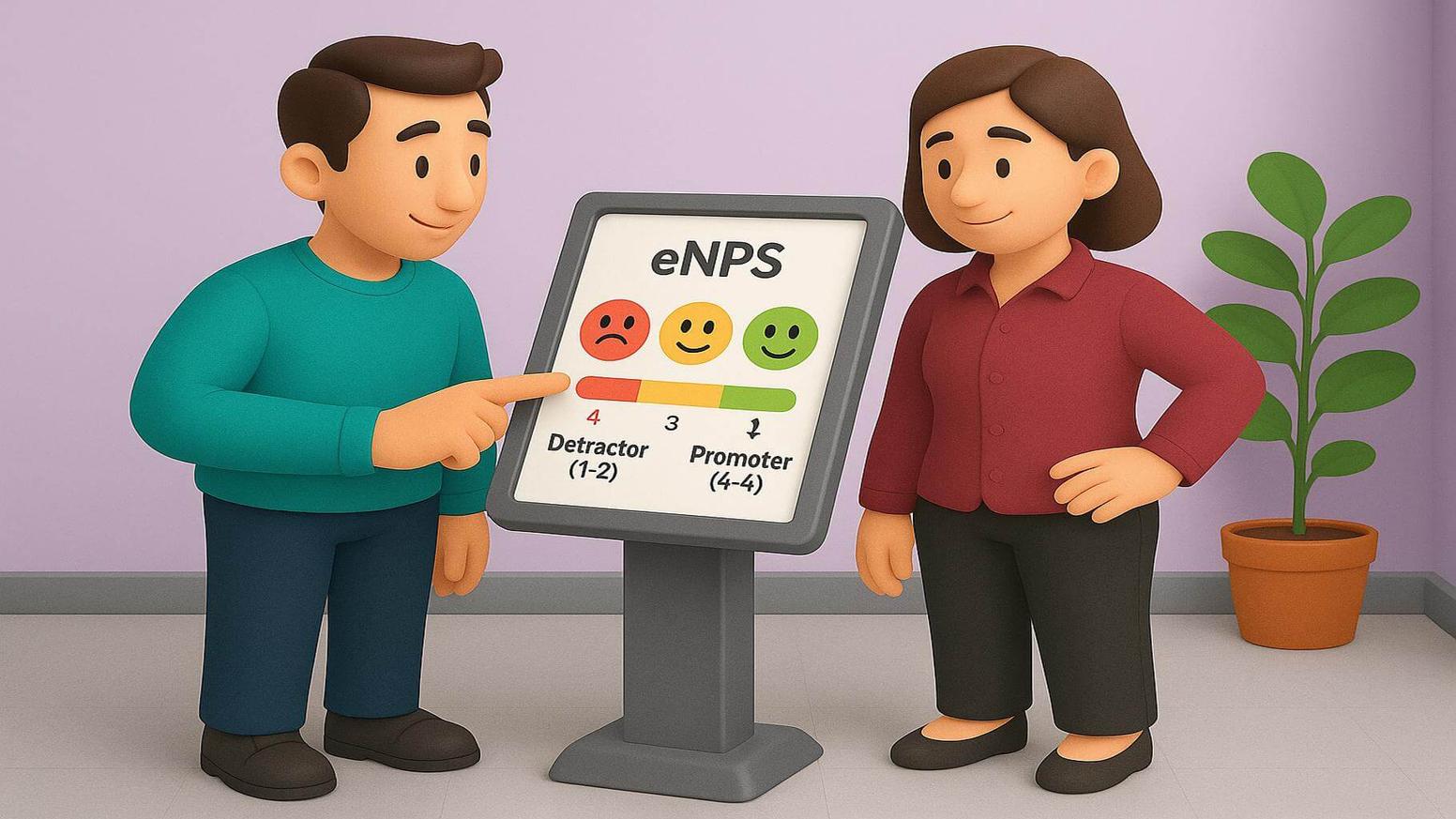
Organizations often wonder how eNPS relates to other measurement approaches they might already use. Understanding the distinctions helps leaders choose appropriate tools for different purposes. No single metric captures every dimension of employee experience, making combination approaches often most effective. Knowing when to use eNPS versus alternatives optimizes measurement efforts and resource allocation.
How eNPS differs from employee engagement surveys
Comprehensive engagement surveys explore multiple dimensions of the employee experience through 10 to 50 questions, covering topics such as leadership effectiveness and career development opportunities. These detailed assessments provide a nuanced understanding of specific satisfaction drivers but require significant employee time to complete. The employee net promoter score focuses narrowly on loyalty and likelihood of recommendations, trading comprehensiveness for simplicity and ease of administration. Engagement surveys excel at diagnosing specific issues and comparing performance across many workplace dimensions. The eNPS approach prioritizes actionability and leadership accessibility over detailed diagnosis. Organizations often use comprehensive employee engagement survey questions annually while conducting quarterly eNPS measurements to track trends between deep dives. This combination provides both strategic insight and tactical monitoring of sentiment changes. The choice between approaches depends on whether the organization needs a broad diagnosis or simple tracking of overall sentiment trends.
When to use eNPS versus pulse surveys
Pulse surveys typically ask three to seven questions about specific topics or recent experiences, enabling frequent check-ins without survey fatigue. These targeted assessments help organizations understand reactions to specific changes or maintain awareness of evolving concerns. The eNPS question often appears within pulse surveys alongside other brief inquiries. Organizations might use a standalone eNPS measurement quarterly while conducting monthly pulse surveys on rotating topics. This approach maintains regular contact with employee sentiment while varying question content to prevent monotony. Some situations call for pure eNPS measurement, particularly when leadership wants a simple, trackable indicator of overall organizational health. Other circumstances benefit from approaches that explore specific dimensions more thoroughly, as detailed in our pulse survey vs engagement survey guide. The distinction often centers on whether the goal is to monitor overall sentiment or to investigate particular issues requiring focused attention.
Combining eNPS with other measurements
Most sophisticated organizations employ multiple measurement approaches rather than relying exclusively on any single metric. The eNPS provides a simple headline indicator while other tools offer depth and specificity. For example, an organization might track eNPS quarterly, conduct comprehensive engagement surveys annually, and use monthly pulse surveys to explore specific topics. This layered approach balances the need for simple tracking with the need for detailed diagnostic information. Some companies integrate their eNPS question into broader survey instruments rather than administering it separately, reducing survey fatigue while maintaining measurement consistency. The key is to ensure that different measurement tools complement rather than duplicate each other. Organizations should also link survey data to behavioral metrics such as turnover, performance, and participation in optional programs. This complete picture reveals whether changes in sentiment scores translate into meaningful business outcomes and shifts in employee behavior.
Common misconceptions about eNPS
Despite widespread adoption, several misconceptions about eNPS persist. Understanding these limitations helps organizations use the metric appropriately without over-relying on it or misinterpreting results. Addressing common myths enables a more sophisticated and nuanced application of employee net promoter score measurement.
What eNPS does not measure
The eNPS metric captures loyalty and recommendation intent but doesn't diagnose specific workplace issues or satisfaction drivers. A declining score signals problems but does not explain their root causes. Organizations need supplementary questions or other measurement tools, such as a pulse survey template, to understand why scores change. The metric also doesn't directly measure productivity, innovation, or other performance outcomes, though correlations often exist. Employees might be rated as promoters while still struggling with specific aspects of their role or workplace. Conversely, detractors might perform well despite dissatisfaction, particularly in the short term. The eNPS scale doesn't capture nuanced differences within categories, treating all promoters as equivalent despite potentially varying engagement levels. Understanding these limitations prevents organizations from expecting more from the metric than it can deliver. Effective measurement programs combine eNPS with other tools that capture dimensions beyond simple loyalty and advocacy.
Limitations and considerations of eNPS
Several factors can distort eNPS measurement or complicate interpretation. Cultural differences in response style mean absolute scores vary by geography even when actual sentiment remains constant. Timing significantly impacts results, with surveys conducted during stressful periods often yielding artificially depressed scores. Small organizations face high score volatility, as a few response changes dramatically shift overall results. The metric's simplicity sometimes leads organizations to oversimplify complex workplace dynamics or ignore important nuances revealed in supplementary questions. Response rates matter tremendously, as low participation raises questions about whether scores represent all employees or primarily those with strong opinions. Some organizations game their scores through selective surveying or pressure on employees to rate positively, undermining the metric's value. An honest assessment of these limitations helps organizations implement eNPS thoughtfully rather than treating it as a silver bullet for understanding employee sentiment.
Avoiding over-reliance on single metrics
No single number captures the full complexity of employee experience and organizational health. Organizations that treat eNPS as their only employee metric miss important signals that other approaches might reveal. Over-emphasis on score improvement sometimes leads to interventions that boost numbers without addressing underlying issues or creating sustainable change. Leaders might manipulate scores through artificial enthusiasm campaigns rather than genuine workplace improvement. The most effective measurement strategies employ multiple complementary metrics that together create a complete picture. These might include retention rates, internal promotion percentages, referral program participation, and qualitative feedback from exit interviews or stay interviews. Reviewing employee engagement survey results alongside eNPS data ensures organizations don't optimize for one metric at the expense of others equally important to business success. The goal should be to understand employee sentiment and experience deeply enough to make informed decisions, not merely to achieve a specific score target.
Best practices for maximizing eNPS effectiveness
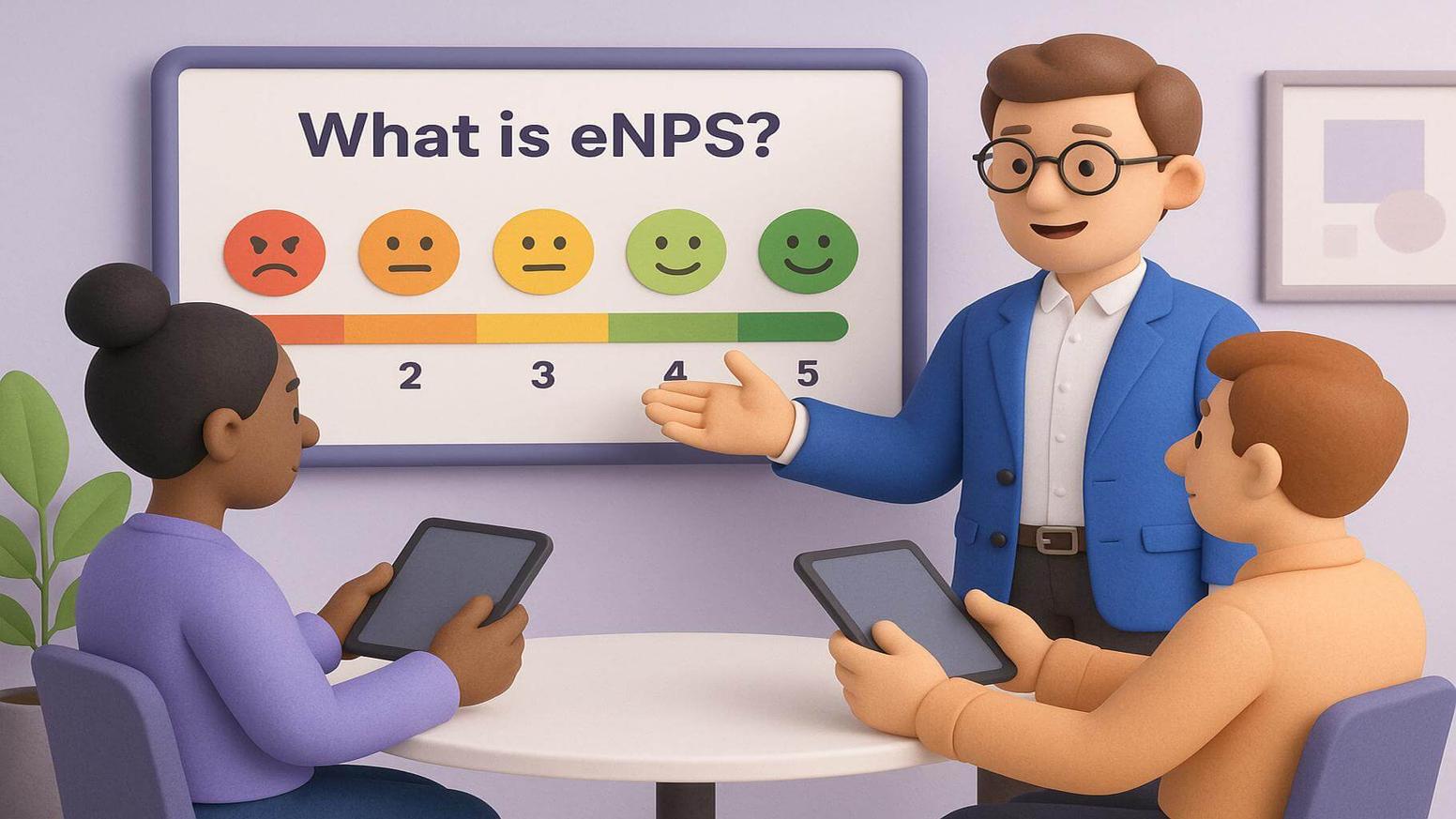
Organizations that extract maximum value from eNPS measurement follow proven practices that encourage honest feedback and enable meaningful action. These approaches recognize that collecting data represents only the beginning of an effective measurement program. The real value emerges from how organizations respond to insights and integrate eNPS into broader engagement strategies.
Ensuring anonymity and honest responses
Employees must trust that their feedback remains confidential for eNPS scores to reflect genuine sentiment. Anonymous survey platforms prevent individual respondents from being identified, even by administrators. However, technical anonymity alone doesn't guarantee psychological safety if employees doubt that promise. Organizations should communicate clearly about how anonymity is protected and why honest feedback benefits everyone. Avoid requiring demographic information that might enable identification in small teams or specialized roles. Consider using third-party survey platforms that are not accessible to internal staff, further assuring employees that their responses remain private. Some organizations allow employees to choose whether to provide identified feedback, acknowledging that some individuals want credit for suggestions. This choice respects different comfort levels while maintaining anonymity as the default. Regular communication about actions taken based on survey feedback, without identifying specific respondents, reinforces that participation is safe and valuable.
Acting on feedback to close the loop
Survey fatigue and cynicism develop when organizations collect feedback without visible follow-through. Commit to sharing results within two weeks of survey close, including overall scores, key themes from open-ended responses, and preliminary action plans. This rapid turnaround demonstrates that leadership values employee input enough to prioritize analysis and response. Communicate not just what the scores reveal, but also what the organization plans to do differently based on those insights. Acknowledge both positive feedback worth celebrating and challenges requiring attention. Track progress on committed actions and provide updates at regular intervals, showing that promises made weren't forgotten once initial enthusiasm waned. This accountability transforms eNPS from a measurement exercise into a framework for ongoing organizational improvement. Employees who see tangible changes resulting from their feedback become more engaged in future surveys and more positive about the organization generally.
Connecting eNPS to recognition programs
Strong recognition practices directly influence employee Net Promoter Score results. Employees who feel regularly appreciated for their contributions rate more positively than those whose efforts go unacknowledged. Organizations should examine whether their recognition programs reach all employees or primarily benefit certain groups. Connect eNPS feedback to recognition program design by asking whether appreciation frequency and authenticity match employee expectations. Use follow-up questions about recognition satisfaction to identify specific improvement opportunities in this critical engagement driver. Consider whether managers receive adequate training and tools to effectively recognize their teams. Some organizations implement recognition campaigns specifically in response to eNPS feedback, indicating employees feel under-appreciated. The connection between recognition and scores creates a virtuous cycle in which better appreciation practices drive score improvements, which in turn further validate investment in recognition programs and create momentum for sustained culture change.
How Matter can help with eNPS implementation
Organizations seeking to implement effective eNPS measurement benefit from platforms that simplify the entire process. The comprehensive tools available through Matter's Pro + Surveys plan handle survey distribution, analysis, and seamlessly connect to recognition initiatives that address issues uncovered. The platform's design recognizes that measurement succeeds only when it integrates naturally into daily workflows and directly links to actions that improve the employee experience.
Automated eNPS survey distribution
Survey administration becomes effortless through Matter's automated distribution within Slack and Microsoft Teams, meeting employees where they already work. This integration eliminates the need for separate survey platforms that employees must remember to access. The platform uses a user-friendly 5-point Likert scale instead of the traditional 0-10 scale, making surveys faster to complete and more accessible on mobile devices. This approach reduces survey completion time while maintaining measurement accuracy. Automated scheduling ensures surveys reach employees at consistent intervals without requiring manual effort from human resources teams. The system manages response tracking while maintaining strict anonymity, ensuring leadership sees participation rates without identifying individual respondents. This automation reduces administrative burden while maintaining measurement consistency over time. Organizations can focus their energy on analyzing results and taking action rather than wrestling with survey logistics and technology challenges.
Real-time score calculation and tracking
Automatic score calculation is based on Matter's proprietary 5-point scale, where strongly agree responses count as promoters, agree responses as passives, and neutral through strongly disagree responses as detractors. This simplified approach provides results that correlate with traditional 0-10 scales while offering better usability and reducing respondent confusion. The platform's analytics features enable organizations to track scores over time and identify trends that warrant investigation. Historical tracking shows how scores evolve, helping organizations assess whether interventions are working. This measurement capability, available through the Pro + Surveys plan, transforms eNPS from a periodic snapshot into an ongoing pulse on organizational health. Leaders can monitor whether engagement initiatives positively impact employee sentiment and make data-driven decisions about workplace improvements.
Integrated recognition based on feedback
Connecting eNPS measurement directly to recognition and rewards programs is where Matter uniquely excels, addressing common feedback themes through immediate action. When surveys reveal that employees feel underappreciated, the platform's recognition capabilities enable immediate recognition campaigns. Beautiful, customizable kudos cards allow peers and managers to celebrate contributions in ways that feel personal and authentic. The coin-based reward system encourages regular participation in recognition without budget concerns, with coins resetting weekly to maintain authenticity and consistency. Integration with Slack and Teams ensures recognition happens in the flow of work rather than requiring separate platforms that employees might forget to use. Automated celebrations for birthdays and work anniversaries demonstrate consistent appreciation that influences overall sentiment. This integration ensures feedback collected through eNPS surveys translates quickly into actions that improve the very metrics being measured, creating a complete ecosystem for measuring sentiment and building workplace cultures where employees thrive.
Frequently asked questions about what is eNPS
Q: What is eNPS, and why should organizations use it?
A: Employee Net Promoter Score measures employee loyalty by asking how likely team members are to recommend the organization as a place to work. Organizations use it to predict retention, track engagement trends over time, and quickly assess overall workplace sentiment. The metric's simplicity enables frequent measurement without creating survey fatigue while providing actionable insights into company culture health. For more context on setting clear measurement goals, explore our guide on pulse survey objectives.
Q: What does eNPS stand for exactly?
A: eNPS stands for Employee Net Promoter Score. The "e" prefix distinguishes this employee-focused metric from the original customer-focused Net Promoter Score. Both measure recommendation likelihood but serve different stakeholders and have different organizational purposes.
Q: What is an eNPS score, and how do I calculate it?
A: An eNPS score represents the percentage of employee promoters minus the percentage of detractors. First, categorize responses based on rating scales into promoters, passives, and detractors. Then calculate what percentage of total respondents fall into each category. Finally, subtract the detractor percentage from the promoter percentage to arrive at your score, which can range from -100 to 100.
Q: What is a good eNPS score for my company?
A: Scores above ten indicate more promoters than detractors and represent acceptable performance. Scores above 30 suggest strong employee loyalty, while scores exceeding 50 indicate an excellent workplace culture. However, context matters significantly as industry, company size, and geography influence expected ranges. Focus on improving your score over time rather than obsessing over absolute numbers.
Q: What is an eNPS survey, and how often should I run it?
A: An eNPS survey asks employees to rate their likelihood of recommending the organization as a workplace, typically including follow-up questions for context. Most organizations conduct eNPS measurements quarterly, balancing the need for regular data with the risk of survey fatigue. Some prefer semi-annual measurement, especially when combining eNPS with other engagement assessments. Consistency matters more than frequency, so establish a regular cadence and maintain it over time.
Q: How is eNPS different from other engagement metrics?
A: eNPS focuses specifically on employee loyalty and advocacy rather than measuring multiple engagement dimensions. The metric uses a single core question instead of comprehensive surveys with dozens of items. This simplicity enables frequent measurement and creates an accessible indicator that all leaders can understand. However, eNPS provides less diagnostic detail than broader engagement surveys, making it better suited for tracking overall trends than investigating specific issues.
Final thoughts about what is eNPS
Understanding what is eNPS equips organizations with a straightforward yet powerful framework for measuring employee loyalty and workplace satisfaction. This approachable metric transforms complex employee sentiment into actionable insights that guide leadership decisions and engagement investments. Organizations that systematically adopt eNPS, respond promptly to feedback, and maintain transparent communication foster cultures in which employees perceive themselves as heard and appreciated. The simplicity of the measurement approach belies its strategic importance, as tracking employee advocacy provides early warning signals about retention risks and validates the effectiveness of workplace improvement initiatives.
Matter provides comprehensive tools for organizations to implement eNPS successfully, from automated survey distribution to integrated recognition programs that address common feedback themes. The platform's seamless integration with Slack and Microsoft Teams ensures measurement happens without disrupting employee workflows. Real-time analytics and automated score calculation transform raw data into insights that leadership can act on immediately. When combined with Matter's robust recognition and rewards capabilities, organizations create a complete ecosystem for measuring sentiment, taking action, and building workplace cultures where employees thrive as enthusiastic advocates.
Ready to implement eNPS in your organization? Schedule a demo with a Matter expert today and discover how our platform helps you measure employee net promoter scores, gather insights, and create a culture of continuous improvement.

![29+ eNPS Survey Questions for Employees [2026 Guide]](https://cdn.sanity.io/images/kqqb5xry/production/79ed301d0081f29310816886bc9fe1c0253a149c-800x600.jpg?w=720&q=75&fit=max&auto=format)
![19+ eNPS Survey Questions for Employees [2026 Examples]](https://cdn.sanity.io/images/kqqb5xry/production/28137ecca2090eeb56f13e159bfc35c4df05f92d-800x600.jpg?w=720&q=75&fit=max&auto=format)
![2026 Guide to eNPS Score [19+ Benchmarks & Score Methods]](https://cdn.sanity.io/images/kqqb5xry/production/3d6660449229ea8615bee6828f2cbfc19b85689b-800x600.jpg?w=720&q=75&fit=max&auto=format)