

Short answer: The best employee survey software is the one people answer, so choose on delivery: Matter takes pulse, eNPS, onboarding, and custom surveys inside Slack or Teams, with its Surveys add-on at $2 per user/month, billed annually.
Microsoft Forms and Typeform cost nothing for an occasional poll, Lattice sits surveys beside reviews, and Culture Amp, Qualtrics, and Workday Peakon go deepest on benchmarks, all by quote.
Employee survey software is the tool a company uses to ask its people structured questions and act on the answers: engagement surveys once or twice a year, short pulse surveys every week or month, eNPS, onboarding and exit surveys, and custom questionnaires for everything from a benefits change to a return-to-office plan.
In 2026 the useful distinctions are practical: whether the survey reaches people in Slack, Microsoft Teams, email or a link; whether it is answered inside the chat app or in a browser; how anonymity is enforced; how deep the analytics go; and whether you pay per employee, per survey author, per response or by quote. Some of the best answers are general form tools you may already own.
This page is for the HR lead, people-ops manager or team lead choosing employee survey tools for a company of 20 to 2,000: the team that needs a quick anonymous poll, the growing company starting pulse surveys, the HR team that wants surveys next to recognition or performance, and the enterprise that wants benchmarks.
Every price was read from the vendor’s pricing page, every rating from G2, and where a vendor publishes no price we say so. We build Matter, one of the tools below, and rank it first with that disclosure.
Last verified September 2026.
The short version
For a team on Slack or Microsoft Teams that wants pulse, eNPS, onboarding and custom surveys answered inside chat, with a small coin reward for completing them, Matter is the best fit at a published price.
If all you need is an occasional poll or a one-off form, Microsoft Forms is free inside Microsoft 365 and Typeform answers forms in a Slack channel on a free account; SurveyMonkey and SurveySparrow are the right cheap answer for a team that already uses them for customer research.
For surveys tied to performance reviews, Lattice publishes a per-seat price and Workleap Officevibe sells a suite bundle.
For enterprise listening with benchmarks and driver analysis, Culture Amp, Qualtrics Employee Experience, Workday Peakon Employee Voice and CultureMonkey go deepest, all quote-priced; Microsoft Viva Glint is the low-cost option for a Microsoft 365 tenant.
Quick comparison
| Platform | Works in | Starting price | Free plan or trial | G2 rating | Best for |
|---|---|---|---|---|---|
| Matter | Slack, Teams (answered in chat); email | Surveys add-on $2 per user/month, billed annually | Free plan; 14-day free trial | See G2 page | Pulse, eNPS and custom surveys in chat |
| Culture Amp | Web; Slack and Teams reminders | Quote, billed annually | None printed | 4.5 (1,613) | Benchmarked engagement surveys |
| Qualtrics Employee Experience | Web; Slack and Teams add-ons | Quote by employee count | None printed | 4.4 (463) | People-analytics teams |
| Lattice | Web; Slack (pulse); Teams alerts | Engagement $4 seat/month, $4,000 minimum | None printed | 4.6 (4,123) | Surveys next to performance |
| Workleap Officevibe | Web; Slack and Teams DMs | From $4,999 USD per year | None printed | 4.3 (1,090) | Weekly pulse with manager toolkit |
| CultureMonkey | Web; Slack, Teams, WhatsApp, SMS, QR | Quote by company size | None printed | 4.7 (67) | Frontline reach |
| Microsoft Viva Glint | Teams alerts; web link; no Slack | $2.00 user/month, paid yearly, 50-seat minimum | None printed | 4.6 (42) | Microsoft 365 survey programs |
| Workday Peakon Employee Voice | Web; Teams (answered in chat); Slack alerts | Quote via Workday sales | None | 4.6 (117) | Workday customers |
| SurveyMonkey | Web, mobile; Teams (native); Slack alerts | Team Advantage $30 per user/month, 3-user minimum | Free Basic plan | 4.4 (23,907) | Occasional surveys on a tool you own |
| Typeform | Web; Slack (answered in chat); Teams alerts | Basic 25 USD per month, yearly | Free plan (10 responses per month) | 4.5 (1,014) | Polished one-off forms |
| Microsoft Forms | Teams (built in); web | Included with Microsoft 365 | Included | 4.4 (475) | Quick polls at no cost |
| SurveySparrow | Web, mobile; Slack, Teams (in chat) | Per creator user; confirm on pricing page | Free plan; 14-day free trial | 4.4 (2,066) | Conversational surveys and polls |
Pricing verified September 2026 against each vendor’s pricing page; ratings from G2 as of September 2026. We do not print a G2 score for our own product.
How we evaluated employee survey software
We build Matter, employee survey software that runs inside Slack and Microsoft Teams, so read our take on our own product with that in mind.
For every other tool we reviewed the vendor’s pricing page, help documentation and named G2 reviews; most we have not used hands-on, so we rely on what each vendor publishes.
We scored each tool on five criteria: the survey types it covers (engagement, pulse, eNPS, onboarding, exit, custom); the delivery channel and whether the survey is answered in Slack or Teams or only linked from there; how anonymity is handled; analytics depth, from a results page to benchmarks and driver analysis; and whether pricing can be read without a sales call.
Pricing verified September 2026 on each vendor’s pricing page; ratings from G2 as of September 2026.
Our own data shapes two of those criteria. In The Recognition Habit, Matter’s 2026 Benchmark Report, over half of pulse responses arrive within the first hour and 87.5% within a day, which is why delivery channel weighs so heavily.
The same report finds that coin rewards roughly double completion (39.6% vs 19.6%, survey-weighted across 84,000+ pulse surveys), that 98.2% of pulse surveys run anonymous, and that 98% of teams attach coin rewards on custom surveys. Methodology is on our research page.
What to look for in employee survey software
- Where people will actually use it (Slack, Teams, email, mobile, a portal). Answered in chat, delivered in chat with a link, or emailed: three different response rates. Frontline staff without email need QR codes, SMS or kiosk mode.
- Survey types. A pulse engine with cadence and trend lines, a one-off form builder and an annual engagement survey with driver analysis are three different products.
- Anonymity you can explain. How responses are separated from identities, the minimum group size for reporting, and whether managers see comments.
- Analytics depth you will use. Benchmarks and driver analysis earn their price at 1,000 employees; a participation rate and an eNPS trend are what a 60-person company acts on.
- Completion incentives and reminders. Reminders in the channel people read, and a small reward for completing, move response rates.
- The pricing model. Per employee, per survey author with a response cap, included in a suite you own, or quote.
- Pricing you can read. Half the tools below publish no figure, which decides whether you can pilot next week or next quarter.
The best employee survey software in 2026
1. Matter
We build Matter, so weigh this accordingly. Matter’s Surveys add-on runs pulse and eNPS, onboarding and custom surveys inside Slack and Microsoft Teams, with email delivery as well, on top of a recognition and rewards platform with no separate login because user management syncs from the chat app.
Surveys are answered where they arrive, and completion can be rewarded with coins. Feedback Friday™ (US Patent 12,199,935) prompts the team weekly; give-coins reset weekly, earned coins never expire. Templates are on our employee surveys page.
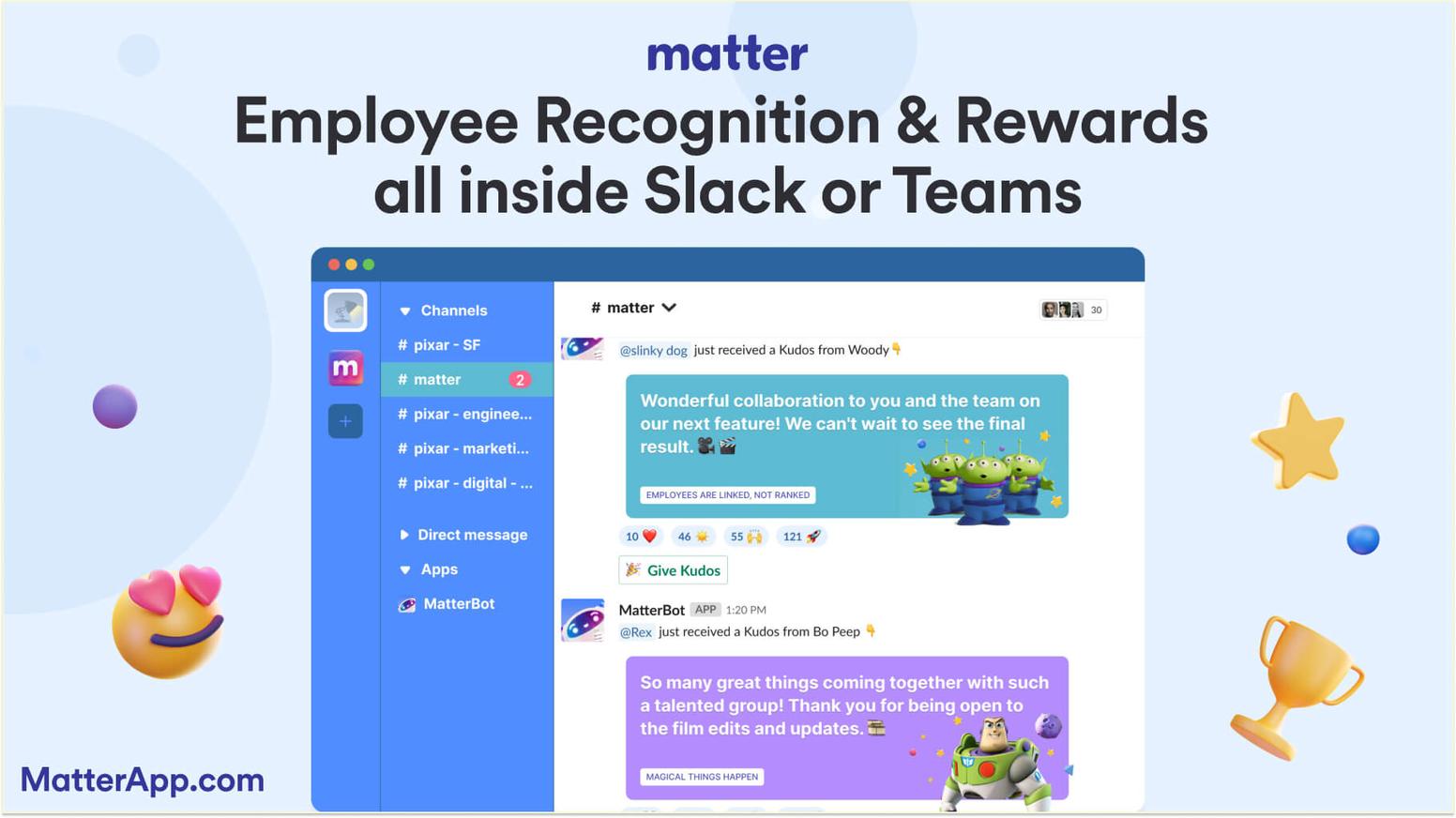
Standout strength: Same-day answers: the survey opens inside Slack or Teams with a coin reward for completion built in, which is why over half of pulse responses on Matter arrive within the first hour. Setup takes about two minutes with no HRIS project.
Watch out for: Surveys are a paid add-on, not part of the Free plan, and dedicated employee-experience suites go deeper on analytics: for industry benchmarks, driver analysis or lifecycle surveys at enterprise scale, Culture Amp, Qualtrics or Peakon is the better tool. Matter’s G2 reviews give the unfiltered view.
Pricing: The Surveys add-on is $2 per user/month, billed annually, on Basic ($1 per user/month, billed annually) or Pro ($3 per user/month, billed annually); Pro + Surveys totals $5.
Free plan for unlimited users covers kudos and Feedback Friday; every paid plan starts with a 14-day free trial, no credit card, and Matter hasn’t raised prices in 8 years. Verified September 2026.
Works in: Slack and Microsoft Teams natively; email delivery for surveys.
Best for: SMB and mid-market teams that want employee listening answered in chat, next to recognition, at a published price.
2. Culture Amp
Culture Amp is the employee survey platform enterprise HR teams benchmark against: engagement and effectiveness surveys, performance cycles and driver analysis. Survey invitations, reminders and announcements arrive in Slack or Teams; the survey itself is completed in the Culture Amp platform.
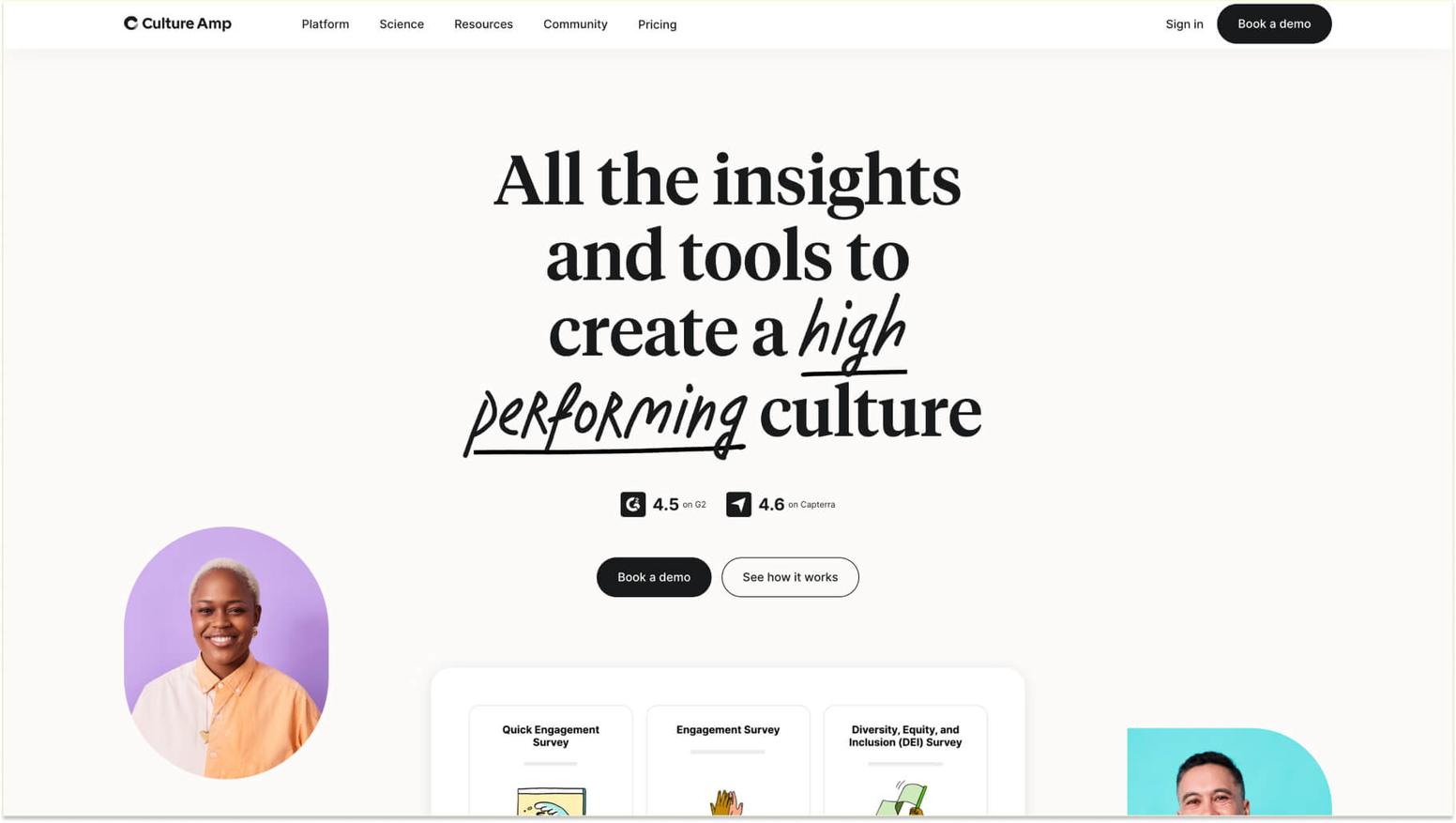
Standout strength: Depth and consistency, 4.5 on G2 across 1,613 reviews. Ryan H., a people operations systems manager (August 2026), has “used Culture Amp at several organizations, throughout the last decade.”
Watch out for: Quote-only pricing billed annually with no figures printed, chat used for notifications rather than answering, and survey fatigue: Bryan M., a head of IT (March 2026): “way too much to fill out, and a lot of it ended up being skipped or never used.”
Pricing: Quote-based, billed annually; depends on employee count, product and service tier (under 200 employees, 200 to 999, 1,000 or more). Verified September 2026.
Works in: Web; Slack and Microsoft Teams for invitations, reminders and announcements.
Best for: Organizations of several hundred or more that want benchmarked engagement surveys and can run an annual procurement.
3. Qualtrics Employee Experience (People Engage)
Qualtrics Employee Experience, sold as People Engage and formerly EmployeeXM, permits unlimited engagement and pulse surveys per annual subscription, plus lifecycle research, with industry benchmarks. The Slack add-on lets employees distribute and take surveys in a channel; the Teams add-on sends a personalized link by direct message that opens the survey in a browser tab.
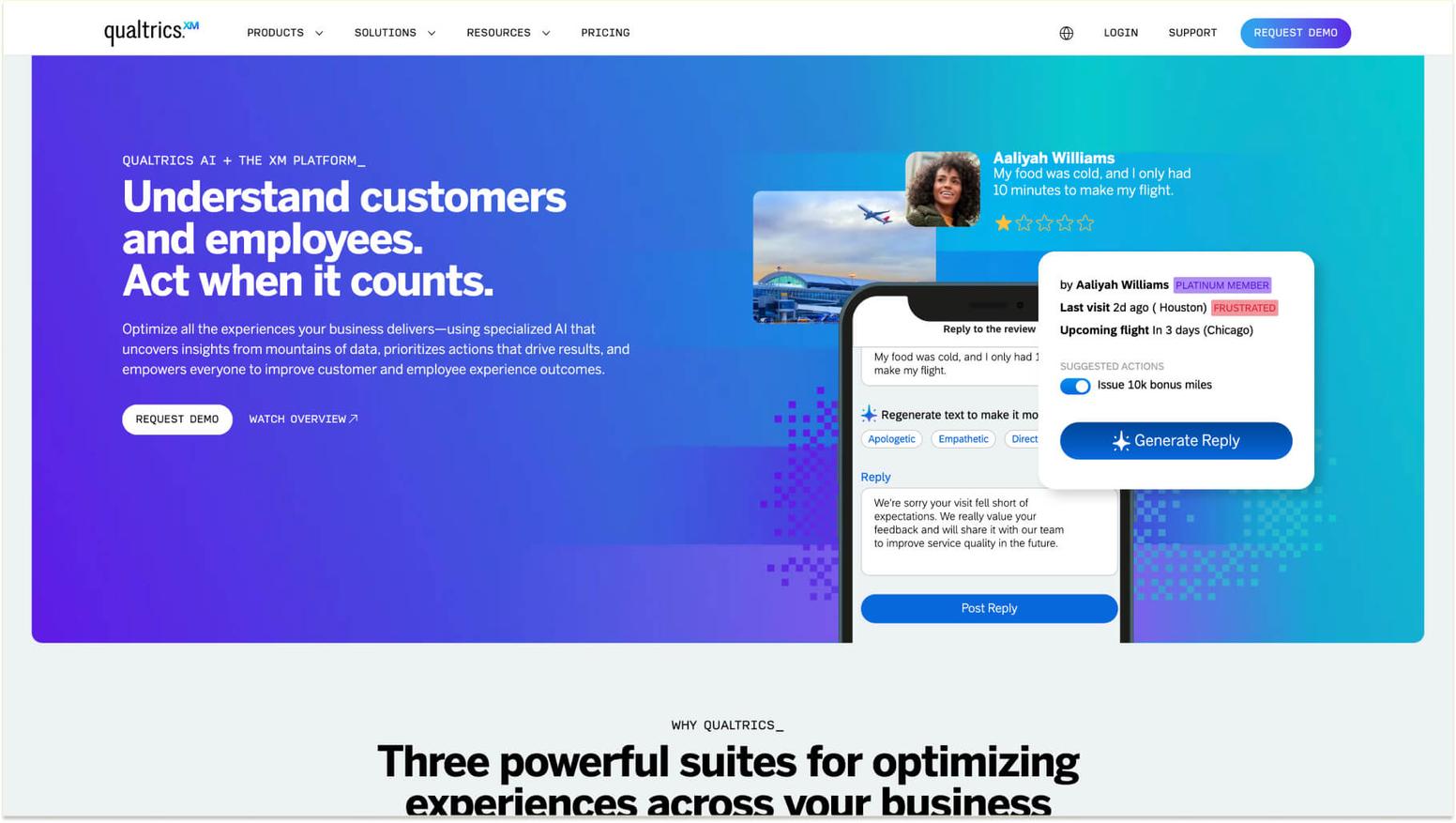
Standout strength: Benchmarks and dashboards for a people-analytics team. Kaela A., a director of human resources (November 2024), on G2, where it holds 4.4 across 463 reviews: “The dashboard is a great visual representation of the results.”
Watch out for: Pricing by employee count with no figures published, and both Slack and Teams delivery sold as add-ons outside the standard license. Sai Srivatsava M., a senior data analyst (October 2024): “The cost is little higher for smaller organizations.”
Pricing: Based on employee count, quote-only; Slack and Teams distribution are paid add-ons. Verified September 2026.
Works in: Web; Slack (surveys taken in a channel, add-on); Microsoft Teams (link by direct message, add-on).
Best for: Large enterprises with a people-analytics function, especially those already running Qualtrics for customer experience.
4. Lattice
Lattice sells Engagement as a standalone product: pulse, onboarding and exit surveys, eNPS, action planning and AI analysis, alongside its performance, goals and 1:1 products. Pulse surveys are answered inside the Lattice app home tab in Slack; on Teams the integration is notifications plus feedback.
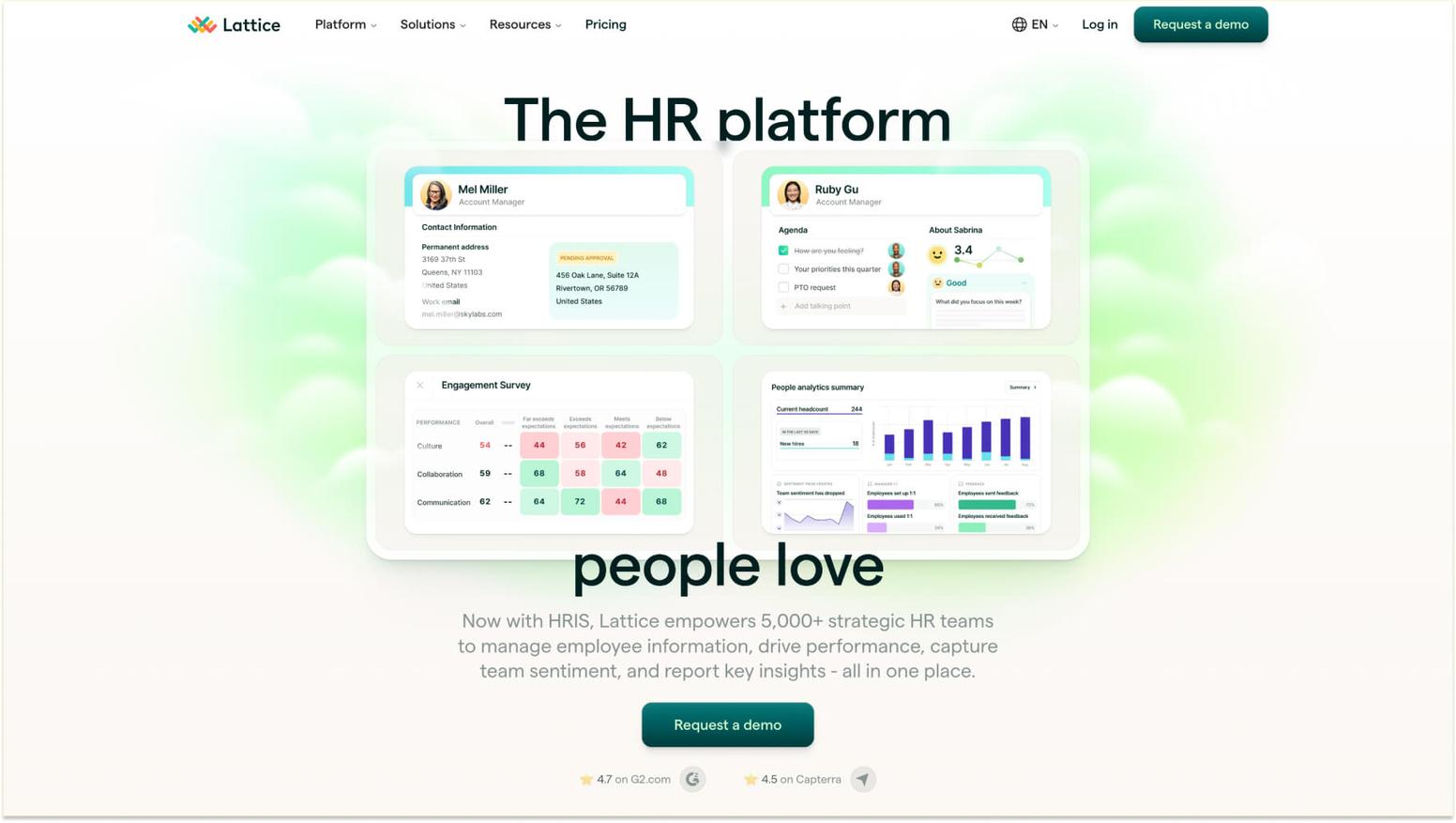
Standout strength: A published per-seat price for a full survey module, in a platform rated 4.6 on G2 across 4,123 reviews. Heather M., a head of people (May 2026): “Everything!”
Watch out for: The minimum annual agreement is $4,000, in USD only, so the $4 seat price applies in practice from roughly 85 seats. Jamie G., a senior director of finance (August 2026), wants “a more streamlined 'skip-level' experience for managers of managers.”
Pricing: Engagement is $4 seat/month, billed annually; Foundations is $13 seat/month; a $4,000 minimum annual agreement applies. Verified September 2026.
Works in: Web; Slack (pulse surveys answered in the app home); Microsoft Teams (notifications and feedback).
Best for: Mid-size companies that want engagement surveys in the same platform as reviews, goals and 1:1s.
5. Workleap Officevibe
Workleap Officevibe built its reputation on the weekly pulse survey, and that is still the core: a short survey delivered through Slack or Teams direct messages each week, with engagement reports, feedback and 1-on-1 prompts, now sold as part of the Workleap suite.
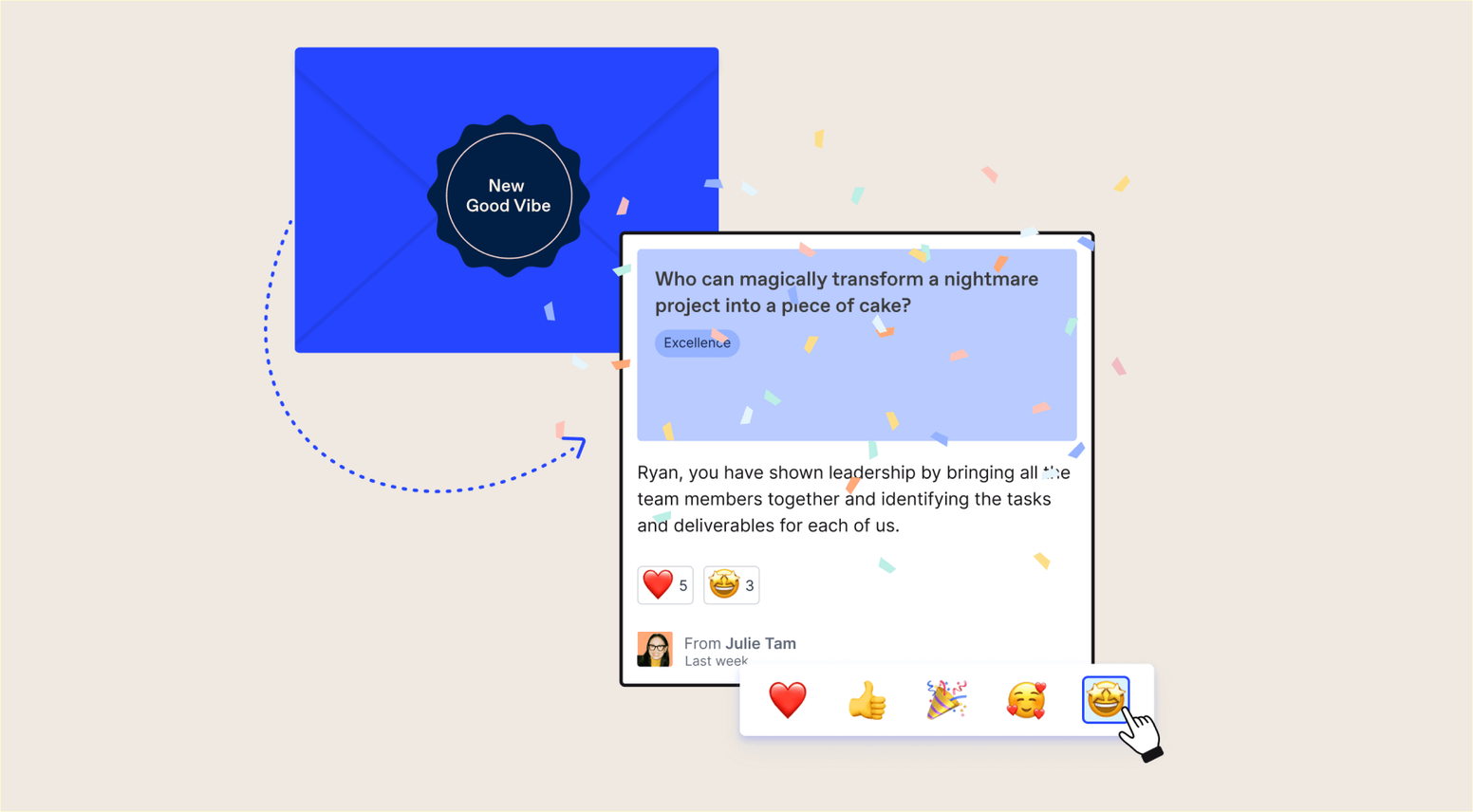
Standout strength: A pulse cadence managers actually follow, wrapped in a manager toolkit. Shruti T., a senior marketing manager (May 2026), on G2, where Workleap holds 4.3 across 1,090 reviews, calls it a “one-stop” platform for employee experience.
Watch out for: The suite now starts at $4,999 USD per year with no per-user or free tier printed, and the fetched pages describe surveys as delivered through chat rather than answered inside it. Duncan J., a managing director (September 2025): urgent support tickets “can take up to three days to be resolved.”
Pricing: Standard starting at $4,999 USD, billed annually; Pro starting at $11,999 USD, billed annually; Enterprise custom for more than 250 employees. Verified September 2026.
Works in: Web; Slack and Microsoft Teams direct messages for the weekly pulse, reminders and 1-on-1 prompts.
Best for: Mid-size companies that want a weekly pulse and manager coaching from an HR-owned suite.
6. CultureMonkey
CultureMonkey is an employee listening platform built for reach: surveys go out by email, Slack, Teams, WhatsApp, SMS, QR code and kiosk mode. In Slack and Teams a bot delivers the invitation and reminders; answers are collected in CultureMonkey, never in the chat app, which the vendor presents as an anonymity guarantee.
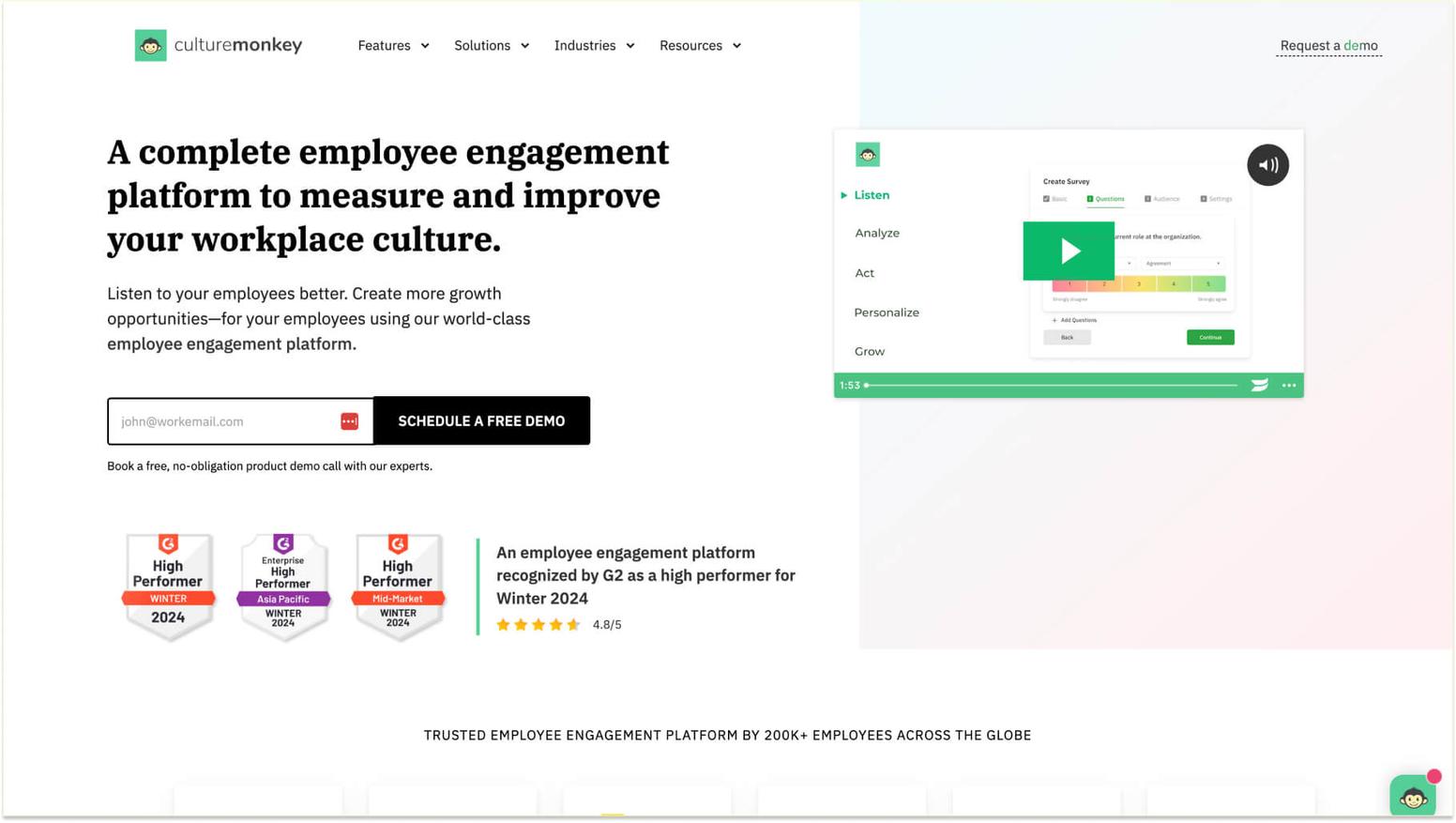
Standout strength: Frontline coverage. Heather K., a senior manager for change management and employee engagement (March 2026), on G2, where it holds 4.7 across 67 reviews: “The biggest thing is workforce access. It's easy to get to frontline employees using mobile access and QR codes.”
Watch out for: Quote-only pricing with no self-serve path, chat as a delivery route to a link rather than in-chat answering, and a Teams install that needs the tenant master administrator and up to 24 hours.
Pricing: Custom pricing by company size (under 200, 200 to 999, 1,000 or more employees), quote via sales. Verified September 2026.
Works in: Web; Slack and Microsoft Teams bot messages; email, WhatsApp, SMS, QR and kiosk.
Best for: Mid-size to enterprise HR teams with frontline and shift teams that need multi-channel delivery and people-science support.
7. Microsoft Viva Glint
Microsoft Viva Glint is Microsoft’s engagement survey product, bought as an add-on to a Microsoft 365 enterprise subscription through a Microsoft representative. Invitations, reminders and results notifications arrive in Teams; the survey opens from a link, by email or QR code; the $6.00 bundle adds Viva Pulse for short manager-run surveys.
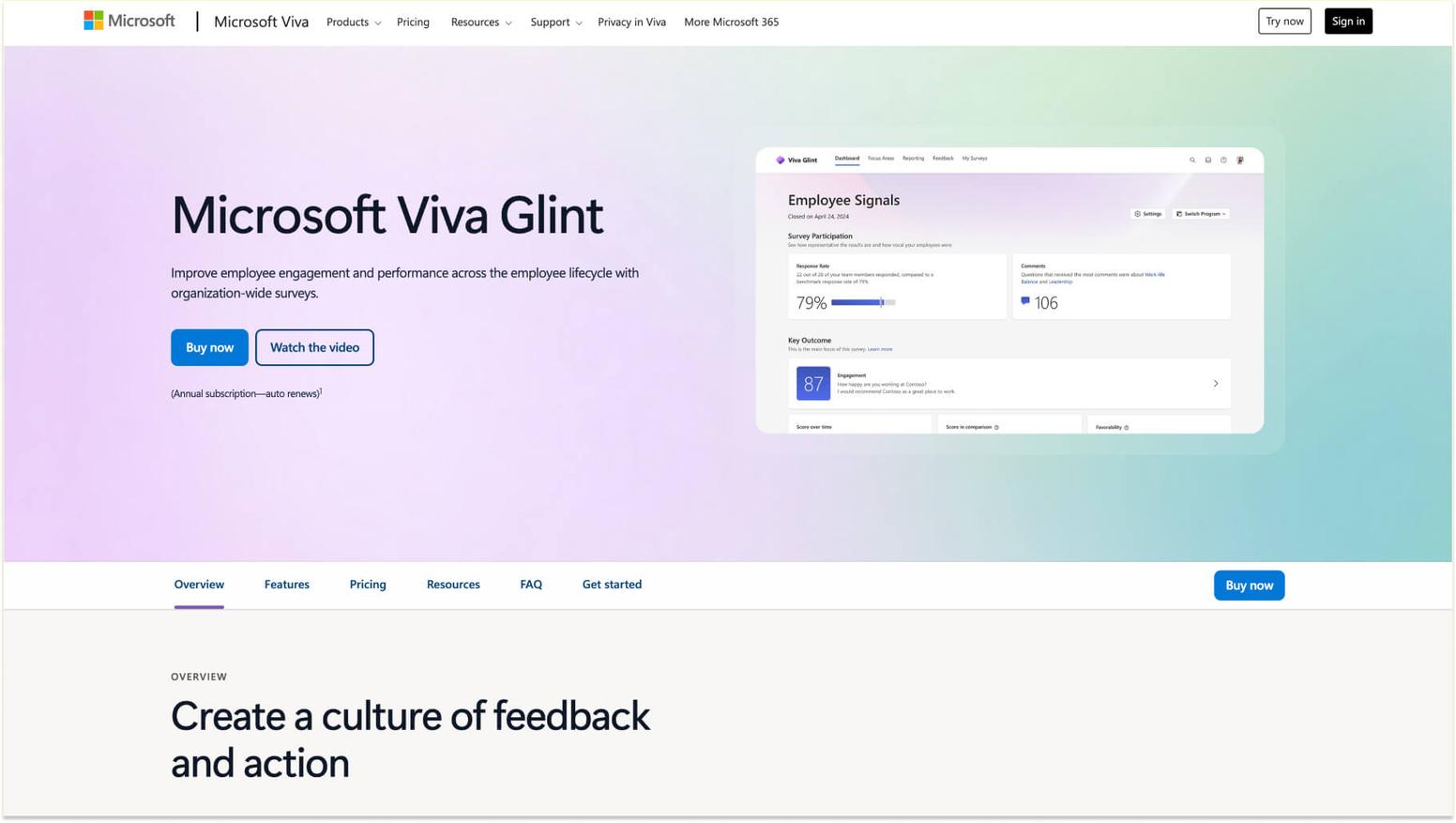
Standout strength: The lowest published price for an engagement survey program on this page, inside the Microsoft stack you already administer.
Watch out for: A 50-seat minimum, Teams licenses required to receive notifications, no Slack, and the survey is answered in a browser rather than inside Teams. G2 shows 4.6 across only 42 reviews, too few to quote a named reviewer.
Pricing: Microsoft Viva Glint is $2.00 user/month, paid yearly; Viva Workplace Analytics and Employee Feedback, which adds Viva Pulse, is $6.00 user/month, paid yearly; a 50-seat license minimum applies. Verified September 2026.
Works in: Microsoft Teams for notifications; web via survey link; email; no Slack.
Best for: Microsoft 365 enterprises that want an HR-run engagement survey with Teams reminders at a low per-user price.
8. Workday Peakon Employee Voice
Workday Peakon Employee Voice, the product that began as Peakon, is continuous listening inside the Workday estate: frequent surveys, manager suggestions and analytics. Employees can open and complete their survey directly within Teams; in Slack the integration sends survey and reminder notifications and daily suggestion summaries to managers.
Standout strength: Surveys completed inside Teams plus a manager loop, rated 4.6 on G2 across 117 reviews. Cesar Y. (December 2025) likes “collecting employee feedback in real time through the frequency of surveys.”
Watch out for: No public pricing anywhere on workday.com and no trial. Peter E., a learning and development manager (October 2020), found a bespoke survey “very difficult without going into a much higher tier that we didn't need.”
Pricing: Quote-based via Workday sales; no plans or figures are published. Verified September 2026.
Works in: Web; Microsoft Teams (survey completed inside Teams); Slack (notifications and manager summaries).
Best for: Large organizations, especially Workday HCM customers, that want continuous listening tied to their HR system of record.
9. SurveyMonkey
SurveyMonkey is a general survey platform, not an employee-listening suite, and it belongs here because many companies already own it. Surveys and polls can be created, shared and answered directly in a Teams channel or chat; the Slack app only posts completed responses to a channel, so employees answer on a web link or email invitation.
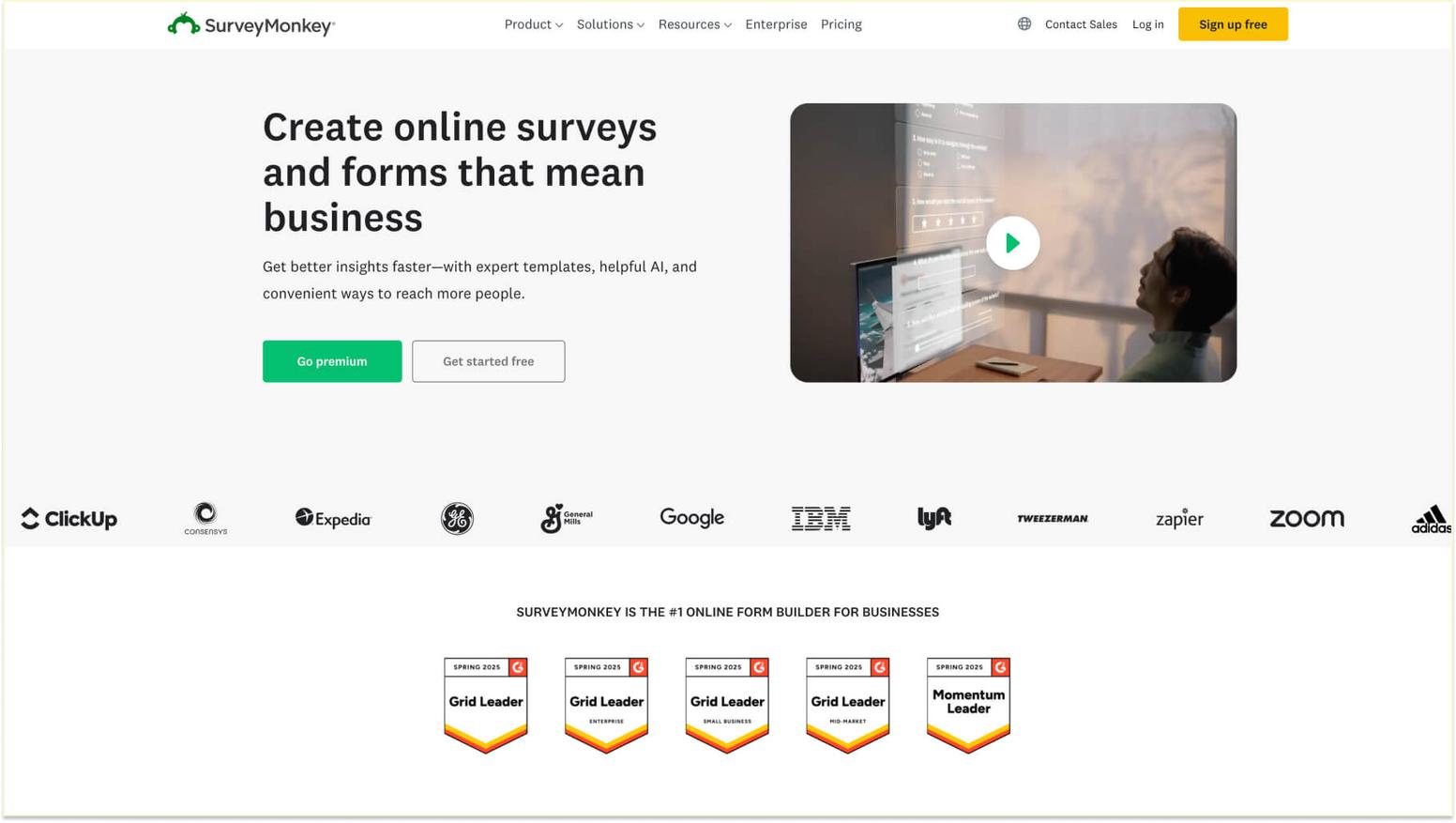
Standout strength: Familiarity and a huge base, 4.4 on G2 across 23,907 reviews. Claire R., a communications director (July 2026): “very straightforward to use during the building phase. Easy to duplicate surveys.”
Watch out for: Pricing is per creator seat with a response cap, not per employee, and the Teams integration is limited to US data center accounts with English-only setup. James M., a VP (July 2026): “It's difficult to get data in useful form.”
Pricing: Basic is free with 10 questions per survey. Team Advantage is $30 per user/month, starting at 3 users, billed annually, with 50,000 responses per year; Individual Advantage Annual is $39 per month, $468 billed annually; extra responses cost 15 cents each. Verified September 2026.
Works in: Web, iOS and Android; Microsoft Teams natively; Slack for notifications; email, link, QR and text.
Best for: Teams that already pay for SurveyMonkey for customer or market research and want occasional internal surveys without a second tool.
10. Typeform
Typeform is a conversational form builder and the cheapest way here to run a polished one-off survey inside Slack: share a form link in a public channel and an Answer in Slack button opens a modal, on a free account. On Teams it only posts responses to a channel.
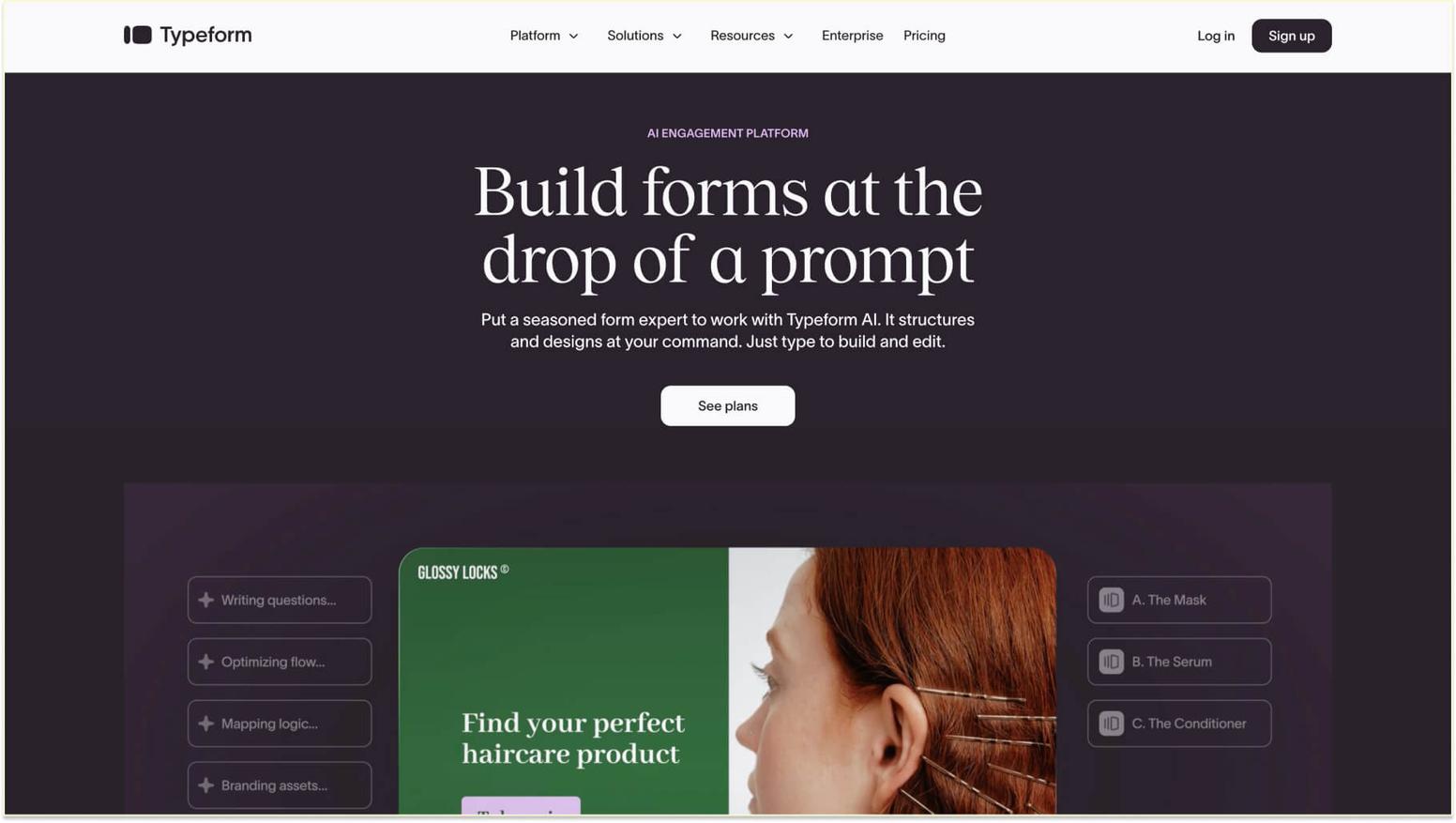
Standout strength: Design. Max P., a director of marketing and communications (April 2026), on G2, where it holds 4.5 across 1,014 reviews: “surveys look polished and professional.”
Watch out for: No anonymity or engagement analytics claims on its pages, plans priced per account with bundled seats and monthly response caps, and the same reviewer warns “You'll hit the paywall pretty quickly once you need features that should be standard.”
Pricing: Free plan with 10 responses per month. Basic is 25 USD per month billed yearly (29 USD monthly) for 1 user and 100 responses per month; Plus is 50 USD per month yearly for 3 users and 1,000 responses; Enterprise is custom. Verified September 2026.
Works in: Web and mobile browser; Slack (answered in a modal); Microsoft Teams (response notifications only); email and link sharing.
Best for: Small teams that want a beautiful one-off form or quick poll answered in a Slack channel, not a recurring listening program.
11. Microsoft Forms
Microsoft Forms is included with Microsoft 365 business, enterprise, education and frontline plans, so for a Teams company it needs no purchase order.
A poll goes into any chat or channel from the compose box, with an option to record names or not, and a Forms survey can be pinned as a team tab with recurring templates such as employee well-being.
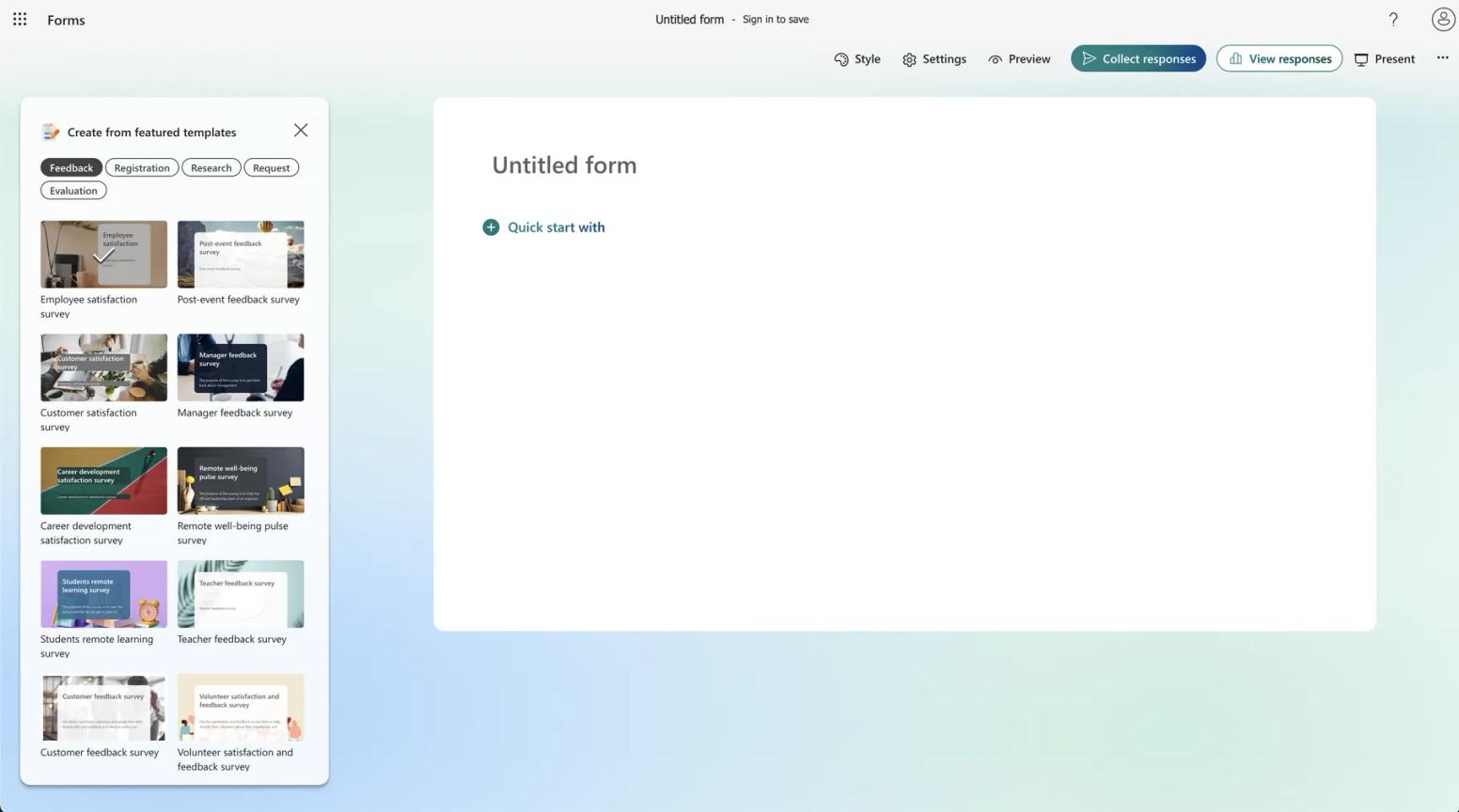
Standout strength: Free, already in the tenant, and simple. Sree K., a software development engineer in test (August 2026), on G2, where it holds 4.4 across 475 reviews: “even when I don't use it very often, I can still build what I need without any confusion.”
Watch out for: It is a form builder, not a listening program: Microsoft’s documentation describes polls, templates and a results page, with no pulse scheduling, eNPS benchmarking or trend analytics, and anonymity is a per-poll choice. Aditya A., a business analyst (November 2025), calls the sharing cap “quite limiting.”
Pricing: Included in Microsoft 365 licenses; no separate price. Verified September 2026.
Works in: Microsoft Teams (built in) and the web; no Slack.
Best for: Quick polls and one-off team surveys inside Teams at no extra cost.
12. SurveySparrow
SurveySparrow is positioned as a customer feedback platform, but its chat apps make it a workable employee survey tool for small teams: polls launch from a /polls command in Slack, surveys can be completed inside Slack, and in a Teams channel members answer with a Take Survey button.
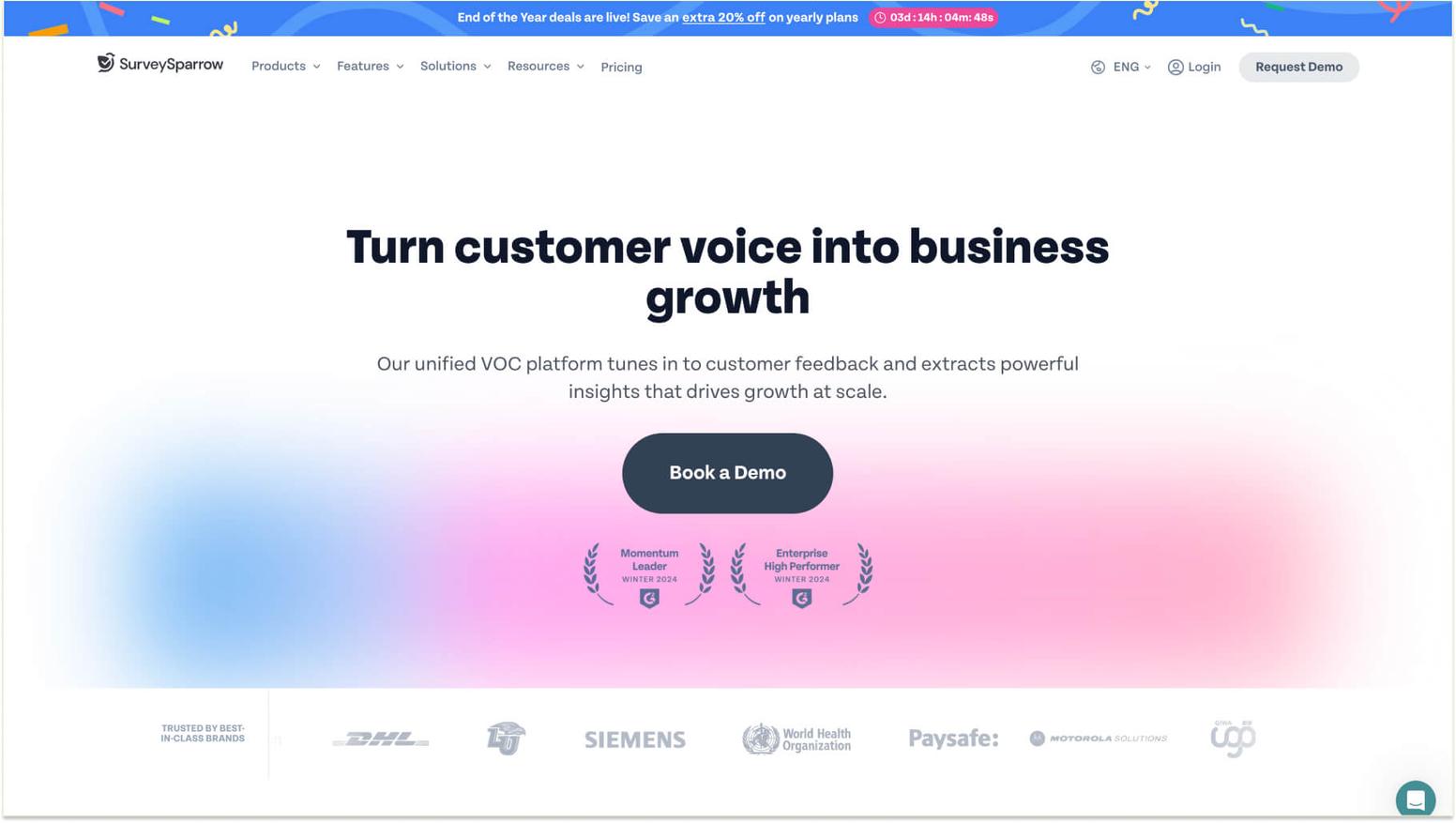
Standout strength: In-chat answering on both platforms. Anna H., an HR manager (August 2026), on G2, where it holds 4.4 across 2,066 reviews: with “scheduling and automatic reminders, HR doesn't have to rebuild the process each cycle.”
Watch out for: The Teams integration is excluded from the Free plan, the paid tier prices above the free plan did not render in our fetch of the pricing page, and the same reviewer adds that “Pricing is something I would review early.”
Pricing: Free plan with 75 responses per quarter, 3 active surveys and 10 questions per survey, plus a 14-day free trial of paid features. Paid tiers are priced per creator user with annual response caps; confirm the dollar figures on the pricing page. Verified September 2026.
Works in: Web, SurveySparrow Go on iOS and Android; Slack and Microsoft Teams (answered in chat); email, link, QR, SMS.
Best for: Small teams that want conversational surveys and quick polls in Slack or Teams and already run customer surveys on the same tool.
What employee survey software costs in 2026
Four pricing models run through employee survey tools. Per-employee pricing is the listening-suite model: Matter’s Surveys add-on at $2 per user/month, billed annually, Lattice Engagement at $4 seat/month, and Microsoft Viva Glint at $2.00 user/month, paid yearly.
Per-author pricing with a response cap is the form-tool model: SurveyMonkey Team Advantage at $30 per user/month for a minimum of 3 users with 50,000 responses a year, and Typeform Basic at 25 USD per month yearly for one user and 100 responses a month.
Included pricing is Microsoft Forms, which comes with the Microsoft 365 license you already pay for. Quote pricing is the enterprise model: Culture Amp, Qualtrics, Workday Peakon and CultureMonkey publish no figure; Workleap Officevibe publishes only a suite floor of $4,999 USD per year.
Per-author pricing looks cheap and can turn expensive. A 300-person company running a quarterly survey on SurveyMonkey fits inside one seat and a response cap; the same company running a weekly pulse to everyone generates more than 15,000 responses a year, where caps and extra-response charges add up.
Per-employee tools are a known monthly number that does not move with survey frequency.
Minimums decide the small-team answer. Lattice’s $4,000 minimum annual agreement and Viva Glint’s 50-seat minimum both price out companies under roughly 50 to 80 people; SurveyMonkey Team plans start at 3 users billed annually. Matter bills only for members of the connected channel, pro-rated daily, with no minimum and no setup fee. The full breakdown is on Matter’s pricing page.
What is genuinely free: Microsoft Forms inside Microsoft 365; SurveyMonkey Basic with 10 questions per survey; Typeform with 10 responses a month, including answering in Slack; SurveySparrow with 75 responses a quarter (without the Teams integration); and Matter’s Free plan for unlimited users, which covers recognition but not surveys. Matter and SurveySparrow each offer a 14-day free trial of paid features.
How to choose employee survey software for your company size
Under 50 people: do not buy a listening suite. For an occasional question, Microsoft Forms (on Teams) or Typeform (on Slack) costs nothing.
If you want a recurring pulse and eNPS with reminders and a trend line, Matter’s Surveys add-on on Basic is $3 per user/month, billed annually, all in, and the survey is answered in the channel.
If your company does not run on Slack or Teams, Matter is the wrong pick; SurveyMonkey or SurveySparrow by email will serve you better.
50 to 500 people: decide whether surveys should live next to recognition or next to performance. Next to recognition, Matter is the published-price option with coin rewards for completion. Next to performance reviews, Lattice publishes $4 seat/month for Engagement and Workleap Officevibe bundles a weekly pulse with manager coaching.
If much of your workforce is frontline, CultureMonkey’s WhatsApp, SMS and kiosk delivery is the better fit. Matter is the wrong choice at this size if you need driver analysis or industry benchmarks; it reports participation, scores and trends.
500 people and up: benchmarks and driver analysis earn their price, and Culture Amp, Qualtrics Employee Experience and Workday Peakon Employee Voice are the tools built for them, with Microsoft Viva Glint as the low-cost route for a Microsoft 365 tenant.
Many enterprises keep one of those for the annual survey and run weekly pulses in a chat-native tool; the two are different products. For the annual instrument itself, see our guide to employee engagement survey software; for the cadence, our guide to pulse survey software.
Frequently asked questions about employee survey software
Is there free employee survey software?
Yes, for one-off surveys. Microsoft Forms is included with Microsoft 365 and posts polls into any Teams chat. SurveyMonkey Basic is free with 10 questions per survey, Typeform’s free plan allows 10 responses a month and answers in Slack, and SurveySparrow’s free plan allows 75 responses a quarter.
None runs a recurring pulse with reminders and trends; for that, Matter’s Surveys add-on is $2 per user/month, billed annually, on a plan from $1 per user/month, billed annually.
What is the difference between a pulse survey and an employee engagement survey?
An employee engagement survey is the long instrument, typically 30 to 60 questions once or twice a year, designed to measure drivers of engagement and compare against benchmarks; Culture Amp, Qualtrics and Viva Glint are built around it.
A pulse survey is short, two to five questions, sent weekly or monthly to track a trend and catch problems early; Matter, Officevibe and Lattice are built around that cadence. Companies over 200 people usually need both.
How much does employee survey software cost?
Per-employee tools run from $2.00 user/month, paid yearly, for Microsoft Viva Glint and $2 per user/month, billed annually, for Matter’s Surveys add-on, to $4 seat/month for Lattice Engagement. Per-author form tools run from free to $30 per user/month for SurveyMonkey Team Advantage.
Workleap Officevibe starts at $4,999 USD per year, and Culture Amp, Qualtrics, Workday Peakon and CultureMonkey quote privately. Minimums and response caps change the real number more than the list price does.
Can employees answer surveys inside Slack or Microsoft Teams?
On some tools, yes. Matter surveys are answered inside Slack and Teams, Lattice pulses inside Slack, Workday Peakon surveys inside Teams, SurveyMonkey and SurveySparrow inside Teams channels, and Typeform and SurveySparrow inside Slack.
Culture Amp, Workleap Officevibe, CultureMonkey and Viva Glint deliver an invitation or reminder into chat and open the survey elsewhere. Our roundups of Slack survey apps and Microsoft Teams apps for employee surveys go platform by platform.
Which employee survey software includes anonymous feedback?
Matter and CultureMonkey both run anonymous employee surveys by design: on Matter, 98.2% of pulse surveys are sent anonymous, and CultureMonkey collects every answer outside the chat app and presents that as its anonymity guarantee. Dedicated listening platforms separate responses from identities and enforce minimum group sizes before showing results.
General form tools are different: a Microsoft Forms poll is anonymous only if the creator chooses not to record names, and Typeform makes no anonymity claims. Ask for the reporting threshold before you promise anonymity.
Which employee survey software helps managers act on feedback?
Workleap Officevibe, Workday Peakon Employee Voice and Lattice are the tools on this list built around the manager loop. Officevibe pairs its weekly pulse with engagement reports, feedback and 1-on-1 prompts, which is why its pulse cadence is one managers actually follow.
Workday Peakon sends managers daily suggestion summaries alongside continuous survey results, and Lattice Engagement includes action planning and AI analysis on top of pulse, onboarding and exit surveys. Form tools such as SurveyMonkey and Typeform collect answers but give managers nothing to act on.
Which employee survey software is best for onboarding and new hire surveys?
Matter, Lattice and Qualtrics all run onboarding surveys as a named survey type. Matter sends an onboarding survey a set number of days after hire, inside Slack or Microsoft Teams, with setup that takes about two minutes and no HRIS project.
Lattice Engagement bundles onboarding and exit surveys with its pulse and eNPS surveys at $4 per seat per month, billed annually, with a $4,000 annual minimum. Qualtrics covers the full employee lifecycle, priced by employee count on a quote.
Which employee survey platform provides analytics and reporting?
Qualtrics Employee Experience, Culture Amp and Workday Peakon Employee Voice are the analytics-first platforms here. Qualtrics pairs industry benchmarks with dashboards built for a people-analytics team; Culture Amp adds driver analysis to engagement and effectiveness surveys; Peakon delivers continuous listening analytics inside the Workday estate.
Lattice includes AI analysis and action planning with its Engagement product, and Workleap Officevibe ships engagement reports with its weekly pulse. Microsoft Forms has a results page but no pulse scheduling, eNPS benchmarking or trend analytics.
Which employee survey software is easiest for HR teams to launch?
Matter, Microsoft Forms and SurveySparrow are the fastest starts on this list. Matter installs in about two minutes with no HRIS project, because user management syncs from Slack or Teams, and its Surveys add-on is a self-serve $2 per user/month, billed annually.
Microsoft Forms is already inside a Microsoft 365 tenant and needs no purchase order, and SurveySparrow's scheduling and automatic reminders mean HR does not rebuild the process each cycle. At the other end, CultureMonkey's Teams install needs the tenant administrator and up to 24 hours, and Viva Glint is bought through a Microsoft representative.
Which employee survey software offers both eNPS and pulse surveys?
Matter, Lattice and the Microsoft Viva bundle all run eNPS and pulse surveys in one product. Matter's Surveys add-on covers pulse and eNPS, plus onboarding and custom surveys, answered inside Slack or Teams. Lattice Engagement includes pulse, eNPS, onboarding and exit surveys for $4 per seat per month, billed annually.
Microsoft's $6.00 per user per month bundle pairs Viva Glint for engagement surveys with Viva Pulse for short manager-run surveys, for Teams companies with 50 or more seats. Qualtrics permits unlimited engagement and pulse surveys per annual subscription.
What is the best employee survey software for measuring engagement?
Culture Amp is the engagement survey platform enterprise HR teams benchmark against, with engagement and effectiveness surveys, driver analysis and a 4.5 rating on G2 across 1,613 reviews. Microsoft Viva Glint is the lowest-priced engagement survey program on this page at $2.00 per user per month, paid yearly, inside the Microsoft stack.
Qualtrics and Workday Peakon serve people-analytics teams that want benchmarks and continuous listening. For tracking engagement week to week rather than once a year, Matter and Workleap Officevibe are built around the short pulse instead of the long annual survey.
When is a form tool like SurveyMonkey or Microsoft Forms enough?
When the survey is occasional, the audience is small enough to fit a response cap, and nobody needs a trend line. A benefits question or a post-event survey belongs in Microsoft Forms, Typeform or SurveyMonkey; buying a listening platform for it is waste.
The moment you want the same questions asked every month, reminders sent automatically, results tracked over time and answers kept anonymous by design, you have outgrown the form tool.
The bottom line
The best employee survey software is the one people actually answer, which means it arrives where they already work and takes a minute.
If your company runs on Slack or Microsoft Teams and you want pulse, eNPS, onboarding and custom surveys answered in chat, with a coin for finishing, at a price you can read, that is what we built Matter to do.
For an occasional poll, use the form tool you own; for benchmarks and driver analysis at enterprise scale, Culture Amp, Qualtrics or Peakon is the better choice. Whichever you pick, share the result and act on it before the next survey.

![49+ Employee Engagement Survey Tools [2026 Software & Tips]](https://cdn.sanity.io/images/kqqb5xry/production/abc4b7d1e97facabe782eac4644268b6a0fdfa24-800x600.jpg?w=720&q=75&fit=max&auto=format)
![Employee Engagement Surveys [25+ Tips & Tools for 2026]](https://cdn.sanity.io/images/kqqb5xry/production/13fd70d57fbbac5ce7dc325b8217cacb5509a53c-800x600.jpg?w=720&q=75&fit=max&auto=format)