

Short answer: The best pulse survey apps for Microsoft Teams are Viva Pulse, Matter, Workday Peakon Employee Voice, TINYpulse, Polly, Geekbot and Workleap Officevibe, separated by whether the weekly answer happens inside Teams or by link.
Viva Pulse suits Viva Suite or Glint holders and keeps results with the manager who asked. Matter runs anonymous pulse and eNPS in Teams, Surveys add-on $2 per user/month, billed annually. Peakon fits enterprise listening. Officevibe answers in a web app.
Pulse surveys on Microsoft Teams start with a licensing question, not an app question. Microsoft Forms is free with Microsoft 365 and drops a poll into any chat, but it has no cadence engine.
Viva Pulse is native to Teams and built for manager-run pulse checks, but it is not in base Microsoft 365 and needs a paid Viva plan. Everything else is a third-party app that passes through the tenant admin, and in two cases here a Global Administrator, before anyone sees a question.
This page is about pulse specifically: cadence, response speed, anonymity, eNPS trending and who follows up. Our broader guide to Microsoft Teams apps for employee surveys covers polls, onboarding and custom surveys.
The roster differs from our Slack survey apps guide because Viva Pulse exists only on Teams and Peakon answers inside Teams while its Slack app is a notification channel.
Last verified September 2026.
The short version
Viva Pulse is the right answer if you already pay for Viva Suite or Viva Glint and manager-scoped pulse checks are what you want; it is not free, and results stay with the manager who asked.
Matter, Workday Peakon Employee Voice, TINYpulse, Polly and Geekbot take the pulse answer inside Teams: Matter for a recurring pulse and eNPS program with rewards for completion at a published price, Peakon for enterprise continuous listening, TINYpulse for the original one-question weekly pulse, Polly for a recurring poll in chats and meetings, and Geekbot for standup teams.
Workleap Officevibe delivers its weekly pulse by Teams direct message and collects the answer in its web app. Microsoft Forms handles a one-off check-in at no cost.
Quick comparison
| App | Native to Teams | Starting price | Try before you buy | Best for |
|---|---|---|---|---|
| Matter | Yes, answered in Teams | Free plan; Surveys add-on $2 per user/month, billed annually | Free plan, 14-day free trial | Pulse and eNPS with recognition |
| Viva Pulse | Built in (licensed) | $6.00 user/month, paid yearly, in a Viva plan | Admin-led trial, 25 users | Manager pulse checks on Viva |
| Workday Peakon Employee Voice | Yes, answered in Teams | Quote-based | No free plan or trial | Enterprise continuous listening |
| TINYpulse by WebMD Health Services | Yes, answered in Teams | Not published | Demo only | WebMD Health Services customers |
| Polly | Yes, answered in Teams | Free plan; Pro $19 per month, billed $228 annually | Free plan | Recurring polls in chats and meetings |
| Geekbot | Yes, answered in Teams | Free up to 10 users; surveys $1 per unique respondent, per month | Free plan, trial of 30 days | Standup teams adding a pulse |
| Workleap Officevibe | Connector: answered in web app | Standard starting at $4,999 USD, billed annually | No free plan or printed trial | HR-owned weekly pulse suite |
Pricing verified September 2026 against each vendor’s pricing page; ratings from G2 as of September 2026, except Matter’s Teams App Store figure, from its Microsoft marketplace listing.
How we evaluated these pulse survey apps
We build Matter, which runs pulse and eNPS surveys native to Microsoft Teams and Slack, so read our entry with that in mind. For every other app we read the vendor’s pricing page, Teams product page or Microsoft documentation, plus named G2 reviews; we have not used most of them hands-on.
We scored five things: built in, licensed or third party, and the admin path; answered inside Teams or through a link; the cadence engine (schedule, reminders, repeated questions so results trend); anonymity and who sees results; and trending, eNPS and manager follow-up.
Pricing and availability were verified in September 2026 against each vendor’s own pricing page and app listing; ratings are from G2 as of September 2026.
Our own platform data set the bar for response speed. In The Recognition Habit, Matter’s 2026 Benchmark Report, over half of pulse responses arrive within the first hour and 87.5% within a day, coin rewards roughly double completion (39.6% vs 19.6%, survey-weighted across 84,000+ pulse surveys), and 98.2% of pulse surveys run anonymous.
The same report finds that almost half of teams (46%) send their first recognition within 15 minutes of setup, 1 in 3 within 5 minutes, and the figures are identical on Slack and Teams. On Teams, two-thirds of the team onboards within the first hour. More is at Matter Research.
What to look for in pulse survey apps for Microsoft Teams
- Built in, licensed or third party. Microsoft Forms is included with Microsoft 365. Viva Pulse is a Microsoft app behind a Viva plan. Everything else is governed by your tenant’s app policies, and a pulse that waits on a policy change starts a month late.
- The admin path. Third-party apps must be set to Allowed under Teams apps in the admin center and covered by a permission policy assigned to users; Polly documents those steps and notes that apps are not supported in Teams private channels. TINYpulse needs a Teams Global Admin, and Peakon needs Global System Administration access.
- Answered in Teams or by link. Viva Pulse, Matter, Peakon, TINYpulse, Polly and Geekbot take the answer in Teams. Officevibe sends a Teams direct message and collects the answer in a web app, a login every week.
- Anonymity and who sees results. A Forms poll can simply not record names. Viva Pulse keeps results confidential to the requesting manager, a feature for a team lead and a limit for HR. A program needs anonymity by default and a stated minimum group size; no vendor here prints a threshold, so ask.
- Government tenants. TINYpulse says third-party apps are not supported on Teams GCC or GCC-High, and Microsoft’s Forms service description excludes meeting polls from GCC High and DoD.
The best pulse survey apps for Microsoft Teams in 2026
1. Matter
Matter is recognition, rewards and employee surveys in one app native to Microsoft Teams: no separate login, about two minutes to set up, and user management syncs from Teams. Pulse and eNPS live in the Surveys add-on, delivered in Teams, Slack and email, with optional coin rewards for completion.
Leaders can use Matter with Microsoft Copilot to surface survey insights and recognition activity in natural language. We build Matter, so weigh this entry accordingly and read Matter’s reviews on G2 too.
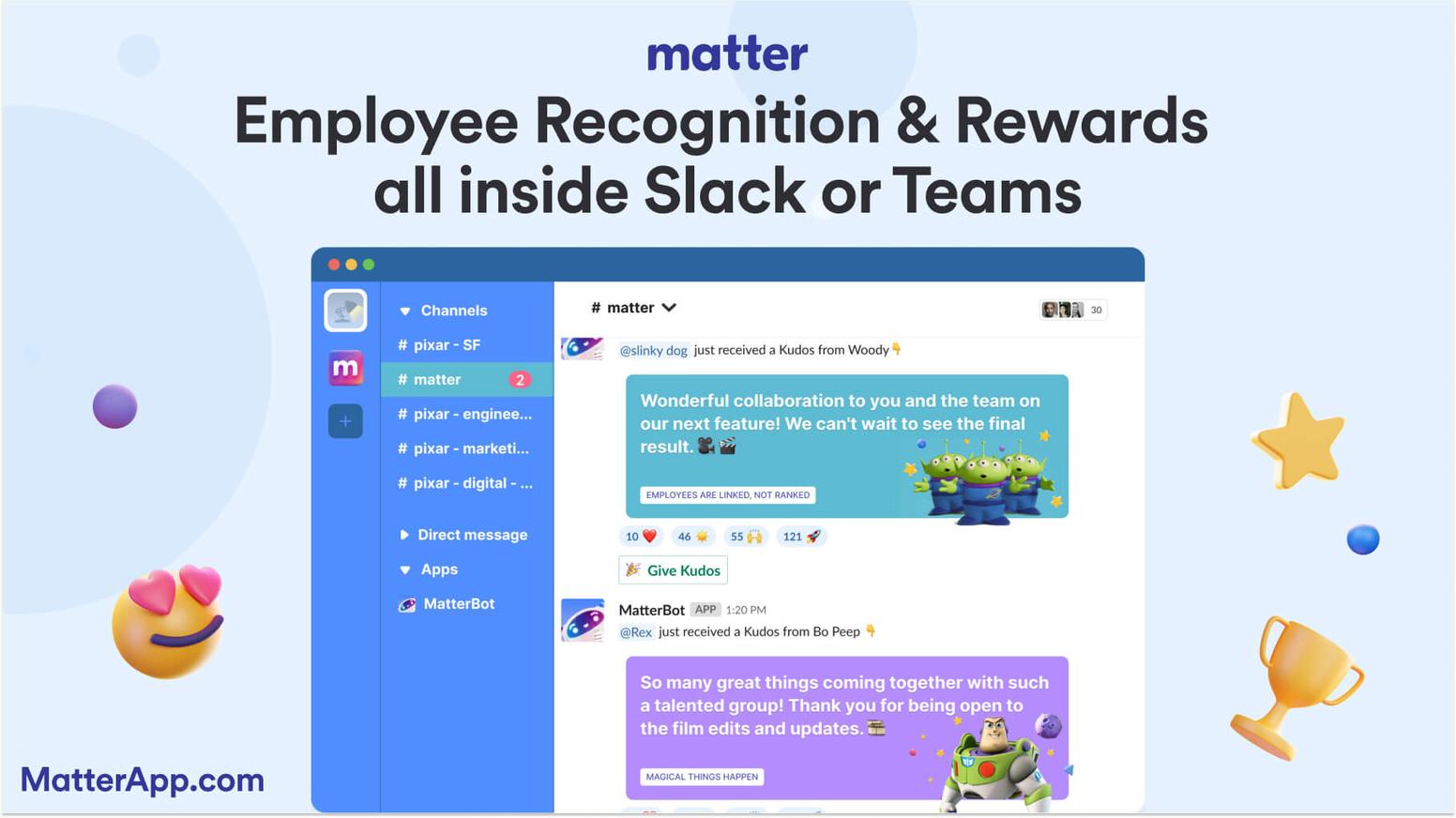
Standout strength: Response speed. The pulse is answered in Teams, runs anonymous, and a small coin reward for completion is built in, the mechanism behind the figures above; Matter rates 5.0 across 1,476 ratings on the Teams App Store.
Feedback Friday™ (US Patent 12,199,935) prompts the team weekly; give-coins reset weekly, earned coins never expire. The Free plan for unlimited users covers kudos and Feedback Friday, a low-risk first employee listening step; templates are on the pulse surveys page.
Watch out for: Surveys are a paid add-on, and dedicated listening suites go deeper on analytics: for driver analysis across hundreds of managers, Peakon is the better tool. A tenant admin may need to approve the app. HRIS sync is an Enterprise-tier item (250+ HRIS integrations available; no HRIS project is required because user management syncs from Slack or Teams).
Pricing: Free plan for unlimited users. Basic is $1 per user/month, billed annually; Pro is $3 per user/month, billed annually; the Surveys add-on is $2 per user/month, billed annually, on Basic or Pro (Pro + Surveys totals $5). 14-day free trial, no credit card, and Matter hasn’t raised prices in 8 years. See the pricing page, verified September 2026.
Best for: SMB and mid-market teams that want a recurring pulse and eNPS program answered in Teams, with recognition in the same app, at a published price.
2. Microsoft Viva Pulse
Viva Pulse lets managers and project leads send short pulse surveys from inside Teams or the web, drawing on a question library and templates Microsoft says are designed by experts in people science. Results stay confidential to the manager or project lead who asked, and a Teams license is required to use it in Teams.
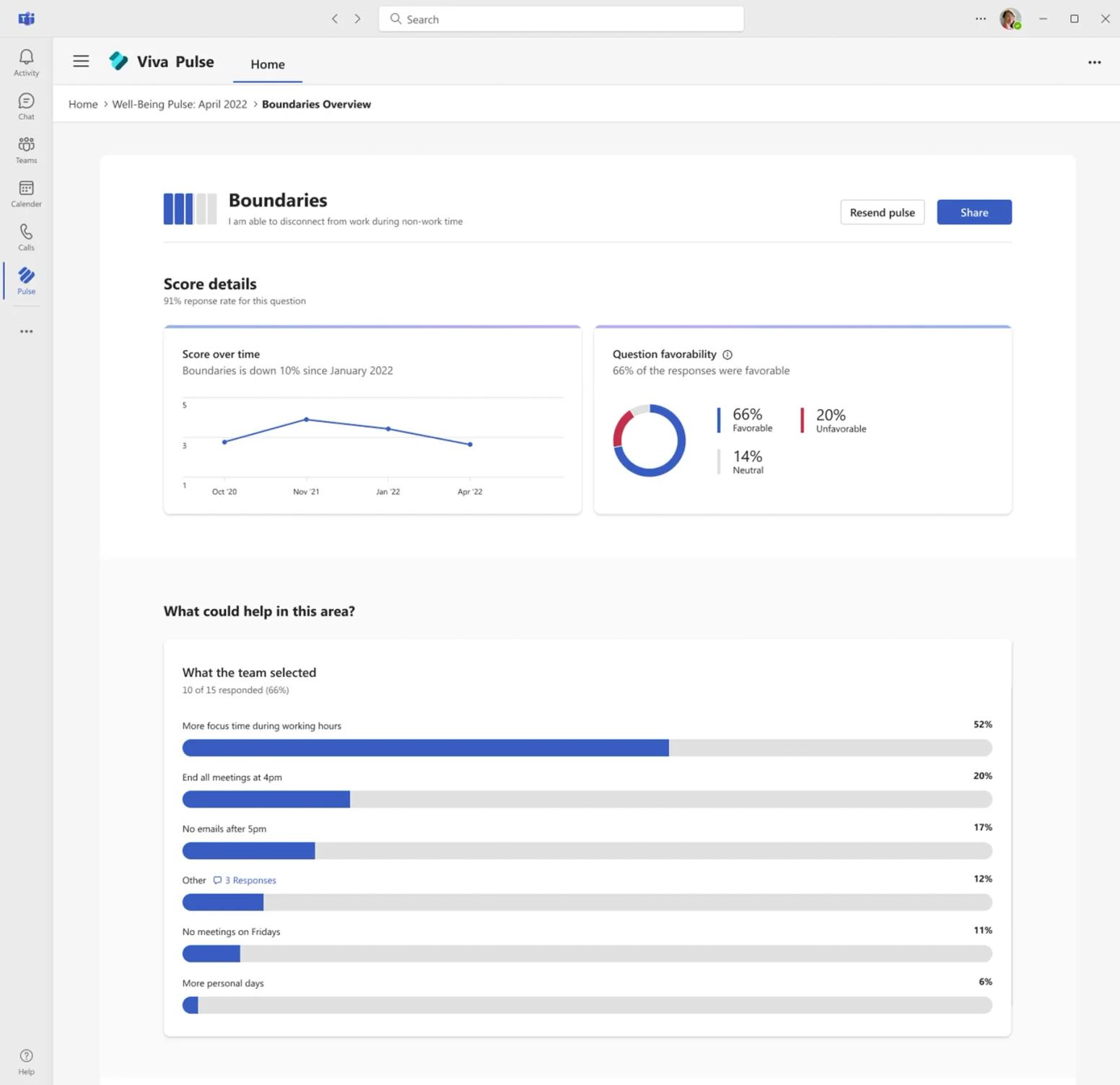
Standout strength: Native to Teams with no third-party app to approve, and if your organization already pays for Viva Suite or Viva Glint, Pulse is already in the entitlement. For a manager checking a team after a reorg, it is the shortest path here.
Watch out for: It is not included in base Microsoft 365, and Microsoft’s documentation describes manager-scoped feedback rather than an org-wide program with anonymous trending, rewards or delivery outside Teams. There is no G2 product page for Viva Pulse, so we cite no rating.
Pricing: Microsoft Viva Workplace Analytics and Employee Feedback is $6.00 user/month, paid yearly (Annual commitment); Microsoft Viva Suite is $12.00 user/month, paid yearly (Annual commitment); a Viva Glint license also unlocks it. An admin-led trial lets Billing Admins assign 25 users for 30 days. Verified September 2026.
Best for: Microsoft-standardized organizations already on Viva Suite or Glint that want manager-level pulse checks in Teams.
3. Workday Peakon Employee Voice
Peakon, now Workday Peakon Employee Voice, is the enterprise continuous-listening platform on this list, and unlike its Slack app, its Teams app is native: Workday’s documentation says employees can open and complete their survey directly within Teams. Setup needs administrator access in Peakon and in Microsoft Teams (Global System Administration), and the app is added from AppSource.
Standout strength: The only enterprise listening suite here that takes the answer inside Teams, with the frequency model built around continuous measurement. Cesar Y. (December 2025) wrote on G2: “I like the possibility of collecting employee feedback in real time through the frequency of surveys.” It rates 4.6 across 117 reviews.
Watch out for: Pricing is quote-only through Workday sales with no trial, and the Microsoft-side setup needs the highest admin role. Peter E. (October 2020) found a bespoke survey “very difficult without going into a much higher tier that we didn’t need.”
Pricing: Quote-based via Workday sales; no plans printed, no free plan, no trial. Verified September 2026.
Best for: Large organizations, especially Workday HCM customers, that want enterprise listening answered inside Teams.
4. TINYpulse by WebMD Health Services
TINYpulse made the one-question weekly pulse a category and has changed hands twice since: Limeade acquired it and renamed it Limeade Listening, WebMD Health Services then acquired Limeade, and from July 2024 the product was rebranded back to TINYpulse by WebMD Health Services.
On Teams the TINYpulse bot pings every user in the integrated Team when a survey opens, and people respond to surveys directly in Teams.
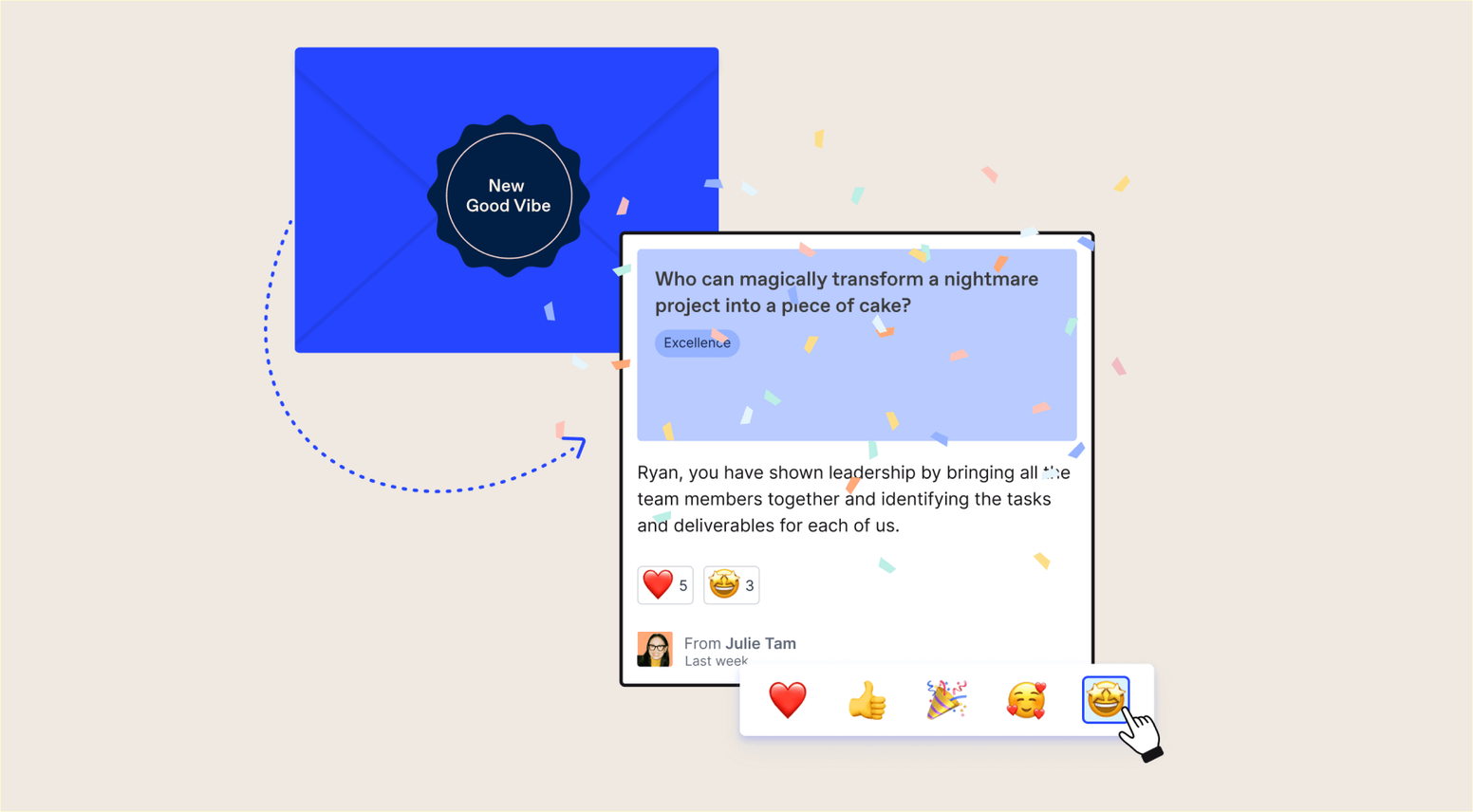
Standout strength: The weekly one-question rhythm is the whole design. Tina H. (May 2022), a Chief of Staff, wrote on G2: “Easy to set up with a fairly intuitive UI. We mainly use weekly ‘pulse’ one question check-ins, and occasionally do longer surveys as well.” It rates 4.4 across 214 reviews.
Watch out for: No public pricing and no trial, only a demo request. Setup needs a TINYpulse admin plus a Teams Global Admin, and it is not supported on Teams GCC or GCC-High.
Eniko S. (December 2021) described the link-out failure mode: “By clicking on the survey response we are taken to login and then one has to answer the survey again.” Both named reviews predate the 2024 rebrand.
Pricing: No plans printed; demo request only. Verified September 2026.
Best for: Organizations already buying WebMD Health Services well-being programs that want a weekly pulse from the same vendor.
5. Polly
Polly is the established poll app on Teams, priced separately from its Slack product. Type @polly or click the pinned icon in the message extension to send a poll to a group chat, channel or meeting; results live in the Polly tab. Over a Forms poll it adds templates, scheduling, anonymity controls and trend analysis.
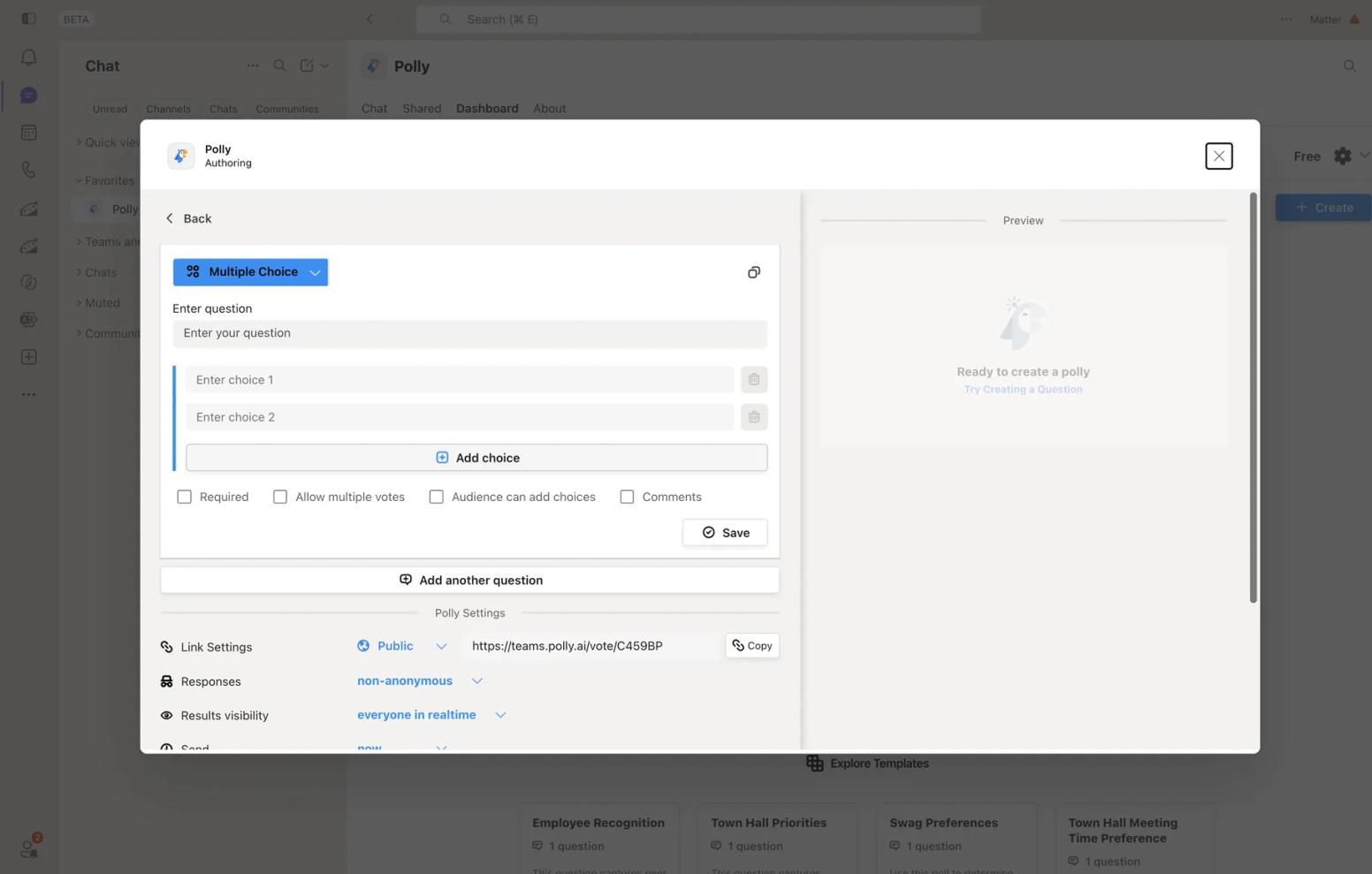
Standout strength: Polls in meetings as well as channels, so a pulse can close an all-hands. Christy H. (April 2026) called it “Easy to set up and easy to use” on G2, where it holds a 4.6 across 94 reviews.
Watch out for: The Teams free plan has no anonymous responses, no reminders or scheduling, no DM delivery and 30 days of results history, so an anonymous pulse needs Pro. Paid plans are per author license, billed annually; Alex P. (April 2026) wrote: “The pricing practices are genuinely misleading, and that’s not a word I use lightly.”
Pricing: Free plan. Pro is $19 per month, billed $228 annually, per license; Enterprise is quote-based. Verified September 2026.
Best for: Teams that want a recurring poll in chats and meetings with one or two authors, paying Pro for anonymity and scheduling.
6. Geekbot
Geekbot automates standups, retrospectives and surveys right in Teams: the bot notifies each person at the time you set, they answer in their own words or on a 1 to 5 or emoji scale, and the summary posts to a channel. Surveys have an anonymous option.
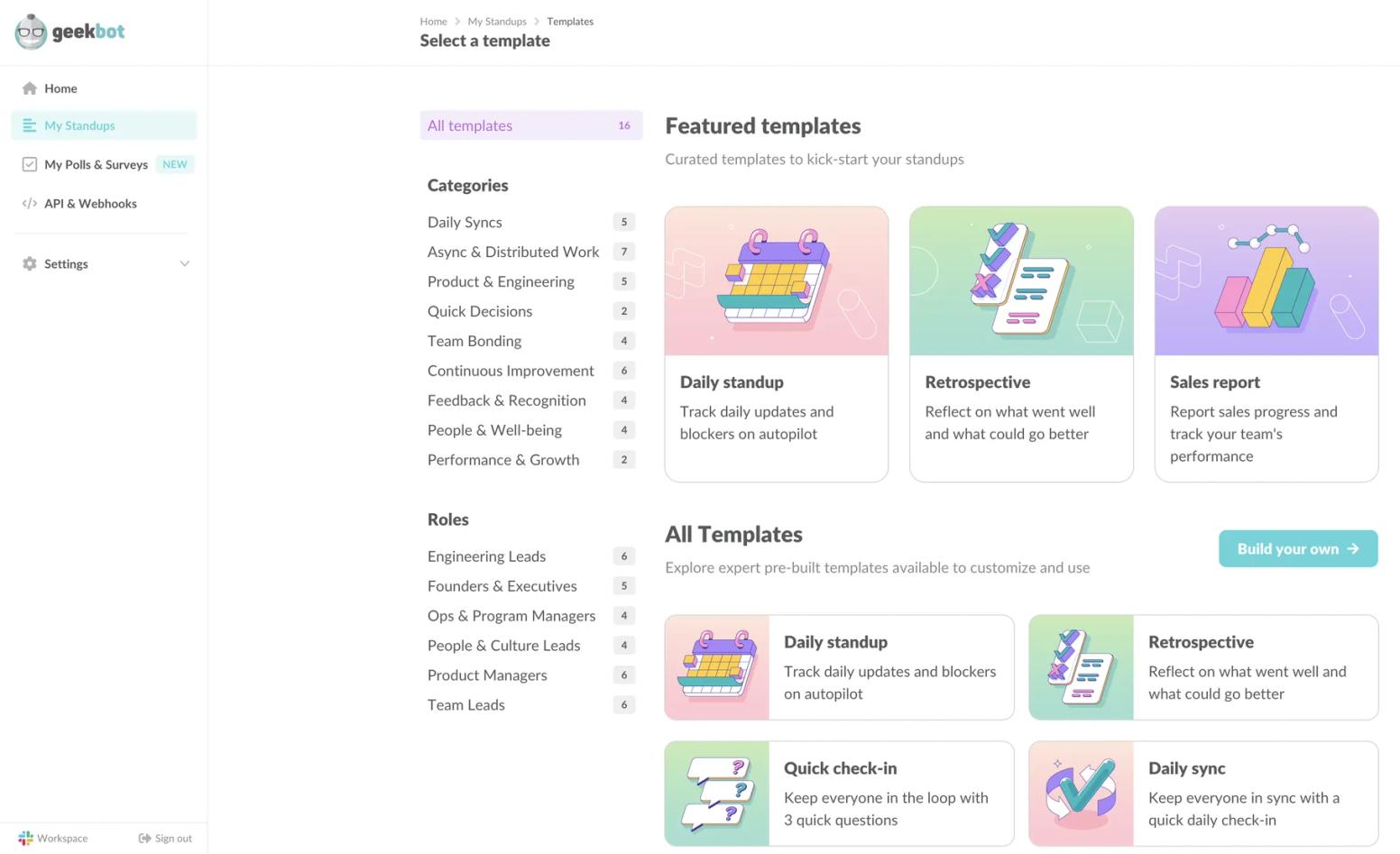
Standout strength: The habit already exists: a team that answers a Geekbot standup every morning will answer a Friday pulse in the same bot, and teams of up to 10 get surveys free. Ashar M. (October 2025) says on G2 it “has made our daily standups and progress updates effortless”; 4.6 across 164 reviews.
Watch out for: Standups are metered per participant and surveys per unique respondent, so a team using both pays both; there is no eNPS layer; and the vendor’s pages give no tenant admin guidance. Christie M. (July 2023) wrote: “It’s not very customizable.”
Pricing: Starter is free for teams of up to 10 users. Basic prices standups at $2.5 /participant/month on the annual plan and Polls & Surveys at $1 per unique respondent, per month, with a free trial of 30 days; Enterprise is contact us. Verified September 2026.
Best for: Engineering and product teams running async standups in Teams who want a scheduled pulse question in the same bot.
7. Workleap Officevibe
Workleap Officevibe, formerly Officevibe, is the engagement module of the Workleap suite, and the weekly pulse is its founding feature.
On Teams it is a connector: Officevibe sends direct messages through Teams with weekly Pulse Survey notifications and reminders to complete a survey, and the survey is answered in the Workleap web app. Administrators activate the integration and each employee connects their own Teams account.
Standout strength: The follow-up loop is built in: team health and engagement reports for HR and 1-on-1 tooling for managers. Shruti T. (May 2026) called it “one of the most truly one-stop platforms/tools for bringing employee experiences together in a single, cohesive place.” It rates 4.3 across 1,090 reviews on G2, listed there as Workleap.
Watch out for: Every weekly response is a link-out and a login, and pricing is a Workleap bundle starting at $4,999 USD per year with no per-user price or free plan printed. Duncan J. (September 2025) wrote that urgent support tickets “can take up to three days to be resolved.”
Pricing: Standard starting at $4,999 USD, billed annually; Pro starting at $11,999 USD, billed annually; Enterprise custom for organizations with 250 or more employees. No trial printed. Verified September 2026.
Best for: Mid-size companies with an HR owner and a five-figure budget that want weekly pulse plus 1-on-1 tooling.
What it actually takes to get started
Viva Pulse needs a Viva license per user, or the admin-led trial. Every third-party app goes through the Teams admin center: Allowed under Teams apps, covered by an app permission policy assigned to users.
Matter installs from AppSource and takes about two minutes once approved, with no HRIS project because membership syncs from Teams; our pulse surveys in Teams training walks through the first pulse; see also our roundup of the best Teams apps.
Two apps need the top of the admin ladder: TINYpulse asks for a Teams Global Admin and Peakon for Global System Administration access.
Officevibe needs an administrator to activate the integration and every employee to connect their own Teams account, and every weekly response runs through a browser login, the point IT admins raise first. Before the first send, decide the cadence, the anonymity promise in the announcement, and who reads the results each cycle.
How to choose the right pulse survey app for your team
Start with what you already own. Forms will run a one-off check-in for nothing, but it has no cadence, no reminders and no trend line.
If you hold a Viva Suite or Glint license, try Viva Pulse next: it is native, it is paid for, and if manager-scoped results are the goal it is enough.
It stops being enough when HR needs an anonymous org-wide trend, when you want to reward completion, or when part of the company lives in Slack.
Otherwise, choose by the surface and the meter. Polly is the pick for a recurring poll in chats and meetings with a couple of authors, once you pay Pro for anonymity; Geekbot if your engineering team already answers its standup.
Under about 200 people and without an HR platform, Matter runs pulse and eNPS inside Teams, keeps it anonymous, rewards completion and publishes its price. At mid-size with a five-figure budget, Officevibe adds 1-on-1 follow-up to the weekly pulse.
At enterprise scale, or wherever Workday is the system of record, Peakon is the better product, and on Teams it answers in chat, which is rare at that tier.
For the wider market, see our guide to pulse survey software, and for question design our explainer on what a pulse survey is. Whatever you choose, run two cycles and count how many answers land in the first hour.
Frequently asked questions about pulse survey apps for Microsoft Teams
Is Viva Pulse enough for pulse surveys in Microsoft Teams?
For a manager checking in with their own team, yes: Viva Pulse is native to Teams, uses a people-science question library, and keeps results confidential to the manager who asked.
It is not enough when HR needs an anonymous org-wide trend, when you want to reward completion, or when part of the company works in Slack. It is not in base Microsoft 365: it needs a $6.00 or $12.00 user/month Viva plan, paid yearly, or a Viva Glint license.
Can you run a pulse survey with Microsoft Forms?
You can send the same Forms poll or survey every week, and it costs nothing extra with Microsoft 365. What Forms does not do, per Microsoft’s documentation, is run a cadence with reminders, trend results over time, benchmark eNPS or guarantee anonymity beyond a per-poll choice not to record names.
It works for a one-off check-in; a recurring anonymous pulse with a trend line needs a dedicated app.
Do pulse survey apps need Microsoft Teams admin approval?
Third-party apps do. A tenant admin has to allow the app under Teams apps in the Teams admin center and cover it with an app permission policy assigned to users; Polly documents these steps. TINYpulse needs a Teams Global Admin and Workday Peakon needs Global System Administration access.
Viva Pulse needs a license rather than an app approval, and Forms needs nothing.
Which pulse survey apps are answered inside Microsoft Teams?
Viva Pulse, Matter, Workday Peakon Employee Voice, TINYpulse, Polly and Geekbot all take the answer inside Teams. Workleap Officevibe sends the weekly pulse as a Teams direct message and collects the answer in its own web app, so each response needs a browser login. On a weekly cadence that difference decides your response rate.
How much do pulse survey apps for Microsoft Teams cost?
From free to a quote. Viva Pulse needs a $6.00 or $12.00 user/month Viva plan, paid yearly; Polly’s Teams Pro plan is $19 per month, billed $228 annually, per license; Geekbot is free up to 10 users, then $1 per unique respondent, per month; Matter’s Surveys add-on is $2 per user/month, billed annually; Workleap Officevibe starts at $4,999 USD per year; TINYpulse and Workday Peakon are demo and quote only. All verified September 2026.
The bottom line
On Teams, start with what you already own: Forms for a one-off check-in, Viva Pulse if you are on Viva Suite or Glint and manager-level results are enough. For a recurring pulse and eNPS program answered inside Teams, anonymous, with rewards for completion and recognition alongside it, Matter is built for that.
For enterprise listening answered in Teams, Peakon; for a weekly pulse with an HR-owned suite behind it, Officevibe will serve you better.

![13+ Best Pulse Survey Apps [2026 Growth & Engagement]](https://cdn.sanity.io/images/kqqb5xry/production/8af850743393196ac1ec207e20082226132a2f68-800x600.jpg?w=720&q=75&fit=max&auto=format)
![39+ Pulse Survey Examples [2026 Questions & Templates]](https://cdn.sanity.io/images/kqqb5xry/production/9e8648b1fd4001957a65d32fc1b12e7e633e6765-800x600.jpg?w=720&q=75&fit=max&auto=format)